Irregular menstrual bleeding in perimenopause and menopause
TL;DR: Irregular bleeding is the first sign of perimenopause and can last 4 to 8 years before your final period. Most of the variation is hormonal and harmless. But heavy bleeding (soaking a pad or tampon every hour for two or more hours), any bleeding after confirmed menopause, or new mid-cycle spotting always needs a look to rule out polyps, fibroids, or uterine cancer.
What counts as irregular bleeding in perimenopause?
Irregular bleeding in perimenopause means your cycle has changed from whatever was normal for you. That can look a lot of different ways: cycles that used to run 28 days now swinging between 21 and 45, periods that last 10 days instead of 5, flows that go from moderate to absolutely drenching, or months of spotting with no real period at all. All of that is, broadly, within the expected range for the transition.
The North American Menopause Society (NAMS) defines perimenopause as beginning when menstrual cycle lengths vary by 7 or more days from the previous cycle length, and its guidance notes that this early stage typically begins in a woman's mid-to-late 40s, though it can start in the late 30s [1]. The staging system researchers use, called STRAW+10 (Stages of Reproductive Aging Workshop), breaks the transition into early and late stages: in the early stage cycles are still mostly regular but starting to shift; in the late stage you go 60 days or more between periods [2].
So 'irregular' is almost the wrong word, because irregular IS the pattern. What you're really trying to figure out is whether the changes you're seeing fit the hormonal chaos of the transition or whether something else is going on.
Why does bleeding become irregular during perimenopause?
The short answer: ovulation stops being reliable, and the estrogen-progesterone balance falls apart.
During your reproductive years, ovulation triggers progesterone production from the corpus luteum. Progesterone stabilizes the uterine lining and causes it to shed in a predictable, controlled way. As you move into perimenopause, your ovarian reserve drops, follicles become less responsive to FSH (follicle-stimulating hormone), and ovulation gets erratic. Some cycles you ovulate late; some you skip entirely. When you don't ovulate, there's no progesterone. Estrogen can keep rising and falling on its own, stimulating the lining without the organized shedding signal.
The result is a lining that sometimes over-builds and sheds heavily and irregularly, sometimes thins out and barely bleeds, and sometimes does a little of both. Estrogen levels in perimenopause can actually be higher and more volatile than in the late reproductive years before they eventually decline for good [3]. That surprises most women, who assume perimenopause means estrogen is just steadily dropping.
FSH rises as the ovaries become less responsive, and measuring it is one way a clinician can confirm you're in the transition. A single FSH reading above 25 IU/L taken on cycle day 2 to 5 is considered consistent with diminished ovarian reserve, though NAMS cautions that FSH levels fluctuate considerably during perimenopause and a single result shouldn't be used as the sole diagnostic criterion [1].
What does normal vs. abnormal perimenopausal bleeding look like?
This table is the fastest way to orient yourself.
| Pattern | Likely perimenopausal? | Needs evaluation? | |---|---|---| | Cycles varying 7+ days from prior length | Yes | No, unless other symptoms | | Periods closer together (every 21 days) | Yes, common in early perimenopause | No if flow is manageable | | Periods far apart (60+ days) | Yes, late perimenopause | Pregnancy test first if < 50 | | Heavier flow than usual for 1-2 days | Yes | Watchful waiting usually fine | | Soaking a pad/tampon every hour for 2+ hours | Possibly | Yes, evaluate same week | | Bleeding after 12 months of no periods | No | Yes, evaluate promptly | | Spotting between periods or after sex | Uncertain | Yes, evaluate | | Periods lasting > 7 days regularly | Uncertain | Yes, evaluate |
American College of Obstetricians and Gynecologists (ACOG) practice bulletin 128 defines abnormal uterine bleeding (AUB) as bleeding that is abnormal in frequency, duration, regularity, or volume, and states that any postmenopausal bleeding (PMB), meaning bleeding after 12 consecutive months of amenorrhea, requires evaluation to exclude endometrial cancer [4].
Heavy menstrual bleeding during perimenopause is common. A population-based Melbourne Women's Midlife Health Project found that roughly 25% of women reported heavy bleeding at some point during the menopausal transition [5]. Heavy doesn't automatically mean something is wrong, but it does mean you should be seen, because fibroids, polyps, and endometrial hyperplasia all become more common in the same age range.
When should you see a doctor about irregular bleeding?
Go to your provider the same week if you're soaking through a pad or tampon every hour for two or more consecutive hours, passing clots larger than a quarter, or feeling faint or dizzy. That level of blood loss can cause iron-deficiency anemia fast, and it sometimes signals a structural cause that needs same-cycle management.
Schedule an appointment within two to four weeks if you have any bleeding after confirmed menopause (12 months without a period), spotting after sex more than once, bleeding that lasts longer than seven days regularly, or any new pattern that doesn't match the gradual-and-variable profile of typical perimenopause.
Don't wait at all if you're also feeling pelvic pain, pressure, or unusual discharge alongside the bleeding. Those combinations raise the suspicion for endometrial trouble.
Endometrial cancer is the most common gynecologic cancer in the United States: the American Cancer Society estimated roughly 67,880 new cases in 2024 [6]. Postmenopausal bleeding is its most common symptom, and catching it early changes outcomes. The survival rate for stage I endometrial cancer is above 95% [6]. That number isn't meant to scare you. It's the reason evaluation is worth every bit of the hassle.
How is irregular perimenopausal bleeding evaluated?
Your provider will likely start with a pelvic exam and a detailed history of your bleeding pattern, followed by a transvaginal ultrasound (TVUS). TVUS can measure endometrial thickness, spot fibroids or polyps, and check the ovaries. ACOG guidance indicates that an endometrial thickness of 4 mm or less on TVUS in a postmenopausal woman with bleeding is associated with a low risk of endometrial cancer [4], though tissue sampling may still be warranted depending on risk factors.
If the ultrasound raises any questions, an endometrial biopsy is usually the next step. This is an office procedure: a thin catheter is passed through the cervix to sample a small piece of the lining. It takes a few minutes and ranges from mildly uncomfortable to pretty crampy. Most women find it manageable with ibuprofen taken beforehand.
For heavy perimenopausal bleeding, a sonohysterogram (saline infusion sonography) or office hysteroscopy can find polyps or submucous fibroids that a standard ultrasound misses. Blood work will likely include a complete blood count (to check for anemia), TSH (thyroid disease is common in this age group and affects cycle regularity), and sometimes a coagulation panel if the history suggests a bleeding disorder.
One note on timing: if you're still having periods, track them in a period app or a simple calendar. A written record of dates, flow volume, and duration is genuinely useful to your provider and takes the guesswork out of staging where you are in the transition.
What causes heavy or irregular bleeding besides perimenopause?
Perimenopause gets the blame for almost every cycle change in the 40s and 50s, and most of the time that blame is correct. But a few other causes deserve mention, because missing them has real consequences.
Uterine fibroids are benign muscle tumors in the uterine wall. They affect up to 70% of women by age 50, with higher rates in Black women (up to 80%) [7]. Submucous fibroids, which push into the uterine cavity, are the type most likely to cause heavy or prolonged bleeding. They don't become malignant, but they can cause serious anemia.
Endometrial polyps are overgrowths of the lining. They're common in the 40s and 50s, often show up on ultrasound, and are usually benign, though a small percentage harbor atypical cells. Removal via hysteroscopy is typically straightforward.
Endometrial hyperplasia is an overgrowth of the lining, often driven by unopposed estrogen (too much estrogen without adequate progesterone to counterbalance it). Atypical hyperplasia carries a meaningful risk of progressing to endometrial cancer and is treated, often with a progestin IUD or surgery.
Thyroid disease deserves special mention. Both hypothyroidism and hyperthyroidism alter menstrual patterns, and thyroid dysfunction peaks in midlife women. A TSH test is cheap and easy.
Cervical polyps, bleeding from the cervix due to ectropion, and (rarely) cervical cancer can also cause irregular or post-coital bleeding. That's why a Pap smear and cervical inspection still matter even when you're sure the issue is perimenopausal.
What treatments help with heavy or irregular perimenopausal bleeding?
Treatment depends on whether the goal is to regulate cycles, reduce flow volume, manage symptoms, or all three. There's no single right answer. It depends on how much the bleeding is affecting your life, what else is going on hormonally, and what you want your periods to look like for the next few years.
Progesterone-based options are often first-line for heavy perimenopausal bleeding when there's no structural cause. Oral micronized progesterone (Prometrium) taken for 12 to 14 days per cycle can reintroduce the missing luteal-phase progesterone and stabilize the lining. The levonorgestrel intrauterine device (LNG-IUD, sold as Mirena or Liletta) releases a small dose of synthetic progestin directly into the uterus, cuts flow dramatically, and often stops periods altogether within a year. A 2015 Cochrane review found the LNG-IUD more effective than oral progestins at reducing heavy menstrual bleeding [8]. You can read more about how progesterone works in this context at progesterone.
Combined hormonal contraception (pill, patch, ring) regulates cycles and reduces flow. Low-dose combination oral contraceptives are commonly prescribed in the late 40s specifically for perimenopausal bleeding management. They also provide contraception, which matters: you can still ovulate in perimenopause, and pregnancy is possible until confirmed menopause.
Menopause hormone therapy (MHT), formerly called HRT, is not the same as contraception and does not reliably suppress ovulation or prevent pregnancy in women who are still perimenopausal. If you're in confirmed menopause, combined estrogen-progesterone MHT regulates the lining and can reduce bleeding. Read more about the options at hormone replacement therapy and estrogen patch.
Non-hormonal options include tranexamic acid (Lysteda), an antifibrinolytic taken during heavy bleeding days that can cut flow by 40 to 50% [9], and NSAIDs like naproxen sodium, which reduce flow modestly and help with cramping.
For structural causes: polyps and submucous fibroids are removed hysteroscopically. Endometrial ablation, which destroys the uterine lining, is an option for women with heavy bleeding who don't want more pregnancies. It works, but it means you can't accurately read future endometrial biopsies, so talk it through carefully with your provider. Hysterectomy is definitive and increasingly rare as a first-line choice given how well less invasive options work.
WomenRx providers, if you're working with a telehealth platform for perimenopausal care, can help figure out whether hormonal management fits your bleeding pattern and order any needed labs before prescribing.
Does hormone therapy make irregular bleeding worse?
Not straightforwardly. It depends on the regimen, the dose, and where you are in the transition.
In the first three to six months of starting combined estrogen-progestogen MHT, irregular breakthrough bleeding is common and expected. The lining is adjusting to the new hormonal environment. Most of the time it settles on its own. If breakthrough bleeding persists past six months on a continuous combined regimen, evaluation (usually TVUS, sometimes biopsy) is warranted to rule out endometrial pathology.
Cyclic regimens, where progestogen is taken for 12 to 14 days per month, produce a scheduled withdrawal bleed, which many women in early perimenopause find preferable to unpredictable spotting. Continuous combined regimens aim for no bleeding at all and work best in women who are at least one year past menopause.
Estrogen-only therapy (used in women without a uterus) doesn't cause the same breakthrough bleeding issue, but women with a uterus must have progestogen added to prevent endometrial hyperplasia. This is not optional and not a debate in evidence-based practice: the FDA requires this protective co-prescription [10].
If you're considering MHT specifically to manage perimenopausal bleeding, the discussion about timing and type matters a lot. Read more at menopause and when does menopause start.
How long does irregular bleeding last in perimenopause?
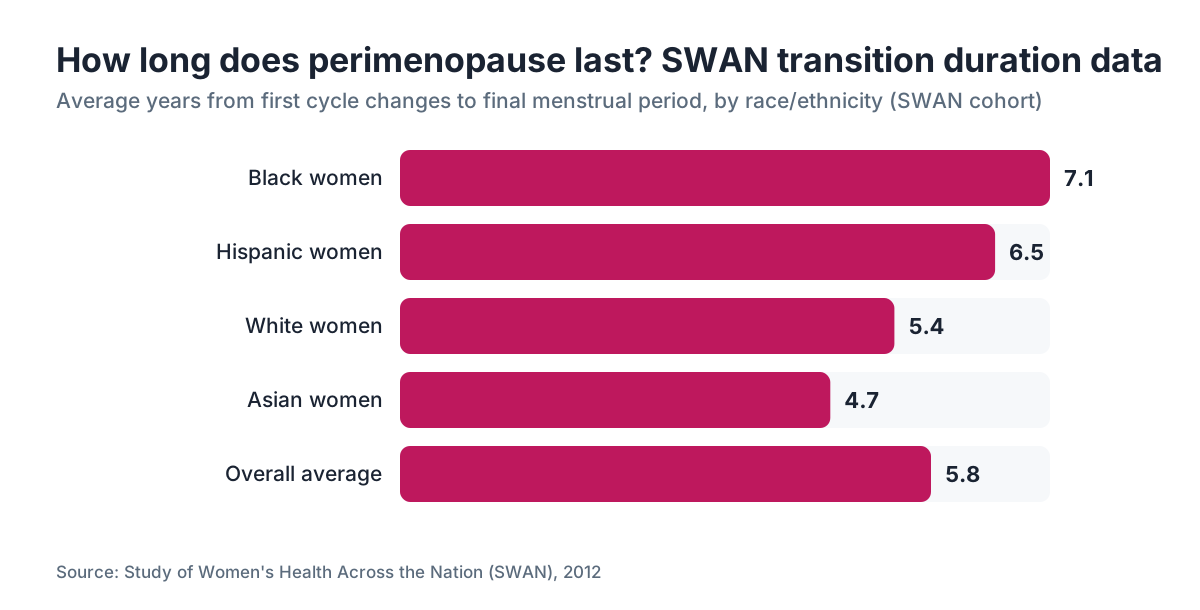
Longer than most women expect. The Study of Women's Health Across the Nation (SWAN), one of the largest long-running studies of the menopausal transition, found that the average length of perimenopause (from the first cycle changes to the final menstrual period) was roughly 4 to 8 years [11]. The late transition, the stretch after a 60-day gap and before the final period, ran around one to three years.
There's genuine individual variation. Women who enter perimenopause later (after 48) tend to have shorter transitions. Women who start earlier (before 45) may have longer ones. Race and ethnicity appear to affect duration too: SWAN data showed Black and Hispanic women had longer transitions on average than white or Asian women [11].
For most women, the most disruptive bleeding hits in the late transition, when cycles are farther apart but the bleeds that do come can be unexpectedly heavy. Then things quiet down relatively quickly as the final period approaches. After 12 consecutive months with no period, you're in menopause, and any bleeding after that is by definition postmenopausal and needs evaluation.
Knowing where you are in the transition helps calibrate expectations. If you're in early perimenopause with mostly regular cycles, you're likely years away from your final period. If you're already going 60 to 90 days between periods, you may be closer than you think. You can read about age patterns at perimenopause age and menopause age.
Can you still get pregnant if your periods are irregular?
Yes. This is genuinely underappreciated.
Irregular cycles in perimenopause mean inconsistent ovulation, not absent ovulation. You can still ovulate, possibly when you least expect it. ACOG recommends that perimenopausal women who don't want to become pregnant use contraception until they've completed 12 consecutive months without a period (for women over 50) or 24 months (for women under 50), a threshold some European guidelines also use [4].
The most effective contraceptive options in perimenopause are often the same ones that treat heavy bleeding: the LNG-IUD (Mirena) and low-dose combination pills are both highly effective and address the bleeding problem at the same time. Barrier methods work but obviously don't help with cycle regulation.
If you haven't had a period in several months and you have any question about pregnancy, test first. Perimenopausal and early pregnancy symptoms overlap a lot: fatigue, breast tenderness, nausea, mood changes. A urine pregnancy test is reliable and cheap. Don't assume it's menopause without ruling out pregnancy if there's any realistic chance.
What lifestyle factors affect perimenopausal bleeding?
Weight matters more than most women are told. Fat tissue produces estrone (a form of estrogen) through a process called aromatization, and excess fat tissue means higher circulating estrogen levels independent of the ovaries. This adds to the unopposed estrogen problem that drives endometrial over-buildup and heavy bleeding. Women with higher BMI tend to have heavier perimenopausal bleeding and higher rates of endometrial hyperplasia [12].
This isn't a judgment about weight. It's a physiological mechanism worth knowing about because it changes the clinical picture. If heavy bleeding is wrecking your quality of life and weight loss is possible, even modest reduction (5 to 10% of body weight) lowers circulating estrogens meaningfully. GLP-1 receptor agonists like semaglutide have become a real option for this population, and many women in perimenopause are using them for weight management. You can read more at semaglutide for weight loss. Weight loss on GLP-1s hasn't been specifically studied for its effects on perimenopausal bleeding patterns, but the estrogen-aromatization link is mechanistically plausible.
Thyroid function, as mentioned earlier, directly affects cycle regularity. So does stress, which disrupts the hypothalamic-pituitary-ovarian axis. Vigorous over-exercise and very low body weight can suppress ovulation, causing missed periods that could be mistaken for the transition. Medications matter too: anticoagulants, corticosteroids, and some antidepressants can all affect bleeding patterns.
Check your iron stores if your periods are heavy. Low ferritin is common in this population even without frank anemia, and low ferritin causes fatigue that piles on top of other perimenopausal symptoms.
How do you track irregular periods and know when you've reached menopause?
You need a record. A phone app (Clue, Flo, Apple Health) or a paper calendar with start dates, end dates, and flow notes works fine. Your provider can't accurately stage your transition or judge whether bleeding is abnormal without knowing your pattern, and memory for cycle details is notoriously unreliable.
Menopause is confirmed looking backward: 12 consecutive months without a period, with no other cause like pregnancy, breastfeeding, or certain medications. There's no blood test that confirms menopause in real time. FSH can be suggestive but fluctuates too much during the transition to be definitive. AMH (anti-Mullerian hormone) levels drop as ovarian reserve declines and are sometimes used clinically, but there's no validated threshold that says 'you're in menopause' [2].
If you're on hormonal contraception, it can mask or create bleeding patterns that make it hard to know where you are. Some providers suggest switching to the LNG-IUD (which thins the lining and reduces or stops bleeding) while still protecting against pregnancy, then checking FSH levels through the hormonal noise. It's imperfect.
For practical purposes: once you've gone six months without a period and you're over 45, start counting the months. If you reach 12 with no bleeding, that's your confirmed menopause date. Write it down. It stays clinically relevant for the rest of your life, because any bleeding after that needs prompt evaluation.
Frequently asked questions
Is it normal to have a period every two weeks during perimenopause?
Shorter cycles, down to 21 days or fewer, are common in early perimenopause as the follicular phase shortens. Bleeding every two weeks can feel alarming but is often just a compressed cycle rather than two separate bleeds. That said, if it persists or the flow is heavy, an ultrasound to check for polyps or fibroids is reasonable. Your provider can help distinguish a short cycle from true mid-cycle bleeding.
Can stress cause missed periods during perimenopause?
Yes, stress disrupts the hypothalamic-pituitary-ovarian axis and can suppress ovulation, causing delayed or absent periods. The tricky part is that in perimenopause, you may miss periods for both hormonal-transition reasons and stress reasons at once. If you miss a period and there's meaningful psychological or physical stress, that's a contributing factor, but it doesn't erase the need to rule out pregnancy or evaluate a pattern that continues.
What does postmenopausal bleeding mean and how serious is it?
Postmenopausal bleeding (PMB) is any vaginal bleeding after 12 consecutive months without a period. It always warrants evaluation. About 10% of women with PMB have endometrial cancer; the other 90% have benign causes (atrophic vaginitis, polyps, endometrial atrophy). The point is you can't tell which group you're in without an exam, ultrasound, and possibly biopsy. The American Cancer Society notes endometrial cancer is highly treatable when found early.
Should I get an endometrial biopsy for heavy perimenopausal bleeding?
Not automatically, but often yes. ACOG recommends endometrial sampling for women over 45 with abnormal uterine bleeding, for women under 45 with risk factors like obesity, PCOS, or persistent anovulatory bleeding, and for any postmenopausal bleeding. An endometrial biopsy is an office procedure that takes a few minutes. It's uncomfortable but important, because heavy bleeding alone can't tell benign from premalignant causes apart.
Can the Mirena IUD help with heavy perimenopausal bleeding?
Yes, and it's one of the most effective options available. The levonorgestrel IUD (Mirena) releases a low dose of progestin locally, thins the uterine lining, and cuts menstrual flow by about 90% in most users within a year. A Cochrane review found it more effective than oral progestins for heavy menstrual bleeding. It also provides highly effective contraception, which matters in perimenopause when ovulation is still possible.
How do I know if my irregular bleeding is perimenopause or something more serious?
Gradual changes in cycle length and flow that fit the variable-and-progressing pattern of perimenopause (and that show up in your mid-40s or later) are usually benign. Red flags that need evaluation: any bleeding after confirmed menopause, bleeding after sex, periods lasting more than seven days regularly, soaking through protection every hour for two-plus hours, or pelvic pain alongside the bleeding. When you're not sure, an ultrasound is reassuring and low-risk.
Does irregular bleeding mean I'm close to menopause?
Not necessarily close. Irregular cycles can begin 4 to 8 years before the final period, per SWAN study data. Once you start going 60 or more days between periods (late perimenopause), you're likely within one to three years of menopause. The transition length varies a lot by individual. Tracking your cycle dates is the best way to gauge progression; no single blood test reliably predicts when your final period will be.
Can thyroid problems cause irregular bleeding that looks like perimenopause?
Yes. Both hypothyroidism and hyperthyroidism alter menstrual patterns. Hypothyroidism often causes heavier, more frequent periods; hyperthyroidism can cause lighter, less frequent ones. Thyroid dysfunction peaks in midlife women, and symptoms overlap heavily with perimenopause: fatigue, weight changes, mood shifts. A TSH blood test is cheap and should be part of the workup for any woman with new cycle changes. Treating the thyroid often normalizes bleeding without hormonal intervention.
What blood tests should I ask for if my periods are irregular?
Reasonable first-line labs include FSH (elevated in perimenopause), estradiol (highly variable but gives a snapshot), TSH (to rule out thyroid disease), a complete blood count with ferritin (to check for anemia from heavy bleeding), and a pregnancy test if there's any chance of pregnancy. AMH can indicate ovarian reserve. Prolactin is worth checking if periods are very irregular, since high prolactin suppresses ovulation. Your provider will tailor the panel to your history.
Is it safe to use low-dose birth control pills for perimenopausal bleeding?
For most healthy, non-smoking women under 50 to 55, low-dose combination oral contraceptives are considered safe and are commonly prescribed specifically for cycle regulation and flow reduction in perimenopause. They're not appropriate for women with a history of blood clots, certain migraines, or cardiovascular risk factors. After confirmed menopause, the estrogen dose in standard pills is higher than needed and MHT formulations become preferable. Discuss your individual risk profile with your provider.
Can I use hormone therapy to stop irregular perimenopausal bleeding?
Menopausal hormone therapy (MHT) is not the right tool for suppressing cycles or preventing pregnancy in active perimenopause. It doesn't reliably suppress ovulation. Low-dose combination contraceptives or a progestin IUD work better for cycle management during the transition. Once you're in confirmed menopause, MHT with continuous combined estrogen-progestogen typically results in no regular bleeding and manages other menopause symptoms at the same time.
How does weight affect perimenopausal bleeding?
Fat tissue produces estrone through aromatization, raising circulating estrogen levels independent of the ovaries. Higher body weight means more unopposed estrogen, which drives endometrial over-buildup and heavier, more irregular bleeding. Women with higher BMI also have higher rates of endometrial hyperplasia. Modest weight loss of 5 to 10% of body weight lowers circulating estrogens meaningfully and may improve bleeding patterns, on top of its other health benefits.
What is the STRAW+10 staging system and how does it apply to my cycle changes?
STRAW+10 (Stages of Reproductive Aging Workshop) is the consensus framework clinicians use to stage where a woman is in the reproductive-to-postmenopause transition. Early perimenopause is defined by cycles varying 7 or more days in length. Late perimenopause begins with a 60-day or longer gap between periods. The final menstrual period can only be identified looking backward, after 12 months of amenorrhea. Knowing your STRAW stage helps your provider read symptoms, labs, and imaging correctly.
When should I consider a bone density test during perimenopause?
Estrogen protects bone, and as it declines through the transition, bone loss speeds up. NAMS recommends baseline bone density testing (DEXA scan) at menopause for most women, or earlier for those with risk factors like early menopause (before 45), fracture history, low body weight, smoking, or corticosteroid use. You can read more about the evaluation process at bone density test. Catching bone loss early makes treatment much more effective.
Sources
- North American Menopause Society (NAMS), Menopause Practice: A Clinician's Guide
- Harlow SD et al., Executive summary of the Stages of Reproductive Aging Workshop +10, Menopause 2012
- Prior JC, Perimenopause: The complex, transitional time of the menopausal transition, Endocrinology and Metabolism Clinics of North America 2011
- American College of Obstetricians and Gynecologists (ACOG), Practice Bulletin 128: Diagnosis of Abnormal Uterine Bleeding in Reproductive-Aged Women
- Guthrie JR et al., Melbourne Women's Midlife Health Project, Climacteric 2004
- American Cancer Society, Key Statistics for Endometrial Cancer 2024
- Baird DD et al., High cumulative incidence of uterine leiomyoma in black and white women, American Journal of Obstetrics and Gynecology 2003
- Lethaby A et al., Progesterone or progestogen-releasing intrauterine systems for heavy menstrual bleeding, Cochrane Database of Systematic Reviews 2015
- Freeman EW et al., Tranexamic acid for heavy menstrual bleeding, Obstetrics and Gynecology 2011
- U.S. Food and Drug Administration, Estrogen labeling guidance and approved drug products
- Harlow SD et al., Study of Women's Health Across the Nation (SWAN), SWAN Report 2012
- Ørbo A et al., Endometrial cancer risk factors, Gynecologic Oncology 2009 (and supporting ACOG obesity guidance)