HRT for perimenopause: what it does, who needs it, and how to start
TL;DR: Hormone therapy during perimenopause replaces the estrogen your ovaries make less reliably, plus a progestogen if you still have a uterus. It cuts hot flashes, night sweats, and sleep disruption by more than 75% in trials. Most healthy women under 60 with symptoms are good candidates. Transdermal estradiol plus micronized progesterone is the safest common regimen.
What is HRT and how does it work in perimenopause?
Perimenopause is the stretch before your final period, usually 4 to 8 years, when estrogen and progesterone swing around unpredictably before trending down [1]. HRT (also called menopausal hormone therapy, or MHT) replaces the estrogen your ovaries are making less reliably. If you still have a uterus, it adds a progestogen to protect your uterine lining, because estrogen alone can overgrow that tissue and raise endometrial cancer risk.
Here's the part most women misunderstand. HRT doesn't suppress ovulation or cycle you the way birth control pills do. It steadies the floor. You're calming the chaotic swings that cause symptoms, not forcing your body into an artificial hormone state.
Estrogen comes as patches, gels, sprays, or pills. Patches and gels are preferred now because they deliver estradiol through the skin and skip the liver, which means lower blood clot risk than oral estrogen [2]. The progestogen is either synthetic (norethindrone, medroxyprogesterone acetate) or body-identical micronized progesterone (Prometrium), which most women tolerate better.
For a closer look at the progesterone piece, see progesterone.
What symptoms does HRT actually treat in perimenopause?
HRT works best on the vasomotor stuff: hot flashes and night sweats. The North American Menopause Society (NAMS) calls hormone therapy the most effective treatment for vasomotor symptoms and genitourinary syndrome of menopause (GSM), with symptom reduction that usually tops 75% in trials [3].
Beyond that, women report better sleep, fewer mood swings, less brain fog, and better vaginal comfort. The sleep gains mostly come from fewer night sweats, not a direct sedating effect, though micronized progesterone does help sleep a little.
Bone protection is real too. Bone loss speeds up as estrogen falls, and HRT holds density well [4]. That matters because the fastest loss happens in the 2 to 3 years around your final period, often before anyone has thought to order a bone density test.
HRT won't fix everything. Joint pain, hair thinning, and libido often need separate attention. (Testosterone isn't FDA-approved for women, but it's widely prescribed off-label and has solid trial data for low desire.) Sort out expectations with your prescriber before you start, so you know what the patch will and won't touch.
What HRT handles well: hot flashes, night sweats, vaginal dryness, sleep disruption tied to night sweats, mood swings tied to estrogen shifts, and urinary urgency from GSM. What it helps partly or indirectly: joint pain, fatigue, brain fog. What it mostly leaves alone: stress-driven anxiety, weight gain on its own, and hair loss from androgenic causes.
Who is a good candidate for HRT during perimenopause?
The 2022 NAMS position statement says hormone therapy has a favorable benefit-risk profile for healthy symptomatic women under 60, or within 10 years of menopause onset [3]. That's the clearest guidance we have.
Good candidates have moderate to severe symptoms that hurt quality of life and no contraindications. The contraindications that genuinely matter: unexplained vaginal bleeding, active or recent hormone-receptor-positive breast cancer, active liver disease, a current or recent blood clot or stroke, or a known clotting disorder. A personal history of blood clots is a relative contraindication with oral estrogen, but often fine with transdermal estrogen, which doesn't raise clot risk the way pills do [2].
A family history of breast cancer is not itself a reason to avoid HRT, though it's worth a detailed talk with a provider. In the Women's Health Initiative, combined estrogen-progestogen HRT added about 8 breast cancer cases per 10,000 women per year of use, smaller than the risk from two daily alcoholic drinks or from obesity [3].
Women with surgical menopause (ovaries removed) usually need higher starting doses and benefit a lot from HRT, because their hormone drop is a cliff rather than a slope.
Not sure where you are in the transition? The article on perimenopause age walks through what's normal by decade.
HRT or the pill for perimenopause: which is better?
This is the question providers hear constantly from women in their 40s, and the honest answer depends on your situation.
Low-dose combined birth control pills do two things HRT doesn't: they suppress ovulation reliably, and they regulate your cycle. If you're perimenopausal and still need contraception, the pill solves both at once. Long-term use also lowers ovarian and endometrial cancer risk, and it supplies enough estrogen to control hot flashes in most women.
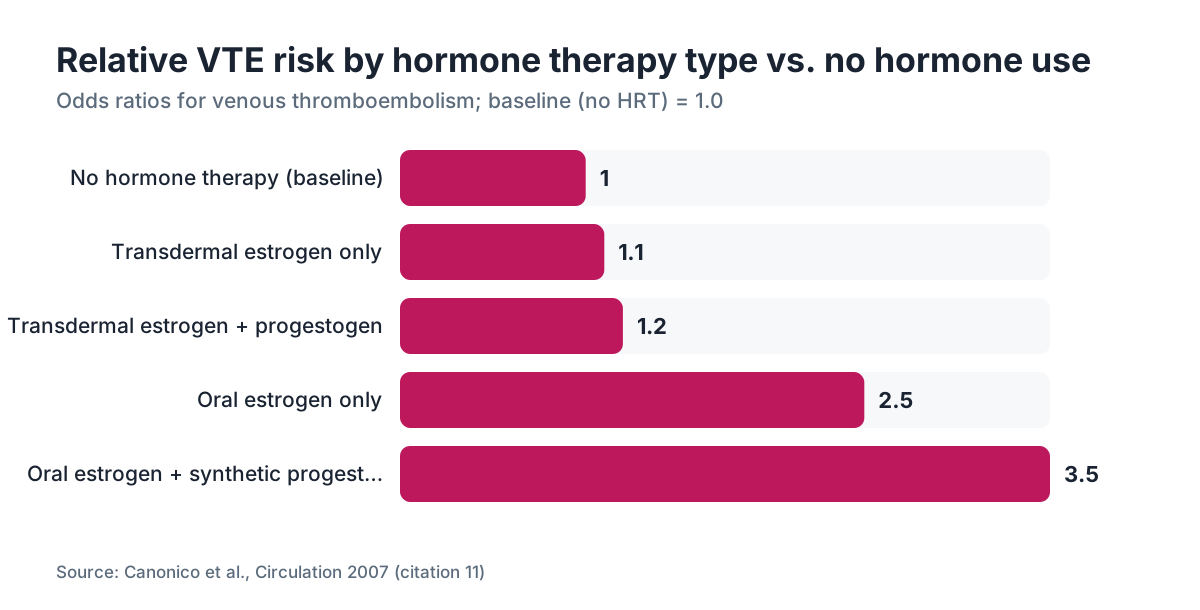
The catch is pharmacologic. The pill uses synthetic ethinyl estradiol at doses 4 to 7 times higher than standard menopause HRT, plus synthetic progestins instead of body-identical progesterone [5]. That means meaningfully higher venous thromboembolism (VTE) risk. Oral HRT carries more VTE risk than transdermal, but the combined pill carries more than either.
Transdermal estradiol plus micronized progesterone is now the preferred approach for most symptomatic perimenopausal women who don't need contraception. It gives the lowest effective estrogen dose with the best safety profile we have data on. The Endocrine Society's 2015 clinical practice guideline names transdermal estradiol as the preferred route for women at elevated clot risk [2].
So here's the practical split. Need contraception and tolerate the pill? It's a reasonable choice through perimenopause. But if you're 45 or older, using a non-hormonal method for birth control already, or carrying risk factors that make clot risk relevant, moving to transdermal HRT (with a separate non-hormonal contraceptive if needed) is usually the smarter play.
See the full breakdown of hormone replacement therapy options for a head-to-head of regimens.
| Factor | Combined Oral Contraceptive | Transdermal HRT |
|---|---|---|
| Estrogen type | Ethinyl estradiol (synthetic) | Estradiol (body-identical) |
| Estrogen dose (estrogen equivalent) | Higher (20-35 mcg EE) | Lower (0.025-0.1 mg/day) |
| Progestogen | Synthetic progestin | Often micronized progesterone |
| VTE risk vs. no hormone | ~3-4x baseline | ~1x baseline (transdermal) |
| Cycle control | Yes | No (may need separate method) |
| Contraception | Yes | No |
| FDA-approved for menopause symptoms | No | Yes |
What are the real risks of HRT in perimenopause?
The Women's Health Initiative (WHI) trial, published in 2002, scared a generation of women and doctors away from HRT, and the fear has outlived the evidence [6]. Here's what WHI actually found, and what later reanalysis showed.
WHI studied mostly older postmenopausal women (average age 63, not perimenopausal) taking oral conjugated equine estrogen plus synthetic medroxyprogesterone acetate. In that group, combined therapy linked to a small rise in breast cancer and a small rise in cardiovascular events. The estrogen-only arm (women without a uterus) showed no breast cancer increase and possibly a drop.
Reanalysis by age changed the picture. Women who started HRT before 60, or within 10 years of menopause, had much better cardiovascular outcomes than late starters, a pattern now called the "timing hypothesis" or "critical window" [3]. Starting HRT in your 40s or early 50s is a different situation than starting at 65.
The risks that stay real: combined estrogen-progestogen therapy (especially with synthetic progestins) adds a small breast cancer risk with 5 or more years of use. Oral estrogen raises VTE risk; transdermal doesn't, meaningfully [2]. Stroke risk ticks up slightly with oral estrogen in older women, but not clearly with transdermal at standard doses.
And the risk nobody weighs enough: doing nothing. Untreated hot flashes track with disrupted sleep, cardiovascular risk (hot flashes mark endothelial dysfunction), faster bone loss, and a worse quality of life. The cost of leaving perimenopause untreated is real, even if it's harder to put in a trial column.
What forms of HRT are available and which work best?
The menu has grown a lot in the last decade. Here's the practical version.
Estrogen delivery: patches (weekly or twice-weekly), gels (daily), sprays (daily), and pills. Patches are the most studied transdermal form and the easiest to dose consistently. Gels need careful application so you don't transfer estrogen to a partner or child through skin contact. Pills are convenient but run through the liver first, which is where the extra VTE risk comes from [2].
Progestogen if you have a uterus: oral micronized progesterone (Prometrium) 100 to 200 mg nightly is the preferred form in current guidelines, because it skips the metabolic downsides of synthetic progestins and has a mild sedating effect that helps sleep [3]. The levonorgestrel IUD (Mirena) is a strong option for women who want local uterine protection without systemic progestogen. Synthetic progestins (norethindrone acetate, medroxyprogesterone acetate) work, but their profiles are less kind, especially for breast tissue and mood.
Local estrogen for vaginal and urinary symptoms: low-dose vaginal estrogen (cream, ring, or tablet) puts estrogen right on vaginal and urethral tissue with barely any systemic absorption. It's safe even for many women who can't use systemic HRT, and it's badly underused. If systemic HRT is off the table for you, vaginal estrogen may still change your life.
For a good visual on the estrogen patch, that article covers Vivelle-Dot, Climara, and the generics.
Starting doses for systemic therapy sit on the low end: a 0.025 or 0.05 mg/day estradiol patch, or 0.5 to 1 mg oral estradiol. You titrate up based on symptoms, usually rechecking at 8 to 12 weeks. The target is the lowest dose that controls symptoms, not the most you can stand.
How do you know if HRT is working, and how long should you take it?
Most women feel a real drop in hot flashes within 4 to 8 weeks at a therapeutic dose. Sleep often improves in 2 to 4 weeks. Vaginal dryness takes longer, usually 3 months or more, because rebuilding that tissue is slow.
If you've held a stable dose for 12 weeks and symptoms still bother you, that's your cue to reassess the dose, the delivery route, or whether something else (thyroid trouble, sleep apnea, high cortisol) is in the mix.
Blood tests aren't much help for titrating women on transdermal estrogen. Estradiol levels bounce around through the day and with patch placement, so NAMS guidance is to adjust by symptoms, not serum numbers. Checking estradiol and FSH at baseline, and again if symptoms won't settle, is reasonable enough.
Duration is genuinely individual. The old "stop at 5 years" rule has no firm basis for most women. NAMS says there's no arbitrary time limit and that women should decide with their providers. Its 2022 statement puts it plainly: hormone therapy "does not need to be routinely discontinued" at a set age or duration for healthy women who still benefit [3]. Plenty of women stay on HRT through their 60s for bone protection and quality of life. The math shifts with age, but it doesn't flip negative at year 5.
Some women try to quit after a few years and watch symptoms come roaring back. Tapering tends to go smoother than stopping cold, though the evidence on taper protocols is thin.
Does HRT cause weight gain in perimenopause?
Perimenopausal weight gain is real, running about 1 to 2 pounds a year in midlife, but it's driven mostly by muscle loss with age, less activity, and metabolic shifts, not by HRT [7]. Several randomized trials show HRT doesn't cause meaningful weight gain and may even slow the shift of fat from your limbs to your belly.
That said, some women do retain fluid early on, especially with oral estrogen, and that can read as a few pounds in the first month. Switching to transdermal usually clears it.
The bigger metabolic story: estrogen shapes insulin sensitivity and visceral fat storage. As estrogen falls in perimenopause, women often pack on abdominal fat with no change in diet or exercise. HRT can blunt that shift, though the effect varies and HRT isn't a weight loss drug.
If weight is your main concern, GLP-1 receptor agonists like semaglutide have strong evidence for weight reduction in women. That's a separate conversation from HRT, and the two aren't either/or. WomenRx providers work with women on both HRT and GLP-1 therapy, running them as complementary tools. For that side of the equation, the semaglutide for weight loss article covers the data.
How does HRT affect mood, anxiety, and brain function in perimenopause?
Estrogen acts directly on serotonin, dopamine, and norepinephrine systems, which is why perimenopausal mood trouble often shrugs off standard antidepressants but responds to estrogen [8]. Timing matters. Women who never had mood disorders but develop anxiety, irritability, or low mood in perimenopause often respond dramatically to HRT. Women with existing depression may need antidepressants alongside HRT, not instead of it.
The brain fog complaint (word-finding trouble, poor focus, memory lapses) is one of the most distressing perimenopausal symptoms and one of the least discussed with providers. Estrogen affects cerebral blood flow and glucose metabolism. Observational data suggests estrogen started during perimenopause may support cognitive function, though this evidence is weaker than the hot flash data [9].
Anxiety is trickier. Some women find estrogen calms it a lot. Others find that progesterone, particularly synthetic progestins, makes it worse. If you start HRT and mood or anxiety slides, the progestogen is the first suspect. Switching from a synthetic progestin to micronized progesterone, or to the levonorgestrel IUD (minimal systemic progestogen), often fixes progesterone-driven mood symptoms.
Sleep and mood are tightly wired in perimenopause. Fixing the night sweats frequently does more for mood than anything aimed at neurotransmitters.
How is HRT different from bioidentical hormones?
"Bioidentical" is a marketing word, not a regulatory category. It means hormones chemically identical to what your body makes. By that definition, FDA-approved estradiol patches, estradiol gels, and micronized progesterone (Prometrium) are all bioidentical. Most women asking about bioidentical hormones don't realize they can get them with a standard prescription.
What's usually sold under the "bioidentical" banner is compounded hormone therapy from a compounding pharmacy, often dosed off saliva tests, in custom blends (BHRT or cBHRT). The FDA doesn't approve compounded preparations, so they haven't been tested for potency, purity, or safety the way approved drugs are [10]. Saliva testing correlates poorly with tissue levels and isn't endorsed for dosing by NAMS, the Endocrine Society, or the American College of Obstetricians and Gynecologists.
Some women do well on compounded preparations and find them easier to get through telehealth providers who specialize there. That's a valid personal choice. But the claim that compounded BHRT is inherently safer or more natural than FDA-approved bioidentical therapy isn't backed by evidence, and the missing independent quality testing is a real consideration.
If cost worries you, FDA-approved generic estradiol patches and oral estradiol are cheap, often under $50 a month with GoodRx-type discounts, and generic micronized progesterone is similar.
How do you start HRT for perimenopause?
Start with a real clinical assessment: symptom history, menstrual pattern, cardiovascular risk factors, personal and family cancer history, blood pressure, BMI, and a frank talk about your goals. You don't need a blood test to diagnose perimenopause if you're in your 40s with classic symptoms and irregular periods, because FSH and estradiol bounce around so much that a single reading tells you little [1].
A typical starting regimen for a symptomatic perimenopausal woman with a uterus: a 0.05 mg/day estradiol patch (changed twice weekly) plus 100 mg oral micronized progesterone nightly. Reassess at 8 to 12 weeks. Titrate as needed.
Still having periods and need contraception? Sort that out first. HRT doesn't prevent pregnancy. Some providers bridge with low-dose HRT plus a progestogen-releasing IUD; others keep you on a low-dose pill until you're solidly postmenopausal, then switch to HRT.
Telehealth has made access much easier. Providers can prescribe FDA-approved estradiol and progesterone off a thorough intake and a video or asynchronous visit, with labs ordered as needed. If you couldn't get these conversations from a primary care doctor or gynecologist, platforms like WomenRx connect you with practitioners who focus on perimenopausal and menopausal hormone care.
For the full arc of the menopause transition, and what to expect across both perimenopause and postmenopause, that article has the bigger picture.
Frequently asked questions
At what age should you start HRT for perimenopause?
There's no single right age. Most women enter perimenopause between 40 and 51 [1]. The trigger is symptoms bad enough to hurt your quality of life, not a birthday. NAMS considers hormone therapy appropriate for symptomatic women under 60, or within 10 years of their final period. If symptoms are mild, you may not need it at all.
Can you take HRT if you still have regular periods?
Yes. Perimenopause often starts well before cycles turn irregular. If you're having hot flashes, sleep disruption, or mood changes with regular periods, HRT can still help. You'll need a progestogen if you have a uterus, regardless of cycle status, and a separate contraceptive method, because HRT doesn't suppress ovulation.
Is HRT safe if breast cancer runs in my family?
Family history alone isn't a contraindication. Being BRCA-positive is a different, more serious conversation. For women with a first-degree relative who had breast cancer but no known genetic mutation, many oncologists and gynecologists consider low-dose transdermal estradiol plus micronized progesterone reasonable after a careful review of individual risk. Have that talk with a provider who knows your full history.
What is the difference between systemic HRT and local vaginal estrogen?
Systemic HRT (patches, gels, pills) raises estrogen throughout the body and treats hot flashes, sleep problems, and mood changes. Local vaginal estrogen (cream, ring, or tablet) acts only on vaginal and urethral tissue with negligible systemic absorption, treating dryness, discomfort, and urinary urgency. Women who can't use systemic HRT for medical reasons can often still use vaginal estrogen safely.
How long does it take for HRT to work in perimenopause?
Hot flashes usually start easing within 2 to 4 weeks of reaching a therapeutic dose, with real reduction by 8 to 12 weeks. Sleep often improves in the first 2 to 4 weeks, especially when night sweats were the cause. Vaginal dryness takes longer, often 3 months, because it needs tissue remodeling. No improvement after 12 weeks at a stable dose means it's time to adjust.
Can HRT help with perimenopause-related weight gain?
HRT doesn't cause weight gain and may help with the fat redistribution from limbs to belly that comes with falling estrogen. But it's not a weight loss treatment. Perimenopausal weight gain is driven mostly by muscle loss, less activity, and metabolic change. Women who want meaningful weight loss alongside HRT may benefit from discussing GLP-1 options like semaglutide with their provider.
What is the safest type of HRT for perimenopause?
Current evidence favors transdermal estradiol (patch or gel) plus oral micronized progesterone for women with a uterus. Transdermal delivery skips the liver, which removes the clot risk tied to oral estrogen [2]. Micronized progesterone has a better cardiovascular and breast safety profile than synthetic progestins. Women without a uterus can use estrogen alone, which is safer than combined therapy.
Will HRT make my periods more regular during perimenopause?
Systemic HRT doesn't reliably regulate perimenopausal cycles, because it doesn't suppress the pituitary-ovarian axis. Periods may get more predictable for some women and not for others. If cycle regularity is your main goal, a low-dose birth control pill suppresses the cycle more consistently. The Mirena IUD often makes periods lighter or absent and is a strong option for uterine protection with HRT.
Do I need a blood test before starting HRT?
You don't strictly need hormone blood tests to diagnose perimenopause or start HRT if you have classic symptoms in the right age range. FSH and estradiol swing so much during perimenopause that a single snapshot is unreliable [1]. Providers typically check blood pressure, review cardiovascular risk, and may test thyroid and metabolic markers, but hormone levels alone don't decide whether HRT fits you.
Can HRT prevent osteoporosis in perimenopause?
Yes. Estrogen is a proven bone-protective agent. Bone loss speeds up as estrogen declines, with the steepest losses in the 2 to 3 years around the final period [4]. HRT holds bone density through that window. Whether it replaces dedicated osteoporosis drugs depends on your baseline density and fracture risk, which a DEXA scan can assess.
What's the difference between HRT and BHRT (bioidentical hormone therapy)?
FDA-approved estradiol patches and micronized progesterone are chemically bioidentical. Compounded BHRT from specialty pharmacies is also bioidentical but not FDA-approved, so potency and purity aren't independently verified [10]. There's no evidence that compounded preparations are safer or more effective than FDA-approved bioidentical options. "Bioidentical" has become more marketing than clinical distinction.
Is it safe to use HRT and an antidepressant at the same time in perimenopause?
Yes, and the combination is often the right call. HRT and antidepressants work through different mechanisms. Some women need both: estrogen addresses the hormonal driver of mood symptoms while an antidepressant addresses serotonin or norepinephrine dysregulation. SNRIs like venlafaxine are also used for hot flashes in women who can't take HRT. Ask your prescriber which combination fits your symptoms.
Can the pill and HRT be used at the same time?
Generally no. They have overlapping effects, so using both adds total hormone exposure without extra benefit. The choice is usually one or the other. Women on the pill who move to HRT stop the pill first. If you still need contraception on HRT, non-hormonal methods (copper IUD, barrier) or the levonorgestrel IUD (local uterine protection) pair with systemic HRT.
How do I know if my symptoms are perimenopause versus something else?
Hot flashes, night sweats, irregular periods, and brain fog in a woman aged 38 to 51 are very likely perimenopausal. But thyroid dysfunction, sleep apnea, autoimmune conditions, and high cortisol can mimic it closely. A provider should check TSH, a metabolic panel, and blood pressure at minimum before blaming everything on hormones. Perimenopause is a clinical diagnosis, history-based, not a single lab value.
Sources
- ACOG Practice Bulletin on Menopause, American College of Obstetricians and Gynecologists
- Endocrine Society Clinical Practice Guideline: Treatment of Symptoms of the Menopause
- NAMS 2022 Hormone Therapy Position Statement, North American Menopause Society
- NAMS 2022 Hormone Therapy Position Statement, North American Menopause Society
- FDA Drug Safety Communication on Combined Hormonal Contraceptives and VTE Risk
- Writing Group for the Women's Health Initiative Investigators. Risks and Benefits of Estrogen Plus Progestin in Healthy Postmenopausal Women. JAMA 2002;288(3):321-333.
- Greendale GA et al. Changes in body composition and weight during the menopause transition. JCI Insight 2019;4(5):e124865.
- Soares CN. Depression and Menopause: Current Knowledge and Clinical Recommendations for a Critical Window. Psychiatric Clinics of North America 2017;40(2):239-254.
- Maki PM et al. Guidelines for the Evaluation and Treatment of Perimenopausal Depression: Summary and Recommendations. Menopause 2019;26(5):481-497.
- FDA: Bio-identical Hormones, U.S. Food and Drug Administration
- Canonico M et al. Hormone Therapy and Venous Thromboembolism Among Postmenopausal Women: Impact of Route of Estrogen Administration and Progestogen. Circulation 2007;115(7):840-845.