How to treat perimenopause: your practical guide to feeling better
TL;DR: Perimenopause usually starts in your mid-40s and runs 4 to 10 years. The most effective treatments are menopausal hormone therapy (MHT), micronized progesterone, and targeted lifestyle changes like resistance training. Non-hormonal prescriptions exist for women who can't use estrogen. No single protocol fits everyone, but most symptoms are treatable once you find a clinician who takes them seriously.
What is perimenopause and why does it need treatment?
Perimenopause is the transition before menopause, when your ovaries start producing hormones erratically and then wind down. Estrogen and progesterone don't fall in a straight line. They swing, sometimes hard, which is exactly why the symptoms feel so unpredictable from one week to the next.
The average woman enters perimenopause around age 47, though it can start at 40. You're in it once your cycles change length or frequency, even while you're still getting periods. Menopause itself, the point 12 months after your last period, marks the end of the transition. Everything before that line is perimenopause. The perimenopause age range covers what's considered normal and what isn't.
Symptoms vary enormously. Some women notice almost nothing. Others get hot flashes by the hour, can't sleep, ride mood swings worse than any PMS they've had, and hit brain fog real enough to dent their careers. The North American Menopause Society (NAMS) estimates up to 80% of women get hot flashes during the transition, and for about a quarter of them the flashes are severe enough to disrupt daily life [1].
Treatment matters because the disruption isn't only about comfort. Falling estrogen affects bone density, cardiovascular health, brain function, and metabolic rate. Perimenopause is a window where the right intervention changes long-term health, more than how you feel this month.
How is perimenopause diagnosed before you can treat it?
Perimenopause is mostly a clinical diagnosis, based on your age, symptom pattern, and menstrual history, not a single blood test. This is where many women get stuck. FSH (follicle-stimulating hormone) and estradiol swing so much day to day that one result tells you almost nothing. A "normal" FSH on Monday doesn't mean you aren't perimenopausal by Thursday.
NAMS and the Endocrine Society both treat it as a clinical call [2]. Blood tests earn their keep by ruling out other causes (thyroid disease, PCOS, premature ovarian insufficiency), not by confirming perimenopause.
Still, a TSH, complete metabolic panel, and fasting glucose are worth doing. Sleep loss and weight gain in perimenopause can hide or worsen thyroid dysfunction and insulin resistance, and you want those on the table before you build a plan.
If you're trying to figure out when does menopause start and where you sit on the timeline, your cycle history is the marker that counts, not any single lab value.
What are the most effective treatments for perimenopause symptoms?
There's a real hierarchy here, and it's worth being honest about it.
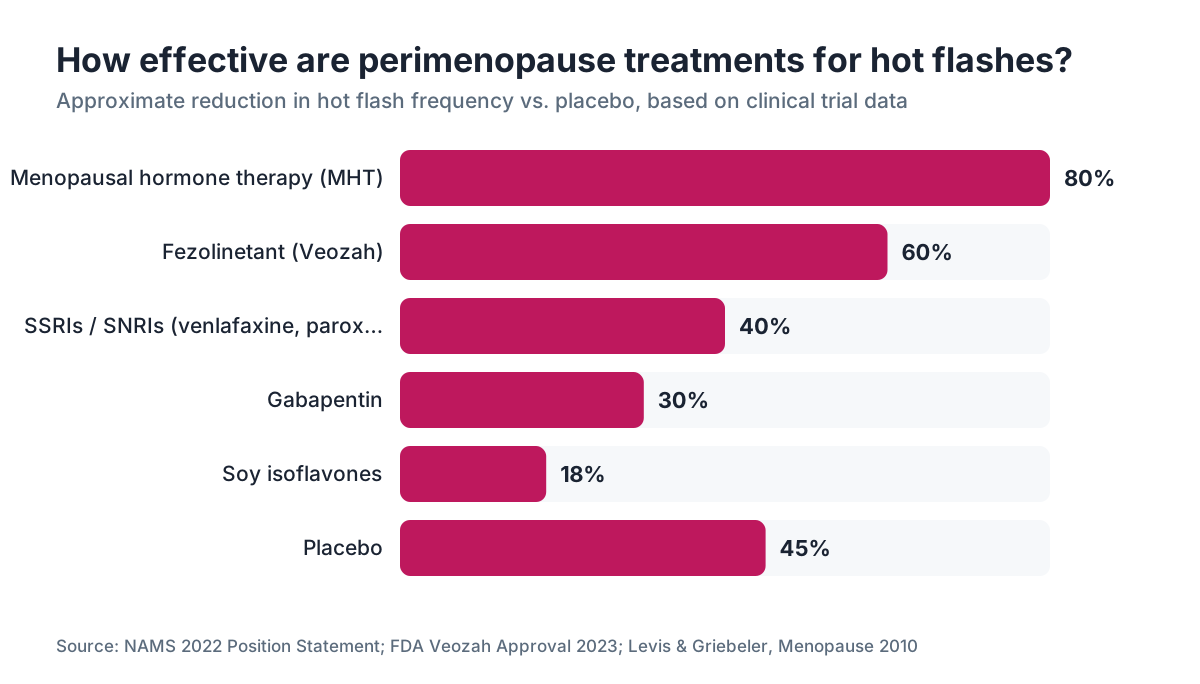
Menopausal hormone therapy (MHT, also called HRT) is the most effective treatment for hot flashes, night sweats, and the sleep loss tied to hormonal swings. The 2022 NAMS position statement is blunt: "Hormone therapy remains the most effective treatment for vasomotor symptoms and the genitourinary syndrome of menopause" [1]. For women without contraindications, it's first-line, not a last resort.
What MHT looks like depends on whether you still have a uterus. If you do, you need both estrogen and progesterone. Estrogen alone raises uterine cancer risk; adding progesterone protects the lining. Women who've had a hysterectomy can use estrogen alone.
Progesterone gets undersold. Micronized progesterone (brand name Prometrium in the US) is better tolerated than synthetic progestins, and some evidence points to a friendlier sleep and mood profile. Ask for micronized progesterone by name rather than accepting whatever the prescription pad defaults to.
Estrogen comes in several forms. Patches, gels, sprays, and rings skip first-pass liver metabolism, which matters for cardiovascular safety and is why transdermal routes are usually preferred for perimenopausal women. An estrogen patch is one of the most common starting points. The hormone replacement therapy guide compares the formulations in detail.
Timing matters. The "timing hypothesis," backed by observational data and re-analysis of the Women's Health Initiative, holds that women who start hormones within 10 years of menopause or before age 60 get the best cardiovascular risk profile. Start later, in women with established heart disease or years of estrogen deprivation, and the math changes [3].
Nobody should be scared off hormones by a misread of the WHI. The absolute risks in healthy women under 60 who start MHT are small, and the symptom and bone benefits are real.
What non-hormonal prescription treatments actually work?
Some women can't use estrogen: active or recent hormone-sensitive cancers, certain clotting disorders, unexplained vaginal bleeding. Others just prefer not to. The non-hormonal options are better now than they were ten years ago.
Fezolinetant (brand name Veozah) is an FDA-approved non-hormonal pill for moderate to severe vasomotor symptoms. It's a neurokinin 3 receptor antagonist. The FDA approved it in May 2023 on trial data showing it cut hot flash frequency by about 60% versus roughly 45% for placebo at 12 weeks [4]. It isn't cheap, and it requires liver enzyme monitoring, but it's a genuine option when you need one.
Paroxetine (Brisdelle, 7.5mg) is the only SSRI with FDA approval specifically for vasomotor symptoms. Other SSRIs and SNRIs (venlafaxine, escitalopram) get used off-label with reasonable evidence behind them. They don't match MHT for most women, but they're a realistic choice when hormones are off the table.
Gabapentin has some evidence for hot flashes, especially the nighttime ones. It isn't first-line, and the side effects (sedation, weight gain) make it a hard sell in perimenopause specifically.
Clonidine, an older blood pressure drug, shows up in guidelines, but its effect on hot flashes is modest and its side effects aren't. Most clinicians don't reach for it first.
How do you treat the sleep problems that come with perimenopause?
Perimenopause wrecks sleep from two directions at once. Night sweats wake you up. And separate from the sweating, falling progesterone changes sleep architecture, because progesterone acts on GABA receptors that promote slow-wave sleep.
Treat the hot flashes with MHT and sleep often improves a lot. That's the most direct path. Micronized progesterone has improved sleep quality in small trials independent of its effect on hot flashes, though the data isn't large enough to call it settled.
For women who can't use hormones, cognitive behavioral therapy for insomnia (CBT-I) has the strongest evidence for chronic insomnia in any population, midlife women included. It beats sleep medication over the long run and carries no dependency risk. It takes real work, and access to trained providers is patchy.
Low-dose melatonin (0.5 to 1mg, not the 5 to 10mg pills that flood pharmacy shelves) can help you fall asleep. The evidence is modest, the safety profile excellent.
A cold bedroom isn't just advice. It lowers the threshold for a nighttime hot flash. Set the thermostat to 65 to 67 degrees Fahrenheit if the household can stand it.
What helps with perimenopause mood changes and anxiety?
Mood symptoms in perimenopause get missed and undertreated. Women hear they're just stressed. Sometimes they are. But estrogen shapes serotonin and dopamine systems, so estrogen swings are a biological driver of mood instability, not simply a reaction to bad sleep.
For women whose main complaint is mood, treating the hormonal root with MHT often resolves or sharply reduces symptoms, especially when the mood trouble began with the transition rather than predating it. That's a different situation from a primary depressive disorder.
If depression is moderate to severe, or MHT alone doesn't fix it, antidepressant therapy is appropriate and well-supported. SSRIs and SNRIs are first-line. Some of them also cut hot flashes by 30 to 50%, which makes them efficient for women carrying both problems.
Anxiety that's new in perimenopause and feels different from your old anxiety (more physical, tied to cycle phase, worse around missed or late periods) often responds to hormonal stabilization. Continuous low-dose oral contraceptives or low-dose MHT can flatten the fluctuations that set off the spikes.
What should you do about perimenopause weight gain?
The body composition changes in perimenopause are real and physiological, not a matter of eating more. Falling estrogen pushes fat toward the abdomen. Insulin sensitivity drops. Muscle mass fades faster without the hormonal support that used to protect it. So women do the same things they've always done and gain weight anyway, mostly around the middle.
MHT helps, modestly. Estrogen therapy doesn't cause weight gain (a stubborn myth) and may help hold lean mass and metabolic rate through the transition [1]. It isn't a weight loss drug, but it can slow the drift.
For women with meaningful weight gain and metabolic risk, GLP-1 receptor agonists have entered the conversation for good reason. Semaglutide and tirzepatide produce 15 to 22% body-weight loss in trials, with tirzepatide at the high end in SURMOUNT-1 (average 22.5% at 72 weeks on the top dose) [5]. These are serious drugs with real side effects and ongoing prescriptions, but for women 40 to 65 dealing with significant weight gain alongside perimenopausal symptoms, they're worth understanding. Compare semaglutide vs tirzepatide or read the full breakdown of semaglutide for weight loss to see if you're a candidate.
Resistance training is the single best-supported lifestyle move for body composition in perimenopause. Not cardio alone. Lifting weights (or equivalent resistance work) holds muscle, improves insulin sensitivity, and supports bone at the same time. Two to three sessions a week is where the evidence clusters.
Protein matters more in midlife than most women are told. Aim for at least 1.2 grams per kilogram of body weight a day. It drives muscle protein synthesis, which gets less efficient as hormones decline.
How do you protect bone density during perimenopause?
Bone loss speeds up sharply in the years just before and after your final period. In the first five years after menopause, women can lose 2 to 3% of bone density a year, against less than 1% a year before the transition [6]. Act before the loss piles up, not after a fracture.
MHT is the most effective way to prevent bone loss in perimenopause and early menopause. It maintains density rather than just slowing the decline. Women who start MHT during perimenopause and stay on it keep significantly more bone than those who never use it.
Get a baseline bone density test (DEXA scan), especially if you carry risk factors: thin frame, smoking history, family history of osteoporosis, low calcium intake, or early perimenopause. The US Preventive Services Task Force recommends screening for women 65 and older, and the Endocrine Society recommends earlier screening for women with significant risk factors [7].
Calcium and vitamin D are necessary but not enough on their own. Most women need 1,000 to 1,200mg of calcium daily from food and supplements combined, plus 1,500 to 2,000 IU of vitamin D a day if bloodwork shows a shortfall. Weight-bearing exercise and resistance training add direct benefit to bone mineral density.
What lifestyle changes actually make a difference in perimenopause?
A few things have real evidence. Plenty of popular advice does not.
Resistance training. Already covered for weight, but worth saying again for everything else. It improves mood, sleep, bone density, insulin sensitivity, and muscle mass. It's the most broadly useful lifestyle intervention you have.
Alcohol reduction. Even moderate drinking worsens hot flash frequency and severity in many women. It fragments sleep, raises cortisol, and interferes with hormone metabolism. Cutting back often pays off within weeks.
Smoking cessation. Smoking is linked to menopause about two years earlier, worse hot flashes, faster bone loss, and higher cardiovascular risk. It also drags down the efficacy and safety of hormone therapy. Quitting is the highest-yield single change on this list.
Dietary patterns. No food eliminates perimenopause symptoms, whatever the supplement ads claim. A Mediterranean-style pattern has the best overall evidence for cardiovascular protection and weight maintenance in midlife women. Soy isoflavones show modest benefit for hot flashes, an average of about 1.3 fewer per day in meta-analyses, statistically real but clinically small [8].
Stress management. Chronic-stress cortisol affects sex hormone balance and can worsen hot flashes. This isn't a command to relax. Structured programs like mindfulness-based stress reduction (MBSR) have trial evidence for reducing hot flashes and improving quality of life in perimenopausal women.
How do you find a clinician who actually knows perimenopause?
This is a genuine problem. Many primary care clinicians get little training in menopause medicine and still carry outdated views on hormone risk, rooted in the misread 2002 WHI headlines. Women get told their symptoms are normal, their labs are fine, and to wait it out.
NAMS keeps a provider locator at menopause.org that lists certified menopause practitioners [1]. These clinicians have done extra training and credentialing in menopausal medicine specifically. Starting there is worth the effort.
Telehealth has changed access in a meaningful way. Several platforms now offer live consultations with hormone-focused practitioners, including WomenRx, which works specifically on hormones, GLP-1s, and perimenopause care for women. If geography or appointment waits are the barrier, a telehealth consult is a legitimate way to get a plan started.
When you see any clinician, bring a symptom journal covering at least four weeks: date, cycle status, hot flash frequency and timing, sleep quality, mood notes. It turns a subjective "I feel terrible" into a pattern a clinician can actually work with.
What is the current evidence on hormone therapy safety?
The Women's Health Initiative (WHI), published in 2002, did enormous harm by triggering mass discontinuation of hormone therapy on results that were widely misrepresented [3]. WHI participants averaged 63 at enrollment, more than a decade past menopause. The findings applied to that group. They don't map onto healthy women in their 40s and early 50s starting MHT at the onset of perimenopause.
Current evidence, including re-analysis of WHI data, the Danish Osteoporosis Prevention Study, and the ELITE trial, supports a few clear points.
For women under 60, or within 10 years of menopause onset, with no contraindications, the benefits of MHT (symptom relief, bone protection, possible cardiovascular benefit) outweigh the risks for most.
Breast cancer risk is the concern people cite most. The WHI found a small increase with the combined arm (estrogen plus synthetic progestin): about 8 extra cases per 10,000 women per year. Estrogen alone, in women without a uterus, showed no increased risk. Micronized progesterone may carry lower breast cancer risk than synthetic progestins, though head-to-head data are limited [9].
The Endocrine Society's 2022 guidance states that for symptomatic women under 60 or within 10 years of menopause, the benefits of menopausal hormone therapy outweigh the risks [2].
This is not a fringe position. It's the current scientific consensus. If your doctor is still citing 2002 WHI data without this context, that's your cue to get a second opinion.
What does a practical perimenopause treatment plan look like?
A reasonable starting framework looks like this, though every woman's plan needs tuning.
Step one: get a full symptom picture and baseline labs. TSH, fasting glucose, lipid panel, and a DEXA scan if bone risk factors are present.
Step two: decide on hormone therapy if there's no contraindication. For most women with a uterus, that means transdermal estradiol (patch, gel, or spray) plus micronized progesterone. Starting doses run low and get adjusted over three to six months based on symptom response and tolerability. For women without a uterus, transdermal estradiol alone.
Step three: address sleep and mood directly if hormonal stabilization didn't clear them. CBT-I for sleep. Antidepressant evaluation for mood if needed.
Step four: build the lifestyle base. Resistance training two to three times a week, protein targets, less alcohol, and quitting smoking if that applies.
Step five: reassess on a schedule. Perimenopause is a moving target. Doses that worked at 46 may need changing at 49 as ovarian function keeps declining. Annual symptom check-ins and periodic labs keep you ahead of it.
WomenRx offers telehealth treatment plans built for this kind of long-term perimenopause and menopause management, for women who want a clinician focused on this area instead of squeezing it into a ten-minute general appointment.
The menopause age article covers what comes after perimenopause and how your treatment needs shift once you've crossed the 12-month mark.
Frequently asked questions
How long does perimenopause last?
Most women are in perimenopause for 4 to 10 years, with an average around 7. Women who enter it earlier tend to have longer transitions. Perimenopause ends 12 months after your final period, which is the point that marks menopause. After that, you're postmenopausal.
Can I get pregnant during perimenopause?
Yes. You can ovulate and conceive during perimenopause even when your cycles are irregular. Fertility drops sharply, but pregnancy is possible until you've confirmed 12 consecutive months without a period. Women in perimenopause who don't want to become pregnant still need contraception.
What are the first signs of perimenopause?
The earliest signs are usually changes in cycle length (shorter or longer), heavier or lighter periods, disrupted sleep, and new or worse PMS-like symptoms. Hot flashes can begin early but often ramp up as the transition goes on. Brain fog and mood changes show up early for many women too.
Is hormone therapy safe for perimenopause?
For healthy women under 60 or within 10 years of menopause onset, with no contraindications (hormone-sensitive cancers, active clotting disorders, unexplained uterine bleeding), the current consensus from NAMS and the Endocrine Society is that benefits outweigh risks. The 2002 WHI data that scared many women applied to an older, different population.
What tests should I ask for if I think I'm in perimenopause?
Ask for TSH (to check thyroid), fasting glucose, and a lipid panel. FSH and estradiol tests swing day to day in perimenopause, so they're less useful for diagnosis than your symptom and cycle history. A DEXA scan is worth discussing if you have bone risk factors like a thin frame or family history of osteoporosis.
Can antidepressants treat hot flashes without hormones?
Yes. Paroxetine 7.5mg (Brisdelle) is FDA-approved specifically for vasomotor symptoms. Other SSRIs and SNRIs like venlafaxine and escitalopram get used off-label with reasonable trial evidence. They don't match hormone therapy for most women, but they're a real option when hormones are contraindicated or you'd rather skip them.
Will GLP-1 medications help with perimenopause weight gain?
GLP-1 receptor agonists like semaglutide and tirzepatide produce significant weight loss in trials (15 to 22% of body weight). They don't treat hormonal symptoms directly, but for women with substantial perimenopausal weight gain and metabolic risk, they're a clinically meaningful option worth discussing with a prescriber.
Does perimenopause cause anxiety?
Hormonal swings in perimenopause directly affect the neurotransmitter systems behind mood and stress response. New or worse anxiety that tracks with cycle changes is a recognized perimenopausal symptom, more than stress. Stabilizing hormones with MHT often reduces it in these cases. Standalone anxiolytic or antidepressant therapy may also be appropriate.
What's the difference between perimenopause and menopause?
Perimenopause is the transition leading up to your final period, usually 4 to 10 years. Menopause is a single point in time: 12 consecutive months without a period. Everything after that is postmenopause. Most symptoms people call menopause actually start and peak during perimenopause.
Do I need progesterone if I still have a uterus?
Yes. If you're using estrogen therapy and have a uterus, you need progesterone to protect the lining from endometrial hyperplasia and cancer. Micronized progesterone (bioidentical) is generally preferred over synthetic progestins for tolerability. Progesterone isn't optional here; it's a safety requirement.
Are there natural remedies that actually help perimenopause symptoms?
Soy isoflavones have the best evidence among supplements, cutting hot flash frequency by about 1.3 per day on average in meta-analyses. That's modest but real. Black cohosh has mixed evidence. Most other herbal remedies lack rigorous trial support. No supplement comes close to hormone therapy for moderate to severe symptoms.
How do I know if my doctor is knowledgeable about perimenopause?
Ask directly how they approach hormone therapy. A current, evidence-based clinician references NAMS or Endocrine Society guidelines and won't reflexively refuse hormones over outdated WHI misreadings. NAMS keeps a certified menopause practitioner directory at menopause.org if you want to find a specialist.
Can perimenopause start in your 30s?
Perimenopause before 40 is called premature ovarian insufficiency (POI), not typical perimenopause, and it affects roughly 1% of women under 40. Perimenopause starting in the early-to-mid 40s is within the normal range. Symptoms in your late 30s with regular cycles usually aren't perimenopause but do warrant evaluation.
How does perimenopause affect bone health?
Estrogen protects bone. As estrogen declines in perimenopause, bone resorption speeds up. Women can lose 2 to 3% of bone mineral density a year in the years just before and after menopause. MHT is the most effective prevention tool. Resistance exercise, calcium (1,000 to 1,200mg daily), and vitamin D matter too.
Sources
- North American Menopause Society (NAMS), 2022 Hormone Therapy Position Statement
- Endocrine Society, Menopause and Perimenopause Clinical Practice Guideline 2022
- NIH National Heart, Lung, and Blood Institute, Women's Health Initiative Study Overview
- FDA, Veozah (fezolinetant) Drug Approval, 2023
- Jastreboff AM et al., SURMOUNT-1 Trial, New England Journal of Medicine 2022
- Bone Health and Osteoporosis Foundation, Bone Loss in Menopause
- US Preventive Services Task Force, Osteoporosis Screening Recommendation
- Levis S & Griebeler ML, Soy Isoflavones Meta-analysis, Menopause 2010
- Collaborative Group on Hormonal Factors in Breast Cancer, The Lancet 2019
- NIH National Institute on Aging, Menopause Overview
- Rossouw JE et al., WHI Investigators, JAMA 2007