How to stop perimenopause itching: causes and treatments that work
TL;DR: Perimenopause itching comes mostly from falling estrogen, which thins and dries the skin. Fix the barrier first: fragrance-free ceramide cream on damp skin within 3 minutes of bathing. Add topical or systemic estrogen for the root cause. Most women see clear improvement in 4 to 12 weeks on hormone therapy. Antihistamines help the itch-sleep spiral but do not fix the cause.
Why does perimenopause cause itching?
Estrogen is the skin's maintenance hormone. It tells fibroblasts to keep making collagen, prompts sebaceous glands to produce oil, and holds water inside the skin barrier. When estrogen starts its erratic perimenopause decline, all three of those jobs slip at once.
The result is what dermatologists call estrogen-deficiency dermopathy. Skin gets thinner, loses ceramides faster, and can no longer hold onto water. That moisture loss fires up itch-sensing nerve fibers (C fibers) even without any rash. Many women describe it as crawling under the skin, prickling, or a sensation that moves around the body with nothing to see.
Low estrogen also drops the itch threshold directly. A 2023 review in the journal Menopause reported that estrogen modulates histamine receptors in skin, so as estrogen falls, skin reacts more to normal stuff like clothing friction or a mild temperature change [1].
There is a vulvar component too. The skin of the vulva and vagina is especially estrogen-sensitive. Genitourinary syndrome of menopause (GSM) can show up as vulvar itching, burning, and irritation years before the final period. The Menopause Society (formerly NAMS) lists vulvovaginal itching among the defining symptoms of GSM [2].
Stress amplifies all of it. Cortisol spikes during perimenopause, partly from broken sleep, weaken the barrier further and can push a manageable itch into a miserable one.
How common is itching during perimenopause?
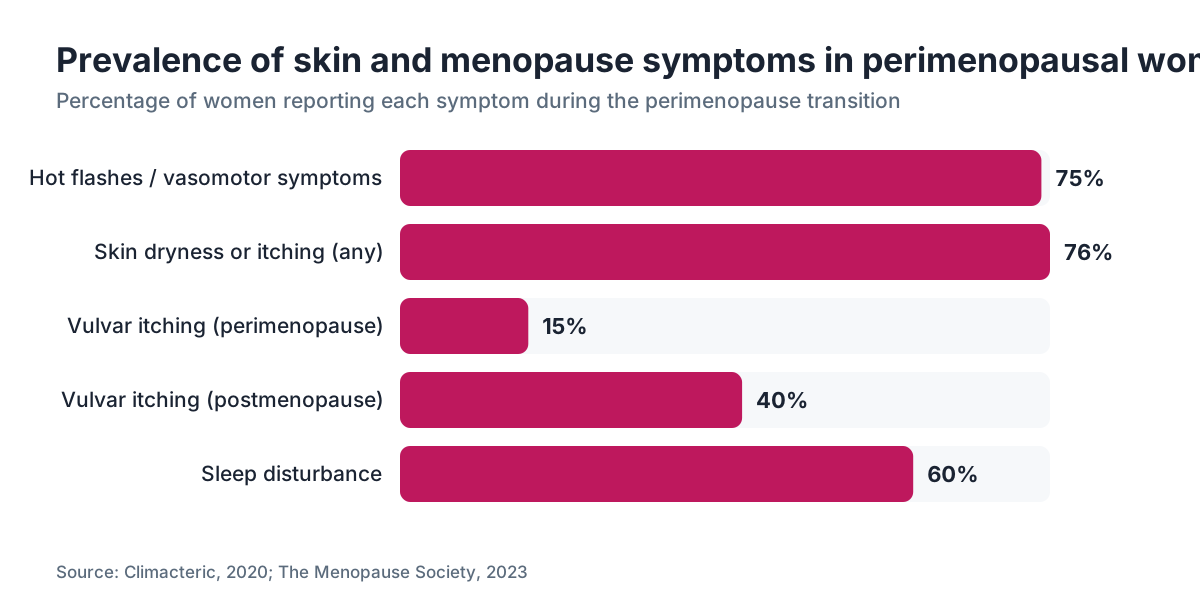
More common than most women are ever told. A 2020 survey study in Climacteric found up to 76% of perimenopausal and postmenopausal women report skin symptoms, with itching (pruritus) among the top complaints alongside dryness and thinning [3].
Hot flashes get all the press. In that same literature base, roughly 70 to 80% of women report vasomotor symptoms. Itching runs nearly as prevalent and gets a fraction of the attention.
Vulvar itching specifically is reported by about 15% of perimenopausal women and rises to around 40% postmenopause, per data cited by the Menopause Society [2]. Most of those women never mention it to a clinician, either from embarrassment or because they assume it is yeast and treat it on their own.
What does perimenopause itching feel like and where does it appear?
The classic picture is generalized itching with no visible rash. You scratch and nothing is there. It moves: arms one day, back the next, shins the day after. Some women describe a brief intense prickling that fades in seconds, sometimes called formication (the sensation that something is crawling on the skin).
Common locations:
| Location | Typical presentation | Likely driver | |---|---|---| | Scalp | Diffuse itch, sometimes with more hair shed | Estrogen loss, dry scalp, possible telogen effluvium | | Arms and legs | Dry, tight skin that itches after bathing | Barrier disruption, low ceramides | | Torso and back | Itching that is worse at night | C-fiber sensitization, cortisol rhythm changes | | Vulva and vagina | Burning, rawness, itching | GSM, thinning epithelium | | Hands | Cracking at knuckles, itch along finger joints | Collagen loss, low sebum |
Night-time itch is especially common. Skin loses more water after 11 p.m. because transepidermal water loss follows a circadian rhythm, and the distraction of a busy day is gone. If itching wakes you up, that matters clinically. Tell your prescriber.
What are the fastest at-home remedies for perimenopause itching?
Start with the barrier. The fastest measurable relief most women get comes from fixing moisture loss, not from any pill or prescription. Here is what the evidence supports.
Bathe in lukewarm water, never hot. Hot water strips the acid mantle and removes what little skin oil is left. Keep showers under 10 minutes when itching is active.
Apply a ceramide-containing moisturizer within 3 minutes of toweling off. The 'three-minute rule' comes from research showing damp skin absorbs emollients far better than dry skin, guidance the American Academy of Dermatology gives for eczema care [4]. Products with ceramides 1, 3, and 6-II (the main barrier ceramides) beat plain petroleum jelly for long-term repair, though petrolatum is still a fine cheap option for an acute itch.
Switch to fragrance-free everything. Fragrance is the leading cause of allergic contact dermatitis in midlife women. Laundry detergent, body wash, dryer sheets, toilet paper: all of it. This single change produces immediate relief more often than any other.
Wear loose, natural-fiber clothing. Synthetic fabric and tight waistbands mechanically fire the itch-sensitive nerve fibers in skin that has already lost its cushioning fat layer.
Run a humidifier in the bedroom. Anything under 40% relative humidity speeds up transepidermal water loss. A basic $30 ultrasonic humidifier set to 45 to 50% RH can cut overnight itch within a week.
Cool compresses for acute flares. A damp room-temperature cloth held for 5 to 10 minutes interrupts the itch-scratch cycle by firing cold thermoreceptors that compete with C-fiber signaling. Not glamorous. Works fast.
For vulvar itch, skip all scented wipes, feminine sprays, and 'pH-balancing' products. Plain water and a gentle unfragranced bar soap on the external vulva only is the right move while you address the hormone deficiency underneath.
Does hormone replacement therapy stop perimenopause itching?
For most women, yes. Systemic hormone therapy (HT) is the most effective treatment for estrogen-deficiency itching, and it addresses the actual cause rather than masking it.
A 2019 study in the British Journal of Dermatology followed women starting HT and found significant gains in skin hydration, elasticity, and self-reported itch at 12 and 24 weeks versus controls [5]. The Menopause Society says in its 2023 position statement that hormone therapy is appropriate for bothersome menopause symptoms, including skin complaints, in healthy women under 60 or within 10 years of menopause onset [2].
Systemic estrogen (patch, gel, or spray) reaches body-wide itch including scalp, torso, and limbs. A hormone replacement therapy evaluation should cover your full symptom burden, more than hot flashes.
For vulvar and vaginal itch, low-dose local vaginal estrogen (cream, ring, or tablet) works well, is considered safe even for most women with a history of estrogen-sensitive breast cancer under updated guidance, and skips the systemic risks of oral estrogen [2]. FDA-approved vaginal estrogen products include estradiol cream, estradiol ring, estradiol vaginal tablet, and conjugated equine estrogen cream [12]. An estrogen patch delivers systemic estrogen through the skin and is often chosen over oral because it avoids first-pass liver metabolism.
Progesterone matters too. If you have a uterus and take systemic estrogen, you need a progestogen to protect the uterine lining. Micronized progesterone (Prometrium or compounded bioidentical) also has mild anti-itch effects through central GABA receptors, which can ease the night-time itch-sleep spiral.
Timeline: most women notice real improvement in skin itch within 4 to 8 weeks of starting HT, with full benefit at 3 to 6 months. Estrogen therapy is the most effective treatment for menopausal symptoms, including genitourinary and skin complaints, per the Endocrine Society clinical practice guideline [11].
What topical treatments actually work for skin itching in perimenopause?
A handful of topicals have real evidence behind them for menopausal skin.
Low-potency corticosteroids (1% hydrocortisone over the counter) can break an acute itch-scratch cycle. Use them 5 to 7 days maximum on body skin, and be very cautious on vulvar skin, where prolonged steroid use thins tissue further. Not a long-term fix.
Calcineurin inhibitors (tacrolimus 0.1% or pimecrolimus 1%) are prescription-only and excellent for vulvar lichen simplex chronicus, the skin thickening that develops when estrogen-deficient skin gets scratched chronically. Steroid-free, and usable longer-term under dermatology guidance.
Topical antihistamines like diphenhydramine (Benadryl cream) are a bad idea. They barely work on the skin surface, and diphenhydramine is a common cause of allergic contact dermatitis, which can make the itch dramatically worse.
Colloidal oatmeal creams have solid clinical data for itch relief. The FDA has recognized colloidal oatmeal as a skin protectant since 2003 [6]. It forms a physical barrier, and avenanthramides in oats have mild anti-inflammatory activity. Good for daily use on arms and legs.
Shea butter and squalane products are decent emollients for general dryness with no specific anti-itch mechanism beyond moisturizing. Cheap and safe for daily use.
For the scalp, a salicylic acid or coal tar shampoo twice weekly reduces scalp pruritus from dryness and mild seborrheic dermatitis, which often worsens in perimenopause.
Are there oral medications that help perimenopause itching?
If topicals and hormone therapy are not enough, there are systemic options.
Oral antihistamines (cetirizine or loratadine, both non-sedating) reduce histamine-mediated itch. They work best when the itch has a hive-like or allergic quality. Second-generation antihistamines are safe for daily use. Hydroxyzine (prescription, sedating) suits night-time itch because it calms itch and promotes sleep at the same time.
Gabapentin has a modest evidence base for pruritus and for menopause symptoms. A 2006 trial in Menopause found gabapentin at 900 mg/day cut hot flashes significantly, and the same GABA-modulating mechanism that quiets vasomotor symptoms may reduce itch-fiber sensitization [7]. Off-label, so talk to your prescriber.
SSRIs and SNRIs, used mainly for hot flashes in women who cannot take estrogen, may reduce itch indirectly by improving sleep and lowering the cortisol load on the skin barrier. There is no direct itch trial data here, but clinicians report the link.
Doxepin (a tricyclic with strong H1 antihistamine activity) at low doses (10 to 25 mg at bedtime) works for chronic pruritus. It is sedating, which is a feature or a bug depending on your situation.
Do not self-prescribe oral steroids for itching without a diagnosis. Systemic prednisone for unexplained pruritus can mask serious skin or systemic disease and causes real harm with repeat use.
When is itching a sign of something other than hormones?
Most perimenopause itching is exactly what it looks like: estrogen deficiency. But some midlife itching has a different or added cause that will not budge for moisturizer or HT.
Thyroid dysfunction. Both hypothyroidism and hyperthyroidism cause pruritus. Check TSH in any perimenopausal woman with new or worsening itch, because thyroid disease is common in this age group.
Lichen sclerosus. An autoimmune skin condition causing intense vulvar itching, white patchy skin, and architectural change. It gets mistaken for menopausal dryness for years. Treatment is high-potency topical steroids, not estrogen, though the two can coexist. Any persistent vulvar itch needs a visual exam.
Allergic contact dermatitis. Midlife skin reacts more. A new laundry product, a fragranced pad, or synthetic underwear can trigger a severe itch that looks hormonal.
Cholestasis or liver disease. Generalized itch without rash, especially on palms and soles, can signal bile duct trouble. Liver function tests are worth checking if the pattern is odd.
Polycythemia vera and other blood disorders. Itch after bathing (aquagenic pruritus) is a classic early sign. Not common, but worth flagging if water reliably triggers it.
Iron-deficiency anemia. Common in perimenopausal women with heavy periods. Low ferritin is a documented cause of pruritus independent of anemia [8]. A ferritin under 15 ng/mL, or even under 30 ng/mL in a symptomatic woman, is worth treating.
See a clinician if the itch is severe and generalized without obvious dryness, if there is jaundice or dark urine, if vulvar skin has changed color or texture, or if standard measures have done nothing after 4 to 6 weeks.
What should I ask my doctor about perimenopause skin itching?
Many clinicians spend the whole perimenopause visit on hot flashes and wait for you to raise skin. Raise it yourself.
Bring these specific questions:
- Is low-dose vaginal estrogen right for my vulvar symptoms, and what is my actual systemic absorption risk?
- Should we check my TSH and ferritin alongside hormone panels?
- Are my symptoms consistent with estrogen-deficiency skin, or do I need a dermatology referral?
- Would systemic HT address my body-wide itch, and what form (patch, gel, oral) fits my history?
- If I am not a candidate for HT, what non-hormonal prescription options exist for pruritus?
At WomenRx, clinicians review skin symptoms as part of a full perimenopausal hormone workup rather than as a footnote to hot flash management. That matters, because itch is often the first estrogen-deficiency symptom women notice, before vasomotor symptoms even begin.
A full hormone panel for perimenopausal itch usually includes FSH, estradiol (ideally on day 3 of the cycle if still cycling), TSH, ferritin, a complete metabolic panel, and a skin exam or dermatology co-management if vulvar changes are present.
For the wider transition timeline, see our guide on perimenopause age and when does menopause start.
How long does perimenopause itching last and does it go away?
The honest answer: it depends on what you do about it.
Left alone, itching driven by estrogen deficiency usually worsens through the transition and into postmenopause as estrogen falls further. It does not resolve on its own, because the hormone deficit does not self-correct after the final period.
With hormone therapy, most women see significant improvement in 4 to 12 weeks and near-resolution of estrogen-deficiency skin symptoms within 6 months [5]. Vulvar symptoms on local vaginal estrogen typically improve over 12 weeks, and the Menopause Society recommends ongoing use because symptoms return when treatment stops [2].
With aggressive barrier repair (ceramide moisturizers, fragrance elimination, humidifier) and no hormone therapy, many women get 50 to 70% symptom reduction. Worth doing regardless. Barrier repair works faster and cheaper than any prescription, and it amplifies whatever hormone treatment you add.
For women whose itch comes partly from lichen sclerosus or contact dermatitis, timeline depends on diagnosis and targeted treatment. Lichen sclerosus needs indefinite management. It does not remit.
If you are in early perimenopause (still cycling, FSH not yet consistently elevated), know the transition averages 4 to 8 years, per the National Institute on Aging [9]. Skin symptoms swing month to month with estrogen. Some months are better, some worse. Tracking symptoms alongside your cycle gives your clinician real data to work with.
Can diet, supplements, or lifestyle changes reduce perimenopause itching?
None of this replaces estrogen. But some of it is real, and the evidence for a few is decent.
Omega-3 fatty acids. A 2021 randomized trial in Nutrients found 2.5 g/day of EPA and DHA improved skin hydration and reduced self-reported itch in postmenopausal women over 16 weeks versus placebo [10]. Fish oil at that dose is reasonable to add. Flaxseed oil is a less-studied alternative.
Collagen peptides. Small trials show 2.5 to 5 g/day of hydrolyzed collagen improves skin elasticity and hydration. The itch data specifically is thin, but the mechanism, restoring the dermal matrix, is logical.
Vitamin D. Deficiency is common in perimenopausal women and links to immune skin dysregulation. A serum 25-OH vitamin D below 30 ng/mL is worth correcting. The target for skin and immune health is generally 40 to 60 ng/mL.
Phytoestrogens (soy isoflavones, red clover). Skin data is mixed. The strongest trial evidence supports effects on hot flashes, not itch. Not a substitute for systemic estrogen.
Cut dietary itch triggers. Alcohol, spicy food, and hot drinks cause skin vasodilation and can intensify itch. If your itch is worse after wine, that is a real physiologic connection, not your imagination.
Exercise. Regular moderate exercise improves cortisol regulation and sleep, both of which dampen itch. No direct itch trial data, but the downstream barrier effects are well-established.
Stress reduction is not a soft add-on. Cortisol directly degrades ceramide synthesis. Chronic perimenopausal stress measurably worsens barrier function, and habits that lower cortisol (a consistent sleep schedule, mindfulness, less evening screen time) produce measurable skin improvement in 8 to 12 weeks.
Is perimenopause itching connected to hot flashes and night sweats?
Yes, and the link is tighter than most women realize.
Hot flashes cause skin vasodilation. Blood rushes to the surface during a flash and fires temperature-sensitive nerve fibers that sit close to itch-sensing fibers. The two cross-talk. Women with frequent hot flashes consistently report more itch during and after a flash.
Night sweats leave salt residue as the sweat dries. Dried sweat on estrogen-deficient skin is an irritant that can trigger or worsen overnight itch. Rinse or wipe down with a damp cloth after night sweats, then immediately apply a ceramide moisturizer. That breaks the cycle.
Sleep loss from either flashes or itch raises cortisol, which degrades the barrier further. It is a reinforcing loop. Treating hot flashes with HT tends to improve skin itch in parallel, partly because both share the estrogen-deficiency root, partly because better sleep drops the cortisol load.
For the full picture of the transition and what drives these overlapping symptoms, see our menopause overview.
Frequently asked questions
Can perimenopause cause itching all over the body with no rash?
Yes. Generalized itching with no visible skin change is one of the most reported and least discussed perimenopausal symptoms. Falling estrogen lowers the itch threshold and cuts the skin's ability to hold water, firing itch-sensing nerve fibers with no inflammatory trigger. A TSH and ferritin check is worthwhile to rule out thyroid or iron issues, but estrogen deficiency is the leading cause in perimenopausal women.
How quickly does itching improve after starting hormone therapy?
Most women notice meaningful reduction in skin itch within 4 to 8 weeks of starting systemic estrogen therapy. Full improvement in skin texture and hydration usually takes 3 to 6 months. Vaginal estrogen for vulvar itch generally improves symptoms over 8 to 12 weeks. Improvement lasts as long as therapy continues, and symptoms can return if HT is stopped.
Is vulvar itching in perimenopause always a yeast infection?
No. It frequently is not yeast. Vulvar itching in perimenopausal women is often genitourinary syndrome of menopause (GSM), the result of estrogen-deficient vaginal and vulvar tissue. It can also be lichen sclerosus or contact dermatitis. Treating assumed yeast infections over and over when GSM is the real cause delays effective care. A pelvic exam gives a clear answer.
What is the best moisturizer for perimenopause skin itching?
Look for a fragrance-free cream (not lotion) with ceramides 1, 3, and 6-II, plus hyaluronic acid and glycerin. Apply within 3 minutes of bathing to damp skin. Over-the-counter options with a ceramide complex include CeraVe Moisturizing Cream and Vanicream. For vulvar dryness, plain coconut oil or a fragrance-free hypoallergenic balm applied externally is appropriate.
Does perimenopause itching get worse at night?
Yes, for two reasons. Transepidermal water loss follows a circadian pattern, peaking in late evening and overnight, so skin is driest when you are trying to sleep. And daytime distractions are gone, so the same level of itch feels more intense. A bedside humidifier, a ceramide cream at bedtime, and loose cotton sleepwear cut overnight itch significantly for most women.
Can low estrogen cause scalp itching in perimenopause?
Yes. The scalp has estrogen receptors, and estrogen deficiency reduces scalp sebum just as it does on body skin. The result is a dry, itchy scalp that may also shed more hair. Mild seborrheic dermatitis often worsens with estrogen loss. A gentle salicylic acid shampoo twice a week plus a leave-in scalp oil helps while the hormonal root cause is addressed.
Is antihistamine cream helpful for perimenopause itch?
No. Topical diphenhydramine (the antihistamine in many anti-itch creams) is a common cause of allergic contact dermatitis and can worsen itch over time. Oral non-sedating antihistamines like cetirizine are safer and modestly effective for histamine-mediated itch. Colloidal oatmeal creams are the better over-the-counter topical option for perimenopausal skin itch.
Should I see a dermatologist or my gynecologist for perimenopause itching?
Start with your gynecologist or a menopause specialist if the itch is clearly hormone-related, meaning it came on gradually during perimenopause with other symptoms like vaginal dryness or hot flashes. See a dermatologist if there is a visible rash, if vulvar skin has changed color or texture (possible lichen sclerosus), or if the itch does not improve after 4 to 6 weeks of targeted treatment.
Can iron deficiency cause itching in perimenopause?
Yes. Iron deficiency, common in perimenopausal women with irregular or heavy periods, is a documented cause of pruritus. Low ferritin reduces the activity of iron-containing enzymes involved in skin barrier repair. A ferritin under 30 ng/mL in a symptomatic woman is worth treating with supplementation or dietary iron, independent of whether hemoglobin is abnormal yet.
Does perimenopause cause itching inside the vagina?
Internal vaginal itching or burning is a hallmark of genitourinary syndrome of menopause (GSM). Estrogen deficiency thins the vaginal walls, reduces lubrication, and raises vaginal pH, creating internal irritation and a burning itch. Low-dose vaginal estrogen cream, tablet, or ring is the most effective treatment. Over-the-counter vaginal moisturizers used regularly, more than before sex, reduce symptoms but do not reverse the tissue changes.
Can stress make perimenopause itching worse?
Significantly, yes. Cortisol released during stress directly reduces ceramide production, worsening the barrier defect that drives itch. Perimenopausal women already carry disrupted cortisol rhythms from poor sleep and hormonal swings. Stress amplification of itch is a physiologic process, not a psychological one. Sleep hygiene, a consistent wake time, and cortisol-lowering habits produce measurable barrier improvement in 8 to 12 weeks.
Are there non-hormonal prescription options for perimenopause itching?
Yes. For women who cannot or choose not to use estrogen, options include low-dose gabapentin (off-label, shown to reduce menopausal symptoms via GABA modulation), low-dose doxepin at bedtime (a tricyclic with strong antihistamine activity), hydroxyzine for night-time itch, and prescription-strength topical calcineurin inhibitors for vulvar itch. None address the root estrogen deficiency, but they can give meaningful relief.
What blood tests should be ordered for unexplained perimenopause itching?
A reasonable panel includes FSH and estradiol (to confirm hormonal status), TSH (thyroid disease causes pruritus and is common at this age), ferritin and CBC (iron deficiency and polycythemia both cause itch), a complete metabolic panel with liver function tests (cholestasis), and total IgE if an allergic cause is suspected. A skin exam and possibly a punch biopsy are warranted if vulvar or body skin has visible changes.
Is perimenopause itching the same as formication?
Formication is the specific sensation of insects crawling on or under the skin with nothing there to see. It is one type of perimenopausal itch, from estrogen-related sensitization of C-fiber nerve endings. Not every perimenopausal itch is formication; some is simply dry-skin pruritus. Both respond to estrogen therapy. Formication that is severe, persistent, and unresponsive to hormone treatment warrants neurologic evaluation.
Sources
- Menopause journal, 2023 review: estrogen and skin itch threshold
- The Menopause Society (NAMS), 2023 Position Statement on Hormone Therapy
- Climacteric, 2020: survey of skin symptoms in perimenopausal and postmenopausal women
- American Academy of Dermatology, Eczema skin care guidance
- British Journal of Dermatology, 2019: hormone therapy and skin hydration RCT
- FDA, Skin Protectant Drug Products OTC Monograph
- Menopause journal, 2006: gabapentin 900 mg/day RCT for hot flashes
- Journal of the American Academy of Dermatology: iron deficiency and pruritus
- NIH National Institute on Aging, Menopause transition overview
- Nutrients journal, 2021: omega-3 supplementation and skin hydration in postmenopausal women RCT
- Endocrine Society, Clinical Practice Guidelines
- FDA, Drugs@FDA Approved Drug Products database: vaginal estrogen labeling