How to reduce side effects of progesterone
TL;DR: Most progesterone side effects (drowsiness, bloating, breast tenderness, mood shifts) depend on dose and timing. Take oral progesterone at bedtime, use the lowest effective dose, switch to vaginal delivery when appropriate, and give your body 4 to 12 weeks to adjust. That fixes symptoms for most women. A small group needs a different formulation, a split dose, or a levonorgestrel IUD.
Why does progesterone cause side effects in the first place?
Progesterone is not inert. It binds progesterone receptors throughout the body, but it also crosses into the brain, where it converts to a metabolite called allopregnanolone, a strong positive modulator of GABA-A receptors [1]. That is why sedation is the most consistent side effect of oral micronized progesterone. You are getting a mild neurosteroid hit every time you swallow a capsule. The higher the oral dose, the more allopregnanolone your brain sees.
The form matters enormously. Oral micronized progesterone (brand name Prometrium in the US) passes through the gut and liver before it reaches your bloodstream, which amplifies metabolite production and explains why oral progesterone causes far more sedation than vaginal or topical progesterone at the same dose [2]. Synthetic progestins like medroxyprogesterone acetate (MPA) have a different receptor profile and make no allopregnanolone at all. They cause their own set of problems (mood changes, lipid shifts) and none of the sedation, but also none of the sleep benefit.
Most side effects fall into three buckets. Neurological: drowsiness, brain fog, mood swings, vivid dreams. Hormonal and tissue-based: breast tenderness, bloating, fluid retention, irregular spotting. Gastrointestinal: nausea and loose stools, usually tied to dose and timing. Figuring out which bucket your symptom belongs to tells you which fix to try first.
What are the most common side effects of oral progesterone?
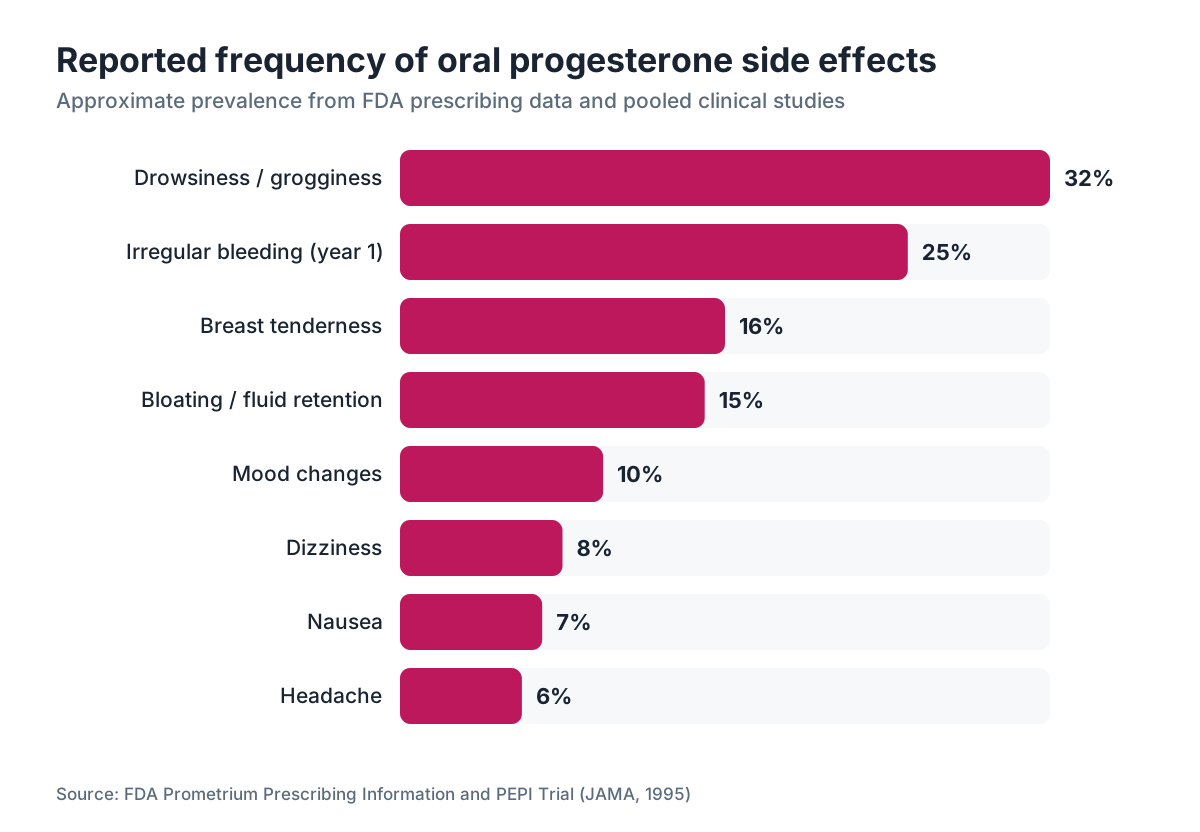
Drowsiness leads the list, hitting 25 to 40 percent of women on oral micronized progesterone, followed by breast tenderness and bloating. Most of these are dose-related and fade within a few weeks. The PEPI trial (Postmenopausal Estrogen/Progestin Interventions), which followed 875 postmenopausal women for three years, remains one of the largest head-to-head comparisons of progesterone and progestin regimens [3]. Oral micronized progesterone had a better lipid profile than MPA but caused more bleeding irregularity in the first year of cyclic use.
Here is what shows up most often with oral micronized progesterone, drawn from the published literature and prescribing data:
| Side effect | Approximate frequency | Usual onset | |---|---|---| | Drowsiness / next-day grogginess | 25-40% of users | First 2-4 weeks | | Breast tenderness | 10-20% | 1-3 weeks | | Bloating / fluid retention | 10-20% | 1-4 weeks | | Mood changes (anxiety, irritability) | 5-15% | Variable | | Dizziness | 5-10% | First week | | Nausea | 5-10% | First 1-2 weeks | | Irregular vaginal bleeding | 10-40% (first year of cyclic use) | Variable | | Headache | 5-10% | Variable |
These frequency estimates come from FDA prescribing information and pooled clinical data, and individual variation is wide [4]. Women who are more sensitive to GABA-ergic compounds (some anxiety disorders, prior sensitivity to alcohol or benzodiazepines) tend to feel the sedation more intensely.
Does taking progesterone at night actually reduce side effects?
Yes, and it is the single most evidence-backed tweak you can make. The North American Menopause Society (NAMS) recommends taking oral micronized progesterone at bedtime to cut daytime sedation and dizziness [5]. Peak allopregnanolone arrives roughly 1 to 2 hours after an oral dose, so scheduling that peak during sleep turns the main side effect into a benefit. Most women on bedtime dosing report better sleep.
The instruction is simple. Take your capsule with a small amount of food (a few crackers, half a glass of milk) 30 to 60 minutes before you want to be asleep, not the moment your head hits the pillow. Food raises the bioavailability of oral micronized progesterone by about 50 percent [4]. So if you have been taking it on an empty stomach and still wake up groggy, moving the dose earlier in the evening with a snack can let the peak sedation clear before you need to be alert.
Morning grogginess that hangs on past four weeks is a signal to look at dose, not timing. A 200 mg nightly dose sedates much more than 100 mg. Some women on hormone replacement therapy (hormone replacement therapy) do just as well endometrially at 100 mg, especially on a continuous rather than cyclic regimen [5].
Can switching to vaginal progesterone eliminate the drowsiness?
For many women, yes. Vaginal progesterone (suppositories, gel, or inserts like Crinone or Endometrin) skips first-pass liver metabolism almost entirely, so very little allopregnanolone is produced and systemic sedation runs from minimal to nonexistent [2]. Vaginal delivery also puts high concentrations right at the uterus with lower blood levels, which helps with endometrial protection.
The trade-off is comfort. Vaginal progesterone means insertion, discharge (white, waxy, or gel-like), and some mess. Timing matters less because systemic levels stay low, but most protocols still call for bedtime use.
Vaginal progesterone is well studied in fertility and IVF, but it has thinner long-term safety data as a standalone endometrial protectant in postmenopausal HRT than oral micronized progesterone does. The NAMS 2022 Hormone Therapy Position Statement notes vaginal progesterone has been used for endometrial protection while flagging that the long-term safety evidence in this setting is less extensive than for oral routes [5]. That does not make it wrong for you. It means the conversation with your prescriber should center on your specific situation.
If oral progesterone is intolerable and you want to switch forms, a menopause-literate clinician is the right next stop. Platforms like WomenRx handle exactly this kind of formulation decision and can order the labs and history review needed to make a safe call.
What about progesterone cream? Does it actually work?
Progesterone cream is sold over the counter and marketed hard. The problem is absorption. Transdermal progesterone from standard cream formulations is highly variable and generally does not reach serum levels adequate for reliable endometrial protection [6]. A 2018 review in Menopause found that over-the-counter creams raised salivary progesterone but failed to raise serum progesterone to protective levels, and the authors concluded these products should not be relied on to protect the endometrium in women using systemic estrogen [6].
If you use estrogen systemically (patch, pill, gel, ring) and you have a uterus, you need progesterone at a level documented to protect your endometrium. Cream sold without a prescription does not reliably deliver that, whatever the label promises.
Compounded transdermal progesterone from a licensed compounding pharmacy, prescribed by a physician and made at pharmacological doses, is a different thing from drugstore cream. It can reach meaningful serum levels, but endometrial safety data for compounded transdermal products are still thin next to oral and vaginal routes. The FDA has approved no transdermal progesterone product for endometrial protection, though it has approved the oral and vaginal forms [4].
So: progesterone cream is fine for general well-being if you are not on systemic estrogen. It is no substitute for prescription progesterone when uterine protection is the goal.
How do you reduce bloating and breast tenderness from progesterone?
Bloating and fluid retention tend to track with dose and usually ease within the first 6 to 12 weeks as your body adjusts. A few things genuinely help.
Cut sodium during your most symptomatic days, especially in cyclic regimens where progesterone runs for 10 to 14 days a month. High-dose progesterone can have mild mineralocorticoid activity that drives fluid shifts [1]. Staying well hydrated reduces water retention rather than worsening it.
Magnesium glycinate (200 to 400 mg daily) has some evidence for easing PMS-type symptoms including bloating and breast tenderness, though most of that data comes from premenopausal women with PMS rather than women on HRT [7]. It is low-risk. Try it for 2 to 3 cycles before deciding it does nothing.
Breast tenderness is often an estrogen-to-progesterone ratio issue as much as a progesterone issue. If tenderness started when you added progesterone, it may actually mean your estrogen dose is slightly high relative to your progesterone. Ask your prescriber about adjusting the estrogen component before you blame progesterone.
A low-dose diuretic (sometimes used for PMS-related fluid retention) is a last resort and rarely needed. Most women find tenderness and bloating settle within 2 to 3 months with nothing more than dose optimization.
Can progesterone cause anxiety or mood changes, and how do you fix it?
This one is genuinely complicated, and anyone who hands you a simple answer is oversimplifying. Allopregnanolone calms most people. That is why brexanolone, a synthetic allopregnanolone, won FDA approval for postpartum depression [8]. But a subset of women, especially those with a history of premenstrual dysphoric disorder (PMDD) or panic disorder, seem to have atypical GABA-A receptor responses and feel more anxious or low when allopregnanolone rises.
A 2016 study in Psychoneuroendocrinology found women with PMDD showed paradoxical sensitivity to allopregnanolone, with more negative affect instead of sedation [9]. A PMDD history is a strong flag to raise with your prescriber before you start oral micronized progesterone.
If oral progesterone is worsening your mood, the first move is switching to vaginal delivery, which keeps allopregnanolone exposure low. If vaginal is not practical, dropping the oral dose (100 mg instead of 200 mg) cuts the neurosteroid load meaningfully. Some clinicians reach for a progestin like norethindrone acetate or dydrogesterone (approved in Europe and Canada, not in the US) in PMDD-sensitive women, since neither makes allopregnanolone.
Mood symptoms that outlast 4 to 6 weeks on any progesterone formulation deserve a full reassessment. Menopause itself changes mood, and it can be genuinely hard to separate the hormone from the life stage from a separate mood disorder. See menopause for more on the mental-health picture during this transition.
How long does it take for progesterone side effects to go away?
For most women, the window is 4 to 12 weeks. Your steroid-metabolizing enzymes adapt over time and receptor sensitivity shifts. Drowsiness and dizziness usually improve fastest, often within 2 to 4 weeks. Bloating and breast tenderness tend to peak in weeks 1 to 3, then ease.
Irregular bleeding in cyclic regimens can take 6 to 12 months to settle into a predictable pattern, and some first-year spotting is normal and expected [3]. Bleeding that is heavy, prolonged, or lands outside the expected progesterone withdrawal window needs evaluation, not reassurance.
Still fighting significant side effects at 12 weeks on the same dose and form? Adaptation is unlikely to rescue you. That is the moment for a formulation switch, a dose change, or a different progestogen, rather than more waiting.
Women in perimenopause (see perimenopause age for the timing picture) may notice side effects swing month to month depending on where their own cycle sits. That does not mean the progesterone is failing. It means your own hormones are still in play and adding variability.
Does the dose of progesterone affect how bad side effects are?
Directly. Dose is one of the strongest predictors of side effect severity with oral micronized progesterone, because a bigger oral dose means more gut absorption, more hepatic conversion, and more allopregnanolone reaching the brain [1].
The FDA-approved doses for oral micronized progesterone in postmenopausal women are 200 mg nightly for 12 days a month (cyclic) or 100 mg nightly (continuous combined) [4]. Plenty of women find 200 mg intolerable for sedation but do fine at 100 mg. If you are on cyclic 200 mg and struggling, ask your prescriber whether a continuous 100 mg protocol fits you, as long as your endometrial protection needs are met.
Women using progesterone in perimenopause to tame irregular cycles and symptoms, rather than for full-menopause HRT, work with a wider and less standardized dose range. This is where a prescriber's experience with perimenopausal hormone management matters. A clinician who rarely manages perimenopause may default to standard postmenopausal doses that are not tuned for someone still cycling.
Never halve a capsule without asking your prescriber. Prometrium is an oil-based micronized capsule, and cutting it changes how the oil and progesterone behave during absorption. If you need 50 mg, compounded capsules at that dose are the right answer.
Are there specific strategies for women who can't tolerate any form of progesterone?
A small group of women genuinely cannot tolerate any progestogen at physiological doses, including micronized progesterone, synthetic progestins, and vaginal formulations. For women with a uterus on systemic estrogen, that is a real clinical problem, because unopposed estrogen carries a meaningful risk of endometrial hyperplasia and cancer [5].
A few alternatives exist, though none are as clean as a standard progesterone regimen.
The levonorgestrel IUD (Mirena) drips progestin directly into the uterus with very low systemic absorption. The FDA has not approved it specifically for endometrial protection in HRT, but it has been studied for it. A 2015 review in Climacteric found the 52 mg levonorgestrel IUD gave effective endometrial protection in women using systemic estrogen for menopause [10]. Many menopause specialists treat this as a reasonable off-label option for women who cannot tolerate systemic progestogens, and NAMS names it as a consideration [5].
Dydrogesterone, a synthetic progestogen with a profile close to natural progesterone and reportedly better tolerated by PMDD-sensitive women, is available in the UK, Europe, and Canada but is not FDA-approved in the US. Some US women get it through compounding pharmacies.
If this is you, the conversation belongs with a menopause specialist rather than a general practitioner. The risk-benefit math is real and individual. Resources through hormone replacement therapy can help you find clinicians who handle this specific problem.
Women without a uterus do not need progesterone for endometrial protection at all, which rewrites the risk-benefit equation for that group entirely.
What lifestyle habits make progesterone side effects worse?
A few patterns reliably make progesterone side effects harder to manage.
Alcohol is the big one. Alcohol and allopregnanolone both act on GABA-A receptors, so even one drink on the same evening as your progesterone dose can produce pronounced next-morning grogginess, dizziness, and mood effects. Women on oral progesterone who drink regularly often report the worst sedation and the most erratic mood. Cutting alcohol is the fastest fix many of them have.
Sleep timing matters too. Take progesterone at midnight and need to be alert at 6 AM, and six hours may not clear the peak allopregnanolone effect even on 100 mg. Shift the dose earlier (9 PM instead of midnight) and aim for 7 to 8 hours of sleep in the window after dosing.
High stress and cortisol dysregulation can worsen progesterone sensitivity. The relationship between the HPA axis and progesterone metabolism is real but complex. Under high stress, the body's use of progesterone as a cortisol precursor shifts, which can change how much is available for conversion to allopregnanolone and how receptors respond.
Some medications interact with progesterone metabolism through the CYP3A4 enzyme, including certain antifungals (ketoconazole), antibiotics (clarithromycin), and anticonvulsants [4]. If your side effects worsened right after you started a new medication, bring the full list to your prescriber.
When should you call your doctor about progesterone side effects?
Most side effects are annoying, not dangerous. A few need prompt evaluation.
Call your provider for heavy vaginal bleeding (soaking more than one pad an hour for two or more hours), bleeding that starts outside your expected window and lasts more than a few days, or any postmenopausal bleeding more than 12 months after your last period that your current hormone regimen does not explain.
Severe breast pain or a new breast lump needs evaluation whether or not you are on progesterone. Progesterone does not cause breast cancer, but it can change breast tissue density in ways that may warrant imaging [5].
Chest pain, shortness of breath, or severe leg pain and swelling need emergency evaluation no matter what hormones you take. These are not typical progesterone side effects, but they matter for any woman on hormone therapy.
Depression that feels qualitatively different from your baseline, or suicidal thoughts, is never something to chalk up to hormones and wait out. Get mental health support quickly.
For routine tolerability troubleshooting, a telehealth visit is often enough. Many women find it easier to describe symptoms and ask for a formulation change over a video or asynchronous visit than to wait months for an in-person gynecology appointment.
Frequently asked questions
Can I take progesterone every other day to reduce side effects?
Every-other-day dosing is not a standard protocol and has not been studied for endometrial protection. In HRT, inconsistent dosing leaves gaps in endometrial coverage. If daily dosing is intolerable, the better moves are a lower dose, a different formulation, or a levonorgestrel IUD discussed with your provider. Do not change the schedule on your own.
Does oral progesterone cause weight gain?
Weight gain is reported anecdotally but is not well documented in controlled trials as a direct progesterone effect. Fluid retention in the first 4 to 12 weeks can mimic weight gain on the scale. Progesterone has mild anti-aldosterone properties that should, in theory, reduce fluid retention, though this is dose-dependent. Weight gain that persists past 3 months and is not fluid deserves a full metabolic review.
Is bioidentical progesterone safer or less likely to cause side effects than synthetic progestins?
Micronized progesterone (what most people mean by bioidentical) has a different side effect profile from synthetic progestins, not a strictly safer one. Oral micronized progesterone causes more sedation. Synthetic progestins cause less sedation but more mood and lipid effects. The PEPI trial showed oral micronized progesterone had a better HDL effect than MPA. Neither wins across the board. It depends on your symptoms and history.
Why do I feel depressed or anxious after starting progesterone?
A subset of women, especially those with a PMDD or panic disorder history, respond atypically to allopregnanolone, the brain-active progesterone metabolite. They feel more anxious or low rather than sedated. Switching to vaginal progesterone, which produces far less allopregnanolone, often resolves it. Mood symptoms that last beyond 6 weeks need a formal evaluation to rule out a separate mood disorder.
Can I take progesterone in the morning instead of at night?
You can, but most women regret it fast. Peak sedation and dizziness arrive 1 to 2 hours after an oral dose, so morning dosing drops that peak straight into your workday. NAMS recommends bedtime dosing for exactly this reason. The only exception is a very low dose with minimal sedation that you find easier to remember in the morning, and even then, run it by your prescriber.
How long does progesterone-related drowsiness last after each dose?
For most women on 100 mg at bedtime, peak sedation clears within 6 to 8 hours. On 200 mg, some grogginess spills into the morning, especially in the first 2 to 4 weeks. Taking the dose with food, giving it 4 weeks to adapt, and skipping alcohol that evening shorten the impairment window most. Drowsiness that lasts past noon the next day calls for a dose or formulation change.
Does vaginal progesterone cause the same side effects as oral progesterone?
No. Vaginal progesterone bypasses liver metabolism, so allopregnanolone production is minimal and sedation is rare. The main side effects are local: discharge, irritation, or discomfort at the insertion site. Systemic effects like breast tenderness and bloating occur at much lower rates than with oral forms because blood levels stay lower. That is why vaginal progesterone is often the first switch when oral is intolerable.
Is spotting or irregular bleeding on progesterone normal?
In the first 6 to 12 months of a cyclic HRT regimen, irregular spotting is common and expected, as the PEPI trial data documented. Breakthrough bleeding during the progesterone phase is more common than during the estrogen-only phase. Bleeding that is heavy, prolonged, or occurs in postmenopausal women not on a new regimen needs evaluation, including endometrial biopsy or pelvic ultrasound, to rule out hyperplasia.
Can peanut allergies affect tolerance of Prometrium?
Yes. Prometrium capsules contain peanut oil as a carrier. Women with peanut allergies should not take Prometrium. They should use compounded micronized progesterone in an alternative oil base (such as sunflower or sesame oil) or vaginal formulations that contain no peanut oil. This is listed as a contraindication in the FDA prescribing information for Prometrium.
Does taking progesterone with food change how it is absorbed?
Significantly. Taking oral micronized progesterone with food raises bioavailability by about 50 percent compared with fasting. A 100 mg dose taken with a snack delivers roughly the same systemic exposure as a higher fasted dose. If you have been taking it on an empty stomach with little effect, adding food may improve endometrial coverage. It also shifts the timing of peak allopregnanolone, which can reduce morning grogginess.
Can I use progesterone cream instead of prescription progesterone to avoid side effects?
Only if you do not need endometrial protection. Over-the-counter creams produce measurable salivary progesterone but generally fail to raise serum levels into the range documented as protective against endometrial hyperplasia. If you have a uterus and use systemic estrogen, OTC cream is not an appropriate substitute for prescription progesterone. Compounded transdermal progesterone at pharmacological doses is different but carries its own evidence gaps.
What is the difference between oral progesterone side effects and progestin side effects?
Oral micronized progesterone's main side effects are sedation, dizziness, and mood effects driven by allopregnanolone. Synthetic progestins (medroxyprogesterone acetate, norethindrone) make no allopregnanolone, so they cause little sedation but more androgen-related effects (acne, mood changes, negative HDL shifts in some women) and more pronounced breast tenderness in some users. Neither category is effect-free. The profiles are genuinely different.
Should I stop progesterone if I have bad side effects?
Do not stop without talking to your prescriber, especially with a uterus and systemic estrogen. Stopping progesterone while continuing estrogen creates unopposed estrogen exposure, which raises endometrial cancer risk. A planned 2 to 4 week pause is sometimes used to clarify whether a symptom is progesterone-related, but that is a clinical decision, not a self-managed one. If side effects are severe, contact your provider the same day.
Sources
- Bäckström T et al., Journal of Neuroendocrinology, 2014 -- allopregnanolone and GABA-A receptor modulation
- de Lignières B, American Journal of Obstetrics and Gynecology, 1999 -- oral vs vaginal progesterone pharmacokinetics
- Writing Group for the PEPI Trial, JAMA, 1995 -- Postmenopausal Estrogen/Progestin Interventions trial
- FDA -- Prometrium (progesterone) prescribing information
- North American Menopause Society -- 2022 Hormone Therapy Position Statement, Menopause journal
- Kuhl H, Schneider H, Menopause review, 2018 -- transdermal progesterone cream serum levels
- Facchinetti F et al., Obstetrics and Gynecology, 1991 -- magnesium and premenstrual symptoms
- FDA -- brexanolone (Zulresso) approval announcement, 2019
- Bäckström T et al., Psychoneuroendocrinology, 2016 -- paradoxical allopregnanolone sensitivity in PMDD
- Somboonporn W et al., Climacteric, 2015 -- levonorgestrel IUD for endometrial protection in HRT
- Endocrine Society -- Clinical Practice Guideline: Treatment of Menopause