How to raise progesterone: natural steps and medical options
TL;DR: Progesterone rises after ovulation, so anything that blocks ovulation keeps it low. The real fixes: treat the cause of anovulation, lower your cortisol load, keep a healthy weight, and when those fall short, use FDA-approved bioidentical progesterone (Prometrium). Vitex and magnesium have modest evidence. Most women with clinically low progesterone eventually need a prescription.
What actually controls your progesterone levels?
Your corpus luteum makes almost all of your progesterone. That is the temporary tissue that forms in the ovary after an egg releases. No ovulation, no corpus luteum, no progesterone. One fact, and it explains nearly everything about how to raise the hormone.
During perimenopause, egg quality drops and ovulation gets erratic. Cycles still come, but many of them are anovulatory, meaning no egg releases and progesterone stays flat the whole month [1]. That is why progesterone trouble often starts years before the last period, back when estrogen still looks normal or even runs high.
After menopause, the ovaries stop making progesterone almost completely. At that point the only way to raise it is hormone therapy from the outside [2].
In reproductive-age women, low progesterone usually traces to something correctable: chronic stress (high cortisol suppresses the LH surge that triggers ovulation), low body weight or disordered eating, thyroid problems, high prolactin, or polycystic ovary syndrome (PCOS). Fix the cause and progesterone often comes back on its own. Know that before you spend a dollar on supplements.
See also: progesterone for a full explainer on what this hormone does and why levels shift across the lifespan.
How do you know if your progesterone is actually low?
You can't diagnose low progesterone from symptoms. The only confirmation is a blood test drawn at the right point in your cycle. Symptoms read like a generic wellness complaint list: irregular or heavy periods, spotting before your period, anxiety, poor sleep, breast tenderness, trouble getting or staying pregnant. Every one of those has a dozen other causes.
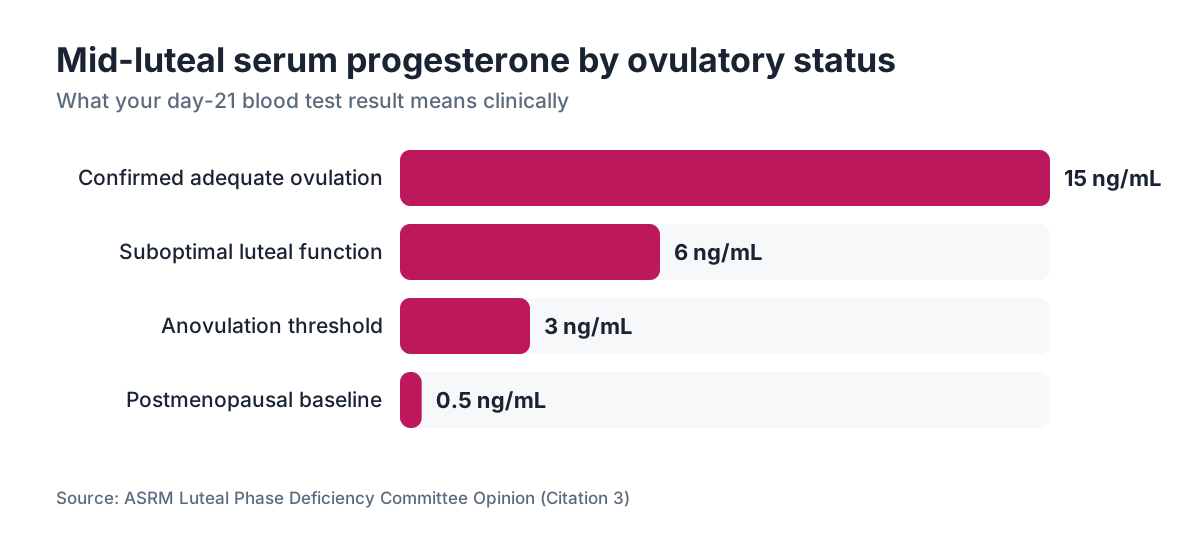
A mid-luteal serum progesterone, drawn 7 days after confirmed ovulation (usually day 21 of a 28-day cycle), is the standard measure. Below 10 ng/mL suggests weak luteal function. Below 3 ng/mL suggests no ovulation happened at all [3]. If your cycle length bounces around, timing is everything, and a single normal result drawn on the wrong day can fool you.
Saliva and urine tests get marketed hard. They have real accuracy problems for progesterone. The Endocrine Society does not recommend saliva testing for routine clinical decisions [4].
Get a day-21 serum progesterone before you change anything. Without that baseline number, you have no way to tell whether your plan is working or you're just guessing.
Which lifestyle changes can raise progesterone naturally?
Lifestyle changes work best in reproductive-age women whose low progesterone comes from something fixable. They rarely bring progesterone back to good levels after menopause, and they are not a substitute for treatment when a blood test shows a real deficiency.
Reduce cortisol load. The adrenal glands and ovaries share the same steroid-building pathway. When the body needs a lot of cortisol, it makes cortisol at progesterone's expense, sometimes called "pregnenolone steal." The human evidence for that exact mechanism is modest, but the practical advice holds up: chronic sleep loss, under-eating, and psychological stress all suppress the LH surge and shorten or wipe out the luteal phase [5]. Better sleep, enough calories, and dealing with ongoing stressors have restored luteal function in small studies.
Keep a healthy body weight. Fat tissue converts androgens to estrogens, and very low body fat shuts down the hypothalamic-pituitary-ovarian axis entirely. Hypothalamic amenorrhea, common in athletes and women who eat restrictively, drops progesterone to near zero. Weight restoration reliably brings ovulation back in these cases [3].
Treat thyroid problems. Subclinical hypothyroidism raises prolactin, which suppresses GnRH and disrupts ovulation. Getting your TSH into range, typically under 2.5 mIU/L when you're trying to conceive, can restore progesterone by itself [3].
Ease off heavy endurance training. More than 60 minutes of high-intensity exercise a day is linked to luteal phase defects in otherwise healthy women. This is not a reason to stop exercising. It means that if you're training for an ultramarathon and your periods have gone short and light, the training volume is worth a look.
None of this shows up in a week. Give lifestyle changes at least three full cycles before you decide whether they helped.
For how these hormonal shifts unfold over time, see perimenopause age.
Do supplements actually raise progesterone?
For most progesterone supplements, the evidence runs from thin to nonexistent. A few have real, if small, data behind them. The shelf is full of products promising to boost the hormone, and most of them can't.
| Supplement | What the evidence says | Typical dose studied | Evidence quality | |---|---|---|---| | Vitex agnus-castus (chasteberry) | Reduces prolactin, which may restore ovulation and luteal function indirectly | 20-40 mg extract daily | Low-moderate (small RCTs) | | Magnesium | Deficiency linked to luteal phase problems; may improve cycle regularity | 200-400 mg elemental magnesium | Low (observational) | | Vitamin B6 | One older RCT showed modest improvement in luteal progesterone | 50-100 mg daily | Low (single older trial) | | Zinc | Supports LH secretion; deficiency linked to anovulation | 25-30 mg daily | Low (mostly animal data) | | Wild yam (diosgenin) | Converted to progesterone in labs, not in the human body | N/A | None for raising progesterone |
Vitex has the most consistent human evidence. A review of randomized trials found vitex preparations beat placebo for premenstrual syndrome and cycle irregularities, with prolactin reduction as the likely mechanism [6]. The effect is modest, and none of these trials measured progesterone directly as the main outcome.
Wild yam cream deserves its own callout because it's marketed so aggressively. Diosgenin from wild yam is the starting material chemists use to synthesize progesterone in a lab, but your body cannot run that reaction. Studies applying wild yam cream to the skin showed no change in serum progesterone [7]. Save your money.
Supplements work best alongside the lifestyle changes above, and both work best once you know why progesterone is low in the first place.
What does prescription progesterone do that supplements cannot?
Prescription progesterone actually raises your levels in a predictable, measurable way. Supplements don't. FDA-approved oral micronized progesterone (brand name Prometrium, also sold as a generic) is bioidentical: the same molecular structure as the progesterone your body makes. It is not a progestin, which is a synthetic version used in many oral contraceptives and older hormone therapies [2].
The difference matters. Synthetic progestins like medroxyprogesterone acetate (MPA) bind progesterone receptors but also latch onto other steroid receptors in ways natural progesterone doesn't, which drives side effects that oral micronized progesterone mostly avoids. The Women's Health Initiative, the trial that raised alarms about combined hormone therapy, used MPA, not natural progesterone [8].
Oral micronized progesterone at bedtime (100 mg for endometrial protection, 200 mg for symptom relief) has a calming effect because it breaks down into allopregnanolone, which turns up GABA-A receptor activity. Many women sleep noticeably better on it. The Endocrine Society's 2022 menopause guideline supports its use for both endometrial protection and sleep in peri- and postmenopausal women [4].
Women who can't tolerate the oral form can use progesterone vaginal gel (Crinone) or intramuscular progesterone, mostly in fertility settings.
Compounded progesterone in oil or cream is available too, but absorption is inconsistent next to the oral micronized version, and serum levels are harder to predict [4]. If you're weighing the prescription route, a telehealth hormone clinic like WomenRx can read your labs and prescribe the right form.
See also: hormone replacement therapy for how progesterone fits into a full HRT protocol.
How does progesterone fit into hormone replacement therapy (HRT)?
If you still have a uterus and you take estrogen, you must take progesterone (or a progestin) to protect the uterine lining. Estrogen alone thickens the endometrium over time and raises the risk of endometrial hyperplasia and cancer. This one is not optional [2].
Women without a uterus after hysterectomy usually take estrogen alone, though some clinicians add progesterone for the sleep and mood benefits.
The standard peri- and postmenopausal setup is combined therapy: estrogen (often by patch, gel, or spray) plus oral micronized progesterone. See estrogen patch for more on transdermal delivery.
Perimenopausal women who are still cycling but have short cycles or heavy periods that point to low progesterone sometimes get cyclic progesterone, usually 200 mg of oral micronized progesterone on days 12 to 26 of the cycle. This can cut cycle-related symptoms and heavy bleeding sharply without fully shutting down the remaining natural cycle.
The North American Menopause Society (NAMS) states in its 2022 position statement that "micronized progesterone is preferred over synthetic progestins because of its more favorable effect on mood, sleep, and the cardiovascular risk profile" [9]. That is a real endorsement from the field's leading clinical body.
For when hormonal changes start to speed up, see when does menopause start.
Can diet raise progesterone?
No food raises progesterone the way medication does. Diet works indirectly, through body weight, cortisol, thyroid function, and nutrient sufficiency. That's the honest answer, and it's worth getting straight before you buy a fertility cookbook.
Specific eating patterns do have knock-on effects. Severe calorie restriction drops progesterone fast. Eating enough total calories, and enough fat in particular (dietary fat is the raw material for every steroid hormone, progesterone included), supports the machinery that builds it. Diets very low in fat, under roughly 20% of calories, have been tied to shorter luteal phases in some studies.
Zinc, in red meat, shellfish, pumpkin seeds, and legumes, supports LH secretion. Magnesium, in dark leafy greens, nuts, and whole grains, feeds into hormonal signaling. B6, in poultry, fish, potatoes, and chickpeas, was the nutrient in the original luteal phase studies.
The Mediterranean pattern has some observational support for hormonal health in reproductive-age women, though nailing down cause and effect is hard. It delivers adequate fat, varied micronutrients, and lower inflammation, all of which help the ovaries do their job.
Eating enough beats eating any single "superfood." If you're under-eating to hold a very low weight, no supplement stack will make up the difference.
Does stress actually lower progesterone, and how much?
Yes, and the mechanism is well established. The hypothalamic-pituitary-adrenal (HPA) axis and the hypothalamic-pituitary-gonadal (HPG) axis compete for pregnenolone, the shared precursor to both cortisol and progesterone. Under chronic stress, the HPA axis wins [5].
More directly, high cortisol suppresses the GnRH pulse from the hypothalamus, blunts LH secretion, and shortens or eliminates the LH surge that triggers ovulation. No ovulation, no corpus luteum, no progesterone rise in the second half of the cycle.
Studies of women under psychological stress, including competitive athletes, medical residents, and women during acute life events, consistently show shorter luteal phases and lower mid-luteal progesterone than controls [5].
How much stress management moves the needle depends on the person and the size of the stressor. Mindfulness-based stress reduction has improved luteal-phase progesterone in small trials of women with infertility, but the effects are modest. Treating a sleep disorder aggressively, with CBT for insomnia or by addressing something like sleep apnea, has more consistent evidence for restoring hormonal rhythm.
This is a real pathway, not a platitude. It works best when chronic stress is the main driver, not when progesterone is low from perimenopause or another structural cause.
What are realistic expectations for how fast progesterone responds?
Progesterone resets every month. That is good news, because changes, up or down, show up fast. It is a cycle-by-cycle hormone, so you don't wait a year to see whether your plan worked.
Lifestyle changes (better sleep, less stress, weight restoration) usually need two to three cycles to show in a mid-luteal blood test. Part of the lag is that the follicle destined to ovulate starts maturing about 90 days before release, so follicle health responds slowly to shifts in nutrition and stress.
Vitex and other supplements need at least three months of steady use for a fair read, and many studies ran six months or longer.
Prescription progesterone works within days. Sleep often improves in the first week of oral micronized progesterone at bedtime. Cycle-related symptoms like premenstrual anxiety and breast tenderness usually ease within one to two cycles of cyclic progesterone.
A reasonable protocol: run a baseline day-21 serum progesterone, start whatever intervention fits your situation, and retest on the same cycle day after three months. On a prescription, your prescriber will likely retest sooner to confirm absorption.
Don't chase symptoms alone. Symptoms are useful signals but a terrible ruler for hormone levels, which is exactly why the blood test matters.
When should you see a doctor about low progesterone?
See a clinician if your periods have gone irregular or unusually short, or you're dealing with significant premenstrual symptoms or fertility trouble. Testing is reasonable at any age. You don't have to wait until things get severe.
Situations that warrant a prompt evaluation:
You're trying to conceive and it's been six months or more (or three months if you're over 35). Low progesterone is a common, treatable cause of early pregnancy loss and implantation failure.
Your cycle has dropped to 24 days or shorter. Short cycles often reflect a truncated luteal phase and low progesterone.
You're in your 40s with worsening sleep, mood changes, and irregular periods. That's the classic perimenopause picture, and progesterone falls before estrogen in most women's transition.
You're on estrogen therapy for menopause and not taking progesterone. If you have a uterus, that's a clinical error that needs correcting.
A reproductive endocrinologist, OB-GYN, or a NAMS-certified menopause clinician can read your labs in context. Telehealth platforms that focus on women's hormones, WomenRx among them, can order labs, interpret results, and prescribe without an in-person visit in most states.
See also: menopause for a wider look at the transition and the treatment options.
Are there risks to raising progesterone, either naturally or with medication?
Natural approaches carry little risk. Vitex can interact with hormonal contraceptives and dopamine-related medications, so women with dopamine-sensitive conditions should ask their doctor before starting. Excess B6 (above 100 mg daily) can cause peripheral neuropathy over time. High-dose zinc competes with copper absorption.
Prescription oral micronized progesterone is generally well tolerated. Sedation at higher doses is the most common complaint, which is why bedtime dosing is standard. Some women get breast tenderness, bloating, or mood changes, particularly at 200 mg. Those usually settle with a dose adjustment.
The older data linking progestins to breast cancer (from the WHI trial) involved synthetic MPA, not natural progesterone. A large French cohort (the E3N study, over 80,000 women followed for more than a decade) found no rise in breast cancer risk with oral micronized progesterone combined with estradiol, unlike the higher risk seen with synthetic progestins [10].
The risks of raising progesterone when you don't need to are low. But without a confirmed low level from a blood test, you're guessing, and guessing with hormones, even natural ones, is a bad strategy. Test first.
Frequently asked questions
Can I raise progesterone without a prescription?
Lifestyle changes, better sleep, less chronic stress, enough calories, and correcting nutrient gaps, can restore progesterone in women whose low levels come from those causes. Vitex (chasteberry) has modest evidence for improving luteal function by reducing prolactin. But if your levels are clinically low from perimenopause or anovulation, these approaches usually don't move things enough to resolve symptoms.
What is a normal progesterone level in the luteal phase?
A mid-luteal serum progesterone, drawn 7 days after confirmed ovulation, should ideally sit above 10 ng/mL to confirm adequate ovulation. Values between 3 and 10 ng/mL suggest weak luteal function. Below 3 ng/mL is consistent with anovulation. Reference ranges vary slightly by lab, so ask your clinician to read it in the context of your cycle day.
Does vitex (chasteberry) actually raise progesterone?
Vitex reduces dopamine-mediated prolactin secretion, which can indirectly restore ovulation and luteal function in women whose low progesterone ties back to high prolactin. A review of randomized trials found consistent evidence for cycle improvement and PMS relief. It does not directly make progesterone, and it works best when prolactin suppression of ovulation is the underlying problem.
What foods help raise progesterone naturally?
No food directly raises progesterone. Diet helps by supplying the building blocks and cofactors for steroid hormone synthesis. Adequate dietary fat supports the process. Zinc-rich foods like shellfish and pumpkin seeds support LH secretion. B6 from poultry and fish was studied in older luteal phase trials. Eating enough total calories matters most. Severe calorie restriction suppresses progesterone regardless of which specific foods you eat.
Can stress lower progesterone enough to affect my period?
Yes. Chronic psychological and physical stress raises cortisol, which suppresses the hypothalamic GnRH pulse and blunts the LH surge needed to trigger ovulation. No ovulation means no corpus luteum and near-zero progesterone in the luteal phase. Studies in competitive athletes, medical residents, and women during major life stressors show consistently shorter luteal phases and lower mid-luteal progesterone. Sleep and stress work can partially restore it.
Is oral micronized progesterone (Prometrium) the same as bioidentical progesterone?
Yes. Oral micronized progesterone, sold as Prometrium and as a generic, has the identical molecular structure as the progesterone your body produces. It is FDA-approved and distinct from synthetic progestins like medroxyprogesterone acetate (MPA) used in older hormone therapies. The North American Menopause Society recommends micronized progesterone over synthetic progestins for its more favorable profile on mood, sleep, and cardiovascular risk.
How long does it take for progesterone supplements to work?
Prescription oral micronized progesterone produces measurable serum levels within hours and usually improves sleep within the first week. Vitex and other supplements need at least three months of steady use for a fair read. Lifestyle changes like stress reduction and weight restoration need two to three full cycles before mid-luteal progesterone reflects the improvement. Retest at the same cycle day as your baseline after three months.
Do I need progesterone if I am on estrogen for menopause?
If you have a uterus, yes, and it's not optional. Estrogen alone stimulates the uterine lining and raises the risk of endometrial hyperplasia and cancer. Adding progesterone (or a progestin) prevents that buildup. If you had a hysterectomy, estrogen alone is typically prescribed, though some clinicians add progesterone for sleep and mood. Using estrogen without progesterone in a woman with a uterus is a clinical error.
Can low progesterone cause anxiety and poor sleep?
Yes, and it's a real physiological effect. Progesterone metabolizes into allopregnanolone, which binds GABA-A receptors and produces a calming, sleep-promoting effect. When progesterone drops in the late luteal phase before a period, or chronically during perimenopause, GABA activity falls and anxiety and insomnia worsen. Oral micronized progesterone at bedtime restores allopregnanolone and meaningfully improves sleep in many women.
What causes low progesterone in perimenopause specifically?
In perimenopause, egg quality and ovarian reserve decline. Cycles keep coming but increasingly go anovulatory, meaning no egg releases and no corpus luteum forms, so progesterone stays low the whole cycle while estrogen may still run normal or high. This imbalance, often called estrogen dominance, explains why heavy periods, PMS, and poor sleep often start years before the final period. Progesterone tends to fall before estrogen does.
Does wild yam cream raise progesterone?
No. Wild yam (diosgenin) is the raw material chemists use to synthesize progesterone in a lab, but the human body cannot run that conversion. Studies applying wild yam cream to the skin showed no rise in serum progesterone. This is a well-documented finding. Wild yam products marketed as natural progesterone boosters do not raise progesterone in any clinically measurable way.
Can low progesterone cause miscarriage?
Low progesterone is associated with early pregnancy loss, though the causality is complex. Progesterone supports the uterine lining and helps prevent immune rejection of the embryo. In women with recurrent pregnancy loss or fertility treatment cycles, progesterone supplementation is standard. The PROMISE trial found progesterone did not improve outcomes in the general population with unexplained recurrent miscarriage, though a subgroup with prior early bleeding appeared to benefit [11].
How do I get my progesterone tested?
Ask your primary care provider, OB-GYN, or a hormone specialist for a day-21 serum progesterone test (day 21 assumes a 28-day cycle; if yours differs, aim for 7 days before your expected period). Some telehealth platforms can order labs directly. Skip salivary and urine progesterone tests for clinical decisions; the Endocrine Society does not recommend them for routine hormonal assessment because of accuracy limits.
Sources
- NAMS (North American Menopause Society) - 2022 Hormone Therapy Position Statement
- FDA - Prometrium (progesterone, USP) Prescribing Information
- ASRM (American Society for Reproductive Medicine) - Luteal Phase Deficiency Committee Opinion
- Endocrine Society - Clinical Practice Guideline on Menopause and Hormonal Therapy 2022
- Breen KM, Karsch FJ. Does cortisol inhibit pulsatile LH secretion at the hypothalamic or pituitary level? Endocrinology. 2004;145(2):692-698.
- Schellenberg R et al. Phytomedicine. 2012; Carmichael AR. Evid Based Complement Alternat Med. 2008 - Vitex agnus-castus review
- Komesaroff PA et al. Climacteric. 2001;4(2):144-150. Wild yam cream versus placebo in menopausal women.
- Women's Health Initiative - NIH/NHLBI main WHI findings page
- NAMS 2022 Hormone Therapy Position Statement - The Menopause Society
- Fournier A et al. Breast Cancer Risk and Different Types of Hormone Replacement Therapy. E3N cohort. Int J Cancer. 2005;114(3):448-454 and follow-up analyses.
- Coomarasamy A et al. PROMISE Trial. N Engl J Med. 2015;373:2141-2148.
- CDC - Reproductive Health: Infertility FAQs