How to prevent menopause weight gain: what actually works
TL;DR: Most women gain 5 to 8 pounds during the menopause transition, driven by falling estrogen, muscle loss, and insulin resistance rather than eating more. The interventions with the strongest evidence are resistance training, protein-forward eating, sleep repair, and for many women, hormone therapy. GLP-1 medications are an option when lifestyle changes fall short.
What causes weight gain during menopause?
The short answer is estrogen. When estradiol drops in perimenopause, your body moves fat storage from the hips and thighs toward the abdomen [1]. Visceral fat, the kind that wraps around your organs, behaves differently than the fat under your skin. It drives insulin resistance, raises inflammation, and makes further fat gain easier. That is the machinery behind what so many women describe as their body suddenly working against them.
At the same time, you are losing muscle. After 40, women lose roughly 1 to 2% of skeletal muscle mass per year in a process called sarcopenia [2]. Muscle is expensive tissue, metabolically speaking. Less of it means a lower resting metabolic rate. So even if you eat exactly what you ate at 38, you are running a smaller engine.
Sleep disruption piles on. Night sweats and insomnia, both common in perimenopause, raise cortisol and ghrelin (the hunger hormone) while blunting leptin (the fullness signal). One night of bad sleep can push appetite up 20 to 25% the next day. That is not a willpower failure. That is physiology.
Activity quietly declines too. Women often move less as they age, not from laziness but because joint pain, fatigue, and schedule demands stack up. You can see how the whole system tilts toward weight gain without any single dramatic change.
Average weight gain across the menopause transition is about 5 pounds, but the shift from peripheral to central fat can change your dress size and your cardiovascular risk even when the scale barely moves [1]. The fix has to match the mechanism, which is why understanding the mechanism matters.
How much weight do women typically gain during menopause?
Women gain an average of about 1.5 pounds per year during the perimenopause transition, according to the Study of Women's Health Across the Nation (SWAN), which followed more than 3,000 women across several ethnic groups [1]. Over a five-year transition, that is 7 to 8 pounds. SWAN also documented that abdominal fat increases even in women whose total weight holds steady.
That second part deserves your attention. Your waist can grow and your metabolic risk can climb even if the scale sits still. Women who were lean their whole lives sometimes watch their waist cross the 35-inch mark that the American Heart Association ties to metabolic syndrome and elevated cardiovascular risk, with no change in body weight at all [11].
Ethnic variation is real. SWAN data showed Black women carried higher baseline BMI but less weight change across the transition, while Japanese and Chinese American women gained less overall but showed similar central redistribution [1]. These are population averages. Individual variation is wide.
Do not track only the scale. Waist circumference, how your clothes fit around the middle, fasting glucose, and triglycerides tell you far more about what menopause is doing to your metabolism than a single morning number.
Does estrogen loss directly cause belly fat?
Yes. The mechanism is direct, not a secondhand effect of other changes. Estrogen receptors on fat cells regulate where your body prefers to store lipids [3]. When estradiol is high, those receptors push storage toward the hips, thighs, and buttocks. When estradiol falls, that bias disappears and visceral fat accumulation speeds up.
Animal studies are blunt. Rodents that have their ovaries removed gain central fat fast, and the gain reverses with estrogen replacement. Human data are messier but point the same way. The Women's Health Initiative found lower rates of new-onset metabolic syndrome in women on combined estrogen-progestin than on placebo [3]. A 2022 meta-analysis in Menopause found that transdermal estradiol specifically reduced visceral fat accumulation compared to both oral estrogen and placebo [3].
Oral versus transdermal matters here. Oral estrogen goes through the liver first, which raises triglycerides and C-reactive protein in some women. Transdermal estradiol skips that first pass and has a cleaner metabolic profile. If you are exploring hormone replacement therapy to address metabolic changes, transdermal is generally the route of choice for women with any cardiovascular or metabolic concern.
For how the whole transition unfolds and when these hormonal shifts usually start, see our guide on when does menopause start.
What does resistance training actually do for menopause weight?
Resistance training is the most evidence-backed thing you can do to stop the muscle loss that drives menopause weight gain [2]. Cardio burns calories during the workout. Resistance training rebuilds the tissue that decides how many calories you burn the other 23 hours.
The North American Menopause Society (NAMS) recommends at least two resistance sessions per week for postmenopausal women, citing lean mass and bone density as the goals [4]. The same sessions that protect muscle protect bone, which matters because falling estrogen speeds up bone turnover. Our article on bone density test explains when to get screened.
How much is enough? The strongest trials used two to three sessions per week, 45 to 60 minutes each, hitting all the major muscle groups. Progressive overload, meaning you gradually add weight or resistance, is what drives the adaptation. Going through the motions with the same 8-pound dumbbells for two years will hold some muscle but will not rebuild what age and estrogen loss took.
Protein has to ride along with the training. Muscle protein synthesis is blunted in older women at the same protein intake younger women thrive on, a problem called anabolic resistance [2]. To offset it, the research supports 1.2 to 1.6 grams of protein per kilogram of body weight per day, spread across meals instead of dumped at dinner. For a 150-pound (68 kg) woman, that is roughly 82 to 110 grams daily across three or four meals.
What should you eat to prevent weight gain in menopause?
No single menopause diet beats the others in long-term trials. What the evidence supports is a pattern: high protein, high fiber, few ultra-processed carbohydrates, and enough fat from whole foods.
Protein earns the most attention in the literature. Beyond muscle, it has the highest thermic effect of any macronutrient, so your body burns more calories digesting it. It also blunts ghrelin better than carbs or fat. Reach for eggs, poultry, fish, legumes, Greek yogurt, and cottage cheese. Protein shakes are fine if they help you hit your number, but whole foods bring fiber and micronutrients along for the ride.
Fiber slows glucose absorption and feeds the gut bacteria linked to healthy weight. Women in perimenopause tend to see gut microbiome shifts that track the hormonal ones. Aim for 25 to 30 grams of fiber a day from vegetables, legumes, and whole grains. Most women eating a Western diet are nowhere close.
Alcohol gets overlooked as a driver of menopause weight gain. It is calorie-dense, wrecks sleep architecture (which worsens night sweats), raises cortisol, and blocks fat oxidation for hours. Two glasses of wine three nights a week is roughly 300 to 400 extra calories, plus the sleep and cortisol damage. No nutrition plan works well stacked on top of steady drinking.
Aggressive calorie cutting usually backfires in this age group. Big deficits speed up muscle loss, deepen fatigue, and rarely last. A modest, steady deficit of 200 to 300 calories below maintenance, driven mostly by food quality rather than quantity, holds up better and protects lean mass.
How does sleep affect menopause weight gain and what helps?
Sleep and weight are wired together, and menopause attacks sleep from several angles at once. Hot flashes fragment sleep. Anxiety, common as progesterone falls, delays sleep onset. Obstructive sleep apnea risk climbs after menopause, partly because fat redistributes toward the neck and upper airway as estrogen drops.
The hormonal fallout is not minor. A 2022 study in the journal Sleep found that sleeping less than six hours a night was tied to 33% higher odds of abdominal obesity in midlife women, independent of total calories eaten [5]. Ghrelin rises, leptin falls, cortisol stays high into the morning. That combination makes a calorie deficit nearly impossible to hold, no matter how motivated you are.
Fixing sleep is not optional. It is weight management. Cool the bedroom to 65 to 68 degrees Fahrenheit (hot flashes partly track ambient temperature), cut alcohol in the three hours before bed, treat sleep apnea if you have it (a CPAP alone produces real weight loss in some women), and treat night sweats with hormone therapy if they wake you repeatedly.
Progesterone earns a specific mention here. Oral micronized progesterone (Prometrium, plus widely available generics) has a mild sedative effect through GABA activity, which is why it is often prescribed as part of HRT in perimenopausal women who are not sleeping. That is a two-for-one benefit that plenty of women, and some clinicians, miss.
Does hormone replacement therapy prevent menopause weight gain?
HRT does not cause weight loss, but the evidence says it prevents the fat redistribution that makes menopause weight gain metabolically dangerous. Randomized trials plus the large observational data from SWAN and the Women's Health Initiative consistently show that menopausal hormone therapy blunts visceral fat accumulation compared to no treatment [3][4].
The 2022 NAMS Hormone Therapy Position Statement is the governing document for US clinical practice, and it states plainly that hormone therapy does not cause weight gain and may reduce the central fat gain that comes with menopause [4].
Type and route matter. Estradiol (bioidentical estrogen) with micronized progesterone (for women who still have a uterus) has a more neutral or favorable metabolic profile than synthetic progestins like medroxyprogesterone acetate. Transdermal estradiol, whether an estrogen patch or gel, skips the first-pass liver metabolism that can raise triglycerides with oral estrogen.
Timing matters too. Women who start HRT within 10 years of menopause or before age 60, the so-called timing hypothesis or healthy window, get more benefit and less cardiovascular risk than women who start late. If you are in your 40s or early 50s, this is not a decision to keep pushing off.
For a full walk through options, risks, and benefits, see our guide on hormone replacement therapy.
Do GLP-1 medications like semaglutide help with menopause weight gain?
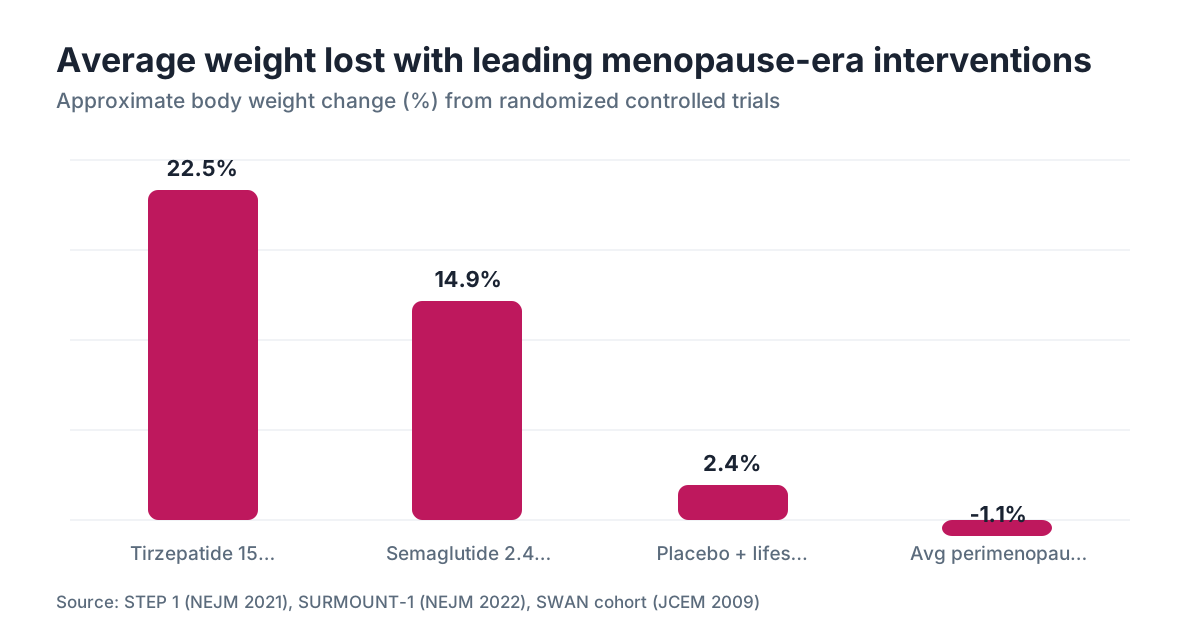
Yes. For women who have worked the lifestyle changes without enough result, GLP-1 receptor agonists are the most effective medication available right now. The STEP 1 trial of semaglutide 2.4 mg (Wegovy) produced an average weight loss of 14.9% of body weight over 68 weeks versus 2.4% for placebo [6]. The SURMOUNT-1 trial of tirzepatide (Mounjaro/Zepbound) hit up to 22.5% weight loss at the highest dose in adults with obesity [7].
Those numbers are not typical for the average menopause patient, who may not meet the clinical threshold for obesity. But they show what the mechanism can do. GLP-1 agonists cut appetite through the central nervous system, slow gastric emptying, and improve insulin sensitivity. All three target specific menopause-related weight gain mechanisms.
Semaglutide is FDA-approved for chronic weight management as Wegovy at 2.4 mg weekly (for adults with a BMI of 30 or higher, or 27 or higher with a weight-related condition) and for type 2 diabetes as Ozempic at lower doses [9]. Tirzepatide is FDA-approved as Zepbound for weight management and as Mounjaro for type 2 diabetes [7]. Compounded semaglutide was widely available from 503B outsourcing facilities during FDA shortage periods, though that has since changed. Our breakdown of compounded semaglutide covers current availability.
For women in menopause, HRT plus a GLP-1 can hit the problem from two directions. HRT addresses the hormonal driver of fat redistribution. The GLP-1 addresses appetite and insulin resistance. No large randomized trial has tested that exact combination in menopausal women yet, but the mechanistic case is solid, and telehealth clinicians including WomenRx can evaluate whether both fit you.
For a closer comparison of the two main options, see semaglutide vs tirzepatide or our full guide on semaglutide for weight loss.
What role does stress and cortisol play in menopause weight gain?
Chronic stress is a fat-storage signal. Cortisol promotes visceral fat through receptors concentrated in abdominal fat cells, and it drives cravings for calorie-dense food through dopamine pathways. Perimenopause is, for many women, the highest-stress decade of their lives, with teenagers, aging parents, career peak, and their own changing health all landing at once.
The cortisol-estrogen link makes it worse. Estrogen normally softens the cortisol stress response through HPA axis regulation. As estrogen falls, that buffer shrinks. Women in perimenopause and early postmenopause often say stressors that were fine at 38 feel crushing at 48. Part of that is hormonal.
Mind-body work has real, if modest, trial data. Mindfulness-based interventions have been shown to lower cortisol and perceived stress in perimenopausal women, with secondary effects on weight maintenance. The effect sizes are smaller than resistance training or HRT, but they are real and they add up.
You do not need an elaborate routine. Consistent sleep, walking, and skipping alcohol do more for cortisol than most stress supplements on the shelf. If anxiety is a leading symptom, low-dose progesterone or a psychiatric evaluation for menopause-related mood symptoms is worth raising with a clinician.
What exercise is best for preventing menopausal weight gain?
Both cardio and resistance training, and if you have to pick, resistance training first. That is the honest answer.
Moderate sustained cardio like brisk walking, cycling, or swimming improves insulin sensitivity, lowers visceral fat, and protects your heart. Large observational cohorts show that women walking 7,000 to 10,000 steps a day gain less weight and develop less metabolic disease than sedentary peers [4]. Walking is underrated because it is dull to talk about, not because it fails to work.
High-intensity interval training (HIIT) shows meaningful benefits for postmenopausal women, especially for visceral fat. A 2018 systematic review in the British Journal of Sports Medicine found HIIT cut visceral fat more than steady-state cardio in middle-aged adults [8]. Three 20-minute HIIT sessions a week produced results comparable to five hours of moderate cardio. The caveat is joints. Women with knee or hip trouble may need to modify.
Resistance training stays non-negotiable for muscle mass and metabolic rate. Two to three resistance sessions plus 150 minutes of moderate cardio a week is what NAMS and the American College of Sports Medicine recommend as the floor, not the ceiling [4].
Consistency beats intensity every time. The best program is the one you do at 7 AM after a bad night's sleep with meetings stacked back to back. Build the habit around a fixed time, a fixed place, and as little friction as possible.
Are there any supplements that help prevent menopause weight gain?
The evidence is thin, and most supplements sold for menopause weight gain are not worth the money. That is the honest answer.
Magnesium glycinate has reasonable evidence for improving sleep quality in midlife women and costs almost nothing. Better sleep helps weight downstream. That is the mechanism, not direct fat burning.
Creatine monohydrate, usually filed under supplements for young male lifters, has growing evidence in postmenopausal women for holding lean mass when paired with resistance training. A 2017 meta-analysis in the Journal of Strength and Conditioning Research found creatine plus resistance exercise significantly improved lean mass and strength in older adults [10]. Three to five grams a day is the standard dose. It is cheap, heavily studied, and safe.
Vitamin D deficiency is common in menopausal women and tracks with higher body fat and insulin resistance in observational studies. Correcting a documented deficiency is reasonable. Supplementing without testing first is not. Get a 25-OH vitamin D level and target 40 to 60 ng/mL.
Phytoestrogens (soy isoflavones, red clover) get marketed hard for menopause symptoms including weight. The body composition data are inconsistent and the effect sizes are small. They are not dangerous, but they are not your main lever.
Skip the expensive proprietary menopause weight loss blends. They are usually a scattershot of herbs dosed below what any trial used, with no FDA approval for any claim. Put the money toward a gym membership or better food.
How do you make a realistic plan to prevent menopause weight gain?
Start with an honest look at where you are. Get a basic metabolic panel, a fasting insulin, a lipid panel, and a DEXA scan if you can get one. DEXA shows your actual lean mass versus fat mass and your bone density, which beats a scale weight every time. Knowing your starting composition tells you whether muscle loss or fat gain is the bigger problem.
Prioritize in this order, based on how strong the evidence is:
- Sleep. Fix it first. Everything else is harder on five hours.
- Resistance training. Two sessions a week minimum, with progressive overload.
- Protein. Hit your daily target, spread across meals.
- Consider HRT if you have vasomotor symptoms, disrupted sleep, or are in early perimenopause. The timing window counts.
- Add cardio, fiber, and stress management on top of that base.
- Revisit GLP-1 options if six months of the above is not working and your BMI or metabolic markers warrant it.
At WomenRx, clinicians review the full hormonal picture before recommending treatment, including whether HRT, a GLP-1, or both fit a given patient's history and goals.
Track what matters: waist circumference, fasting glucose, energy, and sleep quality. The scale is one data point. The other four tell you whether your interventions are working at the level that counts, which is metabolic health.
If you are in early perimenopause, acting sooner beats waiting for menopause to finish. Our perimenopause age article covers the typical timeline so you can place yourself in the transition.
Frequently asked questions
Can you really prevent menopause weight gain or is it inevitable?
You can prevent or sharply limit it, but it takes deliberate effort. SWAN data show that women who keep up resistance training, high protein intake, and healthy sleep gain far less visceral fat across the transition than sedentary women. Weight gain is common but not inevitable. The biggest mistake is assuming it is out of your hands and waiting until 10 pounds have piled on before acting.
Does HRT make you gain weight?
No. The 2022 NAMS Hormone Therapy Position Statement states plainly that hormone therapy does not cause weight gain and may reduce central fat. The misconception traces back to older combination pills and to the fact that women often start HRT right when natural menopausal weight gain is peaking. Properly prescribed HRT is, if anything, metabolically protective.
Why is menopause belly fat so hard to lose?
Visceral belly fat carries more cortisol receptors and is more insulin-resistant than fat elsewhere, which makes it stubborn. Falling estrogen actively steers new fat storage into that region. Losing it means addressing the hormonal driver, estrogen loss, alongside exercise and diet. Treat only one side of the equation and you usually get modest results.
What is the best diet for menopause weight gain?
No single diet wins in long-term trials, but the pattern with the most consistent evidence is high protein (1.2 to 1.6 g per kg body weight daily), high fiber (25 to 30 g), minimal ultra-processed food, and less alcohol. Mediterranean-style eating fits that pattern well. Aggressive calorie restriction backfires because it speeds up the muscle loss that is already a menopause problem.
Does low estrogen cause weight gain directly?
Yes, through two direct mechanisms. First, estrogen receptors on fat cells decide where fat is stored, and without estrogen, storage shifts to the abdomen. Second, estrogen influences insulin sensitivity, so lower estradiol means more insulin resistance, which makes fat loss harder and fat gain easier. These are receptor-level effects, not downstream side effects of other changes.
How much protein do I need during menopause to prevent muscle loss?
Current evidence supports 1.2 to 1.6 grams of protein per kilogram of body weight daily for perimenopausal and postmenopausal women, well above the general RDA of 0.8 g/kg. For a 150-pound (68 kg) woman, that is 82 to 110 grams a day. Spread it across meals instead of loading it all at dinner for better muscle protein synthesis.
Are GLP-1 drugs like Ozempic appropriate for menopause weight gain?
They can be, when lifestyle changes have not delivered enough and BMI or metabolic markers meet clinical criteria. FDA-approved semaglutide (Wegovy) and tirzepatide (Zepbound) are the options. The STEP 1 trial showed 14.9% average weight loss with semaglutide. These medications work best alongside lifestyle changes, not instead of them, and a prescribing clinician has to confirm you are a candidate.
Does intermittent fasting work for menopause weight?
The evidence is mixed. Some trials show modest gains in insulin sensitivity and body composition with time-restricted eating in midlife women. The risk is that long fasting windows can spike cortisol and break down muscle, especially in women already fighting anabolic resistance. If you try it, keep your protein target inside your eating window and watch for worse fatigue or sleep.
How does sleep deprivation cause menopause weight gain?
Short sleep raises ghrelin (hunger) and lowers leptin (fullness), which pushes next-day calorie intake up by an estimated 20 to 25%. It also keeps morning cortisol elevated, which directly promotes visceral fat storage. Night sweats and insomnia are among the most common menopause symptoms, so this is a direct route to weight gain that hormone therapy or sleep hygiene can address.
Does stress cause weight gain in menopause?
Yes, through cortisol. Cortisol promotes visceral fat storage through abdominal fat cell receptors and increases cravings for calorie-dense food. Perimenopause removes estrogen's buffering of the HPA stress axis, so cortisol responses run hotter. Consistent sleep, exercise, and skipping alcohol are the most effective cortisol tools. Mindfulness practices have modest but real supporting data.
What is the fastest way to lose menopause belly fat?
There is no genuinely fast route, but the combination with the strongest evidence is transdermal HRT to address the hormonal driver, resistance training two to three times a week, protein at 1.2 to 1.6 g/kg/day, and cutting alcohol. If that fails after three to six months and metabolic criteria are met, a GLP-1 adds meaningful effect. Expecting quick results from any single intervention usually ends in frustration.
Can perimenopause cause weight gain before periods stop?
Yes. Hormonal swings in perimenopause often precede the final period by 5 to 10 years and trigger the same fat redistribution as full menopause. Many women notice their waist growing and their energy dropping in their early-to-mid 40s while still having regular periods. Perimenopause, not menopause, is often when acting early pays off the most.
Does strength training really help with menopause weight or is cardio better?
Both help, but resistance training has a role nothing else fills: it rebuilds skeletal muscle mass, the main driver of resting metabolic rate. Cardio burns calories during exercise and improves insulin sensitivity. Resistance training improves both of those and rebuilds the muscle that aging and estrogen loss erode. The evidence supports making resistance training the non-negotiable base, with cardio added on top.
Sources
- SWAN (Study of Women's Health Across the Nation), published in the Journal of Clinical Endocrinology and Metabolism
- Journal of Cachexia, Sarcopenia and Muscle, systematic review on sarcopenia and protein requirements in older women
- Menopause (journal of NAMS), meta-analysis on hormone therapy and visceral fat
- North American Menopause Society, 2022 Hormone Therapy Position Statement
- Sleep (journal), study on sleep duration and abdominal obesity in midlife women
- NEJM, STEP 1 trial: Once-Weekly Semaglutide in Adults with Overweight or Obesity
- NEJM, SURMOUNT-1 trial: Tirzepatide for Obesity
- British Journal of Sports Medicine, systematic review of HIIT vs moderate continuous exercise for fat loss
- FDA, Wegovy (semaglutide) prescribing information
- Journal of Strength and Conditioning Research, meta-analysis of creatine supplementation in older adults
- American Heart Association, metabolic syndrome and waist circumference thresholds