How to prevent bone loss during menopause naturally
TL;DR: Women can lose up to 20% of bone density in the 5-7 years after menopause as estrogen drops. The strategies with the best evidence are weight-bearing and resistance exercise, adequate calcium (1,200 mg/day for women over 50), vitamin D3 (800-2,000 IU/day), and quitting smoking. Hormone therapy directly prevents bone loss too, and it's worth discussing with your doctor.
Why does menopause cause bone loss in the first place?
Estrogen does far more than regulate your cycle. One of its quieter jobs is keeping your bone remodeling cycle in balance. Bone is living tissue. It constantly breaks down (via cells called osteoclasts) and rebuilds (via osteoblasts). Estrogen puts the brakes on osteoclasts. When estrogen drops sharply in perimenopause and the first years after your final period, those brakes come off.
The result is measurable and fast. The National Osteoporosis Foundation (now the Bone Health and Osteoporosis Foundation, BHOF) estimates women can lose up to 20% of their bone density in the 5-7 years surrounding menopause [1]. After that window, bone loss slows to roughly 1-2% per year, but the damage from those early years is the main reason women account for about 80% of osteoporosis diagnoses in the US [1].
Perimenopause, more than post-menopause, is where the decline starts. If you're in your early-to-mid 40s and noticing irregular cycles, your bones are already seeing less estrogen. This is the window where prevention matters most. See our piece on peri menopausal stages if you're not sure where you are in the transition.
Bone loss is mostly silent. There is no pain signal until a fracture happens. A DEXA scan (dual-energy X-ray absorptiometry) is the gold-standard test, and BHOF recommends all women get a baseline scan at age 65, or earlier if you have risk factors like early menopause, low body weight, a smoking history, or a family history of hip fracture [1].
What are the most effective natural ways to prevent bone loss?
"Natural" here means non-pharmaceutical, though hormone therapy (its own section below) is also a real and evidence-backed tool. The strategies below have solid trial data behind them.
Weight-bearing and resistance exercise
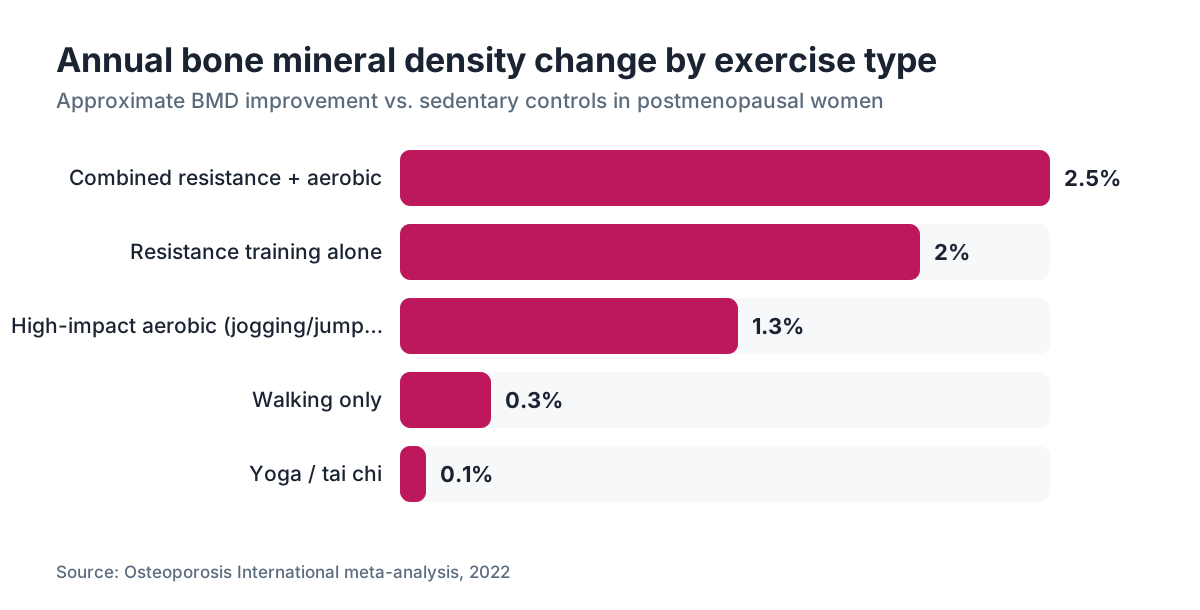
This is the single highest-yield lifestyle intervention. Bone responds to mechanical load by building more of itself. Walking counts, but it is not enough on its own for women who have already lost significant bone. High-impact activities (jogging, dancing, stair climbing, jump rope) and resistance training (lifting weights, resistance bands, bodyweight moves like squats and lunges) produce the greatest bone-building stimulus [2].
A 2022 meta-analysis in the journal Osteoporosis International reviewed 18 randomized controlled trials and found that combined aerobic and resistance exercise significantly improved lumbar spine and femoral neck BMD in postmenopausal women compared to controls [2]. The dose that shows up in the data is at least 150 minutes per week of moderate aerobic activity plus 2-3 resistance sessions per week.
Balance training (yoga, tai chi) doesn't build bone directly but cuts fall risk, which is the downstream danger. A hip fracture is the clinical event you're trying to avoid, and about half of all hip fracture patients never return to their prior level of function [1].
Calcium
The National Institutes of Health recommends 1,200 mg of calcium per day for women over 50 [3]. Food first is genuinely good advice here, not a platitude: dairy, calcium-set tofu, sardines with bones, kale, and fortified plant milks all contribute. The average American woman gets roughly 700-900 mg from food, so most women need a supplement, but the supplement dose should be modest (typically 500 mg or less at a time, because absorption is capped per dose).
One caution worth knowing: several large observational studies, including a 2010 BMJ analysis of 12,000 participants, raised concern that calcium supplements taken without vitamin D may modestly increase cardiovascular risk [4]. That finding is still debated. But it's a reason to not pile supplemental calcium on top of what food already covers.
Vitamin D
Vitamin D is essential for calcium absorption in the gut. Without it, you can eat plenty of calcium and absorb very little. The NIH sets the recommended dietary allowance for women over 50 at 600-800 IU per day [13], but many bone specialists and the Endocrine Society say that keeping serum 25-hydroxyvitamin D at 30 ng/mL or above may take 1,500-2,000 IU daily for many women, especially those in northern latitudes or with limited sun exposure [5].
Get your level tested before high-dose supplementing. There is a real upper limit: chronic intake above 4,000 IU/day without medical supervision can cause toxicity [13].
Protein
Bone matrix is roughly one-third collagen, which is protein. Adequate protein intake (at least 1.0-1.2 g per kg of body weight per day) supports both muscle mass and bone matrix quality in older women [6]. Sarcopenia and osteoporosis travel together, and the muscle loss from low protein intake amplifies fall risk.
Magnesium
Magnesium is a cofactor in bone mineralization and it affects both calcium metabolism and vitamin D activation. The RDA for women over 30 is 320 mg per day [3]. Most Americans fall short. Good food sources include nuts, seeds, legumes, and dark leafy greens.
How much does exercise actually change bone density numbers?
Concrete numbers set realistic expectations. Exercise won't rebuild a decade of loss, but it can stop net loss and reverse a point or two of it per year.
| Exercise type | Bone site most affected | Approximate BMD change vs. sedentary controls | |---|---|---| | Resistance training alone | Lumbar spine | +1% to +3% per year [2] | | High-impact aerobic (jogging, jumping) | Hip, femoral neck | +0.5% to +2% per year [2] | | Combined resistance + aerobic | Spine and hip | +1% to +3.5% per year [2] | | Walking only | Hip | +0.2% to +0.5% per year [2] | | Yoga / tai chi | Minimal BMD effect | Primarily reduces fall risk |
Those numbers look small. But the natural loss rate during early menopause runs up to 2-3% per year, so stopping net loss, or clawing back 1-2% annually, is a real win over a decade.
Consistency beats intensity. Three months of hard training followed by six months of nothing does very little. The bone stimulus has to repeat regularly for bone to keep responding.
Does diet really matter, or is supplementation enough?
Diet matters in ways supplements can't replicate, and supplements can't rescue a poor diet.
The PREDIMED trial and related Mediterranean diet studies found that higher adherence to a plant-forward, olive-oil-rich, low-processed-food eating pattern is associated with better bone mineral density and lower fracture risk in older women [7]. The mechanism is probably several things at once: lower systemic inflammation, better gut microbiome function (which affects calcium absorption), higher phytonutrient intake, and adequate protein.
Foods specifically linked to bone health include:
- Dairy (yogurt, milk, cheese): high calcium and protein
- Leafy greens (kale, bok choy, collards): calcium plus vitamin K1
- Fatty fish (salmon, sardines, mackerel): vitamin D plus omega-3s
- Nuts and seeds (almonds, chia, sesame): magnesium, calcium, and healthy fats
- Fermented foods (kefir, yogurt): emerging evidence for a gut-bone benefit
What to minimize matters just as much. Excess sodium (over 2,300 mg/day) increases urinary calcium excretion. High caffeine intake (more than 4 cups of coffee daily) has a modest negative effect on calcium absorption, though this is largely offset if calcium intake is adequate [3]. Heavy alcohol use, defined as more than 1 drink per day on average for women, directly suppresses osteoblast activity and raises fall risk [1].
For most women eating a varied diet, a targeted supplement stack (calcium from food plus a modest supplement if needed, vitamin D3, and magnesium) covers the bases better than a one-a-day multivitamin. Generic menopause multivitamins often underdose the bone-relevant nutrients. A product like cvs menopause multivitamin with hot flash support may be convenient, but check the label doses against the numbers above.
Can hormone therapy prevent bone loss during menopause?
Yes. This is one of the best-documented effects of menopausal hormone therapy (MHT, also called HRT).
The FDA has approved estrogen therapy specifically for the prevention of postmenopausal osteoporosis [8]. Large trials, including the Women's Health Initiative (WHI), confirmed that combined estrogen-progestogen therapy cut hip fracture risk by roughly 34% and vertebral fracture risk by about 34% over the 5-year trial period [8]. The protective effect is real, and it starts quickly after you begin therapy.
After you stop hormone therapy, bone loss resumes at roughly the same accelerated rate it would have followed without treatment. That's why the decision to start MHT is best made looking at your whole health picture, more than your bones. MHT also addresses hot flashes, sleep disruption, genitourinary symptoms, and mood changes, so women who are symptomatic have several reasons to consider it.
The North American Menopause Society (NAMS) states in its 2022 position statement: "Hormone therapy is the most effective treatment for menopausal symptoms and is effective for the prevention of osteoporosis" [9]. NAMS notes that for healthy women under 60 or within 10 years of menopause onset, the benefits of MHT generally outweigh the risks.
If you're curious what a personalized hormone evaluation looks like, WomenRx offers online consultations with clinicians who specialize in menopause hormone management.
For more context on what current research says about menopause care, the new menopause is a useful overview. You can also review what professional bodies say via the menopause society resource page.
What about phytoestrogens and other herbal supplements for bone health?
Phytoestrogens are plant compounds (isoflavones from soy, lignans from flaxseed) that bind weakly to estrogen receptors. The idea is that they might partly substitute for estrogen's bone-protective effect.
The data is genuinely mixed and not strong enough to recommend as primary bone protection. A Cochrane review of soy isoflavone supplements found modest, inconsistent effects on bone mineral density at the spine, no significant effect at the hip, and no fracture data [10]. The effect size is far smaller than MHT and probably only meaningful for women with high soy food intake over many years (as in traditional Japanese dietary patterns).
Red clover isoflavones have been studied in similarly small trials with similar results: mildly positive signals, not enough evidence to call them protective against fractures.
Black cohosh, widely used for hot flash symptoms, has not shown meaningful effects on bone density. Strontium ranelate was a prescription drug in Europe with documented bone effects, but it was pulled from most markets over cardiovascular risks, and the strontium-containing supplements sold in the US are a different compound and lack efficacy data.
Nobody has good fracture outcome data for any herbal supplement. The closest evidence is BMD surrogate data, which is weaker. If you're in a high-risk category for osteoporosis, herbal supplements should add to, not replace, the interventions with actual fracture-reduction evidence.
Which women are at highest risk of bone loss during menopause?
Risk is not evenly distributed. Some women enter the transition with meaningfully higher baseline risk and need to get aggressive about prevention earlier.
Major risk factors include [1]:
- Early menopause (before age 45) or surgical menopause (oophorectomy), because the estrogen-deprivation window is longer
- Low body weight or BMI under 19 (less mechanical loading on bones and less peripheral estrogen production from fat tissue)
- White or Asian ethnicity (Black and Hispanic women have higher baseline BMD on average, though osteoporosis is still significant in all groups)
- Family history of osteoporosis or a parent's hip fracture
- A prior fracture as an adult
- Smoking (directly inhibits osteoblasts)
- Heavy alcohol use
- Long-term use of corticosteroids, proton pump inhibitors, certain anticonvulsants, or aromatase inhibitors (used in breast cancer treatment)
- Low dietary calcium and vitamin D intake over decades
- Sedentary lifestyle
- Celiac disease, inflammatory bowel disease, or other malabsorption conditions
- Untreated hyperthyroidism or hyperparathyroidism
If you're managing a thyroid condition alongside menopause, it's worth reviewing thyroid hormone replacement therapy, since both thyroid status and estrogen affect bone turnover at the same time.
FRAX is a free online tool developed by the World Health Organization that calculates your 10-year probability of a major osteoporotic fracture based on your individual risk factors. Your primary care provider or gynecologist can use it to decide whether a DEXA scan or preventive medication is warranted before age 65.
Does stopping smoking and reducing alcohol actually help bones?
Yes, and the effects are not trivial.
Smoking is one of the most modifiable risk factors for osteoporosis. Meta-analyses estimate current smokers carry a 25-55% higher relative risk of hip fracture than nonsmokers, independent of other risk factors [1]. Nicotine and other tobacco compounds directly reduce osteoblast activity, disrupt estrogen metabolism (smokers often reach menopause 1-2 years earlier than nonsmokers), and reduce calcium absorption. Quitting partially reverses the bone-loss effect over time, though some damage is permanent.
Alcohol's relationship with bone is dose-dependent. Light to moderate drinking (up to 1 drink per day for women) has not been shown to consistently harm bone, and some studies show a neutral or slightly positive effect, possibly from alcohol's weak estrogenic activity. Heavy drinking (more than 7 drinks per week, or binge patterns) suppresses bone formation, raises fracture risk through falls and trauma, and interferes with calcium and vitamin D metabolism [1].
The practical takeaway: if you smoke, quitting is one of the highest-value things you can do for your bones, your heart, and your cancer risk all at once. Alcohol is about moderation rather than elimination for most women.
How do you know if what you're doing is working? Testing and tracking
You cannot feel bone loss, which makes tracking important.
A DEXA scan measures bone mineral density at the lumbar spine, hip, and sometimes the forearm. Results come back as a T-score (comparison to a healthy young adult) and a Z-score (comparison to age-matched peers). A T-score above -1.0 is normal, -1.0 to -2.5 is osteopenia (low bone mass), and below -2.5 is osteoporosis [1].
For women starting natural prevention in early perimenopause with a normal baseline DEXA, a repeat scan every 1-2 years is reasonable if you have multiple risk factors, every 2-3 years if your risk is average. Medicare covers DEXA scans every 2 years for women over 65 who qualify [11].
Blood tests your provider might check include serum 25-hydroxyvitamin D (target 30-50 ng/mL for bone health), calcium, parathyroid hormone (PTH), and occasionally bone turnover markers like serum CTX or P1NP. Those markers can flag elevated bone resorption earlier than BMD changes show up on DEXA, but they aren't standard practice for most primary care providers.
If your DEXA shows you've crossed into osteoporosis (T-score below -2.5), or you've had a fragility fracture, prescription medications (bisphosphonates, denosumab, or anabolics like teriparatide) become the standard of care alongside lifestyle measures. Natural strategies are meaningful prevention tools, but they are not sufficient treatment for established osteoporosis.
What other menopause symptoms are connected to bone health?
Bone loss doesn't happen in isolation. The same estrogen decline that speeds up bone resorption also drives a cluster of other symptoms, and managing them together works better than treating each one separately.
Musculoskeletal pain is one of the least-talked-about menopause symptoms. Joint stiffness, aching, and reduced grip strength are common in perimenopause and early postmenopause. Frozen shoulder, for example, has a documented association with perimenopause, likely through estrogen's effect on joint and connective tissue. See frozen shoulder menopause for more on that connection.
Sleep disruption, driven by night sweats and hormonal shifts, cuts into the deep sleep stages where growth hormone is secreted. Growth hormone supports bone formation, so chronically poor sleep may compound the bone-loss trajectory.
Depression and anxiety during perimenopause sometimes lead to lower physical activity, which then speeds up bone loss. Antidepressants in the SSRI/SNRI class, taken long-term, have also been linked to modest bone loss in some observational studies, though the data is inconsistent.
Menopause symptoms feed into each other, which is exactly why an integrative approach (hormones, sleep, nutrition, and movement together) tends to beat single-intervention fixes. Platforms like WomenRx are built around that kind of connected care, covering hormones, metabolic health, and how they affect one another.
For a broader picture of how menopause care is evolving, the menopause society compiles current clinical guidance in one place.
Can GLP-1 medications affect bone density in menopausal women?
This is a genuinely open question, and honest uncertainty is the right posture here.
GLP-1 receptor agonists like semaglutide (Ozempic, Wegovy) are increasingly used by women in the menopause transition for weight management. Weight loss itself, no matter how you get there, does reduce bone density, because you're taking mechanical load off the skeleton and because fat tissue produces estrogen through aromatization. The clinical question is whether GLP-1s have effects on bone beyond the weight loss.
The STEP and SURMOUNT trials, the major phase 3 trials for semaglutide and tirzepatide respectively, were not designed primarily to evaluate fracture outcomes. Preliminary analysis of STEP 1 data suggested the rate of bone density loss with semaglutide was modest and not clearly different from weight-loss-matched controls, but the trial wasn't powered for fracture endpoints and follow-up ran only about 68 weeks [12].
Some preclinical data suggests GLP-1 receptors sit on osteoblasts, possibly with a direct bone-anabolic effect. Whether that translates to a clinical benefit in humans is not yet established.
The practical implication: if you're taking a GLP-1 for weight loss during menopause, that's a reason to be proactive about the natural bone-protection strategies above, keep your calcium and vitamin D intake solid, and discuss DEXA monitoring with your provider. It is not a reason to avoid GLP-1 medications if they're otherwise appropriate for you. See our semaglutide news page for updates as this research develops.
Frequently asked questions
How much calcium do menopausal women actually need per day?
The NIH recommends 1,200 mg of calcium daily for women over 50. Aim to get 700-900 mg from food (dairy, fortified plant milks, leafy greens, sardines) and supplement only what food doesn't cover, usually 300-500 mg at most. Taking more than 500 mg in a single dose wastes most of it, since absorption is capped per sitting.
Is walking enough exercise to prevent bone loss in menopause?
Walking helps, but it is not enough on its own for most women. It gives some bone stimulus at the hip and very little at the spine. Resistance training (weights, bands, bodyweight squats) and higher-impact activities like jogging or dancing produce far greater increases in bone mineral density. Aim for at least 2-3 resistance sessions per week on top of your walking.
What vitamin D level should I aim for to protect my bones?
Most bone specialists and the Endocrine Society recommend a serum 25-hydroxyvitamin D level of at least 30 ng/mL, with 40-60 ng/mL often cited as optimal. Many women in northern climates or with indoor lifestyles fall below 20 ng/mL. A simple blood test tells you your level, and supplements of 1,500-2,000 IU/day are commonly needed to maintain adequate levels.
Does menopause hormone therapy (HRT) really prevent fractures?
Yes. The Women's Health Initiative trial found estrogen-progestogen therapy reduced hip fracture risk by about 34% over 5 years. The FDA has approved estrogen therapy specifically for osteoporosis prevention. NAMS states hormone therapy is effective for this purpose in healthy women under 60 or within 10 years of menopause. The bone protection stops when you stop the therapy.
At what age should I get a DEXA bone density scan?
BHOF recommends all women get a baseline DEXA scan at age 65. You should get one earlier if you have risk factors: menopause before 45, a prior fracture as an adult, long-term corticosteroid use, low body weight, a parent with a hip fracture, or a smoking history. Medicare covers DEXA every 2 years for women over 65 who qualify.
Does smoking really cause bone loss, and does quitting help?
Smoking meaningfully raises fracture risk. Current smokers carry roughly 25-55% higher relative risk of hip fracture than nonsmokers. Tobacco compounds directly inhibit osteoblasts, reduce calcium absorption, and speed up estrogen metabolism, so smokers often reach menopause earlier. Quitting partially reverses the bone effects over time, though how much you recover depends on how long and how much you smoked.
Are soy isoflavones and phytoestrogens effective for bone protection?
The evidence is modest and inconsistent. A Cochrane review found soy isoflavone supplements showed small, unreliable improvements in lumbar spine BMD, no significant hip effect, and no fracture data at all. High soy food intake over decades (as in traditional Japanese diets) may support bone health, but supplements are not a substitute for the strategies with fracture-reduction evidence.
Can losing weight on GLP-1 medications like semaglutide hurt my bones?
Weight loss from any cause takes some mechanical load off bones and can lower BMD modestly. The STEP 1 trial with semaglutide did not show dramatic bone loss over 68 weeks, but the trial wasn't powered for fracture outcomes. If you're on a GLP-1, keep your calcium and vitamin D intake solid, continue resistance training, and discuss DEXA monitoring with your doctor.
What foods are worst for bone health during menopause?
High sodium intake (above 2,300 mg/day) increases urinary calcium excretion. Heavy alcohol (more than 7 drinks/week) suppresses bone formation and raises fall risk. Very high caffeine intake may slightly reduce calcium absorption, though this is mostly offset by adequate calcium. Ultra-processed, low-nutrient diets crowd out the foods that actually supply calcium, magnesium, and protein.
How quickly does bone loss start after menopause?
Bone loss begins in perimenopause, often 2-3 years before your last period, as estrogen starts fluctuating and declining. The fastest loss happens in the 1-3 years right after menopause, when the rate can hit 2-3% per year at the spine. Over the full 5-7 year transition window, total loss can reach 20% without intervention.
Does magnesium help with bone loss during menopause?
Magnesium is a cofactor in bone mineralization and vitamin D activation, so deficiency likely contributes to bone loss. The RDA for women over 30 is 320 mg per day, and most Americans fall short. Food sources include nuts, seeds, beans, and dark leafy greens. Evidence for supplemental magnesium specifically preventing fractures is limited, but correcting a deficiency is a reasonable, low-risk move.
Is osteopenia the same as osteoporosis, and should I treat it?
No. Osteopenia (T-score between -1.0 and -2.5) means low bone mass but not full osteoporosis. Most women with osteopenia do not fracture. The decision to treat with medication depends on your FRAX 10-year fracture probability, not the T-score alone. Lifestyle interventions (exercise, calcium, vitamin D, no smoking) are the primary strategy for osteopenia without other high-risk features.
Can perimenopause symptoms and bone loss happen at the same time?
Yes, and that's one reason to take perimenopause seriously even though your periods haven't stopped. As estrogen fluctuates and trends down during perimenopause, bone resorption speeds up even before your last period. Women in perimenopause who also have hot flashes, sleep loss, and joint pain are already seeing the downstream effects of estrogen decline that reach the bones.
What's the difference between calcium carbonate and calcium citrate supplements?
Calcium carbonate (found in Tums and many cheap supplements) needs stomach acid to dissolve and absorb well, so take it with food. Calcium citrate absorbs without food or stomach acid, which makes it better for women who take proton pump inhibitors or have lower stomach acid, which becomes more common with age. Both forms raise calcium levels when taken correctly.
Sources
- Bone Health and Osteoporosis Foundation (BHOF), Osteoporosis Fast Facts
- Osteoporosis International, 2022 meta-analysis of exercise and BMD in postmenopausal women
- NIH Office of Dietary Supplements, Calcium Fact Sheet for Health Professionals
- BMJ, 2010, Bolland et al., calcium supplements and cardiovascular risk
- Endocrine Society Clinical Practice Guideline, Vitamin D Deficiency, 2011
- American Journal of Clinical Nutrition, protein intake and bone health in older women
- PREDIMED trial investigators, New England Journal of Medicine / NEJM
- FDA Drug Label Database, conjugated estrogens (Premarin), osteoporosis prevention indication
- North American Menopause Society (NAMS), 2022 Hormone Therapy Position Statement
- Cochrane Database of Systematic Reviews, phytoestrogens for menopausal symptoms
- Centers for Medicare and Medicaid Services (CMS), Medicare preventive services coverage, bone density tests
- STEP 1 trial (semaglutide 2.4 mg), New England Journal of Medicine, Wilding et al. 2021
- NIH Office of Dietary Supplements, Vitamin D Fact Sheet for Health Professionals