Hot flashes from perimenopause or thyroid disease: how to tell
TL;DR: Perimenopause and thyroid disease both cause hot flashes, sweating, and mood shifts, which makes them easy to confuse. Timing, extra symptoms, and lab results are what separate them. A TSH test plus an FSH level from the same blood draw answers the question in most women. Some women have both at once, so ruling out one does not rule out the other.
Why do both perimenopause and thyroid disease cause hot flashes?
Both conditions disrupt your body's thermostat. They just do it through different wiring.
In perimenopause, falling estrogen destabilizes the hypothalamus, the brain region that regulates temperature. The hypothalamus turns hypersensitive to tiny shifts in body warmth. It misreads normal heat as overheating and fires off a sudden vasodilatory flush to dump that heat. That is the classic perimenopausal hot flash: sudden intense warmth, usually from the chest up, lasting two to four minutes on average, often followed by a chill [1].
Hyperthyroidism takes a different route. When the thyroid overproduces thyroxine (T4) and triiodothyronine (T3), your metabolic rate speeds up across every cell. Picture turning up a furnace that was already running. All that extra heat production causes steady warmth, sweating, and heat intolerance. It feels a lot like hot flashes, but it is really a constant low-grade hyperthermia rather than episodic surges [2].
Hypothyroidism, the underactive form, is a sneakier culprit. Most people link low thyroid with feeling cold, and that is the usual pattern. But some women with hypothyroidism report hot flashes, probably because thyroid hormones interact with estrogen metabolism and because the general hormonal disruption of low thyroid can mimic or amplify perimenopausal symptoms.
The overlap is real and frequent. Perimenopausal women also carry a higher risk of autoimmune thyroid disease, Hashimoto's thyroiditis in particular, so the two conditions often run together instead of taking turns [3].
How common is each condition in women aged 40 to 55?
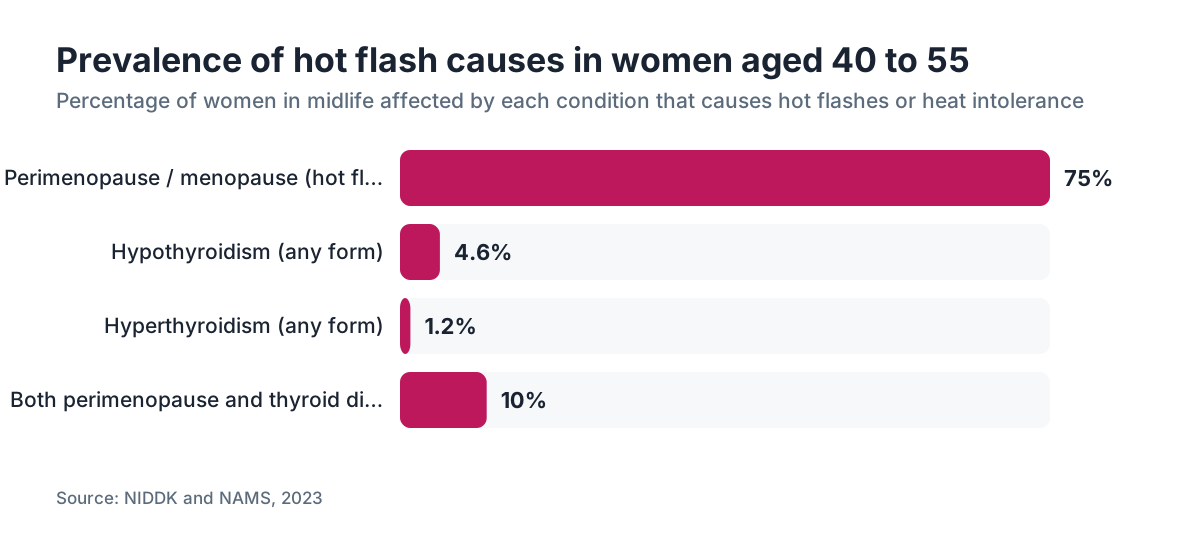
Perimenopause reaches virtually every woman who lives long enough, usually starting in the mid-40s, sometimes earlier. About 75% of women in the menopause transition get hot flashes, per the North American Menopause Society [1]. That figure climbs above 80% in some population studies, depending on how hot flashes are defined and counted.
Thyroid disease is the most common endocrine condition after diabetes. Hypothyroidism affects roughly 4.6% of the U.S. population aged 12 and older, and women are five to eight times more likely to have it than men [4]. Hyperthyroidism is rarer, at about 1.2% of the population, and it too skews female [11]. Autoimmune thyroid disease, which covers both Hashimoto's and Graves', often peaks during the perimenopausal years.
Those numbers matter because they set your base rates. If you're 47 and having hot flashes, perimenopause is the most likely explanation by a wide margin. But a roughly 1-in-20 chance of a coexisting thyroid problem is not trivial, especially since thyroid disease is highly treatable once you find it.
Some research suggests thyroid dysfunction goes undiagnosed in perimenopausal women precisely because the symptoms get pinned on hormones and nobody runs a thyroid panel. That is a real clinical problem, not a hypothetical one [3].
What are the symptom differences between perimenopause and thyroid hot flashes?
The symptoms overlap a lot. But some patterns are worth knowing.
Perimenopausal hot flashes tend to be:
- Episodic: they come on fast and end within two to five minutes
- Tied to the menstrual cycle, or triggered by alcohol, caffeine, spicy food, or stress
- Paired with night sweats that wreck sleep and wax and wane with cycle changes
- Bundled with irregular periods, vaginal dryness, brain fog, and mood swings
- Worst in the year before and after the final period
Hyperthyroid heat intolerance and flushing tend to be:
- More continuous: a steady feeling of being warm rather than a wave
- Paired with palpitations, tremor, unexplained weight loss despite a normal or bigger appetite, anxiety, and diarrhea
- Sometimes linked to a visibly enlarged thyroid (goiter), though not always
- Present even in cool rooms where everyone else is comfortable
Hypothyroid symptoms usually run the other direction: fatigue, weight gain, constipation, depression, dry skin, and cold intolerance. When low thyroid does throw off flushing or sweating, it tends to be milder and shows up alongside the classic cold, sluggish picture.
Palpitations deserve a flag. A racing or pounding heart is common in perimenopause, but a resting heart rate that stays above 100 beats per minute (tachycardia) points far more strongly to hyperthyroidism than to perimenopause alone [2].
Brain fog and mood changes hit in both and are basically useless for telling them apart. So is fatigue. You cannot sort this out by symptoms alone.
Which lab tests actually tell you whether it's perimenopause or thyroid?
Labs are where the answer lives. No symptom checklist is reliable enough on its own.
TSH (thyroid-stimulating hormone) is the single best first thyroid screen. The normal reference range in most U.S. labs runs 0.4 to 4.0 mIU/L, though some clinicians push for a tighter functional range in symptomatic women. TSH below 0.4 suggests hyperthyroidism. TSH above 4.0 suggests hypothyroidism. These cutoffs vary slightly by lab, so read the reference range printed on your own result [7].
If TSH comes back abnormal, your clinician should add free T4 and free T3 to confirm and characterize the problem.
FSH (follicle-stimulating hormone) gauges menopausal status. FSH consistently above 40 mIU/mL in a woman with no periods for 12 months confirms menopause. During perimenopause, FSH swings all over the place, so one normal reading does not rule perimenopause out [1].
Estradiol is less diagnostic on its own than FSH, but it adds context. Very low estradiol (under roughly 30 pg/mL) with a high FSH fits menopause, though again, perimenopausal levels bounce around.
A thyroid antibody panel (anti-TPO and anti-thyroglobulin) picks up autoimmune thyroid disease, Hashimoto's specifically, which can be present even when TSH still reads technically normal but is creeping toward the high end.
The practical move: if you're 40 to 55 with hot flashes, ask for TSH, free T4, FSH, estradiol, and a complete metabolic panel in one draw. That covers the likely hormonal causes and hands your clinician enough data to act. Running one test at a time wastes months.
| Test | What it screens for | Typical normal range | Action if abnormal | |---|---|---|---| | TSH | Thyroid function | 0.4 to 4.0 mIU/L | Add free T4, free T3 | | Free T4 | Thyroid output | 0.8 to 1.8 ng/dL | Confirm hypo or hyperthyroid | | FSH | Ovarian reserve / menopausal status | Varies by cycle phase; >40 mIU/mL post-menopause | Assess with estradiol | | Estradiol | Estrogen level | Wide variation in perimenopause | Interpret with FSH and symptoms | | Anti-TPO antibodies | Hashimoto's autoimmune disease | Negative (<9 IU/mL in most labs) | Suggests autoimmune thyroid even with normal TSH |
Can you have perimenopause and thyroid disease at the same time?
Yes, and it happens often enough that you should treat it as your default assumption until labs say otherwise.
Autoimmune conditions cluster, and the perimenopausal hormone shift seems to open a window of immune instability. Hashimoto's thyroiditis, the most common cause of hypothyroidism in women, is an autoimmune disease. It shares immune-driven pathways with other autoimmune conditions that also spike in the perimenopausal years.
Here is one way to hold it: estrogen has immune-modulating effects. As estrogen drops during perimenopause, the immune system shifts, and that shift can unmask or speed up autoimmune thyroid disease that had been subclinical. This is more than theory. Several population studies note a jump in new Hashimoto's diagnoses in women from their mid-40s into their early 50s [3].
The consequence of a dual diagnosis is where it gets practical. Treat only the thyroid and your hot flashes may hang on, because the menopausal piece is untouched. Treat only the perimenopause and your fatigue, weight gain, and cognitive symptoms may not fully clear if the thyroid is still off. Each condition needs its own plan.
For women stuck in this tangle, a telehealth practice built around women's hormones (WomenRx is one) can order the full panel and run both the menopause and thyroid workup in one place, which beats bouncing between a gynecologist and an endocrinologist who never talk to each other.
What does a perimenopausal hot flash actually feel like versus a thyroid-related one?
This is subjective. But women who have lived through both often describe a real difference in quality.
A perimenopausal hot flash arrives as a wave. Most women describe sudden intense heat starting in the chest or face, spreading up and out, with visible flushing and sweat, then fading, sometimes with a chill as the body overcorrects. It can jolt you out of sleep (that is the night sweat version). It might hit twice a day or twenty times a day. It is episodic in a way that is often startling.
Hyperthyroid heat intolerance usually gets described differently: a steady background warmth, being the person in the room who always wants the window open, sweating through ordinary activity, staying comfortable in the cold while everyone else complains. It is less an event and more a state.
Still, the variation between women is enormous, and these are generalizations. Some women with Graves' disease describe frank hot flashes. Some perimenopausal women describe steady background warmth rather than clear surges. The character of the symptom alone is not diagnostic. Use the distinction to start a conversation with your clinician, not to self-diagnose.
What triggers can help you tell the difference?
Perimenopausal hot flashes come with fairly well-documented triggers. Alcohol (red wine and spirits especially), caffeine, spicy food, hot drinks, stress, and warm rooms all set them off. Many women notice a link to their cycle, with hot flashes worsening in the luteal phase or in cycles where they didn't ovulate.
Thyroid heat symptoms don't follow that trigger pattern. If you're hyperthyroid, you feel warm and uncomfortable pretty much all the time, no matter what you ate or drank. The symptoms don't cluster around your cycle in any predictable way.
Try this: keep a two-week symptom diary logging the time of each hot flash, what came before it, your sleep quality, your heart rate if you can measure it, and where you are in your cycle. A perimenopausal pattern shows episodic events with identifiable triggers and cycle correlation. A thyroid pattern shows constant symptoms without obvious precipitants. That diary gives your clinician real data, and it gives you something to anchor to when you're trying to describe months of vague symptoms in a ten-minute appointment.
Weight is another useful clue. Unexplained weight loss with hot flashes and anxiety leans hyperthyroid. Weight gain with fatigue and feeling cold (even alongside some flushing) leans hypothyroid, or the ordinary weight-gain pattern of perimenopause.
What treatments are used for each condition, and do they overlap?
The treatments barely overlap, which is one more reason to get the diagnosis right.
For perimenopausal hot flashes, menopausal hormone therapy (MHT, also called HRT) is the most effective option we have. Estrogen therapy cuts hot flash frequency by roughly 75% versus placebo in randomized trials, per NAMS guidance [1]. Non-hormonal options with FDA-approved hot flash indications include fezolinetant (Veoza), approved in 2023, which acts on the neurokinin B pathway in the hypothalamus [5], and paroxetine (Brisdelle), the only SSRI with a specific low-dose FDA approval for hot flashes [12].
For hyperthyroidism, treatment runs to antithyroid medications (methimazole, propylthiouracil), radioactive iodine ablation, or thyroidectomy, depending on cause and severity. Once the thyroid is back to normal, the heat intolerance and flushing usually fade [2].
For hypothyroidism, levothyroxine (synthetic T4) is standard. Most women on an adequate dose see fatigue, weight, and cognitive symptoms improve. If hot flashes stick around after the thyroid is optimized, that points to a concurrent menopausal component [see /articles/thyroid-hormone-replacement-therapy for more on thyroid replacement].
There is no meaningful crossover. You can't treat thyroid disease with estrogen, and you can't treat menopausal hot flashes with levothyroxine. Each diagnosis needs its own intervention. Have both, and you'll likely need both treatments.
On the perimenopause side, resources like the menopause society and books like the new menopause lay out the full evidence base for hormone therapy in plain language.
How do doctors typically evaluate hot flashes in women over 40?
A solid workup for hot flashes in a woman 40 and older starts with history: when the hot flashes started, how often they hit, whether they're episodic or constant, whether periods are still regular, and what else is going on.
The physical exam checks resting heart rate (tachycardia is a thyroid red flag), looks for thyroid enlargement, and reads skin texture and other thyroid clues.
Lab testing should include at minimum a TSH, a complete blood count, and a metabolic panel. For women 40 to 55 with irregular cycles, FSH and estradiol add real value. If TSH is abnormal, or the clinical picture suggests thyroid disease despite a normal TSH, adding free T4 and anti-TPO antibodies is reasonable. ACOG recommends thyroid function testing in women with menopausal symptoms when the presentation is atypical or the diagnosis is uncertain [8].
Some clinicians run these labs reflexively for any perimenopausal woman with hot flashes. Others start with TSH alone and add the reproductive hormones only if the thyroid checks out. The difference is a couple extra tubes of blood and maybe a few weeks of delay. Given how common both conditions are and how much their symptoms overlap, the case for running the full panel upfront is strong.
If you're working through peri menopausal changes and want the full diagnostic picture, ask for the workup above by name if your clinician doesn't offer it.
When should you see a specialist versus handling this with a primary care doctor?
Most cases of perimenopause with straightforward hot flashes and a normal TSH are fine with a knowledgeable primary care doctor, internist, or gynecologist. Prescribing menopausal hormone therapy doesn't require a specialist, though in practice comfort and knowledge vary a lot among generalists.
See an endocrinologist if:
- Your TSH is abnormal and your symptoms don't fit simple perimenopause
- You have Graves' disease (hyperthyroidism from autoimmune stimulation of the thyroid)
- You have a thyroid nodule or goiter that needs evaluation
- Your thyroid labs keep swinging and you can't get stable on medication
- You have subclinical thyroid disease (TSH mildly out of range, symptoms present) and you're getting conflicting advice about treating
See a menopause specialist or a gynecologist with menopause expertise if:
- Your hot flashes are bad enough to wreck function or sleep
- You have contraindications to hormone therapy you want evaluated
- You've had breast cancer or another condition that complicates hormone decisions
- Primary care treatment hasn't controlled symptoms after a fair trial
The Menopause Society (formerly NAMS) keeps a directory of certified menopause practitioners at menopause.org, a reasonable place to find someone with specific expertise [1].
For milder cases, or for women who want an integrated approach to both menopausal and thyroid symptoms, telehealth platforms like WomenRx that focus on women's hormones can run the initial workup and coordinate care, which helps if you live somewhere without easy specialist access.
Are there other conditions that mimic perimenopause hot flashes?
Thyroid disease is the most common mimic, but not the only one. This matters because a few of the alternatives are serious.
Carcinoid syndrome, caused by neuroendocrine tumors that secrete serotonin and other vasoactive compounds, produces flushing that can pass for hot flashes. Carcinoid flushes tend to be redder and longer than perimenopausal ones, and they're often triggered by alcohol, specific foods, or exertion. A 24-hour urine test for 5-HIAA (a serotonin metabolite) screens for it [9].
Pheochromocytoma, a rare adrenal tumor, causes episodic high blood pressure, headache, sweating, and flushing. The sweating is often profuse and drenching. Plasma metanephrines or urinary catecholamines are the screening tests [10].
Mastocytosis, a mast cell disorder, produces flushing, hives, and sometimes anaphylaxis, driven by mast cell mediator release.
Medications cause flushing too. Niacin is a classic. Calcium channel blockers, nitrates, some antibiotics, and opioids can all bring on flushing or sweating. A medication review is always worth doing.
For most women in their 40s and 50s with episodic hot flashes, carcinoid and pheochromocytoma are rare enough to stay off the initial workup unless the picture is atypical: very long flushes, severe blood pressure spikes, diarrhea with flushing, unusual skin findings. But they're worth knowing about when standard treatments for perimenopause or thyroid disease aren't working [2].
If you're also noticing joint symptoms or odd pain, it's worth reading how menopause hits the musculoskeletal system, including something as unexpected as frozen shoulder menopause.
What is the takeaway if you're unsure whether your hot flashes are hormonal or thyroid-related?
Get the labs. That is the only way to know.
The symptom overlap between perimenopause and thyroid disease is real, and you cannot reliably untangle it from a symptom description. A TSH, free T4, FSH, and estradiol drawn together cost relatively little and answer most of the diagnostic question in one visit. Waiting and blaming everything on menopause without checking the thyroid means you might miss a treatable thyroid condition for months or years.
If your thyroid labs come back completely normal and your FSH and estradiol fit perimenopause or menopause, you have your answer. If thyroid labs are abnormal, treat the thyroid and then reassess the hot flashes, because some symptoms may clear with thyroid normalization alone.
If both are abnormal, both need treatment. There is no triage here where you treat one and wait. Thyroid disease and perimenopause are independent conditions with independent treatments, and nothing is gained by delaying one while you watch whether treating the other helps.
The North American Menopause Society's position statement notes that "vasomotor symptoms are reported by approximately 75% of women in the menopausal transition," and that a thorough clinical evaluation including laboratory testing is appropriate when the diagnosis is uncertain [1]. That guidance backs doing the labs over guessing.
For how menopause care keeps changing, the new menopause walks through what has shifted in clinical recommendations over the past decade.
Frequently asked questions
Can a blood test tell me if my hot flashes are from perimenopause or thyroid disease?
Yes, a blood panel is the most reliable way to tell them apart. A TSH test checks thyroid function, while FSH and estradiol help place you in the menopausal transition. Running all three in one draw gives your clinician the data to name the cause, or to confirm both conditions are present at once. Symptoms alone cannot reliably separate the two.
What TSH level should I be worried about if I have hot flashes?
Most U.S. labs flag TSH below 0.4 mIU/L as low (suggesting hyperthyroidism) and above 4.0 mIU/L as high (suggesting hypothyroidism). Either result in a woman with hot flashes warrants follow-up with free T4 and, if indicated, thyroid antibody testing. Some clinicians prefer a tighter range for symptomatic women. Check your lab's reference range rather than trusting any single number.
Do hot flashes from hyperthyroidism feel different from menopausal hot flashes?
Often, yes. Perimenopausal hot flashes tend to be episodic waves of intense heat lasting two to five minutes, frequently tied to triggers like alcohol or stress. Hyperthyroid heat symptoms are usually more constant, a steady background warmth with sweating even at rest, often paired with palpitations and unexplained weight loss. Many women describe the thyroid version as always being hot rather than having hot flash episodes.
Can hypothyroidism cause hot flashes even though it usually makes you feel cold?
Yes, though it's less common. Most hypothyroid women feel cold and sluggish, but some report hot flashes or sweating episodes, possibly because thyroid hormones influence estrogen metabolism and overall hormonal balance. If you're hypothyroid and having hot flashes, check whether they persist after your thyroid levels are optimized, because a concurrent menopausal component is possible.
How do I know if I have both perimenopause and thyroid disease at the same time?
Lab testing is the only reliable confirmation. An abnormal TSH alongside FSH and estradiol levels consistent with the menopausal transition means both conditions are active at once. Autoimmune thyroid disease, Hashimoto's in particular, is more common in perimenopausal women than in younger women, so a dual diagnosis is not unusual. Both conditions need their own treatment plan.
Will treating my thyroid make my hot flashes go away?
If hyperthyroidism is the main driver, normalizing thyroid function with antithyroid medication, radioactive iodine, or surgery usually resolves the heat symptoms. If you have both thyroid disease and perimenopause, treating only the thyroid may reduce but not eliminate hot flashes. The perimenopausal piece will likely need hormone therapy or another menopausal treatment to fully control symptoms.
At what age do hot flashes typically start in perimenopause?
Most women notice hot flashes starting in their mid-to-late 40s, though some begin earlier, especially if they smoke or have a family history of early menopause. Hot flashes are most frequent and severe in the year before and after the final period. On average, women have hot flashes for about seven years, and some continue for a decade or longer, according to the Study of Women's Health Across the Nation (SWAN).
Should I ask my doctor for a thyroid test if I'm in perimenopause?
Yes, it's a reasonable request. Thyroid disease is common in women, peaks in incidence during the perimenopausal years, and shares enough symptoms with perimenopause that it gets missed. A TSH test is cheap and low-risk. Many clinicians run it routinely for perimenopausal symptoms; if yours hasn't, asking for it is entirely appropriate.
Can medications cause hot flashes that look like perimenopause or thyroid disease?
Yes. Niacin causes noticeable flushing. Calcium channel blockers, GnRH agonists used for endometriosis or fibroids, certain chemotherapy drugs, opioids, and some antidepressants can all produce flushing or sweating. A medication review is part of any proper hot flash evaluation. If a drug started around the same time your hot flashes began, flag that timing with your clinician.
What is the fastest way to get a diagnosis if I think my hot flashes might be thyroid-related?
The fastest path is a single-visit blood draw covering TSH, free T4, FSH, and estradiol. Most primary care clinicians can order it, and results usually land within one to two days. Telehealth platforms that focus on women's hormones can order these labs and interpret results in a follow-up visit, which speeds things up if your regular doctor has a long wait.
Are night sweats more likely to be perimenopause or thyroid disease?
Night sweats are more classically perimenopause and menopause. They're essentially hot flashes during sleep, strongly tied to falling estrogen and hypothalamic instability. Hyperthyroidism can also cause nighttime sweating, but it tends to come with insomnia, racing thoughts, and a persistently high resting heart rate rather than the episodic drenching sweats typical of menopause. Labs are still needed to confirm.
Does Graves' disease cause hot flashes?
Graves' disease, the autoimmune cause of hyperthyroidism, produces heat intolerance, sweating, and flushing that can closely resemble menopausal hot flashes. Additional Graves' features like bulging eyes (exophthalmos), a rapid heart rate, significant weight loss despite eating normally, and a diffusely enlarged thyroid help distinguish it. A suppressed TSH with elevated free T4 and positive thyroid-stimulating immunoglobulin antibodies confirms the diagnosis.
Can a normal FSH level mean I'm not in perimenopause?
Not necessarily. During perimenopause, FSH swings from cycle to cycle, so a single normal result does not rule perimenopause out. FSH is most useful for confirming postmenopause (consistently above 40 mIU/mL after 12 months with no periods). If you have irregular cycles and hot flashes, you may well be in perimenopause even with a normal FSH on the day of the draw.
What questions should I bring to my doctor if I think I might have both perimenopause and thyroid disease?
Ask for a TSH with free T4, FSH, estradiol, anti-TPO antibodies, a complete metabolic panel, and a complete blood count, all in one draw. Ask your doctor to review your medications for anything that causes flushing. Bring a two-week symptom diary noting timing, duration, triggers, sleep disruption, heart rate, and cycle changes. That prep makes the appointment far more productive.
Sources
- North American Menopause Society (NAMS), Menopause Practice: A Clinician's Guide and position statements
- American Thyroid Association, Hyperthyroidism patient education
- Endocrine Society, Clinical Practice Guideline on Hypothyroidism in Adults
- National Institute of Diabetes and Digestive and Kidney Diseases (NIDDK), Hypothyroidism
- U.S. Food and Drug Administration, FDA approves fezolinetant (Veoza) for vasomotor symptoms due to menopause
- National Institutes of Health, Study of Women's Health Across the Nation (SWAN)
- MedlinePlus (National Library of Medicine), TSH (Thyroid-stimulating hormone) test
- American College of Obstetricians and Gynecologists (ACOG), Management of Menopausal Symptoms
- National Cancer Institute, Carcinoid Tumors and Carcinoid Syndrome
- Endocrine Society, Pheochromocytoma and Paraganglioma Clinical Practice Guideline
- NIDDK, Hyperthyroidism (Overactive Thyroid)
- FDA, Prescribing information for Brisdelle (paroxetine mesylate) 7.5 mg