How to inject semaglutide: a step-by-step guide for women
TL;DR: Semaglutide is a once-weekly shot into the fat just under your skin, usually the abdomen, outer thigh, or upper arm. Use a fresh needle every time, rotate your site by at least an inch, inject slowly, hold the pen button for 6 seconds, and drop the needle in a sharps container. Most women have the technique down by their third injection.
What is semaglutide and why does the injection method matter?
Semaglutide is a GLP-1 receptor agonist the FDA approved for type 2 diabetes (Ozempic) and chronic weight management (Wegovy) [1]. It's a peptide hormone. That's why it can't survive your stomach and has to go in as a subcutaneous injection, meaning into the fat layer just under your skin instead of into muscle or a vein.
The method matters more than most people expect. Go too deep and you hit muscle, which speeds up absorption in ways you can't predict and can ramp up the nausea. Keep hitting the same spot or inject into scar tissue and you get lipodystrophy, those small lumps or dents that change how much drug actually reaches your bloodstream. Rotate correctly, get the angle and depth right, and the drug absorbs at a steady pace, peaks somewhere around 24 to 72 hours after your dose, and stays in your system for roughly a week [2].
Body composition works in your favor here. Women carry more subcutaneous fat than men on average, and that fat is exactly what a subcutaneous injection needs. The abdomen, outer thigh, and upper arm all work. This is about technique and repetition, not strength or a medical degree.
Want the background on how the drug actually works before you start jabbing yourself? The semaglutide overview covers the mechanism in plain language. If you're comparing it against tirzepatide, our semaglutide vs tirzepatide piece lays out the differences.
What supplies do you need before your first injection?
Lay everything out before you open anything. Rushing the setup is where the mistakes live.
Here's the list:
- Your semaglutide pen or vial (Wegovy and Ozempic come as prefilled pens; compounded semaglutide usually comes as a multi-dose vial with separate syringes)
- A new needle for each injection (pen needles for brand pens, typically 4 mm or 5 mm, 32 gauge; insulin syringes for vials, typically 29 to 31 gauge, 0.5 mL or 1 mL)
- Alcohol swabs
- A sharps disposal container (do not recap loose needles and toss them in the trash)
- A clean, flat surface
- Good light
Pen users: Wegovy and Ozempic pens come preloaded. You attach a new needle, prime, dial your dose (Ozempic) or confirm the fixed dose (Wegovy), inject, then take the needle off and throw it away. You never reuse the needle. The pen itself lives in the refrigerator until its expiration date, or you can keep it at room temperature (up to 77 degrees F / 25 degrees C) for up to 56 days for Ozempic and up to 28 days for Wegovy once you've started it [3].
Vial users: Compounded semaglutide usually comes in a bacteriostatic saline solution. You draw the prescribed volume into an insulin syringe, which means you need to know your dose in milligrams and the concentration of your vial (printed on the label as mg/mL). If that math is fuzzy, call your prescriber before you inject anything. Getting the concentration wrong is the most dangerous mistake with compounded products. Our compounded semaglutide article covers what to check for.
One thing that trips people up: pen needles don't come with brand pens. You get a separate prescription or buy them over the counter. Have them in hand before your first dose day.
Where to inject semaglutide: which sites work best?
The FDA-approved injection sites are the abdomen, outer thigh, and upper arm [3]. All three sit over subcutaneous fat. Here's how they stack up in real use.
| Injection site | Ease of self-injection | Absorption consistency | Notes | |---|---|---|---| | Abdomen (2 inches from navel) | High | Highest | Easiest to pinch; most studied site | | Outer thigh | High | High | Good for solo injection; avoid inner thigh | | Upper arm (outer, fatty area) | Lower (hard to self-inject) | High | Better with a helper; avoid the deltoid muscle |
Start with the abdomen. You can see it, you can pinch up a fold of fat easily, and you don't have to twist your body into a pretzel. Stay at least two inches from your navel in every direction, and steer clear of scars, moles, and bruises.
The outer thigh works if you've got enough fat there. Use the middle third of the outer thigh, not the top by the hip and not down near the knee. Sit with the leg relaxed and flat and it gets a lot easier.
The upper arm is the hardest to reach solo. The right zone is the back of the arm where the triceps fat pad sits. Without a mirror or a second pair of hands, you're basically injecting blind. If you go this route, practice the motion a few times with no needle first.
Rotate within a site and between sites. A simple system: mentally split your abdomen into four quadrants and move clockwise each week. Keep every injection at least an inch from the last one. That's what stops the lumpy scar tissue (lipohypertrophy) that drags down absorption and makes your blood sugar or weight response unpredictable [4].
Never inject into skin that's red, bruised, infected, or has broken-open stretch marks. Skip moles and skin tags too.
How to inject semaglutide with a pen: step by step
This covers Ozempic and Wegovy prefilled pens. The steps are nearly identical.
Step 1: Prepare the pen. Take it out of the refrigerator and let it sit at room temperature for 15 to 30 minutes. Cold injections sting more. Check the window: the liquid should be clear and colorless. Cloudy, discolored, or floating particles means don't use it [3].
Step 2: Attach a new needle. Peel the paper tab off a fresh pen needle. Screw or push it onto the pen tip until it's snug. Pull off the outer needle cap (keep it) and then the inner cap. Toss the inner cap.
Step 3: Prime the pen. With a new pen, you prime to clear the air and confirm the needle flows. Turn the dose selector to the flow check symbol (two drops on Ozempic). Point the needle up. Press the dose button all the way in and hold for at least 6 seconds. A drop should show up at the tip. No drop? Repeat up to six times. Still nothing, call your pharmacist.
One note: Wegovy single-injection pens come set to the prescribed dose, so there's no dial. Ozempic multi-dose pens make you turn the selector to your dose (0.25 mg, 0.5 mg, 1 mg, or 2 mg).
Step 4: Choose and prep your site. Clean it with an alcohol swab. Let it air-dry for at least 10 seconds. Don't blow on it or fan it. Wet skin stings and can carry contamination in.
Step 5: Inject. Pinch up a fold of skin about an inch wide with your free hand. Insert the needle at a 90-degree angle to the fold (straight in). Very lean women may need 45 degrees to stay out of the muscle. Press the dose button all the way in and hold it down for at least 6 seconds before you pull out. That 6-second hold is the whole ballgame: it delivers the full dose and cuts down on leakage.
Step 6: Remove the needle. Pull the pen straight out. A tiny drop of blood or fluid is normal. Don't rub the site, because that can throw off absorption.
Step 7: Dispose of the needle safely. Scoop the outer cap back onto the needle one-handed (do not use two hands). Unscrew the needle from the pen and drop it into your sharps container. Two-handed recapping is exactly how needlestick injuries happen.
Step 8: Store the pen. Cap it and put it back in the refrigerator, or keep it at room temperature if you're inside the storage window. Write down the date and site in a notebook or an app.
The full button press and the 6-second hold are the two steps most people skip on their first try. Both count.
How to inject compounded semaglutide from a vial
Compounded semaglutide comes as a vial of liquid, and you draw your own dose into a syringe. You get more flexibility on dosing, but there's an extra step and it takes a little more nerve.
Before you start: Confirm the concentration on your vial label (say, 2.5 mg/mL or 5 mg/mL). Your prescriber gives you a dose in milligrams. Divide dose (mg) by concentration (mg/mL) to get the volume in mL. Example: a 0.25 mg dose at 2.5 mg/mL concentration equals 0.1 mL. Write that number down before you pick up a needle.
Step 1: Gather and wash. Wash your hands with soap and water for at least 20 seconds. Set out the vial, a new insulin syringe, and an alcohol swab.
Step 2: Clean the vial top. Wipe the rubber stopper with an alcohol swab. Let it dry.
Step 3: Draw air, then liquid. Pull the plunger back to draw in air equal to your dose volume. Push the needle through the stopper and push that air in (this equalizes pressure and makes drawing easier). Flip the vial upside down. Draw the plunger back to just past your target volume. Check for bubbles: tap the syringe, float the bubbles to the top, push the plunger to expel them. Land on the correct volume line.
Step 4: Inject. Same site prep, pinch, insert, and 6-second hold as the pen. Vial syringes usually have shorter, finer needles (28 to 31 gauge), which most people find less scary than they braced for.
Step 5: Dispose. Drop the whole syringe (needle attached) into the sharps container without recapping. Syringes are single-use, period.
Store the vial the way your pharmacist tells you to, usually refrigerated and out of direct light. Bacteriostatic saline formulations are generally stable for 28 to 90 days refrigerated, but follow your pharmacy's specific guidance since this shifts by formulation.
How do you reduce pain and bruising from semaglutide injections?
Done right, most semaglutide injections barely register. When they hurt, one of a handful of things is usually the culprit.
Let the pen warm up. Cold liquid straight from the fridge stings. Fifteen to thirty minutes at room temperature makes a real difference.
Wait for the alcohol to dry. Injecting through wet alcohol burns. Ten seconds of drying is enough.
Use a fresh, sharp needle every single time. Reusing needles is a habit people carry over from other meds, but even one prior use dulls the tip enough to hurt more and damage tissue. A fresh 32-gauge pen needle is close to painless for most people.
Pinch correctly. A firm but gentle pinch lifts the fat away from the muscle. Let go after the injection is done, not before.
Go slow and hold. Slamming the plunger raises pressure and pain. For vial injections, push gently over two to three seconds. For pens, the 6-second hold after full button depression does the same job.
Bruising is usually just a nicked capillary. Harmless. Press gently (don't rub) for 10 to 20 seconds after the needle comes out and you'll see less of it. Bruising at the same site week after week? Move to a different area for a few weeks.
Day-after soreness is less common with semaglutide than with older injectables. If you keep getting sore, check that you're actually reaching fat and not muscle. Very lean women sometimes need a 45-degree angle instead of 90 to stay in the fat layer.
What happens if you inject semaglutide in the wrong place or at the wrong depth?
Going too deep into muscle is the mistake that actually matters clinically. Muscle has more blood flow than fat, so the drug absorbs faster. You get a sharper, earlier peak in your bloodstream, which usually shows up as worse nausea, vomiting, or dizziness. You also lose some of the weekly slow-release effect, because muscle doesn't hold the drug in a depot the way fat does.
Injecting into scar tissue does the opposite: it cuts absorption. The fibrous tissue blocks uptake. Women who've had abdominal surgery, C-sections, or who've hammered one site for years without rotating tend to develop this. The tell is inconsistent weight loss or glucose response even though your dosing is correct. Rotate away from the scar tissue and it usually sorts itself out within a few weeks.
Injecting into a vein is basically impossible with the pen needles or insulin syringes used in subcutaneous tissue, so scratch that off your worry list. The needle length (4 to 8 mm for most pen needles) can't reach a vein.
If you think you botched a dose (liquid leaked out, or you weren't sure the pen fully fired), do not re-inject on the spot. Wait a day or two and see whether your usual side effects or appetite changes show up. If they don't, call your prescriber. Double-dosing semaglutide can cause nausea and vomiting bad enough to land you in urgent care.
What is the semaglutide dose schedule and how long does it take to increase?
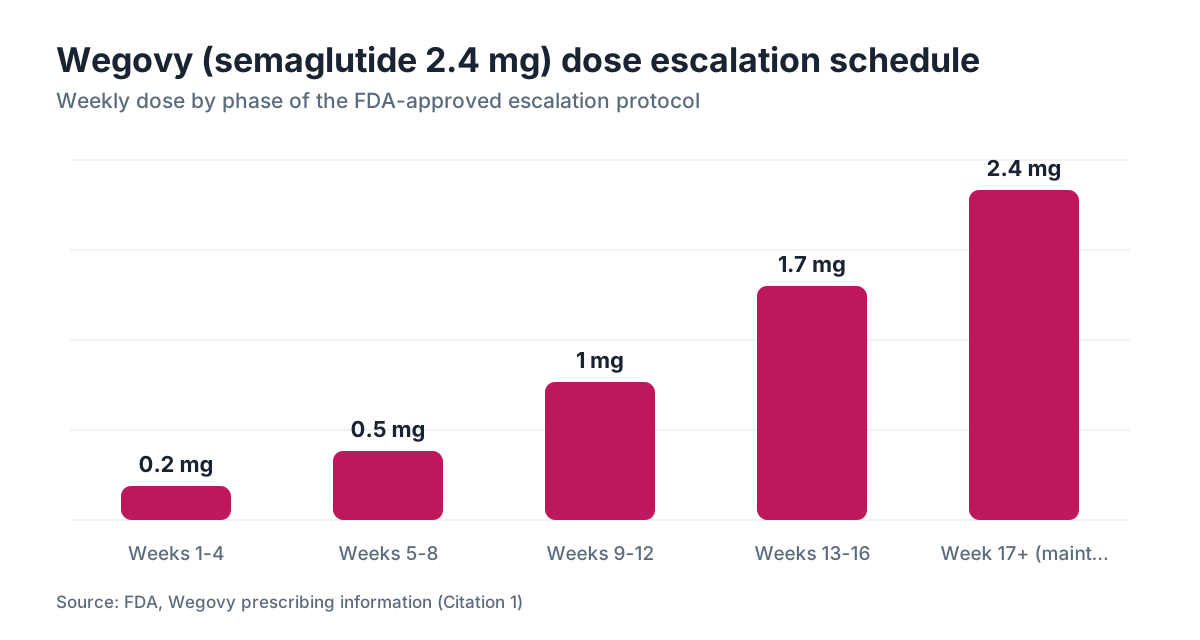
Semaglutide climbs slowly on purpose, to keep the GI side effects manageable. The FDA-approved Wegovy schedule for chronic weight management is [1]:
| Weeks | Weekly dose | |---|---| | 1-4 | 0.25 mg | | 5-8 | 0.5 mg | | 9-12 | 1.0 mg | | 13-16 | 1.7 mg | | 17+ (maintenance) | 2.4 mg |
This 16-week ramp isn't optional. Jump straight to maintenance and you get much higher rates of nausea, vomiting, and people quitting the drug. In the STEP 1 trial (n=1961), 84.1% of participants reached the 2.4 mg maintenance dose, and most of the people who dropped out did so during the early escalation weeks [5].
Ozempic (for type 2 diabetes) starts at 0.25 mg weekly for 4 weeks, then 0.5 mg. It can go up to 1 mg and then 2 mg depending on glucose response [3].
Compounded semaglutide dosing varies by prescriber and product. Some protocols start below 0.25 mg (0.1 mg or 0.15 mg, say) for women who are very sensitive to GI effects, especially those in perimenopause already dealing with nausea or gut changes. No published trial has tested ultra-low starting doses in this group specifically, but pharmacologically the logic holds up.
Miss a dose? Inject it as soon as you remember, as long as your next scheduled dose is at least 48 hours out. If it's inside 48 hours, skip it and get back on your normal schedule. Never double up [3].
For more on using the drug for weight loss and what real-world results look like for women, see semaglutide for weight loss.
Is self-injection safe if you have never injected before?
Yes, for almost everyone. Subcutaneous injection of GLP-1 medications counts as low-risk for home use, which is why the FDA approved these drugs for self-administration with no in-office training requirement.
Still, the first injection is the one that benefits most from someone walking you through it, whether that's your prescriber, a nurse, or a pharmacist. Many telehealth GLP-1 programs build in a video consult or instructional video during onboarding. WomenRx includes clinical guidance on injection technique as part of its GLP-1 prescribing process, because skipping that step is where most early mistakes come from.
Needle phobia is real and common. If you catch yourself dodging your injection day, a few things help: use the thinnest needle you can get (32 to 34 gauge), ice the site for 30 seconds first (it numbs the surface), push the needle in at 90 degrees without pausing once it breaks skin (hesitation makes it worse), and look away. Most people say it's a small pinch, less than a blood draw.
Some conditions are worth a quick technique check with your care team: very low body weight (less fat, higher chance of hitting muscle), active skin infections or psoriasis plaques where you'd inject, or clotting disorders that make bruising a bigger deal. None of these rule out self-injection. They're just reasons to get a hands-on review before you go it alone.
If you're on hormone therapy alongside semaglutide, know that neither estrogen nor progesterone interacts with semaglutide pharmacokinetically. But if you're tracking weight, appetite, or GI changes while you start or stop hormones, those shifts can masquerade as a medication response. Our hormone replacement therapy piece helps you tell them apart.
How do you store semaglutide and dispose of needles legally?
Storage: Store brand pens (Ozempic, Wegovy) in the refrigerator at 36 to 46 degrees F (2 to 8 degrees C) before first use. After that, Ozempic keeps at room temperature (up to 77 degrees F) for up to 56 days. Wegovy single-dose pens stay refrigerated until use and should be used within 28 days if kept at room temperature after you take them out [3][7]. Don't freeze either one. Freezing wrecks the peptide and the drug stops working.
Compounded semaglutide vials usually stay refrigerated the whole time. Go by the expiration date on the label and whatever your compounding pharmacy tells you.
Sharps disposal: All 50 states have laws or guidelines for home sharps disposal, and most ban loose needles in regular trash or recycling. The FDA recommends an FDA-cleared sharps disposal container, then following your local rules [6]. Your options:
- Drop-off locations (pharmacies, hospitals, some health departments)
- Mail-back programs (some states offer or require these)
- Home needle destruction devices
When a container hits about three-quarters full, seal it and use your local disposal method. Don't overfill it, and don't recap needles with two hands. Those two habits prevent the needlestick injuries that send home injectors to the ER.
Traveling? Bring a small puncture-resistant travel sharps container, and don't try to cross an international border with used sharps without checking that country's customs rules first. TSA allows insulin syringes and pen needles through security as long as the medication is with them.
What side effects are directly linked to injection technique versus the drug itself?
Knowing which problems you can fix with better technique and which are just the drug being the drug saves a lot of worry.
Technique-related (fixable):
- Injection site pain, bruising, or redness: usually dull needles, cold medication, wet alcohol, or hitting scar tissue. All fixable with the steps above.
- Lumps or dents at injection sites (lipohypertrophy or lipoatrophy): from not rotating. Rotate and they clear up over weeks to months.
- Incomplete dose delivery: from skipping the 6-second hold or from a clogged needle. Check technique, use a fresh needle.
- Extra local inflammation: sometimes from injecting too often into one small patch. Space injections at least an inch apart.
Drug-related (technique won't touch these):
- Nausea, vomiting, diarrhea, constipation: the most common semaglutide side effects overall. In STEP 1, nausea hit 44% of semaglutide participants versus 16% on placebo [5]. These come from GLP-1 receptor activation in your gut and brain, not from how you inject.
- Fatigue during dose escalation
- Injection site reactions: mild redness or itching right at the injection spot, separate from the tissue-damage issues above. These are immune responses to the drug and usually fade after a few weeks.
- Gallbladder events: 2.6% of semaglutide participants in STEP 1 versus 1.2% on placebo, including cholecystitis and cholelithiasis [5]. Nothing to do with injection.
If you get a hard lump that won't go, warmth, spreading redness, or a fever from an injection site, that could be infection and needs a clinician. Uncommon with good technique, but it happens.
For women in perimenopause or menopause stacking symptoms like nausea, fatigue, and mood swings, figuring out whether semaglutide or hormonal shifts are behind it matters. Read up on perimenopause and how its timeline overlaps with the age range when so many women start GLP-1 therapy.
Special considerations for women: menopause, body composition, and injection site choice
Women in their 40s, 50s, and 60s have physiology that changes how these injections play out in practice.
Body fat shifts during perimenopause and menopause, moving from hips and thighs toward the abdomen [9]. That actually makes abdominal injection easier and more reliable in this age group, since there's more fat in that zone to work with. One catch: if abdominal fat has gone visceral (deep, around your organs) rather than subcutaneous (just under the skin), your subcutaneous layer may be thinner than you'd guess, so the pinch-and-insert technique matters even more for staying shallow.
Muscle mass drops as estrogen falls, starting in perimenopause [9]. Women who are also lifting (which semaglutide guidance increasingly recommends to protect muscle during weight loss) may end up with less fat on the outer thigh. The abdomen or upper arm may serve you better.
Skin thins as estrogen declines [9]. Thinner skin bruises a little easier and heals slower from the tiny trauma of an injection. Using the finest gauge needle you can (32 to 34 gauge) and rotating diligently matters more, not less, with age.
Semaglutide produces real weight loss (a mean of 14.9% of body weight at 68 weeks in STEP 1 [5]), but muscle loss rides along with it. Women who start the drug while already losing muscle to menopause should talk protein targets and resistance training with their prescriber. This is also where hormones can genuinely help: hormone replacement therapy helps preserve lean mass during menopause and may pair well with the weight loss from GLP-1 therapy.
Estrogen patches, progesterone, and most other hormone formulations don't interact with semaglutide at the pharmacokinetic level. But GLP-1 drugs slow gastric emptying, which could in theory reduce absorption of oral medications taken around the same time. Take oral estrogen and oral progesterone at a consistent time relative to your injection day, and flag this for your prescriber. Patches and gels sidestep the issue entirely. Our estrogen patch overview has the context.
Frequently asked questions
How often do you inject semaglutide?
Once a week, same day each week. You pick the day, and a lot of women choose a weekend morning when they aren't rushed. Semaglutide's half-life is about 7 days, which is what makes once-weekly dosing work. If you miss a day, inject as soon as you remember as long as your next dose is at least 48 hours away. Otherwise skip it and resume your regular schedule.
Can you inject semaglutide in your stomach?
Yes, and the abdomen is the most recommended site. Stay at least 2 inches from your navel in any direction, skip scars and broken-open stretch marks, and pinch up a fold of fat before the needle goes in. Rotate quadrants each week so lumps don't form.
What angle do you inject semaglutide at?
For most women, 90 degrees (straight in, perpendicular to the skin fold) keeps the needle in fat. Very lean women with little subcutaneous fat may need 45 degrees to miss the muscle. Not sure? Pinch up a fold first. The fold should be at least 1 to 2 inches thick to safely use 90 degrees with a standard 4 to 5 mm pen needle.
Do you need to pinch the skin when injecting semaglutide?
Yes, especially in the abdomen and thigh. Pinching lifts the fat layer off the muscle below and lowers the chance of an intramuscular injection. Use your free hand to pinch a fold about an inch wide, hold it through the whole injection, and let go only after the needle is fully out.
Can I inject semaglutide in my thigh?
Yes, the outer thigh is an FDA-approved site. Use the middle third of the outer thigh, not the inner thigh and not right at the hip. Sit with the leg relaxed and flat. The thigh works especially well if you have enough fat there and find the abdomen uncomfortable.
How long do you hold the pen in after injecting semaglutide?
Hold the dose button fully pressed for at least 6 seconds before pulling the needle out. This delivers the complete dose and stops the medication from leaking back out along the needle track. Skipping it is one of the most common reasons people get an incomplete dose.
What happens if semaglutide leaks out after injection?
A tiny drop at the needle tip after you pull out is normal and barely any volume. If you saw liquid running down your skin during the injection, you may have gotten a partial dose. Don't re-inject right away. Watch whether your usual appetite suppression or side effects show up over the next day or two. If they don't, call your prescriber before adding more.
Can you rotate between semaglutide injection sites in the same week?
Since semaglutide is weekly, you only inject once a week, but you should change your site each week. You can rotate within one region (a different spot in the same abdominal quadrant each week) or between regions (abdomen one week, thigh the next). Keeping each injection at least an inch from the last one in the same area prevents tissue buildup.
Is it normal for the semaglutide injection site to be red or itchy?
Mild redness, itching, or slight swelling at the site is common, especially the first few weeks. It's a local immune response to the drug and usually clears within hours to days. If you get spreading redness, warmth beyond the injection spot, a fever, or a growing lump, see a clinician, since those can signal infection or a real allergic reaction.
Can you inject semaglutide in your arm?
Yes, the upper arm is an approved site. Use the outer, fatty area, not the deltoid muscle. It's harder to self-inject because you can't see or steady it well, so it works best when a partner or caregiver helps. If you're doing it alone, practice the motion without a needle first to check your reach and angle.
Does a semaglutide injection hurt?
Most people call it a mild pinch or barely notice it. Pain usually comes from cold medication (let it warm up 15 to 30 minutes), a reused needle, or wet alcohol. A fresh 32 to 34 gauge needle, room-temperature medication, and letting the alcohol dry before you inject clears up most of the discomfort.
What do you do with used semaglutide needles?
Drop them straight into an FDA-cleared sharps disposal container. When it's three-quarters full, seal it and dispose per your local rules (drop-off site, mail-back program, or similar). No loose needles in household trash or recycling. All 50 states regulate home sharps disposal; your pharmacist or the FDA's sharps disposal page can point you to local options.
Can semaglutide be injected in the same spot every week?
No. Same spot every week builds lipohypertrophy, fibrous scar tissue that cuts absorption and makes dosing unpredictable. Rotate at least an inch from the last injection. Consistent rotation is one of the highest-impact habits for steady, effective delivery across months and years of treatment.
How does semaglutide injection compare to tirzepatide injection?
The technique is nearly identical. Tirzepatide (Mounjaro, Zepbound) is also a once-weekly subcutaneous injection into the abdomen, thigh, or upper arm, using the same pinch, insert, hold, and rotate approach. The differences are in the drug's mechanism, dose schedule, and side effect profile, not the method. Our semaglutide vs tirzepatide comparison covers those in detail.
Sources
- FDA, Wegovy (semaglutide) prescribing information
- European Medicines Agency, semaglutide clinical pharmacology assessment report
- FDA, Ozempic (semaglutide) prescribing information label
- American Diabetes Association, Standards of Care in Diabetes, injection technique guidance
- Wilding JPH et al., STEP 1 trial, New England Journal of Medicine, 2021
- FDA, Safely Using Sharps (Needles and Syringes) at Home, at Work and on Travel
- FDA, Wegovy (semaglutide) prescribing information, storage and handling
- Endocrine Society, Clinical Practice Guideline: Pharmacological Management of Obesity, 2015
- North American Menopause Society (NAMS), Menopause Practice: A Clinician's Guide
- Davies M et al., SCALE Obesity and Prediabetes, NEJM, 2015 (liraglutide); Rubino D et al., STEP 4, JAMA, 2021