How to increase sex drive during menopause: what actually works
TL;DR: Low sex drive during menopause is driven mainly by falling estrogen and testosterone, vaginal dryness, and disrupted sleep. Hormone therapy (estrogen, sometimes testosterone), ospemifene, flibanserin, and targeted lifestyle changes all have evidence behind them. No single fix works for everyone, but most women who pursue treatment see real improvement within weeks to months.
Why does sex drive drop during menopause in the first place?
Your hormones are reshaping your entire body, and desire is one of the first things to go. Estrogen drops sharply in the years around menopause, and that fall does several things at once. It thins the vaginal walls, reduces natural lubrication, and can make penetration genuinely painful. Pain during sex kills desire fast. Testosterone also falls, and testosterone is the hormone most tightly linked to sexual desire in women, more than men.
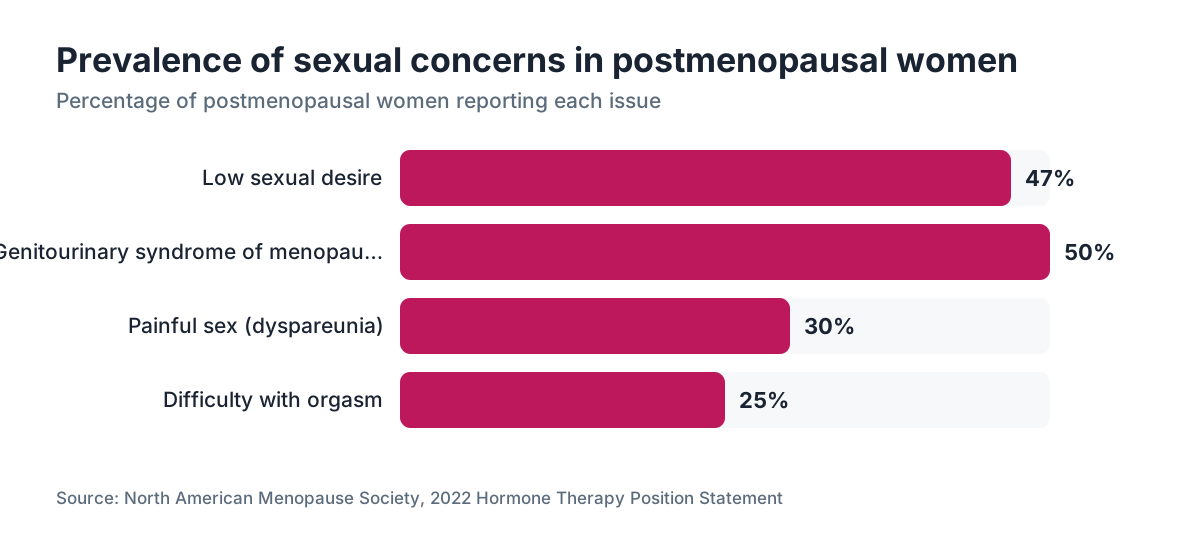
The North American Menopause Society (NAMS) estimates that roughly 40 to 55 percent of postmenopausal women report low sexual desire, making it the most common sexual complaint in this life stage [1]. That number matters because low libido in menopause is not a character flaw or a relationship problem. It has a physiological cause.
Sleep disruption adds another layer. Night sweats and insomnia, which are direct consequences of falling estrogen, leave many women exhausted. Exhaustion is one of the most effective libido suppressants there is. Depression and anxiety, both more common in the perimenopause transition, compound the problem. So does body image, which shifts for many women during this period. Desire sits downstream of all these factors, and that is the starting point for fixing it.
See the full picture of what's happening hormonally in our guide to menopause and, if you're still in the transition, perimenopause age.
What hormones affect sex drive in menopause, and can you measure them?
Estrogen and testosterone are the two hormones that matter most for female libido, and both decline during and after menopause. Estrogen receptors line the vaginal tissue, clitoris, and urethra. When estrogen falls, that tissue atrophies, becomes less sensitive, and produces less lubrication. The clinical term is genitourinary syndrome of menopause (GSM), and it affects roughly 50 percent of postmenopausal women [2].
Testosterone is produced in the ovaries and adrenal glands. Ovarian testosterone production slows substantially after menopause. No consensus threshold for "low" female testosterone exists, which makes interpreting blood tests tricky. The Endocrine Society's 2014 clinical practice guideline states that it does not recommend making a diagnosis of androgen deficiency in women due to the lack of a well-defined syndrome and validated normal ranges [3]. That said, many clinicians still use total testosterone as a rough guide, aiming for premenopausal reference ranges when treating.
Progesterone also declines, though its link to libido is less direct. Some women report mood and sleep improvements on progesterone that indirectly improve desire. Read more about how that hormone works in our progesterone overview.
Baseline blood work worth asking for includes estradiol (E2), total testosterone, free testosterone, SHBG (sex hormone-binding globulin), TSH (thyroid), and a basic metabolic panel. SHBG is worth measuring because high SHBG binds free testosterone and can leave you with low active testosterone even when total levels look adequate.
Does hormone replacement therapy actually help with low libido?
For most women, yes. Systemic estrogen therapy improves libido indirectly by resolving the problems that suppress it: dryness, dyspareunia (painful sex), sleep disruption, and mood instability. It does not reliably increase desire directly the way testosterone does, but removing the barriers to desire is often enough.
The NAMS 2022 Hormone Therapy Position Statement concludes that hormone therapy remains the most effective treatment for vasomotor symptoms (hot flashes, night sweats) and GSM, and that for women under 60 or within 10 years of menopause onset, the benefits generally outweigh the risks for most healthy women [1]. That 10-year window matters and is often called the "timing hypothesis."
Estrogen can be delivered as pills, patches, gels, sprays, or vaginal rings. For libido specifically tied to GSM, low-dose vaginal estrogen (cream, ring, or suppository) puts estrogen exactly where the problem is, at doses low enough that systemic absorption is minimal. This is a meaningful distinction for women with a history of breast cancer or who prefer to minimize systemic exposure. Read more about delivery options in our estrogen patch article.
The full story on risks and options is in our hormone replacement therapy guide.
Does testosterone therapy increase sex drive in menopausal women?
This is where the evidence is strongest for libido specifically. A 2019 systematic review and meta-analysis in The Lancet Diabetes and Endocrinology analyzed 36 randomized controlled trials involving 8,480 women and found that testosterone therapy significantly improved sexual function, desire, arousal, orgasm, and satisfaction compared to placebo or comparator [4]. The effect was clinically meaningful, more than statistically significant.
The problem is that no testosterone product is FDA-approved for women in the United States. Clinicians who prescribe it do so off-label, typically using low-dose compounded testosterone cream or gel, or male-formulated testosterone products at fractions of the male dose. Pellet implants are also used, though less data exists on dose consistency with pellets.
Target ranges that most clinicians aim for: total testosterone in the premenopausal female range, roughly 15 to 70 ng/dL, though lab ranges vary. Free testosterone is more clinically meaningful and is ideally kept in the mid-normal premenopausal range. Starting doses are typically low and titrated over weeks.
Side effects at appropriate female doses are generally mild: some acne, a little increased body hair. Virilizing effects (voice change, clitoral enlargement) are dose-dependent and rare at physiologic doses. Monitoring every 3 to 6 months is standard practice.
What non-hormone medications are FDA-approved for low libido in women?
Two medications have FDA approval specifically for hypoactive sexual desire disorder (HSDD), which is the clinical term for low libido causing personal distress.
Flibanserin (Addyi) was approved by the FDA in 2015 for premenopausal women with HSDD [5]. It works on serotonin and dopamine receptors in the brain, not hormones. The registration trials showed it increased satisfying sexual events by roughly one additional event per month compared to placebo, which sounds modest but was statistically meaningful in trials of 700 to 1,000 women. It carries a boxed warning about hypotension and syncope when combined with alcohol, and it requires a prescriber certification (REMS program). It is taken daily as a 100 mg pill at bedtime. It is approved for premenopausal women, though some clinicians use it off-label in postmenopausal women.
Bremelanotide (Vyleesi) was FDA-approved in 2019 for premenopausal women with HSDD [5]. It is injected subcutaneously about 45 minutes before anticipated sexual activity, as needed. It acts on melanocortin receptors. The main side effects are nausea (reported in about 40 percent of users in trials) and transient blood pressure elevation. It is not for daily use.
Ospemifene (Osphena) is not a libido drug per se, but it is FDA-approved for treating dyspareunia due to GSM [6]. By making sex less painful, it removes one of the biggest drivers of low desire. It is a selective estrogen receptor modulator taken as a 60 mg daily oral pill. For women who can't or won't use vaginal estrogen, it is a reasonable alternative.
| Medication | Approval year | Mechanism | How taken | Main caveat | |---|---|---|---|---| | Flibanserin (Addyi) | 2015 | Serotonin/dopamine | Daily oral pill | No alcohol; REMS program | | Bremelanotide (Vyleesi) | 2019 | Melanocortin receptor | Pre-sex injection | Nausea; BP increase | | Ospemifene (Osphena) | 2013 | SERM | Daily oral pill | For painful sex, not desire directly | | Vaginal estrogen (various) | Multiple | Estrogen receptor | Cream/ring/suppository | Minimal systemic absorption |
What lifestyle changes actually move the needle on libido?
Lifestyle advice often sounds like filler, but a few changes have mechanistic backing that is worth taking seriously.
Sleep. This one is not negotiable. Sleep deprivation suppresses testosterone production and increases cortisol, which directly suppresses sex hormones. If hot flashes are wrecking your sleep, treating them first (with hormone therapy, non-hormonal prescriptions like fezolinetant, or even a cooling mattress pad) is often the highest-leverage move for libido.
Exercise, specifically resistance training. Resistance exercise transiently raises testosterone in women and improves body image, both of which feed into desire. A 2018 study in the Journal of Sexual Medicine found that higher physical activity levels were associated with better sexual function in postmenopausal women [7]. Aim for at least two sessions of resistance training per week.
Pelvic floor physical therapy. If pain during sex is the primary issue, a pelvic floor PT can assess and treat hypertonic (too tight) pelvic floor muscles, which is extremely common after menopause. This is underused and often dramatically effective. A referral from your gynecologist or a self-referral to a pelvic health specialist works.
Alcohol. Counterintuitively, regular alcohol use depresses testosterone and disrupts sleep architecture. Cutting back often improves libido, even though a drink seems to lower inhibitions in the moment.
Stress and the cortisol-testosterone seesaw. Chronic stress raises cortisol, which competes with testosterone for production resources. Mindfulness has some evidence behind it: a small but real 2018 randomized trial published in Psychosomatic Medicine found that mindfulness-based cognitive therapy improved sexual desire in women with sexual dysfunction [8].
Lubricants and moisturizers. Not glamorous, but relevant. Long-acting vaginal moisturizers (used every 2 to 3 days, not only during sex) rebuild comfort and can make sex feel possible again. NAMS recommends them as first-line for GSM when women prefer to avoid hormones [1]. Water-based and silicone-based lubricants both work during sex; avoid oil-based options with latex condoms.
Does low libido in menopause have a psychological component, and how do you address it?
Yes, and ignoring the psychological piece means incomplete treatment for most women. Desire is not a purely biological event. It requires context, safety, and mental bandwidth.
Cognitive behavioral therapy (CBT) adapted for sexual dysfunction has the best evidence base among psychological approaches. A 2018 review in Sexual Medicine Reviews found that CBT significantly improved sexual desire, satisfaction, and distress in women with HSDD [9]. The key mechanisms are reducing performance anxiety, restructuring negative thoughts about sex and the body, and improving communication with a partner.
Mindfulness-based sex therapy teaches women to stay present during sexual activity rather than mentally monitoring their response. It was developed largely by Dr. Lori Brotto at the University of British Columbia and has been studied specifically in menopausal women with GSM and low desire. The research is promising.
Relationship dynamics matter too. Long-term partnerships often settle into patterns where initiation drops and novelty disappears. This is not pathology. But it does mean that even with perfect hormone levels, desire may stay low if the relational context isn't addressed. Couples therapy or sex therapy is a legitimate medical recommendation, not a last resort.
Depression is worth screening for explicitly. The PHQ-9 or similar tool, administered at a routine visit, catches a lot of untreated depression that is being blamed on "just menopause."
Can weight loss improve sex drive during menopause?
There is a real connection here, though causality runs in multiple directions. Excess adipose tissue converts androgens to estrogen via aromatase, which can raise SHBG and reduce free testosterone. It also contributes to insulin resistance, inflammation, and sleep apnea, all of which suppress libido. Body image, which strongly influences sexual confidence, also shifts with weight.
GLP-1 receptor agonists like semaglutide have become major tools for weight loss in this age group. The STEP 1 trial, published in the New England Journal of Medicine in 2021, showed mean body weight reduction of 14.9 percent with semaglutide 2.4 mg versus 2.4 percent with placebo over 68 weeks [10]. Several smaller studies have noted improvements in sexual function in women following significant weight loss, though GLP-1 drugs haven't been studied specifically for libido endpoints in large trials.
If you're curious whether a GLP-1 might be appropriate for you alongside hormone therapy, our guides to semaglutide for weight loss and semaglutide cover how these medications work. WomenRx provides telehealth evaluation for both GLP-1 therapy and hormone management for women in menopause, if you want to explore both in one place.
Weight loss alone rarely fixes low libido if underlying hormone deficiency is the primary driver, but in the context of obesity and metabolic disruption, it can meaningfully improve the hormonal environment.
What does a real treatment plan look like, step by step?
A sensible, evidence-based approach looks something like this:
Step 1: Get baseline labs. Estradiol, FSH, total and free testosterone, SHBG, TSH, and a basic metabolic panel. If symptoms are severe, a fasting insulin and HbA1c are worth adding to rule out insulin resistance.
Step 2: Address GSM first if dyspareunia is present. Vaginal dryness and painful sex need to be treated before libido can improve. Start with a quality vaginal moisturizer used regularly and a lubricant during sex. If symptoms persist, low-dose vaginal estrogen or ospemifene is the next step.
Step 3: Consider systemic hormone therapy if you have other menopause symptoms. Hot flashes, sleep disruption, and mood symptoms all suppress libido. Treating them with estrogen (and progesterone if you have a uterus) often improves desire as a downstream effect within 8 to 12 weeks.
Step 4: Evaluate for testosterone supplementation. If libido is still low after estrogen is optimized, testosterone is the most evidence-based next step. Work with a provider who will prescribe an appropriate dose and monitor blood levels every 3 to 6 months.
Step 5: Address psychological and relational factors in parallel. CBT or sex therapy doesn't need to wait for hormones to be sorted. The two approaches reinforce each other.
Step 6: Optimize sleep, exercise, and alcohol intake. These are not afterthoughts. Sleep and resistance training have direct hormonal effects. Persistent alcohol use will blunt the benefit of everything else.
Step 7: Reassess at 12 weeks. Most hormone interventions take 8 to 12 weeks to show meaningful effect on libido. Don't abandon a reasonable plan in 3 weeks.
For a broader map of where menopause hormone care fits, our hormone replacement therapy guide walks through the risk-benefit framework in detail.
What questions should you ask your doctor about low libido in menopause?
Many women feel embarrassed raising this topic, and many clinicians, frankly, don't ask about it. You may need to be direct. Here's what to ask:
"Can we check my estrogen and testosterone levels as part of this visit?"
"Is my low libido related to vaginal dryness or pain, or is it a desire problem, or both?"
"What are my options for vaginal estrogen specifically, and is that separate from the decision about systemic hormone therapy?"
"Have you prescribed testosterone for women before? What form do you use and how do you monitor it?"
"Should we consider a referral to a sex therapist or pelvic floor PT alongside the medical treatment?"
"What's a realistic timeline for improvement?"
If your provider dismisses low libido as "just menopause" without any further workup or discussion of treatment options, that is a sign to seek a second opinion. NAMS maintains a provider directory at menopause.org where you can search for certified menopause practitioners by location [1].
WomenRx offers telehealth consultations specifically for menopause hormone management, including evaluation for testosterone and estrogen therapy, if you don't have easy access to a menopause specialist locally.
Are there supplements or over-the-counter products that help with libido in menopause?
This is where honest hedging is necessary. The supplement market for female libido is enormous and mostly unregulated. A few things have at least some evidence; most don't.
DHEA (dehydroepiandrosterone). The ovaries and adrenal glands make DHEA, a precursor to testosterone and estrogen. Intravaginal DHEA (prasterone, brand name Intrarosa) is FDA-approved for dyspareunia due to GSM [6]. Oral DHEA at 25 to 50 mg daily is used off-label and converts to androgens locally in tissues. The evidence for oral DHEA on libido is modest and inconsistent, but it is physiologically plausible and generally well-tolerated at low doses.
Maca root. A small number of RCTs (mostly small, short, and funded by industry) suggest maca may improve libido in postmenopausal women. A pilot study in Menopause found improved sexual dysfunction scores versus placebo, but the effect size was small and the trial involved 14 women [11]. Worth knowing about; not worth much confidence.
L-arginine. A precursor to nitric oxide, which increases genital blood flow. Combined with other ingredients in products like ArginMax, it showed some benefit in small trials. Not a strong recommendation.
Red clover and soy isoflavones. These are phytoestrogens. Evidence for libido benefit specifically is weak. They may modestly help with hot flashes in some women.
For anything claiming to "balance hormones" without a listed mechanism, skip it. The regulatory bar for structure-function claims on supplements is extremely low in the United States.
How long does it take to see improvement in sex drive after starting treatment?
Realistic timelines matter because many women abandon treatment too early.
Vaginal estrogen: genitourinary symptoms (dryness, discomfort) often improve within 2 to 4 weeks, with maximal effect at 8 to 12 weeks.
Systemic estrogen therapy: vasomotor symptoms improve faster (often within 2 to 4 weeks), but the indirect libido benefit from better sleep and mood takes 6 to 12 weeks to become apparent.
Testosterone: most women who respond notice changes in desire within 4 to 8 weeks. Full effect assessment is typically done at 12 weeks.
Flibanserin: the prescribing information for Addyi specifies that patients who don't experience benefit within 8 weeks should discontinue [5]. Response is binary for many women.
Bremelanotide (Vyleesi): onset is within 45 minutes because it is used on-demand, but the quality of response varies by individual.
CBT and sex therapy: research protocols typically run 6 to 12 sessions over 8 to 12 weeks. Most women report meaningful change by session 4 to 6.
Pelvic floor PT: typically 6 to 8 sessions, with many women noticing comfort improvement by session 3.
Patience is not a passive act here. Tracking your experience in a simple journal (libido level 1-10, sleep quality, whether you had sex and whether you wanted to) gives you real data to bring back to your provider.
Frequently asked questions
How common is low sex drive during menopause?
Very common. The North American Menopause Society estimates that 40 to 55 percent of postmenopausal women report low sexual desire. It is the most frequently reported sexual complaint in this life stage, and it has identifiable hormonal and physiological causes. That means it is treatable in most cases, not something to simply accept.
Can menopause cause low libido even before periods stop?
Yes. The perimenopause transition, which can begin years before the final period, involves fluctuating and declining estrogen and testosterone. Many women notice decreased desire, vaginal dryness, or painful sex during perimenopause, sometimes before they've connected the dots to hormonal changes. If you're in the transition and noticing these changes, it's worth discussing with a provider now rather than waiting for full menopause.
Is there an FDA-approved testosterone product for women in the US?
No. As of mid-2026, no testosterone product has FDA approval specifically for women in the United States. Clinicians who prescribe testosterone for female libido do so off-label, using compounded preparations or low doses of male-formulated products. This is a legitimate and common clinical practice, but it means dosing and monitoring require an experienced prescriber.
Does estrogen therapy directly increase sexual desire?
Estrogen mainly improves libido indirectly by resolving vaginal dryness, pain during sex, sleep disruption, and mood changes, all of which suppress desire. For many women, this indirect effect is significant. For women whose primary complaint is low desire rather than painful sex or dryness, testosterone is the hormone with the most direct evidence.
Can vaginal dryness cause low libido, or are they separate problems?
They are separate problems that frequently occur together and amplify each other. Vaginal dryness and atrophy (genitourinary syndrome of menopause) make sex painful, and anticipated pain reliably kills desire over time. Treating dryness first, with vaginal estrogen or moisturizers, often improves desire as a direct result of making sex something the body no longer associates with discomfort.
What is flibanserin and does it work for menopausal women?
Flibanserin (Addyi) is FDA-approved for HSDD in premenopausal women and works on brain serotonin and dopamine pathways. Trials showed roughly one additional satisfying sexual event per month versus placebo. It is not FDA-approved for postmenopausal women, though some clinicians use it off-label. It cannot be taken with alcohol and requires a prescriber REMS certification.
Are there natural ways to increase estrogen and boost libido after menopause?
No food or supplement meaningfully raises circulating estrogen to premenopausal levels. Phytoestrogens (soy, red clover) bind weakly to estrogen receptors and may modestly reduce hot flashes in some women, but evidence for libido benefit is weak. Maintaining a healthy weight reduces aromatase-driven conversion that can lower free testosterone. For meaningful hormone restoration, prescription hormone therapy is the only well-evidenced option.
How does sleep affect sex drive during menopause?
Sleep deprivation raises cortisol and suppresses testosterone production. Hot-flash-related sleep disruption is one of the most common libido suppressants in menopause, and it is often underappreciated. Treating vasomotor symptoms (with hormone therapy or non-hormonal options like fezolinetant) to improve sleep frequently improves desire as a downstream effect, sometimes without any additional libido-specific treatment.
Can pelvic floor physical therapy help with low sex drive?
If pain during sex is contributing to low desire, pelvic floor physical therapy is one of the most effective and underused interventions available. After menopause, pelvic floor muscles often become hypertonic (too tight), which causes pain. A trained pelvic floor PT can assess and treat this in 6 to 8 sessions. Many women report dramatic improvement in both comfort and desire.
Does weight loss improve libido in menopause?
It can. Excess adipose tissue raises SHBG and can reduce free testosterone. Obesity is also linked to sleep apnea and insulin resistance, both of which suppress sex hormones. GLP-1 medications like semaglutide have produced average weight loss of nearly 15 percent in trials. Meaningful weight loss often improves the hormonal environment, though it rarely fixes low libido on its own if hormone deficiency is the primary driver.
What is HSDD and is it different from low libido?
Hypoactive sexual desire disorder (HSDD) is the clinical diagnosis for low or absent sexual desire that causes personal distress. It is more than low frequency of sex. The key criterion is the distress component: if you're not bothered by low desire, it is not HSDD. The diagnosis matters because flibanserin and bremelanotide are approved specifically for HSDD, not for low libido as a general complaint.
How do I find a doctor who specializes in menopause and sexual health?
The North American Menopause Society maintains a searchable directory of certified menopause practitioners at menopause.org. The International Society for the Study of Women's Sexual Health (ISSWSH) also has a provider finder. Telehealth platforms focused on women's hormonal health, including WomenRx, can be a practical option when a local specialist isn't accessible.
Is low libido in menopause permanent if left untreated?
It tends to persist or worsen without treatment, because the underlying hormonal changes don't reverse on their own after menopause. Vaginal atrophy progresses, and avoidance of sex due to pain or low desire creates its own negative feedback loop. The good news: treatment at any point in the postmenopausal period can improve sexual function meaningfully. Later start is not hopeless; it just may take longer.
Can antidepressants cause low libido during menopause?
Yes, and this is frequently overlooked. SSRIs and SNRIs, which are commonly prescribed for menopause-related mood symptoms and even hot flashes, are among the most common causes of drug-induced low libido and anorgasmia. If you started an antidepressant around the time your libido dropped, that connection is worth discussing with your prescriber. Bupropion is one antidepressant with a relatively lower sexual side-effect profile.
Sources
- North American Menopause Society, 2022 Hormone Therapy Position Statement
- ACOG, Genitourinary Syndrome of Menopause
- Endocrine Society, Androgen Therapy in Women Clinical Practice Guideline, 2014
- Islam RM et al., The Lancet Diabetes and Endocrinology, 2019
- FDA, Addyi (flibanserin) and Vyleesi (bremelanotide) drug approvals
- FDA, Osphena (ospemifene) and Intrarosa (prasterone) drug approvals
- Stanton AM et al., Journal of Sexual Medicine, 2018
- Paterson LQ et al., Psychosomatic Medicine, 2017
- Kingsberg SA et al., Sexual Medicine Reviews, 2018
- Wilding JPH et al., New England Journal of Medicine, STEP 1 trial, 2021
- Brooks NA et al., Menopause, 2008 (maca pilot study)