How to increase progesterone naturally: what actually works
TL;DR: You can support your body's own progesterone by lowering chronic stress (high cortisol suppresses ovulation), keeping your weight in an ovulation-friendly range, eating enough zinc, magnesium, B6, and fat, and sleeping 7 to 9 hours. Chasteberry (Vitex) has modest trial evidence. None of this replaces prescription progesterone when your levels are clinically low, but these are real levers.
What does progesterone actually do, and why does low progesterone matter?
Progesterone is the hormone your body makes after ovulation, mostly in the corpus luteum, the temporary gland that forms in your ovary once an egg is released. Its main job is to prepare the uterine lining for a possible pregnancy, then drop sharply so you get a period. It does far more than that.
Progesterone has a direct calming effect on the brain because it converts to a compound called allopregnanolone, which acts on GABA receptors, the same receptors anti-anxiety medications target [1]. It helps regulate sleep, body temperature, and fluid balance. It also counteracts estrogen's stimulating effect on breast and uterine tissue, which is why women on estrogen therapy who still have a uterus have to take progestin or progesterone alongside it.
When progesterone runs low relative to estrogen, a pattern often called estrogen dominance, women notice irregular or heavy periods, spotting in the second half of the cycle, anxiety, poor sleep, breast tenderness, and bloating. These show up early in perimenopause, the years before your final period, when ovulation gets erratic and progesterone falls faster than estrogen does [2].
Low progesterone is not always a crisis. For many women it's a slow shift that lifestyle changes can genuinely move. For others, especially those trying to conceive or deep into perimenopause, a prescription is the right tool. Figure out which situation you're in before you spend a dime on supplements.
What causes low progesterone?
The most common cause is simple. You didn't ovulate, or you ovulated poorly. Progesterone is made almost entirely after ovulation. No egg release means no corpus luteum, which means no progesterone. Anything that disrupts ovulation disrupts progesterone.
Chronic stress sits near the top of the list. Your body builds both cortisol and progesterone from the same precursor, pregnenolone. Under sustained stress, your adrenal glands shift that precursor toward cortisol, a phenomenon sometimes called the pregnenolone steal, though that term is contested in endocrinology. What's well-established: high cortisol tracks with suppressed reproductive hormone output [3].
Other common drivers:
- Undereating or very low body fat. The hypothalamic-pituitary-ovarian axis shuts down ovulation when it senses too little energy. Athletes and women on very restrictive diets often have low or absent progesterone as a result.
- Excess body fat. Fat tissue makes estrogen. High estrogen can suppress the LH surge that triggers ovulation, so more estrogen ends up meaning less progesterone.
- Thyroid dysfunction. Hypothyroidism impairs progesterone production and can cause luteal phase defects. Run a TSH test if you have classic low-progesterone symptoms [4].
- Age and perimenopause. Starting in the late 30s to mid-40s, ovarian reserve declines and ovulatory cycles get less reliable. This is the most predictable cause of falling progesterone.
- PCOS. Polycystic ovary syndrome disrupts the hormonal signals that trigger ovulation.
Knowing your cause tells you which lever matters most.
How to naturally increase progesterone: the evidence-ranked strategies
No supplement tells your body to make more progesterone the way a prescription does. What natural strategies do is remove the blocks to your own production, or supply the raw materials your body needs. That distinction changes everything about what to expect.
1. Reduce chronic stress, consistently
This is not generic wellness talk. There's a documented hormonal mechanism. Sustained HPA-axis activation raises cortisol, which suppresses GnRH pulsatility, the signal that drives LH and FSH, which in turn trigger ovulation and progesterone production [3]. A prospective cohort in Human Reproduction found women with high salivary alpha-amylase (a stress biomarker) had a 24% lower probability of conception per cycle, partly through anovulation [5]. You don't need perfection. You need steady stress reduction: sleep, movement that doesn't punish you, hours that aren't spent in crisis mode.
2. Get enough sleep
Sleep is when your brain pulses out the GnRH and LH that run the ovulatory cycle. Chronic sleep below 7 hours a night tracks with menstrual irregularity and lower reproductive hormone output. It's one of the cheapest interventions and one of the most ignored.
3. Eat enough, and eat enough fat
Progesterone is a steroid hormone. Every steroid hormone is built from cholesterol. Women on extremely low-fat diets or hard caloric restriction often have suppressed progesterone. You don't need an unusual diet. You need adequate calories, adequate fat (at least 20 to 25% of calories), and enough zinc, magnesium, and vitamin B6, which support the enzymes involved in progesterone synthesis [6].
4. Keep your weight in an ovulation-friendly range
Both ends of the weight spectrum impair ovulation. Underweight shuts down the HPO axis. Excess fat tissue pumps out extra estrogen and inflammatory signals that scramble ovulatory signaling. In women with obesity who aren't ovulating, even a 5 to 10% drop in body weight can restore ovulation and raise progesterone [7]. This is one place a GLP-1 medication might help hormonal health as a downstream effect of weight loss, worth raising with your clinician.
5. Consider chasteberry (Vitex agnus-castus)
This is the supplement with the most human trial evidence for progesterone-related symptoms. Vitex contains no progesterone. It acts on dopamine receptors in the pituitary, which can lower prolactin and, as a knock-on effect, normalize LH pulsatility and support the luteal phase. A systematic review in Phytomedicine (2017) found Vitex improved luteal phase defects and premenstrual symptoms across multiple controlled trials [8]. The effect is real but modest. Studied doses run 20 to 40 mg of dry extract daily. It's slow: most trials ran 3 to 6 months. Skip it if you're on hormonal contraceptives or dopamine-related medications.
6. Get enough zinc, magnesium, and vitamin B6
These three micronutrients come up over and over in the progesterone literature. Zinc supports the LH surge and corpus luteum function. Magnesium is a cofactor in steroid hormone synthesis and helps modulate cortisol. B6 supports progesterone production and has been used for decades to blunt luteal-phase symptoms. Food first: pumpkin seeds and oysters for zinc, leafy greens and dark chocolate for magnesium, salmon and chickpeas for B6. Supplementing is reasonable if your diet is thin, and the doses in most commercial products (under 25 mg zinc, 200 to 400 mg magnesium glycinate, 50 to 100 mg B6) are safe for most adults.
7. Moderate exercise, not extreme exercise
Regular moderate exercise (150 minutes a week of moderate activity, per CDC guidance) improves insulin sensitivity, lowers cortisol over time, and supports healthy weight, all of which help progesterone indirectly. Overtraining, especially at low body weight, is one of the fastest ways to suppress ovulation and crash progesterone. The line isn't precise, but if you're training more than 10 hours a week at high intensity and your periods are irregular, look hard at your volume.
8. Limit alcohol
Alcohol disrupts the HPA axis, raises cortisol, and can slow the liver's metabolism of hormones. Even moderate intake (about 7 drinks a week) has been linked in some cohort studies to hormonal disruption. This isn't zero-tolerance advice. Cutting back is a real lever.
Which foods increase progesterone naturally?
No food contains progesterone or directly tells your ovaries to make more. Foods supply the building blocks and cofactors your body runs on. The nutrients with the clearest mechanistic and observational support are zinc, magnesium, vitamin B6, and healthy fats.
| Nutrient | Best food sources | Why it matters for progesterone | |---|---|---| | Zinc | Oysters, beef, pumpkin seeds, lentils | Supports LH surge and corpus luteum function | | Magnesium | Spinach, dark chocolate, almonds, avocado | Cofactor in steroid synthesis; helps regulate cortisol | | Vitamin B6 | Salmon, chicken, chickpeas, banana | Supports progesterone biosynthesis; reduces PMS symptoms | | Vitamin C | Bell peppers, citrus, kiwi | A 2003 study found 750 mg/day raised mid-luteal progesterone vs. placebo [9] | | Healthy fats | Olive oil, fatty fish, nuts, avocado | Cholesterol is the direct precursor to all steroid hormones |
The vitamin C finding stands out because it's one of the few supplement studies with actual serum progesterone as the outcome. That trial was small (n=150) and published in Fertility and Sterility, so it needs replication, but 750 mg is safe and cheap.
Wild yam gets name-checked in wellness circles constantly. It contains diosgenin, which chemists can convert to progesterone in a lab. Your body can't run that reaction. Eating wild yam does not raise progesterone. Neither do wild yam creams, whatever the label suggests.
Does stress really lower progesterone, and what can you do about it?
Yes, and the mechanism is documented. The hypothalamic-pituitary-adrenal axis and the hypothalamic-pituitary-ovarian axis share upstream signals. When cortisol stays chronically high, corticotropin-releasing hormone (CRH) suppresses GnRH, which cuts the LH pulse that triggers ovulation. No ovulation, no corpus luteum, no progesterone.
The real question is what to actually do. Meditation has randomized trial evidence for lowering cortisol in perimenopausal women. A 2021 meta-analysis in Menopause found mindfulness-based interventions reduced perceived stress and improved sleep in women with menopausal symptoms, though direct hormone measurements weren't consistently reported [10]. Yoga, especially restorative or yin styles, has similar evidence for cortisol reduction.
Sleep is wired into this. Poor sleep raises cortisol the next day. It's a loop that feeds itself, and breaking it often means treating sleep directly, through sleep hygiene, CBT-I, or sometimes medication.
Here's the honest part. Stress reduction is hard to quantify and hard to study with progesterone as the direct endpoint. The mechanism is real. How much it moves your numbers depends on how stressed you were to begin with.
Can supplements actually raise progesterone levels?
Most can't, at least not directly or dramatically. A few have evidence worth taking seriously.
Vitex agnus-castus (chasteberry): Best-studied. The 2017 Phytomedicine systematic review covered 12 randomized controlled trials [8]. It doesn't raise progesterone directly but can normalize the luteal phase by lowering elevated prolactin and improving LH pulsatility. Effects take 3 to 6 months. Not right for everyone.
Vitamin C (750 mg/day): The Fertility and Sterility study showed a statistically significant rise in mid-luteal progesterone in women with luteal phase defects versus placebo [9]. Effect size was moderate. The study used luteal phase defect as its population, so it's most relevant if you have that specific problem.
Magnesium: No solid RCT shows magnesium directly raising serum progesterone, but deficiency is common (roughly 48% of Americans fall short of the recommended intake, per NHANES data [6]), and magnesium supports the enzyme systems in steroid synthesis. Correcting a deficiency may restore normal function.
Ashwagandha: Has RCT evidence for lowering cortisol. A 2019 trial in Medicine found 240 mg of ashwagandha root extract significantly reduced cortisol versus placebo [11]. If cortisol suppression is your mechanism, this could help downstream. It's not a direct progesterone-raiser.
What doesn't work despite the marketing: Wild yam cream, maca root (evidence is very weak for progesterone specifically), and low-dose over-the-counter progesterone creams. Those OTC creams typically don't raise serum progesterone to meaningful levels. Prescription-strength bioidentical progesterone is a completely different matter.
If you want the full contrast between natural and prescription approaches, the progesterone overview covers both.
How do I know if my progesterone is actually low?
Symptoms give you a clue, not a diagnosis. The only way to know is a blood test, and timing matters enormously.
Progesterone peaks about 7 days after ovulation, the mid-luteal phase. In a standard 28-day cycle, that's around day 21. For longer or shorter cycles, count back 7 days from your expected period, not forward from the start of your cycle.
A mid-luteal progesterone above 10 ng/mL generally counts as evidence of good ovulation. Between 3 and 10 ng/mL may point to a luteal phase defect. Below 3 ng/mL in the mid-luteal phase suggests either no ovulation or a very weak corpus luteum.
In perimenopause and menopause, progesterone production drops hard. After your final period, progesterone is usually undetectable or near zero, below 1 ng/mL. No natural strategy meaningfully raises postmenopausal progesterone, because there's no functional corpus luteum. At that stage, if you need progesterone, you need a prescription.
Ask your doctor for a progesterone test on the correct cycle day. Many women get tested on day 3 or at random, which tells you almost nothing about whether you ovulated. Reference ranges vary by lab, so read your number in context with your clinician.
What's the difference between progesterone and progestin?
This distinction matters if you're weighing or already on hormone therapy.
Progesterone is the molecule your body naturally makes. Bioidentical progesterone (brand name Prometrium in the US) has the identical molecular structure. Progestins are synthetic compounds built to act like progesterone. They bind progesterone receptors but are structurally different, and those differences shape their risk profiles.
The Women's Health Initiative found that estrogen plus medroxyprogesterone acetate (a synthetic progestin) was associated with a small increase in breast cancer risk [12]. Later observational work, especially the large French E3N cohort, suggests micronized progesterone (bioidentical) may carry lower breast cancer risk than synthetic progestins, though that data is observational, not from an RCT, so it has limits [13].
If you're on hormone replacement therapy or considering it, ask directly whether you'll get bioidentical progesterone or a synthetic progestin, and why. The answer should turn on your full history, not a default.
For women in menopause who still have a uterus, progesterone or progestin is required alongside estrogen to protect the uterine lining. Skipping it isn't an option.
When should I stop trying natural approaches and talk to a doctor?
Natural approaches work best when your ovaries can still make progesterone but something is getting in the way of ovulation. They don't work once the ovaries have lost the ability to ovulate reliably, which is what happens in later perimenopause and menopause.
Talk to a doctor if:
- Your mid-luteal progesterone is consistently below 5 ng/mL on a timed test
- You've been trying to conceive for 6 to 12 months without success
- Your periods have gotten very irregular, very heavy, or stopped
- Your symptoms are hitting daily function (severe anxiety, no sleep, debilitating PMS)
- You're in your mid-40s or beyond with clear perimenopausal symptoms
At WomenRx, clinicians can order timed progesterone labs, read them against your full hormone panel, and prescribe bioidentical progesterone if it's warranted. Natural strategies and prescription treatment aren't either-or. Plenty of women use both.
The natural approach comes with a clock. If you've done the stress work, sleep, diet, and Vitex consistently for 3 to 6 months and nothing's improved, that's useful information. It usually means the problem isn't lifestyle-fixable. Get the blood test. Know your number. Decide from there.
Does progesterone affect weight, and can fixing it help with weight loss?
Progesterone's link to weight is real but often misread. Low progesterone relative to estrogen can cause fluid retention and bloating, which adds a few pounds that aren't fat. Fixing the imbalance often clears that.
Progesterone also affects sleep, and poor sleep drives weight gain through ghrelin and leptin dysregulation. A woman sleeping badly because of low progesterone may find her appetite and weight settle once sleep improves, even with no diet change.
Still, progesterone is not a weight loss tool. It doesn't meaningfully change metabolic rate or fat-burning pathways. Some women report weight gain on progesterone, especially oral forms, and some studies show a modest appetite-stimulating effect.
If weight is a big concern alongside hormonal symptoms, GLP-1 medications are worth a separate conversation with a clinician. They work through an entirely different mechanism and don't substitute for hormonal care. How they work and how they might sit alongside hormone management is its own discussion, distinct from managing progesterone.
For women handling both perimenopause and weight, this gets genuinely complicated, and a clinician who treats the two together rather than in separate silos tends to get better outcomes.
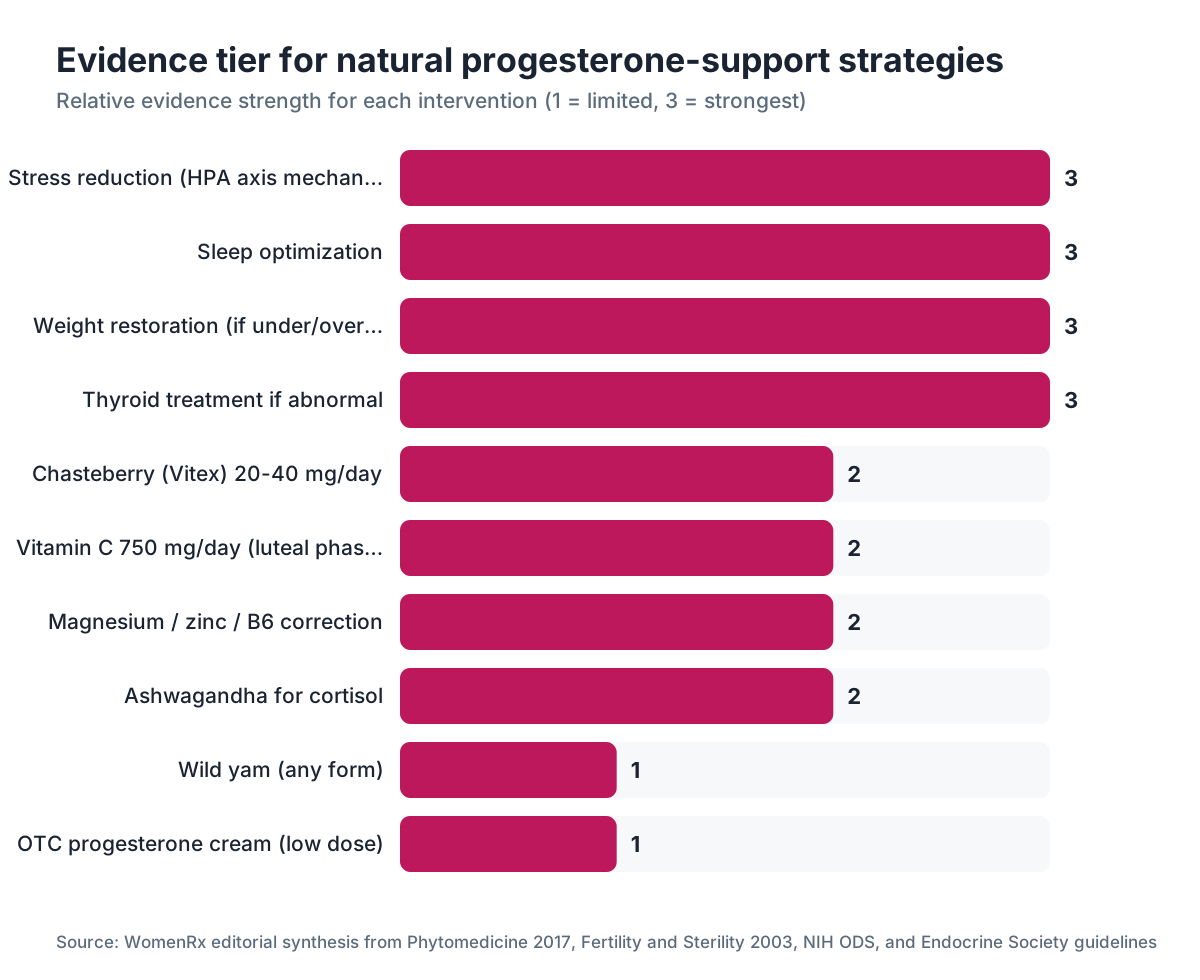
What lifestyle changes have the strongest evidence for supporting progesterone?
Here's a practical action list, ranked by evidence quality and effect size.
Tier 1 (strongest mechanistic and/or trial evidence):
- Reducing chronic stress (HPA-HPO axis interaction, well-documented [3])
- Treating sleep as a priority (7 to 9 hours, consistent schedule)
- Restoring body weight to a range that supports ovulation (if currently well under or over)
- Treating thyroid dysfunction if present (TSH above 2.5 is linked to luteal phase defects in women trying to conceive [4])
Tier 2 (reasonable evidence, low risk):
- Chasteberry 20 to 40 mg extract daily for 3 to 6 months [8]
- Vitamin C 750 mg daily in the luteal phase [9]
- Adequate dietary fat and calories
- Correcting zinc, magnesium, and B6 deficiency through diet or supplements
Tier 3 (plausible mechanism, limited direct evidence):
- Ashwagandha for cortisol reduction [11]
- Reducing alcohol intake
- Cutting ultra-processed food (linked to inflammation that can disrupt ovulatory signaling)
Not supported by evidence:
- Wild yam in any form
- OTC low-dose progesterone creams
- Most multi-ingredient "hormone balance" supplements
The honest summary: if the problem is lifestyle-driven, the Tier 1 changes probably beat any supplement. If the problem is age-related ovarian decline, no supplement compensates.
Frequently asked questions
How quickly can you raise progesterone naturally?
It depends on the cause. If stress or poor sleep is suppressing ovulation, you may see improvement within one or two cycles once you fix it. Vitex usually takes 3 to 6 months to do anything noticeable. If the issue is age-related ovarian decline, natural strategies won't move your numbers much. A timed progesterone blood test at day 21 (or 7 days before your expected period) is the only way to confirm progress.
Can vitamin D increase progesterone?
Vitamin D receptors sit in ovarian tissue, and observational data links vitamin D deficiency to lower progesterone and poorer IVF outcomes. A 2015 review in the European Journal of Clinical Nutrition found associations between vitamin D status and reproductive hormones. But high-quality RCT evidence that supplementing vitamin D raises progesterone is limited. Correcting a confirmed deficiency is worth it for overall health, but don't expect dramatic hormonal effects.
What are the symptoms of low progesterone?
Common signs include irregular or missed periods, spotting before your period starts, a short luteal phase (under 10 days between ovulation and your period), anxiety or mood shifts in the second half of your cycle, poor sleep, breast tenderness, and bloating. These overlap with many other conditions, so a blood test timed to the mid-luteal phase is the only way to confirm low progesterone as the cause.
Does chasteberry (Vitex) really work for low progesterone?
It's the supplement with the most supporting evidence. Vitex holds no progesterone, but it acts on pituitary dopamine receptors to lower prolactin and normalize LH pulsatility, which can improve the luteal phase and raise progesterone indirectly. A 2017 systematic review in Phytomedicine covered 12 controlled trials showing benefit for luteal phase defects and PMS. Effects take 3 to 6 months. Not appropriate if you're on hormonal contraceptives or dopamine medications.
Is it possible to raise progesterone naturally after menopause?
Not meaningfully. After menopause the ovaries no longer ovulate, so the corpus luteum that makes progesterone never forms. Natural strategies work by improving ovulatory function. Without ovulation, there's nothing to support. Women who need progesterone after menopause, typically those on estrogen therapy who still have a uterus, require a prescription. Bioidentical progesterone (Prometrium) or a synthetic progestin are the options.
Can low progesterone cause anxiety?
Yes, through a documented mechanism. Progesterone metabolizes to allopregnanolone, which acts on GABA-A receptors in the brain and produces a calming effect. When progesterone drops, that natural anxiolytic signal drops with it. It's why many women feel more anxious in the days before their period and during perimenopause. Raising progesterone, naturally or by prescription, often improves anxiety when low progesterone is the underlying cause.
What blood test should I ask for to check my progesterone?
Ask for a serum progesterone test timed to the mid-luteal phase: 7 days after you ovulate, or roughly 7 days before your expected period. In a 28-day cycle, that's around day 21. A level above 10 ng/mL suggests good ovulation. Many women get tested on random cycle days, which makes results nearly uninterpretable. Always confirm the exact day you were tested when you review results with your clinician.
Does magnesium increase progesterone?
Directly, no. Magnesium is a cofactor in steroid hormone synthesis and helps regulate cortisol, so a deficiency can impair progesterone production indirectly. NHANES data suggests roughly 48% of Americans fall short of the recommended magnesium intake. Correcting a deficiency may restore better hormonal function. Magnesium glycinate at 200 to 400 mg before bed is reasonable for most women, and it supports sleep, which independently helps hormonal health.
Can losing weight increase progesterone?
In women with overweight or obesity who have anovulatory cycles, even a 5 to 10% reduction in body weight can restore ovulation and raise progesterone as a result. Excess fat tissue makes extra estrogen that can suppress the LH surge needed for ovulation. The effect is most pronounced in women with PCOS. For women already at a healthy weight, weight loss won't meaningfully change progesterone.
Is there a difference between natural progesterone cream and prescription progesterone?
Yes, a big one. Prescription bioidentical progesterone (Prometrium, 100 to 200 mg oral capsules) delivers doses that reliably raise serum progesterone to therapeutic levels. Over-the-counter creams contain far lower doses with poor, inconsistent skin absorption. Most studies show OTC creams don't significantly raise serum progesterone or protect the uterine lining. If you genuinely need treatment, OTC cream is not an adequate substitute for a prescription.
How does perimenopause affect progesterone levels?
In perimenopause ovulation gets inconsistent. Some cycles happen with no egg released at all, so no corpus luteum forms and no progesterone is made that month. This can start years before estrogen drops, creating a stretch of relatively high estrogen with very low progesterone. Irregular periods, mood changes, sleep disruption, and heavy bleeding are common results. Progesterone production becomes steadily less reliable through the late 40s into the early 50s.
Can exercise increase progesterone naturally?
Moderate, regular exercise supports progesterone indirectly by improving insulin sensitivity, lowering chronic cortisol, and supporting healthy weight, all of which help ovulatory function. Over-exercise, especially with low body weight or caloric restriction, does the opposite and can suppress ovulation entirely. The CDC recommends 150 minutes of moderate-intensity activity per week as a general target. Training well past that at high intensity without enough food often harms progesterone.
Does ashwagandha help with low progesterone?
Ashwagandha doesn't raise progesterone directly, but it has RCT evidence for lowering cortisol, and high cortisol is a documented suppressor of ovulatory hormone output. A 2019 trial in Medicine found 240 mg of ashwagandha root extract daily significantly reduced cortisol versus placebo over 60 days. If stress is the main driver of your low progesterone, this could be one useful piece. Generally safe, but avoid during pregnancy.
Sources
- NIH National Institute on Drug Abuse, Allopregnanolone and GABA receptors
- The Menopause Society (NAMS), Perimenopause overview
- Endocrine Society, Clinical Practice Guideline on Functional Hypothalamic Amenorrhea
- American Thyroid Association, Guidelines for Hypothyroidism in Adults
- Human Reproduction, Lynch et al. 2018, Salivary alpha-amylase and conception probability
- NIH Office of Dietary Supplements, Magnesium Fact Sheet for Health Professionals
- Journal of Clinical Endocrinology and Metabolism, Kiddy et al., Weight loss improves reproductive outcome in obese women with PCOS
- Phytomedicine, Verhoeven et al. 2017, Systematic review of Vitex agnus-castus for PMS and luteal phase defects
- Fertility and Sterility, Henmi et al. 2003, Vitamin C and mid-luteal progesterone
- Menopause (journal), 2021 meta-analysis, Mindfulness-based interventions in perimenopausal women
- NIH National Heart, Lung, and Blood Institute, Women's Health Initiative findings
- International Journal of Cancer, Fournier et al. 2008, E3N cohort, progestins vs progesterone and breast cancer