How to increase progesterone: what actually works
TL;DR: Progesterone rises only after ovulation, so anything that supports consistent ovulation helps most in reproductive years. After menopause, the only reliable way to raise progesterone is prescription bioidentical progesterone (micronized progesterone, brand name Prometrium). Lifestyle changes like reducing chronic stress, keeping a healthy weight, and getting enough zinc and vitamin B6 support production modestly. Creams labeled 'natural progesterone' do not raise serum levels enough to matter clinically.
Why does progesterone get low in the first place?
Progesterone is made almost entirely by the corpus luteum, the temporary gland that forms in your ovary after ovulation. If you don't ovulate, you don't make meaningful progesterone. That single fact explains most cases of low progesterone in women under 50.
The common causes break down by life stage. In your 20s and 30s, the biggest culprits are anovulatory cycles (cycles where ovulation never happened), polycystic ovary syndrome (PCOS), hypothalamic amenorrhea from undereating or overexercising, thyroid dysfunction, and hyperprolactinemia. In perimenopause, which can start in the mid-30s to mid-40s, ovulation becomes irregular and the luteal phase shortens, so progesterone production drops before estrogen does [1]. After menopause, ovarian progesterone production essentially stops.
Chronic stress is worth its own mention. The adrenal glands use pregnenolone to make both progesterone and cortisol. Under prolonged stress, the body preferentially shunts pregnenolone toward cortisol. Researchers call this the 'pregnenolone steal', though the term is more mechanistic shorthand than a proven clinical phenomenon. The cortisol-progesterone competition is real, but how much it lowers serum progesterone in otherwise healthy women is genuinely unclear.
Before spending money on supplements or creams, get a serum progesterone level drawn on day 21 of a 28-day cycle (7 days after presumed ovulation). A result above 10 ng/mL is generally consistent with ovulation; below 3 ng/mL in the luteal phase suggests either anovulation or a short luteal phase [2]. That number tells you what you're actually dealing with.
What are the real symptoms of low progesterone?
Low progesterone doesn't produce a tidy checklist, and many symptoms overlap with thyroid issues, low estrogen, or plain sleep deprivation. That said, the pattern most clinicians recognize is: irregular or very short cycles, a luteal phase shorter than 10 days, spotting before your period starts, trouble falling asleep or staying asleep, anxiety that feels worse in the second half of your cycle, and heavy periods caused by unopposed estrogen.
In perimenopause, low progesterone often arrives before estrogen changes become obvious. Women notice their cycles getting shorter, sleep deteriorating, and PMS symptoms intensifying. This happens because anovulatory cycles become more frequent years before the last period [1].
Miscarriage in early pregnancy is also associated with low progesterone, though whether low progesterone causes the miscarriage or is a result of a failing pregnancy is still debated in the literature. The PRISM trial (2019, New England Journal of Medicine) found that vaginal micronized progesterone did not raise live birth rates across all women with recurrent miscarriage, but a subgroup with early pregnancy bleeding did benefit [3].
Symptoms alone can't diagnose low progesterone. You need the blood test.
How can you increase progesterone production naturally?
The honest answer is that lifestyle changes move progesterone modestly at best, and only if an underlying correctable cause exists. No supplement reliably raises serum progesterone the way a prescription does. Here is what has real evidence behind it and what doesn't.
Restore ovulation first. Since progesterone depends on ovulation, anything that restores regular ovulatory cycles is the most powerful 'natural' intervention. For women with hypothalamic amenorrhea, that means eating enough calories, backing off high-intensity exercise, and managing psychological stress. Studies in athletes show that cutting training load and increasing energy intake can restore ovulatory cycles within a few months [4].
Manage body weight. Both underweight and significant excess body fat disrupt ovulation. In women with PCOS, even a 5 to 10 percent reduction in body weight can restore ovulatory cycles and raise luteal-phase progesterone. This is one of the best-documented lifestyle interventions for low progesterone in this population [5].
Support thyroid function. Hypothyroidism suppresses progesterone indirectly by disrupting the LH surge needed for ovulation. Getting a TSH checked and treating subclinical or overt hypothyroidism can restore normal cycles.
Zinc and vitamin B6. These are the two micronutrients most consistently linked to progesterone production in small studies. Zinc is required for pituitary function and LH release. B6 is involved in the metabolism of progesterone. Deficiency in either can impair luteal function. Real food sources (pumpkin seeds for zinc, chicken and chickpeas for B6) beat high-dose supplements because excess zinc competes with copper absorption. The evidence here is preliminary and mostly from small trials; nobody has run a large randomized controlled trial on zinc supplementation and progesterone levels specifically.
Reduce chronic psychological stress. Easier said than done, but if cortisol is genuinely chronically elevated, addressing it through sleep, exercise moderation, and stress management may help the adrenals send more pregnenolone toward progesterone. No controlled human trial isolates this effect cleanly.
Keep sleep healthy. Growth hormone and LH, both of which influence the ovarian cycle, are released mostly at night. Chronic sleep below 7 hours disrupts pulsatile LH release. This is an indirect effect, but it's plausible and worth fixing anyway.
Things that do not reliably raise progesterone: wild yam extract, maca root, chasteberry (Vitex agnus-castus) in most studies, and progesterone creams sold over the counter. Wild yam contains diosgenin, which can be converted to progesterone in a laboratory but not inside the human body. Vitex may slightly lengthen the luteal phase and raise luteal-phase progesterone in some small studies, but the effects are small, inconsistent, and the studies are poor quality [6]. If you're in perimenopause or post-menopause and looking for symptom relief, a supplement will not fill the gap that a functioning corpus luteum used to fill.
Do progesterone creams actually raise your levels?
This is one of the most common misconceptions in women's health, and the answer is mostly no, at least not in any way that matters clinically.
Over-the-counter progesterone creams are made from plant-derived progesterone (usually from soy or wild yam), and the hormone in them is chemically identical to human progesterone. The problem is absorption and distribution, not chemistry. Progesterone is fat-soluble and accumulates in fat tissue rather than circulating in the blood. Multiple pharmacokinetic studies have found that topical progesterone raises salivary progesterone significantly but raises serum (blood) progesterone only minimally and inconsistently [7]. Since salivary levels don't correlate well with tissue levels or clinical effect, it becomes very hard to know what, if anything, the cream is doing.
The FDA does not recognize over-the-counter progesterone creams as safe and effective drugs. They're sold as cosmetics or dietary supplements, which means no required proof of efficacy. If your clinician wants you to use topical progesterone at a therapeutic dose, they should prescribe a compounded topical progesterone at a specific strength, and even then, most evidence suggests oral micronized progesterone reaches more predictable and higher serum levels than topical formulations at equivalent nominal doses.
The short version on creams: the product at the health food store is unlikely to raise your serum progesterone enough to do anything meaningful for symptoms like sleep disruption, heavy bleeding, or a luteal phase defect.
When do you need prescription progesterone?
Several scenarios genuinely require a prescription:
Perimenopause and menopause. If you're taking estrogen for menopause symptoms and you have a uterus, you must also take a progestogen to protect the uterine lining. The North American Menopause Society (NAMS) position statement specifies that unopposed estrogen in women with a uterus significantly increases the risk of endometrial cancer, and progestogen is required to counter that [8]. Micronized progesterone (Prometrium 100 mg or 200 mg) is the FDA-approved option most often used in hormone replacement therapy. Synthetic progestins like medroxyprogesterone acetate (MPA) also protect the uterus, but many women and clinicians prefer micronized progesterone because it has a better side effect profile and may promote sleep through its effect on GABA receptors.
Luteal phase defect and infertility. Reproductive endocrinologists routinely prescribe progesterone supplementation during IVF cycles and sometimes in natural cycles where the luteal phase is documented to be short or progesterone levels are consistently low.
Irregular cycles from anovulation. Cyclic progesterone (typically 200 mg of oral micronized progesterone for 12 to 14 days per month) is prescribed to induce a withdrawal bleed and protect the uterine lining in women who are not ovulating regularly.
Early pregnancy support. In specific clinical situations, particularly for women with prior losses who are now showing early pregnancy bleeding, vaginal progesterone may be offered (as studied in the PRISM trial) [3].
The standard serum progesterone threshold that suggests you may benefit from support is below 10 ng/mL in the mid-luteal phase, combined with symptoms and clinical context. No single number is a hard cutoff; treatment decisions depend on what you're trying to achieve.
If you want to know whether progesterone therapy fits your situation and you want to talk through your lab results with a clinician who focuses on women's hormones, platforms like WomenRx can connect you with practitioners who order the right tests and explain your options without a long wait for an in-person appointment.
What's the difference between progesterone and progestins?
This distinction matters more than most women are told. Progesterone refers to the bioidentical hormone, chemically identical to what your ovaries make. Progestins are synthetic compounds designed to mimic progesterone's effect on the uterine lining but with different chemical structures.
The most studied progestin is medroxyprogesterone acetate (MPA), which was used in the Women's Health Initiative (WHI) combined HRT arm. That trial showed increased breast cancer risk with estrogen plus MPA, and it shaped (and distorted) the conversation about hormone therapy for 20 years afterward [9]. Observational data and the E3N cohort study from France suggest that estrogen combined with micronized progesterone does not carry the same breast cancer signal as estrogen combined with MPA, though this is observational evidence rather than a randomized trial.
For women using hormones for contraception, most hormonal IUDs, implants, pills, and patches use synthetic progestins, not progesterone. The Mirena IUD releases levonorgestrel locally in the uterus; very little reaches systemic circulation. If you're taking hormonal contraception and wondering why your progesterone is 'low', that's expected because the contraception suppresses ovulation on purpose.
For a fuller look at progesterone and how it differs from progestins, the details matter when you're weighing your HRT options.
How does weight affect progesterone levels?
Both extremes of body weight disrupt progesterone, just through different mechanisms.
Underweight women and women with very low body fat often stop ovulating because the hypothalamus reads insufficient energy availability as an unsafe environment for reproduction and reduces GnRH pulsatility. This is the core of hypothalamic amenorrhea. Female athletes, women with eating disorders, and women in significant caloric deficit are all susceptible. Restoring energy availability is the most effective intervention, and progesterone levels typically recover when ovulation resumes [4].
Obesity and significant excess adiposity disrupt progesterone differently. Excess adipose tissue converts androgens to estrogens via aromatase, raising estrogen levels. Elevated insulin from insulin resistance (common in women with PCOS) interferes with normal LH pulsatility and the LH surge needed for ovulation. Women with PCOS who are overweight frequently have anovulatory cycles and correspondingly low progesterone. Weight loss through diet and lifestyle, and in some cases with the help of GLP-1 medications like semaglutide, can restore ovulation in this group [5].
For women in perimenopause or approaching menopause, weight management stays relevant, but it won't restore progesterone production once the ovaries have stopped cycling. At that point, the body simply doesn't have the machinery to make the hormone regardless of weight.
Can GLP-1 medications like semaglutide affect progesterone?
Many women are starting to ask this as GLP-1 receptor agonists become more common. The short answer is: possibly yes, indirectly.
GLP-1 medications like semaglutide work partly by reducing insulin resistance and promoting weight loss. In women with PCOS and insulin resistance, both of those effects can help restore more regular ovulatory cycles, which would raise progesterone. A 2022 analysis found that GLP-1 receptor agonists improved menstrual regularity in women with PCOS compared to placebo, though studies directly measuring progesterone levels as an outcome are limited [10].
One practical caution: because GLP-1 medications can restore fertility in women with PCOS who believed they were infertile, pregnancies have happened unexpectedly. The FDA label for semaglutide (Ozempic, Wegovy) advises stopping the medication at least two months before a planned pregnancy [11]. If you're using a GLP-1 for weight loss and not trying to conceive, contraception matters.
For women in perimenopause or menopause, GLP-1 medications will not directly raise progesterone. The weight loss benefits are real and separate, but they won't substitute for hormone therapy if progesterone deficiency is the clinical problem.
What diet and lifestyle changes genuinely support progesterone production?
No diet will raise progesterone in a post-menopausal woman. But for premenopausal women with anovulation or luteal phase issues, diet and lifestyle adjustments can shift the picture enough to restore ovulation.
Eat enough. Low-calorie diets, especially those dropping total energy below roughly 1,200 kcal/day for an extended period, signal hypothalamic shutdown of the reproductive axis. If you're undereating and your cycles are irregular, eating more is the most direct fix available.
Prioritize protein and fat. Cholesterol is the precursor to all steroid hormones, including progesterone. Extremely low-fat diets have been linked to lower sex hormone concentrations. Adequate dietary fat (avocados, olive oil, nuts, eggs, fatty fish) keeps cholesterol available for steroidogenesis. This does not mean a high-fat diet is better; it means avoiding severely fat-restricted diets.
Cut processed sugar and refined carbohydrates. Elevated insulin drives androgen production and suppresses ovulation, especially in women with any degree of insulin resistance. A lower glycemic-index eating pattern improves insulin sensitivity and may help restore ovulation in PCOS [5].
Prioritize sleep. Seven to nine hours is not negotiable for hormonal health. The pulsatile LH release that triggers ovulation happens mostly during sleep.
Exercise smart, not maximally. High-intensity training without adequate recovery or calorie compensation can suppress ovulation. Moderate aerobic exercise, strength training 2 to 3 times per week, and real rest days support hormonal function better than daily hard sessions without recovery.
Manage cortisol. Chronic psychological stress, sleep debt, and overtraining all raise cortisol. The direct effect on progesterone is hard to quantify, but managing these factors is good medicine regardless.
None of these changes will reverse progesterone decline in perimenopause or menopause. For that, see the sections on prescription options and hormone replacement therapy.
How does progesterone affect sleep, mood, and anxiety?
Progesterone has direct effects on the brain that go beyond its role in the uterus. Its metabolite allopregnanolone acts as a positive allosteric modulator of GABA-A receptors, the same receptor system that benzodiazepines target. This is why rising progesterone in the second half of the natural cycle is calming for many women, and why falling progesterone in the late luteal phase (or in perimenopause) can produce anxiety, irritability, and sleep disruption [12].
Women often describe the progesterone drop in perimenopause as a background hum of anxiety, worse in the evening, plus waking at 3 or 4 AM and not falling back asleep. This pattern is distinct from hot-flash-related sleep disruption (which is more estrogen-driven) and responds well to oral micronized progesterone taken at bedtime. Oral micronized progesterone is metabolized in the gut to a higher proportion of allopregnanolone than vaginal or topical routes, which is one clinical reason to prefer the oral route for women whose main complaint is sleep and anxiety rather than uterine protection alone.
This neurosteroid effect is one of the main reasons many clinicians and patients prefer micronized progesterone over synthetic progestins for HRT. Progestins do not metabolize to allopregnanolone and do not have the same sedating, anxiety-reducing profile.
If your main perimenopausal symptoms are poor sleep and anxiety, progesterone is often the first hormone worth addressing, before or alongside estrogen. A clinician who focuses on women's hormonal transitions, such as those at WomenRx, can help you figure out whether your lab picture supports this approach.
How do you know if your progesterone has actually increased? What should you test?
Serum (blood) progesterone is the standard test. Saliva and urine hormone tests are sold widely but have significant accuracy limitations and are not recommended by the Endocrine Society as the primary diagnostic tool [2].
Timing is everything. Progesterone peaks 7 days after ovulation. In a textbook 28-day cycle, that's day 21. If your cycle is longer or shorter, count 7 days back from when you expect your next period and test then. A mid-luteal serum progesterone above 10 ng/mL is generally consistent with normal ovulation. Values between 3 and 10 ng/mL suggest a weak luteal phase. Below 1 to 2 ng/mL in any cycle phase suggests anovulation.
If you're taking oral micronized progesterone, your serum progesterone will be measurably elevated on the day you take it and for 12 to 24 hours afterward. Testing to 'see if it's working' is not very useful because the pill transiently spikes levels; what you want to assess is symptom resolution (sleep, cycle regularity, bleeding pattern) and uterine lining thickness (via ultrasound if needed to verify endometrial protection).
For women using vaginal progesterone, serum levels are lower than with oral use even at equivalent doses because vaginal administration avoids first-pass metabolism (which produces the allopregnanolone spike). Local uterine concentrations are actually higher vaginally, which is why this route is often chosen for uterine protection rather than systemic or neurological effect.
Test progesterone in the context of a full hormonal panel: FSH, LH, estradiol, testosterone, DHEA-S, thyroid (TSH, free T3, free T4), and fasting insulin if metabolic issues are suspected. Progesterone doesn't tell you much in isolation.
Progesterone levels by life stage: what's normal?
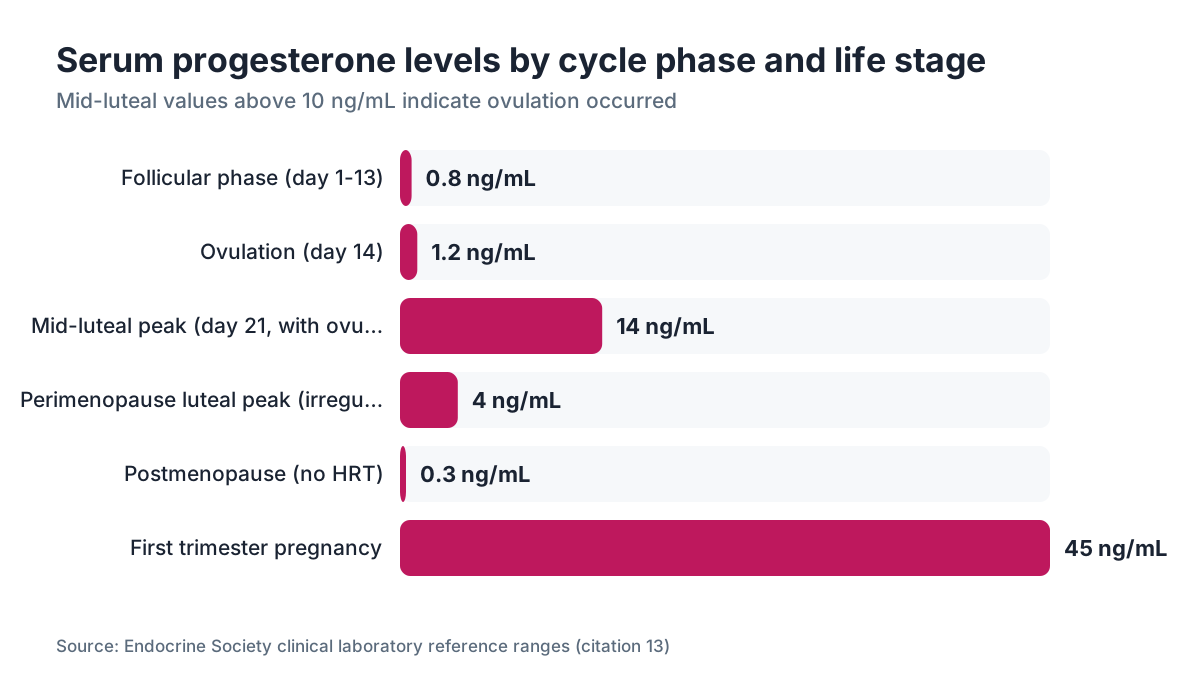
Knowing where you should be helps you read your lab results. The table below reflects reference ranges used by major labs and cited by the Endocrine Society [2].
| Life stage / cycle phase | Typical serum progesterone range | |---|---| | Follicular phase (day 1-13) | 0.1 to 1.5 ng/mL | | Ovulation (day 14) | 0.5 to 2.0 ng/mL | | Mid-luteal phase (day 21, peak) | 5.0 to 20+ ng/mL (10+ suggests ovulation) | | Perimenopause (cycling irregularly) | Variable; luteal peak often below 5 ng/mL | | Postmenopause (no HRT) | Less than 0.5 ng/mL | | Pregnancy, first trimester | 11 to 90 ng/mL | | Pregnancy, third trimester | 48 to 150 ng/mL |
These ranges vary between laboratories, so always read your number alongside the reference range printed on your lab report. A result that looks high or low in isolation may be perfectly normal for the assay your lab uses.
Frequently asked questions
What foods increase progesterone?
No food directly raises progesterone. Certain foods support the conditions your body needs to make it. Zinc-rich foods (pumpkin seeds, beef, shellfish) support LH release. B6-rich foods (chicken, chickpeas, bananas) are involved in progesterone metabolism. Adequate dietary fat provides cholesterol, the raw material for steroidogenesis. Think of food as supporting infrastructure, not as a hormone source. If you're post-menopausal, diet cannot replace what the ovaries no longer make.
Can vitex (chasteberry) increase progesterone?
Some small studies show Vitex agnus-castus may modestly raise luteal-phase progesterone by acting on dopamine receptors in the pituitary, which can reduce prolactin and support LH release. The effect is small and the study quality is poor. A 2013 systematic review found insufficient evidence to recommend Vitex for any reproductive condition. It may be worth a short trial in premenopausal women with mild luteal phase symptoms, but it won't work in perimenopause or after menopause.
How quickly can progesterone levels increase naturally?
Progesterone rises naturally only after ovulation and peaks around day 21 of a 28-day cycle, a matter of days within a single cycle. If your low progesterone comes from anovulation and you fix the underlying cause (restoring body weight, treating thyroid disease, reducing exercise load), it may take two to four cycles before regular ovulation resumes. Prescription oral micronized progesterone raises serum levels within a few hours of the first dose.
Can stress cause low progesterone?
Yes, indirectly. Chronic high cortisol from psychological or physiological stress can disrupt hypothalamic GnRH pulsatility, suppressing LH and preventing ovulation, which cuts progesterone production at the source. The idea that cortisol 'steals' progesterone directly (pregnenolone steal) is real biochemically but the clinical size of that specific pathway in women is not clearly established. Stress management, adequate sleep, and reducing overtraining are all sensible even if the exact mechanism isn't fully proven.
Is wild yam cream the same as progesterone cream?
No. Wild yam contains diosgenin, a compound that can be converted to progesterone in a chemistry lab. The human body cannot do that conversion. Wild yam cream does not raise progesterone levels. Products marketed as 'natural progesterone cream' that actually contain USP progesterone are a different thing, but even those don't reliably raise serum progesterone to clinically meaningful levels because it absorbs into fat tissue rather than circulation.
Does low progesterone cause weight gain?
Low progesterone relative to estrogen (estrogen dominance) can contribute to fluid retention and bloating, which registers on the scale. Progesterone also has a mild thermogenic effect (it slightly raises basal body temperature), so very low progesterone may lower basal metabolic rate by a small amount. The evidence linking low progesterone directly to fat gain is thin. Weight gain in perimenopause is more strongly tied to declining estrogen, changes in insulin sensitivity, and aging than to progesterone levels specifically.
What is the difference between bioidentical progesterone and synthetic progestins?
Bioidentical progesterone (micronized progesterone, brand name Prometrium) has the identical molecular structure to the progesterone your ovaries produce. Synthetic progestins like medroxyprogesterone acetate, levonorgestrel, and norethindrone are designed to protect the uterine lining but have different side effect and metabolic profiles. Bioidentical progesterone metabolizes to allopregnanolone, which promotes sleep and reduces anxiety. Most synthetic progestins do not. The Women's Health Initiative used synthetic MPA, and its findings should not be applied to bioidentical progesterone.
Can you increase progesterone after menopause without a prescription?
No. After menopause, ovarian progesterone production stops. The corpus luteum no longer forms, and no amount of diet, supplements, stress reduction, or over-the-counter cream will restore meaningful progesterone levels. Prescription micronized progesterone is the only evidence-based option. If you have a uterus and are taking estrogen therapy, progesterone is medically required. If you want the neurological benefits of progesterone (sleep, anxiety reduction) after menopause, a prescription is the only route that works.
How does progesterone affect perimenopause symptoms?
In perimenopause, progesterone drops before estrogen does, which is why many women notice sleep problems and anxiety in their 40s while still having regular periods. Restoring progesterone with oral micronized progesterone (100 to 200 mg at bedtime) can improve sleep quality significantly, reduce nighttime anxiety, and stabilize cycles. It also protects the uterus from unopposed estrogen if estrogen therapy is added later. This is often the first hormone intervention clinicians reach for in early perimenopause.
Can PCOS cause low progesterone, and how do you fix it?
Yes. PCOS causes anovulatory cycles in many women, meaning no ovulation and therefore no corpus luteum and no progesterone. First-line approaches include weight loss if overweight (even 5 to 10 percent of body weight can restore ovulation), a lower glycemic eating pattern, and treating insulin resistance. If cycles don't normalize, a clinician may prescribe cyclic progesterone to induce withdrawal bleeds and protect the uterine lining, or ovulation induction agents if pregnancy is the goal.
Does progesterone help with sleep?
Yes, oral micronized progesterone has a well-documented sedative effect. Its gut metabolism produces allopregnanolone, which binds to GABA-A receptors and promotes sedation similarly to how benzodiazepines work. Studies show women taking oral micronized progesterone at bedtime fall asleep faster and have fewer nighttime awakenings. Vaginal progesterone and synthetic progestins do not produce the same effect. For perimenopausal women whose primary symptom is poor sleep, bedtime progesterone is often the most targeted intervention available.
Is a progesterone level of 1 ng/mL too low?
A serum progesterone of 1 ng/mL drawn in the mid-luteal phase (around day 21 of a 28-day cycle) is very low and suggests either anovulation or a severely inadequate luteal phase. Normal mid-luteal progesterone is above 10 ng/mL when ovulation has occurred. A value of 1 ng/mL in the follicular phase or post-menopause is expected. Context is everything. Make sure your blood was drawn at the right time in your cycle before interpreting the number.
Can you take too much progesterone?
Yes. Excess progesterone causes drowsiness, dizziness, and bloating. Very high doses can worsen depression in some women. Oral micronized progesterone is typically prescribed at 100 mg (for uterine protection with continuous estrogen) or 200 mg for 12 days per month (cyclic use). Going above prescribed doses without clinical guidance is not recommended. Because progesterone is sedating, too much taken during the day impairs function. It's almost always taken at bedtime for this reason.
Do I need a uterus to take progesterone?
If you've had a hysterectomy, you do not need progesterone for uterine protection because you have no uterus. You can take estrogen alone. Some clinicians prescribe progesterone even after hysterectomy for its neurological benefits (sleep, mood), but this is a personal choice rather than a medical requirement. If your uterus is intact and you're on estrogen therapy, progesterone is medically necessary to prevent endometrial hyperplasia and cancer.
Sources
- North American Menopause Society (NAMS), Menopause Practice: A Clinician's Guide
- Endocrine Society, Clinical Practice Guideline: Hormone Testing
- Coomarasamy A et al., PRISM Trial, New England Journal of Medicine, 2019
- De Souza MJ et al., Exercise and energy availability in female athletes, Journal of Clinical Endocrinology and Metabolism
- Teede HJ et al., International evidence-based guideline for the assessment and management of PCOS, 2023
- van Die MD et al., Vitex agnus-castus extracts for female reproductive disorders: A systematic review, Planta Medica, 2013
- Wren BG et al., Transdermal progesterone and its effect on vasomotor symptoms, Journal of Menopause, 2003
- North American Menopause Society (NAMS), 2022 Hormone Therapy Position Statement
- Women's Health Initiative (WHI), estrogen plus progestin trial, JAMA, 2002
- Jensterle M et al., Efficacy of GLP-1 receptor agonists in women with PCOS, Reproductive Biology and Endocrinology, 2022
- FDA, Wegovy (semaglutide) prescribing information
- Bixo M et al., Allopregnanolone and GABA-A receptor modulation in women, Psychoneuroendocrinology, 2017
- Endocrine Society, Progesterone reference ranges, clinical laboratory standards