How to increase estrogen naturally after 50: what actually works
TL;DR: After 50, your ovaries have mostly stopped making estrogen, and no food or supplement brings it back to premenopausal levels. Phytoestrogens (soy, flaxseed), strength training, a healthy amount of body fat, and lower stress can weakly support estrogen activity and ease symptoms. They don't replace hormone therapy, which stays the most effective option for moderate to severe symptoms.
What happens to estrogen after 50, and how low does it actually go?
Estrogen does not taper gently. In the two years around your final period, estradiol (the main estrogen your ovaries make) drops by roughly 85 to 90 percent [1]. Before menopause, a typical cycle peaks somewhere between 100 and 400 pg/mL. After menopause, most women settle below 20 pg/mL, often in single digits. That is a different hormonal environment entirely, more than a minor adjustment.
The body does keep making small amounts of estrogen after menopause, mainly by converting androgens into estrone (a weaker estrogen) in fat tissue, muscle, skin, and the adrenal glands. This process is called peripheral aromatization [2]. It does not replace what the ovaries produced, but it is real, and it is the biological basis for most of the natural strategies below.
Here is the part I want to say plainly. No food, supplement, or habit will raise your serum estradiol back to premenopausal levels. The strategies here work by supporting estrogen receptor activity, slowing estrogen breakdown, or maintaining the body's own residual conversion. That is genuinely useful. It is just not the same as hormone therapy, and conflating the two does women a disservice.
If you want to understand what the peri menopausal transition looks like in the years before estrogen bottoms out, that context shapes how much ground you are trying to recover.
Do phytoestrogens really raise estrogen levels, or is that a myth?
Phytoestrogens are plant compounds that bind estrogen receptors, though with far weaker grip than estradiol. The main classes are isoflavones (soy, red clover), lignans (flaxseed, sesame), and coumestans (alfalfa sprouts). They don't raise circulating estradiol in any measurable way in controlled trials [3]. What they can do is switch on estrogen receptors weakly, and in a low-estrogen body that weak signal counts for more than it would have at 35.
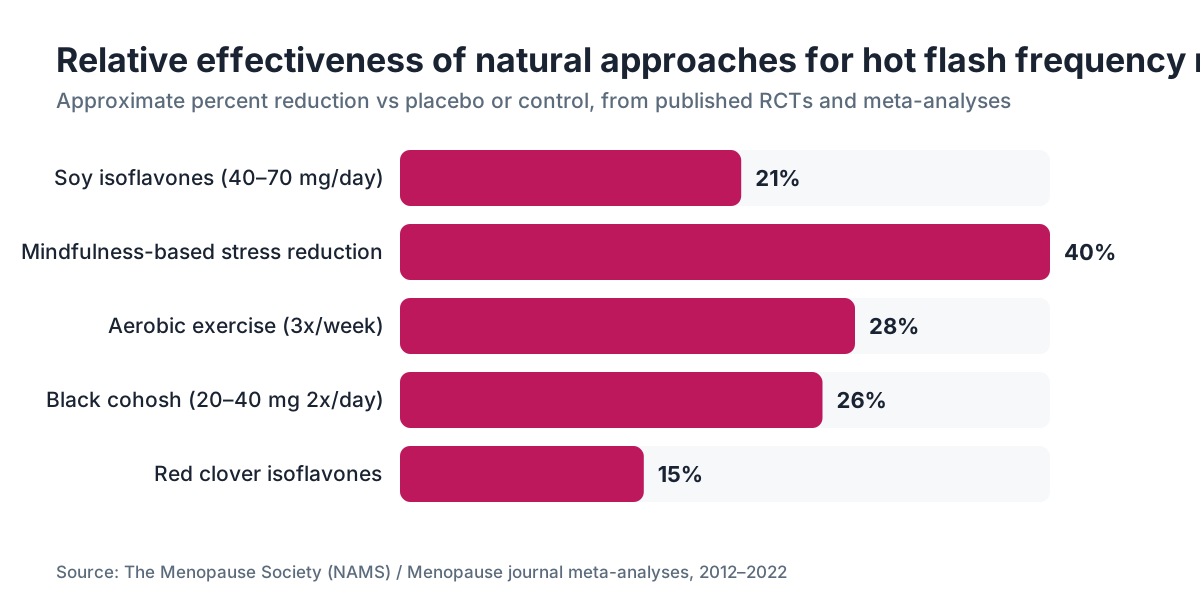
The evidence for symptom relief is real but modest. A 2012 meta-analysis in Menopause (the journal of the Menopause Society) found that isoflavone supplementation cut hot flash frequency by about 21 percent compared to placebo [3]. Not dramatic. But if you're having eight hot flashes a day, losing a fifth of them is something you notice.
Soy isoflavones get the most research attention. Two servings of whole soy foods daily (edamame, tofu, tempeh, miso) delivers roughly 40 to 70 mg of isoflavones, the dose range studied in most trials [3]. Soy supplements are more concentrated and their safety data is thinner. Whole food sources are the better bet.
Flaxseed is the richest lignan source, and lignans seem to have a gentler receptor effect than isoflavones. One or two tablespoons of ground flaxseed daily is a reasonable dose. Buy it ground or grind it yourself. Whole seeds pass through largely undigested.
Red clover supplements contain formononetin and biochanin A, which convert to weaker isoflavones in the gut. Some trials show modest hot flash reduction. The evidence is less consistent than soy [3].
One real concern: women with a history of estrogen-receptor-positive breast cancer should talk to their oncologist before adding concentrated sources. The receptor binding that makes phytoestrogens useful is the same reason caution applies in that specific case.
Which foods support estrogen activity most reliably after 50?
There is no single estrogen-boosting food. What exists is a pattern of eating that supports the body's residual hormone activity and slows how fast the liver clears estrogen.
The foods with the best evidence:
| Food | Relevant compound | Evidence strength | |---|---|---| | Edamame, tofu, tempeh, miso | Isoflavones (genistein, daidzein) | Strongest; multiple RCTs [3] | | Ground flaxseed | Lignans (secoisolariciresinol) | Moderate; smaller trials | | Sesame seeds | Lignans | Preliminary | | Cruciferous vegetables (broccoli, Brussels sprouts) | Indole-3-carbinol | Supports favorable estrogen metabolism [4] | | Berries and dark leafy greens | Polyphenols, folate | Indirect; support aromatase function | | Fatty fish, walnuts | Omega-3s | Reduce systemic inflammation that impairs hormone signaling |
Cruciferous vegetables deserve their own note. Indole-3-carbinol (I3C) shifts estrogen metabolism toward less potent, less proliferative metabolites through the liver's CYP1A2 pathway [4]. This does not raise estrogen. It shapes which form of estrogen dominates. Small distinction, but a real one.
What to limit: heavily processed foods, refined sugar, and alcohol. Alcohol bumps up aromatase activity in a way that sounds helpful but actually raises estrone (the weaker, potentially more problematic postmenopausal estrogen) relative to estradiol, and it raises breast cancer risk even at low intakes [4]. A glass of wine a night is not nothing from a hormonal standpoint.
Does exercise raise estrogen after menopause?
Exercise does not raise estrogen directly in postmenopausal women the way it can shift hormones before menopause. Resistance training has the clearest indirect benefit: it builds and holds muscle mass, and muscle carries aromatase enzymes that convert androgens into estrone [2]. More muscle means a slightly bigger conversion factory.
A 2019 review in the Journal of Clinical Endocrinology and Metabolism reported that postmenopausal women doing regular moderate-intensity resistance exercise showed higher circulating estrone than sedentary women, though the estradiol differences were not statistically significant [2]. Real, but modest.
The stronger case for exercise after 50 is everything it protects regardless of estrogen level. Weight-bearing exercise holds bone density that estrogen loss chips away at. Cardio dampens the vasomotor instability (hot flashes, night sweats) that low estrogen sets off. A 2014 randomized trial found that aerobic exercise three times weekly cut severe hot flash frequency and improved sleep quality compared with a stretching control group [5].
What I'd actually do: two to three resistance sessions weekly plus 150 minutes of moderate aerobic activity. Not because it restores estrogen, but because it keeps the tissues estrogen used to protect and eases symptoms through other routes.
Does body weight affect estrogen levels after 50?
Yes, and it cuts both ways. Fat tissue carries aromatase, so postmenopausal women with more body fat make more estrone through peripheral conversion. This is one reason women with obesity often show higher circulating estrogen after menopause than thin women, and also one reason they have higher rates of estrogen-receptor-positive breast cancer and endometrial cancer [4].
That does not make gaining weight a good estrogen strategy. The form produced is mainly estrone, not estradiol. Estrone has weaker receptor activity and a different risk profile. The symptoms of low estrogen (hot flashes, vaginal atrophy, bone loss) are driven mostly by low estradiol, and extra estrone does not reliably head them off.
Here's the balance. Being significantly underweight after 50 shrinks even your residual estrogen production, and that speeds up bone loss. Keeping a healthy weight, and specifically enough lean muscle, supports whatever natural estrogen production you have left. That is a different thing from deliberately gaining fat to raise estrogen, which trades one problem for several.
For women managing weight after menopause, the menopause society has published clinical guidance on body composition changes and their hormonal implications.
Do stress and sleep deprivation lower estrogen after 50?
Chronic stress raises cortisol, and cortisol competes with progesterone for the same precursor (pregnenolone) in what some call the cortisol steal. Before menopause this throws off the estrogen-progesterone balance. After menopause, when ovarian production has already stopped, the direct hormonal interference is less acute, but the effect on how bad your symptoms feel is very real.
High cortisol turns up the intensity of hot flashes, wrecks sleep architecture, and slows the liver's clearing of estrogen metabolites [4]. Women living in chronic high-stress states tend to report worse menopausal symptoms even at similar estradiol levels.
Sleep deprivation runs the same loop. Poor sleep raises evening cortisol, which worsens night sweats, which shreds more sleep. Round and round. The Study of Women's Health Across the Nation (SWAN), one of the largest longitudinal studies of the menopausal transition, found that sleep disturbance was one of the strongest predictors of overall symptom burden, independent of measured hormone levels [6].
Interventions with RCT support for menopause symptom relief: mindfulness-based stress reduction (a 40 percent drop in hot flash interference in one trial [5]), yoga, and cognitive behavioral therapy for insomnia (CBT-I). None of these are sold as estrogen-raising, but they cut the stress-driven amplification of low-estrogen symptoms.
What supplements are promoted for estrogen support, and what does the evidence actually say?
This is where the market outruns the science by a wide margin. An honest rundown:
Black cohosh (Actaea racemosa): The most-studied botanical for hot flash relief. It does not bind estrogen receptors and does not raise estrogen. Its mechanism is serotonergic and dopaminergic, not hormonal. The North American Menopause Society (NAMS) treats it as a reasonable option for mild to moderate vasomotor symptoms, with evidence rated Level II [7]. Liver toxicity has been reported rarely; women with liver conditions should avoid it. Standard trial dose: 20 to 40 mg twice daily [10].
DHEA (dehydroepiandrosterone): An adrenal precursor that can convert to both androgens and estrogens in peripheral tissue. Supplemental DHEA (25 to 50 mg daily) modestly raises estrone and estradiol in some postmenopausal studies [2]. The effect is real but small. Intravaginal DHEA (brand name Prasterone) is FDA-approved for dyspareunia (painful sex from vaginal atrophy) and has the strongest localized evidence [8]. Oral DHEA supplements are unregulated and doses vary. The quality evidence sits with the prescription intravaginal form.
Maca root: Marketed hard as an estrogen booster. It does not raise serum estrogen. Small Peruvian trials show some benefit for mood and energy, possibly via glucosinolates, but the estrogen claims are not backed up [7].
Vitex (chasteberry): Has some evidence in perimenopause for PMS-type symptoms. Very little data specific to postmenopausal estrogen support.
Vitamin D: Deficiency (below 20 ng/mL) tracks with worse menopausal symptoms and faster bone loss. It is not an estrogen precursor, but correcting a deficiency supports calcium absorption and musculoskeletal function that estrogen once protected [9]. The Endocrine Society recommends 1,500 to 2,000 IU daily for deficient adults over 50 [9].
The supplement aisle is full of products stacking these ingredients under hormone-balance marketing. The cvs menopause multivitamin with hot flash support is a typical example of how these are positioned. Read the label against the evidence here and you'll see fast what you're actually buying.
Can gut health affect estrogen levels after 50?
This is a genuinely interesting area, and a heavily overhyped one. The gut microbiome holds a set of bacteria with beta-glucuronidase activity, collectively called the estrobolome. These bacteria uncouple estrogen metabolites the liver has tagged for excretion, letting them get reabsorbed. A diverse estrobolome may support circulating estrogen by recirculating a fraction that would otherwise leave the body [4].
The research is early. Most human data comes from observational studies, not randomized trials. What's reasonably settled: dysbiosis (microbial imbalance from antibiotics, low-fiber diets, chronic stress) appears to reduce estrobolome activity, which may push circulating estrogen lower. The intervention that helps is not a probiotic aimed at the estrobolome (no such product has real RCT support in menopausal women). It's a high-fiber, plant-heavy diet, fewer unnecessary antibiotics, and fermented foods on a regular basis.
A diet that supports the estrobolome overlaps almost completely with the phytoestrogen-rich, cruciferous-heavy pattern above. You don't need a separate plan.
When do natural strategies stop being enough, and how do you know?
This is the question everything above has been building toward.
Natural strategies can meaningfully reduce mild to moderate vasomotor symptoms, support bone health inside a broader prevention plan, improve sleep, and make the postmenopausal environment a little friendlier to the estrogen receptors you still have. That helps a lot of women.
They do not prevent or reverse genitourinary syndrome of menopause (vaginal atrophy, painful sex, recurrent UTIs). They do not protect bone density as reliably as estrogen therapy in women at high fracture risk. They do not touch severe hot flashes, significant mood swings, or the cardiovascular risk shifts of postmenopausal estrogen loss at the level hormone therapy does. The NAMS 2022 position statement puts it directly: "Hormone therapy remains the most effective treatment for the vasomotor symptoms and the GSM" [7].
The decision to pursue hormone therapy is personal and medical. It runs on your individual fracture risk, cardiovascular history, breast cancer history, and symptom severity. If you've tried natural approaches for three to six months without enough relief, that is enough information. A clinician who specializes in menopause care can review whether hormone therapy makes sense for you. WomenRx offers telehealth visits built for exactly this conversation, with clinicians trained in menopausal hormone management.
For a fuller grounding in what menopausal care looks like now, the new menopause covers how the clinical approach has shifted in the last decade.
Women with a history of bleeding after menopause should speak with a provider before adding any estrogen-active supplement or hormone therapy.
Are there risks to natural estrogen-raising approaches that women miss?
A few worth naming out loud.
High-dose soy isoflavone supplements (over 150 mg daily) have not been studied long-term for endometrial or breast safety in postmenopausal women. Whole food soy at normal dietary amounts is considered safe by NAMS and the American Cancer Society for most women, including breast cancer survivors, but the supplement form at high doses is a different exposure [7].
Over-the-counter DHEA is not regulated for purity or dose consistency. Some tested products have contained two to three times their labeled dose. Excess DHEA can raise androgen levels (acne, unwanted hair growth) and in susceptible women may push estrogen high enough to stimulate the endometrium if it is not being shed. Women with an intact uterus using any estrogen-active strategy long-term should have periodic gynecologic check-ins.
Herbs marketed for hormone balance, including ashwagandha, maca, and Vitex, interact with medications including thyroid hormone replacement. If you take thyroid medication, run any new supplement past your prescriber. The overlap between thyroid and sex hormone management is real and underappreciated; thyroid hormone replacement therapy covers the interaction risk in more detail.
And the quiet risk of leaning too hard on natural approaches: delaying hormone therapy during the early postmenopausal window (roughly the first ten years after menopause, or before age 60) means missing what researchers call the "timing hypothesis," the stretch when the cardiovascular and neuroprotective benefits of estrogen therapy show up most clearly [7]. Waiting too long has a real cost.
What does a practical daily plan look like for supporting estrogen after 50?
Pulling the evidence into something you can actually run:
Eat: Two servings of whole soy foods daily, one tablespoon of ground flaxseed, four or more cups of vegetables including cruciferous types, and enough protein (at least 1.2 g per kg body weight) to support muscle mass and give aromatase something to work with.
Move: Resistance training two to three times weekly. 150 minutes of moderate aerobic activity across the week. Weight-bearing activities (walking, hiking) count toward bone protection.
Sleep: Aim for seven to eight hours. If insomnia is active, CBT-I is the evidence-backed first line, not sleep aids.
Stress: A consistent mindfulness practice, even ten minutes a day, has measurable effects on hot flash frequency in RCT data [5]. Pick the form you'll actually keep doing.
Supplements to consider seriously: Vitamin D if you're deficient (get tested first), and magnesium if sleep is poor (200 to 400 mg glycinate before bed has reasonable evidence for sleep quality in this group, though not for estrogen).
Supplements to skip or treat skeptically: High-dose isoflavone pills, proprietary hormone-balance blends, maca for estrogen specifically.
Revisit at six months: If symptoms are still significantly disruptive, have a direct talk about hormone therapy. That is not failure. It is appropriate medical care.
WomenRx clinicians work specifically with women weighing this decision and can review your history, symptoms, and options in a single telehealth visit.
Also worth reading: the health & her perimenopause support resource covers the earlier transition, which shapes how you approach the postmenopausal period.
Frequently asked questions
Can you raise estrogen naturally after menopause without medication?
You can support estrogen receptor activity and slow estrogen breakdown through food, exercise, and stress reduction. Phytoestrogens in soy and flaxseed weakly activate estrogen receptors. Keeping muscle mass supports peripheral estrogen conversion. None of these restore premenopausal estradiol levels. For women with moderate to severe symptoms or high fracture risk, hormone therapy remains more effective than any natural approach.
What are the best foods for increasing estrogen after 50?
Whole soy foods (edamame, tofu, tempeh, miso) have the strongest clinical evidence for modest symptom relief through isoflavones. Ground flaxseed provides lignans, another phytoestrogen class. Cruciferous vegetables shift estrogen metabolism toward less potent forms. A Mediterranean-style pattern supports the gut microbiome's role in estrogen recirculation. No single food raises serum estradiol measurably.
Does exercise increase estrogen levels in postmenopausal women?
Resistance training modestly raises estrone by building muscle tissue that carries aromatase enzymes. A 2019 review found higher estrone in regularly exercising postmenopausal women compared with sedentary controls, though estradiol differences were not significant. The stronger case for exercise is protecting bone, heart, and metabolic health that estrogen once maintained, plus reducing hot flash frequency directly.
Is soy safe for women over 50 concerned about estrogen and breast cancer?
Whole food soy at dietary amounts (two servings daily) is considered safe for most women including breast cancer survivors by the North American Menopause Society and the American Cancer Society. High-dose soy isoflavone supplements have less long-term safety data. Women with estrogen-receptor-positive breast cancer history should discuss any isoflavone use with their oncologist before changing intake significantly.
What supplements actually work for low estrogen symptoms after 50?
Black cohosh has NAMS Level II evidence for mild to moderate hot flash relief; it does not raise estrogen but works through serotonergic pathways. Vitamin D correction supports bone health when levels are deficient. Prescription intravaginal DHEA (Prasterone) is FDA-approved for painful sex from vaginal atrophy. Over-the-counter hormone-balance blends have weaker evidence across the board.
How does stress affect estrogen levels after menopause?
Chronic high cortisol does not directly suppress ovarian estrogen production after menopause (that production has already stopped), but it amplifies hot flash intensity, disrupts sleep, and slows liver processing of estrogen metabolites. The SWAN study found sleep disturbance and stress among the strongest predictors of symptom burden, independent of measured hormone levels. Mindfulness-based stress reduction cut hot flash interference by 40 percent in one trial.
Does DHEA raise estrogen levels in women over 50?
Oral DHEA supplements (25 to 50 mg daily) can modestly raise estrone and, to a lesser degree, estradiol through peripheral conversion in postmenopausal women. The effect is real but small. FDA-approved intravaginal DHEA (Prasterone) raises local estrogen in vaginal tissue effectively and is the best-evidenced form. Over-the-counter oral DHEA is unregulated; product purity and actual dose vary significantly.
At what point should a woman over 50 stop relying on natural estrogen support and consider HRT?
If natural approaches over three to six months have not adequately controlled vasomotor symptoms, sleep, or vaginal atrophy, hormone therapy deserves a serious look. The NAMS 2022 position statement identifies hormone therapy as the most effective treatment for these symptoms. The first ten years after menopause, or before age 60, is the period when cardiovascular and bone benefits of estrogen therapy show up most clearly. Waiting has costs.
Does low body weight make estrogen levels worse after menopause?
Yes. Postmenopausal estrogen production depends mainly on aromatization of androgens in fat and muscle tissue. Very low body weight, especially very low body fat, reduces this conversion and speeds bone loss. High body fat raises estrone but not estradiol, and increases breast and endometrial cancer risk. Keeping a healthy weight with adequate lean muscle is the most protective approach.
What is the estrobolome, and does gut health affect estrogen after 50?
The estrobolome is the set of gut bacteria with beta-glucuronidase activity that can reactivate estrogen metabolites tagged for excretion, letting them be reabsorbed. A disrupted gut microbiome may reduce circulating estrogen modestly. The intervention that helps is a high-fiber, diverse plant diet rather than specific probiotic supplements, which lack adequate RCT evidence for estrobolome support in postmenopausal women.
Can black cohosh raise estrogen levels?
No. Black cohosh does not bind estrogen receptors and does not raise serum estrogen. Its mechanism is serotonergic and possibly dopaminergic. It is the most-studied botanical for hot flash relief and has NAMS Level II evidence for mild to moderate vasomotor symptoms. The standard trial dose is 20 to 40 mg twice daily. Rare liver toxicity has been reported; women with liver conditions should avoid it.
How long does it take for dietary changes to affect estrogen-related symptoms after 50?
Most phytoestrogen trials show measurable effects on hot flash frequency within four to twelve weeks of consistent intake. Bone density effects from lifestyle changes take six to twelve months to appear on DEXA scans. Sleep and mood improvements from stress reduction can show up within two to four weeks. None of these are immediate, which is one reason three to six months is a reasonable trial period before reassessing.
Does alcohol affect estrogen levels after menopause?
Yes, and not favorably. Alcohol increases aromatase activity, which raises estrone relative to estradiol in postmenopausal women. It also raises breast cancer risk at even low intakes and worsens hot flashes and sleep in most women who track symptoms carefully. This is not a reason to raise estrone through alcohol. Even one drink daily has a measurable association with increased breast cancer risk.
Sources
- Endocrine Society, Journal of Clinical Endocrinology and Metabolism – Estradiol levels across the menopausal transition (Rannevik et al. longitudinal data cited in Endocrine Society guidelines)
- Journal of Clinical Endocrinology and Metabolism – Peripheral aromatization and exercise in postmenopausal women
- Menopause (journal) – Meta-analysis of isoflavone supplementation and vasomotor symptoms, 2012
- National Cancer Institute – Phytoestrogens, cruciferous vegetables, and estrogen metabolism
- Menopause (journal) – RCTs on aerobic exercise and mindfulness for vasomotor symptoms
- NIH – Study of Women's Health Across the Nation (SWAN)
- The Menopause Society (NAMS) – 2022 Hormone Therapy Position Statement
- FDA – Prasterone (Intrarosa) prescribing information
- Endocrine Society – Vitamin D Deficiency Clinical Practice Guideline
- NIH Office of Dietary Supplements – Black Cohosh Fact Sheet