How to increase bone density: what actually works
TL;DR: You can increase bone density at any age, though the ceiling drops after 50. The strongest strategies are heavy resistance and impact exercise, enough calcium (1,000-1,200 mg daily) and vitamin D (800-2,000 IU daily), and, if you're peri- or postmenopausal, hormone therapy. Bisphosphonates add 5-8% spine density within 3 years in women with osteoporosis.
Can you actually increase bone density, or just slow the loss?
Both, depending on where you are in life. Before about age 30, your skeleton is still building net new bone, so you can genuinely add to the total mass you'll carry into midlife. After 30, and especially after menopause, the goal shifts. Slowing loss becomes the main job. Real gains are still possible at specific sites (the spine and hip matter most) with the right mix of exercise and treatment.
"Increase bone density" technically means improving your T-score or Z-score on a bone density test (a DEXA scan). Studies show 1-8% improvements in lumbar spine BMD over 1-3 years with bisphosphonates [1], and 1-3% gains with resistance exercise alone in postmenopausal women [2]. Those numbers sound small. A 3-5% improvement in hip BMD still cuts fracture risk in a way you can feel.
The honest caveat: nobody rebuilds the skeleton they had at 25 once they're 60. What you can do is reduce fracture risk, which is the outcome that actually matters. Women have a 1-in-2 lifetime fracture risk after age 50 according to the Bone Health and Osteoporosis Foundation [3], and that number bends with effort.
What exercises increase bone density, especially in the spine?
Heavy resistance training and impact loading are the two exercise types with the best BMD evidence. Both put mechanical stress on bone that signals osteoblasts to build. Walking and swimming help general health, but they don't produce much bone. Here's what does the work.
Weight-bearing aerobic exercise forces your skeleton to work against gravity. Walking, hiking, dancing, stair climbing, and jogging all count. A 2022 meta-analysis in the Journal of Bone and Mineral Research found impact exercise (activities where your foot strikes the ground with force greater than body weight) produced 0.5-1.5% gains in hip BMD over 6-12 months in postmenopausal women [2]. Lower-impact activities like swimming and cycling are good cardiovascular work but give the bone almost no stimulus.
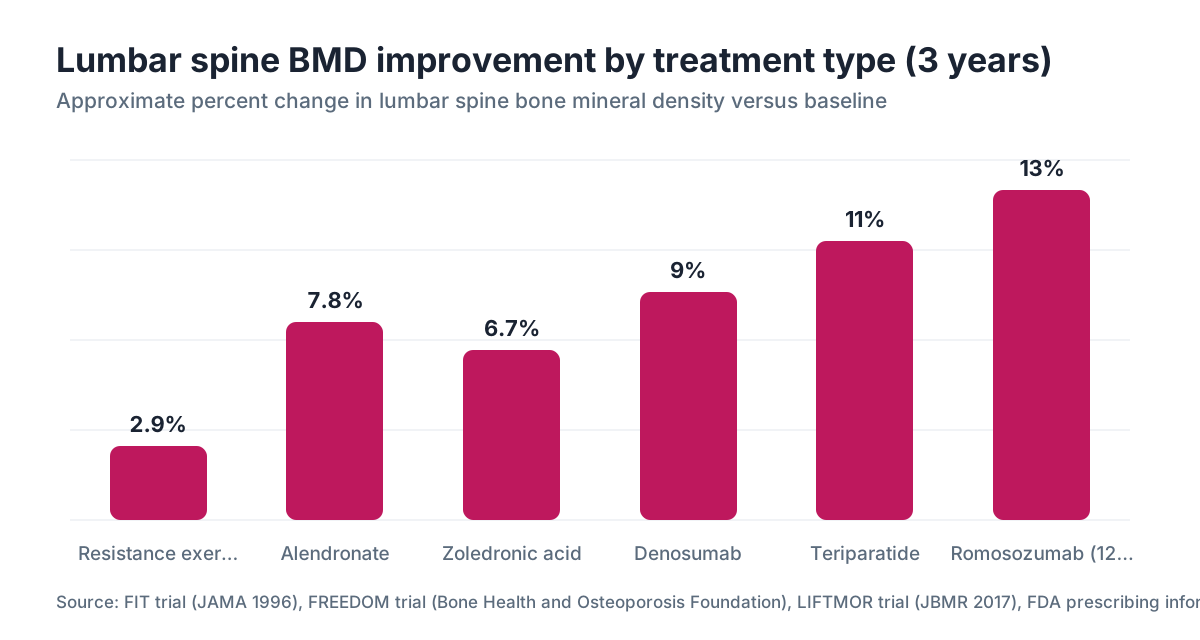
Progressive resistance training is the most important tool for spinal density. When muscle pulls hard on bone during a loaded movement (a deadlift, squat, row, or overhead press), that stress triggers osteoblasts, the bone-building cells, to lay down new matrix. The 2017 LIFTMOR randomized controlled trial, published in the Journal of Bone and Mineral Research, found high-intensity resistance and impact training produced a 2.9% improvement in lumbar spine BMD and a 0.3% improvement in femoral neck BMD over 8 months in postmenopausal women with low bone mass [4]. The moves that drove those results were back squats, deadlifts, overhead presses, and jumping chin-ups at 80-85% of a one-rep maximum.
What loads the spine specifically? Movements that load through the length of the spine and in extension are the strongest stimulus. Deadlifts, squats, loaded carries, and rows are the evidence-backed choices. Spinal flexion under load (a weighted crunch, for example) can raise vertebral fracture risk in women who already have osteoporosis, so skip it.
Yoga and Pilates sit in a different tier. They improve balance and cut fall risk, which reduces fracture risk indirectly, but the evidence for direct BMD gains is thin. One small trial reported gains in specific vertebrae, though its design drew criticism for methodological problems. Do it for balance, posture, and function. Just don't count it as your bone builder.
A weekly structure most of the evidence supports:
| Day | Activity | Why | |-----|----------|-----| | Mon | Heavy resistance training (squat, deadlift) | Spinal + hip bone stimulus | | Tue | Brisk walking 30-45 min | Weight-bearing, cardiovascular | | Wed | Rest or yoga | Balance, recovery | | Thu | Heavy resistance training (press, row, carry) | Upper spine + overall | | Fri | Jogging, hiking, or stair climbing | Impact loading | | Sat | Active rest: dancing, pickleball | Enjoyment, compliance | | Sun | Rest | |
Progression matters. Two years of the same bodyweight squats gives declining bone stimulus because the skeleton adapts to what you ask of it. Add load or volume every 4-6 weeks.
How much calcium and vitamin D do you actually need?
Women 51 and older need 1,200 mg of calcium and roughly 800-2,000 IU of vitamin D daily. Calcium is the main mineral in bone. Vitamin D is what lets your gut absorb it. Without enough D, most of the calcium you eat leaves in your stool instead of reaching your skeleton [5].
The NIH Office of Dietary Supplements sets calcium at 1,000 mg daily for women ages 19-50 and 1,200 mg daily for women 51 and up [5]. The vitamin D recommended dietary allowance is 600 IU for ages 19-70 and 800 IU for 71 and older, though the Endocrine Society suggests 1,500-2,000 IU daily for adults at risk of deficiency [6].
Food first is the better route for calcium. Dairy (one cup of milk has about 300 mg), fortified plant milks, canned salmon with the bones, and dark leafy greens like kale and bok choy all add up fast. Get 800-1,000 mg from food and you need only a small supplement to close the gap, not a large-dose pill.
On supplements: calcium citrate absorbs better than calcium carbonate, especially for women on acid-reducing medications or with lower stomach acid (common after 50). Take it in divided doses of 500 mg or less, because absorption drops with bigger single doses. A 2010 BMJ meta-analysis raised the question of whether calcium supplements increase cardiovascular risk, but later analyses didn't find the same signal once dietary calcium was accounted for. If it worries you, lean on food sources and talk to your doctor.
Vitamin D deficiency is common. CDC data from NHANES found 41.6% of U.S. adults have insufficient vitamin D levels (below 20 ng/mL) [5]. A blood test (25-hydroxyvitamin D) tells you exactly where you stand. Most women below 30 ng/mL do well on 1,000-2,000 IU of supplemental D3 daily. Very low levels (below 12 ng/mL) may need short-term high-dose repletion under a physician's watch.
Does hormone replacement therapy increase bone density?
Yes, and it's one of the best-established effects in menopause medicine. Estrogen directly suppresses osteoclasts, the cells that break bone down. When estrogen drops at menopause, that brake comes off and bone loss speeds up to 1-3% per year in the first 5-7 years after the final period [7].
Hormone replacement therapy restores the brake. The Women's Health Initiative trial, which enrolled 16,608 postmenopausal women, found combined estrogen-progestin therapy cut hip fracture risk by 34% and vertebral fracture risk by 34% versus placebo [7]. That's a real reduction in broken bones, not a T-score rounding exercise.
The mechanism is simple. Estrogen keeps osteoclasts in check, so formation (which continues at a steadier pace) wins the net balance. HRT produces about a 3-5% gain in lumbar spine BMD over 2 years in recently postmenopausal women, and holds that gain as long as therapy continues.
Stop HRT and bone loss resumes. That's one reason bone specialists often keep women on HRT past the old "5-year" limit, particularly those with osteopenia or osteoporosis. The North American Menopause Society states in its 2022 position statement that "for women aged younger than 60 years or who are within 10 years of menopause onset and have no contraindications, the benefit-risk ratio is favorable for treatment of bothersome vasomotor symptoms and for those at elevated risk for bone loss or fracture" [8].
Progesterone (or a synthetic progestin) is added to protect the uterine lining when estrogen goes to a woman who still has her uterus. Some evidence hints progesterone may have a mild independent bone benefit, though estrogen does the heavy lifting.
If you're in perimenopause or early postmenopause and wondering whether HRT fits your situation, hormone replacement therapy deserves a direct conversation with a clinician who knows your full history. WomenRx providers work through this risk-benefit math with patients regularly.
The estrogen patch (transdermal estrogen) is often chosen over oral estrogen for bone health because it delivers estrogen without the first-pass liver metabolism that raises clotting factor production, which matters most for women with clotting risk factors.
What prescription medications are used to increase bone density?
When bone density meets the criteria for osteoporosis (a T-score below -2.5) or fracture risk runs high, medication adds protection that exercise and nutrition can't match. Five drug classes carry the strongest evidence, and they split into two camps: drugs that slow breakdown and drugs that build new bone.
Bisphosphonates (alendronate, risedronate, zoledronic acid, ibandronate) are the most prescribed class. They inhibit osteoclasts, tipping the remodeling balance toward formation. Alendronate (Fosamax) is usually the first choice: generic, cheap, and backed by a large body of evidence. The Fracture Intervention Trial showed alendronate cut vertebral fracture risk by 47% and hip fracture risk by 51% in women with osteoporosis over 3 years, with lumbar spine BMD up 7.8% [1]. Oral bisphosphonates ask for a specific routine (empty stomach, upright for 30 minutes, no food for another 30). It's a nuisance, and it's what prevents esophageal irritation.
Denosumab (Prolia) is a biologic antibody given by subcutaneous injection every 6 months. It blocks RANKL, a signaling protein that switches on osteoclasts. The FREEDOM trial found denosumab cut vertebral fracture risk by 68% and hip fracture risk by 40% over 3 years [3]. It's useful for women who can't tolerate oral bisphosphonates or who have significant kidney disease. One warning: stopping denosumab abruptly triggers a rebound in bone resorption and vertebral fracture risk. Patients have to transition to a bisphosphonate before stopping.
Teriparatide (Forteo) and abaloparatide (Tymlos) are anabolic agents. They stimulate new bone formation instead of just slowing breakdown. Both are daily self-injections. Teriparatide is a fragment of parathyroid hormone; abaloparatide is a PTH-related protein analog. They're held for severe osteoporosis (multiple fractures or very low T-scores) because they're expensive and time-limited (2 years for teriparatide, 18 months for abaloparatide). After a course, a bisphosphonate locks in the gains.
Romosozumab (Evenity) is the newest option, a monoclonal antibody that builds bone and slows resorption at the same time. Given as monthly injections for 12 months, it cut new vertebral fractures by 73% versus placebo in the FRAME trial [12]. It carries a boxed warning for cardiovascular risk (heart attack, stroke) and is off-limits for women who had a cardiac event in the prior year.
| Medication | Type | Route | BMD Gain (spine, 3 yr) | Fracture Risk Reduction | |------------|------|--------|----------------------|------------------------| | Alendronate | Bisphosphonate | Weekly oral | ~7-8% | Vertebral -47%, Hip -51% | | Zoledronic acid | Bisphosphonate | Annual IV infusion | ~6-7% | Vertebral -70%, Hip -41% | | Denosumab | Biologic | SC injection q6mo | ~9% | Vertebral -68%, Hip -40% | | Teriparatide | Anabolic | Daily SC injection | ~9-13% | Vertebral -65% | | Romosozumab | Dual-action biologic | Monthly SC injection x12mo | ~13% | Vertebral -73% |
Source: prescribing information and cited trials [1][3][12]
How does GLP-1 weight loss affect bone density?
Rapid weight loss lowers the daily mechanical load on your skeleton, and that can pull bone density down. GLP-1 medications like semaglutide and tirzepatide are widely used by women over 40, so this question keeps coming up. The direct effect on bone is still being worked out, but the load story is real.
Body weight is one of the forces that stresses your bones every single day. Lose weight, drop that load, and BMD tends to drift down. The STEP 1 trial of semaglutide reported a mean body weight loss of 14.9% over 68 weeks. In SURMOUNT-1, tirzepatide produced up to 20.9% weight reduction over 72 weeks [9]. Those are large amounts of lost mechanical load.
The evidence on GLP-1s and bone is mixed and still young. Some studies show small drops in hip BMD alongside semaglutide-linked weight loss; others show no meaningful change, maybe because GLP-1 receptors sit on osteoblasts and could have a direct bone-protective effect. The honest position: nobody has definitive long-term data yet. If you're using semaglutide for weight loss or comparing semaglutide vs tirzepatide, resistance training (more than cardio) is the best-evidenced way to protect bone while you lose fat. Protein of 1.2-1.6 g per kg of body weight helps hold onto lean mass, which supports bone indirectly.
If you're over 50, well above a healthy weight, and starting a GLP-1, get a baseline DEXA before you start and a follow-up at 1-2 years. That gives you data instead of a guess.
What nutrients beyond calcium and vitamin D affect bone density?
Bone isn't made of calcium and vitamin D alone. Several other nutrients carry documented roles in bone health, and most Americans don't track any of them. Protein, magnesium, and vitamin K2 are the three worth paying attention to.
Protein builds the collagen scaffold that mineralizes into bone. Adequate protein (at least 1.0 g per kg of body weight, ideally 1.2-1.6 g) is tied to better BMD and lower fracture risk in observational studies. The old worry that protein flushes calcium out through urine hasn't held up. The net effect of enough protein on bone is positive.
Magnesium is needed to convert vitamin D to its active form and to build normal bone crystal structure. The RDA is 320 mg/day for women over 31, and most fall short. Dark chocolate, nuts, seeds, and leafy greens are the best food sources.
Vitamin K2 (menaquinone) activates osteocalcin, a protein that binds calcium into the bone matrix. Natto (Japanese fermented soybean) is by far the richest food source; supplements of 90-200 mcg/day are commonly recommended by bone specialists, though the fracture-reduction trials are less clear than for calcium or D. Women on warfarin (Coumadin) need physician clearance before taking K2, because it interferes with anticoagulation.
Omega-3 fatty acids from fatty fish or algae supplements seem to modestly lower bone resorption markers in some studies, though the direct BMD effect is small. Eat fatty fish 2-3 times a week for your heart and metabolism regardless.
Alcohol speeds bone loss in excess (more than 2 drinks a day). Smoking is an independent osteoporosis risk factor that directly impairs osteoblast function and lowers estrogen. Neither is a minor player: heavy smoking roughly doubles fracture risk.
Caffeine in very high amounts (more than 4 cups of coffee daily) can slightly raise calcium excretion, but adequate calcium easily offsets it. Moderate coffee doesn't meaningfully affect bone.
How long does it take to increase bone density?
Give it 12 months before expecting a measurable change on DEXA, and 2-3 years for the full effect. Bone remodels slowly. Osteoblasts lay down new collagen matrix, then it mineralizes over roughly 3-6 months. A full remodeling cycle, where old bone is fully replaced at a given site, takes about 3-10 years depending on location.
What to expect by approach:
- Exercise alone: 6-12 months to see measurable BMD changes on DEXA in most studies. Real-world gains of 1-3% in the spine over 12 months with consistent resistance training.
- Calcium and vitamin D optimization: These stop further loss once levels normalize, but the measurable BMD gain from correction alone is modest.
- HRT: Gains show up at 12 months and build over 2-5 years. Most of it lands in the first 2 years.
- Bisphosphonates: Meaningful gains at 12 months; the biggest gains (up to 7-8% in the spine) build over 3 years. Fracture protection starts earlier than the BMD number suggests, because these drugs also improve bone material quality.
- Anabolic agents (teriparatide, romosozumab): Faster than bisphosphonates; measurable gains often appear at 6 months.
DEXA scans usually repeat every 1-2 years during active treatment, or every 2-5 years for monitoring in women with osteopenia. Scanning more often just generates noise, because the measurement error of most DEXA machines (roughly 1-2%) overlaps with the biological change you'd expect over 6 months.
Patience is the whole game. The women who improve their bone health most over a decade start the right habits in their 40s and stay consistent. Not the ones who run a 3-month intense program and quit.
What lifestyle factors quietly destroy bone density in women?
You can do everything right with exercise and supplements and still lose bone faster than expected if one of these is in play. Steroids, undiagnosed celiac disease, and a history of missed periods are the ones most often missed.
Low body weight or a history of eating disorders. Peak bone mass depends on estrogen, nutrition, and mechanical load during adolescence and early adulthood. Women with a history of anorexia nervosa carry lower lifetime peak bone mass, and that deficit is hard, sometimes impossible, to fully recover even after they've recovered. Low body weight at any age is one of the strongest clinical predictors of fracture.
Long-term glucocorticoid use. Prednisone and similar steroids (taken orally or injected regularly, not inhaled at standard doses) are among the most potent drivers of bone loss. The American College of Rheumatology recommends starting bone-protective therapy when oral glucocorticoid use passes 3 months at doses above 2.5 mg prednisone equivalent daily.
Certain medications. Proton pump inhibitors (PPIs like omeprazole), SSRI antidepressants, loop diuretics, some antiepileptic drugs, and thiazolidinediones (used for type 2 diabetes) have all been linked to lower BMD or higher fracture risk with longer-term use. This doesn't mean stop a medication that's working. It does mean bone monitoring belongs on your physician's radar.
Celiac disease and other malabsorption conditions cut calcium and vitamin D absorption sharply. Undiagnosed or poorly controlled celiac disease is a common secondary cause of osteoporosis that slips through the cracks.
Prolonged amenorrhea (missing periods from low body fat, overtraining, or the Female Athlete Triad) causes estrogen deficiency the same way menopause does, with the same bone consequences. Young athletes who lose their periods build a skeletal debt that shows up in their 40s and 50s.
Poor sleep. New research shows bone resorption markers rise with sleep deprivation. That's plausible, since growth hormone (which supports bone formation) releases mainly during slow-wave sleep. The clinical size of sleep's effect on BMD is still being pinned down, but 7-8 hours is a fair target for general health.
How do you know if your bone density is improving?
A repeat DEXA scan, usually at 1-2 years, is how you know. It measures bone mineral density at the hip (total hip and femoral neck) and lumbar spine (usually L1-L4), gives a T-score (compared to a young adult reference) and Z-score (compared to age-matched peers), takes under 15 minutes, and uses trivial radiation [10].
The Bone Mass Measurement Act requires Medicare to cover a DEXA scan every 24 months for women who qualify, including postmenopausal women not on estrogen therapy, women whose DEXA already showed osteoporosis, and women whose physician certifies a monitoring need [10]. Most private insurers follow similar rules, though it varies by plan.
For women on treatment, most bone specialists repeat DEXA at 1-2 years to check response. A least significant change calculation, which factors in the machine's measurement error, tells you whether a change is real or just noise. Spine readings are more reproducible than hip readings because the hip is more sensitive to positioning.
Bone turnover markers (blood and urine tests: CTX for resorption, P1NP for formation) give a faster signal. They shift within weeks to months of starting therapy, versus the 12-24 months DEXA takes. Not every provider orders them routinely, but they're useful when you want earlier reassurance that a medication is doing its job.
What is the right approach for perimenopause and early menopause specifically?
Start resistance training, calcium and vitamin D, and an HRT conversation in your 40s, before the fastest loss hits. Perimenopause is when bone loss begins to accelerate, often before the final period and sometimes before a woman even realizes she's in the transition. Knowing perimenopause age and when menopause starts matters here, because earlier awareness means earlier action.
Estrogen swings wildly in perimenopause before settling to its postmenopausal floor. Bone loss during this stretch can run 1-2% per year, fastest in the 2 years before and after the final period. Women who reach menopause earlier, naturally or surgically, spend more total years in estrogen deficiency, which adds up to higher lifetime fracture risk.
For perimenopausal women in their 40s not yet on HRT, the priorities are immediate: resistance training, calcium and vitamin D, and a conversation about HRT if symptoms and history allow. A baseline DEXA at menopause age (average 51 in the U.S.) captures a starting number before real loss piles up.
WomenRx runs hormone consultations that include bone health risk assessment for perimenopausal and postmenopausal women, so if you're not sure where to begin, that's a reasonable first step.
For women who hit surgical menopause (bilateral oophorectomy) before 45, the urgency climbs. Multiple major societies recommend HRT in this group until at least the average age of natural menopause (~51) to prevent accelerated bone loss, among other consequences.
What are the diet patterns most strongly linked to better bone health?
The Mediterranean diet has the strongest link to lower fracture risk, and any pattern that hits your calcium and protein targets without excess sodium or ultra-processed food does most of the work. There's no single bone diet, but the whole pattern over years is what shows up on a scan.
The Mediterranean pattern, heavy on vegetables, legumes, whole grains, fish, olive oil, and moderate dairy, is tied to lower hip fracture risk across large cohort studies. A 2021 analysis in Nutrients found adherence to a Mediterranean diet was associated with meaningfully higher BMD at the femoral neck [11].
High-sodium diets raise urinary calcium excretion. For every 2,300 mg of sodium, roughly 40 mg of calcium leaves in the urine. That won't cause osteoporosis alone, but it chips away at calcium balance when your intake is already marginal.
Acid-load theory (the idea that meat makes the body acidic, so the skeleton donates calcium to buffer it) sparked a wave of protein worry in the 1990s. The evidence since then doesn't support cutting protein for bone health. The actual risk comes from too little protein, not from the amounts typical of a Western diet.
Fermented dairy (yogurt, kefir) may help beyond its calcium because of probiotic effects on gut calcium absorption, though that evidence is early. Soy isoflavones (from tofu, edamame, miso) have mild estrogen-like effects, and some studies show modest BMD benefits in postmenopausal women. The effect isn't strong enough to replace HRT in women with significant bone loss.
Frequently asked questions
Can you increase bone density after 60?
Yes, though the gains run smaller than in younger women. Resistance training produces 1-2% spine BMD improvement over 12 months in women in their 60s and 70s in well-designed trials. Bisphosphonates produce 6-8% gains over 3 years at any age. The remodeling machinery still works at 60 and 70, it just runs slower. Two to three years of consistent effort produces real, fracture-reducing gains even in older women.
How do I increase bone density fast?
There's no shortcut that works in weeks. The fastest clinically meaningful route combines prescription anabolic therapy (teriparatide or romosozumab) with resistance exercise and enough calcium and vitamin D. Teriparatide produces measurable BMD gains within 6 months. Exercise and nutrition gains show up on DEXA at 12 months. Anyone promising visible results in 30 days is selling something that doesn't exist.
Is walking enough to increase bone density?
Walking maintains bone and beats no activity, but for most postmenopausal women it isn't enough to produce meaningful BMD gains. The mechanical stimulus is moderate. Walking-only studies typically show prevention of loss rather than improvement. Adding resistance training two to three days a week on top of regular walking is where the evidence for actual improvement lives.
What foods increase bone density?
Dairy (milk, cheese, yogurt), calcium-set tofu, canned sardines or salmon with the bones, kale, bok choy, and fortified plant milks all add meaningful calcium. Fatty fish and egg yolks add vitamin D. Whole grains, nuts, and seeds bring magnesium. Natto (fermented soybeans) is the best food source of vitamin K2. No single food reverses osteoporosis; the whole dietary pattern over years is what matters.
Does calcium alone increase bone density?
Calcium on its own, without vitamin D, exercise, and enough protein, produces minimal BMD improvement. Meta-analyses of calcium without D show only modest effects on bone loss. Calcium is necessary but not sufficient. The body needs vitamin D to absorb it, protein to build the collagen matrix, and mechanical loading to signal where new bone is needed. All four together outperform any one alone.
What T-score means I need medication for bone density?
A T-score of -2.5 or below at the hip or spine meets the WHO definition of osteoporosis and is a standard threshold for starting medication. A T-score between -1.0 and -2.5 is osteopenia; medication may still be warranted depending on your FRAX fracture probability score (which factors in age, body weight, prior fractures, and other risks). Your physician uses the T-score and FRAX together, not the T-score alone.
Does estrogen therapy prevent bone loss during menopause?
Yes, clearly. The Women's Health Initiative trial showed estrogen-progestin therapy cut hip fracture risk by 34% and vertebral fracture risk by 34% versus placebo. Estrogen suppresses osteoclasts, the cells that break bone down. When therapy stops, resorption resumes. The North American Menopause Society treats fracture prevention as a well-established benefit of HRT in younger postmenopausal women without contraindications.
Do GLP-1 medications like semaglutide cause bone loss?
Rapid weight loss by any method reduces mechanical load on the skeleton, which can lower BMD over time. Semaglutide studies show some decrease in hip BMD alongside significant weight loss. GLP-1 receptors sit on osteoblasts and may partly offset this, but long-term fracture data in large populations aren't in yet. Resistance training during weight loss is the best-documented way to protect bone on GLP-1 therapy.
How often should I get a DEXA scan to track bone density?
For most women, every 1-2 years during active osteoporosis treatment, and every 2-5 years for monitoring in osteopenia or normal bone density. Medicare covers DEXA every 24 months for qualifying postmenopausal women. Repeating more often than every 12 months rarely adds useful information, because the machine's measurement error overlaps with the biological change expected over that short window.
What is the best supplement combination for bone density?
The evidence supports calcium (1,000-1,200 mg daily total from food and supplement combined), vitamin D3 (1,000-2,000 IU daily, adjusted to blood level), and magnesium (300-400 mg daily). Vitamin K2 (90-200 mcg of the MK-7 form) is increasingly added by bone specialists, though definitive fracture-trial data are limited. Collagen peptides have some trial support for bone markers but aren't in major guidelines. Supplements support but don't replace exercise and, when needed, prescription treatment.
Can strength training reverse osteoporosis?
Strength training can produce 2-3% improvements in lumbar spine BMD in postmenopausal women with osteopenia or osteoporosis over 12 months, and the LIFTMOR trial demonstrated exactly this with high-intensity lifting. It won't fully reverse severe osteoporosis to normal T-scores, but better BMD plus stronger muscles and better balance produces a real reduction in fall and fracture risk. Most women with osteoporosis can lift heavy safely under qualified supervision.
What medications cause bone density loss?
Long-term oral glucocorticoids (prednisone) are the most common culprit. Others with documented bone effects include proton pump inhibitors, SSRIs, loop diuretics, aromatase inhibitors (used in breast cancer treatment), GnRH agonists, thiazolidinediones, and some antiepileptic drugs. Taking one doesn't mean you must avoid it, many are necessary, but it should prompt a conversation about bone monitoring and protective strategies.
Is it too late to improve bone density after a fracture?
No, and a fracture is the strongest signal to start aggressive treatment right away. A prior vertebral fracture multiplies the risk of a second one roughly 5-fold in the following year. After a fracture, the standard of care is starting prescription bone therapy within 3-6 months if you're not already on it, paired with fall prevention and supervised exercise. Treatment after fracture consistently cuts subsequent fracture risk by 30-70% depending on the drug.
How does progesterone affect bone density?
Progesterone receptors exist on osteoblasts, and some research suggests natural progesterone may have a mild pro-formation effect on bone, distinct from synthetic progestins. The clinical evidence is less definitive than for estrogen. In standard HRT regimens, progesterone is added mainly to protect the uterine lining, not specifically for bone. Whether the form (natural micronized versus synthetic) changes bone outcomes remains an open research question.
Sources
- JAMA: Fracture Intervention Trial (FIT), Black et al., 1996
- Journal of Bone and Mineral Research: meta-analysis of exercise and BMD in postmenopausal women, 2022
- Bone Health and Osteoporosis Foundation (formerly National Osteoporosis Foundation): clinician guide
- Journal of Bone and Mineral Research: LIFTMOR trial, Watson et al., 2017
- NIH Office of Dietary Supplements: Calcium and Vitamin D Fact Sheets
- Endocrine Society: Vitamin D Deficiency Clinical Practice Guideline
- JAMA: Women's Health Initiative (WHI), Rossouw et al., 2002
- North American Menopause Society (NAMS): 2022 Hormone Therapy Position Statement
- New England Journal of Medicine: SURMOUNT-1 trial, Jastreboff et al., 2022
- CMS.gov: Bone Mass Measurement Act coverage criteria
- Nutrients journal: Mediterranean diet and BMD meta-analysis, 2021
- FDA prescribing information: Evenity (romosozumab-aqqg) label