How to improve bone density: a practical guide for women
TL;DR: You can raise bone mineral density, more than slow the loss. Weight-bearing and resistance exercise, 1,000-1,200 mg of calcium, 1,500-2,000 IU of vitamin D3, and quitting smoking do the heavy lifting. For women near menopause, hormone therapy protects bone directly. Prescription drugs add bone back in moderate-to-severe cases. Most women see measurable gains in 12-24 months.
Can you actually improve bone density, or just slow the loss?
Both, and the difference is real. Bone is living tissue that tears down old material and lays down new material on a constant cycle called remodeling. That cycle gives you a genuine chance to build density at almost any age. The window is widest before about age 30 and narrows after menopause, but it never closes. [1]
Studies using dual-energy X-ray absorptiometry (DXA) found that postmenopausal women who did structured resistance training for 12 months gained roughly 1-3% in lumbar spine bone mineral density, while control groups lost density over the same year. [2] A 3% gain at the spine sounds tiny. It isn't. That size of change lowers fracture risk in a way that shows up in outcome data.
For women under 50 with low bone mass, gains come faster and larger. For women in their 60s and 70s, the goal shifts. You might add 1-2% per year in treated sites, and holding steady in the rest is a clinical win worth having. Nobody should oversell this. The honest claim is narrow: improvement is measurable, it's achievable, and stacking several strategies stacks the gains.
A bone density test (DXA scan) gives you the baseline number you need to track progress. Without one, you're guessing.
What causes bone loss in women, especially around menopause?
Estrogen is the biggest single driver of bone loss in women. It keeps osteoclasts, the cells that break bone down, on a short leash. When estrogen falls during perimenopause and menopause, those osteoclasts run unsupervised. Women can lose 1-2% of bone mass per year in the early postmenopausal years, and up to 20% of total bone mass in the 5-7 years after the final period. [3]
Other factors pile on. Low calcium intake, vitamin D deficiency, very low body weight, high cortisol from chronic stress, smoking, heavy alcohol use, low physical activity, and certain medications (glucocorticoids, proton pump inhibitors, and some antidepressants) all speed the loss. [1]
Knowing when menopause starts matters, because bone loss begins in the years before your last period, not after. Wait until you've been postmenopausal for a decade and you're starting from a deeper hole.
Genetics sets a ceiling and a floor. Women of Asian and white ancestry carry lower peak bone mass on average and hit fracture-risk thresholds sooner. Black and Hispanic women tend to have higher peak bone mass, but they still fracture, and they're historically undertreated. [4]
What exercises improve bone mineral density the most?
Bone answers to mechanical load. The more force your muscles and gravity put through a bone, the louder the signal to osteoblasts to build. Swimming and cycling are wonderful for your heart and do almost nothing for your skeleton, because your body weight is supported the whole time. [2]
Two categories carry the strongest evidence.
Weight-bearing aerobic activity: running, hiking, brisk walking, stair climbing, dancing, tennis. Impact is the active ingredient. Walking beats sitting, but jogging or jumping adds far more stimulus. Higher-impact loading, running rather than walking, produces greater femoral neck density gains. [2]
Resistance training: squats, deadlifts, lunges, rows, overhead presses. Progressive overload is the whole point, meaning you add weight or difficulty over weeks and months. Two to three sessions a week hitting the legs, hips, and back is the standard target. The ACSM recommends 8-10 exercises, 8-12 reps, 2-3 sets, at 70-85% of your one-rep max for a bone-building effect. [5]
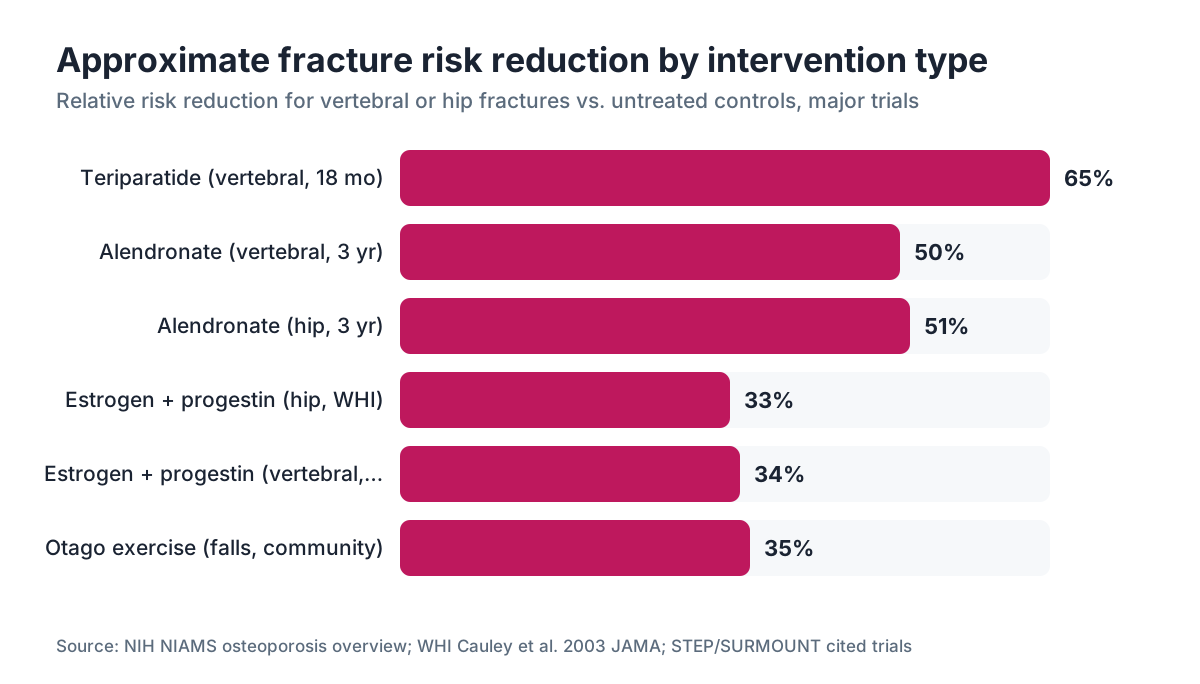
Balance work (yoga, tai chi, Pilates) doesn't build bone directly, but it cuts fall risk, and falls cause most fractures. The Otago Exercise Programme has randomized trial evidence for reducing falls in older women by about 35%. [6]
Here's the combination that works: 3 resistance sessions a week, 2-3 moderate-impact aerobic sessions, and a short daily balance practice. Most women fit all of it into 4-5 hours of movement per week.
| Exercise type | Direct bone-building effect | Best skeletal sites |
|---|---|---|
| Running / jumping | High | Hip, spine, tibia |
| Resistance training | High | Spine, hip, wrist |
| Brisk walking | Moderate | Hip |
| Swimming | Low | Minimal |
| Cycling | Low | Minimal |
| Tai chi / yoga | Indirect (fall prevention) | All, via fracture reduction |
What is the best diet to improve bone density?
Calcium gets the headlines and earns them, but it works with a cast. A bone diet is really about several nutrients showing up together.
Calcium: The NIH recommends 1,000 mg per day for women 19-50 and 1,200 mg for women 51 and older. [7] Most American women get 700-900 mg from food, so there's a gap. Dairy packs the most per serving (one cup of milk or yogurt gives about 300 mg), but you can hit your target without it: canned salmon with the bones, firm tofu set with calcium sulfate, kale, bok choy, and fortified plant milks. Food first is the right play. Calcium from food absorbs better and carries fewer risks than high-dose supplements.
Vitamin D: Without enough of it, your gut pulls in roughly 10-15% of dietary calcium instead of 30-40%. [7] The Endocrine Society recommends 1,500-2,000 IU of vitamin D3 daily for adults at risk of deficiency, which covers most women over 50, especially those in northern latitudes or who spend little time outdoors. [8] Aim for a serum 25-hydroxyvitamin D between 40-60 ng/mL. Below 20 is deficient. Ask for the test.
Protein: Undersold in every bone conversation. Bone matrix is about one-third protein, mostly collagen, and enough protein keeps the muscle that loads that bone. Aim for 1.2-1.6 g per kilogram of body weight daily. The old worry that high protein leaches calcium from bone hasn't held up. [9]
Magnesium, vitamin K2, and zinc fill out the picture. Magnesium (320-420 mg/day) is a cofactor for vitamin D activation. Vitamin K2 (MK-7 form, around 100-180 mcg/day) helps steer calcium into bone rather than arteries. Get these from leafy greens, nuts, and fermented foods before you reach for pills.
Alcohol and caffeine both raise urinary calcium loss in excess. More than 2-3 drinks a day tracks consistently with lower bone density. Coffee at 3-4 cups a day has a much smaller effect and probably doesn't matter if your calcium is adequate.
Does hormone replacement therapy improve bone density?
Yes, and the effect is settled science. Estrogen suppresses osteoclast activity directly, so replacing it after menopause stops and partly reverses the fast bone loss of early menopause. The Women's Health Initiative trials showed that combined estrogen plus progestin, and estrogen alone in women who'd had hysterectomies, cut hip and vertebral fracture risk, by roughly 33-34% for hip fractures. [10]
The FDA-approved label for hormone replacement therapy specifically covers prevention of postmenopausal osteoporosis. The North American Menopause Society says hormone therapy suits women under 60 or within 10 years of menopause who have bothersome symptoms or high fracture risk, and that for these women "the benefits are likely to outweigh the risks." [3]
Transdermal estrogen, such as an estrogen patch, is generally preferred over oral estrogen for bone and cardiovascular endpoints because it skips the first-pass liver effect, though both forms protect bone. Progesterone (micronized, bioidentical) gets added for women with a uterus to protect the lining, and it may carry a small bone benefit of its own.
WomenRx offers telehealth evaluation for hormone therapy, including DXA review, for women making this decision without easy access to a specialist.
Here's the practical version: if you're in the perimenopausal window with low bone density or several risk factors, hormone therapy does two jobs at once. Treating hot flashes while protecting your skeleton is a reasonable priority, not a happy accident.
For women who can't or won't use hormones, the non-hormonal prescriptions in the next section are the alternative.
What prescription medications improve bone mineral density?
When lifestyle and hormones aren't enough, or a woman is already in the osteoporosis range (T-score at or below -2.5) or has had a fragility fracture, prescription drugs are appropriate and they work.
Bisphosphonates (alendronate, risedronate, zoledronic acid) are the workhorses. They shut down osteoclasts, slowing breakdown. Alendronate cuts vertebral fracture risk by about 50% and hip fracture risk by about 51% in postmenopausal women with osteoporosis. [1] Oral versions are usually weekly; zoledronic acid is a once-a-year IV. The catch is a rare but real risk of atypical femoral fractures and jaw osteonecrosis with very long use, which is why most guidelines call for a drug holiday after 5-10 years.
Denosumab (Prolia) is a twice-yearly injection that blocks RANK ligand, a protein osteoclasts need to form. It produces larger density gains than bisphosphonates in most head-to-head studies and works in women with kidney disease, where bisphosphonates are off the table.
Romosozumab (Evenity) is newer and genuinely impressive for severe osteoporosis: it builds new bone and slows breakdown at the same time. Monthly injections for 12 months, then an antiresorptive to hold the gains. It carries a cardiovascular warning, so it's off-limits for women with a recent heart attack or stroke.
Teriparatide and abaloparatide are anabolic agents, meaning they build bone rather than only preserve it. They're reserved for severe cases, very high fracture risk, or failed antiresorptive therapy. Teriparatide cuts vertebral fracture risk by about 65% over 18 months. [1]
None of these drugs work well without enough calcium and vitamin D on board. They add to lifestyle. They don't replace it.
How much calcium and vitamin D do you actually need?
The numbers most clinicians use come from the NIH Office of Dietary Supplements. Calcium: 1,000 mg per day for women 19-50, 1,200 mg for women 51 and older. [7] Vitamin D: the NIH sets 600 IU for adults through 70 and 800 IU past 70, but the Endocrine Society's guideline for people at risk of deficiency sets a higher target of 1,500-2,000 IU daily, which covers most women over 50. [8]
Supplemental calcium deserves a caution. High-dose calcium supplements (calcium carbonate above 500 mg at one sitting in particular) have been tied in some studies to higher cardiovascular risk, though the question stays unsettled. The safe move is to get most of your calcium from food and use a small supplement (200-400 mg) only to close the gap, never to paper over a poor diet.
Vitamin D toxicity is possible above 4,000 IU per day but rare in practice. Most women over 50 are far more likely to run low than high. A blood test for 25-hydroxyvitamin D is the only way to know where you stand.
One detail worth keeping: magnesium deficiency blunts vitamin D metabolism, so even a diligent D supplement underperforms if your magnesium is low. Leafy greens, legumes, and nuts fix that.
How does GLP-1 medication affect bone density?
This is a fair concern for women using semaglutide or tirzepatide to lose weight, and the data are still coming in.
Rapid weight loss of any kind, including from GLP-1 drugs like semaglutide, can lower bone density, because bone responds to load and a lighter body puts less force through the skeleton. The STEP 1 trial, which tested 2.4 mg semaglutide over 68 weeks, found total body lean mass and bone mass dropped in proportion to overall weight loss, though the DXA-measured hip bone mineral density change was modest and not statistically significant versus placebo in some subgroup analyses. [11]
Tirzepatide data from SURMOUNT-1 showed density changes in the same direction, mostly at the hip. [12] The size was small, but the trend runs consistent across GLP-1 trials.
So here's what to do: women using semaglutide for weight loss or weighing semaglutide vs tirzepatide should be strict about resistance training (it partly offsets the lean mass and bone loss), protein (1.2-1.6 g/kg/day), and calcium plus vitamin D throughout treatment. A baseline DXA before you start and a repeat at 12-24 months is a reasonable ask from your prescriber.
GLP-1 receptors do show up in bone tissue, and some early work hints that direct activation might carry a small protective effect, but the clinical meaning of that isn't clear yet. For now, the unloading effect of weight loss appears to win out.
What lifestyle habits quietly destroy bone density?
A handful of habits erode bone in ways most women never connect to their skeleton.
Smoking: current smokers carry consistently lower bone mineral density than nonsmokers, with studies showing roughly 10% lower hip density in long-term smokers. [4] Nicotine impairs osteoblasts and drops estrogen. Quitting helps, but the deficit doesn't fully bounce back.
Alcohol: more than 2-3 drinks a day is directly toxic to osteoblasts, raises fall risk, hurts calcium absorption, and slows vitamin D activation in the liver. One drink a day for women carries a small negative effect and isn't the main worry.
Sitting: every hour seated is an hour of zero load on your skeleton, and that's separate from whether you exercise. Women who sit most of the day but train for 30 minutes still show worse bone outcomes than women who move throughout the day, though high-intensity sessions close some of the gap.
Very low calorie diets: under about 1,200-1,400 calories per day, bone density falls over time, partly from lower load and partly from nutrient shortfalls. Crash dieting and eating disorders are among the most overlooked causes of early osteoporosis in women under 40.
High sodium: it drives urinary calcium out. The average American woman gets about 3,400 mg of sodium a day against the 2,300 mg recommended, and that gap works against calcium balance.
Glucocorticoids (prednisone, cortisone): even 5 mg of prednisone daily for more than 3 months causes real bone loss. If you take these for a chronic condition, ask about bone protection at the start of treatment, not years down the line.
How long does it take to see improvement in bone density?
Bone remodeling is slow. One full cycle, from osteoclast activation to fresh osteoblast deposition, runs about 3-6 months. Meaningful change on a DXA scan usually takes 12-24 months of steady work. [1]
Medications compress the timeline a bit. Teriparatide shows statistically significant vertebral gains at 12 months. Bisphosphonates show significant hip and spine gains at 12-24 months. Romosozumab produces some of the fastest documented gains, around 9-12 months, one reason it's saved for high-risk cases.
Exercise and nutrition alone move the needle more slowly, but the change is real. A previously sedentary woman who starts a structured resistance program can see 1-2% gains at the spine at 12 months. That's genuinely worth having, and it demands consistency, progressive loading, and enough fuel.
Re-testing with DXA before 12 months isn't recommended, because the scan's precision error (roughly 1-1.5% at the spine) makes short-interval changes hard to read. A 2-year interval is standard for tracking response to lifestyle or medication. [13]
Plan for a long game. The women who post the biggest improvements are the ones who run several strategies at once and keep them going for years, not months.
When should you get a bone density test and what does the score mean?
The U.S. Preventive Services Task Force recommends DXA screening for all women 65 and older, and for younger postmenopausal women whose 10-year fracture risk equals or beats that of a 65-year-old white woman. [13] That second rule catches plenty of women in their late 50s, especially those who are thin, smoke, have a family fracture history, or use glucocorticoids.
Your DXA report gives you a T-score, which compares your bone density to a healthy 30-year-old woman at peak bone mass.
| T-score | Classification | |---|---| | -1.0 and above | Normal | | -1.0 to -2.5 | Osteopenia (low bone mass) | | -2.5 and below | Osteoporosis | | -2.5 or below with fragility fracture | Severe osteoporosis |
The Z-score compares you to women your own age. A Z-score below -2.0 in a premenopausal woman flags secondary causes worth chasing down: celiac disease, hyperparathyroidism, vitamin D malabsorption.
More on reading your results sits in the bone density test guide. The FRAX tool, built by WHO, folds your T-score together with clinical risk factors to estimate 10-year fracture probability and helps decide whether medication is warranted. [4]
Are calcium supplements actually worth taking?
The honest answer: only if you can't reach your target from food, and even then, modestly.
For most women getting 800-1,000 mg of calcium from food daily, a 200-400 mg supplement is a fair insurance policy. Women eating dairy-free with few fortified foods may have a bigger gap that genuinely needs supplementation. The NIH sets the tolerable upper intake at 2,500 mg per day for adults 19-50 and 2,000 mg for women over 50. [7] Blow past those consistently and you raise kidney stone risk and possibly cardiovascular risk.
Calcium carbonate is the cheapest form and holds the most elemental calcium (40%), but it needs stomach acid, so take it with food. Calcium citrate absorbs fine on an empty stomach and suits women on proton pump inhibitors or with low stomach acid (common past 60). Keep any single dose at or below 500 mg, because absorption efficiency falls off above that.
Vitamin D supplements are an easier call: most women over 50 run mildly low, the pill is cheap, and the downside at 1,000-2,000 IU daily is essentially zero for most people. Do that one without much debate. The Endocrine Society's 2011 guideline states that "maintenance of a serum 25(OH)D level of at least 30 ng/mL required at least 1500-2000 IU vitamin D/day." [8]
Can younger women and premenopausal women improve bone density too?
Yes, and for premenopausal women the gains can run larger, because estrogen is still around to support osteoblast activity.
In your 20s and 30s, the goal is maxing out peak bone mass, which largely sets your fracture risk decades later. Every 10% increase in peak bone mass is estimated to push osteoporosis onset back by about 13 years. [1] Heavy resistance training, plenty of calcium and vitamin D, a healthy body weight, and no smoking are the levers.
In perimenopause (roughly ages 40-51, though perimenopause age varies), bone loss is already underway even with regular cycles. This is the window where building good habits, getting a baseline DXA if you carry risk factors, and talking through hormone therapy early pays the biggest dividend.
For women with amenorrhea from disordered eating, excessive exercise (the female athlete triad), or hypothalamic suppression, bone loss can be fast and severe. Restoring a normal hormonal environment, usually by treating the underlying cause and sometimes adding hormonal support, matters more than any supplement or drug. No supplement stack compensates for prolonged estrogen deficiency in a 25-year-old.
For women already diagnosed with osteopenia, the plan mirrors the postmenopausal one, just with more runway. A 45-year-old with osteopenia who takes it seriously has a decade to head off osteoporosis through lifestyle and, if it fits, hormonal support.
Frequently asked questions
How can you improve bone density naturally without medication?
Weight-bearing exercise and resistance training are the two strongest non-medication moves, with studies showing 1-3% spinal density gains at 12 months from structured programs. Pair those with 1,000-1,200 mg of calcium a day (mostly from food), 1,500-2,000 IU of vitamin D3, adequate protein (1.2-1.6 g/kg body weight), and dropping smoking and excess alcohol. Consistency across at least 12 months is required to see measurable change on a DXA scan.
What foods are best for a bone density diet?
Dairy (milk, yogurt, cheese) is the most calcium-dense option at about 300 mg per serving. Non-dairy sources include canned salmon with bones (about 200 mg per 3 oz), firm tofu set with calcium sulfate (200-400 mg per half cup), kale, bok choy, and fortified plant milks. Fatty fish, egg yolks, and UV-exposed mushrooms supply vitamin D. Leafy greens and nuts bring magnesium. Fermented foods like natto are rich in vitamin K2.
At what age should women start worrying about bone density?
Start thinking about it in your mid-30s, when peak bone mass is set and the slow baseline decline begins. It turns urgent around perimenopause (often the mid-to-late 40s), when estrogen decline speeds bone loss. The USPSTF recommends DXA screening at 65 for all women, and earlier for postmenopausal women with risk factors like low body weight, smoking, fracture history, or glucocorticoid use.
Does walking improve bone density?
Walking gives moderate benefit, better than sitting but weaker than higher-impact or resistance exercise. Brisk walking produces small positive effects on hip density in postmenopausal women. Hiking on varied terrain and stair climbing add more load than flat walking. If walking is your only exercise, adding even two resistance sessions per week produces far more bone-building stimulus than logging extra miles.
How much does hormone therapy help with bone density specifically?
The Women's Health Initiative trials showed combined estrogen-progestin therapy cut hip fracture risk by about 33% and vertebral fracture risk by about 34% versus placebo over 5.6 years of follow-up. DXA studies show postmenopausal women on hormone therapy gain roughly 3-5% bone density at the spine and hip over 2-3 years. The benefit reverses once therapy stops, so duration of use and transition planning matter.
Can osteoporosis be reversed, or only slowed?
Partial reversal is possible, though full return to a normal T-score is uncommon in women who start treatment at moderate-to-severe osteoporosis. Anabolic drugs like teriparatide and romosozumab produce the biggest jumps, up to 10-15% at the spine over 18-24 months. Antiresorptives like bisphosphonates and denosumab mostly stop further loss and add 3-7% over 2-3 years. Lifestyle changes add meaningfully on top of medication in every case.
Does semaglutide or Ozempic cause bone loss?
STEP 1 trial data showed modest decreases in bone mineral density alongside weight loss with semaglutide, in line with any large weight loss. The loss appears driven mainly by reduced mechanical load as weight drops, not a direct drug effect. Women on GLP-1 medications should prioritize resistance training, adequate protein, calcium, and vitamin D, and consider a baseline DXA before starting and at 12-24 months into treatment.
What is the difference between osteoporosis and osteopenia?
Both are defined by DXA T-score. A T-score between -1.0 and -2.5 is osteopenia (also called low bone mass), meaning density has dropped below peak but not yet to the fracture-risk threshold. A T-score at or below -2.5 is osteoporosis. About 54 million Americans have osteoporosis or low bone mass by these criteria. Osteopenia isn't a disease that needs medication in most women, but it's a strong signal to intensify lifestyle strategies and keep up regular DXA follow-up.
Are calcium supplements safe, and how much should you take?
They're safe in modest doses. The NIH tolerable upper intake is 2,000-2,500 mg per day from all sources combined. A supplement of 200-500 mg suits women who can't meet their food-based calcium target. Higher doses (1,000 mg on top of dietary calcium) have been weakly linked to kidney stones and possible cardiovascular risk in some studies. Calcium citrate absorbs better in women over 60 or those on acid-reducing medications.
How often should you get a DXA bone density scan?
Every 2 years is standard for women on treatment or with diagnosed osteoporosis. Women with normal bone density at 65 may be able to wait 10-15 years before rescanning, based on a 2012 NEJM study showing minimal progression over that interval in low-risk women. Women with osteopenia recheck every 1-5 years depending on T-score and risk factors. After a new medication or a fragility fracture, expect a 12-24 month follow-up scan.
Does vitamin D alone improve bone density?
Vitamin D alone, without enough calcium, doesn't reliably improve bone density. The two work as a pair: vitamin D enables intestinal calcium absorption, so supplementing D is mostly wasted if calcium intake is poor, and the reverse holds too. A 2022 Cochrane review found vitamin D supplementation alone didn't significantly reduce fracture risk, but calcium and vitamin D together cut hip fracture risk in institutionalized older adults by about 16-30%.
Can weight lifting increase bone density in women over 60?
Yes. Randomized controlled trials, including LIFTMOR in postmenopausal women with osteopenia or osteoporosis, showed high-intensity resistance and impact training produced significant lumbar spine and femoral neck density gains in women over 58 compared with minimal-exercise controls. The LIFTMOR program used supervised deadlifts, squats, overhead presses, and jumping, and found statistically significant spine density gains of about 3% at 8 months.
What vitamins or supplements help bone density beyond calcium and vitamin D?
Vitamin K2 (MK-7 form, about 100-180 mcg daily) helps steer calcium into bone matrix rather than soft tissue; some trials show modest density improvements. Magnesium (300-400 mg) is a cofactor for vitamin D activation and is commonly low. Collagen peptides (10 g daily) have small trial evidence for better bone markers, though DXA-confirmed density benefits are less established. Strontium ranelate worked but was pulled from most markets over cardiovascular concerns.
Does progesterone help with bone density?
Progesterone receptors sit on osteoblasts, and some research suggests micronized progesterone has a mild bone-protective effect independent of estrogen. The evidence is weaker than for estrogen. Synthetic progestins in older hormone trials showed bone protection, but that was largely credited to their estrogenic activity. Micronized bioidentical progesterone, used in modern hormone therapy, likely adds a modest bone benefit when combined with estrogen, but it shouldn't be relied on as a primary bone therapy.
Sources
- NIH National Institute of Arthritis and Musculoskeletal and Skin Diseases, Osteoporosis overview
- Journal of Bone and Mineral Research, Watson et al. 2017, Lifting intervention for training muscle and osteoporosis rehabilitation (LIFTMOR)
- WHO FRAX fracture risk assessment tool documentation and Kanis et al. osteoporosis epidemiology
- American College of Sports Medicine, Position Stand on physical activity and bone health
- Cochrane Database of Systematic Reviews, Gillespie et al., Interventions for preventing falls in older people living in the community (Otago Programme)
- NIH Office of Dietary Supplements, Calcium fact sheet for health professionals
- Endocrine Society Clinical Practice Guideline, Holick et al. 2011, Evaluation, treatment, and prevention of vitamin D deficiency
- American Journal of Clinical Nutrition, Mangano et al. 2014, Dietary protein is beneficial to bone health under conditions of adequate calcium intake
- Women's Health Initiative, Cauley et al. 2003, Effects of estrogen plus progestin on fracture risk in WHI trial, JAMA
- STEP 1 trial, Wilding et al. 2021, NEJM, Once-weekly semaglutide in adults with overweight or obesity
- SURMOUNT-1 trial, Jastreboff et al. 2022, NEJM, Tirzepatide once weekly for the treatment of obesity
- U.S. Preventive Services Task Force, Final recommendation on osteoporosis screening in postmenopausal women