How to delay menopause: what the evidence actually shows
TL;DR: There is no proven way to stop menopause, but several lifestyle factors can shift your natural timing by one to three years. Smoking speeds it up by about two years. A Mediterranean-style diet rich in oily fish and legumes is linked to later onset. New research into ovarian reserve, NAD+ pathways, and ovarian tissue preservation is promising but not ready for clinical use.
Can you actually delay menopause, or is the timing fixed?
You cannot fully prevent menopause. But the timing is not locked in at birth either. Natural menopause, defined as twelve consecutive months without a period, happens at a median age of 51 to 52 in the United States, while the normal range runs from 40 to 58. [1] That is a nearly twenty-year window. It tells you there is real biological variability, and some of that variability answers to choices you make over decades.
Your ovarian reserve, meaning the number of follicles left in your ovaries, sets when menopause arrives. You are born with roughly one to two million follicles. By puberty that number drops to about 300,000, and by menopause fewer than 1,000 typically remain. [2] The rate at which those follicles disappear, a process called follicular atresia, is driven mostly by genetics (the single strongest predictor), but also by smoking, body weight, nutrition, stress, inflammation, and possibly environmental toxin exposure.
So the practical question becomes: can you slow follicular loss? Certain lifestyle changes appear to slow it modestly, and certain habits speed it up. The studies are largely observational, so causation is hard to prove. But the signals repeat often enough that most menopause specialists take them seriously.
What lifestyle factors are linked to later natural menopause?
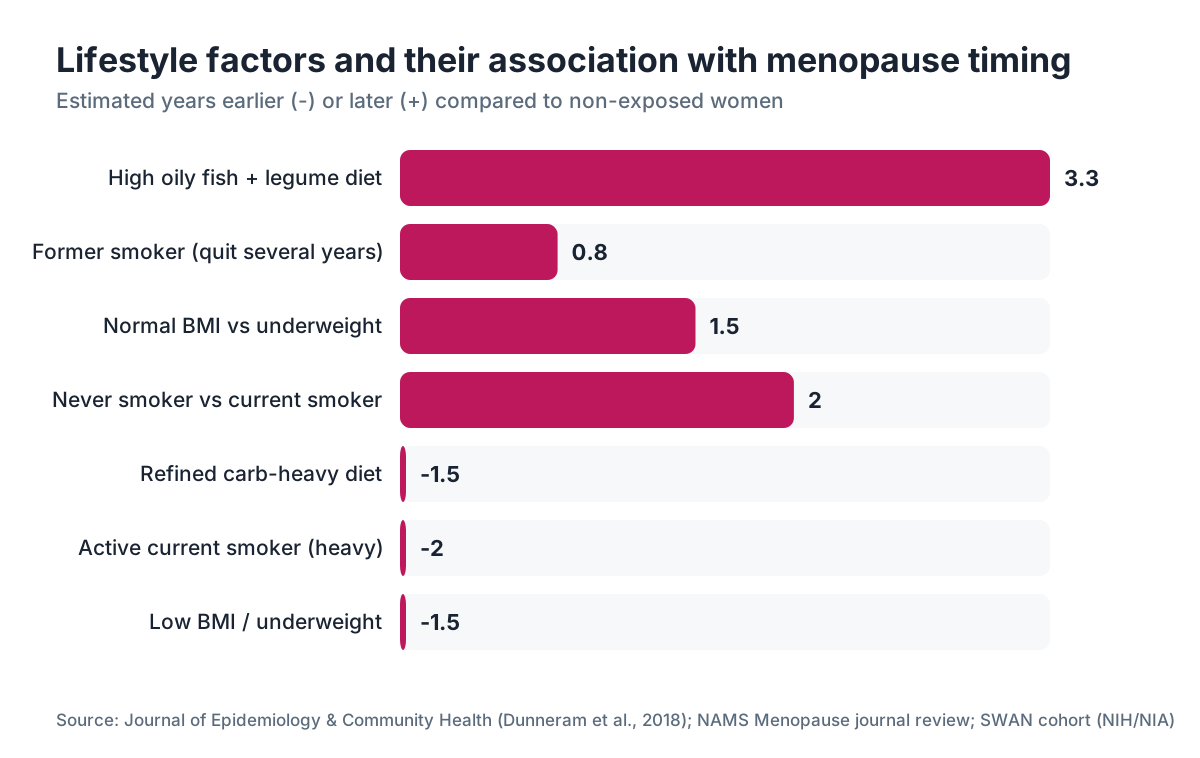
Diet has the clearest and most consistent link. A 2018 UK Biobank analysis of 914 women found that a diet high in oily fish and fresh legumes was associated with delayed natural menopause by roughly 3.3 years per unit increase in those food groups, while refined carbohydrates were associated with earlier menopause. [3] That is a large effect size for a nutrition study, and it has held up in smaller replication efforts.
Why might oily fish help? The leading theory points to antioxidant load. Follicular atresia is driven partly by oxidative stress. Omega-3 fatty acids and the fat-soluble vitamins in oily fish (D and K in particular) reduce systemic oxidative damage, which may slow follicle loss. Legumes bring their own benefit through phytoestrogens, though the evidence on phytoestrogens specifically is mixed.
Body weight matters too, but not the way most people expect. Being underweight (BMI below 18.5) is linked to earlier menopause. Some data suggest higher adiposity is linked to modestly later menopause, probably because fat tissue makes estrogen through aromatization and can partly buffer the hormonal shift. [4] This does not mean gaining weight is a strategy. The cardiovascular and metabolic costs of excess weight almost certainly outweigh a few months of delayed menopause.
Physical activity data are messier. Extreme endurance training can suppress ovarian function and trigger earlier menopause or premature ovarian insufficiency. Moderate regular exercise looks neutral to mildly protective. The mechanism is probably inflammation reduction rather than any direct effect on the follicle pool.
Alcohol, in the few large studies that have looked, shows no clear link with menopause timing in either direction at moderate consumption. Heavy drinking disrupts hormones generally, so it is not a pathway worth pursuing.
How much does smoking accelerate menopause, and can quitting reverse the damage?
Smoking is the single most consistently documented modifiable accelerant of menopause. Current smokers reach menopause approximately 1.5 to 2 years earlier than nonsmokers, and the effect is dose-dependent: heavier smokers and longer-term smokers lose more years. [4] The mechanism is direct. Polycyclic aromatic hydrocarbons in cigarette smoke are toxic to ovarian follicles, trigger apoptosis in granulosa cells, and suppress estradiol production. This is not a subtle association. It repeats across countries, ethnicities, and study designs.
Can quitting help? Former smokers who have quit for several years show menopause timing closer to never-smokers than to current smokers, which points to at least partial recovery. The data are not precise enough to say how many years of quitting buys back how much time, but the trend is real. Set menopause timing aside for a second: quitting smoking is the highest-return health action a woman under 60 can take. So this is not a hard call.
Passive smoke exposure carries a smaller but measurable link to earlier menopause in some studies. Environmental toxins, particularly polychlorinated biphenyls (PCBs) and some pesticides, are also linked to earlier menopause onset, though the effect sizes are smaller and the evidence base thinner. [5] Cutting exposure where you have control, mainly through diet quality and avoiding unnecessary pesticide contact, is reasonable.
Does hormone replacement therapy delay menopause?
This is probably the question we get most often at WomenRx, and the answer has a wrinkle. Hormone replacement therapy (HRT), including estrogen, progesterone, and estrogen-plus-progestogen combinations, does not delay the depletion of your ovarian reserve. The follicles keep disappearing at the same underlying rate whether or not you take hormones. What HRT does is replace the hormones your ovaries no longer make in adequate amounts, which relieves symptoms and has meaningful protective effects on bone and cardiovascular health. [6]
There is one partial exception worth understanding. Low-dose oral contraceptives, which suppress the hypothalamic-pituitary-ovarian axis, were once thought to "save" follicles by suppressing ovulation. The theory: if you prevent ovulation cycles, you slow the recruitment and loss of follicles. The evidence does not back this up. Follicular atresia, the continuous background loss of follicles, happens whether or not you ovulate. Anti-Müllerian hormone (AMH) levels, the best proxy for remaining ovarian reserve, decline at the same rate in pill users and non-users once you correct for the pill's effect on AMH measurement. [7]
So HRT is not a delay strategy for menopause itself. It is the standard of care for managing symptoms and long-term health risks once the transition begins. If you want to understand your own timeline and options, a conversation with a hormone specialist plus a baseline AMH test beats waiting to see what happens. You can read more about what hormone replacement therapy actually does and does not do, and about the role of progesterone specifically in the perimenopausal transition.
What is ovarian tissue cryopreservation, and is it a real option?
This is where medicine is moving fast. Ovarian tissue cryopreservation (OTC) means surgically removing one ovary or a portion of ovarian cortex, freezing it, and reimplanting it later. It was developed mainly for cancer patients who needed gonadotoxic chemotherapy or radiation and wanted to preserve fertility. [8]
A 2023 paper in the journal Menopause reported on a small cohort of women who had OTC before menopause with the specific goal of delaying it. After reimplantation, some women got restored ovarian hormone production for months to years. [8] The numbers are small, the follow-up periods short, and the procedure carries surgical risk and cost (estimates run from $10,000 to $20,000, though this varies widely by center and country). No major medical society, including the North American Menopause Society (NAMS), currently recommends OTC for healthy women who want to delay natural menopause. It stays experimental for that use.
The nearer-term question is whether this technology gets refined enough, and the evidence strong enough, to move into broader practice in the next decade. Several European centers, particularly in Denmark and Belgium, are researching this now. The FDA has not approved any indication for OTC outside of fertility preservation in medically indicated cases. [8]
If you are in your late 30s and thinking about this, the honest advice: watch the literature, talk to a reproductive endocrinologist, but do not pay for this as a menopause-delay strategy today. The evidence is not there yet.
Can NAD+ supplements or rapamycin slow ovarian aging?
NAD+ precursors, mainly nicotinamide riboside (NR) and nicotinamide mononucleotide (NMN), have drawn enormous interest in the longevity space because NAD+ levels fall with age and NAD+ sits at the center of mitochondrial function and DNA repair. In animal studies, NMN supplementation in aged mice improved ovarian function, oocyte quality, and fertility. [9] These findings are real and have been replicated across several mouse models.
Human data are almost nonexistent. A small clinical trial (NCT04903860, registered at ClinicalTrials.gov) is testing NMN in women with diminished ovarian reserve, but results are not published as of mid-2025. [13] The honest position: promising in rodents, no human evidence, and the rodent-to-human translation record in aging research is poor.
Rapamycin, an mTOR inhibitor used in transplant medicine, has shown striking life-extension effects in mice and some evidence of ovarian function preservation in animal models. A handful of longevity physicians prescribe low-dose rapamycin off-label for healthy women with ovarian aging concerns, but this is genuinely experimental. The drug has immunosuppressive effects, metabolic consequences, and no published randomized trial data in healthy premenopausal women for this purpose.
The same caution applies to senolytics (drugs that clear senescent cells), metformin, and other longevity-adjacent compounds that animal data suggest might touch ovarian aging. Interesting. Unproven. Not a clinical recommendation today.
For a clear look at where your own ovarian reserve stands right now, a bone density test and AMH panel together give you the best picture of how the perimenopause transition is progressing. You can also learn more about perimenopause age and what typical timelines look like.
Does diet quality affect anti-Müllerian hormone (AMH) and ovarian reserve?
AMH is made by small antral follicles and is the most reliable blood marker of remaining ovarian reserve. It declines steadily from your late 20s onward, with the steepest drop usually in the late 30s and 40s. [2] The question is whether diet can slow that decline.
A 2022 prospective analysis from the SWAN (Study of Women's Health Across the Nation) cohort found that women with higher adherence to a Mediterranean-style diet had modestly higher AMH levels at follow-up than those with lower dietary quality, after adjusting for age and BMI. [11] The effect was not dramatic, but it was statistically significant and pointed the same direction as the earlier UK Biobank findings on menopause timing. [3]
Specific nutrients linked to higher AMH in cross-sectional studies include vitamin D, zinc, and the antioxidant vitamins C and E. Dairy sends a mixed signal. Processed red meat is consistently linked to lower AMH in the studies that have looked. None of this has been tested in an intervention trial where women were randomly assigned to a dietary pattern with AMH as the primary outcome, which limits how strongly you can state the causal claim.
Practical takeaway: a diet that is good for cardiovascular and metabolic health (diverse vegetables, oily fish two to three times weekly, legumes, whole grains, minimal ultra-processed food) is the best available dietary strategy for ovarian aging. It is not magic, and it will not beat genetics, but it is probably worth about one to three years of menopause timing for someone who shifts from a poor diet to a high-quality one.
What about stress, sleep, and cortisol effects on ovarian function?
Chronic psychological stress suppresses the hypothalamic-pituitary-ovarian (HPO) axis. High cortisol blocks GnRH pulsatility, which downstream cuts LH and FSH signaling to the ovaries. In younger women, severe chronic stress can cause hypothalamic amenorrhea. Whether moderate chronic stress speeds up menopause timing in normal-range women is genuinely unclear, because the studies are confounded by smoking, socioeconomic status, and other correlated variables.
Sleep is a more interesting lever. The HPO axis is extremely sensitive to circadian rhythm. GnRH pulses peak during sleep. Women with chronic sleep disruption (defined in most studies as fewer than six hours a night or severely fragmented sleep) have higher FSH levels for their age in cross-sectional analyses, which suggests more advanced ovarian aging. [5] Whether this is cause or effect is hard to untangle, because early perimenopause itself wrecks sleep through night sweats and hormonal swings.
What you can do: protect your sleep, treat obstructive sleep apnea if it is present (underdiagnosed in women, particularly perimenopausal women), and take chronic stress seriously enough to address it with behavioral work or therapy. These recommendations hold up from a whole-health standpoint even where the direct menopause-delay evidence is soft.
The link between stress and reproductive aging is one reason the social determinants of menopause timing show real disparities. Black women reach menopause on average one to two years earlier than white women in the US, a gap that persists after controlling for BMI and smoking and is believed to partly reflect chronic stress burden and unequal access to care. [11]
How does weight and metabolic health affect menopause timing?
Weight influences menopause timing through several pathways, and the relationship runs both ways. As noted earlier, low body weight (particularly from restrictive eating or excessive exercise) is consistently linked to earlier menopause, likely because body fat is a peripheral estrogen source and because energy deficit impairs reproductive axis function. [4]
On the other side of the scale, obesity brings higher circulating estrogen from aromatization in fat tissue, and some (not all) studies find modestly later menopause in women with higher BMI. The tradeoff is bad: higher-weight women face greater risk of endometrial hyperplasia from unopposed estrogen, and the cardiometabolic costs of obesity are large.
Metabolic health may matter on its own, apart from weight. Insulin resistance and type 2 diabetes are linked to earlier menopause in several large cohort studies. The proposed mechanism: advanced glycation end products (AGEs) damaging ovarian follicles, plus the direct toxic effect of hyperinsulinemia on ovarian granulosa cells.
This is one area where GLP-1 receptor agonists could matter for perimenopausal women. Not as a menopause-delay drug, but because they improve insulin sensitivity, reduce visceral fat, and lower systemic inflammation. All of that is theoretically favorable for ovarian aging, though no trial has tested it directly. WomenRx works with clinicians who prescribe GLP-1s for metabolic reasons in women in their 40s and 50s. If you want to understand what semaglutide for weight loss actually looks like in this population, that is a good place to start. Keeping a metabolically healthy weight is about as close as we get to a broadly supported intervention that could touch multiple pathways of ovarian aging at once.
Are there any medical interventions that can preserve fertility and delay menopause at the same time?
For women facing medically induced early menopause, several interventions are established. GnRH agonist co-treatment during chemotherapy (often called ovarian suppression with lupron or goserelin) reduces follicle loss from chemotherapy by temporarily shutting down ovarian activity during treatment. A 2015 trial in the New England Journal of Medicine found that premenopausal women with hormone-receptor-negative breast cancer who received a GnRH agonist during chemotherapy had significantly higher rates of ovarian function resumption than controls. [10] This is a real, guideline-supported intervention for cancer patients.
For healthy women, no approved medical treatment currently delays natural menopause. The research directions that look most promising over the next ten to fifteen years include:
Ovarian tissue cryopreservation and later reimplantation (discussed above). Stem cell-derived oocytes or in-vitro follicle maturation, which could in theory bypass the need for a functioning ovary entirely. Targeted senolytic therapies to clear senescent granulosa cells that build up in the aging ovary and impair follicle function. mTOR pathway modulation to slow the activation rate of primordial follicles.
None of these are available outside research settings. The timeline for any of them reaching routine clinical practice is a decade or more, and some will not pan out at all.
For women who want to understand their own timing now, the most actionable steps are: know your AMH and antral follicle count, understand when menopause typically starts based on your family history, avoid smoking absolutely, get your diet and metabolic health in order, and make a plan for HRT or other care before you need it urgently.
What factors should you know about early or premature menopause?
Premature ovarian insufficiency (POI), formerly called premature menopause, affects roughly 1 in 100 women under age 40. Early menopause (age 40 to 45) affects about 5 percent of women. [1] These are not delays waiting to happen. They are conditions that need active medical management, because the long-term health risks of estrogen deficiency starting before age 40 are serious, including elevated cardiovascular risk, osteoporosis, cognitive effects, and premature death.
Risk factors for POI include: a family history of early menopause (the strongest predictor after genetics), Turner syndrome and other chromosomal abnormalities, fragile X premutation carrier status, autoimmune thyroid disease, pelvic radiation or chemotherapy, and certain surgical histories including multiple ovarian cyst removals. [1]
If you have a mother or sister who went through menopause before 45, ask your gynecologist about AMH testing in your mid-30s. That gives you time to make decisions about fertility preservation if you want it, and to plan for HRT well before symptoms turn severe.
For women who do experience POI or early menopause, hormone replacement therapy is not optional the way it might be for someone going through menopause at 51. The guidance from NAMS, the Endocrine Society, and the British Menopause Society lines up: women with POI should take HRT until at least the average age of menopause (51 to 52) to reduce excess health risks. [6] Understand what a menopause age of 40 versus 52 means for your long-term health, and take it seriously.
You can read more about what menopause involves as a process, and about the estrogen patch as a delivery method that many specialists prefer for women with POI.
What is the most realistic timeline for actual medical delay of menopause to become available?
The honest summary: modest lifestyle-based delay (perhaps one to three years) is available now through the diet, smoking cessation, and metabolic health changes described above. True medical delay, meaning pausing or extending ovarian function by years or decades, is a research goal, not a clinical reality in 2025.
Ovarian tissue cryopreservation is probably nearest to clinical use for healthy women in selected circumstances, but it still faces regulatory, safety, and evidence hurdles. The longevity-medicine approaches (rapamycin, NAD+ precursors, senolytics) are being studied in animals and early-phase human trials, but realistically a decade or more from routine prescription.
Genetic research keeps adding detail. Genome-wide association studies have identified more than 290 genetic variants tied to menopause timing, and this work is helping researchers pinpoint the biological pathways most worth targeting. [2] The fact that a large share of menopause timing variance is genetic and identifiable in principle means that one day it may be possible to sort women by their biological risk trajectory and step in earlier and more precisely.
For now, the most productive mindset is not "how do I stop this from happening" but "how do I know where I am in the process, and what do I do to protect my health through it." A baseline AMH in your mid-30s, a plan for perimenopause care before symptoms are disruptive, and an informed conversation about HRT are worth far more than any supplement stack currently on the market.
Frequently asked questions
Can you delay menopause naturally?
You can modestly influence the timing, probably by one to three years, through diet quality, not smoking, keeping a healthy weight, and managing metabolic health. A Mediterranean-style diet with oily fish and legumes is the most consistently supported dietary pattern. These are associations from observational data, not controlled trials, but the signals are consistent enough that most menopause specialists consider them credible.
Does taking birth control delay menopause?
No. The idea was that suppressing ovulation would save follicles, but follicular atresia (the background loss of eggs) happens continuously regardless of whether you ovulate. Anti-Müllerian hormone, the best marker of ovarian reserve, declines at the same rate in pill users and non-users once you correct for the pill's known suppressive effect on measured AMH levels.
How much does smoking affect menopause timing?
Current smokers reach menopause approximately 1.5 to 2 years earlier than nonsmokers, with the effect growing with heavier and longer smoking. The chemicals in cigarette smoke are directly toxic to ovarian follicles. Former smokers who have quit for several years show timing closer to never-smokers than to current smokers, which points to partial but not full recovery of the effect.
What is ovarian tissue cryopreservation for menopause delay?
It involves surgically removing and freezing ovarian tissue before menopause, then reimplanting it later to restore hormone production. It works in cancer patients for fertility preservation and has been tested in small cohorts for menopause delay with some success. It stays experimental for healthy women seeking menopause delay, is not endorsed by NAMS or the Endocrine Society for that purpose, and costs $10,000 to $20,000 or more.
What is the average age of menopause and how much variation is normal?
The median age of natural menopause in the US is 51 to 52. The normal range is 40 to 58. Menopause before 40 is classified as premature ovarian insufficiency (POI), affecting about 1 in 100 women, and warrants hormone therapy. Menopause between 40 and 45 is early menopause, affecting roughly 5 percent of women.
Can NMN or NAD+ supplements delay menopause?
In mice, NMN supplementation improved ovarian function and oocyte quality in aged animals. Human trial data are nearly absent as of mid-2025. The honest answer: promising animal data, no clinical evidence, and a poor track record for rodent aging findings carrying over to humans. NMN is unlikely to harm you at typical doses, but do not pay a lot for it expecting menopause delay.
Does having children or being childless affect menopause age?
Some studies find that women who have had more pregnancies reach menopause slightly later, possibly because pregnancy pauses the monthly recruitment and loss of follicles. The effect size is small (less than a year per pregnancy in most analyses) and inconsistent across populations. Parity is not a meaningful strategy for delaying menopause; the absolute difference is too small.
Can I test my ovarian reserve to know when I'll reach menopause?
Anti-Müllerian hormone (AMH) and antral follicle count (AFC) via transvaginal ultrasound are the best available markers of remaining ovarian reserve. They give a sense of how much reserve you have relative to age-matched norms, but they do not predict the exact year of menopause for an individual. They are most useful for identifying women at risk of early menopause who may want to make decisions earlier.
Does HRT cause you to experience menopause later when you stop?
No. HRT does not preserve ovarian follicles or slow follicle loss. When you stop HRT, you will experience menopause-related symptoms based on where your underlying ovarian function sits at that point. You may have fewer symptoms during HRT use, which can create the impression that menopause is delayed, but the biological process keeps going underneath.
What vitamins or supplements are most supported for ovarian aging?
Vitamin D deficiency is linked to lower AMH and earlier menopause in observational studies; correcting a deficiency is reasonable and cheap. Coenzyme Q10 is used in fertility medicine for mitochondrial support in granulosa cells, with some small trial data in older women trying to conceive, but no direct menopause-delay evidence. Omega-3 fatty acids from food (not necessarily supplements) have the best dietary data.
Is early menopause hereditary, and should I get tested?
Family history is the strongest predictor of early menopause after smoking. If your mother or sister reached menopause before 45, ask your gynecologist about an AMH test in your mid-30s. Fragile X premutation carrier status is also linked to POI and can be detected with genetic testing. Earlier awareness gives you more options for both fertility planning and managing long-term health.
Do GLP-1 drugs like semaglutide have any effect on menopause timing?
No clinical trial has tested GLP-1 drugs specifically for menopause delay. Their relevance is indirect: they improve insulin sensitivity and reduce visceral fat, both of which are theoretically favorable for ovarian aging based on the metabolic health data. Some perimenopausal women use them for weight management and metabolic reasons, but the link to menopause timing is speculative.
What is the difference between perimenopause and menopause, and when does perimenopause start?
Perimenopause is the transitional phase before menopause, typically lasting four to eight years, during which hormone levels swing irregularly. Menopause itself is a single point in time: twelve consecutive months without a period. Perimenopause often begins in the mid-to-late 40s but can start as early as the late 30s in some women. Symptoms can be significant well before the final period.
Can reducing stress delay menopause?
Chronic stress suppresses the hypothalamic-pituitary-ovarian axis, and there are links between high-stress life circumstances and earlier menopause in observational data. The effect size is not well quantified and is heavily confounded by other variables. Stress management is worth pursuing for overall health, but the direct evidence that it meaningfully delays menopause in healthy women is thin.
Sources
- North American Menopause Society (NAMS), Menopause Practice: A Clinician's Guide
- Nature Genetics, Genome-wide association study of menopause timing (Ruth et al., 2021)
- Journal of Epidemiology & Community Health, Dietary patterns and age at natural menopause (UK Biobank, Dunneram et al., 2018)
- Menopause (journal of NAMS), BMI, smoking, and age at natural menopause review
- Menopause (journal of NAMS), Environmental exposures, sleep, and reproductive aging review
- Endocrine Society, Clinical Practice Guideline on Menopause and Hormone Therapy
- Human Reproduction (Oxford), Oral contraceptive use and anti-Müllerian hormone levels, systematic review
- Menopause (journal of NAMS), Ovarian tissue cryopreservation for menopause delay: outcomes review (2023)
- Cell Reports, NMN supplementation restores mitochondrial function and fertility in aged female mice (Miao et al., 2020)
- New England Journal of Medicine, GnRH agonist co-treatment during chemotherapy to preserve ovarian function (Moore et al., 2015)
- Study of Women's Health Across the Nation (SWAN), NIH/National Institute on Aging
- FDA, Approved drug products with therapeutic equivalence evaluations (Orange Book), hormone therapy labeling
- ClinicalTrials.gov, NCT04903860, NMN supplementation in women with diminished ovarian reserve