How to build bone density: a practical guide for women
TL;DR: You can build bone density at any age, though gains shrink after 65. The best strategy stacks heavy resistance training, calcium (1,000-1,200 mg/day), vitamin D (800-1,000 IU/day), enough protein, and, for many women, hormone therapy. Estrogen cut hip fracture risk 33% in the WHI. A baseline DEXA scan makes every other intervention easier to judge.
How does bone density actually change over your lifetime?
Bone is living tissue. Cells called osteoclasts break it down, cells called osteoblasts rebuild it, and the balance between them decides your bone density. Through your 20s and early 30s the building side wins, and you hit peak bone mass around age 30 [1]. After that, resorption slowly gains ground. For women the shift speeds up hard around perimenopause, because estrogen normally holds osteoclasts in check, and estrogen is exactly what starts to fall.
The numbers are blunt. Women lose an average of 1-2% of bone mass per year starting in perimenopause, and up to 3-5% per year in the first few years after the final period [1]. Over the five to seven years after menopause, that stacks up to a possible 20% loss [2]. Trabecular bone, the spongy inner bone of the spine and hip, goes faster than the dense cortical shell. That is why a vertebral fracture is often the first sign anyone notices.
None of this is fixed. Bone answers to the same inputs your whole life: mechanical load, hormones, protein, calcium, and vitamin D. Where you are in the arc changes the emphasis. The levers stay the same.
When is it too late to build bone density?
Never entirely. What changes is the kind of win you can realistically get.
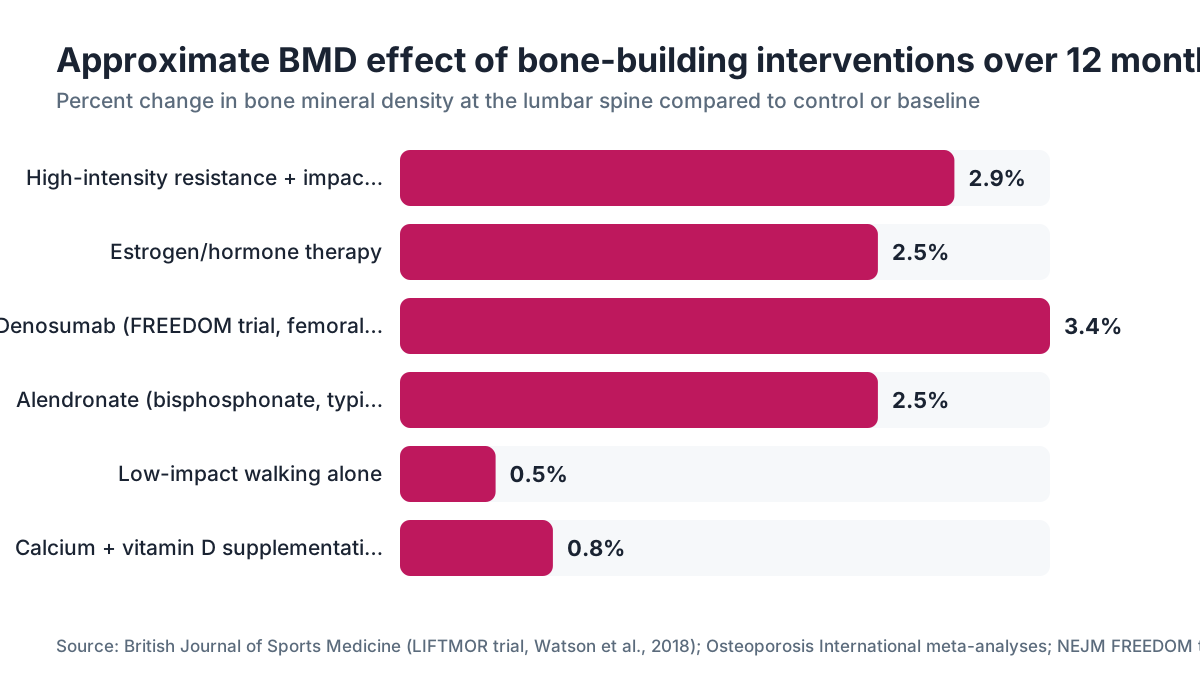
Before menopause you can genuinely add bone mineral density. After menopause the honest goal for most women is to slow loss and, with steady work, claw back modest gains at the hip and spine. Resistance training trials in postmenopausal women show 1-3% gains at the lumbar spine over 12 months [3]. That sounds tiny. It matters, because each 0.1 increase in spine T-score drops fracture risk by roughly 10-15%, and moving from osteoporosis (T-score below -2.5) toward osteopenia (-1.0 to -2.5) changes your actual risk of breaking a bone [4].
Women in their 70s and 80s still benefit from lifting and from medication. The FREEDOM trial of denosumab cut fracture risk in women with a mean age of 72 [5]. Treating bone as a young woman's problem is one of the more expensive myths in women's medicine.
What is genuinely too late is having a fragility fracture and then doing nothing. Even then, treatment lowers the odds of a second break. The most useful move right now, at any age, is a baseline bone density test so you know your starting line.
What kind of exercise builds bone density most effectively?
Bone builds under mechanical stress, and stress is the operative word, not motion. Swimming and cycling are great for your heart and do close to nothing for your bones, because the water and the bike carry your weight. Bone needs impact and load.
The evidence splits into two useful buckets.
Weight-bearing aerobic exercise covers walking, jogging, hiking, tennis, dancing, and stair climbing. Higher impact produces a bigger signal. A meta-analysis in Osteoporosis International found high-impact work (jumping protocols, running) built more lumbar spine BMD than low-impact walking alone [3]. Small habits count too: take the stairs, walk uneven ground, do 20 hops before your morning shower. Impact travels up the skeleton and tells osteoblasts to get to work.
Progressive resistance training is the single most evidence-backed intervention for postmenopausal women. The LIFTMOR trial tested a high-intensity resistance and impact program (squats, deadlifts, overhead press, jumping chin-ups at about 85% of one-rep max) in postmenopausal women with low-to-very-low bone mass. After eight months the training group gained 2.9% at the lumbar spine and 0.3% at the femoral neck. The control group lost bone [6]. For that population, holding steady is a win, so those numbers are large.
Lift heavy enough that the last two reps of each set are honestly hard. Three to four sessions a week, compound movements (deadlifts, squats, rows, presses), and more load over time. If you have never lifted and already have osteoporosis, get a physical therapist or a trainer who knows bone health before you load your spine.
Balance and fall prevention is the third bucket. It does not build bone, but it stops the fall that turns osteoporosis into a hip fracture. Single-leg stands, yoga, Tai Chi, and proprioceptive drills all cut fall risk. For women over 65, fall prevention may protect more than any bone drug.
How much calcium do you actually need, and can you get it from food?
The National Academy of Medicine recommends 1,000 mg/day of calcium for women 19-50 and 1,200 mg/day for women 51 and up [7]. Most American women take in roughly 700-900 mg from food, which leaves a gap of 300-500 mg that a supplement can cover.
Food first is the right call for most women. Dairy is the densest source (an 8-ounce cup of milk has about 300 mg, a cup of yogurt around 400 mg), but you do not need it. Calcium-set tofu, canned sardines and salmon with the bones, edamame, kale, bok choy, and fortified plant milks all add up.
If you do supplement, calcium carbonate (the cheap form in Tums and generics) absorbs best with food. Calcium citrate absorbs fine on an empty stomach and is the better pick if you take acid-suppressing medication. Do not swallow more than 500 mg of elemental calcium at once, because absorption falls off a cliff above that dose.
About the heart scare: a 2019 analysis in the British Medical Journal found no significant link between calcium supplements at recommended doses and cardiovascular events when vitamin D was adequate [8]. The old alarm came from studies using higher doses without vitamin D alongside. Still, if you already eat close to 1,200 mg, piling supplements on top adds risk and buys you nothing.
| Food | Serving | Approx. calcium (mg) | |---|---|---| | Plain yogurt | 1 cup | 415 | | Milk (any fat level) | 8 oz | 300 | | Calcium-set tofu | 4 oz | 250-350 | | Canned sardines (with bones) | 3 oz | 325 | | Edamame | 1 cup cooked | 100 | | Kale, cooked | 1 cup | 95 | | Almonds | 1 oz | 75 |
What does vitamin D do for bone, and how much is enough?
Vitamin D is the thing that lets your gut absorb calcium. Without it, you can eat all the calcium you want and most of it walks straight out. The Institute of Medicine set the RDA at 600 IU/day for adults under 70 and 800 IU/day for those 71 and up, with a tolerable upper limit of 4,000 IU/day [7].
Many clinicians treating osteoporosis aim for serum 25-hydroxyvitamin D between 30 and 50 ng/mL. Deficiency (below 20 ng/mL) is common, especially in women who live in northern latitudes, stay indoors most of the day, have darker skin, or carry more body fat (fat tissue holds onto vitamin D). A simple blood test settles the question.
For supplementation, 1,000-2,000 IU/day of vitamin D3 (cholecalciferol) is what most bone specialists suggest for women at risk of deficiency. Some need more to reach range, but dosing above 4,000 IU/day without monitoring is a bad idea. D3 raises serum levels better than D2 (ergocalciferol).
Sunlight makes vitamin D in your skin, but you cannot lean on it year-round. Even in summer, SPF 30 cuts synthesis by about 95%. Food sources are thin (fatty fish, egg yolks, fortified dairy). For bone care, supplementation is close to universal.
Does protein matter for bone density?
Yes, and it gets shortchanged. About half of bone by volume is protein, mostly collagen. You need dietary protein to build that collagen and to drive IGF-1 signaling, which switches on osteoblasts.
There was an old worry that high-protein diets were acidic and pulled calcium out of bone. It did not survive the data. A 2017 analysis in the Journal of Bone and Mineral Research found higher protein intake tracked with modestly better bone mineral density and lower fracture risk in older adults [9].
The range most evidence supports for postmenopausal women who want to hold onto muscle and bone is 1.2 to 1.6 grams of protein per kilogram of body weight per day. That is well above the 0.8 g/kg RDA, which was set to prevent deficiency, not to protect the musculoskeletal system. For a 140-pound (63 kg) woman, 1.4 g/kg works out to about 88 grams a day. Spread it across meals, at least 25-30 grams each, to get the most muscle protein synthesis.
If you use a GLP-1 receptor agonist for weight management, read this part twice. GLP-1s cut appetite sharply, and women who are not deliberate about protein often slide below the amount needed to hold lean mass during weight loss. Fast weight loss on any method can shave a little bone density. Bring it up with your prescriber. WomenRx clinicians review protein and nutrition targets alongside GLP-1 protocols for this exact reason.
How does hormone therapy affect bone density?
Estrogen is the strongest internal regulator of bone remodeling in women. It quiets osteoclasts and keeps osteoblasts alive. When estrogen drops at menopause, the brake on bone breakdown comes off.
Hormone therapy (HT) is the only intervention that hits that root cause head-on. The Women's Health Initiative showed estrogen-containing HT lowered hip fracture risk by about 33% and vertebral fracture risk by 34% versus placebo [10]. The North American Menopause Society, in its 2022 position statement, calls estrogen "the most effective therapy for prevention of postmenopausal bone loss" and backs HT as a first-line choice for bone protection in women under 60 or within 10 years of menopause [11].
Progesterone matters too. In women with a uterus, a progestogen goes in to protect the uterine lining. Some data hint that micronized progesterone (Prometrium) may help bone directly, though that case is weaker than estrogen's. There is more on the role of progesterone in hormonal balance.
If you are in perimenopause or early menopause and weighing HT, the hormone replacement therapy overview and the menopause section here both walk through the current evidence. For women who hit perimenopause age earlier than average, the bone-protection window opens sooner, which is worth raising with a clinician.
For women who cannot or would rather not take estrogen, FDA-approved bone drugs (bisphosphonates, denosumab, raloxifene, romosozumab) give real fracture protection. These are prescriptions, not supplements, and each carries its own benefit-risk profile that deserves a full conversation with a physician.
What lifestyle factors silently destroy bone density?
Knowing what tears bone down matters as much as knowing what builds it up.
Smoking is one of the most consistent bone-loss risk factors in the data. It cuts intestinal calcium absorption, speeds estrogen breakdown, and starves bone of blood supply. Current smokers run roughly 10-15% lower bone density than non-smokers [1].
Alcohol above two drinks a day tracks with lower BMD and higher fracture risk, and heavy drinking sends fall risk up on top of that.
Chronic stress and high cortisol suppress osteoblasts directly. Women with prolonged high cortisol, whether from Cushing's syndrome or from chronic psychological stress driving HPA axis activation, lose measurable bone. Researchers have documented lower spine BMD in women with major depressive disorder, independent of medication [1].
Eating disorders and low body weight wreck bone. Amenorrhea from low energy availability causes loss that can be permanent. The female athlete triad (low energy availability, menstrual dysfunction, low BMD) is well documented, and its damage does not always reverse after recovery.
Certain medications are major culprits. Long-term glucocorticoids (prednisone, hydrocortisone) do the most harm. Proton pump inhibitors, SSRIs, heparin, and depot medroxyprogesterone acetate (the Depo-Provera shot) all associate with bone loss. If you take any of these long term, ask your doctor whether you should be monitoring bone.
Excess thyroid hormone, from hyperthyroidism or from over-replacement in hypothyroid treatment, speeds up bone resorption. If you take levothyroxine, keeping TSH in range is part of protecting your bones.
How do you actually know if your interventions are working?
A DEXA (dual-energy X-ray absorptiometry) scan is the clinical standard for measuring bone mineral density. It takes about 10 minutes, uses very little radiation, and reports a T-score (versus a young adult reference) and a Z-score (versus your age peers). The WHO defines osteoporosis as a T-score at or below -2.5 at the lumbar spine or hip, and osteopenia as -1.0 to -2.5 [4].
The US Preventive Services Task Force recommends screening every woman 65 and older, plus younger postmenopausal women whose 10-year fracture risk (from FRAX, the WHO fracture risk tool) matches or beats that of a 65-year-old white woman [12]. That threshold works out to roughly 9.3% for major osteoporotic fracture.
If your DEXA is normal and you have no major risk factors, the usual interval is five years. On treatment, most clinicians repeat in one to two years to check the response. Bone turnover markers (serum CTX for resorption, P1NP for formation) are blood tests that can flag a working treatment earlier, though DEXA still drives clinical decisions.
The bone density test article walks through what your DEXA results mean and what to ask your clinician afterward.
What does a practical bone-building week actually look like?
Here is what consistent bone care looks like once you stack the pieces.
Monday, Wednesday, Friday: Resistance training with compound movements. Squats, deadlifts, rows, presses at 70-85% of your one-rep max. Three to four sets of six to eight reps. New to lifting? Start lighter and drill form. A trainer who knows bone health is worth the money for the first few months.
Tuesday, Thursday: Weight-bearing cardio with impact. A 30-minute walk with short jog intervals, a tennis game, a dance class, or a 20-minute hike on rough ground. Add 10-20 countermovement jumps before or after for extra osteogenic stimulus.
Saturday: Yoga, Tai Chi, or balance work. Single-leg stands for 30 seconds each side. Heel rises. Anything that tests your proprioception.
Daily: Get 1,200 mg of calcium from food, with a supplement only to fill the gap. Take vitamin D3, at least 1,000 IU. Hit your protein target of 1.2-1.6 g/kg across meals. Cap alcohol at one to two drinks. If you smoke, quitting is the highest-yield single thing you can do for bone.
Quarterly or annually: Review bone-affecting medications with your prescriber. If you are in perimenopause or have crossed the line at when does menopause start, talk directly about the bone case for hormone therapy if you have not already. Over 50 with any risk factors and no DEXA yet? Request one.
This is not complicated. It takes consistency and a willingness to treat bone as a real clinical priority instead of a someday project.
When should you consider prescription medication for bone loss?
Exercise and nutrition prevent and slow bone loss. For some women, once real loss has set in, they are not enough on their own.
Current guidelines say consider drug treatment in postmenopausal women with a T-score at or below -2.5 (osteoporosis), or a T-score between -1.0 and -2.5 (osteopenia) plus a FRAX 10-year probability of major osteoporotic fracture at or above 20% or hip fracture at or above 3% [4].
The options split two ways. Antiresorptive drugs (bisphosphonates like alendronate, risedronate, and zoledronate; denosumab; raloxifene) slow the osteoclast side. Anabolic agents (teriparatide, abaloparatide, romosozumab) push new bone formation. Anabolics usually get reserved for women with very low bone density or prior fragility fractures, because they cost much more and, with romosozumab, carry a boxed warning about cardiovascular risk.
Hormone therapy sits in its own spot, because it protects bone and, for many women in the transition, treats other things too (hot flashes, sleep, urogenital symptoms, mood). NAMS backs it as first-line bone prevention, more than a bonus, for women in the right age and risk window [11].
Nobody should start bisphosphonates or denosumab without a real talk about how long to stay on them, drug holidays, and rare harms like atypical femur fracture and osteonecrosis of the jaw. Those risks are small and depend on context, but they are real. If your doctor prescribes a bone drug and skips this conversation, raise it yourself.
Frequently asked questions
Can you reverse osteoporosis completely?
Full reversal from osteoporosis to normal bone density (T-score above -1.0) is uncommon but happens in some women, especially younger postmenopausal women who start treatment early. Anabolic agents like teriparatide and romosozumab produce bigger BMD gains than antiresorptives and can move some women out of the osteoporotic range. Realistically, the target is meaningful improvement and lasting fracture risk reduction, not necessarily a normal T-score.
Does walking build bone density?
Walking helps bone but is not enough on its own for women with osteopenia or osteoporosis. Studies show small BMD gains in premenopausal women and modest maintenance in early postmenopausal women, but it is well behind resistance training and higher-impact activity. If walking is your only exercise, add resistance training plus some jumping or jogging intervals to raise the osteogenic stimulus.
What foods are worst for bone density?
Excess alcohol (more than two drinks daily) does the most dietary damage. Very high sodium diets raise urinary calcium losses. Heavily caffeinated drinks can modestly cut calcium absorption. Very high-oxalate foods like spinach bind calcium in the gut and reduce absorption from that meal. None need to go entirely, but leaning on spinach as your main calcium source, or drinking heavily while treating bone loss, works against you.
How long does it take to see bone density improvement?
Bone remodeling cycles run three to six months. Most interventions show measurable BMD changes on DEXA after 12-24 months. Bone turnover markers (blood tests for CTX and P1NP) move faster, within one to three months, and can confirm early that treatment is working. A DEXA six months into treatment tells you little. Wait at least 12 months, ideally two years, for a comparison that means something.
Is it safe to take calcium supplements if you have kidney stones?
It depends on the stone type. For women with calcium oxalate stones (the most common), dietary calcium actually lowers stone risk by binding oxalate in the gut. Supplemental calcium, especially taken away from meals, may raise risk slightly. Calcium phosphate or uric acid stones need different management. Tell your doctor about any stone history before starting calcium; they may run a 24-hour urine test to guide dosing.
Can GLP-1 medications like semaglutide affect bone density?
Rapid weight loss from any cause, including GLP-1 receptor agonists, can lead to modest bone density loss, especially when protein intake is low. Current data on semaglutide and bone are limited and mostly reassuring at typical weight loss amounts, but long-term studies are still coming. Women using semaglutide for weight loss should prioritize protein, resistance training, and adequate calcium and vitamin D to protect bone during the loss.
Do you need to take hormone therapy to protect bone after menopause?
No. HT is one effective option, not the only one. FDA-approved bone drugs (bisphosphonates, denosumab, raloxifene, romosozumab, teriparatide, abaloparatide) all cut fracture risk independent of hormone therapy. For women with bothersome menopause symptoms plus bone concerns, HT handles both at once, which is why NAMS endorses it as first-line. Women who cannot or prefer not to use hormones have well-supported alternatives.
What is the FRAX score and should I know mine?
FRAX is the WHO fracture risk assessment tool. It estimates your 10-year probability of a major osteoporotic fracture (spine, hip, forearm, or shoulder) from age, sex, BMI, smoking, alcohol, family history, corticosteroid use, and more. You do not need a DEXA to run it, though a DEXA sharpens it. Running FRAX (free at sheffield.ac.uk/FRAX) is a solid starting point before your next primary care visit.
How does perimenopause affect bone density differently from menopause?
Bone loss starts in perimenopause, before the final period. As estrogen begins to swing and fall, resorption outpaces formation. Some studies show detectable BMD loss two to three years ahead of the last menstrual period. So the intervention window opens earlier than many women hear. A baseline DEXA in your mid-40s if you have risk factors, or by 50 regardless, gives you data to act on before much loss piles up.
Does the form of estrogen or delivery method matter for bone?
All systemic estrogen formulations (oral, patch, gel, spray) protect bone at standard doses. The estrogen patch delivers estradiol straight into the bloodstream without first-pass liver metabolism, which some clinicians prefer for metabolic reasons, but no delivery route has proven clearly better for bone endpoints specifically. Low-dose vaginal estrogen does not reach systemic levels high enough to protect bone. You need systemic estrogen for the bone benefit.
Is vitamin K2 worth taking for bone health?
Vitamin K2 (particularly the MK-7 form) helps steer calcium into bone rather than soft tissue by activating a protein called osteocalcin. Several Japanese trials showed lower vertebral fracture rates at 45 mg/day of menaquinone-4. Western studies at lower doses have been less consistent. The evidence is not strong enough to call K2 standard care, but for women who are otherwise optimized, 100-200 mcg of MK-7 daily has a reasonable safety profile and some plausible benefit.
Can collagen supplements help build bone?
A small number of randomized trials suggest specific collagen peptides (5-10 grams/day) may modestly improve bone mineral density and lower bone turnover markers in postmenopausal women. A 2018 study in Nutrients found significant BMD gains at the spine and femoral neck after 12 months versus placebo. The evidence is early and the effects are modest. Collagen is not a substitute for resistance training, calcium, or hormone therapy, but it is low-risk and may add a little.
How do I know if my doctor is taking my bone health seriously enough?
Red flags for undertreated bone care: you are over 65 with no DEXA ever; you have been on oral glucocorticoids more than three months with no bone discussion; you fractured after a minor fall and no workup followed; your T-score is below -2.5 and lifestyle advice was the only recommendation. Bring your FRAX score to the appointment. If the conversation still feels thin, ask for a referral to an endocrinologist or a certified menopause practitioner.
Sources
- NIH Office of Dietary Supplements: Calcium Fact Sheet for Health Professionals
- NIH National Institute of Arthritis and Musculoskeletal and Skin Diseases: Osteoporosis Overview
- Osteoporosis International (journal home): meta-analyses of exercise and BMD in postmenopausal women
- New England Journal of Medicine: Denosumab for Prevention of Fractures in Postmenopausal Women (FREEDOM trial, Cummings et al., 2009)
- British Journal of Sports Medicine: LIFTMOR trial (Watson et al., 2018)
- National Academies Press: Dietary Reference Intakes for Calcium and Vitamin D (2011)
- The BMJ: Calcium intake and cardiovascular outcomes (Chung et al., 2019)
- Journal of Bone and Mineral Research: Dietary protein and bone health meta-analysis (Shams-White et al., 2017)
- JAMA: Women's Health Initiative, conjugated equine estrogen in postmenopausal women with hysterectomy (2004)
- The Menopause Society (NAMS): 2022 Hormone Therapy Position Statement
- US Preventive Services Task Force: Osteoporosis to Prevent Fractures Screening (2018 recommendation)