How to balance hormones naturally without HRT: what actually works
TL;DR: No supplement or habit fully replaces HRT for severe menopause symptoms. But several strategies have real evidence: consistent resistance training, Mediterranean-style eating with phytoestrogens, cortisol control, and targeted supplements like magnesium and S-equol. Most nonprescription options cut symptom burden by 30 to 50% at best, and your results depend heavily on where you are in the transition.
What does 'balancing hormones naturally' actually mean?
The phrase gets thrown around constantly and rarely comes with a definition. So let's be direct. Your body cannot make the estrogen it has stopped producing just because you eat more flaxseed. What natural strategies can do is shrink the amplitude of symptoms driven by hormonal swings, support the systems (adrenal, thyroid, metabolic) that talk to your sex hormones, and lower the whole-body inflammation that makes hormonal shifts harder to ride out.
Estrogen, progesterone, testosterone, cortisol, insulin, and thyroid hormone are all biochemically linked. When one shifts hard, the others answer. Perimenopause and menopause are mostly a story of ovarian estrogen and progesterone dropping, but insulin sensitivity worsens at the same time, cortisol dysregulation gets more common, and thyroid dysfunction is more prevalent in women over 40 than most people expect [1]. Working on those secondary systems is where nonprescription approaches earn their keep.
Here's the honest framing. 'Natural' does not mean risk-free, and it does not mean useless. Some interventions have randomized trial data. Others are plausible on mechanism but lack controlled evidence. A few are basically folklore. This article tries to be clear about which is which.
What lifestyle changes have the strongest evidence for hormonal symptoms?
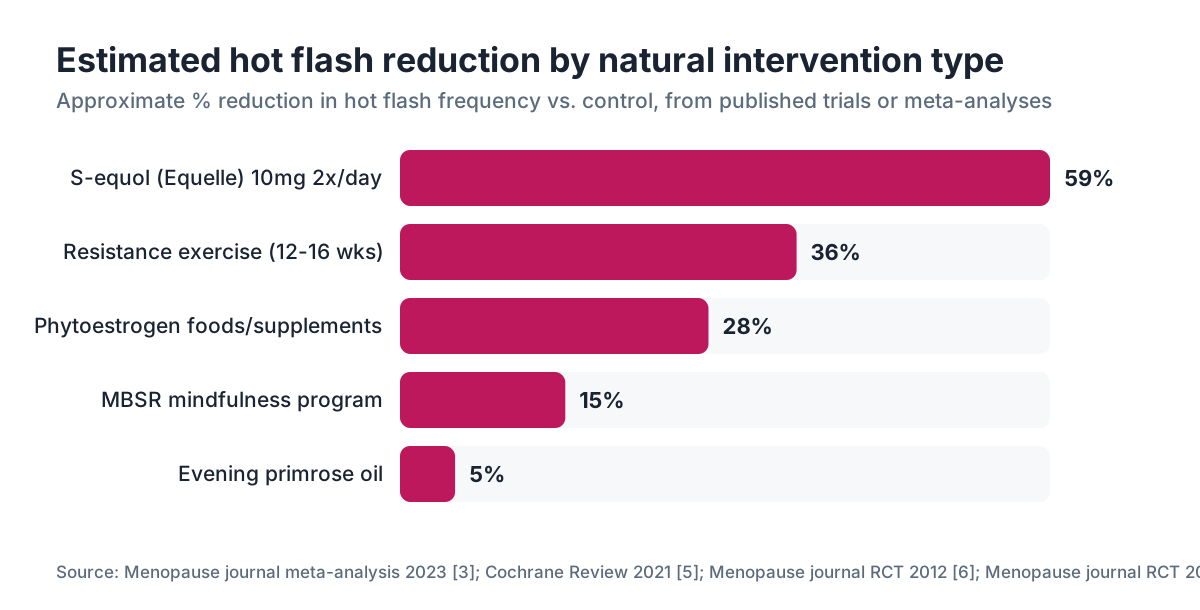
Exercise is the most evidence-backed nonpharmacological intervention for perimenopause and menopause symptoms, and resistance training leads the pack. Lifting improves insulin sensitivity, which matters because estrogen loss accelerates insulin resistance [2]. A 2023 meta-analysis in Menopause, the journal of the Menopause Society, found resistance exercise cut hot flash frequency by roughly 36% versus sedentary controls and improved sleep scores on several validated instruments [3]. That is not a trivial effect.
Two to three sessions per week of progressive resistance training, meaning you actually add load over time, is the minimum effective dose in the trial data. Yoga and stretching help mood and give some sleep benefit, but they don't touch metabolic or vasomotor symptoms the same way. Aerobic exercise helps mood and cardiovascular risk, which matters enormously after estrogen withdrawal, but it is not better than lifting for hot flashes specifically.
Sleep gets its own paragraph because it does more than make you feel rested. Poor sleep drives cortisol up, and high cortisol suppresses progesterone synthesis through the shared pregnenolone precursor. Perimenopausal women who average under six hours a night show higher inflammatory markers and worse vasomotor scores. Fixing sleep is not cosmetic. It changes the hormonal environment you're trying to steady.
Structured stress work (more than "trying to relax") has a real mechanism. Chronic psychological stress keeps cortisol high, and sustained cortisol competes with progesterone at the receptor and suppresses the HPG axis. Mindfulness-based stress reduction (MBSR) produced statistically significant drops in hot flash interference scores in a 2019 randomized trial in Menopause [4]. The effect was modest, roughly a 15% improvement on the Hot Flash Related Daily Interference Scale, but it was real and it repeated.
Do phytoestrogens actually reduce hot flashes and other symptoms?
Phytoestrogens are plant compounds that bind weakly to estrogen receptors. The main classes are isoflavones (soy, red clover), lignans (flaxseed, sesame), and coumestans (sprouts, alfalfa). They draw attention because populations on high-soy traditional diets have historically reported fewer vasomotor symptoms, though that ecological data is muddied by other dietary and genetic factors.
The controlled trial data is genuinely mixed. A 2021 Cochrane review of 43 trials concluded that phytoestrogen interventions were tied to a small reduction in hot flash frequency (about 1.3 fewer flashes per day versus placebo) and a modest improvement in vaginal dryness, but rated the evidence "low to moderate" because outcomes varied across trials [5]. Real, but small.
S-equol earns its own mention because its evidence beats generic soy isoflavone supplements. S-equol is a metabolite of daidzein (a soy isoflavone) made by specific gut bacteria. Only about 25 to 30% of Western women produce it on their own; the rest cannot. Supplemental S-equol (sold as Equelle in the US) was tested in a 2012 randomized controlled trial of 126 Japanese women and cut hot flashes by 58.6% at 10mg twice daily versus 34.2% on placebo [6]. That is a bigger effect than most phytoestrogen studies, which is why it stands apart.
Flaxseed adds fiber and lignans. Two tablespoons of ground flaxseed daily was the dose in a small Mayo Clinic pilot (n=29) that showed a 50% drop in hot flash frequency, though it wasn't placebo-controlled and the sample was tiny. Promising, not proven.
Practical bottom line: if you want to try phytoestrogens, ground flaxseed or whole soy foods (tofu, edamame, tempeh) are reasonable starting points with no known risk at food amounts. If you want something closer to a therapeutic dose, S-equol (as Equelle) has the cleanest data.
For what the Menopause Society currently recommends for nonhormonal care, see our overview at menopause society.
Which supplements have real evidence versus hype?
This is where a lot of money gets wasted, so let's be specific.
Magnesium glycinate or bisglycinate: Sleep disruption, anxiety, and muscle tension are common in perimenopause, and magnesium intake runs low in Western diets (an estimated 48% of Americans get less than the EAR) [7]. Magnesium glycinate at 200 to 400mg before bed has solid mechanistic rationale and a clean safety record. It will not fix vasomotor symptoms, but for sleep and anxiety it is genuinely useful and cheap.
Ashwagandha (KSM-66 extract): Randomized trials in peri- and postmenopausal women using 300mg twice daily showed better menopause-specific quality of life, sleep, and self-reported anxiety over 8 weeks [8]. The cortisol effect was statistically significant (mean drop of 27.9% versus 7.9% on placebo in one trial). The mechanism is adrenal-supportive, not estrogenic. Check thyroid labs before using ashwagandha if you have any thyroid history, since it can shift T3/T4. See thyroid hormone replacement therapy for why that matters.
Black cohosh (Remifemin): The American College of Obstetricians and Gynecologists calls black cohosh the best-studied herbal option for hot flashes, but the trials contradict each other. A 2012 Cochrane review found no convincing benefit over placebo. Some women report clear subjective improvement. Rare cases of liver injury have been reported. If you try it, use standardized extracts at studied doses (20mg twice daily) and stop at any GI or liver symptoms.
Maca root: Small studies hint at better sexual function and mood in postmenopausal women. A 2008 Menopause crossover trial (n=14) showed statistically significant improvement in sexual dysfunction scores. The samples are too small for strong claims. It looks safe at food amounts.
Vitex (chaste tree berry): More relevant for perimenopause with intact cycles than for postmenopause. Some evidence supports it for PMS and cycle irregularity through mild dopaminergic effects on prolactin. Not well studied for hot flashes.
Evening primrose oil: No consistent benefit for hot flashes in controlled trials. A waste of money for this purpose.
| Supplement | Evidence grade | Best use case | Dose used in trials | |---|---|---|---| | Magnesium glycinate | B (mechanistic + safety) | Sleep, anxiety, muscle tension | 200-400mg nightly | | S-equol (Equelle) | B (RCT data) | Hot flashes | 10mg twice daily | | Ashwagandha KSM-66 | B (2 RCTs) | Cortisol, sleep, anxiety | 300mg twice daily | | Black cohosh | C (inconsistent trials) | Vasomotor symptoms | 20mg twice daily | | Maca root | C (small studies) | Sexual function, mood | 3.5g daily | | Evening primrose oil | D (no RCT support) | Hot flashes | N/A |
How does diet affect estrogen and hormone balance in perimenopause?
Diet does not replace estrogen, but it changes how your body handles estrogen metabolism, insulin, and inflammation, all of which shape how bad your symptoms get.
The Mediterranean pattern (olive oil, vegetables, legumes, fish, modest whole grains, little ultra-processed food) is the most studied eating pattern for menopausal women. A 2020 observational study in the American Journal of Clinical Nutrition found women who followed it most closely had roughly 20% lower risk of severe vasomotor symptoms [9]. The likely mechanism is lower systemic inflammation and better insulin sensitivity, not any direct estrogenic effect.
Fiber matters specifically for estrogen recycling. A subset of the gut microbiome called the estrobolome processes estrogen conjugates and decides how much free estrogen gets reabsorbed. High-fiber diets support a diverse estrobolome and tip the balance toward excretion. This matters most for premenopausal or early perimenopausal women with estrogen-dominant cycling symptoms. In deep menopause, estrogen is low no matter what, so estrobolome effects are a smaller lever.
Blood sugar stability is underrated here. Estrogen normally helps regulate insulin sensitivity, and losing it speeds visceral fat gain, which is metabolically active and throws off more inflammatory signals. Eating that avoids big glucose spikes (lower-glycemic carbs, protein at every meal, no refined carbs eaten alone) calms the cortisol-insulin loop and steadies energy. This isn't about restriction. It's about distribution and food quality.
Alcohol deserves a direct mention. Even moderate intake triggers vasomotor symptoms acutely through vasodilation and wrecks sleep architecture. If your hot flashes are severe, cut alcohol entirely for 4 to 6 weeks. That gives you clean data on whether it's a real trigger for you.
Can managing stress really change hormone levels?
Yes, and the mechanism is specific enough to convince. The precursor molecule pregnenolone sits upstream of both cortisol and the sex hormones. Under chronic stress, the body routes pregnenolone toward cortisol. Some call this "pregnenolone steal," a term more common in functional medicine circles than academic endocrinology. The underlying pathway is real even if the label is contested.
Cortisol also directly suppresses GnRH pulsatility, so chronic stress can hit the entire hypothalamic-pituitary-gonadal axis. In women still cycling through perimenopause, this shows up as irregular cycles and shortened luteal phases, which cuts progesterone output. In postmenopausal women, high cortisol worsens sleep, adds visceral fat, and feeds the anxiety-insomnia cycle that already rides along with estrogen withdrawal.
Structured stress interventions with actual trial data in menopausal women include mindfulness-based stress reduction (MBSR, an 8-week program), cognitive behavioral therapy for insomnia (CBT-I), and heart rate variability biofeedback. CBT-I has data from at least three randomized trials showing significant improvement in sleep quality and hot flash-related distress in peri- and postmenopausal women [4]. If you can access only one thing on this list, CBT-I is probably the highest-value nonpharmacological tool you have.
Adaptogenic herbs (ashwagandha, rhodiola) for adrenal support have plausible mechanism and some trial data, covered in the supplements section. They are not a substitute for dealing with the actual sources of chronic stress.
What role does gut health play in hormonal balance?
More than most gynecologists cover in a standard appointment. The gut shapes hormone balance through three main pathways: the estrobolome (estrogen metabolism), the gut-brain axis (mood, sleep, anxiety), and systemic inflammation.
The estrobolome is the set of gut bacteria that produce beta-glucuronidase, an enzyme that deconjugates estrogen metabolites and lets them get reabsorbed. A diverse, fiber-rich microbiome tends toward less aggressive beta-glucuronidase activity, which favors healthier estrogen metabolism and elimination. Disrupted flora (dysbiosis) from antibiotic overuse, ultra-processed diets, or chronic stress can tip this balance the wrong way.
Practical implications: fermented foods (yogurt with live cultures, kefir, kimchi, sauerkraut) and prebiotic fiber (onions, leeks, garlic, green bananas, oats) support microbiome diversity. Probiotic supplements are harder to recommend because strain selection matters and most consumer products don't match the mechanistic evidence. The best probiotic data in menopausal health involves Lactobacillus rhamnosus and Lactobacillus reuteri strains for vaginal health, not hot flashes.
Gut-derived inflammation also reaches the hypothalamic thermoregulatory center. Lipopolysaccharide (LPS) from gram-negative gut bacteria can cross a permeable gut lining and set off systemic inflammatory signaling that lowers the threshold at which the hypothalamus fires a hot flash. Plausible, but not yet well quantified in humans.
Does weight affect hormone balance during menopause?
Yes, in both directions. Fat tissue is the primary site of estrogen production after menopause, through peripheral aromatization of androgens. Women with higher body fat tend to carry more circulating estrone (a weaker estrogen) than lean women, which can soften some menopause symptoms but also raises the risk of estrogen-sensitive cancers and metabolic trouble.
Visceral fat is the metabolically active kind that worsens the hormonal picture: it pumps out inflammatory cytokines, drives insulin resistance, and tracks with higher cortisol reactivity. The shift toward visceral fat that comes with estrogen loss is one of the most clinically important metabolic changes of menopause.
GLP-1 receptor agonists (like semaglutide) have become an option for women fighting perimenopausal weight gain that hasn't budged with lifestyle changes, though these are prescription medications, not a natural strategy. If you're weighing whether a GLP-1 fits alongside or instead of hormone approaches, is semaglutide the same as ozempic lays out the options. WomenRx clinicians assess hormonal and metabolic health together, because these are not separate systems in a woman's body.
To lose weight without medication, the strongest evidence supports a caloric deficit, protein adequacy (at least 1.2g per kg body weight in perimenopausal women, based on lean mass preservation data), and resistance training. Protein matters especially because estrogen withdrawal speeds muscle protein breakdown.
Can natural approaches help with sleep, mood, and brain fog specifically?
These three are among the most common and disruptive symptoms in perimenopause, and they're also the ones most directly moved by natural interventions. That makes them a reasonable place to start.
Sleep: Magnesium glycinate (200 to 400mg at bedtime), a consistent wake time regardless of sleep quality, no screens for 60 minutes before bed, and a cold bedroom (65 to 68 degrees F) all support sleep architecture. CBT-I, available through apps like Sleepio (which has RCT data) or a sleep psychologist, beats sleep medication on long-term outcomes and has specific data in menopausal women.
Mood and anxiety: Ashwagandha (KSM-66, 300mg twice daily) improved anxiety and general wellbeing in the two menopausal RCTs cited above. Omega-3 fatty acids (EPA-dominant, 2 to 3g daily) have reasonable evidence for easing depressive symptoms in women generally, and a 2020 meta-analysis in Translational Psychiatry found EPA superior to DHA for depressive outcomes [10]. Exercise stays the most evidence-backed mood intervention: 150 minutes per week of moderate aerobic activity improves depressive symptoms about as well as low-dose antidepressant therapy in some meta-analyses.
Brain fog: Nobody has great data here. The closest mechanistic evidence points to sleep quality and insulin resistance as the two most modifiable drivers of perimenopausal cognitive symptoms. Fixing sleep with CBT-I, steadying blood sugar through diet, and adding DHA (200 to 500mg daily, separate from EPA for this purpose) are reasonable strategies with plausible support. Phosphatidylserine at 100mg three times daily showed modest cognitive benefit in older adults in several trials, though menopause-specific data is thin.
For a wider look at the perimenopausal transition, peri menopausal covers the full symptom picture, brain fog included.
Are there symptoms where natural approaches are genuinely not enough?
Yes, and being honest about this matters a great deal for your health.
Severe vasomotor symptoms (multiple hot flashes an hour, drenching night sweats that shred your sleep every night) are unlikely to be managed well by lifestyle and supplements alone. The effect sizes for nonhormonal nonprescription approaches top out around 30 to 50% symptom reduction in the best trials. If your baseline is severe, a 50% cut can still leave you functionally impaired.
Genitourinary syndrome of menopause (GSM), the umbrella term for vaginal dryness, atrophy, painful sex, and recurrent UTIs, has one proven prescription solution (local vaginal estrogen) and essentially no natural equivalent. Over-the-counter vaginal moisturizers like Replens lower symptom scores and are worth using, but they do not reverse the tissue changes of GSM the way local estrogen does. This is one area to raise with a clinician sooner rather than later, because GSM gets worse progressively without treatment.
Severe mood symptoms, including perimenopausal depression, panic disorder, or significant anxiety, are not well served by supplements alone. These deserve clinical evaluation. There is a specific window of heightened depression vulnerability in perimenopause that is biologically driven and may warrant prescription treatment.
Bone loss is another place where the limits should be clear. Weight-bearing exercise, adequate calcium (1200mg/day total from food and supplements for postmenopausal women, per NIH guidance), and vitamin D (800 to 1000 IU/day minimum, with many women needing 2000 IU to reach sufficient serum 25-OH-D) are all needed but may not be enough for women with osteopenia or osteoporosis, especially in early postmenopause [11]. DEXA scanning and clinical assessment should drive decisions here.
If you're figuring out where you fall and whether prescription options make sense, the menopause society publishes current clinical guidance on both hormone therapy and nonhormonal alternatives.
What should a realistic daily protocol look like?
The evidence does not support buying 12 supplements and hoping. It supports a small number of consistently applied practices, plus well-chosen additions where your specific symptoms match the data.
A sensible evidence-based day looks something like this: resistance training three times a week, protein at each meal targeting 1.2 to 1.6g per kg of body weight, Mediterranean-pattern eating with fiber from vegetables and legumes, two tablespoons of ground flaxseed added to food, magnesium glycinate (300mg) before bed, and steady sleep and wake times. That stack runs maybe $15 to $20 a month beyond your regular food budget, carries negligible side effect risk, and touches most of the modifiable mechanisms.
For high-burden symptoms, add targeted pieces: S-equol for stubborn hot flashes (Equelle, roughly $30 to $40 a month), ashwagandha KSM-66 for sleep and anxiety ($15 to $20 a month), EPA-dominant omega-3s for mood (1 to 3g EPA, $15 to $25 a month). A vaginal moisturizer (Replens or comparable) if GSM symptoms are present.
What to skip: most proprietary "hormone balance" blends that stack eight ingredients at doses too low to match any single trial, detox protocols of any kind, and any product claiming to "restore estrogen naturally" without a specific estrogen receptor mechanism.
For products marketed for perimenopause support and what the evidence behind them actually shows, see our reviews at health & her perimenopause support and cvs menopause multivitamin with hot flash support.
WomenRx offers telehealth evaluation for women who want a clinician to read their full hormonal picture, including whether natural approaches are enough or whether prescription support makes sense. The goal is always the least intervention that actually solves the problem. Some women need very little. Others need more.
How long does it take for natural hormone-balancing strategies to work?
Ask this before you start, because bad timeline expectations make people quit strategies that would have worked, or cling to ones that won't.
Resistance training effects on hot flash frequency typically show up over 12 to 16 weeks of consistent lifting, based on the trials that found benefit. You will not see meaningful vasomotor change in 2 to 3 weeks.
Dietary changes (Mediterranean-style eating, blood sugar stabilization) can lift energy and mood within 2 to 4 weeks, but their effect on hot flash frequency is slower, often 6 to 8 weeks, and depends on your starting diet.
S-equol studies measured outcomes at 12 weeks. Ashwagandha trials saw statistically significant cortisol and anxiety changes at 8 weeks. Magnesium for sleep may help within 1 to 2 weeks for some women.
Commit to any strategy for at least 8 to 12 weeks before you call it a failure. Track symptoms with a simple daily log (hot flash count, sleep quality on a 1 to 10 scale, mood) so you have data instead of impressions. If a clean log shows no improvement after 12 weeks, that strategy probably isn't working for you, and that is useful information, not defeat.
Frequently asked questions
Can you actually balance hormones without HRT?
You cannot replace the estrogen your ovaries have stopped producing without some form of exogenous estrogen. What you can do is cut symptom burden by working on cortisol, insulin, sleep, and inflammation, which all interact with the hormonal environment. For mild to moderate symptoms, natural approaches reduce symptom frequency by 30 to 50% in the best trials. For severe symptoms, they're rarely enough on their own.
What is the most effective natural remedy for hot flashes?
S-equol (sold as Equelle in the US, 10mg twice daily) has the strongest randomized trial evidence among supplements, with up to a 58.6% reduction in hot flash frequency in one placebo-controlled trial. Resistance exercise (2 to 3 sessions per week for 12+ weeks) showed about 36% reduction in a meta-analysis. Both beat most herbal blends sold for hot flash support.
Does magnesium help with perimenopause symptoms?
Magnesium glycinate or bisglycinate at 200 to 400mg before bed has reasonable evidence for better sleep and lower anxiety in perimenopausal women. It does not directly affect hot flash frequency. About 48% of Americans get less than the estimated average requirement for magnesium, which makes supplementation low-risk and often genuinely helpful for sleep and muscle tension.
How does stress affect hormone balance in women over 40?
Chronic stress raises cortisol, which competes with progesterone through the shared pregnenolone precursor and suppresses GnRH pulsatility. In women still cycling, this can shorten the luteal phase and cut progesterone output. In peri- and postmenopausal women, high cortisol worsens sleep, adds visceral fat, and amplifies anxiety and vasomotor symptoms.
Are phytoestrogens safe for women with a history of breast cancer?
This needs individual oncologist guidance. The concern is that phytoestrogens bind estrogen receptors, and their safety in estrogen-sensitive cancer survivors has not been settled in long-term trials. The 2021 Cochrane review did not evaluate cancer outcomes. Most oncologists advise caution with concentrated isoflavone supplements, though whole soy foods are generally considered lower risk. Never replace your oncologist's guidance with general information.
Does diet really affect estrogen levels?
Diet affects estrogen metabolism and circulation more than estrogen production in postmenopausal women. High-fiber diets support gut microbiome diversity, which shapes how estrogen is recycled versus excreted. Blood sugar stability lowers insulin-driven hormonal disruption. Mediterranean-pattern eating was tied to roughly 20% lower risk of severe vasomotor symptoms in a 2020 study in the American Journal of Clinical Nutrition.
What supplements should I avoid during perimenopause?
Black cohosh at high doses carries rare but documented liver injury; use only standardized extracts at studied doses and watch for GI symptoms. Evening primrose oil has no controlled trial evidence for hot flashes and isn't worth the cost. Proprietary hormone balance blends with 8 to 12 ingredients at subtherapeutic doses rarely earn the money. Any product claiming to "restore estrogen naturally" without a specific receptor mechanism is making an unsubstantiated claim.
How does perimenopause affect sleep and what helps naturally?
Estrogen and progesterone both act directly on sleep architecture. Their withdrawal disrupts sleep onset, REM quality, and thermal regulation. Cognitive behavioral therapy for insomnia (CBT-I) has the strongest evidence, beating sleep medications on long-term outcomes in multiple RCTs including menopausal women. Magnesium glycinate at bedtime, consistent wake times, and a cold bedroom (65 to 68 degrees F) are evidence-supported adjuncts.
Can exercise balance hormones during menopause?
Exercise does not restore lost estrogen, but it meaningfully addresses estrogen's downstream effects. Resistance training improves insulin sensitivity, cuts hot flash frequency by roughly 36% per a meta-analysis in Menopause, preserves lean mass, and supports bone density. Aerobic exercise improves cardiovascular risk markers and mood. Two to three sessions per week of progressive resistance training is the minimum effective dose for vasomotor and metabolic benefits.
What natural approaches work for vaginal dryness and GSM?
Genitourinary syndrome of menopause (GSM) has no fully effective nonprescription equivalent to local estrogen. Vaginal moisturizers (Replens or comparable) used 2 to 3 times per week lower symptom scores and are worth using. Adequate hydration and staying sexually active (with lubrication) help maintain tissue health. If symptoms hurt quality of life or cause recurrent UTIs, local vaginal estrogen is highly effective and warranted.
How long do natural hormone-balancing approaches take to work?
Most evidence-supported strategies need 8 to 12 weeks of consistent use before you can measure meaningful symptom change. Resistance training trials showed hot flash benefits at 12 to 16 weeks. Ashwagandha RCTs measured cortisol and anxiety outcomes at 8 weeks. S-equol trials ran 12 weeks. Expecting results in 2 to 3 weeks leads to quitting approaches that would have worked. Track symptoms daily and give any intervention a full 8 to 12 week trial before calling it ineffective.
Is brain fog in perimenopause reversible with natural strategies?
Perimenopausal cognitive symptoms, especially word retrieval and working memory issues, tie more closely to sleep disruption and insulin resistance than to estrogen levels directly. Improving sleep with CBT-I, steadying blood sugar through diet, and adding DHA (200 to 500mg daily) are the most mechanistically grounded natural strategies. The evidence base for these specifically in perimenopause brain fog is limited; the closest data comes from sleep and metabolic health research more broadly.
Do natural hormone approaches help with frozen shoulder or joint pain in menopause?
Joint pain and frozen shoulder (adhesive capsulitis) are underrecognized menopause symptoms driven partly by estrogen receptor activity in connective tissue. Natural anti-inflammatory strategies, including omega-3 fatty acids (2 to 3g EPA/DHA daily), the Mediterranean pattern, and resistance training targeting the affected area, have reasonable mechanistic support. None have been tested in RCTs specifically for menopausal frozen shoulder. For more on this connection, see frozen shoulder menopause.
When should I see a doctor instead of trying natural approaches?
See a clinician if symptoms are severe enough to disrupt daily function or sleep most nights; if you have vaginal bleeding after menopause (always evaluate, see is bleeding after menopause always cancer); if you have significant mood symptoms including depression or panic; if you suspect thyroid dysfunction; or if you have risk factors for osteoporosis. Natural approaches are reasonable first steps for mild to moderate symptoms, not for severe or medically complex cases.
Sources
- Endocrine Society, Clinical Practice Guidelines: Thyroid Dysfunction in Women
- NIH National Institute on Aging, Menopause and Insulin Resistance
- Menopause (journal), Meta-analysis: Exercise and vasomotor symptoms, 2023
- Menopause (journal), RCT: Mindfulness-based stress reduction for hot flash interference, 2019
- Cochrane Database of Systematic Reviews, Phytoestrogens for menopausal symptoms, 2021
- Menopause (journal), RCT: S-equol for hot flashes in Japanese women, 2012
- NIH Office of Dietary Supplements, Magnesium Fact Sheet for Health Professionals
- Journal of Ethnopharmacology, RCT: Ashwagandha KSM-66 in peri- and postmenopausal women, 2021
- American Journal of Clinical Nutrition, Mediterranean diet and vasomotor symptoms, 2020
- Translational Psychiatry, Meta-analysis: EPA versus DHA for depressive symptoms, 2020
- NIH Office of Dietary Supplements, Calcium Fact Sheet for Health Professionals
- The Menopause Society (NAMS), Nonhormonal Management of Menopause-Associated Vasomotor Symptoms