How much bacteriostatic water to mix with 10mg of semaglutide
TL;DR: For a 10mg vial of compounded semaglutide powder, most compounding pharmacies recommend reconstituting with 2 mL of bacteriostatic water, which gives a concentration of 5 mg/mL. Your injection volume then depends on your prescribed dose: a 0.25 mg starter dose is 0.05 mL. Follow your prescriber's written instructions, because some pharmacies ship at different concentrations.
What is the standard reconstitution ratio for 10mg of semaglutide?
The most common guidance for a 10mg semaglutide vial is 2 mL of bacteriostatic water, which gives a final concentration of 5 mg/mL. At that strength, a 0.25 mg starting dose is 0.05 mL (50 microliters), and a 1 mg dose is 0.2 mL. Those are tiny volumes. A 1 mL insulin syringe with 0.01 mL markings is the right tool.
There is no single reconstitution standard the FDA enforces for compounded peptides. Pharmacies write their own instructions. Some ship 10mg vials with a recommendation of 1 mL of bacteriostatic water (giving 10 mg/mL) or 4 mL (giving 2.5 mg/mL). Change the water volume and you change every dose volume you draw. That is why the dosing guide from your specific pharmacy governs your math, not a generic table you found online.
If your pharmacy didn't send reconstitution instructions, call and ask before you mix anything. Guessing the water volume is not a safe shortcut.
How do I calculate my injection volume after mixing?
The math is simple once you know your concentration. The formula:
Injection volume (mL) = Prescribed dose (mg) ÷ Concentration (mg/mL)
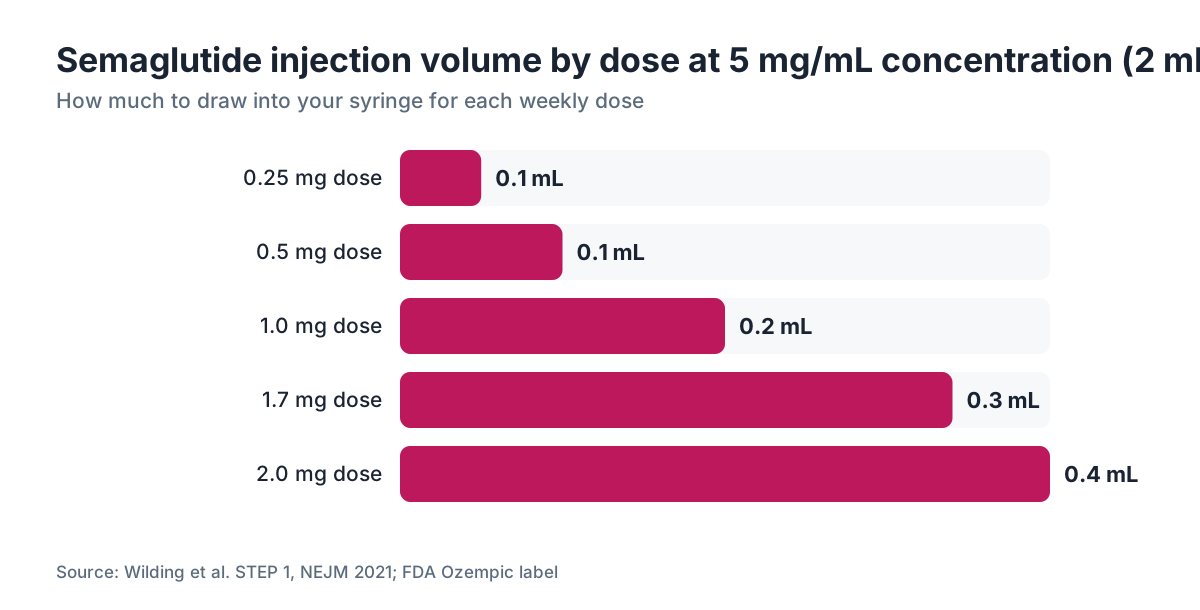
Using the 2 mL / 10 mg example (5 mg/mL concentration):
| Prescribed dose | Calculation | Draw this volume | |---|---|---| | 0.25 mg | 0.25 ÷ 5 | 0.05 mL (5 units on a U-100 syringe) | | 0.5 mg | 0.5 ÷ 5 | 0.10 mL (10 units) | | 1.0 mg | 1.0 ÷ 5 | 0.20 mL (20 units) | | 1.7 mg | 1.7 ÷ 5 | 0.34 mL (34 units) | | 2.0 mg | 2.0 ÷ 5 | 0.40 mL (40 units) |
A U-100 insulin syringe marks each unit as 0.01 mL, so "5 units" equals 0.05 mL. That's the convention most prescribers use when they talk you through a dose. If your syringe is labeled in mL, use the mL column instead.
If your pharmacy used 1 mL of bacteriostatic water (concentration 10 mg/mL), every volume in that table gets cut in half. This is exactly the error that causes an accidental double dose, so confirm your pharmacy's ratio before you calculate anything. [1]
Why does the water volume matter so much?
Semaglutide is a GLP-1 receptor agonist with a half-life of about 7 days in its injectable form [2]. A long half-life means a dosing error doesn't clear your system quickly. Inject twice the intended dose because you miscalculated concentration and you can trigger severe nausea, vomiting, hypoglycemia (especially if you're also on other glucose-lowering drugs), and in serious cases, pancreatitis.
The STEP 1 trial, which tested semaglutide 2.4 mg weekly in adults with obesity, found gastrointestinal events were the main reason people stopped the drug, affecting roughly 4.5% of participants versus 0.8% on placebo [3]. Most of those events tracked with dose. Getting your concentration right is not a pedantic detail. It controls how much drug goes into your body each week.
The reverse error is milder. Too much water under-concentrates the solution, which doesn't make the drug dangerous but can make your dose volume large or hard to measure on a small syringe.
What is bacteriostatic water and why can't I use regular sterile water?
Bacteriostatic water for injection (BWFI) is sterile water with 0.9% benzyl alcohol added as a preservative [4]. That preservative is what lets you puncture the vial multiple times over several weeks without contaminating the solution. A single 10mg vial reconstituted for weekly injections gets accessed 4 to 8 times, depending on your dose. Regular sterile water for injection has no preservative, so it belongs only in single-dose vials you discard after one draw.
Normal saline (0.9% sodium chloride) shows up in online forums. Don't use it. The ionic content can affect peptide stability, and it isn't the diluent validated for GLP-1 peptide reconstitution.
Bacteriostatic water comes in 30 mL multi-dose vials and sells at most pharmacies, often without a prescription depending on your state. Retail price runs $5 to $15 per vial (varies by state and pharmacy), and one 30 mL vial covers many reconstitutions. Store it at room temperature, away from light. [4]
Step-by-step: how to actually mix a 10mg semaglutide vial
Before you start, gather everything: the semaglutide vial, a vial of bacteriostatic water, two alcohol swabs, and a 3 mL or 5 mL syringe with a large-bore needle (18 to 21 gauge) for drawing the water. You'll use a separate, finer-gauge syringe for your actual injections.
- Wash your hands thoroughly.
- Wipe the rubber stopper of both vials with separate alcohol swabs. Let them air dry for 10 to 15 seconds.
- Draw the exact volume of bacteriostatic water your pharmacy specified (commonly 2 mL for a 10mg vial) into the larger syringe.
- Insert the needle into the semaglutide vial and inject the water slowly down the inside wall of the vial. Don't shoot it directly onto the powder cake.
- Swirl the vial gently for 30 to 60 seconds. Don't shake it. Shaking can degrade the peptide.
- The solution should turn clear or very slightly yellow. If it's cloudy or has visible particles, discard it.
- Label the vial with the date of reconstitution and the concentration (e.g., "5 mg/mL, mixed 2025-07-10").
- Refrigerate at 36 to 46 degrees Fahrenheit (2 to 8 degrees Celsius) right away. Most compounding pharmacy guidance puts reconstituted semaglutide stability at 28 days refrigerated, though some pharmacies say up to 90 days. Use your pharmacy's stated expiration. [5]
Does the concentration differ for compounded semaglutide vs. brand-name Ozempic or Wegovy?
Yes, and the difference matters. FDA-approved Ozempic pens come pre-mixed at fixed concentrations: the 0.25 mg and 0.5 mg pen holds 2 mg per 1.5 mL (about 1.34 mg/mL), and the 1 mg pen holds 4 mg per 3 mL (about 1.34 mg/mL). Wegovy pens for weight loss are pre-filled at 0.25 mg, 0.5 mg, 1 mg, 1.7 mg, and 2.4 mg doses, each delivered in a 0.5 mL injection [9]. You never reconstitute a brand-name pen. You dial the dose and inject.
Compounded semaglutide is different. It comes as a lyophilized (freeze-dried) powder in a multi-dose vial that you reconstitute yourself. The FDA does not approve compounded drugs the way it approves Ozempic or Wegovy, and compounded semaglutide is not FDA-approved [7]. The FDA has said compounded semaglutide may have different inactive ingredients, concentration, and bioavailability than the brand products. That context matters when you compare trial data from semaglutide for weight loss research (which used Ozempic or Wegovy) to what you're injecting from a compounding pharmacy.
For more on the compounded version, the compounded semaglutide article covers the regulatory picture in detail.
What concentration do most prescribers actually use for 10mg vials?
The most common reconstitution instructions for a 10mg vial, across the pharmacy guidance and prescriber protocols that circulate publicly, land at three options:
| Water volume added | Final concentration | Common rationale | |---|---|---| | 1 mL | 10 mg/mL | Smaller injection volumes, preferred by some prescribers | | 2 mL | 5 mg/mL | Most widely cited; easier to measure small starter doses | | 4 mL | 2.5 mg/mL | Reduces concentration error risk for small doses |
The 2.5 mg/mL and 5 mg/mL concentrations dominate in practice. At 10 mg/mL, a 0.25 mg starting dose is only 0.025 mL (2.5 units), which sits at the edge of what most syringes measure accurately. That's why many prescribers pick 2 mL.
No one has published a peer-reviewed trial comparing reconstitution volumes for compounded semaglutide. The guidance comes from individual pharmacy protocols. Treat any online table, this one included, as a starting framework, not a substitute for your pharmacy's actual instructions. [5]
How should I store the vial after mixing, and how long does it last?
Once reconstituted, keep the vial in the refrigerator at 36 to 46°F (2 to 8°C). Don't freeze it. Freezing can denature the peptide and make it inactive. Keep it away from light. A small opaque bag or the original box works.
Most compounding pharmacies that ship semaglutide powder state a post-reconstitution stability of 28 days refrigerated, though some cite up to 90 days based on their internal testing. The FDA requires compounders to support beyond-use dating with stability data [5], but those data don't always reach patients. When in doubt, ask your pharmacy for the beyond-use date they assigned, and follow your label.
Unopened vials of lyophilized semaglutide powder, before reconstitution, usually hold for 12 to 24 months refrigerated, again depending on the pharmacy's testing. Room temperature stability runs much shorter, often under 30 days, so don't leave an unmixed vial on your counter.
If the solution ever looks cloudy, turns more than faintly yellow, or shows visible particles during its use window, discard it and call your pharmacy.
What are the most common mixing mistakes and how do I avoid them?
The costliest mistake is the wrong water volume, specifically confusing a 1 mL protocol with a 2 mL one. That single error doubles the concentration, and since your syringe markings are fixed, you inject twice your intended dose every week. If you're unsure what volume your pharmacy specified, call them. This is a phone call worth making.
Shaking the vial is another common one. Hard shaking creates air bubbles and may break peptide bonds in some formulations. Swirl gently.
Using the reconstitution syringe to inject is a problem too. A large-bore needle pulls water through the stopper efficiently but isn't right for a subcutaneous shot. Use a 29 to 31 gauge, 5/16" to 1/2" insulin needle for the injection.
Injecting into muscle instead of subcutaneous fat happens more with longer needles. Semaglutide is formulated for subcutaneous injection. The FDA labeling for Ozempic specifies subcutaneous dosing in the abdomen, thigh, or upper arm [6]. Compounded versions follow the same anatomical guidance.
Skipping site rotation can cause lipohypertrophy, a thickening of subcutaneous fat that slows absorption. Rotate sites systematically each week.
If you use a telehealth service like WomenRx, your prescriber's written instructions should walk you through these steps, and their clinical team can answer reconstitution questions directly.
Is compounded semaglutide still legal to prescribe in 2025?
This is a moving legal situation. The FDA placed semaglutide on its drug shortage list in 2022, which opened a window for 503A and 503B compounding pharmacies to legally compound it. In February 2025, the FDA removed injectable semaglutide from the shortage list, which started enforcement timelines for compounders [7]. The FDA's stated position, as of early 2025, is that 503B outsourcing facilities had until May 22, 2025 to stop producing copies of commercially available semaglutide doses, and 503A pharmacies had until April 22, 2025 for non-personalized formulations.
Some compounders and prescribers argue that patient-specific compounding with added ingredients (such as vitamin B12, or different salt forms like semaglutide sodium or acetate) may still be permissible. Litigation was ongoing as of mid-2025. The status genuinely depends on the specific formulation and pharmacy type, and it may shift again.
The practical takeaway: if you're using or considering compounded semaglutide, ask your prescriber or pharmacy specifically whether their formulation is legal under current FDA guidance. For broader context on the semaglutide landscape, including brand-name options, that article covers what's available now and what isn't.
The FDA's compounding Q&A states that "FDA recognizes that patients may depend on compounded drugs when an FDA-approved drug is unavailable or does not meet their needs" [7], but that exemption is tied to the shortage designation.
How does body weight affect semaglutide dosing for women?
Body weight doesn't directly change the mg/mL concentration you mix, but it does shape the dose your prescriber picks and how fast you titrate. The STEP 1 trial dosed semaglutide at 2.4 mg weekly regardless of body weight, and participants lost an average of 14.9% of body weight over 68 weeks against 2.4% in the placebo group [3]. That trial enrolled adults with a BMI of 30 or above, or 27 and above with at least one weight-related condition.
For women, hormonal status changes the picture. Menopause-related shifts in estrogen affect fat distribution, insulin sensitivity, and how the body responds to GLP-1 agonists. A woman in perimenopause or past menopause may carry a different metabolic baseline than a premenopausal woman at the same weight, though semaglutide's mechanism (slowing gastric emptying, cutting appetite through GLP-1 receptor signaling) works across hormonal contexts.
None of that changes your reconstitution math. Your prescribed dose in mg drives your injection volume. Your body weight influences the dose your prescriber writes, not how you mix the drug.
How does semaglutide compare to tirzepatide for reconstitution and dosing?
Tirzepatide, the dual GIP/GLP-1 agonist sold as Mounjaro (diabetes) and Zepbound (weight loss), follows the same reconstitution logic when compounded: lyophilized powder plus bacteriostatic water, with concentration set by water volume. Common compounded tirzepatide vials come in 10mg, 20mg, and 60mg sizes, and reconstitution volumes vary by pharmacy.
The clinical comparison carries more weight than the mixing comparison. The SURMOUNT-1 trial found tirzepatide at 15 mg weekly produced a mean weight reduction of 20.9% versus placebo at 72 weeks [8], against roughly 14.9% for semaglutide 2.4 mg in STEP 1. Direct head-to-head data are limited, and the trials had different populations and designs, so the comparison is suggestive, not settled.
For a full breakdown of how the two drugs compare on efficacy, side effects, and dosing, the semaglutide vs tirzepatide article lays out what the data actually say.
On mixing mechanics, both drugs demand the same attention to concentration math. Wrong water volume equals wrong dose.
Frequently asked questions
Can I use 1 mL of bacteriostatic water instead of 2 mL for a 10mg semaglutide vial?
Yes, but your concentration becomes 10 mg/mL instead of 5 mg/mL, and every dose volume you draw gets cut in half. A 0.25 mg starting dose would be just 0.025 mL, at the limit of what a standard insulin syringe measures accurately. Some prescribers prefer this; others find 2 mL easier for small doses. Use whatever your pharmacy specified.
How do I know what concentration my compounding pharmacy used?
Your pharmacy should include a dosing card or instructions with every shipment. Look for the words "reconstitute with X mL" or "final concentration." If you can't find it, call the pharmacy before you mix anything. Some pharmacies also print the concentration directly on the vial label. Never assume a concentration without confirmation.
What happens if I accidentally inject too much semaglutide?
An accidental overdose can cause severe nausea, vomiting, diarrhea, and, less often, hypoglycemia, especially if you combine semaglutide with other glucose-lowering drugs. The half-life is roughly 7 days, so effects can linger. If you suspect a significant overdose, contact your prescriber or a poison control center (1-800-222-1222 in the US) right away.
How long does reconstituted semaglutide stay good in the fridge?
Most compounding pharmacies assign a 28-day beyond-use date to reconstituted semaglutide refrigerated at 36 to 46°F. Some cite up to 90 days based on their own stability data. Check your pharmacy's specific label. Discard the vial if the solution turns cloudy, develops particles, or the labeled expiration passes.
Can I use bacteriostatic saline instead of bacteriostatic water?
No. Bacteriostatic saline contains 0.9% sodium chloride plus a preservative. The ionic content can affect peptide stability and is not the validated diluent for semaglutide reconstitution. Use bacteriostatic water for injection (0.9% benzyl alcohol in water) only, unless your specific pharmacy protocol states otherwise.
What size syringe should I use to inject compounded semaglutide?
Use a 29 to 31 gauge, 5/16" to 1/2" insulin syringe for the subcutaneous injection. A 1 mL syringe with 0.01 mL (1 unit) markings gives enough precision for small dose volumes. Use a larger-bore needle only to transfer bacteriostatic water into the peptide vial, then switch to the fine-gauge insulin needle to inject.
Where on my body should I inject semaglutide?
The FDA-approved Ozempic labeling specifies subcutaneous injection in the abdomen, upper thigh, or upper arm. Compounded semaglutide follows the same anatomical guidance. Rotate sites each week to prevent lipohypertrophy. Avoid injecting within 2 inches of the navel or into areas that are bruised, scarred, or tender.
Does the starting dose change based on whether I'm in perimenopause or postmenopause?
Prescribers typically start all adults at 0.25 mg weekly for the first 4 weeks regardless of menopausal status, following the standard semaglutide titration schedule. Menopausal status affects metabolic context but not the starting dose protocol. Your prescriber may adjust the titration speed based on how you tolerate each step.
Is it safe to mix semaglutide at home?
It can be, if you follow sterile technique and your pharmacy's instructions precisely. The risks are contamination (mitigated by alcohol swabs and bacteriostatic water's preservative) and dosing errors (mitigated by using the correct water volume and a precise syringe). If you feel uncertain at any step, ask your prescriber's clinical team to walk you through it before your first mix.
What if my vial looks cloudy after mixing?
A properly reconstituted semaglutide solution should be clear to very faintly yellow. Cloudiness, visible particles, or unusual color points to contamination or peptide degradation. Discard the vial immediately and contact your pharmacy for a replacement. Never inject a cloudy peptide solution.
Does it matter if I shake the vial when mixing?
Yes. Shaking can create excessive air bubbles and may damage the peptide structure. Instead, roll the vial gently between your palms or swirl it slowly until the powder fully dissolves, usually 30 to 60 seconds. If any powder remains after 2 minutes of gentle swirling, contact your pharmacy.
How much does bacteriostatic water cost, and where can I buy it?
Bacteriostatic water for injection typically costs $5 to $15 for a 30 mL multi-dose vial at retail pharmacies. It's available at major chains like CVS and Walgreens, and online pharmacies, often without a prescription in most US states. One 30 mL vial provides enough diluent for many reconstitutions at 2 mL each.
Can I travel with reconstituted semaglutide?
Yes, with planning. Keep it refrigerated during travel; an insulated cooler with ice packs works for short trips. The TSA allows medically necessary liquids including insulin and injectable medications in carry-on bags, but you may need a prescription label or prescriber's letter. Reconstituted peptides should not sit long without refrigeration, so plan transit times accordingly.
Sources
- FDA, Human Drug Compounding (program overview and safety information)
- FDA, Ozempic (semaglutide) label via DailyMed
- Wilding et al., STEP 1 Trial, New England Journal of Medicine, 2021
- FDA, Bacteriostatic Water for Injection USP label via DailyMed
- USP General Chapter 797, Pharmaceutical Compounding Sterile Preparations
- FDA, Ozempic (semaglutide) label via DailyMed (injection site guidance)
- FDA, GLP-1 and semaglutide compounding and drug shortage information
- Jastreboff et al., SURMOUNT-1 Trial, New England Journal of Medicine, 2022
- FDA, Wegovy (semaglutide 2.4 mg) label via DailyMed
- USP General Chapter 797, Pharmaceutical Compounding Sterile Preparations