How long does semaglutide stay in your system?
TL;DR: Semaglutide has a half-life of about 7 days. It takes roughly 5 weeks (five half-lives) for the drug to fall below detectable levels after your last dose. Appetite and blood sugar effects start fading within days of stopping, but full clearance takes over a month. Pregnancy planning, surgery prep, and side-effect timing all depend on this window.
What is semaglutide's half-life?
Semaglutide's half-life is about 7 days in adults [1]. That one number drives almost every practical question about the drug: how often you dose it, when side effects peak, how long nausea lasts, and how far ahead to stop before surgery or pregnancy.
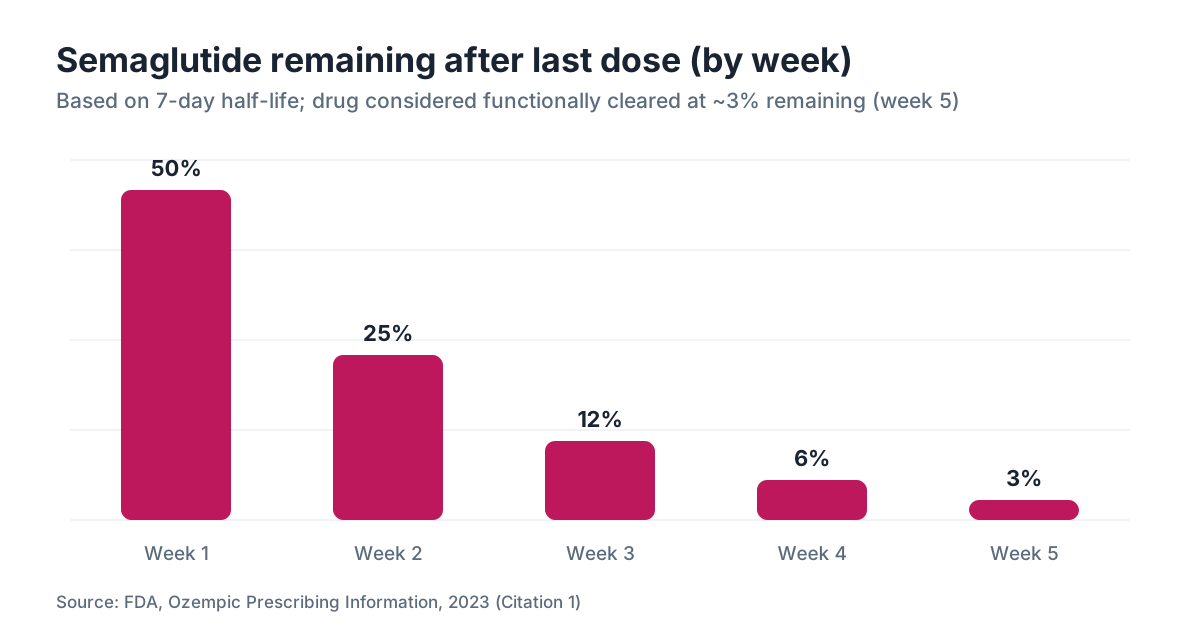
A half-life tells you how long your body takes to cut the drug's concentration by half. After one half-life (roughly a week), you have half the drug left. After two half-lives (two weeks), about a quarter. Pharmacologists call a drug "cleared" after five half-lives, because you're down to less than 3 percent of the original amount. For semaglutide, five half-lives lands at roughly 5 weeks [1].
Weekly dosing for Ozempic and Wegovy is a direct result of that long half-life. Because the drug lingers, you don't need daily shots to hold steady blood levels. Oral semaglutide (Rybelsus) is absorbed and eliminated differently thanks to its formulation, but the active molecule is the same and the systemic half-life is similar once it's in your blood [2].
This long half-life is engineered on purpose. Semaglutide is a GLP-1 receptor agonist built on a modified GLP-1 backbone fused to a fatty acid chain through a linker, which lets it bind tightly to albumin in the blood. That albumin binding shields it from DPP-4, the enzyme that chews up native GLP-1 in seconds [1]. The result is a molecule that behaves nothing like the hormone it copies for how long it lasts.
How long after your last dose is semaglutide fully out of your system?
By the five-half-life rule, semaglutide is functionally cleared about 5 weeks after your last injection [1]. That's the standard pharmacokinetic benchmark used in the prescribing information and in clinical trial washout periods.
Here's how the timeline looks in practice:
| Time after last dose | Approximate drug remaining | |---|---| | 1 week | ~50% | | 2 weeks | ~25% | | 3 weeks | ~12% | | 4 weeks | ~6% | | 5 weeks | ~3% (functionally cleared) |
These percentages assume you were at a stable maintenance dose. If you were still climbing through dose escalation, your baseline level is lower, and clearance may feel faster in terms of effects even though the pharmacokinetics run the same course.
One caveat matters here. The drug dropping below detectable levels is not the same as your body returning to its pre-treatment state. Gastric emptying rates, insulin sensitivity, and gut hormone signaling can stay altered for weeks to months after the drug clears, depending on how long you were on it and what metabolic changes happened during treatment [3]. That's separate from pharmacokinetic clearance.
For women balancing semaglutide with hormonal changes, the interaction matters too. Estrogen shifts gastric motility and GLP-1 receptor expression, so perimenopausal women may notice appetite and GI symptoms change at different points in the menstrual cycle while on the drug. You can read more about the hormonal context at semaglutide for weight loss.
How does semaglutide's half-life compare to other GLP-1 drugs?
Semaglutide's 7-day half-life is the longest of the GLP-1 drugs on the market [1][4]. Tirzepatide (Mounjaro, Zepbound), which hits both GIP and GLP-1 receptors, has a half-life of roughly 5 days, putting full clearance at about 25 days [4]. Liraglutide (Saxenda, Victoza), an older GLP-1 agonist, has a half-life of only about 13 hours, which is why it needs daily injections and clears the body in 2 to 3 days [5].
| Drug | Half-life | Dosing frequency | Time to clearance | |---|---|---|---| | Semaglutide (Ozempic/Wegovy) | ~7 days | Weekly | ~5 weeks | | Tirzepatide (Mounjaro/Zepbound) | ~5 days | Weekly | ~25 days | | Liraglutide (Saxenda/Victoza) | ~13 hours | Daily | ~2-3 days | | Oral semaglutide (Rybelsus) | ~7 days (systemic) | Daily | ~5 weeks |
The longer the half-life, the steadier the drug level between doses, which usually means fewer peaks and troughs in appetite suppression and nausea.
A long half-life also forgives mistakes. Missing a semaglutide dose by a couple of days does not crater your drug levels the way skipping a daily medication would.
If you're weighing the two big weekly options, the comparison runs deeper than half-life. See semaglutide vs tirzepatide for a full breakdown.
When do semaglutide side effects peak and fade?
Most semaglutide side effects are dose-dependent and GI-related: nausea, vomiting, diarrhea, constipation, and reflux. They tend to peak in the first 1 to 4 weeks after each dose increase, then ease off as your body adapts [6].
Because of the 7-day half-life, semaglutide levels build over the first 4 to 5 weeks of treatment before reaching steady state [1]. That buildup is part of why nausea can feel cumulative early on. It's not that each injection hits harder. It's that levels are still climbing toward equilibrium.
After your last dose:
- Nausea and appetite suppression usually start fading within 3 to 7 days, as levels drop by half.
- Most GI symptoms resolve within 2 to 3 weeks for most people.
- Appetite and hunger tend to return noticeably within 2 to 4 weeks, often described as a sudden return of food noise.
- Full return to pre-treatment appetite patterns takes 4 to 8 weeks for most people, though individual variation is real and poorly characterized in published data.
The STEP 1 trial, which enrolled 1,961 adults with obesity, found participants regained roughly two-thirds of lost weight within a year of stopping semaglutide 2.4 mg [3]. That regain is not a pharmacokinetic story. It's a physiological one: the drug suppresses hunger signals that come back when it clears. This is the strongest argument for not treating semaglutide as a short-term fix.
Women in perimenopause or menopause carry extra complexity. Estrogen decline independently worsens appetite regulation and adds visceral fat, so stopping semaglutide during a stretch of hormonal flux can speed up weight regain. Your hormonal baseline matters, which is why some clinicians coordinate GLP-1 therapy with hormone replacement therapy.
How long before surgery should you stop semaglutide?
This is one of the most practically important questions about semaglutide's duration, and the answer has shifted a lot since 2023.
Semaglutide slows gastric emptying. Even in a patient who has fasted, the stomach may still hold food if they've been on semaglutide, which creates serious aspiration risk under general anesthesia [7]. Several case reports of aspiration in fasted semaglutide patients prompted updated guidance.
The American Society of Anesthesiologists (ASA) issued guidance in 2023 recommending patients on weekly GLP-1 agonists like semaglutide hold the drug for at least one week before elective procedures requiring anesthesia [7]. Some anesthesiologists go more conservative and recommend 4 to 6 weeks, reasoning from the full clearance timeline.
The FDA label for Ozempic and Wegovy does not spell out a pre-surgery hold period, but the ASA guidance has become the practical standard at most surgical centers. If you're scheduled for any procedure involving sedation or general anesthesia, tell your surgeon and anesthesiologist you're on semaglutide. Don't assume one week is enough for every situation. Your provider may order a gastric emptying study or point-of-care ultrasound to check for residual stomach contents.
For women facing procedures common in the menopause years, including bone density testing or gynecological surgery, raise this at your pre-op appointment. More on bone health at bone density test.
How long should you wait after stopping semaglutide before getting pregnant?
The FDA label for Wegovy and Ozempic recommends stopping semaglutide at least 2 months before a planned pregnancy [2][8]. That's more conservative than the 5-week pharmacokinetic clearance window, and for good reason.
Animal studies showed embryo-fetal toxicity with semaglutide, including reduced fetal weight, skeletal abnormalities, and increased early pregnancy loss, at doses producing exposures similar to or lower than clinical human exposures [2]. Human data is limited because pregnant women are excluded from clinical trials, so the animal findings drive the label language.
The 2-month recommendation builds in a safety buffer beyond the pharmacokinetic clearance period. It also gives you time to stabilize nutrition, since women coming off semaglutide often see appetite changes and need to rebuild adequate intake before conception.
If you get pregnant while on semaglutide, stop the drug right away and contact your obstetric provider.
There's a pregnancy exposure registry (1-800-727-6500) for Ozempic and Wegovy that collects outcomes data [8].
For perimenopausal women unsure about their fertility status, this question has an added layer. Perimenopause does not mean infertility. See perimenopause age for context on the overlap between hormonal transition and the fertility window.
Does your body weight or kidney function affect how long semaglutide stays in your system?
Somewhat, but less than you'd expect, because semaglutide is cleared mainly through proteolysis (protein breakdown) rather than through the liver or kidneys [1].
The kidneys do excrete some semaglutide metabolites, but the main clearance pathway doesn't hinge on renal filtration the way many other drugs do. The Ozempic prescribing information says no dose adjustment is required in patients with renal impairment, including end-stage renal disease [2]. Hepatic impairment doesn't meaningfully change clearance in clinical studies either.
Body weight does affect volume of distribution. In people with higher body weight, the drug spreads across a larger volume, which can slightly lower peak concentrations after a given dose. That's part of the pharmacokinetic rationale behind weight-based dosing thinking, though the standard semaglutide schedule is not adjusted by weight in current labeling.
Age has a modest effect. Older adults tend to clear the drug a little slower, so semaglutide may run marginally higher at steady state in women over 65 compared to younger adults [1]. The difference isn't big enough to require a dose change in clinical practice, but it may partly explain why older women sometimes report more pronounced side effects at a given dose.
Compounded semaglutide, widely available through compounding pharmacies, uses the same active molecule, but the formulation and quality can vary. If you're using a compounded version, the pharmacokinetics of the active compound are the same. The unknowns are purity and the actual dose delivered. More at compounded semaglutide.
What happens to weight and blood sugar when semaglutide leaves your system?
The data here is stark, and worth being honest about.
The STEP 4 trial tested what happens when patients who lost weight on semaglutide were randomized to continue or switch to placebo. Those who switched to placebo regained an average of 6.9 percent of body weight within 52 weeks, while those who kept going lost an additional 7.9 percent [9]. The net difference was about 14 percentage points in one year.
The STEP 1 extension data, published in Diabetes, Obesity and Metabolism in 2022, found that one year after stopping semaglutide 2.4 mg, participants had regained a mean of 11.6 percentage points of the weight they lost (roughly two-thirds of total weight loss), and cardiometabolic improvements including waist circumference, blood pressure, and lipids largely reversed [3].
For women with type 2 diabetes using semaglutide (Ozempic), blood glucose starts rising within 1 to 2 weeks of stopping, roughly tracking the fall in drug concentration. HbA1c, which reflects average glucose over about 3 months, will gradually worsen over that window if no alternative medication starts.
None of this means semaglutide was "not working" or that stopping was a failure. It means the drug treats an ongoing condition rather than curing it. That framing matters for decision-making.
WomenRx providers approach GLP-1 therapy as one piece of a broader metabolic and hormonal picture, which is especially relevant for women in their 40s and 50s, where hormone shifts are themselves driving metabolic changes. Learn more about the basics at semaglutide.
Can semaglutide be detected on a drug test?
No. Standard workplace drug tests, including the urine and blood panels employers use, do not screen for semaglutide [10]. These tests look for controlled substances and their metabolites: opioids, cannabinoids, amphetamines, cocaine metabolites, and PCP. Semaglutide is not a controlled substance and is not on any standard panel.
Specialized research or clinical studies can measure semaglutide levels using immunoassay or mass spectrometry, but that's purpose-built for research, not routine screening.
If you're joining a clinical trial that requires a washout from GLP-1 medications, standard practice is 5 weeks off semaglutide before enrollment, which matches the five-half-life clearance window. Individual trial protocols vary, so read the inclusion criteria carefully.
For competitive athletes: semaglutide is not on the World Anti-Doping Agency (WADA) prohibited list as of this article's publication. That could change. Checking the current WADA list directly is the right move if this matters to you.
What if you accidentally take a double dose or miss a dose?
Because semaglutide's half-life is a week, small timing errors matter far less than they would with a short-acting drug.
Missed dose: The Ozempic and Wegovy labels say to take the missed dose as soon as possible, as long as your next scheduled dose is at least 2 days (48 hours) away [2]. If your next dose is less than 48 hours out, skip the missed dose and get back on your regular schedule. Do not take two doses in one week to make up for a missed one.
Double dose (accidental): If you inject a second dose in the same week by mistake, your drug levels will run above steady state. This doesn't usually cause dangerous toxicity, but nausea, vomiting, and hypoglycemia (especially if you have diabetes and take insulin or sulfonylureas) are real risks. Contact your prescriber or poison control (1-800-222-1222 in the US) for guidance.
The practical bottom line: because levels stay relatively stable between weekly injections, shifting your injection day by a day or two now and then does not meaningfully change efficacy or safety. Consistent weekly timing is still the goal for predictable, steady drug levels.
How does stopping semaglutide affect menopause symptoms?
This question doesn't have clean trial data behind it yet, and being honest about that matters.
What we know: semaglutide slows gastric emptying and can affect absorption of other medications, including oral hormones. Women on oral estrogen or oral progesterone may find absorption slightly altered while on semaglutide. After stopping, absorption returns to normal within the clearance window.
Some women report that stopping semaglutide brings back vasomotor symptoms (hot flashes, night sweats) that seemed blunted on the drug. There's a plausible mechanism: GLP-1 receptors sit in the hypothalamus, which handles thermoregulation as well as appetite. Whether GLP-1 activity genuinely changes hot flash frequency is an open research question, not an established finding.
Weight regain after stopping is itself a driver of worse menopause symptoms. Higher adiposity is independently linked to more frequent and severe hot flashes, so the metabolic reversal after discontinuation may worsen the symptom picture through that pathway alone [11].
For women managing both weight and menopause, whether to add or continue hormone therapy alongside a GLP-1 deserves a dedicated conversation with your clinician. The menopause overview and hormone replacement therapy pages give you the background to have that conversation well.
The North American Menopause Society (now the Menopause Society) has stated that hormone therapy remains "the most effective treatment for vasomotor symptoms" and does not conflict with GLP-1 use based on current evidence [11].
Frequently asked questions
How long does semaglutide stay in your system after stopping?
Semaglutide has a half-life of about 7 days, so it takes roughly 5 weeks (five half-lives) to fall below 3 percent of your last dose. By most pharmacokinetic standards, that counts as functionally cleared. Appetite and GI effects typically start fading within days of your last injection, but full clearance takes the entire 5-week window.
How long does it take for semaglutide to reach steady state?
Because the half-life is about 7 days, semaglutide reaches steady-state blood levels after roughly 4 to 5 weekly doses, which is 4 to 5 weeks into treatment. Before that, levels keep rising after each injection. This is partly why nausea and other side effects can feel cumulative in the first month, then settle once levels plateau.
How long should I wait after stopping semaglutide to get pregnant?
The FDA label for Wegovy and Ozempic recommends stopping semaglutide at least 2 months before a planned pregnancy. That's more conservative than the 5-week pharmacokinetic clearance period, reflecting animal data that showed embryo-fetal toxicity. If you get pregnant while taking semaglutide, stop immediately and contact your OB provider.
Will semaglutide show up on a drug test?
No. Standard workplace and athletic drug screenings do not test for semaglutide. It is not a controlled substance and is not on any routine drug panel. Semaglutide is also not on the current WADA prohibited substances list. Specialized research assays can measure it, but those aren't used in routine screening.
How long before surgery should I stop taking semaglutide?
The American Society of Anesthesiologists recommends holding weekly GLP-1 agonists like semaglutide for at least one week before elective procedures requiring anesthesia, because of the risk of delayed gastric emptying and aspiration. Some anesthesiologists prefer 4 to 6 weeks for added safety. Always tell your surgical team you're on semaglutide before any procedure.
How quickly does appetite come back after stopping semaglutide?
Most people notice appetite returning within 2 to 4 weeks of stopping, roughly tracking the drop in drug levels. Many describe a sudden return of cravings, sometimes called food noise, around weeks 2 to 3. The STEP 4 trial found patients who stopped semaglutide regained most of their lost weight within 52 weeks compared with those who continued.
Does semaglutide clear faster in people with kidney or liver disease?
No. Semaglutide is cleared mainly through protein breakdown, not through the kidneys or liver, so impaired renal or hepatic function does not meaningfully speed up or slow clearance. The Ozempic prescribing information states no dose adjustment is required even in end-stage renal disease. Drug levels may run slightly higher in older adults due to modest age-related clearance differences.
Is oral semaglutide (Rybelsus) cleared at the same rate as injectable semaglutide?
Yes. The active molecule is identical, and once absorbed systemically, oral semaglutide has the same roughly 7-day half-life as the injectable form. The key difference is absorption: oral semaglutide has lower and more variable bioavailability, so you take it daily to hold steady levels. Clearance after stopping still follows the same 5-week timeline.
Can I restart semaglutide after stopping, and how long does it take to work again?
Yes, semaglutide can be restarted. If you stopped for less than 2 weeks, you may resume your previous dose, but many clinicians recommend restarting lower to limit GI side effects, especially if you were off for more than a few weeks. Appetite suppression typically resumes within 1 to 2 weeks of restarting, though it takes another 4 to 5 weeks to reach steady state again.
How long does semaglutide take to work for weight loss?
Most people see measurable weight loss by 4 to 8 weeks, which lines up with the time needed to reach steady-state drug levels. Bigger weight loss, averaging around 15 percent of body weight in the STEP 1 trial, happens over 68 weeks at the 2.4 mg weekly dose. Early weeks are partly about dose escalation and GI adaptation, not maximum efficacy.
What happens to blood sugar levels when semaglutide leaves the system?
Blood glucose starts rising within 1 to 2 weeks of the last dose in people with type 2 diabetes, roughly in line with falling drug concentrations. HbA1c will gradually worsen over the following 3 months unless alternative glycemic management is in place. Women who used semaglutide for diabetes should have a plan with their prescriber before stopping.
Does semaglutide interact differently with the body during perimenopause?
There's no specific clinical data on semaglutide pharmacokinetics in perimenopausal versus premenopausal women. Estrogen decline affects GI motility and GLP-1 receptor expression, so some variation in drug response is biologically plausible. Practically, perimenopausal women may find weight regain speeds up faster after stopping, because concurrent hormonal changes drive fat redistribution and metabolic slowdown.
How long does semaglutide take to clear if I was on a compounded version?
The active molecule in compounded semaglutide is the same as in brand-name Ozempic or Wegovy, so the 7-day half-life applies equally. Clearance takes about 5 weeks. The caveat is that compounded formulations may have variable purity or actual dose delivered, which could affect how quickly you feel effects diminishing, even if the molecular clearance timeline is the same.
If I miss a semaglutide dose, how long is it safe to wait before taking it?
According to the Ozempic and Wegovy prescribing information, you can take a missed dose as long as your next scheduled dose is at least 48 hours away. If your next dose is within 48 hours, skip the missed dose and continue your normal weekly schedule. Because the half-life is 7 days, a delay of a day or two has minimal effect on steady-state drug levels.
Sources
- FDA, Drugs@FDA database, Ozempic (semaglutide) Prescribing Information, Clinical Pharmacology section
- FDA, Drugs@FDA database, Wegovy (semaglutide 2.4 mg) Prescribing Information, including missed dose and pregnancy guidance
- Wilding JPH et al., STEP 1 trial extension, Diabetes Obesity and Metabolism, 2022
- FDA, Drugs@FDA database, Mounjaro (tirzepatide) Prescribing Information, Clinical Pharmacology
- FDA, Drugs@FDA database, Saxenda (liraglutide 3.0 mg) Prescribing Information, Clinical Pharmacology
- Wilding JPH et al., STEP 1 trial, New England Journal of Medicine, 2021
- American Society of Anesthesiologists, Newsroom, 2023 consensus-based guidance on preoperative management of patients on GLP-1 receptor agonists
- FDA MedWatch, Ozempic and Wegovy Pregnancy Exposure Registry
- Rubino DM et al., STEP 4 trial, JAMA, 2021
- US Department of Transportation, Office of Drug and Alcohol Policy and Compliance, Drug Testing Procedures, 49 CFR Part 40
- The Menopause Society (formerly North American Menopause Society), 2022 Hormone Therapy Position Statement