How long does perimenopause last? What the research actually shows
TL;DR: Perimenopause lasts about 7 years on average, with a wide spread: some women finish in 1 to 2 years, others carry symptoms for a decade or more. The transition ends when you've gone 12 straight months without a period, which is the clinical definition of menopause. Genetics, smoking, race, and how early your cycles turned irregular all shape your personal timeline.
What is perimenopause, exactly, and when does it start?
Perimenopause is the hormonal transition leading up to your final period. It's not a disease and it's not a single event. It's a years-long stretch during which your ovaries make less estrogen and progesterone, your cycles turn unpredictable, and a long list of symptoms can show up before your periods stop for good.
The North American Menopause Society (NAMS) defines perimenopause as beginning when a woman first notices changes in her menstrual cycle length or symptoms tied to shifting hormones, and ending 12 months after her last period [1]. That 12-month mark is menopause itself. Everything before it is perimenopause.
Most women see the first signs in their mid-to-late 40s. Some notice changes as early as their late 30s. Perimenopause age varies more than most people expect, and the reasons aren't fully understood. Smoking, some cancer treatments, and family history all pull the start date earlier.
The transition splits into early and late stages. In early perimenopause, cycles are irregular but the gaps between periods usually stay under 60 days. In late perimenopause, you start seeing cycles spaced 60 days or more apart. That late-stage gap is where symptoms tend to hit hardest [12].
How long does perimenopause last on average?
The honest answer: longer than most women are told.
The most cited research here is the Study of Women's Health Across the Nation (SWAN), which followed more than 3,000 women across several ethnic groups for over two decades. SWAN puts the median total duration of perimenopause at about 7.4 years [2]. The middle half of women (the 25th to 75th percentile) run roughly 4 to 10 years.
A smaller group, around 10%, move through fast and finish in under 2 years. On the other end, some women report symptoms for 12 years or more before they hit that 12-consecutive-month milestone.
Here's a nuance that trips people up. When women say perimenopause "lasted" a certain time, they sometimes mean the stretch from their first irregular cycle to their final period, and sometimes they mean how long the bad symptoms dragged on. Those two windows don't always line up. Hot flashes can start before cycles get irregular and keep going well into postmenopause. The Penn Ovarian Aging Study found the median duration of frequent hot flashes is about 10.2 years, and some women report them longer [3].
So how long does perimenopause last? Figure on 4 to 10 years for planning, with 7 years as a fair central estimate.
What factors make perimenopause longer or shorter?
Several things genuinely move your timeline, and knowing them helps you set expectations that match reality.
Age at first irregular period. SWAN shows that women who enter the late transition (cycles 60+ days apart) at a younger age tend to have a longer total transition. Starting irregular cycles before 45 is linked to a longer perimenopause overall [2].
Race and ethnicity. This is one of the steadiest findings in the literature. Black women have longer transitions and more persistent hot flashes than white women on average. Hispanic women also tend toward longer transitions. Japanese and Chinese women in SWAN had shorter transitions and reported somewhat fewer vasomotor symptoms, though that's not universal [2].
Smoking. Smokers reach menopause 1 to 2 years earlier than non-smokers on average, which shortens the perimenopause window but starts postmenopause sooner [4].
BMI. Higher body fat is linked to slightly later natural menopause, possibly because fat tissue makes estrone (a weak estrogen), which may stretch the transition out. The relationship isn't clean.
Stress. Higher perceived-stress scores in SWAN tracked with more frequent and severe vasomotor symptoms, though the direct effect on transition length is murkier [2].
Surgery and medical history. Removing both ovaries (oophorectomy) ends perimenopause on the spot, whatever your age. Chemotherapy and pelvic radiation can trigger primary ovarian insufficiency, pulling the whole timeline forward.
Genetics may be the strongest single driver, but solid prospective data on specific genes are thin. If your mother or older sisters had a long or rough perimenopause, that tells you something worth knowing.
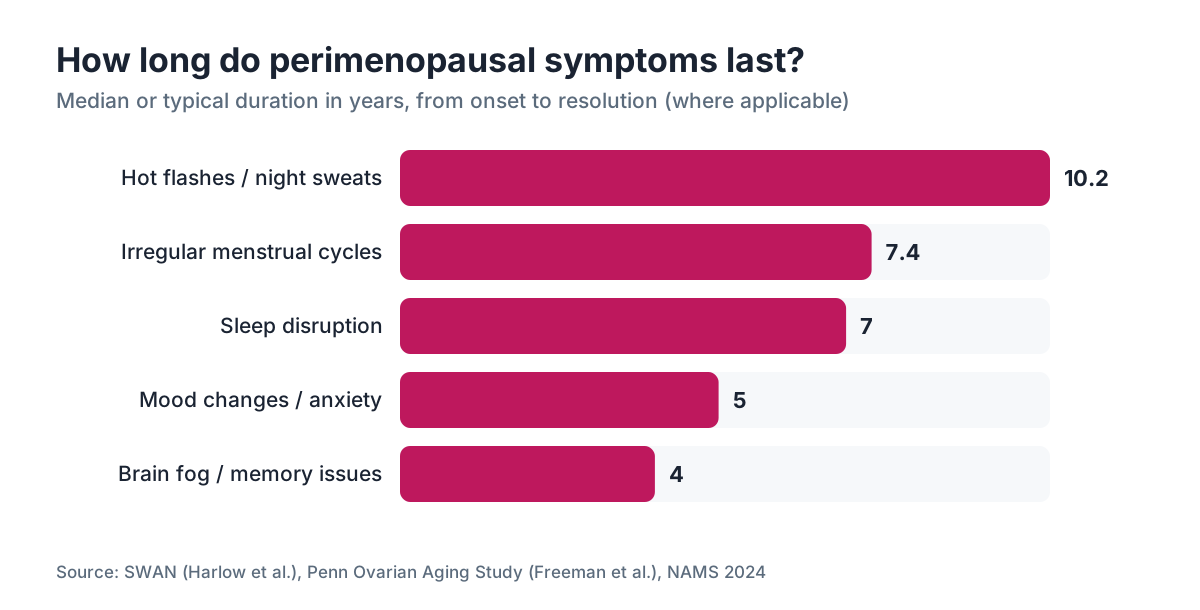
How long do perimenopause symptoms last, symptom by symptom?
The transition doesn't treat every symptom the same, and each one carries its own duration data.
| Symptom | Typical onset | Median duration | Notes | |---|---|---|---| | Hot flashes / night sweats | Late perimenopause, sometimes earlier | ~7 to 10 years total [3] | Can persist 10+ years into postmenopause | | Irregular periods | Early perimenopause | 4 to 8 years [2] | Ends at final menstrual period | | Sleep disruption | Mid-to-late perimenopause | Often tied to hot flashes | May persist on its own postmenopause | | Mood changes / anxiety | Can start in early perimenopause | Variable; often improves after menopause | Strongest during late transition | | Vaginal dryness / GSM | Late perimenopause to early postmenopause | Ongoing without treatment | Does not self-resolve; worsens over time | | Brain fog / memory issues | Mid perimenopause | Usually improves 2 to 3 years post-menopause | Some women notice sustained gains on HRT | | Joint pain | Can begin in perimenopause | Ongoing | Estrogen loss linked to musculoskeletal changes |
Hot flashes earn the most attention here because they last longest and disrupt the most. The Penn Ovarian Aging Study reported that among women with frequent hot flashes, the median duration was 10.2 years, and more than a third of that group still had hot flashes 15 years after their final period [3]. That's far past the "just a few years" framing most women get in a rushed appointment.
Genitourinary syndrome of menopause (GSM) covers vaginal dryness, irritation, and related urinary symptoms. It differs from hot flashes in one way that matters: it doesn't improve on its own. Without treatment (topical estrogen, ospemifene, or laser), GSM tends to get worse steadily after menopause [1][11].
Mood symptoms tend to peak during the transition itself and often ease once estrogen settles at its lower postmenopausal baseline. Women with a prior history of depression carry higher risk for mood symptoms that stick around.
Does perimenopause ever start in your 30s?
Yes. It's uncommon but real.
Primary ovarian insufficiency (POI) affects roughly 1% of women under 40 and can bring perimenopausal symptoms years before most women expect them [5]. POI is not the same as ordinary early perimenopause. It involves intermittent, unpredictable ovarian function rather than a steady decline, and FSH is often elevated (above 25 IU/L on two separate draws 4 weeks apart) while estradiol is low [5].
Separate from POI, some women in their late 30s and early 40s notice cycle changes, sleep trouble, and mood shifts that turn out to be the opening of perimenopause. That's not a disorder. It's just early. When does menopause start leans heavily on individual biology, and a woman who enters perimenopause at 38 might not reach her final period until her late 40s, giving her a decade-plus transition.
If you're under 40 and think you're in perimenopause, get FSH, estradiol, and AMH (anti-Mullerian hormone) checked. FSH and estradiol alone can't diagnose POI because they swing so widely, which is exactly why two measurements 4 weeks apart are required [5].
How do you know when perimenopause is ending?
The clinical endpoint is simple: 12 straight months with no period. That's menopause. The day after that 12-month mark passes, you're postmenopausal.
In practice, this takes actual counting. Plenty of women lose the thread around month 10 or 11, when a surprise period resets the clock. That's frustrating and completely normal in late perimenopause.
Hormone markers can give you a rough read. FSH above 30 IU/L on a day-2-to-3 draw (when levels should be relatively low in a woman still cycling) points toward late perimenopause or the tail end of the transition. AMH below detectable limits (under 0.1 ng/mL in most assays) says ovarian reserve is nearly gone [12]. But no number replaces 12 full months without a period, and hormone levels in perimenopause swing so hard that a single test can mislead you.
Some women go months without a period, feel sure they've crossed the line, then bleed again. That's not a failure or a complication. That's perimenopause behaving the way perimenopause behaves.
What's the difference between perimenopause duration and symptom duration?
This mix-up causes real problems for women trying to plan or choose treatment.
The transition ends at 12 months of no periods. Symptoms, hot flashes especially, can start before cycles get irregular and run for years or decades after menopause. So a woman might be in perimenopause for 7 years and then fight vasomotor symptoms for another 5 years of postmenopause. Her perimenopause lasted 7 years. Her symptom burden lasted 12.
The Penn Ovarian Aging Study pulled these apart, following women from premenopause through postmenopause. Its finding that frequent hot flashes lasted a median of 10.2 years covered time on both sides of the final period [3]. The question of how long perimenopause symptoms last and the question of how long perimenopause itself lasts are two different conversations.
The distinction matters because treatments like hormone replacement therapy work for both perimenopausal and postmenopausal symptoms. Women who assume they only need to manage symptoms "until perimenopause is over" may not realize that for some symptoms, that endpoint doesn't exist without treatment.
Can you shorten perimenopause, or make it less severe?
You can't meaningfully shorten the biological transition. No supplement, diet, or lifestyle change compresses the ovarian aging timeline. Nobody has shown otherwise.
What you can do is cut how severe and disruptive the symptoms are, which for most women is the point anyway.
Hormone therapy (estrogen alone for women without a uterus, estrogen plus progesterone for women with a uterus) is the most effective treatment for hot flashes and night sweats. NAMS states hormone therapy is the most effective treatment for menopausal vasomotor symptoms and is appropriate for healthy women under 60 or within 10 years of menopause onset [1]. The estrogen patch delivers steady blood levels without the first-pass liver metabolism you get from oral estrogen.
Non-hormonal options with real evidence include the neurokinin 3 receptor antagonist fezolinetant (FDA-approved in May 2023 for moderate-to-severe vasomotor symptoms), SSRIs and SNRIs (paroxetine 7.5mg is the only FDA-approved non-hormonal option for this specific use), and gabapentin [6].
Weight changes are common in perimenopause as estrogen decline shifts fat toward the abdomen. GLP-1 receptor agonists have become a relevant option here. Telehealth practices like WomenRx that focus on women's hormones can assess whether a GLP-1 fits alongside or separate from hormone therapy. Semaglutide for weight loss has been studied across a wide age range: the STEP 1 trial reported an average 14.9% body weight reduction with weekly semaglutide 2.4mg versus 2.4% with placebo over 68 weeks [7].
Lifestyle moves with genuine support include regular aerobic exercise (cuts hot flash frequency modestly, improves sleep and mood more), skipping triggers like alcohol and spicy food, and cognitive behavioral therapy (CBT), which has good evidence for reducing hot flash distress even when it doesn't reduce the physical frequency [8].
What happens to your body after perimenopause ends?
Postmenopause brings a different set of health considerations, and they're worth planning for during the perimenopause years.
Bone loss speeds up in the 2 to 3 years right before and after the final period. Women can lose 2 to 3% of bone density a year in this window, compared with under 1% a year before the transition starts [9]. That's why a bone density test around menopause is genuinely useful, not optional. The U.S. Preventive Services Task Force recommends osteoporosis screening for women 65 and older, with earlier testing for women who have risk factors, including early menopause [9].
Cardiovascular risk shifts after menopause too. Estrogen has vasodilatory and anti-inflammatory effects, and as levels drop for good, LDL cholesterol tends to climb and HDL may fall. Starting hormone therapy early in the transition (the "timing hypothesis," or "window of opportunity") has been linked in observational data to lower cardiovascular risk compared with starting 10 or more years postmenopause [1].
GSM becomes more of an issue postmenopause. Vaginal tissue thins and loses elasticity. Urgency and recurrent UTIs get more common. Local low-dose estrogen is highly effective for these symptoms and doesn't carry the same systemic risk profile as systemic hormone therapy, which makes it an option for nearly all postmenopausal women [1][11].
Cognition is an active research area. SWAN has documented that verbal memory dips during the transition and tends to stabilize or partly recover in early postmenopause [2]. Whether hormone therapy protects long-term cognition is still debated. The Women's Health Initiative Memory Study data weren't reassuring for older postmenopausal women, but those women started HRT more than a decade after menopause, which may not be the right comparison for someone weighing therapy during the transition itself.
Should you track your periods and symptoms during perimenopause?
Yes, and it's one of the most useful things you can do.
Tracking does three things. It tells you how many months you've gone without a period, so you know when the 12-month clock actually started. It gives your clinician real data instead of impressions, which makes treatment tweaks faster and more accurate. And it surfaces patterns: which triggers worsen hot flashes, which weeks wreck your sleep, whether mood dips track with cycle phase.
A basic diary doesn't need to be fancy. Date of period, flow level, and a daily symptom rating from 0 to 10 is plenty. Several apps (Clue, Flo, others) include menopause tracking, though none have been validated for perimenopausal research use.
For hormonal context, your clinician may check FSH, estradiol, and sometimes progesterone on cycle day 2 or 3. These numbers vary enormously in perimenopause and should be read alongside your symptoms and cycle history, never in isolation.
If you're weighing hormone therapy and want a practice that reads the full picture, including how GLP-1s and other tools interact with hormone management, WomenRx runs telehealth consultations built around that kind of integrated review.
Does perimenopause affect fertility?
Perimenopause cuts fertility a lot, but it doesn't drop to zero until the final period has passed and 12 months have gone by.
This surprises many women. Because cycles are irregular, some assume ovulation has stopped. But irregular ovulation is not the same as no ovulation, and an egg can release at unexpected times during the transition. The CDC notes that unintended pregnancy among women in their 40s stays a real concern precisely because of this misread [10].
Contraception is recommended for any woman who wants to avoid pregnancy until she has confirmed 12 straight months of no periods. After that, the odds of natural conception are effectively zero for most women (donor eggs or frozen eggs change that math).
For women who want to conceive during perimenopause, options exist, but success rates fall sharply with age, mostly because of egg quality rather than the hormonal environment. A reproductive endocrinologist is the right person to see for anyone in that spot.
What does the research still not know about perimenopause duration?
A fair amount, honestly.
Most of the best duration data, including SWAN and the Penn Ovarian Aging Study, come from mostly American cohorts followed over specific windows. Whether these numbers carry over to women elsewhere, with different diets, stress patterns, and healthcare access, is assumed more than proven.
The mechanisms that set the pace of ovarian aging, meaning why one woman's transition takes 3 years and another's takes 12, aren't well understood at the molecular level. AMH declines predictably but doesn't explain the full variance in duration.
The link between transition length and long-term outcomes (cardiovascular risk, dementia risk, bone health) is still being worked out. A longer transition might mean longer exposure to fluctuating estrogen, which could protect or harm depending on the tissue and the timing. The data are genuinely incomplete.
And nobody has good data on how newer interventions, including GLP-1 receptor agonists now used by millions of midlife women, affect perimenopausal hormone levels or transition timing. That's a real gap. The closest work is just starting.
Frequently asked questions
How long can perimenopause last in total?
The longest well-documented transitions run 12 to 14 years, though most researchers cap the typical outer range at about 10 years. SWAN found roughly a quarter of women have transitions past 10 years. If you've been noticing irregular cycles and symptoms since your late 30s and haven't hit 12 straight months without a period, you may still be in perimenopause in your early 50s.
What is the average age perimenopause ends (menopause age)?
The average age of natural menopause in American women is 51 to 52, according to NAMS. Since perimenopause averages about 7 years, the average start lands around age 44 to 46. Individual variation is large: anything from age 45 to 55 counts as a normal age for the final period. More on menopause age.
Can perimenopause symptoms last longer than perimenopause itself?
Yes, and it's one of the most important things to grasp. Hot flashes in particular often continue well into postmenopause. The Penn Ovarian Aging Study found the median duration of frequent hot flashes was 10.2 years, spanning both sides of the final period. Your perimenopause might end, but if your hot flashes started 3 years before that, you could face 7 more years of symptoms.
Is perimenopause shorter for women who had early periods (menarche)?
The link is modest and indirect. Earlier menarche is associated with slightly later menopause, which could mean a longer reproductive lifespan but doesn't necessarily mean a longer perimenopause transition. The stronger predictor of transition length is the age your cycles first turn irregular, not when they originally started.
Does HRT (hormone replacement therapy) shorten perimenopause or delay menopause?
No. Hormone therapy doesn't delay or shorten the underlying biological transition. It manages symptoms and protects against bone loss and other consequences of estrogen decline, but the ovaries keep aging at their own pace. When you stop HRT, your hormonal status reflects where your body actually is, not a paused or earlier state.
What are the first signs that perimenopause is starting?
The earliest signals are usually changes in cycle length (periods arriving a few days earlier or later than usual) and sleep disruption. Hot flashes often show up in this early phase but can take a few years to turn frequent. Some women notice mood changes or more anxiety before any physical symptom. Cycle changes are the most reliable early marker because they reflect shifting hormones directly.
Can you be in perimenopause for 10 years?
Yes, absolutely. SWAN shows roughly 25% of women have transitions lasting 10 years or more. Women who enter late perimenopause before age 45 are especially likely to have extended transitions. A 10-year perimenopause is medically normal and is not a sign that anything is wrong with your ovaries or your health overall.
How do doctors determine whether you're in perimenopause?
Perimenopause is primarily a clinical diagnosis based on your age, symptom history, and menstrual pattern. Blood tests like FSH and estradiol add context but aren't diagnostic on their own, because hormone levels fluctuate wildly during the transition. An FSH above 25 to 30 IU/L on a day-2 draw, combined with symptoms and cycle irregularity in a woman over 40, is consistent with perimenopause.
Do hot flashes get worse before they get better in perimenopause?
For most women, yes. Hot flashes tend to peak in the late perimenopause stage and in the first 1 to 2 years after the final period, when estrogen is most unstable. They usually ease in frequency and intensity after that, though the Penn Ovarian Aging Study found a meaningful minority of women keep having significant hot flashes 10 or more years postmenopause.
Does weight gain during perimenopause reverse after menopause?
Not automatically. The central weight gain common in perimenopause, driven by shifting estrogen and changing insulin sensitivity, tends to persist into postmenopause. Some women find hormone therapy reduces abdominal fat, but it isn't a weight loss treatment. Sustainable diet and exercise changes are still the foundation, and for some women GLP-1 receptor agonists are now a relevant option, as covered in the body of this article.
What's the difference between perimenopause and menopause?
Perimenopause is the transition phase: variable length, marked by irregular cycles and fluctuating hormones. Menopause is a single point in time, the day that marks 12 straight months without a period. Everything before that marker is perimenopause; everything after is postmenopause. People use the terms loosely, but the clinical distinction matters for treatment timing and risk assessment. More at menopause.
Can stress make perimenopause symptoms worse or last longer?
Stress appears to amplify symptom severity, hot flash frequency and sleep disruption especially. SWAN found higher perceived-stress scores tracked with more frequent and bothersome vasomotor symptoms. Whether chronic stress lengthens the transition itself is less clear from the data, but the symptom burden under high stress is meaningfully worse, which makes stress management a genuinely useful target.
Is there a test that tells you how much longer your perimenopause will last?
Not reliably. AMH (anti-Mullerian hormone) reflects ovarian reserve and gives a rough sense of trajectory: very low or undetectable AMH suggests you're near the end. But AMH doesn't give a precise timeline. Combining AMH with FSH trends, your current cycle pattern, and your age gives clinicians a reasonable estimate, but no test says "6 more months" with any precision.
Do Black women have longer or different perimenopause experiences?
Yes, and it's one of the most consistent findings in the literature. SWAN shows Black women have longer perimenopausal transitions and more persistent, more severe hot flashes than white women on average. They're also more likely to report symptoms earlier in the transition. These differences are real and should shape clinical conversations rather than get dismissed as individual variation.
Sources
- North American Menopause Society (NAMS), Menopause Practice: A Clinician's Guide
- Study of Women's Health Across the Nation (SWAN), published summary and data releases, University of Michigan / NIH
- Freeman EW et al., Penn Ovarian Aging Study, Menopause 2014; duration of menopausal hot flashes and associated factors
- U.S. Office on Women's Health, Menopause basics
- National Institutes of Health, Eunice Kennedy Shriver National Institute of Child Health and Human Development (NICHD), Primary Ovarian Insufficiency
- U.S. Food and Drug Administration, FDA approves fezolinetant (Veozah) for menopausal hot flashes, May 2023
- Wilding JPH et al., STEP 1 Trial, New England Journal of Medicine 2021; 384:989-1002
- Ayers B et al., Cognitive behavioral therapy for menopausal symptoms, Maturitas 2012; published evidence base for CBT in menopause
- U.S. Preventive Services Task Force, Osteoporosis to Prevent Fractures: Screening, 2018 recommendation
- Centers for Disease Control and Prevention (CDC), Reproductive Health
- Endocrine Society, Clinical Practice Guideline: Treatment of Symptoms of the Menopause, 2023
- Harlow SD et al., Executive summary of the Stages of Reproductive Aging Workshop + 10 (STRAW+10), Menopause 2012;19(4):387-395