How long does menopause usually last? A complete timeline
TL;DR: Menopause is technically one day, the 12-month anniversary of your last period. But the surrounding transition, perimenopause through postmenopause, spans roughly 7 to 14 years. Hot flashes alone last a median of 7.4 years according to SWAN study data. Symptoms ease for most women by their late 50s, though some carry them into their 60s.
What exactly is menopause, and how is it defined?
Most people use "menopause" to mean the whole messy stretch of hormonal upheaval, but clinically it means one specific moment. The North American Menopause Society (NAMS) defines menopause as 12 consecutive months without a menstrual period, with no other medical cause. [1] That milestone marks the permanent end of ovarian function. Before it, you're in perimenopause. After it, you're postmenopausal.
This distinction matters because a lot of confusion about "how long menopause lasts" comes from conflating three distinct phases. Each one has its own timeline, its own hormone patterns, and its own symptoms. Which phase you're actually in changes what treatment makes sense and what you can reasonably expect.
How long does perimenopause last?
Perimenopause is the lead-up: the years when your ovaries are winding down, estrogen and progesterone are fluctuating wildly, and periods turn unpredictable. The average duration is 4 to 8 years, though some women sail through in 2 years and others are in it for 10. [1]
The typical starting age is the mid-40s, but roughly 10% of women start perimenopause before age 40. [2] Symptoms during this phase are often the worst because estrogen doesn't just fall, it swings. One month it spikes, the next it crashes. That erratic pattern drives hot flashes, sleep disruption, mood changes, and irregular bleeding far more than a steady decline would.
If you want the full picture of when this phase tends to start and why, the perimenopause age breakdown covers the data on early versus average onset. The when does menopause start article walks through the early warning signs that you're entering perimenopause.
How long does the whole menopause transition last from start to finish?
From the first irregular periods of perimenopause through the final menstrual period, the average woman spends about 7 years in transition. [1] Add the postmenopausal years when symptoms keep winding down, and the full arc from "things are changing" to "I feel settled" runs closer to 10 to 14 years for many women.
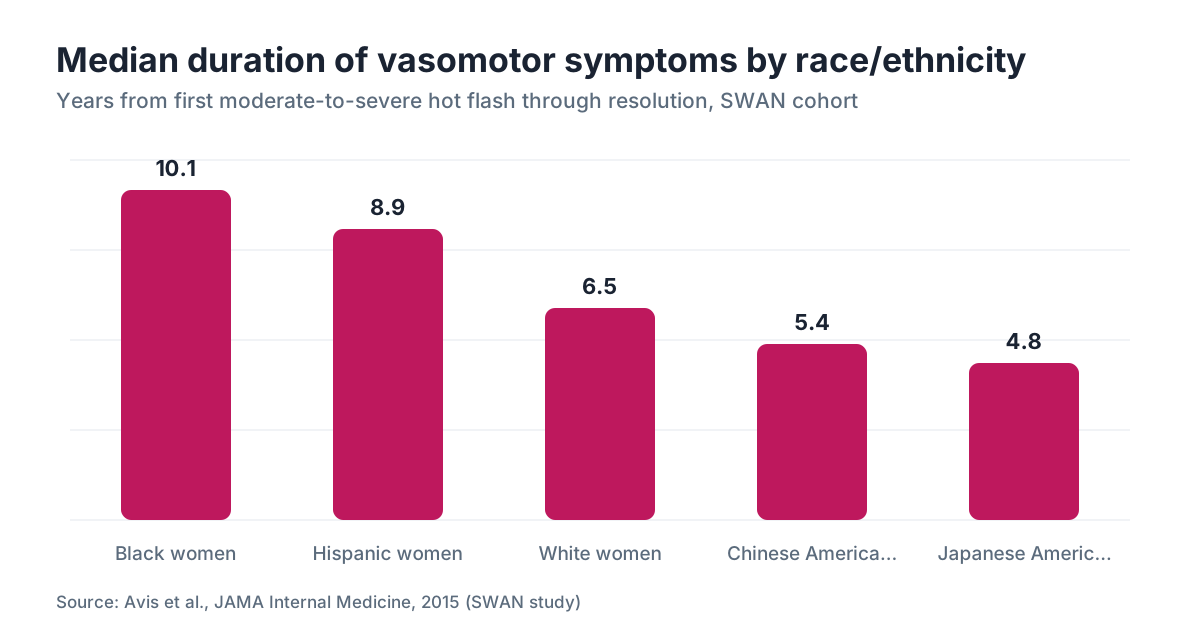
That range is real, not a hedge. Race, genetics, smoking history, and BMI all affect duration. The SWAN (Study of Women's Health Across the Nation) cohort, which tracked over 3,000 women across multiple racial and ethnic groups, found that Black women had the longest transition, averaging around 10 years, while Japanese American women had some of the shortest at around 6 years. [3] Nobody has a clean explanation for that gap yet, though differences in hormone metabolism, body composition, and smoking rates are likely contributors.
Smoking shortens the transition by pushing the final menstrual period earlier, but it doesn't make symptoms milder. Women who smoke reach the menopause milestone roughly 1 to 2 years earlier than nonsmokers. [4]
How long do hot flashes and night sweats last?
This is the question most women actually want answered, and the honest answer is longer than most doctors used to tell us.
The SWAN study, published in JAMA Internal Medicine in 2015, found that the median total duration of moderate-to-severe vasomotor symptoms (hot flashes and night sweats) was 7.4 years. [3] Women who started having hot flashes during perimenopause, before their final period, had the longest duration, sometimes past 11 years. Women who didn't develop them until after their final period had shorter runs, around 3 to 4 years.
About 15% of women report that hot flashes essentially never stop. They continue well into their 60s and even 70s, at lower frequency but still present. This isn't anxiety or a mental health issue. Vasomotor symptoms in older postmenopausal women are real and documented. [3]
If you're weighing options for managing these symptoms, hormone replacement therapy is the most effective treatment, and an estrogen patch is often the preferred delivery method for women who want steady dosing without daily pills.
What happens during postmenopause, and how long do symptoms continue?
Postmenopause begins the day after you hit that 12-month mark. You're postmenopausal for the rest of your life. Symptoms don't stop at the starting line.
For most women, hot flashes gradually drop in frequency and intensity over the first 2 to 5 years of postmenopause. Sleep often improves. Mood tends to stabilize. But some symptoms are not temporary. Genitourinary syndrome of menopause (GSM), which includes vaginal dryness, urinary urgency, and discomfort during sex, is a chronic, progressive condition that worsens over time without treatment. It affects roughly 50 to 60% of postmenopausal women, and unlike hot flashes, it doesn't resolve on its own. [5]
Bone loss is another long-term concern. The fastest bone loss happens in the first 1 to 3 years after the final menstrual period, when estrogen drops sharply. [6] A bone density test is generally recommended within a few years of menopause, especially if you have other risk factors. The U.S. Preventive Services Task Force recommends screening for osteoporosis in women 65 and older, and earlier in postmenopausal women with elevated risk. [7]
Does age at menopause affect how long symptoms last?
Yes, and in a counterintuitive direction. Women who reach menopause at a younger age don't necessarily have a shorter symptom period. The SWAN data showed that an early final menstrual period (before age 45) was tied to longer total vasomotor symptom duration in some subgroups, possibly because symptoms began earlier in the perimenopause window. [3]
Women who go through surgical menopause (bilateral oophorectomy) often report more severe symptoms than women who go through natural menopause, because the hormonal drop is sudden rather than gradual. There's no perimenopause buffer. If you had your ovaries removed before 45, the long-term health implications around cardiovascular disease, bone loss, and cognitive changes are more significant, and early hormone therapy is generally recommended unless there's a contraindication. [8]
For more on typical age ranges for natural menopause, the menopause age article has the full breakdown by population.
How long does brain fog and mood disruption last during the menopause transition?
Brain fog is real and measurable. The SWAN Memory Study showed that cognitive processing speed and verbal memory genuinely dip during the perimenopause-to-early-postmenopause transition and tend to recover in the later postmenopause years for most women. [9] This is not imagined, and it's not early dementia in the vast majority of cases.
Mood disruption follows a similar pattern. The risk of depressive symptoms is highest during perimenopause, particularly in the late perimenopause stage when cycles turn very irregular and estrogen fluctuates most dramatically. The risk drops in postmenopause for most women. [9] If depression is severe or persistent, it warrants evaluation on its own terms, more than a waiting game.
Sleep disruption, which is tightly tied to both brain fog and mood, often improves once night sweats become less frequent, usually 2 to 5 years into postmenopause for most women. Chronic sleep issues that persist past that point may have other causes worth investigating.
Can hormone therapy shorten how long menopause symptoms last?
Hormone therapy doesn't speed up the biological clock of menopause, but it can make years of the transition genuinely livable. Estrogen-based therapy is the most effective treatment available for vasomotor symptoms, with large controlled trials showing a 75-90% reduction in hot flash frequency in women who respond. [1]
The real question is what happens when you stop. When women discontinue hormone therapy after years of use, some see a return of vasomotor symptoms. It can feel like the symptoms were just delayed, not eliminated. The data on this is honest: about 50% of women who stop hormone therapy after long-term use will have recurrent hot flashes, and a minority will have them at the same severity as before they started. [1] Gradual tapering, rather than abrupt discontinuation, may reduce this rebound, though the evidence base for tapering protocols is not as strong as anyone would like.
Progesterone, often prescribed alongside estrogen for women with a uterus, has its own sleep and mood benefits worth considering. The progesterone article covers the difference between synthetic progestins and body-identical micronized progesterone, which matters quite a bit for how women feel on therapy.
For women earlier in the transition who are also managing weight gain, GLP-1 medications have become a real option at platforms like WomenRx. Perimenopause and menopause come with a redistribution of fat toward the abdomen, partly driven by declining estrogen, and GLP-1 medications address that directly. semaglutide for weight loss is one path worth looking at if that's part of your picture.
What's the difference between perimenopause, menopause, and postmenopause in terms of timeline?
| Phase | Starts when | Ends when | Average duration | |---|---|---|---| | Perimenopause | First cycle irregularity or hormonal symptoms | 12 months after final period | 4-8 years [1] | | Menopause | Defined retroactively: 12 months after last period | That same day | One moment in time | | Postmenopause | Day after the 12-month mark | Rest of life | Lifelong | | Vasomotor symptoms | Often during perimenopause | Median 7.4 years after onset [3] | Varies widely | | GSM (vaginal/urinary) | Early postmenopause | Does not self-resolve [5] | Chronic without treatment |
The table collapses a lot of individual variation into clean rows. Your actual timeline could look quite different. Some women have almost no perimenopause symptoms and hit their final period feeling like nothing dramatic happened. Others spend a decade in a symptomatic holding pattern. Both are within the documented range.
When should you see a doctor about menopause symptoms?
If symptoms are disrupting sleep, work, or relationships, that's the threshold. You don't need to wait until you're postmenopausal or until symptoms are unbearable. Perimenopause is exactly the right time to start talking to a clinician about options.
Some situations warrant prompt evaluation. Bleeding that returns after more than 12 months of amenorrhea needs a workup to rule out endometrial pathology. Hot flashes that start before age 40 deserve a look. Symptoms that feel severe and sudden could point to premature ovarian insufficiency rather than natural perimenopause.
A baseline assessment of cardiovascular risk and bone health is reasonable in early postmenopause regardless of symptoms. Estrogen's protective effects on bone disappear at menopause, and the first few years of postmenopause carry the steepest bone loss. [6]
For women sorting through the full hormonal picture, WomenRx offers telehealth consultations covering both hormone therapy and metabolic health in one place, which matters because perimenopause and weight often change at the same time.
Does lifestyle change how long menopause symptoms last?
The honest answer is: somewhat, but lifestyle is not a substitute for medical management in women with moderate-to-severe symptoms.
Cognitive behavioral therapy (CBT) has the strongest non-hormonal evidence base for vasomotor symptoms. A 2021 systematic review found that CBT reduced hot flash problem rating (the impact score, not the frequency) by roughly 30-40% compared to controls. [10] That's meaningful, but it's well below what hormone therapy achieves.
Regular aerobic exercise doesn't reliably reduce hot flash frequency in clinical trials, even though most women feel better with it. The MsFLASH trials, which tested exercise, yoga, and omega-3 supplementation, found none of these interventions significantly beat placebo for hot flash reduction. [11] Exercise still matters enormously for bone density, cardiovascular health, mood, and weight through menopause. The expectations just need to be right.
Smoking cessation, cutting alcohol, keeping a cool sleeping environment, and managing sleep hygiene all reduce symptom burden without the ceiling effect. These are worth doing not because they shorten the menopause timeline but because they make the years more tolerable.
Frequently asked questions
How long does menopause usually last?
Menopause itself is a single point in time, the day after 12 consecutive months without a period. The full transition, perimenopause through postmenopause symptoms, typically spans 7 to 14 years. Hot flashes specifically last a median of 7.4 years from onset, according to the SWAN study. Some women have symptoms for over a decade, particularly those who develop hot flashes before their final period.
What is the average age menopause ends?
The final menstrual period happens at a median age of 51 to 52 in the United States. If symptoms continue for roughly 7 years after that, the average woman sees her most disruptive symptoms resolve around 58 to 60. But genitourinary symptoms like vaginal dryness don't resolve on their own and can persist for decades without treatment.
Can menopause last 20 years?
The postmenopause phase lasts the rest of a woman's life, technically speaking. But significant vasomotor symptoms lasting 20 years are uncommon. About 15% of women have hot flashes persisting well into their 60s. Genitourinary syndrome of menopause is a chronic condition without a natural endpoint, so in that sense, some menopause-related symptoms can indeed persist for 20 or more years.
How do I know if I'm in perimenopause or menopause?
Perimenopause is defined by irregular periods and hormonal symptoms, most commonly starting in the mid-40s. You can only confirm you've reached menopause in retrospect, after 12 consecutive months without a period. FSH blood tests can suggest declining ovarian reserve but are not definitive, especially during perimenopause when hormone levels fluctuate significantly from week to week.
Do hot flashes ever go away on their own?
For most women, yes, eventually. The SWAN study found the median duration of moderate-to-severe hot flashes was 7.4 years. Most women see significant improvement by their late 50s without treatment. However, roughly 15% keep experiencing hot flashes into their 60s and beyond. Women who develop hot flashes early in perimenopause tend to have the longest total duration.
Does menopause last longer for some women than others?
Yes, substantially. The SWAN study found Black women averaged about 10 years of vasomotor symptoms, compared to roughly 6 years in Japanese American women. Smoking history, BMI, age at onset, and whether symptoms start before or after the final period all affect duration. Women with early perimenopausal symptom onset consistently show longer total symptom duration regardless of race.
What happens to your body after menopause ends?
Postmenopause brings lower, stable estrogen levels. Hot flashes gradually ease for most women. But bone density keeps declining, cardiovascular risk rises relative to premenopausal levels, and genitourinary symptoms often worsen over time without treatment. Cognitive function generally stabilizes after the transitional dip. Postmenopause is not a health emergency, but it does require ongoing attention to bone, heart, and urogenital health.
Can hormone therapy make menopause shorter?
Hormone therapy doesn't shorten the biological transition, but it manages symptoms effectively for as long as you take it. The main caveat is that about 50% of women who stop hormone therapy after long-term use see a return of hot flashes. Some read this as menopause lasting longer, but it's actually the suppressed symptoms re-emerging. Gradual tapering may help reduce that rebound.
Is there a way to predict how long my menopause symptoms will last?
Not with precision. Earlier symptom onset during perimenopause is the strongest predictor of longer duration. Smoking, higher BMI, and certain racial backgrounds are also tied to longer transitions in research data. Anti-Müllerian hormone (AMH) testing can estimate how close you are to your final period, but it can't predict how long symptoms will continue after that.
What is the shortest menopause can last?
Some women have minimal perimenopausal symptoms and move through the transition in 2 years or less before their final period, with only brief hot flashes afterward. In these cases, the symptomatic window can be as short as 3 to 4 years total. This is at the short end of the normal distribution, not the median experience, but it's well within the documented range.
Does menopause affect weight, and how long does that last?
Yes. Declining estrogen shifts fat distribution toward the abdomen even without weight gain, and metabolic rate decreases during the transition. This redistribution begins in perimenopause and continues into early postmenopause. Weight and metabolic changes don't simply reverse when symptoms improve. Managing weight during this window often takes more intentional intervention than it did before perimenopause.
What is premature menopause, and does it last longer?
Premature menopause (premature ovarian insufficiency, or POI) is the final menstrual period before age 40, affecting about 1% of women. Surgical menopause from bilateral oophorectomy also causes an abrupt estrogen drop. Vasomotor symptoms in these women can be more severe because the decline is sudden or very early. Early hormone therapy is generally recommended to reduce long-term cardiovascular and bone risks.
Can perimenopause symptoms go on for 10 years?
Yes. NAMS describes the perimenopausal period as typically 4 to 8 years, but the outer range extends to 10 years in some women. The SWAN data showed particular subgroups, including Black women, averaging closer to 10 total years of vasomotor symptoms. If you've been in an irregular cycle pattern for a decade without hitting the 12-month amenorrhea milestone, it's worth a clinical evaluation to rule out other causes.
At what point do menopause symptoms stop being treated with hormones?
There's no strict age cutoff from major medical bodies. NAMS updated its guidance to say that for healthy women under 60 or within 10 years of menopause, the benefits of hormone therapy for symptom management generally outweigh the risks. For women who start later or have other risk factors, the calculation is more individualized. Treatment decisions should be revisited annually with a clinician.
Sources
- NAMS (North American Menopause Society) - Menopause Practice: A Clinician's Guide
- Office on Women's Health, U.S. Department of Health and Human Services - Menopause
- Avis NE et al., JAMA Internal Medicine 2015 - Duration of menopausal vasomotor symptoms over the menopause transition (SWAN)
- NIH National Institute on Aging - Menopause
- NIH National Institute of Arthritis and Musculoskeletal and Skin Diseases - Osteoporosis and Bone Health
- U.S. Preventive Services Task Force - Osteoporosis Screening Recommendation (2018)
- Endocrine Society Clinical Practice Guideline - Menopause (2015)
- Greendale GA et al., Neurology 2009 - Perimenopause and cognitive performance: the SWAN Memory Study
- Sikon A, Menopause 2021 (systematic review) - CBT for vasomotor symptoms
- MsFLASH Network - Menopause Strategies: Finding Lasting Answers for Symptoms and Health trials