How long does it take to lose weight on HRT?
TL;DR: HRT doesn't cause weight loss directly, but it changes where fat sits and makes losing weight easier. Most women notice body composition shifts, including less belly fat, within 3 to 6 months of starting estrogen. The scale may barely move, yet waist circumference and metabolic labs often improve. Pairing HRT with resistance training or a GLP-1 produces faster, larger results.
Does HRT actually cause weight loss?
Short answer: not reliably on the scale, but meaningfully in the mirror and in your metabolic labs.
Estrogen therapy doesn't act like a diet drug. It doesn't suppress appetite or force your body to burn more calories. What it does is interrupt a hormonal cascade that drives fat from your hips and thighs (the safer subcutaneous pattern you had in your 30s) toward your belly (visceral fat, which raises cardiovascular and metabolic risk). That shift toward central fat is one of the defining features of the menopause transition, and estrogen therapy partially reverses it [1].
The Women's Health Initiative, despite its complicated history, found that women assigned to conjugated equine estrogen plus medroxyprogesterone acetate had a smaller increase in waist circumference over time compared with the placebo group [2]. Smaller increase, not dramatic loss. That's the honest framing.
Start hormone replacement therapy expecting to drop 20 pounds in three months and you'll be disappointed. Start it to sleep through the night, move without aching, and protect your metabolism through the menopause transition, and the changes compound into real body composition improvement over 6 to 12 months.
What does the research say about the timeline for body composition changes on HRT?
Published trials point to a rough sequence: symptoms first, then fat redistribution, then compounding results if you train. Here's how it breaks down.
Weeks 1 to 6: Symptoms improve first. Hot flashes, night sweats, and sleep disruption begin to ease for most women within the first 4 to 8 weeks of adequate estrogen dosing [3]. Better sleep alone influences cortisol and appetite hormones, so this phase quietly sets up better weight management before any fat shifts.
Months 2 to 3: Some women notice clothing fits differently around the waist even when the scale hasn't moved. That's the early redistribution of fat away from visceral depots. Estrogen can also add 1 to 2 pounds of water in the first few weeks, so don't panic if the number ticks up briefly.
Months 3 to 6: This is where the clearest body composition data lives. A 2012 randomized trial in Menopause found that women using transdermal estradiol for 6 months had significant reductions in abdominal fat mass measured by DEXA scan compared with placebo [4]. Lean mass held up better in the HRT group too.
Months 6 to 12 and beyond: If you're also making lifestyle changes, this is when the compounding shows. Estrogen supports muscle protein synthesis and insulin sensitivity, so women who add resistance training after starting HRT tend to beat those relying on cardio alone [1].
One honest caveat: most trials run 6 to 12 months. Data past 2 years is thin. What it shows is that the redistribution benefit lasts as long as women stay on therapy but doesn't keep producing progressive weight loss year after year.
How much belly fat can HRT reduce and how is that measured?
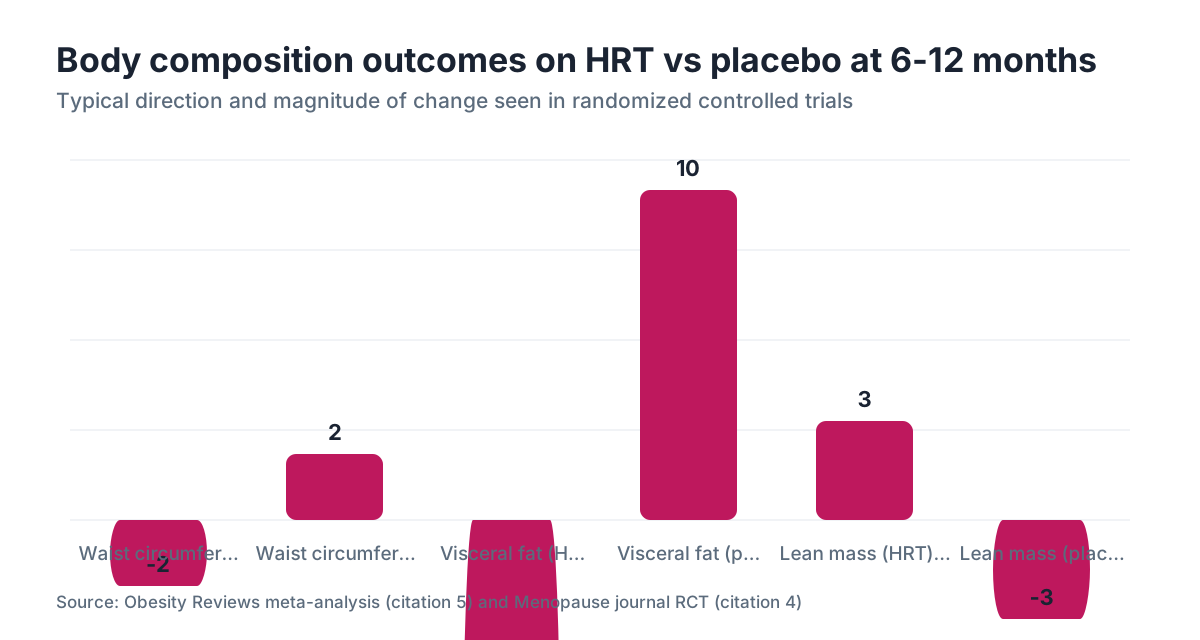
The numbers are modest but real: roughly 1 to 3 centimeters off the waist over 6 to 12 months, driven by visceral fat loss rather than scale weight.
A meta-analysis in Obesity Reviews found that postmenopausal women on estrogen therapy had statistically significant reductions in total body fat percentage and visceral fat area compared with controls, while the mean difference in body weight was not significant [5]. Visceral fat reduction, not scale weight, is the main story.
Waist circumference is the measure most clinicians actually use. That 1-to-3-centimeter change sounds tiny, but visceral fat is disproportionately harmful, so losing even a little of it moves your metabolic risk more than the tape suggests.
DEXA scans give the clearest picture because they separate lean mass, subcutaneous fat, and visceral fat. If your doctor offers a DEXA at baseline and again at 12 months, that data tells you far more than the bathroom scale. See our guide to the bone density test, since DEXA is the same scan used for bone assessment. You can get both pieces of information from one appointment.
Route of delivery matters here. Transdermal estradiol (patches, gels, sprays) has a more favorable metabolic profile than oral estrogen because it skips first-pass liver metabolism, which affects triglyceride and sex hormone-binding globulin levels [3]. The estrogen patch is often the preferred form for women with metabolic concerns.
| Outcome | HRT group (typical 6-12 month trial) | Placebo group | |---|---|---| | Body weight change | -0.5 to +0.5 kg | +0.5 to +1.5 kg | | Waist circumference | -1 to -3 cm | +1 to +3 cm | | Visceral fat (DEXA) | Reduced significantly | Increased | | Lean muscle mass | Preserved or increased | Decreased | | Fasting insulin | Improved in most trials | Worsened |
Does the type of HRT affect how quickly you see results?
Yes, and it's an underappreciated variable. The estrogen route, the progestogen choice, and whether your dose is actually therapeutic all shape how fast body composition responds.
Estrogen route matters. Oral estradiol raises sex hormone-binding globulin more than transdermal forms, which can blunt free testosterone. Since testosterone also supports lean mass and fat metabolism in women, transdermal estrogen is generally preferred for women with weight or muscle concerns [3].
The progestogen component matters too. Synthetic progestins, particularly medroxyprogesterone acetate (MPA), have glucocorticoid-like properties that drive fluid retention and fat accumulation in some women. Micronized progesterone (bioidentical progesterone) has a more neutral metabolic profile and is associated with less weight gain in observational data [6]. It won't make you lose more weight. It just makes you less likely to see progesterone-driven gain.
Testosterone add-back, increasingly used in postmenopausal women, supports lean muscle mass and libido. Some observational data suggests women using testosterone as part of their regimen hold onto muscle better than those on estrogen alone, which matters for long-term metabolic rate. Randomized data on testosterone and body weight in women is thin, so clinical judgment here runs ahead of the evidence.
Dose matters in a nonlinear way. Sitting on a starter dose while symptoms persist leaves you with poor symptom control and poor metabolic support. Getting to a therapeutic dose that actually quiets your symptoms is the prerequisite for body composition benefit. This is one reason a clinician who will titrate your dose matters more than the specific product on the label.
Why are some women gaining weight on HRT instead of losing it?
Five things usually explain it: early water retention, ongoing perimenopausal weight gain, the progestogen you're on, lifestyle drift, and thyroid changes. Any woman who's three months in and feels bigger deserves a real answer, so here it is.
First, timing. The first 4 to 8 weeks of estrogen can cause water retention, especially with oral estrogen or higher starting doses. An early uptick on the daily scale is usually fluid, not fat, and it tends to resolve.
Second, perimenopause timing. Women who start HRT early in the perimenopause transition are gaining weight from hormonal swings regardless. HRT doesn't fully arrest that gain in everyone, especially before the dose is dialed in. The body is unstable, and HRT is trying to steady it, not subtract years of metabolic slowdown overnight.
Third, the progestogen. As above, synthetic progestins can cause bloating, fluid retention, and in some women a genuine bump in appetite. If you're on a combined oral pill and gaining, ask your prescriber about switching to micronized progesterone, cyclic or continuous.
Fourth, lifestyle context. HRT is not a backstop against a caloric surplus. Women who start HRT and quietly move less (symptoms improve, urgency to exercise fades) or eat more will gain weight despite the hormonal support.
Fifth, thyroid function. Starting estrogen can alter thyroid hormone binding and occasionally requires a levothyroxine dose adjustment [7]. If you're gaining weight and dragging, get your free T4 and TSH checked.
When does menopause start and how does that timing affect HRT weight outcomes?
The average age of natural menopause in the US is 51.4 years, and perimenopause typically begins 4 to 10 years before that final period [8]. Body weight tends to climb by roughly 1.5 pounds a year through the perimenopausal transition independent of HRT, driven by falling estrogen, rising FSH, worse sleep, and age-related muscle loss.
Women who start HRT earlier in this transition, during perimenopause rather than years after menopause, tend to have better body composition outcomes. This fits the "timing hypothesis" in menopause medicine: therapy started closer to the final menstrual period appears to have more favorable effects on metabolism, cardiovascular markers, and cognition than therapy started more than 10 years out [3].
If you're reading this because you're 42 with new belly fat, irregular cycles, and broken sleep, that's perimenopause and the window to act is now. See when does menopause start for a detailed look at the staging.
Women who start HRT more than 10 years after their last period shouldn't expect the same body composition response. That doesn't make HRT pointless in later postmenopause, but the metabolic effects are smaller and the risk-benefit math shifts.
Can combining HRT with a GLP-1 medication speed up weight loss?
Yes, and this is where the evidence gets genuinely interesting. HRT and GLP-1s work through separate mechanisms with no reason to conflict, so together they can address the two main drivers of menopausal weight gain at once.
GLP-1 receptor agonists like semaglutide and tirzepatide produce substantial scale weight loss in trials. STEP 1 found that semaglutide 2.4 mg weekly produced a mean weight loss of 14.9% of body weight over 68 weeks [9]. SURMOUNT-1 found tirzepatide at its highest dose produced up to 22.5% mean body weight reduction over 72 weeks [10].
HRT fixes hormonal deficiency and redistributes fat. GLP-1s cut caloric intake and slow gastric emptying. Different jobs, and they stack.
There isn't yet a large randomized trial of HRT plus GLP-1 versus GLP-1 alone in perimenopausal or postmenopausal women. Smaller observational data and clinical experience suggest the combination is well tolerated and may protect lean mass better than a GLP-1 alone, since estrogen supports muscle protein synthesis. The clinical logic is sound while the trial data catches up.
If you're thinking about adding semaglutide for weight loss to your HRT, or starting both at once, find a prescriber who understands menopause medicine. Platforms like WomenRx handle exactly this combination, prescribing hormones and GLP-1s with attention to how they behave in a perimenopausal or postmenopausal body.
For a side-by-side of the two main GLP-1 options, see semaglutide vs tirzepatide.
What lifestyle changes work best alongside HRT for faster weight loss?
HRT is not a substitute for lifestyle. It's the metabolic floor that makes lifestyle changes work harder, and four moves matter most: lifting, protein, sleep, and less alcohol.
Resistance training is the single biggest lever. Estrogen supports muscle protein synthesis, so women on HRT respond to strength training better than women without hormonal support. A 2017 trial in the Journal of Clinical Endocrinology and Metabolism found that postmenopausal women on estrogen who added progressive resistance training had significantly greater improvements in lean mass and fat mass than exercisers without HRT or HRT recipients who didn't train [1]. Aim for three to four sessions a week of compound movements: squats, deadlifts, rows, presses.
Protein intake matters more than most women realize. Perimenopausal and postmenopausal women need more protein to hold onto lean mass, with sports medicine and geriatric nutrition research pointing to 1.2 to 1.6 grams per kilogram of body weight per day. Most women eating a typical Western diet get about half that.
Sleep is a metabolic lever. HRT improves sleep by quieting hot flashes and night sweats, and better sleep lowers cortisol, steadies leptin and ghrelin, and cuts cravings. That's one of the quiet ways HRT helps with weight.
Alcohol reduction punches above its weight in perimenopause. Alcohol worsens hot flashes, wrecks sleep architecture, adds empty calories, and is metabolized differently as estrogen falls. Going from daily drinking to 2 to 3 drinks a week can move the scale when nothing else has.
How do I know if my HRT dose is optimized for metabolic benefit?
Three signals tell you: symptom control, lab values, and body composition trending over time. If any of the three is off, your dose probably needs work.
Symptom control comes first. Still having significant hot flashes, night sweats, or broken sleep at 8 to 12 weeks on your current dose? You're likely underdosed, and the metabolic benefits will stay limited. This isn't a minor annoyance. Undertreated symptoms mean continued sleep disruption and elevated cortisol, both of which drive fat storage.
Labs give the second signal. Estradiol on transdermal therapy generally lands in the 50 to 100 pg/mL range for adequate symptom control, though it varies by person. The Endocrine Society notes that serum estradiol monitoring is useful for optimizing therapy in symptomatic women [3]. If your level is below 40 pg/mL and symptoms persist, it's time for a dose-increase conversation.
Body composition trending over 6 to 12 months is the clearest outcome measure. Waist circumference at baseline, 3 months, and 12 months is cheap and informative. DEXA at baseline and 12 months gives you visceral fat, lean mass, and bone density in one scan.
If you've been on the same starter dose for more than 3 months without symptom improvement, push for titration. Too many women are parked on inadequate doses by cautious prescribers, which leaves them with neither symptom relief nor metabolic benefit. A telehealth provider who specializes in women's hormones, like WomenRx, reads your labs and symptoms together instead of treating a number in isolation.
Is the weight loss from HRT permanent?
No. The body composition benefits of HRT are present while you're on therapy and fade when you stop.
Studies following women who discontinue HRT show visceral fat tends to accumulate again within 1 to 2 years of stopping, even with unchanged habits [4]. That fits the underlying driver being estrogen deficiency: stop the therapy and you re-expose yourself to the same fat-redistribution signal.
This doesn't mean you have to stay on HRT forever. It does mean stopping is a metabolic event worth planning for. Women who built strong habits during their HRT years (consistent resistance training, higher protein, decent sleep) tend to hold their body composition better after stopping than women who leaned on hormones alone.
The North American Menopause Society's 2023 position statement says that "for women who are appropriate candidates, the benefits of hormone therapy outweigh the risks" and sets no arbitrary time limit on use [3]. Duration should come from an individual risk-benefit review, not a fixed number of years.
Frequently asked questions
How long does it take to lose weight on HRT?
Most women see meaningful body composition changes, specifically less belly fat and preserved muscle, within 3 to 6 months of starting estrogen at an adequate dose. Scale weight often doesn't drop dramatically because muscle is preserved or gained even as fat is lost. If you're also changing diet and exercise, the 6 to 12 month mark is where the combination compounds into visible results.
Will HRT help me lose belly fat specifically?
Yes, that's its best-documented body composition effect. Estrogen therapy partially reverses the menopausal shift toward visceral (belly) fat. Randomized trials using DEXA scans show significantly reduced abdominal fat mass in women on transdermal estradiol versus placebo over 6 to 12 months. Waist circumference change is typically 1 to 3 centimeters, modest on a tape measure but significant for metabolic health.
Why am I gaining weight after starting HRT?
Early weight gain on HRT is usually water retention from estrogen, especially in the first 4 to 8 weeks or with oral formulations. If it continues past 3 months, the progestogen may be the culprit: synthetic progestins like MPA can cause fluid retention and increased appetite in some women. Ask your prescriber about micronized progesterone. Also check thyroid function, since starting estrogen can alter thyroid hormone binding.
Does HRT work better for weight loss than GLP-1 medications?
They do different things. GLP-1s like semaglutide produce much larger scale losses, averaging around 15% of body weight over 68 weeks in trials. HRT doesn't produce that, but it improves fat distribution, preserves muscle, and addresses the hormonal root cause of menopausal metabolic change. Many women benefit most from both together, especially when obesity and hormone deficiency coexist.
Does the type of estrogen or route of delivery affect weight loss results?
Yes. Transdermal estradiol (patches, gels, sprays) has a more favorable metabolic profile than oral estrogen because it bypasses first-pass liver metabolism. It raises sex hormone-binding globulin less, so more free testosterone stays available to support lean mass. For women with metabolic concerns, transdermal estradiol plus micronized progesterone is generally preferred over oral combined formulations.
Can HRT help with weight loss during perimenopause or only after menopause?
HRT started during perimenopause may produce better metabolic outcomes than therapy started years after the final period. This fits the timing hypothesis supported by the Endocrine Society: therapy closer to the transition has more favorable effects on metabolic and cardiovascular markers. If you're in perimenopause and noticing body composition changes, that's the window to consider starting rather than waiting.
How much weight can I realistically expect to lose on HRT alone?
Realistically, HRT alone won't produce significant scale loss in most women. Meta-analyses show no statistically significant difference in total body weight between HRT users and controls. The realistic expectation is a 1 to 3 cm reduction in waist circumference, preserved or increased lean mass, and reduced visceral fat on DEXA, alongside symptom improvement that supports better sleep, exercise tolerance, and metabolic function.
What exercises work best alongside HRT for weight loss?
Resistance training is the strongest evidence-based complement to HRT. Estrogen supports muscle protein synthesis, so women on HRT respond to strength training better than those without hormonal support. Three to four sessions a week of compound resistance exercises produces the best lean mass preservation and fat loss. Cardio helps cardiovascular health but does less for body composition than lifting at this life stage.
Does stopping HRT cause weight gain?
Yes, stopping HRT tends to reverse the body composition benefits over 1 to 2 years. Visceral fat re-accumulates as estrogen deficiency returns. Women who built consistent exercise and nutrition habits during their HRT years hold their body composition better after stopping than those who didn't. If you're considering stopping, plan the transition with your prescriber and ramp up lifestyle habits before discontinuing.
Should I try HRT or a GLP-1 first for menopausal weight gain?
If you have significant menopausal symptoms (hot flashes, sleep disruption, vaginal dryness) alongside weight gain, address the hormone deficiency first. HRT improves symptoms and the metabolic foundation, and some women find that enough. If you've been on optimized HRT for 6 months, symptoms are controlled, you're exercising and eating well, and weight loss is still inadequate, that's a reasonable point to add a GLP-1. Many clinicians now use both at once.
Does progesterone cause weight gain on HRT?
Synthetic progestins, particularly medroxyprogesterone acetate, can cause fluid retention and in some women genuine appetite increases from glucocorticoid-like properties. Micronized progesterone (bioidentical) has a more neutral metabolic profile and is associated with less weight gain in observational data. If you're gaining weight on a combined regimen, the progestogen type is one of the first things worth reviewing with your prescriber.
How long should I stay on HRT to maintain the weight and metabolic benefits?
The benefits persist as long as you're on therapy and fade after stopping. The North American Menopause Society's 2023 position statement sets no arbitrary time limit for appropriate candidates. Duration should come from individual risk-benefit assessment, not a fixed number of years. Women who continue HRT through their 50s and 60s tend to hold better lean mass, bone density, and metabolic markers than those who stop early.
Can compounded HRT help with weight loss more than FDA-approved HRT?
No evidence supports compounded HRT being more effective for weight loss than FDA-approved formulations. The active molecules are the same: 17-beta estradiol and micronized progesterone are available in approved products. Compounded preparations fill gaps in available doses and delivery forms, which can help with dose optimization. Approved products should be the default for most women.
What labs should I check to know if HRT is working for my metabolism?
At baseline and 6 to 12 months: serum estradiol (target 50 to 100 pg/mL on transdermal therapy), fasting insulin, fasting glucose, HbA1c, lipid panel, TSH and free T4, and if available a DEXA scan for body composition and bone density. Waist circumference at each visit is cheap and predictive. Together these tell you whether your dose is therapeutic and whether metabolic markers are heading the right way.
Sources
- Journal of Clinical Endocrinology and Metabolism - Sipila et al., estrogen and resistance training in postmenopausal women
- NIH National Heart, Lung, and Blood Institute - Women's Health Initiative
- The Endocrine Society - Clinical Practice Guidelines (menopause hormone therapy)
- Menopause (journal) - randomized trial of transdermal estradiol and abdominal fat (2012)
- Obesity Reviews - meta-analysis of estrogen therapy and body composition in postmenopausal women
- Menopause (journal) - micronized progesterone vs synthetic progestins and weight/metabolic effects
- FDA - Drugs (estrogen and thyroid hormone interaction labeling)
- NIH National Institute on Aging - What Is Menopause?
- New England Journal of Medicine - STEP 1 trial, semaglutide 2.4 mg for obesity (Wilding et al., 2021)
- New England Journal of Medicine - SURMOUNT-1 trial, tirzepatide for obesity (Jastreboff et al., 2022)