How long does it take for semaglutide to suppress appetite?
TL;DR: Most women feel real appetite suppression one to four weeks after their first semaglutide injection, but the full effect builds across the 16-week dose escalation. In the STEP 1 trial, participants cut spontaneous calorie intake by roughly 35% by week 20. Estrogen levels, dose, and individual GLP-1 receptor sensitivity all change how fast it kicks in.
What does semaglutide actually do to appetite?
Semaglutide is a GLP-1 receptor agonist. GLP-1 (glucagon-like peptide-1) is a hormone your gut releases after you eat. It tells your brain to stop eating, slows how fast your stomach empties, and quiets the reward circuits that make food feel urgent. Semaglutide copies that signal, but louder and for far longer. Your own GLP-1 has a half-life of about two minutes. The drug's half-life runs roughly seven days, which is why one injection a week does the job [1][9].
The appetite effect is not an on/off switch. It works through at least three pathways at once: hypothalamic signaling that lowers hunger, slower gastric emptying that keeps you full longer, and reduced hedonic eating that dampens dopamine-driven cravings. That third pathway is why so many women say they stop caring about foods they used to find impossible to resist. The clinical shorthand for this is "food noise" reduction, and it shows up as one of the most reported subjective benefits in STEP trial surveys [2].
Those pathways don't switch on together. Gastric slowing you feel fast. The brain changes that quiet food noise take longer to settle in.
When do most people first notice appetite suppression?
The honest answer is somewhere between day three and week four, with most women landing in the one-to-two-week window after their first shot.
The starting dose for Ozempic (branded semaglutide) is 0.25 mg weekly, and that dose is deliberately too low to drive weight loss. It's a tolerability ramp, nothing more [1]. Even so, plenty of women notice they fill up faster on smaller meals within the first few days. Nausea at this stage is partly a side effect of gastric slowing, and that same slowing is what makes you feel full early.
By week four, when many patients hold at 0.5 mg or get ready to move up, the effect is steadier. It's no longer a single moment of fullness at dinner. Hunger between meals drops. Cravings go quiet.
The appetite suppression that actually drives meaningful weight loss usually doesn't arrive until doses hit 1.0 mg or higher, which under standard escalation means roughly weeks 8 to 16. Wegovy (the higher-dose semaglutide approved for obesity) reaches its 2.4 mg maintenance dose at week 16. That's the point where STEP trial participants reported the biggest drop in appetite and calorie intake [1][2].
What do the STEP trials say about appetite and caloric intake over time?
The STEP (Semaglutide Treatment Effect in People with Obesity) program is the largest and most careful body of evidence on this question. STEP 1 enrolled 1,961 adults with a BMI of 30 or higher and randomized them to 2.4 mg semaglutide weekly or placebo for 68 weeks [2].
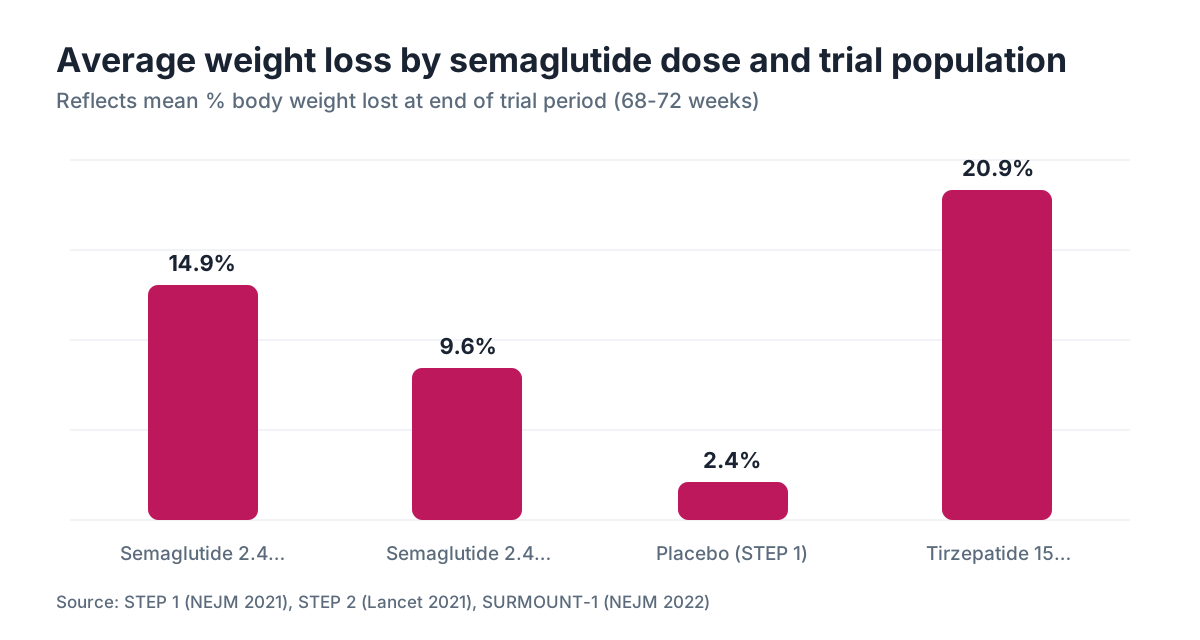
A companion substudy used food diaries and an ad libitum meal test. By week 20, participants on semaglutide had cut spontaneous calorie intake by roughly 35% compared with baseline. Protein and fat intake fell less than carbohydrate intake, which suggests the drug preferentially cuts craving for sweet and high-carb foods. Total body weight loss averaged 14.9% in the semaglutide group versus 2.4% on placebo at 68 weeks [2].
STEP 2 studied people with type 2 diabetes, who tend to see somewhat blunted appetite suppression, possibly because chronic high blood sugar changes GLP-1 receptor sensitivity. Weight loss in that group averaged 9.6% on 2.4 mg versus 3.4% on placebo at 68 weeks [3].
Appetite suppression is dose-dependent and time-dependent. The drug does not hit its ceiling at the starting dose or in the first two weeks.
| Week | Typical semaglutide dose (Wegovy schedule) | Reported appetite change | |------|-------------------------------------------|---------------------------| | 1-4 | 0.25 mg | Early fullness, some nausea | | 5-8 | 0.5 mg | Hunger between meals decreases | | 9-12 | 1.0 mg | Food noise noticeably quieter | | 13-16| 1.7 mg | Strong satiety, smaller portions | | 17+ | 2.4 mg (maintenance) | Full appetite suppression established |
Why does appetite suppression feel stronger at some doses than others?
GLP-1 receptors are scattered, not uniform. They sit in the hypothalamus, brainstem, vagus nerve, stomach, and pancreas. Different doses turn on different subsets at different signal strengths. At 0.25 mg you're mostly getting gastric slowing and incretin effects. The brain-level appetite signaling, the hypothalamic circuit that genuinely lowers baseline hunger, needs higher receptor occupancy [1][9].
That's why the Wegovy escalation runs 16 weeks before maintenance. Novo Nordisk (the manufacturer) was hunting for the lowest dose that maxes out appetite suppression while keeping side effects livable. The 2.4 mg dose was picked from dose-finding trials that showed a clear efficacy plateau at that level [2].
For women using Ozempic off-label for weight loss (doses up to 2.0 mg), the appetite effect is real but may be a touch less complete than at the 2.4 mg Wegovy ceiling. Plenty of women still lose significant weight at 1.0 mg, especially in perimenopause or menopause when their calorie baseline is already modest.
Does menopause or perimenopause change how fast semaglutide suppresses appetite?
The honest answer: we don't have clean trial data yet. The STEP trials did not break out results by menopausal status in their primary publications, though secondary analyses are underway.
What we do know mechanistically is that estrogen interacts with GLP-1 signaling in the hypothalamus. Estrogen receptors sit right alongside GLP-1 receptors in key appetite neurons. As estrogen drops during perimenopause, a few relevant things happen: ghrelin (a hunger hormone) rises, leptin sensitivity falls, and the hypothalamic set point for body weight drifts upward. That's part of why many women gain 5 to 10 pounds during the menopause transition without changing what they eat [4].
Clinically, a lot of women in perimenopause say semaglutide's appetite suppression feels delayed or less dramatic than what they read about in younger women. Given the estrogen-GLP-1 overlap, that tracks. It also explains why some women pair semaglutide with hormone replacement therapy (see hormone replacement therapy) and report the GLP-1 feels stronger. There's a small mechanistic basis for that observation, though no head-to-head randomized trial has been published as of mid-2026.
If you're in perimenopause or past menopause, expect appetite suppression to start on the same general timeline (1-4 weeks) but possibly feel less total than in premenopausal women at the same dose. Titrating to higher doses may matter more for this group.
What factors make appetite suppression happen faster or slower?
Several variables shape your timeline. None are fully under your control or your prescriber's, but they're worth knowing.
Dose speed. Escalating faster, if you tolerate it, reaches therapeutic doses sooner. Some providers move patients to 0.5 mg at week 5 instead of week 9 when there's no nausea. That's off-label from the Wegovy insert but common in practice.
Injection site. The abdomen, thigh, and upper arm are all approved sites [1]. Absorption differs slightly, with the abdomen generally showing the fastest peak concentration. Whether that meaningfully changes appetite onset hasn't been studied well.
Dietary composition. High-fat meals slow gastric emptying before the drug even does. Starting semaglutide while eating a lower-fat, lower-sugar diet can make the appetite effect more noticeable sooner, because you're starting from a cleaner baseline.
GLP-1 receptor genetics. Variation in GLP-1 receptor gene expression (the GLP1R gene) affects how sensitive you are to the drug. Some women are genetic non-responders or slow responders. This isn't tested routinely, but it's an active research area [5].
Concurrent medications. Stimulants can blunt the satiety effect. Some antidepressants (mirtazapine, certain tricyclics) increase appetite in ways that fight GLP-1 suppression. Tell your prescriber what you take.
Hormonal status. Lower estrogen appears to blunt GLP-1 receptor sensitivity in the brain. Women on estrogen therapy may respond faster or more fully at a given dose.
Insulin resistance. High baseline insulin resistance predicts a slower early appetite response, though it does not predict worse long-term weight loss [3].
What does reduced appetite actually feel like on semaglutide?
The clinical phrase is "reduced appetite and increased satiety." The lived version is more specific, and worth describing so you know what to look for.
Most women describe eating a few bites and feeling done, instead of pushing on to clean the plate. The drive to finish is gone. Food that used to pull at you, especially sweet or salty snacks, stops feeling urgent. Some women put it this way: the food still tastes fine, but the pull toward it just isn't there.
Few women report zero hunger or total anorexia. Hunger still shows up, usually around mealtimes, but it's quieter and a smaller portion satisfies it. That's probably the healthiest way to describe it. The satiety ceiling drops. Hunger itself doesn't vanish.
Nausea is common in the early weeks, especially at 0.25 mg to 0.5 mg, and some women confuse nausea-driven eating reduction with true appetite suppression. They're different. Nausea usually peaks at week 2 to 4 and largely clears by week 8 for most patients. True appetite suppression builds as nausea fades. If you still feel hungry and are no longer nauseous at week 8, you may need a dose increase rather than more time at the same dose.
For the full picture of how weight loss works, see semaglutide for weight loss.
How does semaglutide compare to tirzepatide for appetite suppression speed?
Tirzepatide (Mounjaro for diabetes, Zepbound for obesity) hits both GLP-1 and GIP receptors. GIP is a second incretin hormone that may sharpen or reshape GLP-1's effect in appetite-regulating brain regions. The SURMOUNT-1 trial found mean weight loss of 20.9% at 72 weeks on the highest dose (15 mg), versus 14.9% for semaglutide 2.4 mg in STEP 1, a gap the SURMOUNT-1 authors attributed partly to stronger appetite suppression [6].
In indirect comparisons, tirzepatide appears to produce slightly faster appetite suppression at equivalent early doses, with a somewhat larger total drop in calorie intake. SURMOUNT-1 found a 24.2% calorie reduction at week 36 versus the roughly 35% reduction in the semaglutide substudy at week 20. These are different trials with different populations and different measurement methods, so direct comparison is imprecise [2][6].
Both drugs produce meaningful appetite suppression within one to four weeks. Tirzepatide may get there a bit faster for some women and may end up suppressing appetite more, which shows up as modestly greater weight loss past 72 weeks. See semaglutide vs tirzepatide for a full side-by-side.
| Drug | Mechanism | Maintenance dose | Avg weight loss (trial) | Typical appetite onset | |------|-----------|-----------------|------------------------|------------------------| | Semaglutide | GLP-1 agonist | 2.4 mg/wk | 14.9% (STEP 1) | 1-4 weeks | | Tirzepatide | GLP-1 + GIP agonist | 15 mg/wk | 20.9% (SURMOUNT-1) | 1-3 weeks |
What if appetite suppression stops working or wears off?
Some women say the appetite suppression feels weaker after several months. That's a real clinical observation with a few likely causes.
Tolerance to gastric slowing develops faster than tolerance to the central appetite effects, so some of that early fullness does fade. And if the drug has been working and you've lost weight, your body pushes back: leptin falls, ghrelin rises, hunger climbs. That metabolic adaptation happens on any weight loss method, GLP-1 or plain dieting. Semaglutide blunts it but does not erase it [2].
If hunger comes back hard at your current dose after 12 or more weeks, the usual clinical move is stepping up to the next dose, not switching drugs or stopping. The FDA-approved maximum for Wegovy is 2.4 mg weekly [1]. If you're already there and still fighting significant hunger return, that's a conversation for your prescriber. Trying tirzepatide or adding a different behavioral or pharmacological approach is reasonable.
For women in perimenopause, appetite returning after early suppression is sometimes tied to estrogen swings rather than drug tolerance. Tracking symptoms against your cycle or hot flash frequency can help you tell the two apart.
Is compounded semaglutide as fast to suppress appetite as the branded version?
Compounded semaglutide contains the same active peptide as Wegovy and Ozempic, but it's mixed by a 503A or 503B compounding pharmacy and not FDA-approved as a finished drug product. The FDA allowed compounded versions during the shortage, then declared the semaglutide injection shortage resolved, which tightened compounding rules as of early 2025 [7].
If the active ingredient and dose match, the pharmacokinetics should be similar, so appetite suppression should start in the same 1-4 week window. But compounded products aren't required to pass the same bioequivalence testing as FDA-approved drugs, so absorption and purity can vary by pharmacy.
The practical read: if you're using compounded semaglutide and notice nothing by week three at 0.25 mg, product quality is a legitimate suspect, maybe more than your own response. A reputable 503B facility that does batch potency testing matters a lot here.
How should you track appetite suppression to know if semaglutide is working?
Subjective hunger is hard to track without a system. A simple daily hunger rating (a 1-to-10 scale before each meal, plus one at bedtime for overnight hunger) gives you a trend line within two to three weeks that you and your prescriber can actually use.
Providers who prescribe GLP-1s often have patients do two more things: note portion size compared with baseline, and log any time they eat past fullness. Both of these tend to drop measurably before hunger scores show any dramatic change, which can reassure you the drug is working before it feels obvious.
A calorie-tracking app isn't strictly necessary, but some women like seeing the reduction in numbers. The STEP substudy that found 35% calorie reduction used three-day food diaries and a supervised ad libitum meal [2]. You won't replicate that at home, but a rough estimate from an app gives you directionally useful data.
One clean signal that it's working: eating to fullness leaves real food on your plate that would have been gone six weeks ago. That's not placebo. That's the drug.
For the broader context of what semaglutide does and doesn't do for women, see our guide to semaglutide.
Frequently asked questions
How long after the first semaglutide injection does appetite suppression start?
Most women notice something within three to seven days of the first 0.25 mg injection, usually early fullness after meals or less interest in snacking. That early effect is mostly gastric slowing. The fuller appetite suppression that drives significant weight loss builds over weeks 4 to 16 as doses climb. Expecting dramatic hunger reduction from a single 0.25 mg dose will usually disappoint.
Why am I not feeling any appetite suppression after two weeks on semaglutide?
At the 0.25 mg starting dose, the effect can be subtle. Two possibilities: the dose is genuinely too low for you (very common at 0.25 mg), or you're confusing suppressed hunger with the absence of nausea. If you have no nausea and no reduced appetite at two weeks, flag it to your prescriber. Moving to 0.5 mg sooner is often the right call. Product quality is a variable if you're using compounded semaglutide.
Does semaglutide reduce appetite differently in women vs men?
The STEP trials showed women losing slightly less weight than men on average, despite similar appetite suppression scores, likely due to differences in baseline metabolic rate and muscle mass. The mechanism is the same, but women in perimenopause or menopause may need higher doses to reach equivalent brain-level effects, because estrogen loss reduces GLP-1 receptor sensitivity in the hypothalamus. That's a mechanistic inference, not a proven trial finding.
Will appetite suppression go away when I stop semaglutide?
Yes. The STEP 4 trial followed participants who stopped semaglutide after 68 weeks and found hunger returned and most weight was regained within one year. The drug does not permanently reset appetite regulation. That's why most obesity medicine specialists treat semaglutide as a chronic medication rather than a short course, similar to how blood pressure drugs are used long-term [8].
Does semaglutide suppress appetite even at the lowest dose (0.25 mg)?
Some, yes, mostly through gastric slowing that creates earlier fullness. True central appetite suppression, the brain-level drop in hunger and food noise, is dose-dependent and generally needs 0.5 mg to 1.0 mg or higher. The 0.25 mg starting dose is intentionally mild. Novo Nordisk built the escalation schedule specifically because the full appetite effect at higher doses is hard to tolerate without a ramp-up.
How long does it take semaglutide to reduce food noise and cravings specifically?
Food noise reduction is a brain-level effect and tends to arrive later than mealtime fullness. Most women report noticeable craving reduction between weeks 4 and 8, lining up with the 0.5 mg to 1.0 mg range. For some, the quiet-craving effect comes much later, around week 12 at 1.7 mg. It's one of the most valued effects and also one of the slowest to fully develop.
Can I speed up semaglutide's appetite-suppressing effect by changing my diet?
You can't rush receptor pharmacology, but you can make the effect more noticeable. A lower-fat, lower-sugar diet reduces the baseline gastric stimulation that competes with the drug's slowing effect, so the fullness signal comes through clearer. Cutting alcohol helps too: alcohol is processed ahead of other macronutrients, blunts satiety signals, and raises appetite on its own. These changes support the drug. They don't replace dose escalation.
Does semaglutide suppress appetite more at 1 mg or 2.4 mg?
2.4 mg produces stronger appetite suppression than 1.0 mg, based on the dose-finding trials behind the Wegovy approval. STEP 1 used 2.4 mg and found 14.9% mean weight loss and roughly 35% calorie reduction. At 1.0 mg (the Ozempic max for diabetes), weight loss trials typically show 4 to 6% loss, reflecting meaningfully less appetite suppression at the population level. Individual results vary.
Is appetite suppression the main reason semaglutide causes weight loss?
It's the primary driver, yes. The roughly 35% calorie reduction seen in the STEP substudy accounts for most of the weight loss. Semaglutide also has modest effects on fat oxidation and may nudge resting energy expenditure up slightly, but those are secondary. Without the central appetite suppression and gastric slowing, the drug wouldn't produce clinically meaningful weight loss.
Does taking semaglutide with food change how quickly it suppresses appetite?
Semaglutide is a subcutaneous injection, so food timing doesn't affect absorption the way it would with an oral pill. You can inject any day, any time, with or without food. That said, high-fat meals slow gastric emptying on their own, which can amplify early nausea when it stacks with the drug's same effect. Many women find injecting in the evening and eating a low-fat dinner that day cuts nausea in the early weeks.
How does menopause affect semaglutide's appetite-suppression timeline?
Estrogen and GLP-1 receptors sit together in hypothalamic appetite centers, so falling estrogen during perimenopause and menopause may blunt or delay central appetite suppression. Women in menopause often need higher doses before the food-noise quieting that premenopausal women notice earlier. Adding hormone replacement therapy may improve the GLP-1 response, though a rigorous clinical trial proving it hasn't been published yet.
What is the difference between appetite suppression and just feeling nauseous on semaglutide?
Nausea is a side effect of gastric slowing that peaks in weeks 2 to 4 and usually clears by week 8. It reduces intake by making eating uncomfortable. Appetite suppression is a brain-level drop in the desire to eat, independent of discomfort. If you stop eating because you feel sick, that's nausea. If you stop because you're satisfied after less and food sounds less appealing, that's appetite suppression. Both can happen at once in the early weeks.
How long does it take for semaglutide to suppress appetite compared to older weight-loss drugs?
Older drugs like phentermine (a stimulant) suppress appetite within hours of the first dose, but the effect fades within weeks and rebound hunger is common. Semaglutide takes longer to reach full effect (4 to 16 weeks) but holds appetite suppression for as long as you take it, with no tolerance developing to the central effect within the trial timeframe. The slower onset reflects a different mechanism: hormonal signaling rather than stimulant activity.
Sources
- FDA, Wegovy (semaglutide) Prescribing Information
- Wilding JPH et al., STEP 1 Trial, New England Journal of Medicine, 2021
- Davies M et al., STEP 2 Trial, The Lancet, 2021
- The Menopause Society (NAMS), Menopause and Obesity Position Statement
- Jensterle M et al., GLP1R genetic variation and GLP-1 agonist response, Frontiers in Endocrinology, 2022
- Jastreboff AM et al., SURMOUNT-1 Trial, New England Journal of Medicine, 2022
- FDA, Drug Shortage Database and Compounding Policy Updates, 2025
- Wadden TA et al., STEP 4 Trial, JAMA, 2021
- Drucker DJ, GLP-1 physiology and pharmacology, Journal of Clinical Endocrinology and Metabolism, 2022
- Endocrine Society, Clinical Practice Guideline on Pharmacological Management of Obesity, 2015 (updated guidance 2023)