How long does it take for HRT to start working?
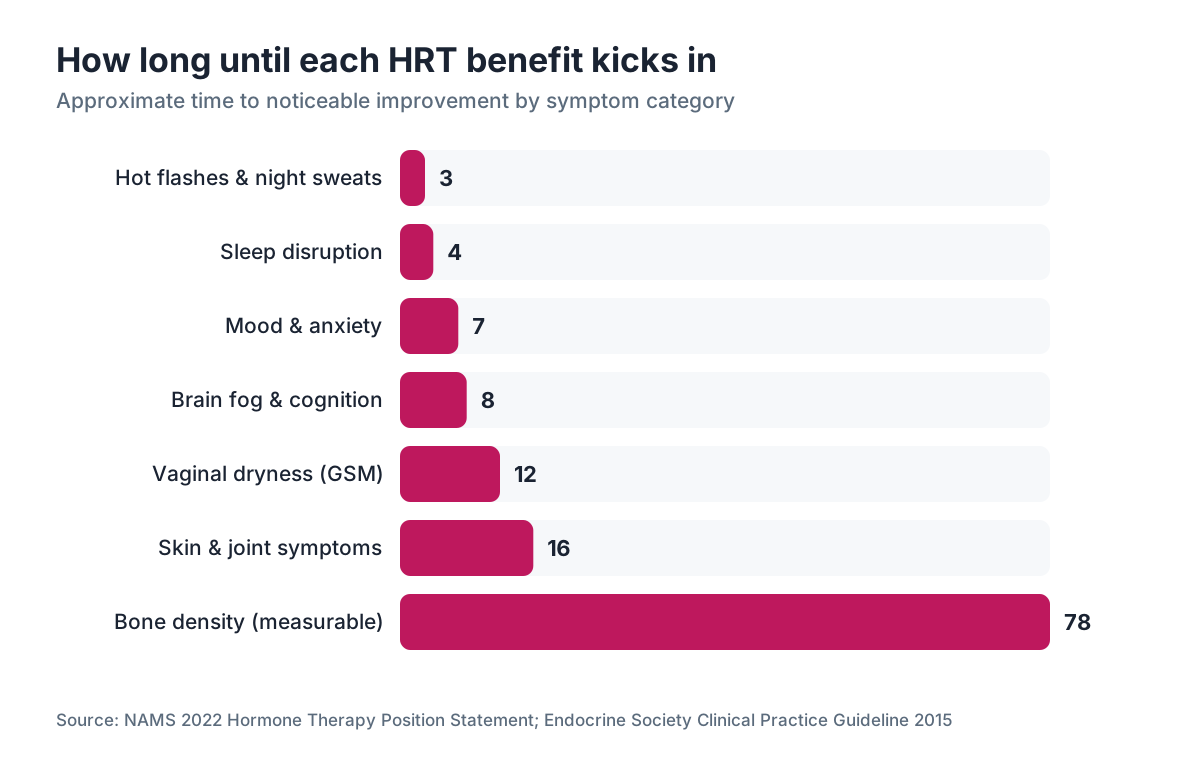
TL;DR: Hot flashes and sleep usually improve within 2 to 4 weeks of reaching an effective HRT dose. Mood, vaginal tissue, and bone protection take longer, roughly 3 to 6 months, and bone changes on a scan take 1 to 2 years. Speed depends on your symptom, your delivery method, and how much your body absorbs. Patches and gels give steadier levels than pills.
How long does it take for HRT to start working?
The honest answer depends on what you're treating. Hot flashes and night sweats respond fastest. Most women report meaningful improvement within 2 to 4 weeks of reaching an effective dose [1]. Sleep follows close behind, often improving in the first month as nighttime hot flashes settle.
Mood and anxiety take longer. Estrogen changes serotonin and dopamine signaling, but brain tissue responds more slowly than blood vessels. Most clinicians give it 6 to 8 weeks before deciding a dose isn't helping mood.
Vaginal dryness and urinary symptoms (the genitourinary syndrome of menopause, or GSM) can take 3 months or more to fully improve. You're waiting for tissue to rebuild thickness and elasticity, not for a signal to flip [2].
Bone protection is the slow game. Estrogen slows bone resorption, but measurable change on a bone density test usually takes 1 to 2 years to appear. You won't feel it happening, which is exactly why baseline and follow-up DEXA scans matter.
Six weeks in and feeling nothing? That's a signal to revisit your dose and delivery method. It is not a reason to quit HRT.
Does the type of HRT (patch, pill, gel, spray) change how fast it works?
Yes, and the difference is real. Oral estrogen goes through your liver first, which converts a chunk of it to less active forms and raises sex hormone-binding globulin (SHBG). At a given milligram dose, that can blunt the effect compared to transdermal routes.
Transdermal estrogen (patches, gels, sprays) skips the liver and puts estradiol straight into your bloodstream. Levels stay steadier and the bio-available fraction is higher [3]. Plenty of women who feel little on oral estrogen do much better on a patch or gel, sometimes at a lower dose.
Here's a rough comparison of how the delivery forms stack up:
| Delivery method | Onset of symptom relief | Liver first-pass effect | Blood level stability | |---|---|---|---| | Oral estradiol | 2 to 4 weeks | Yes | Variable (peaks & troughs) | | Estrogen patch | 1 to 3 weeks | No | Very steady | | Estradiol gel/spray | 1 to 3 weeks | No | Steady | | Vaginal estrogen (local) | 4 to 12 weeks for tissue | No | Minimal systemic | | Pellets | 2 to 6 weeks | No | Steady until they dissolve |
For progesterone, oral micronized progesterone (Prometrium) absorbs through the gut and has a calming, sleep-promoting effect for many women. The vaginal route protects the uterus well but skips that sedative effect. So the form you pick changes how you experience HRT, more than how fast it lands.
The estrogen patch is where many menopause specialists start, precisely because of that steady delivery.
What should you expect week by week after starting HRT?
Weeks 1 to 2: Don't expect much, and don't panic if you feel slightly off. Your body is adjusting to hormones from outside. Some women get breast tenderness, bloating, or mild headaches early on. These usually settle. Hot flashes can even tick up briefly before they improve, especially at a higher starting dose.
Weeks 2 to 4: Hot flashes and night sweats often start easing here. Sleep tends to improve. Energy picks up. Some women describe feeling like themselves again in this window, which tracks with estrogen's serotonin effects starting to register.
Weeks 4 to 8: Mood, focus, and irritability usually improve in this range. Brain fog starts lifting. If you're using vaginal estrogen or a systemic dose for GSM, the first hints of better moisture and comfort tend to show around week 6.
Months 2 to 3: Time for your first real dose check. Your clinician should review how you're doing, possibly run labs (estradiol levels are most useful for transdermal users), and adjust if symptoms hang on or side effects are bothersome. The Menopause Society (NAMS) recommends following up within 3 months of starting HRT to assess response [1].
Months 3 to 6: Full tissue response in the vagina and bladder. Skin, hair, and joint symptoms (yes, estrogen affects joints) often improve noticeably. Most women are at or near their settled dose by month 6.
Month 12 and beyond: Bone benefit keeps building. In women who start close to menopause, the cardiovascular profile improves over time. An annual review of dose, risks, and continued need is standard.
How do you start HRT? What does the process actually look like?
Starting HRT moves faster than most women expect. It comes down to a handful of steps.
First, a clinical evaluation. Your provider needs a symptom history, a review of your personal and family history (especially breast cancer, clotting disorders, and cardiovascular disease), and current blood pressure. A physical exam is standard but not always required at a telehealth visit before an initial prescription.
Blood work helps but isn't always mandatory before starting. Baseline FSH and estradiol can confirm where you sit hormonally, and a thyroid panel rules out thyroid disease as the real driver of symptoms. Some providers also check a lipid panel, CBC, and metabolic panel at baseline.
Your mammogram should be current per guidelines before or shortly after starting. The U.S. Preventive Services Task Force recommends biennial mammograms starting at age 40 for average-risk women [4].
Then you choose a regimen. If you have a uterus, you need both estrogen and a progestogen to protect the uterine lining. If you've had a hysterectomy, estrogen alone is appropriate. The NAMS 2022 Hormone Therapy Position Statement treats this as the foundational prescribing decision [1].
The prescription gets written, filled (at a compounding pharmacy or a retail chain), and you start. Patches and gels start the day you get them. Pills start that night.
A service like WomenRx can handle the evaluation, lab review, and prescription online, cutting the gap from "I want to try this" to "I have my prescription" down to days instead of a months-long waitlist.
Follow-up matters as much as the first prescription. Plan a check-in at 6 to 12 weeks.
When should you start HRT? Is there a best time?
Timing matters more than most women realize, and the research here is genuinely interesting.
The timing hypothesis (sometimes called the window of opportunity) holds that starting estrogen within 10 years of menopause or before age 60 carries a different cardiovascular risk profile than starting later. The WHI data that scared a generation of women and their doctors included many participants well past that window. Younger, recently menopausal women in the study had different outcomes [5].
A reanalysis of Women's Health Initiative data in JAMA (Manson et al., 2013) found that timing of initiation relative to menopause shifts the cardiovascular calculation, with earlier starts linked to better outcomes [5].
For symptom relief, the best time to start is when symptoms are wrecking your quality of life. That's the clinical standard. There's no medical reason to white-knuckle through severe hot flashes waiting for a "right" moment.
In perimenopause, hormones start swinging years before the final period. Perimenopausal HRT looks a little different (doses often lower, cycling sometimes used), but you can start it as soon as symptoms bother you and contraindications are ruled out.
For bone protection, earlier wins. Peak bone loss happens in the first 5 to 7 years after menopause. Starting HRT in that window preserves more bone than starting later, though late starters still benefit [6].
Want to understand when menopause starts for you specifically? Tracking cycle changes and getting an FSH test on day 2 or 3 of a period gives you useful information.
So the answer to "when should I start" is short: as soon as you have bothersome symptoms, no contraindications, and a prescriber who will actually monitor you.
How long can you take HRT? Is there a cut-off age or time limit?
This is the question that trips women up most, largely because the old "five years maximum" guidance got treated as a hard rule. It isn't.
The current NAMS position: there is no arbitrary time limit for HRT in women who benefit from it and who have had a risk-benefit review with their provider [1]. The Endocrine Society takes a similar line, holding that the decision to continue or stop HRT should be individualized [7].
What actually decides how long you can take HRT:
-
Your personal breast cancer risk. Combined estrogen-progestogen HRT carries a small increase in breast cancer risk with use beyond 5 years, roughly on par with drinking a daily glass of wine or being overweight. Estrogen-only HRT (for women without a uterus) has a more favorable profile, and in some analyses is linked to a slight decrease in breast cancer risk [1][5].
-
Your cardiovascular history. Women with established coronary artery disease or a history of stroke are generally not candidates for systemic HRT.
-
Why you're taking it. For bone protection or ongoing quality of life, continuing past 5 or 10 years is medically reasonable and increasingly backed by evidence. For women with premature ovarian insufficiency (POI), guidelines actively recommend continuing HRT until at least the average age of natural menopause (around 51), because stopping earlier means years of estrogen deficiency with real health consequences [7].
In practice: annual review, updated breast and cardiovascular risk assessment, and an honest conversation. Plenty of women are on HRT in their 60s and 70s without trouble. Some have reasons to stop sooner. Neither blanket continuation nor blanket cessation is the right policy.
What if HRT doesn't seem to be working after a few weeks?
First, check the timeline you're using. Two weeks in with hot flashes still around is not a failure. Full thermal control often takes 4 to 6 weeks at a given dose. Give it that long before deciding the dose is wrong.
If 6 to 8 weeks in nothing has changed, a few culprits show up again and again.
Absorption problems with transdermal products. Gels and patches are affected by where you apply them, skin thickness, and humidity. Many women don't use enough gel, or keep sticking the patch on the same dry spot. Apply gel to the inner wrist or inner arm, and rotate patches between the abdomen and buttock.
Dose too low. Starting doses are conservative by design. An initial patch of 0.025 mg/day is reasonable, but it often needs to climb to 0.05 or 0.1 mg/day for real symptom control [8]. A serum estradiol level tells you where you actually land.
The wrong symptom is being treated. HRT treats estrogen-deficiency symptoms. If the real problem is anxiety driven by life rather than hormones, estrogen helps but won't fix it. Sleep problems from sleep apnea won't clear with HRT either.
Thyroid trouble. Hypothyroidism mimics menopause closely. If your TSH hasn't been checked recently, check it.
If your provider won't adjust your dose based on your symptoms and a serum estradiol level, get a second opinion from a menopause specialist. NAMS maintains a menopause practitioner locator on their website [11].
Women told HRT "didn't work" for them often turn out to have been underdosed, on a delivery method that didn't suit them, or not given enough time. A methodical retry is worth doing before you write it off.
Does HRT work differently during perimenopause versus after menopause?
Yes, and the difference shapes what you should expect.
In perimenopause, your ovaries still make estrogen, just erratically. You can have days or weeks of high estrogen followed by crashes. That volatility drives a lot of perimenopausal misery. Adding estrogen on top of unpredictable natural estrogen can, in some women, feel inconsistent or even worse for a stretch.
Many providers use lower, steadier doses in perimenopause to smooth the swings rather than replace estrogen wholesale. Some start with progesterone alone (it has real symptom-relieving effects) and add estrogen later if needed.
After menopause (12 straight months without a period), ovarian estrogen production is basically zero. Replacement is simpler: you're supplying what's gone. Doses stay consistent and effects are more predictable.
The other practical difference is contraception. Perimenopause doesn't mean infertility. You can still ovulate occasionally, and pregnancy is possible. HRT is not birth control. If you need contraception, that's a separate conversation with your provider. Some combined hormonal contraceptives also handle perimenopausal symptoms, which makes them a useful option in your 40s.
For a closer look at the transition and when it usually starts, see perimenopause age and when does menopause start.
What are the real risks of HRT, and how do they affect your decision to start?
The risks are real but often overstated in public debate, and the benefits are often understated.
Breast cancer: Combined estrogen-progestogen HRT carries a small increase in breast cancer risk. The Million Women Study found roughly 8 extra breast cancer cases per 10,000 women per year of use for combined HRT [9]. For context, the absolute increase over 5 years of combined HRT is smaller than the increase from two or more alcoholic drinks a day. Estrogen-only HRT has a more favorable or neutral profile [1][5].
Blood clots (VTE): Oral estrogen raises clot risk slightly. Transdermal estrogen doesn't appear to carry the same VTE increase, based on observational data [3]. For women with a personal or family history of clotting disorders, transdermal is the route to use.
Stroke: There's a small increased risk with oral estrogen at higher doses. Transdermal estrogen doesn't appear to carry it at standard doses [3].
Cardiovascular disease: For women who start HRT before age 60 or within 10 years of menopause, the likely outcome is a cardiovascular benefit or at least neutrality. Starting much later may bring a modest increase in coronary risk. That's the timing hypothesis from earlier [5].
Who shouldn't use systemic HRT: Women with active or recent breast cancer, unexplained vaginal bleeding, active liver disease, or a history of estrogen-sensitive cancers are generally not candidates. This is an individual assessment, not a blanket rule.
Here's the framing that matters. The choice isn't HRT versus zero risk. It's HRT versus the risks of untreated menopause: osteoporosis, faster cardiovascular decline, and a real loss of quality of life. A balanced risk conversation with a clinician who knows this literature is the point. Blanket avoidance isn't.
For the fuller picture on hormone replacement therapy and menopause, those sections go deeper on the evidence.
How do you know if your HRT dose is right?
The main measure is symptom control. If hot flashes, night sweats, mood, and sleep are handled and you're not fighting side effects, your dose is probably right. That's the clinical standard. Lab values are secondary.
That said, serum estradiol levels help when symptoms hang on despite treatment, or when you suspect poor absorption. For transdermal estradiol, a reasonable therapeutic range runs about 50 to 150 pg/mL, though there's no single correct number because symptom thresholds differ between women [8]. The Endocrine Society guidance is that dosing should track clinical response, with labs used to confirm delivery rather than chase a target figure [7].
If you're getting HRT through a telehealth provider, make sure lab monitoring is part of the plan. A prescription with no follow-up labs is half a service.
Side effects that suggest the dose is too high: breast tenderness, bloating, headaches, spotting (on continuous combined regimens), mood swings. Usually the dose needs to come down or the progestogen needs switching.
Side effects that suggest the dose is too low: persistent hot flashes, ongoing sleep disruption, brain fog that hasn't budged after 8 weeks.
Don't let a provider tell you that symptoms at 3 months just mean "HRT isn't for you" without trying a dose adjustment first. Most women find their effective dose within 6 months of starting.
Frequently asked questions
How long does it take for HRT to stop hot flashes?
Most women see a meaningful drop in hot flash frequency and severity within 2 to 4 weeks of reaching an effective dose. Full resolution often takes 4 to 8 weeks. If hot flashes are still frequent at week 8, that's a dose or delivery issue to raise with your provider, not a sign HRT won't work for you.
How long does it take for HRT patches to work?
Estrogen patches reach therapeutic blood levels within 24 to 48 hours of application. Symptom improvement usually follows within 1 to 3 weeks, often a bit faster than oral estrogen because patches bypass the liver and deliver more bio-available estradiol into circulation. Full symptom benefit still takes up to 6 to 8 weeks.
Can HRT make symptoms worse before they get better?
Yes, briefly. In the first 1 to 2 weeks some women get more breast tenderness, bloating, or even a short uptick in hot flashes as levels shift. This usually settles by week 3 to 4. If symptoms are severe or don't ease, call your provider. It can mean the starting dose is too high or the progestogen doesn't suit you.
How long does it take for HRT to help with sleep?
Sleep usually improves within the first 2 to 4 weeks of HRT, mostly because nighttime hot flashes fade. Oral micronized progesterone adds a direct sedative effect through GABA-A receptors, so women on combined regimens with Prometrium often notice sleep improve fairly quickly. If sleep is the main complaint, the progestogen choice matters.
How long does it take for HRT to improve mood and anxiety?
Mood and anxiety usually take 4 to 8 weeks to improve on HRT. Estrogen modulates serotonin and dopamine pathways, and the brain responds more slowly than hot-flash circuitry. Some women feel better sooner. If mood hasn't shifted by week 8, a dose check plus a conversation about whether an antidepressant or therapy would help is reasonable.
How long does it take for HRT to help with vaginal dryness?
Vaginal dryness (genitourinary syndrome of menopause) takes 8 to 12 weeks for meaningful improvement because the tissue has to rebuild thickness and moisture. Local vaginal estrogen or DHEA (prasterone) speeds this up specifically, and many clinicians combine local and systemic estrogen for severe GSM. Systemic HRT alone can be slower.
How do you start HRT if you've never taken it before?
Start with a clinical evaluation covering your symptom history, personal and family medical history, current blood pressure, and relevant labs (estradiol, FSH, TSH at minimum). If you have a uterus, you need both estrogen and a progestogen. Many women start with a low-dose patch plus micronized progesterone. A follow-up at 6 to 12 weeks to assess response and adjust dosing is standard care.
When is the best time to start HRT for the most benefit?
Starting within 10 years of menopause or before age 60 is linked to the best cardiovascular and bone outcomes, based on the timing hypothesis supported by reanalysis of Women's Health Initiative data. For symptom relief, the best time is when symptoms are affecting your quality of life. There's no evidence that waiting improves outcomes.
How long can you safely stay on HRT?
There's no hard time limit. The Menopause Society states that duration should be individualized based on ongoing benefit-to-risk assessment. Many women use HRT for 10 or more years with annual review. Women with premature ovarian insufficiency are advised to continue until at least age 51. Combined estrogen-progestogen carries a small breast cancer risk increase beyond 5 years, which factors into shared decision-making.
Does HRT protect bones, and how long does that take?
Yes. Estrogen slows bone resorption and preserves bone mineral density. The protective effect starts from day one, but measurable change on a DEXA scan usually takes 1 to 2 years to show. Peak bone loss happens in the first 5 to 7 years after menopause, so starting earlier preserves more bone. Stopping HRT accelerates bone loss again.
What blood tests do you need before starting HRT?
At minimum: FSH and estradiol (to confirm menopausal status), TSH (to rule out thyroid disease), and a blood pressure reading. Many providers also check a lipid panel and metabolic panel at baseline. A current mammogram is generally required. Bloodwork requirements vary by provider, and no single test clears a woman to start HRT. It's a clinical picture.
Is it safe to start HRT in your 50s or 60s?
For most healthy women in their 50s who are within 10 years of menopause, starting HRT is considered safe and evidence-supported. For women in their 60s who are more than 10 years past menopause, the risk-benefit calculation is less favorable and needs more individual assessment. There's no absolute age cutoff. It depends on your health history and risk factors.
Can you start HRT during perimenopause, before menopause is confirmed?
Yes. HRT can start in perimenopause when symptoms are affecting quality of life. You don't have to wait for 12 straight months without a period. Perimenopausal regimens often use lower doses or include cycling to account for residual ovarian function. Contraception is a separate need during perimenopause, since pregnancy remains possible.
What happens when you stop HRT?
Symptoms often return, sometimes fast. Hot flashes and sleep disruption can reappear within weeks of stopping. Bone loss accelerates again. Most guidelines suggest tapering rather than stopping abruptly to reduce symptom rebound. Some women stop without symptoms coming back, particularly those many years past menopause. There's no clinical mandate to stop HRT at a specific age.
Sources
- The Menopause Society (NAMS), 2022 Hormone Therapy Position Statement
- ACOG Practice Bulletin No. 141: Management of Menopausal Symptoms
- BMJ, Canonico et al., 2007: Hormone therapy and venous thromboembolism among postmenopausal women
- U.S. Preventive Services Task Force, Breast Cancer Screening Recommendation (2024)
- Women's Health Initiative, Manson et al., JAMA 2013: Menopausal hormone therapy and long-term all-cause and cause-specific mortality
- Bone Health and Osteoporosis Foundation, Clinician's Guide to Prevention and Treatment
- Endocrine Society Clinical Practice Guideline: Treatment of Symptoms of the Menopause, 2015
- Studd J, Panay N, Best Practice & Research Clinical Obstetrics & Gynaecology: Hormones and depression in women
- Million Women Study Collaborators, Lancet 2003: Breast cancer and hormone-replacement therapy in the Million Women Study
- FDA, Highlights of Prescribing Information: Estradiol Transdermal System (Vivelle-Dot)
- The Menopause Society (NAMS), Menopause Practitioner Locator