How long does it take for an estrogen patch to work?
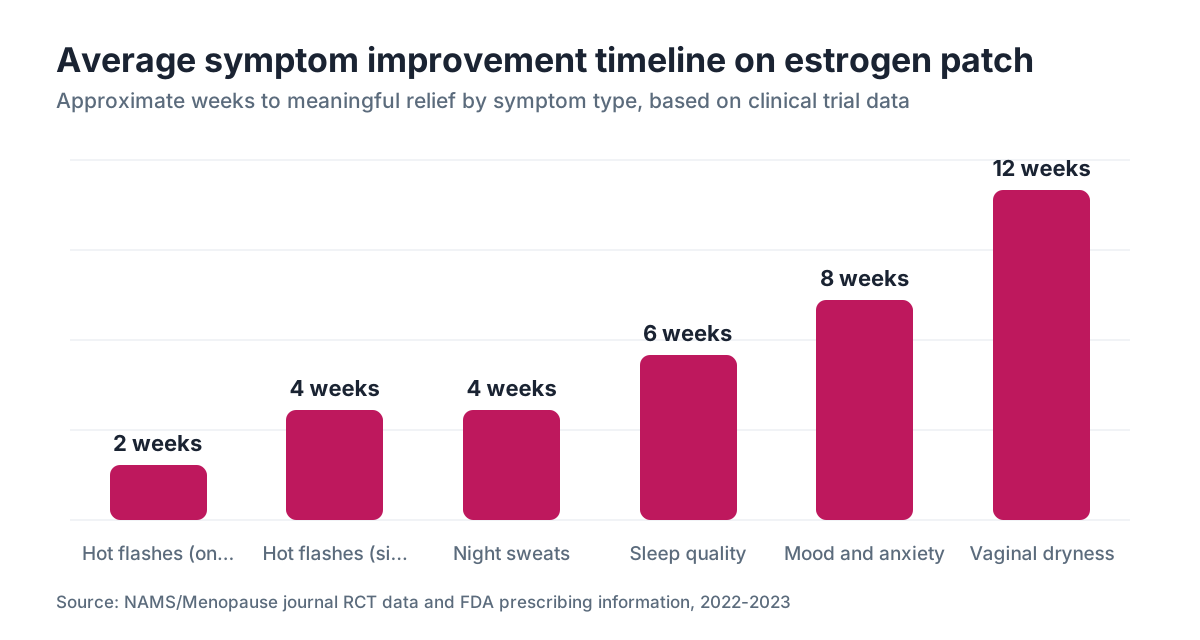
TL;DR: An estrogen patch pushes hormone into your bloodstream within hours of application. But most women don't feel real relief from hot flashes and night sweats until 2 to 4 weeks in. Full benefit for mood, sleep, and vaginal symptoms usually takes 8 to 12 weeks. Still struggling at three months? Your dose almost certainly needs adjusting.
What actually happens when you put on an estrogen patch?
The patch works through transdermal absorption. The adhesive matrix holds estradiol (the most bioidentical form of estrogen) in a reservoir or gel matrix, and the hormone diffuses through your skin into the capillaries just beneath it. From there it goes straight into circulation, bypassing the liver. That liver-bypass matters. Oral estrogen gets metabolized on its first pass through the liver, which raises clotting factors. The patch skips that step, which is one reason the NAMS 2022 Hormone Therapy Position Statement notes transdermal estradiol carries a lower risk of venous thromboembolism than oral formulations [1].
Within four to eight hours of applying your first patch, measurable estradiol appears in your bloodstream [2]. So the hormone is already working, even if you feel nothing yet. The gap between rising estradiol and symptom relief is biology, not a broken product. Your hypothalamus, the brain region that has gone haywire and is firing off hot flashes, needs time to recalibrate once estrogen levels hold steady.
How quickly does an estrogen patch work for hot flashes?
Hot flashes are usually the first symptom to improve, and most women notice a real difference between two and four weeks after starting a patch. A randomized controlled trial published in Menopause (the NAMS journal) found that a 0.05 mg/day estradiol patch cut hot flash frequency by roughly 75 to 80 percent versus placebo by week 12, with statistically significant reductions showing up as early as week 4 [3].
Here is the breakdown most clinicians use:
| Timeframe | What to realistically expect | |---|---| | Days 1 to 7 | Estradiol absorbing; no perceptible symptom change for most women | | Weeks 2 to 4 | Hot flash frequency begins to drop; night sweats may lighten | | Weeks 4 to 8 | Meaningful relief for most women; sleep usually improves | | Weeks 8 to 12 | Full hot flash suppression at the right dose; mood and energy stabilize | | Week 12+ | Vaginal dryness responds fully; libido effects become clearer |
The wide variation in when women respond comes down to how low your estrogen was to start with, your absorption rate, the dose on the patch, and what else is going on hormonally. Perimenopause is especially unpredictable because your ovaries are still producing some estrogen erratically, so the patch is basically trying to smooth out a volatile baseline [4].
How do estrogen patches work differently from pills or gels?
Pills, gels, sprays, and patches all deliver estradiol, but the pharmacokinetics are genuinely different, and that changes both how fast you feel results and what the safety profile looks like.
Oral estradiol: absorbed through the gut, then processed by the liver before reaching circulation. The liver converts much of it to estrone, a weaker estrogen. First-pass metabolism also increases clotting proteins and can affect triglycerides. You take it daily.
Transdermal patch: delivers estradiol directly into circulation. Blood levels stay steadier, without the peaks and troughs of a daily pill. Most patches are changed twice weekly (every three to four days) or once weekly depending on the brand. FDA-approved twice-weekly patches include Climara, Vivelle-Dot, and generic equivalents; once-weekly options include Menostar and Climara [5].
Gels and sprays: also transdermal and liver-sparing, but applied daily. They give more dosing flexibility but require attention to avoid transferring the hormone to a partner or child through skin contact.
Because patches deliver steadier levels, some women feel they work more smoothly, with fewer symptom spikes than pills. Others absorb patches poorly because of skin differences, particularly thicker skin or low body fat at application sites, and do better on gels. Neither wins across the board. It comes down to your absorption pattern and your daily habits.
How long do estrogen patches take to work for mood and anxiety?
This is where patience matters most. Hot flashes respond faster than mood, and mood responds faster than vaginal atrophy. Estrogen acts directly on serotonin and dopamine pathways, and the brain's neurochemical adaptation takes time.
Most clinicians see meaningful mood improvement by weeks six to eight. Some women notice a subtle lift in the second week, especially if severe sleep deprivation from night sweats was driving their low mood. When sleep improves, mood often follows quickly. But the deeper anxious edge that many perimenopausal and postmenopausal women describe, a background hum of dread that wasn't there before, usually takes eight to twelve weeks to quiet down at a therapeutic estradiol dose.
Three months in with no mood shift? Two things are worth checking. First, is your estradiol level actually therapeutic? A serum estradiol of 50 to 100 pg/mL is the range most providers target for symptom control, though some women need levels closer to 100 to 150 pg/mL [6]. Second, is progesterone part of your regimen? Women with a uterus need progestogen to protect the uterine lining, and the type matters for mood. Synthetic progestins like medroxyprogesterone acetate can worsen mood in some women; micronized progesterone (Prometrium) tends to have a more neutral or even calming effect [7]. There's more on that difference in our article on progesterone.
How long does the estrogen patch take to work for vaginal dryness?
Vaginal symptoms (dryness, painful sex, recurrent UTIs from thinning tissue) are the slowest to respond. The vaginal epithelium has to rebuild cellular layers. That's tissue regeneration, not a neurochemical shift.
Expect at least eight to twelve weeks before you notice a real difference in vaginal comfort. For some women it takes closer to four to six months for full restoration of tissue health. A few things to know:
Systemic patches help vaginal symptoms in most women, but not all. Roughly 10 to 15 percent of postmenopausal women on systemic HRT still have significant vaginal symptoms and need a local vaginal estrogen product (cream, ring, or tablet) on top of the patch [8]. Local vaginal estrogen is a different thing from the patch. It stays mostly local and adds minimal systemic estrogen.
If vaginal dryness is your main complaint and hot flashes aren't severe, your clinician might suggest starting with local vaginal estrogen before adding a systemic patch. If you have both hot flashes and vaginal symptoms, a systemic patch handles both.
What dose estrogen patch should you start on, and does dose affect how fast it works?
The most commonly prescribed starting doses for symptom management are 0.025 mg/day and 0.05 mg/day patches [5]. Lower-dose patches like 0.014 mg/day (Menostar) are FDA-approved only for osteoporosis prevention, not symptom relief, so they often won't work fast enough to quiet hot flashes.
Dose absolutely affects speed of response. A 0.025 mg/day patch may take longer to build to a therapeutic serum estradiol level than a 0.05 mg/day patch, and in women who start with very low estrogen (like post-surgical menopause), the lower dose may never get high enough to fully suppress vasomotor symptoms.
The Endocrine Society Clinical Practice Guideline on menopause recommends the lowest effective dose for the shortest duration needed. But "lowest effective" means a dose that actually controls your symptoms, not the smallest dose possible [9]. If you're at twelve weeks on 0.025 mg and still having daily hot flashes, that dose is not your lowest effective dose. It's just not effective.
Dose titration is normal. Most providers reassess at six to twelve weeks and bump the dose if symptom control is inadequate. Don't read that as failure. It's calibration.
Are there reasons an estrogen patch might not work as expected?
Yes, several. And most of them are fixable.
Poor patch adhesion or placement: The patch should go on clean, dry, hairless skin, usually the lower abdomen, buttocks, or outer thigh. Oily skin, lotion residue, or a sweaty application site all cut absorption. Reapplying to the same spot repeatedly causes skin buildup and less absorption over time. Rotate sites.
Low individual absorption: Some women's skin absorbs transdermal medications less efficiently. A serum estradiol blood test, drawn midway between patch changes, tells you whether therapeutic levels are actually being reached. If your level is below 30 to 40 pg/mL on a 0.05 mg/day patch, your skin may not be absorbing well, and switching to a gel or spray might work better [6].
Thyroid dysfunction: Hypothyroidism mimics many menopause symptoms (fatigue, weight gain, brain fog, mood changes). If your thyroid is underactive and untreated, the patch won't fix those symptoms no matter how long you wait.
Insufficient progesterone balance: In perimenopause with low progesterone, you may have estrogen dominance symptoms (bloating, breast tenderness, mood swings) even on a standard patch dose. Adding micronized progesterone often resolves this. See the hormone replacement therapy guide for how combination regimens work.
Interactions: Some antiepileptic drugs (carbamazepine, phenytoin) and rifampin speed up estrogen metabolism and can blunt patch effectiveness. St. John's Wort does the same. Tell your prescriber everything you're taking.
How long should you stay on an estrogen patch before deciding it isn't working?
Give it a minimum of twelve weeks at a therapeutic dose before concluding the patch isn't working. That timeline comes from most of the major HRT clinical trials, which ran twelve weeks as their primary endpoint for symptom relief [3].
Here's the practical version. If you're at week four and still having the same number of hot flashes as before, don't quit. Check that the patch is sticking, confirm your application technique, and keep a symptom diary. If you're at week eight with no improvement, that's the right time to call your provider, because a dose adjustment or formulation change may be needed, not because the therapy has failed.
For women who try the patch and truly don't respond after twelve weeks at 0.05 mg/day or higher, a switch to a different delivery method, usually a gel or spray, is a reasonable next step. Some women simply absorb transdermal estradiol better through gels, likely because of differences in application area and skin contact.
WomenRx providers typically order a serum estradiol level at the eight-week mark if symptoms haven't improved, which takes the guesswork out of whether it's a dose problem or an absorption problem. If your current provider isn't giving you that kind of follow-up, ask for it explicitly.
Is there a difference between how quickly perimenopause and postmenopause respond to the patch?
There is. Perimenopausal women still have functioning ovaries producing erratic estrogen, so the patch layers on top of a fluctuating baseline. That makes symptom response feel less predictable. A woman in early perimenopause might see her hot flashes vary week to week even on the patch, simply because her ovaries had a good week and produced extra estrogen, or a bad week and produced almost none.
Postmenopausal women (twelve months or more after the final period) have a stable, low-estrogen baseline, and the patch sets a steadier new one. Many postmenopausal women report a cleaner, more predictable response. That said, postmenopausal women also tend to have more significant vaginal atrophy, so those symptoms still take the full eight to twelve weeks to show real improvement.
Not sure whether you're in perimenopause or have crossed into menopause? The articles on perimenopause age and when does menopause start lay out what the clinical definitions actually are. It matters for how you and your provider read your labs and your symptoms.
What do the clinical trials actually say about how long estrogen patches take to work?
The most cited efficacy data for transdermal estradiol patches comes from randomized, placebo-controlled trials in the FDA approval packages for products like Climara and Vivelle-Dot, plus independent trials in journals like Menopause and BJOG.
One representative 12-week trial of a 0.05 mg/day twice-weekly estradiol patch found mean hot flash frequency dropped from about 10 to 11 per day at baseline to roughly 2 to 3 per day by week 12 in the active group, versus 8 to 9 per day in placebo. That's a reduction of roughly 75 to 80 percent [3]. The statistically significant separation from placebo appeared at week 4.
The FDA label for Vivelle-Dot (estradiol transdermal system) states that in clinical studies, "significant reductions in moderate to severe vasomotor symptom frequency were observed at week 4" [5]. That's about as close to a manufacturer-cited timeline as regulatory language gets.
Serum estradiol levels peak roughly 24 to 48 hours after applying a new patch, then plateau. For a 0.05 mg/day patch, average steady-state serum estradiol runs approximately 40 to 60 pg/mL, though individual variation is wide [2]. Levels below 30 pg/mL are generally subtherapeutic for hot flash control; levels above 200 pg/mL suggest absorption is higher than intended and the dose should come down.
What should you do if the patch isn't working after 12 weeks?
First, confirm the basics. Are you applying the patch correctly? Is it sticking for the full application period? Are you rotating sites? These sound obvious, but patch failure from application error is genuinely common.
If technique is fine, get a serum estradiol level drawn midway between patch changes. This is the single most useful data point. If your level is below 40 pg/mL on a 0.05 mg/day patch, you need either a higher-dose patch or a different formulation. If your level is 60 to 80 pg/mL and you're still having significant symptoms, the dose may need to go up to 0.075 or 0.1 mg/day, or you may have comorbidities (thyroid, sleep apnea, anxiety disorder) that need separate attention.
There are women for whom no systemic HRT fully controls vasomotor symptoms, particularly women with a history of breast cancer who may be limited in what they can take, or women on tamoxifen or aromatase inhibitors that actively block estrogen. For those women, non-hormonal options like fezolinetant (Veozah), approved by the FDA in 2023 specifically for vasomotor symptoms, or low-dose paroxetine (Brisdelle, also FDA-approved for hot flashes) are worth discussing [10].
For bone density, a separate but related concern in menopause, even low-dose patches that don't fully control hot flashes may still be doing protective work. The article on bone density test explains when and why to get a DEXA scan as part of your menopause care.
Safety: what should you know before starting an estrogen patch?
The benefits of HRT are well established for women who are good candidates, and the risk picture has been substantially clarified since the early 2000s Women's Health Initiative data was misinterpreted in the press. The NAMS 2022 Position Statement concludes that for healthy women under 60 or within ten years of menopause onset, the benefits of hormone therapy outweigh the risks for treating moderate to severe symptoms [1].
Transdermal estradiol specifically has a more favorable risk profile than oral estrogen for VTE (blood clots). A large observational study published in the BMJ found that, unlike oral estrogen, transdermal estradiol was not associated with increased VTE risk [11]. That finding has held up in multiple later analyses.
Breast cancer: the risk depends heavily on whether progestogen is added, and which type. Estrogen alone (used only in women who have had a hysterectomy) has a minimal effect on breast cancer risk; the WHI found the estrogen-alone group actually trended toward lower breast cancer incidence. The risk signal in the WHI came primarily from combined estrogen plus synthetic progestin (medroxyprogesterone acetate) in older postmenopausal women [12]. Micronized progesterone appears to carry lower breast risk, though the evidence is largely observational [7].
Women with active or recent breast cancer, unexplained vaginal bleeding, active liver disease, or active clots should not use the estrogen patch. Every candidate needs an individualized risk conversation with their provider. The menopause overview covers the full risk-benefit framework in more depth.
Frequently asked questions
How long does it take for an estrogen patch to start working?
Estradiol from the patch enters your bloodstream within four to eight hours of application. But you won't feel symptom relief that fast. Hot flashes typically start improving at two to four weeks. Mood and sleep take six to eight weeks. Vaginal dryness takes the longest, usually eight to twelve weeks for meaningful improvement, and sometimes up to six months for full tissue restoration.
Can I feel the estrogen patch working on the first day?
A small number of women notice mild breast tenderness or bloating within the first few days, which is estrogen beginning to act on those tissues. But relief from hot flashes or other menopause symptoms on day one isn't realistic. The brain and body need weeks to recalibrate to steadier estrogen levels. If you feel dramatic changes on day one, mention that to your provider since it may mean the dose is higher than needed.
How do I know if my estrogen patch is working?
Keep a symptom diary tracking hot flash frequency and severity, sleep quality, and mood. Most women on an effective dose see hot flash frequency drop by 50 percent or more by week four to six. A serum estradiol blood test drawn midway between patch changes gives you objective confirmation. Therapeutic range for symptom control is generally 40 to 100 pg/mL, though individual variation is real.
What if the estrogen patch is not working after 4 weeks?
Four weeks is not enough time to conclude the patch has failed, particularly for mood, vaginal symptoms, or sleep. For hot flashes, partial improvement by week four is encouraging; complete relief often takes until week eight to twelve. If you have zero improvement in any symptom by week four, check your application technique and consider asking your provider about moving to 0.05 mg/day if you're on a lower dose.
How often do you change an estrogen patch and does timing affect how it works?
Most patches are changed twice weekly (every three to four days) or once weekly depending on the product. Changing on schedule matters. Wearing a patch past its intended duration lets estradiol levels drop, which can trigger breakthrough symptoms. If you forget a change, apply the new patch as soon as you remember and resume your normal schedule. Do not double up patches to compensate.
Where should I apply an estrogen patch for best absorption?
Apply to clean, dry, hairless skin on the lower abdomen, outer thigh, or buttocks. Avoid the waistband area where clothing causes friction, and never apply to breasts or irritated skin. Rotate sites with each application. Lotion, oil, or sweat on the skin before applying cuts absorption significantly. Press firmly for 30 seconds after applying and check the edges are fully adhered.
Do you need progesterone with an estrogen patch?
If you have a uterus, yes. Estrogen alone causes the uterine lining to thicken (endometrial hyperplasia), which raises uterine cancer risk. Adding a progestogen prevents that. Women who have had a hysterectomy do not need progestogen. The type matters: micronized progesterone (Prometrium) is generally preferred over synthetic progestins for both mood and breast safety. Your prescriber should discuss both options. More detail is in the progesterone article.
Can the estrogen patch help with weight gain during menopause?
Estrogen loss contributes to abdominal fat redistribution and metabolic changes in menopause, and HRT can partially offset that. But the patch isn't a weight loss treatment. Studies show HRT may reduce visceral fat accumulation compared with no treatment, but the effect is modest. If weight is a primary concern alongside menopause symptoms, some providers discuss GLP-1 receptor agonists in addition to HRT. The two treatments address different mechanisms and can be used together.
Is the estrogen patch safe to use long-term?
NAMS states that for women under 60 or within ten years of menopause, the benefits of hormone therapy outweigh the risks for treating moderate to severe symptoms, and there is no arbitrary time limit for healthy candidates. Annual reassessment is standard. Transdermal estradiol specifically does not carry the VTE risk associated with oral estrogen. Individual factors like breast cancer history, cardiovascular disease, and clotting disorders change the calculus significantly.
How does the estrogen patch compare to estrogen pills for speed of symptom relief?
The timelines are similar. Both oral and transdermal estradiol typically produce meaningful hot flash relief by weeks four to eight. The patch delivers steadier blood levels without daily dosing peaks and avoids first-pass liver metabolism, which is a genuine pharmacological advantage. Some women find the patch gives more consistent symptom control because levels don't fluctuate as much as with a daily pill.
Can I swim or shower with an estrogen patch on?
Yes. FDA-approved patches are designed to stay adhered during bathing, swimming, and moderate exercise. Prolonged hot tub soaking may loosen some brands. If an edge lifts after a shower, press it back firmly with your fingertip. If a patch falls off and cannot be reapplied, put on a new one and keep the original change day on your schedule. Brands vary slightly in adhesion quality; if yours consistently peels, ask your pharmacist about an alternative.
What's the difference between a 0.025 mg and 0.05 mg estrogen patch?
These numbers refer to the daily estradiol delivery rate. The 0.025 mg/day patch delivers about half as much estrogen as the 0.05 mg/day patch. For most women with moderate to severe hot flashes, 0.025 mg/day is a low starting dose that may need to be increased. The 0.05 mg/day patch is the most commonly prescribed dose for symptom relief and is often where providers start women who have significant symptoms.
Can I use an estrogen patch during perimenopause, more than after menopause?
Yes, though perimenopause makes dosing trickier because your ovaries are still producing estrogen erratically. Some providers prefer to start perimenopausal women on lower doses and adjust based on symptoms and serum estradiol levels. Because the hormonal baseline fluctuates more in perimenopause, symptom response to the patch can feel less predictable than in postmenopause. Tracking symptoms week by week helps your provider make better dose decisions.
Are generic estrogen patches as effective as brand-name ones?
The FDA requires generic transdermal patches to demonstrate bioequivalence to the brand-name product, meaning the amount of estradiol delivered must fall within 80 to 125 percent of the reference product's rate. In practice most generics perform comparably. Some women report adhesion differences between brands, but pharmacokinetic differences are generally small. If you switch from brand to generic and symptoms change noticeably, check a serum estradiol level to see if delivery has changed.
Sources
- The Menopause Society (NAMS), 2022 Hormone Therapy Position Statement
- FDA, Climara (estradiol transdermal system) prescribing information
- Menopause journal, estradiol transdermal patch RCT (representative 12-week efficacy trial)
- The Menopause Society (NAMS), Perimenopause Overview
- FDA, Vivelle-Dot (estradiol transdermal system) prescribing information
- Endocrine Society, Menopause Hormone Therapy Clinical Practice Guideline
- BJOG: An International Journal of Obstetrics and Gynaecology, micronized progesterone versus synthetic progestins review
- The Menopause Society (NAMS), Genitourinary Syndrome of Menopause Position Statement
- Endocrine Society, Clinical Practice Guideline: Treatment of Menopause
- FDA, Veozah (fezolinetant) approval announcement, 2023
- BMJ, transdermal versus oral HRT and VTE risk observational study
- NIH, Women's Health Initiative study results summary