How long does HRT take to work for anxiety?
TL;DR: Most women feel some anxiety relief within 4 to 6 weeks of starting HRT, with fuller effects by 8 to 12 weeks. Sleep disruption that feeds anxiety can settle sooner. Speed depends on the hormone type, dose, delivery method, and how far into perimenopause or menopause you are. Perimenopausal women often respond faster than postmenopausal women.
How does HRT actually work on anxiety?
Estrogen does a lot in the brain. It modulates serotonin receptors, influences norepinephrine synthesis, and affects GABA activity, the same calming neurotransmitter that anti-anxiety drugs like benzodiazepines target [1]. When estrogen drops during perimenopause and menopause, those systems get disrupted. For many women the result is anxiety, irritability, and a low-level dread that feels nothing like the situational nerves they had earlier in life.
Progesterone matters too. Its metabolite allopregnanolone acts directly on GABA-A receptors and produces a calming effect. When progesterone swings wildly in early perimenopause and then falls off, that GABA calm disappears with it. Our progesterone piece breaks down how that hormone works on its own.
So HRT's effect on anxiety is direct, more than a side benefit of fixing your hot flashes so you sleep better (though that part is real too). Estrogen and progesterone act on the exact neurotransmitter systems that regulate fear, worry, and emotional reactivity. That is why some women describe an almost mood-stabilizing quality to HRT in the first few weeks.
Testosterone has receptors in the brain as well, and small trials suggest it supports mood and confidence in postmenopausal women. The data on anxiety specifically is thinner than for estrogen [2].
How long does HRT take to work, in general?
The honest answer: it depends on which symptom you are tracking. Estrogen moves through different body systems at different speeds.
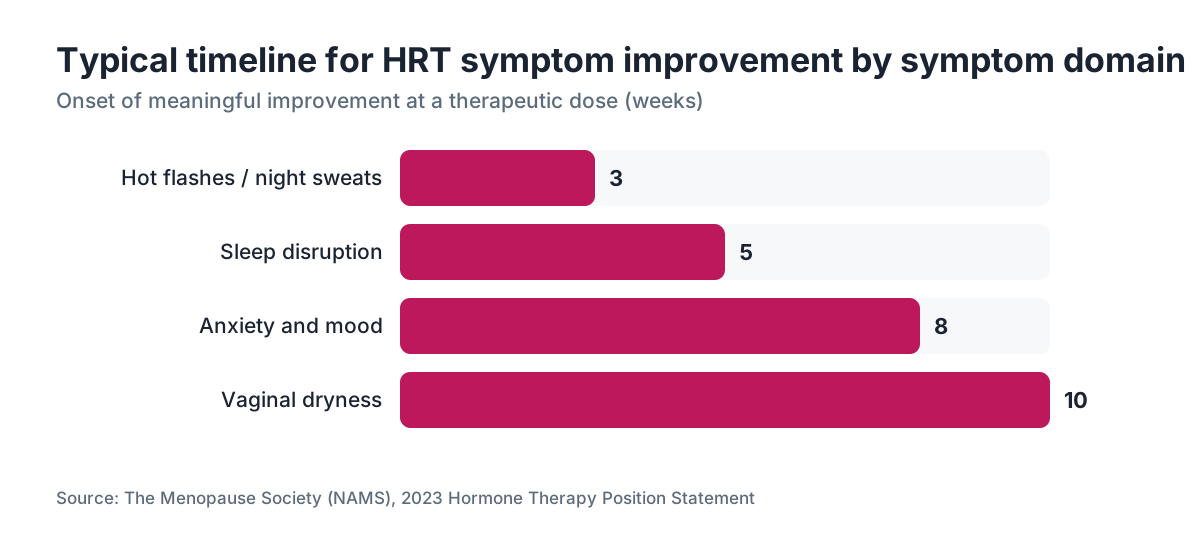
Hot flashes and night sweats often start improving within 2 to 4 weeks of reaching a therapeutic dose. Vaginal dryness usually takes 4 to 8 weeks for early improvement and up to 12 weeks for full response. Sleep, which is often the linchpin for anxiety, tends to improve inside the first 4 to 6 weeks as night sweats quiet down.
Mood and brain symptoms follow a slightly longer curve because neurochemical adaptation takes time. The 2023 Menopause Society (NAMS) hormone therapy position statement notes that relief timelines vary by symptom domain, with mood and cognitive symptoms often needing 8 to 12 weeks at a stable dose before you can judge the full effect [3].
Some women feel noticeably calmer within 10 to 14 days of starting estrogen. That early response is real and likely reflects the direct GABA-modulatory effects of estrogen and progesterone metabolites kicking in fast. Do not be discouraged if your anxiety hasn't vanished in two weeks. Things still settling at week four is not a sign the therapy has failed.
| Symptom | Typical onset of improvement | Full effect by | |---|---|---| | Hot flashes / night sweats | 2 to 4 weeks | 8 to 12 weeks | | Sleep disruption | 4 to 6 weeks | 8 to 12 weeks | | Anxiety / mood | 4 to 8 weeks | 8 to 16 weeks | | Vaginal dryness | 4 to 8 weeks | 12 to 16 weeks | | Bone protection | Months (no symptom) | Ongoing |
These are ranges, not guarantees. Your timeline shifts with dose, delivery method, and baseline hormone levels.
How long does it specifically take for HRT to work for anxiety?
Most data on HRT and anxiety in perimenopause and menopause points to a 4 to 12 week window, with the majority of women who respond showing real improvement by week 8 to 10 at a therapeutic dose [3][4].
A 2019 systematic review and meta-analysis in JAMA Psychiatry found that perimenopausal and early postmenopausal women given estrogen therapy had significantly lower odds of depressive symptoms than those on placebo, with the biggest effects in perimenopausal women still riding the hormonal fluctuations [4]. Anxiety and depression share enough neurochemistry that this finding gets extended to anxiety, though the data on anxiety scales specifically is smaller.
A few things move the timeline.
Delivery method. Transdermal estrogen (patches, gels, sprays) skips first-pass liver metabolism and delivers steadier blood levels than oral estradiol. Steadier levels can mean a smoother mood curve. An estrogen patch usually produces more consistent serum estradiol than a daily pill.
Dose adequacy. Many women start on the lowest dose of an estrogen patch or oral estradiol, feel partial improvement, and stall there. If anxiety is still significant at 8 to 12 weeks, that is the conversation to have: is the dose actually adequate for your symptoms, rather than just technically inside a normal range?
Cyclic vs. continuous progesterone. Women on cyclic progesterone (10 to 14 days per month) sometimes notice anxiety flares in the second half of the month, when progesterone is withdrawn. Continuous low-dose progesterone can smooth that pattern. Some women do better on oral micronized progesterone precisely because it converts to allopregnanolone. Others do better with transdermal progesterone to skip that same conversion, which can tip into sedation.
Underlying anxiety disorder. HRT addresses hormone-driven anxiety. If you also have generalized anxiety disorder, panic disorder, or PTSD that predates perimenopause, HRT alone probably will not carry you all the way. It can still help a lot, but therapy or medication alongside it may be what actually resolves things.
What does the research say about estrogen and the anxious brain?
The research here is genuinely interesting and more specific than most people expect.
Estrogen receptors (ERalpha and ERbeta) sit throughout the limbic system: the amygdala, hippocampus, and prefrontal cortex. Those are the structures that run threat detection, memory of frightening events, and your ability to regulate emotional responses [1]. Estrogen loss does more than change how you feel. It changes how your brain processes fear.
A 2021 review in the journal Menopause found that the menopausal transition was linked to increased amygdala reactivity, and that estrogen therapy appeared to normalize some of that heightened threat-response signaling [5]. The authors were careful not to overstate causality, since most of the studies are observational. But the neuroimaging, the receptor work, and the clinical trial mood data all point the same way.
Allopregnanolone, the progesterone metabolite from earlier, earns its own sentence. It is such a potent GABA-A modulator that a synthetic version (brexanolone) is FDA-approved specifically for postpartum depression, which shares the mechanism of rapid progesterone withdrawal [6]. The perimenopausal brain is coping with a slower but structurally similar withdrawal.
Nobody has clean data on the optimal hormone levels for mood versus the optimal levels for hot flash relief. Those may not even be the same targets. The closest published guidance comes from NAMS and the Endocrine Society, both of which recommend individualizing therapy to the lowest effective dose for your specific symptoms, then reassessing [3][7].
Does the type of HRT affect how fast it works for anxiety?
Yes, and it gets skipped over in a lot of online discussion.
Transdermal estradiol (patches, gels, creams, sprays) reaches therapeutic serum levels within 24 to 72 hours of first application. Oral estradiol absorbs faster but takes a big first-pass hit in the liver, converting to estrone and producing more variable blood levels. Most endocrinologists and gynecologists favor transdermal delivery for mood and cognitive symptoms because of that consistency, though the randomized data comparing routes specifically for anxiety is limited.
Oral micronized progesterone (brand name Prometrium, also generic and compounded) converts to allopregnanolone in the gut and liver, producing that GABA calm. For some women this is the piece that finally quiets the anxiety. For others, the sedative effect of high allopregnanolone is too much at the standard 200 mg dose, and they do better on 100 mg or on transdermal progesterone. Our progesterone article compares the forms in full.
Combined estrogen-progestogen therapy can produce a different anxiety response than estrogen alone. Some women on synthetic progestogens (like medroxyprogesterone acetate, the one used in the original Women's Health Initiative) report worse mood than women on micronized progesterone. A 2008 study in the journal Climacteric found women on estradiol plus micronized progesterone reported better mood outcomes than those on estradiol plus MPA [8]. This is not a minor distinction.
The takeaway: if you are on HRT and anxiety hasn't budged in 12 weeks, ask specifically whether you are on micronized progesterone or a synthetic progestogen, and pin down your estradiol delivery route and actual serum levels.
What if HRT isn't helping your anxiety after 12 weeks?
Twelve weeks at a stable therapeutic dose is a fair point to reassess. If anxiety is still loud, a few threads are worth pulling.
First, check your actual hormone levels. A serum estradiol drawn on a non-peak day (mid-patch cycle) tells you whether your dose is really delivering. Many women feel relief when estradiol lands in the 50 to 100 pg/mL range, though targets vary and some need levels closer to 150 pg/mL to feel well. The Endocrine Society clinical practice guideline on menopause management sets no single target number, but recommends that treatment decisions weigh both levels and symptoms [7].
Second, consider whether testosterone is the missing piece. Low testosterone in women links to low motivation, low libido, and sometimes a flat or anxious mood. Testosterone is not FDA-approved for women in the US, but it is used off-label with a reasonable evidence base, mostly for libido and energy. The data on testosterone and anxiety specifically is modest.
Third, be honest about whether an independent anxiety condition predates your hormone changes. HRT does not replace CBT, an SSRI or SNRI, or other evidence-based anxiety treatment. It works best when the primary driver is hormonal. A good clinician holds both possibilities at once.
WomenRx providers are built for exactly this kind of clinical nuance. They evaluate the full hormone picture, estradiol, progesterone, and testosterone, before adjusting a dose, rather than treating every anxious woman the same way.
Fourth, sleep. If night sweats and broken sleep haven't resolved, anxiety usually won't either. Sometimes nudging the estrogen dose up is what finally quiets the night sweats and, with them, the daytime anxiety that sleep loss breeds.
Is perimenopause anxiety different from postmenopause anxiety, and does that affect the HRT timeline?
Perimenopause anxiety and postmenopause anxiety run on different hormonal drivers, and that changes how fast HRT works.
In perimenopause, the chaos is the problem. Estrogen doesn't just fall. It swings hard, sometimes spiking above premenopausal levels before crashing. That variability is what the brain struggles to adapt to. Women in early perimenopause often feel most anxious precisely because their estrogen is erratic, not because it is low. Adding steady transdermal estrogen can flatten those swings, and mood often stabilizes fast, sometimes within 3 to 4 weeks.
In established menopause (12 months past your last period), estrogen is consistently low. Adding it back produces a more gradual response as receptors recalibrate. The mood timeline runs a bit longer here: 8 to 12 weeks rather than 4 to 6. Our perimenopause age and when does menopause start articles map out the transition timeline.
The JAMA Psychiatry meta-analysis found larger antidepressant effects (and by extension, likely anxiolytic effects) of HRT in perimenopausal women than in postmenopausal women [4]. That does not mean HRT fails postmenopausal women with anxiety. It means the hormonal contribution to mood is proportionally larger during the transition, when the swings are worst.
Starting HRT earlier in the transition appears to pay off beyond anxiety. The timing hypothesis in cardiovascular research, supported by the KEEPS and ELITE trials, suggests early initiation produces better outcomes across multiple systems. That is worth knowing even when anxiety is the symptom you came in for [9].
Can HRT make anxiety worse before it gets better?
For some women, yes. It is real, and it is not a reason to panic or stop.
In the first 1 to 2 weeks of starting HRT, especially oral estrogen, some women notice more anxiety, heart palpitations, or breast tenderness. This is usually a dose or delivery issue. The estrogen spike relative to baseline, or the uneven absorption of an oral pill, can briefly worsen the very volatility the brain is already fighting.
Transdermal delivery tends to make for a smoother start, because serum levels rise gradually instead of peaking 2 to 4 hours after a pill and then dropping. If you started on oral estradiol and feel worse in weeks one to two, say so before you give up on it.
Progesterone timing can also make the first stretch rough. Women who begin estrogen and progesterone together sometimes find the sedating effect of allopregnanolone reads as a heavy, low mood at first rather than calm. That usually clears in 2 to 3 weeks as the body adjusts.
Anxiety that is clearly worsening after 4 weeks with no improvement is not a normal adjustment period and deserves re-evaluation. But 7 to 14 days of extra restlessness or palpitations while your body adapts is common and well documented.
What else can you do while waiting for HRT to take effect?
Eight to twelve weeks feels endless when you are anxious. A few evidence-based moves work in the meantime, and most of them also boost HRT's eventual effect.
Sleep hygiene aimed straight at night sweats. A bedside fan, moisture-wicking sheets, a bedroom held at 65 to 68F, and cutting alcohol (which worsens thermoregulatory instability) can meaningfully reduce the sleep disruption that fuels daytime anxiety before HRT fully lands.
Aerobic exercise. A 2015 Cochrane review found exercise reduced menopausal symptoms, including psychological ones, in women going through menopause, with moderate-intensity aerobic exercise showing the most consistent effect [10]. Even 20 to 30 minutes three times a week helps. This is not a consolation prize while you wait. It works through different enough pathways that it stacks with HRT rather than just substituting for it.
Magnesium glycinate. Nobody has strong randomized data on magnesium for perimenopausal anxiety specifically, but the mechanism (NMDA receptor modulation, GABA facilitation) is real, and magnesium deficiency is common in women over 40. It is low risk and cheap. Doses of 200 to 400 mg at night are common.
Less caffeine, especially after noon. Caffeine worsens anxiety and shreds sleep architecture at doses that feel totally normal. Plenty of women never connect their 2pm coffee to their 2am wakefulness and next-day dread.
CBT, particularly for health anxiety or generalized anxiety if that pattern is present. In the studies that have looked, HRT plus CBT consistently beats either one alone for perimenopausal mood disorders.
Should you use HRT for anxiety instead of SSRIs or SNRIs?
This is the real clinical question, and the answer turns on what is driving your anxiety.
If your anxiety started during perimenopause, tracks with hormonal fluctuation, and arrives packaged with hot flashes, disrupted sleep, and other menopause symptoms, HRT is a solid first choice. You are treating the root cause. SSRIs and SNRIs treat the symptom.
SSRIs and SNRIs also work for perimenopausal anxiety and carry a longer evidence base in anxiety disorders specifically. Venlafaxine (an SNRI) reduces hot flashes through a separate mechanism, so some clinicians reach for it when HRT is contraindicated. The FDA has approved it and several other non-hormonal options (including the newer fezolinetant, brand name Veozah) for vasomotor symptoms, though anxiety is not an FDA indication for these drugs [11].
The honest picture: these approaches are not mutually exclusive. Some women do best on HRT alone. Some do best on HRT plus an SSRI or SNRI through the initial transition. Some, with a true anxiety disorder and incidental perimenopause, do best on medication plus therapy with HRT as a helpful add-on.
For the full picture of what hormone replacement therapy involves and which women are good candidates, that article covers the clinical indications in more depth. If you are also sorting out where menopause fits your current symptoms, the menopause overview pairs well with this one.
What questions should you ask your provider about HRT and anxiety?
Walking in with the right questions changes outcomes. Here is what actually earns its place on the list.
What is my baseline serum estradiol, and what level are we targeting? Not every provider runs labs before prescribing, but knowing where you started helps you judge whether a given dose is working.
Are we using bioidentical estradiol and micronized progesterone, or synthetic progestogens? This matters for mood, and you should know what you are taking.
What delivery route are we starting with, and why? If erratic mood is your worry, ask about transdermal delivery explicitly.
How long should I try this dose before we reassess? A clear timeline upfront prevents both quitting too early and suffering too long at the wrong dose.
Is my testosterone being evaluated? If libido, energy, and drive are low alongside the anxiety, that is a fair question to raise.
Should we address sleep directly alongside the hormones? Sometimes a short-term sleep aid or low-dose melatonin at 0.5 to 1 mg fits the first 4 to 6 weeks while HRT stabilizes your sleep.
WomenRx offers this kind of detailed hormone workup and individualized prescription through telehealth, which makes the conversation easier for women who cannot get enough time with their current OB-GYN.
Frequently asked questions
How long does HRT take to work for anxiety?
Most women notice meaningful anxiety relief within 4 to 8 weeks of reaching a therapeutic HRT dose. Fuller effects, especially on mood and cognition, take 8 to 12 weeks. Perimenopausal women often respond faster than those in established menopause, because steadying erratic estrogen is quicker than rebuilding it from a sustained low baseline.
How long does HRT take to work overall?
Hot flashes often improve within 2 to 4 weeks. Sleep typically improves in 4 to 6 weeks as night sweats quiet down. Mood and anxiety take 4 to 12 weeks depending on dose adequacy, delivery method, and the individual. Vaginal symptoms take longest, often 12 to 16 weeks for full response. If nothing has improved at all by 8 weeks, revisit the dose or delivery method.
How long does it take for HRT to work on mood?
Mood improvements usually begin within 4 to 6 weeks and keep building through 8 to 12 weeks at a stable dose. The 2019 JAMA Psychiatry meta-analysis found significant mood benefits from estrogen therapy in perimenopausal and early postmenopausal women, with the largest effect in the perimenopausal group. Progesterone form matters: micronized progesterone tends to support mood better than synthetic progestogens.
Can HRT make anxiety worse at first?
Yes, temporarily. Some women get more anxiety, palpitations, or restlessness in the first 1 to 2 weeks of HRT, particularly with oral estradiol. This usually reflects the initial hormonal adjustment and tends to resolve by week 2 to 3. Transdermal delivery raises serum levels more smoothly and is often better tolerated. If anxiety is clearly worse after 4 weeks, reassess the dose or formulation.
Does progesterone or estrogen help anxiety more?
Both contribute through different pathways. Estrogen modulates serotonin and norepinephrine systems. Progesterone converts to allopregnanolone, which acts on GABA-A receptors the same way calming agents like benzodiazepines do. For many women the combination beats either alone. Women taking estrogen without progesterone (after hysterectomy) sometimes notice a different quality of mood response than women on combined therapy.
Does transdermal estrogen work faster than oral for anxiety?
It reaches therapeutic blood levels quickly (within 24 to 72 hours) and holds a more consistent serum estradiol than oral estradiol, which peaks then falls over several hours. Steadier levels tend to mean smoother mood. Most clinicians who specialize in menopause medicine prefer transdermal delivery for women with mood or cognitive symptoms, though head-to-head randomized data on anxiety specifically is limited.
Is HRT or an SSRI better for perimenopausal anxiety?
If hormonal fluctuation is the main driver, HRT treats the root cause while SSRIs treat the symptom. Both are effective. For women whose anxiety started during perimenopause and tracks with other menopause symptoms, HRT is a logical first choice. For women with a pre-existing anxiety disorder, HRT plus an SSRI or SNRI, and possibly therapy, often produces the best outcome. These approaches are not mutually exclusive.
What hormone level should estradiol be at for anxiety relief?
There is no universal target, but most menopause specialists aim for serum estradiol around 50 to 100 pg/mL for symptom relief, with some women needing levels closer to 150 pg/mL to feel well. The Endocrine Society recommends weighing symptom response alongside lab values rather than chasing a number in isolation. If significant anxiety persists at 12 weeks, checking your actual serum level is a reasonable next step.
How does perimenopause anxiety differ from generalized anxiety disorder?
Perimenopause anxiety has a distinct quality: it appears or worsens during the transition, often in waves that track hormonal fluctuations, and it usually travels with physical symptoms like palpitations, hot flashes, and disrupted sleep. GAD is more persistent and generalized across life domains and often predates the transition. The two can coexist, and telling them apart matters for treatment planning.
Does HRT help anxiety in women who still have periods (perimenopause)?
Yes. The 2019 JAMA Psychiatry meta-analysis found the largest mood benefits from estrogen therapy in perimenopausal women, specifically those still in the hormonal transition rather than established menopause. Perimenopause runs on erratic estrogen fluctuations, and adding steady transdermal estradiol can flatten those swings quickly, often producing anxiety relief within 3 to 6 weeks in this group.
What if HRT isn't working for my anxiety after 3 months?
Check serum estradiol to confirm the dose is adequate. Ask whether you are on micronized progesterone or a synthetic progestogen, since the former tends to support mood better. Consider whether testosterone deficiency is contributing. Also evaluate whether an independent anxiety disorder or ongoing sleep disruption is present, which HRT alone cannot resolve. Adding CBT or an SSRI, or adjusting the regimen, may be needed.
Can low-dose HRT help anxiety, or do you need a higher dose?
Some women get adequate anxiety relief at lower doses. Others need enough to bring estradiol into the 80 to 150 pg/mL serum range before mood improves meaningfully. Starting low and titrating on both symptoms and lab values is standard. The target is the lowest dose that fully controls symptoms, not the lowest dose that partly controls them.
How long should you stay on HRT for anxiety?
Duration is individualized. NAMS and the Endocrine Society both recommend continuing HRT as long as you are benefiting and the benefit-risk profile supports it, with no mandatory stopping point. Annual reassessment with your provider is standard. Many women who quit HRT out of worry about long-term use find symptoms return, which is itself data about the hormonal contribution to their wellbeing.
Does HRT help with panic attacks related to menopause?
Panic attacks in perimenopause are often missed and may be partly driven by the cardiovascular and autonomic effects of estrogen withdrawal, including changes in heart rate variability and heightened adrenergic tone. HRT can reduce panic frequency in women whose attacks are hormonally triggered. Women with a history of panic disorder may need added treatment, but HRT is a reasonable part of management in this group.
Sources
- National Institutes of Health, PubMed: McEwen BS et al., Estrogen actions throughout the brain, Recent Progress in Hormone Research 2002
- National Institutes of Health, PubMed: Davis SR et al., Testosterone in women: the clinical significance, Lancet Diabetes Endocrinology 2015
- The Menopause Society (NAMS), 2023 Hormone Therapy Position Statement
- PubMed: Georgakis MK et al., Menopausal hormone therapy and the risk of depression, JAMA Psychiatry 2019
- PubMed: Maki PM and Kornstein SG, The psychologic effects of menopause and hormone therapy, Menopause 2021
- U.S. Food and Drug Administration, Brexanolone (Zulresso) Approval
- Endocrine Society Clinical Practice Guideline: Treatment of Menopause-Associated Vasomotor Symptoms, Journal of Clinical Endocrinology and Metabolism 2015
- PubMed: Bjorn I et al., Mood changes associated with different HRT formulations, Climacteric 2008
- PubMed: Hodis HN et al., Vascular effects of early vs late postmenopausal treatment with estradiol (ELITE trial), NEJM 2016
- Cochrane Library: Daley A et al., Exercise for vasomotor menopausal symptoms, Cochrane Database of Systematic Reviews 2015
- U.S. FDA, Veozah (fezolinetant) Approval 2023