How long does a bone density test take, and what should you expect?
TL;DR: A standard DEXA bone density test takes 10 to 30 minutes from the moment you lie down to when you're done. The spine-and-hip scan itself runs about 10 to 20 minutes; a full-body scan can stretch to 30 minutes. There's no injection, no claustrophobia, and no recovery time. You walk out the same day with results usually available within a few days.
How long does a bone density test actually take?
The short answer: 10 to 30 minutes, depending on which body parts your doctor ordered and the specific equipment at your facility [1].
The most common scan is a central DEXA (dual-energy X-ray absorptiometry) of the lumbar spine and hip. That takes roughly 10 to 20 minutes on modern machines. If your doctor adds the forearm or orders a full-body composition scan, add another 5 to 15 minutes. Peripheral DEXA scans, sometimes done at pharmacies or mobile health fairs to screen the heel or wrist, run even faster at around 5 to 10 minutes, but they're considered screening tools only and don't replace a full central DEXA [2].
Check-in and paperwork can add 15 to 20 minutes on top of the scan itself. Plan for about 45 minutes door-to-door on your first visit, less on follow-up scans because you already have a chart.
Nothing is injected. You don't drink a contrast solution. You stay fully clothed unless your clothing has metal hardware, in which case you may be asked to change into a gown. The machine is open, flat, and quiet. Claustrophobia is not an issue.
What happens during the bone density test procedure step by step?
Here's the sequence exactly as it happens in a radiology or DEXA suite.
First, a technologist reviews your medical history for anything that could interfere with the scan, recent contrast CT or nuclear medicine injections (usually cleared after 48 to 72 hours), calcium supplements taken within two hours of the appointment, implants, or hip hardware. Tell the tech everything. A metal hip replacement on the side being scanned will require the other hip or the forearm as a substitute site.
You lie flat on a padded table. For the lumbar spine scan, a foam block raises your legs so your lower back flattens against the table. For the hip scan, a positioning device rotates your foot inward slightly. Neither position hurts unless you already have significant pain with movement.
The scanning arm passes slowly over you, emitting two low-energy X-ray beams at different frequencies. The machine calculates bone mineral density (BMD) from how much of each beam the bone absorbs versus the surrounding soft tissue [1]. You feel nothing. Radiation exposure from a DEXA scan is roughly 1 to 10 microsieverts, equivalent to a few hours of natural background radiation and far less than a standard chest X-ray at about 100 microsieverts [3].
The technologist repositions the arm for each additional site ordered. You don't move between sites except to reposition your legs or arms. The machine does the work.
After the scan, you get up, collect your belongings, and leave. No recovery room. No observation period. You can drive, work, and eat normally.
When do you get your bone density test results, and what does the T-score mean?
A radiologist or your ordering physician interprets the scan, typically within 1 to 5 business days. Some practices offer same-day results; others take longer if the radiologist reads remotely.
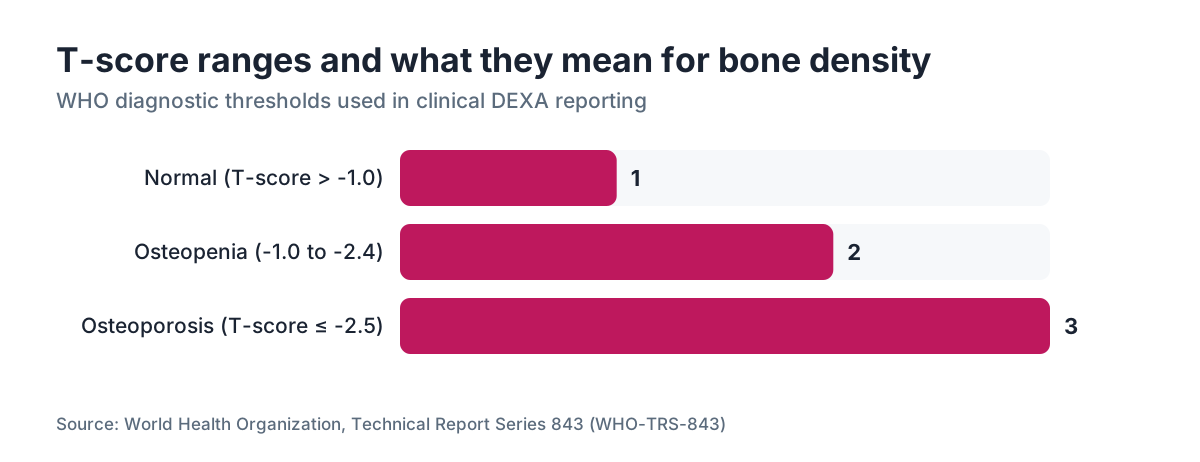
The central number you'll receive is a T-score. The World Health Organization defines these ranges [4]:
| T-score | Diagnosis | |---|---| | -1.0 and above | Normal bone density | | -1.1 to -2.4 | Osteopenia (low bone mass) | | -2.5 and below | Osteoporosis |
The T-score compares your bone mineral density to the average peak bone density of a healthy 30-year-old of the same sex. A score of -2.5 means your BMD is 2.5 standard deviations below that reference. The National Osteoporosis Foundation and the International Society for Clinical Densitometry both use this WHO classification [4].
You'll also see a Z-score, which compares you to people your own age and sex. A Z-score below -2.0 is considered low for your age group and can signal a secondary cause of bone loss worth investigating, such as a vitamin D deficiency, hyperthyroidism, or long-term corticosteroid use [5].
One result is not a sentence. Bone density numbers are read alongside your fracture risk factors using a tool called FRAX, which estimates your 10-year probability of a major osteoporotic fracture. A low T-score in a 65-year-old who smokes and has already had a fragility fracture is treated very differently than the same T-score in a 52-year-old who is otherwise healthy.
For context: the National Osteoporosis Foundation estimates that about 54 million Americans have osteoporosis or low bone mass, and roughly half of all women over 50 will break a bone because of it in their lifetime [5].
Who should get a bone density test, and at what age?
Current guidelines are consistent on the baseline recommendation. The U.S. Preventive Services Task Force recommends screening for osteoporosis with bone measurement testing for all women 65 and older, and for postmenopausal women younger than 65 whose 10-year fracture risk is equal to or greater than that of a 65-year-old white woman with no additional risk factors [6].
That threshold calculates to roughly a 9.3% 10-year fracture probability using the FRAX tool. Risk factors that can push a younger woman into that range include low body weight (BMI under 21), a parent who fractured a hip, smoking, excessive alcohol use, and use of corticosteroids for three months or more.
Menopause speeds bone loss dramatically. In the first 5 to 10 years after the final menstrual period, women can lose 2 to 3% of bone mineral density per year, compared to about 0.5 to 1% per year before menopause [7]. That makes perimenopause and early postmenopause the window where prevention matters most. If you're working through the perimenopause age transition or trying to understand when does menopause start for your situation, bone density is a conversation worth having with your provider sooner rather than later.
Other groups that may warrant earlier or more frequent testing include: women on aromatase inhibitors for breast cancer treatment, women with premature ovarian insufficiency, women who have had gastric bypass surgery, and anyone with a prior fragility fracture (a break from a fall from standing height or less).
For men, screening guidelines are less uniform. Most experts suggest testing men 70 and older and high-risk men starting at 50 to 70, but the male thresholds and FRAX inputs differ from the female ones.
How does estrogen affect bone density, and why does menopause matter so much?
Estrogen is one of the main brakes on osteoclast activity. Osteoclasts are the cells that break down old bone. When estrogen drops during menopause, that brake loosens, and bone resorption outpaces bone formation. The result is a measurable drop in BMD that shows up on DEXA scans within a few years of the final menstrual period [7].
This is one of the strongest arguments for hormone replacement therapy in early postmenopausal women. The Women's Health Initiative, for all its controversy, did consistently show that estrogen-based hormone therapy reduces hip fracture risk by around 33% and total osteoporotic fractures by around 24% [8]. The North American Menopause Society (NAMS) states that "hormone therapy is an appropriate option for the prevention of bone loss and osteoporosis in at-risk women under 60 or within 10 years of menopause onset" [9].
An estrogen patch or other systemic estrogen formulation, often paired with progesterone in women with a uterus, is specifically noted in the NAMS position statement as effective for bone maintenance. This matters because many women are told HRT is only about hot flashes. It's not. Bone protection is a real benefit backed by trial data.
For women who cannot or choose not to use hormone therapy, bisphosphonates (alendronate, risedronate, zoledronic acid) and the RANK-L inhibitor denosumab are FDA-approved for osteoporosis treatment and prevention. Each has its own risk-benefit profile worth discussing with your provider.
WomenRx providers can review your bone density results alongside your hormone levels and discuss whether hormone therapy might be appropriate for your situation as part of a broader menopause care plan.
Does a DEXA scan hurt, and is the radiation actually safe?
It doesn't hurt. There's no injection, no compression, no confined tube. You lie still on a flat table while a low-profile arm moves over you. The only discomfort most women report is minor back or hip pain from lying flat if they already have joint issues; telling the technologist upfront usually gets you an extra cushion.
On radiation: a central DEXA delivers approximately 1 to 10 microsieverts of radiation [3]. For comparison, a cross-country flight exposes you to about 20 to 40 microsieverts from cosmic radiation, and a standard chest X-ray delivers roughly 100 microsieverts. The FDA classifies DEXA as a very low-dose procedure, and the repeated scans recommended every 1 to 2 years for women on osteoporosis treatment do not accumulate to a meaningful risk level [10].
Pregnant women should not have DEXA scans unless there is a compelling clinical reason, because even low radiation should be avoided in pregnancy as a default precaution.
Contrast agents, sedation, and recovery time are not part of a standard DEXA scan. You can eat, drink, and take most medications normally before the appointment. The main exceptions are calcium supplements, which can slightly affect soft-tissue readings, and recent nuclear medicine or barium contrast studies, which can interfere with beam absorption. If you've had either of those in the past 48 to 72 hours, call your imaging center to confirm whether to reschedule.
How often should you repeat a bone density test?
Frequency depends on your baseline result, your risk factors, and whether you're on treatment.
For women with normal bone density and no significant risk factors, repeat testing every 10 to 15 years is often sufficient. The USPSTF does not specify a retesting interval because evidence on the optimal interval is limited, but most clinical practice guidelines converge on the following [6]:
| Baseline result | Typical retesting interval | |---|---| | Normal (T-score above -1.0) | 10 to 15 years | | Mild osteopenia (-1.0 to -1.49) | 5 to 10 years | | Moderate osteopenia (-1.5 to -1.99) | 3 to 5 years | | Advanced osteopenia or osteoporosis | 1 to 2 years |
Women who start osteoporosis treatment (bisphosphonates, denosumab, romosozumab, hormone therapy) are typically re-scanned at 1 to 2 years to confirm a treatment response, then every 2 years once stable.
A single scan is almost never enough information on its own. What matters clinically is the trajectory: is your bone density stable, improving on treatment, or continuing to decline despite intervention? That story needs at least two scans, ideally on the same machine and using the same protocol, because small equipment differences between machines can produce apparent changes that are actually just calibration noise rather than true biological change [2].
If you change imaging facilities, tell the new technologist and bring your previous report so they can note the different machine in your record.
Does GLP-1 weight loss affect bone density?
This is a real concern, and the data is still developing. Rapid weight loss from any cause, including GLP-1 receptor agonists like semaglutide and tirzepatide, can reduce bone mineral density. When you lose lean mass and fat mass quickly, you also lose some mechanical loading on bone, which is one of the main signals that keeps bone remodeling active and strong.
The STEP trials for semaglutide showed modest reductions in BMD, though fracture rates were not significantly elevated in those trials' relatively short timeframes [11]. The data for tirzepatide from the SURMOUNT trials is similarly early. Nobody has good long-term fracture data on women using GLP-1 agonists for several years. The closest evidence suggests the effect is real but small in the short term, and the magnitude likely tracks with total weight loss and rapidity of loss.
For women considering semaglutide for weight loss or comparing options like semaglutide vs tirzepatide, a baseline DEXA scan before starting and a repeat scan at 12 to 24 months is a reasonable precaution, especially for perimenopausal and postmenopausal women who are already at elevated risk. Resistance training during weight loss substantially reduces bone loss, which is a practical, evidence-backed step anyone on a GLP-1 can take regardless of their scan results [12].
The combination of GLP-1 use and declining estrogen in perimenopause creates a situation where monitoring bone density is genuinely sensible, more than box-checking. WomenRx providers who manage compounded semaglutide or branded GLP-1 programs can help you think through whether a DEXA scan belongs on your timeline.
What is the difference between a DEXA scan and other bone density tests?
DEXA is the gold standard and what most clinical guidelines are written around. But it helps to know what else exists.
Central DEXA measures the spine, hip, and sometimes forearm. It's the most validated test for predicting fracture risk and monitoring treatment response. Most major guidelines cite central DEXA BMD as the reference measurement.
Peripheral DEXA and quantitative ultrasound (QUS) measure the heel, wrist, or finger. These are faster (under 10 minutes), cheaper, and sometimes available without a referral at pharmacies or health fairs. They're reasonable for initial risk stratification but cannot replace central DEXA for diagnosis or treatment decisions.
Quantitative CT (QCT) of the spine can measure volumetric bone density and distinguish trabecular from cortical bone, which has some clinical advantages in specific situations. It's not widely used for routine screening because it delivers substantially more radiation than DEXA and costs more.
Vertebral fracture assessment (VFA) is an add-on to DEXA that images the thoracic and lumbar spine to detect existing compression fractures. It adds 5 to 10 minutes to the scan time and is especially useful for older women with height loss or back pain.
For a deeper look at the test itself, what to expect, and how results inform treatment decisions, see our full guide to bone density test evaluation.
How much does a bone density test cost, and is it covered by insurance?
Cost varies widely depending on payer, facility, and location. Without insurance, a central DEXA scan typically runs between $100 and $300 at outpatient radiology centers, and can be higher at hospital-based facilities [13].
Medicare Part B covers DEXA scans for qualifying beneficiaries every 24 months (and more frequently if medically necessary). Qualifying conditions include: women who have been determined to be estrogen deficient and at clinical risk for osteoporosis, individuals with vertebral abnormalities, those on long-term glucocorticoid therapy, those with primary hyperparathyroidism, and those being monitored to assess the response to or efficacy of an FDA-approved osteoporosis drug [10]. The Medicare benefit explicitly covers "bone mass measurements" as defined under Section 1861(rr) of the Social Security Act.
Most private insurance plans cover DEXA scans when ordered for women 65 and older or for younger women with documented risk factors, following USPSTF screening guidelines. Prior authorization requirements vary. If your plan requires it, your ordering physician's office usually handles the paperwork.
If you're paying out of pocket, independent radiology centers are almost always cheaper than hospital outpatient departments for the same scan. GoodRx and similar tools sometimes show imaging cash prices. Some women's health centers offer DEXA as part of a preventive panel, though bundled pricing can obscure the actual scan cost.
A peripheral DEXA at a pharmacy screening event may be free or under $50 but remember it's a screening tool, not a diagnostic one.
How should you prepare for a bone density test?
Preparation is minimal, which is part of why DEXA is such an accessible test.
Skip calcium supplements for at least two hours before your appointment. Some providers say 24 hours to be safe; check with your specific facility. Calcium tablets can affect the soft-tissue readings on some machines, though the effect is usually minor.
Wear comfortable, loose-fitting clothing without metal zippers, underwire bras, or thick belt buckles. If your clothing has significant metal hardware, you'll be asked to change into a gown. Spandex athletic wear with no hardware is ideal.
Eat and drink normally. Unlike many imaging tests, DEXA does not require fasting.
Tell the technologist about: any hip or spine hardware (previous surgeries with implants), recent contrast studies (barium swallow, CT with contrast, nuclear medicine), any possibility of pregnancy, and any corticosteroid use, since steroid-induced bone loss affects how results are interpreted.
Bring your previous DEXA reports if you have them. Even if you're switching facilities, having the prior numbers lets the radiologist note your trajectory rather than just your current snapshot.
That's genuinely it. The appointment is low-burden by design. The scan itself is the quick part. Most of the 45-minute door-to-door time is intake paperwork and waiting for the room.
Frequently asked questions
How long does a bone density test take from start to finish?
The scan itself takes 10 to 20 minutes for a standard spine-and-hip DEXA, or up to 30 minutes if additional sites like the forearm or full body are included. Add 15 to 20 minutes for check-in and paperwork. Total time from arrival to departure is usually about 45 minutes, less for follow-up visits when your chart already exists.
Do you have to undress for a bone density test?
Usually no. You stay fully clothed unless your outfit has significant metal hardware like underwire, thick zippers, or a metal belt buckle. If it does, the technologist will give you a gown for the areas being scanned. Athletic clothes with no hardware are ideal. You never remove everything, and there is no draping or clinical exposure involved.
Can you eat before a bone density test?
Yes. You can eat and drink normally before a DEXA scan. The only precaution is to skip calcium supplements for at least two hours before the appointment, since calcium tablets can slightly affect soft-tissue readings on some machines. Some facilities recommend skipping them for 24 hours; ask when you book.
Is a bone density test painful?
No. There is no injection, no compression, and no enclosed tube. You lie flat on a padded table while a low-profile scanning arm moves over you. The only discomfort some women notice is minor back or hip stiffness from lying flat, which can usually be addressed with a foam cushion. Tell the technologist before the scan starts if you have joint pain.
What does a T-score of -2.5 mean?
A T-score of -2.5 means your bone mineral density is 2.5 standard deviations below the average peak bone density of a healthy young adult, which meets the WHO threshold for an osteoporosis diagnosis. It doesn't automatically mean you'll fracture a bone; your doctor uses the T-score alongside age, fall history, and other risk factors to decide on treatment.
At what age should women start getting bone density tests?
The USPSTF recommends routine screening starting at age 65 for all women. Younger postmenopausal women with risk factors such as low body weight, smoking, family history of hip fracture, or corticosteroid use may qualify earlier. If you have premature menopause or have been on aromatase inhibitors, ask your provider about earlier baseline testing.
How long does it take to get bone density test results?
Most results are available within 1 to 5 business days after the scan. A radiologist reads the images and sends a report to your ordering physician, who then contacts you. Some practices have same-day reads; others use off-site radiology services that take longer. Ask at booking so you're not left wondering after your appointment.
Does menopause affect bone density test results?
Yes, significantly. Estrogen decline during menopause removes one of the main brakes on bone breakdown. In the first 5 to 10 years after the final period, women can lose 2 to 3% of bone mineral density per year. This is why DEXA results often look worse at 55 than they did at 48, even without any other changes in health or lifestyle.
Can you have a bone density test while on hormone therapy?
Yes, and it's actually useful to scan while on HRT to confirm it's working. Estrogen-based hormone therapy is associated with roughly 33% reduction in hip fracture risk and is specifically recommended by NAMS for bone protection in women under 60 or within 10 years of menopause onset. A follow-up DEXA 1 to 2 years into therapy shows whether bone density is stable or improving.
Does rapid weight loss from GLP-1 medications affect bone density?
It can. The STEP trials for semaglutide showed modest BMD reductions, and the mechanism makes sense: losing weight quickly reduces mechanical loading on bone. The effect appears small in short-term trials, but long-term fracture data is still limited. Resistance training during weight loss substantially reduces bone loss and is a practical step for anyone on a GLP-1.
How often should you repeat a bone density test?
Women with normal bone density generally retest every 10 to 15 years. Mild osteopenia warrants a repeat in 5 to 10 years; advanced osteopenia or osteoporosis typically means annual or biennial scans. Women on treatment for osteoporosis are usually re-scanned at 1 to 2 years to confirm a response, then every 2 years once stable.
Is a heel ultrasound the same as a DEXA bone density test?
No. Quantitative ultrasound at the heel is a screening tool only. It takes under 10 minutes and involves no radiation, but it cannot diagnose osteoporosis or monitor treatment. Current guidelines for diagnosis and treatment decisions all require central DEXA of the spine and hip. A positive heel ultrasound screen should prompt a referral for a full central DEXA.
Does Medicare cover bone density testing?
Yes. Medicare Part B covers DEXA scans every 24 months for qualifying beneficiaries, including postmenopausal women at clinical risk for osteoporosis and anyone on long-term glucocorticoid therapy or FDA-approved osteoporosis medication. More frequent coverage is available if medically necessary. Most private plans follow similar USPSTF-aligned criteria.
What should you wear to a bone density test?
Comfortable, loose clothing without metal hardware is ideal. Spandex athletic wear or soft pants and a T-shirt work perfectly. Avoid underwire bras, thick metal zippers, belt buckles, and pants with rivets in the hip area. If your clothes have unavoidable hardware, the facility will provide a gown. You keep everything on from the waist down for the hip scan.
Sources
- RadiologyInfo.org (ACR/RSNA), Bone Densitometry (DEXA, DXA)
- International Society for Clinical Densitometry (ISCD), Official Positions
- Health Physics Society, Radiation Exposure from Medical Procedures
- National Osteoporosis Foundation, Bone Health Basics
- U.S. Preventive Services Task Force, Osteoporosis to Prevent Fractures: Screening (2018)
- National Institute on Aging (NIH), Osteoporosis
- JAMA, Women's Health Initiative: Effects of Estrogen on Fracture (Anderson et al., 2004)
- Centers for Medicare and Medicaid Services (CMS), Medicare Benefit Policy Manual, Chapter 15, Bone Mass Measurements
- New England Journal of Medicine, STEP 1 Trial: Semaglutide 2.4 mg (Wilding et al., 2021)
- Journal of Bone and Mineral Research, Resistance Exercise and Bone Loss during Weight Reduction (meta-analysis)
- Healthcare Bluebook, Fair Price for DEXA Bone Density Scan