How long can semaglutide be out of the fridge?
TL;DR: An unopened or in-use semaglutide pen (Ozempic or Wegovy) keeps at room temperature, between 59°F and 86°F (15°C to 30°C), for up to 56 days. After that window, discard it. Never freeze semaglutide. These rules come straight from the FDA-approved prescribing information for both branded products.
What is the actual room-temperature limit for semaglutide?
Fifty-six days. That is the labeled limit, and it comes straight from the FDA prescribing information for both products. Ozempic and Wegovy labels state that a pen may be stored at room temperature (up to 86°F/30°C) for up to 56 days once you start using it or once you take it out of the refrigerator [1][2]. Eight weeks. Not a vague "a few weeks" or "about a month." Fifty-six days, then you throw it out.
The cold end of that range matters too. The label sets a floor of 59°F (15°C) [1]. A pen sitting in a cold car on a January morning, or parked next to an air conditioning vent that runs below 59°F, is technically outside the labeled range, though freezing is the bigger threat (more on that below).
Here is what trips people up: the 56-day rule applies whether the pen is brand new or already half used. The clock starts when the pen leaves the fridge, not when you take your first dose.
Does it matter whether the pen is opened or unopened?
No. The 56-day rule covers both states. Novo Nordisk's Ozempic prescribing information draws no line between a new, capped pen and one you've already injected [1]. The moment a pen comes out of the fridge for the first time, the countdown starts, needle cap or not.
That surprises a lot of people who assume the clock only begins at first injection. Write the date on the pen with a permanent marker the day you pull it from the fridge. That is the only reliable way to track it.
Insulin has a similar 28-day room-temperature rule after opening, so the logic is familiar to anyone who has managed diabetes medication. Semaglutide gets a longer window, but the reason is the same. Proteins and peptides break down outside cold storage over time.
What temperature is too hot for semaglutide?
Anything above 86°F (30°C) sits outside the labeled safe range. That covers a hot car dashboard in summer (which can hit 130°F to 170°F), a gym bag left in the sun, a bathroom cabinet near a steam shower, or a windowsill catching afternoon light [3].
Heat speeds up the chemical breakdown of the GLP-1 peptide in the solution, and you probably won't see it happen. The liquid may still look clear and colorless, which is exactly how a good pen looks [1]. That is the trap. A heat-damaged pen gives you no warning.
Post-market reports to the FDA have described reduced efficacy and injection site reactions after suspected temperature excursions, though causality is hard to pin down in that kind of data. The conservative clinical call is to treat any confirmed exposure above 86°F as a discard event.
Simple test: if a chocolate bar would melt where you left the pen, the pen wasn't safe there either.
Can semaglutide be refrigerated again after being at room temperature?
Yes. You can move the pen back into the fridge as many times as you want during the 56-day window. The Ozempic prescribing information states the pen "can be stored in the refrigerator or at room temperature" and can move between the two [1]. There is no rule against returning it to the cold.
What you cannot do is restart the clock. Putting the pen back in the fridge does not buy you a fresh 56 days. The counter keeps running from the date the pen first left refrigeration. If a pen came out 40 days ago, it has 16 days left, no matter how much of that time it spent back in the cold.
Keep tracking that original date.
What happens if semaglutide freezes?
Freezing is a hard discard. The label is blunt: "Do not freeze. Do not use Ozempic if it has been frozen" [1]. The Wegovy label says the same [2].
Freezing can trigger protein aggregation in the peptide solution, meaning the drug forms tiny clumps or particles you can't see with the naked eye. Those particles don't inject the way they should, and the dose you actually get may run unpredictably low.
The number to worry about is 32°F (0°C). A pen left in a car overnight during a hard freeze, stored where a mini-fridge freezer bleeds cold into the shelf below, or packed directly against ice in a cooler is all at risk. If you're not sure whether it froze, look at the liquid. Any cloudiness, discoloration, or visible particles means discard it now [1]. If it looks fine but you genuinely suspect a freeze, the safest move is still to toss it and call your pharmacy or prescriber for a replacement.
How should you travel with semaglutide?
Travel is where most temperature excursions happen. A few practical points that follow the labeled storage rules.
For short trips (under 56 days of total room-temperature exposure), a pen needs no cooler at all. It just has to stay below 86°F and above 59°F. A carry-on bag in an air-conditioned cabin is fine. Cargo hold temperatures can drop well below freezing at altitude, so semaglutide never goes in checked luggage [3].
For longer trips, or a very hot destination, a soft insulin travel case with a reusable cooling insert (not ice, which risks freezing) keeps the pen in range. Several cases are built specifically for GLP-1 and insulin pens.
TSA allows injectable medications in carry-on bags without the 3.4-ounce liquid limit. Keeping medication in its original labeled packaging through security is the standard recommendation and cuts down on questions [4]. You do not need a doctor's note at the checkpoint, but the pharmacy label on the pen helps.
One more thing: if you're running semaglutide alongside hormone therapy, say an estrogen patch and a GLP-1, the storage rules differ. Estrogen patches keep at room temperature away from heat and humidity, but they aren't cold-sensitive the way a peptide pen is. You can read about estrogen patches and their storage separately.
How do you know if semaglutide has gone bad?
Inspect the solution before every injection. A safe pen holds a clear, colorless to almost colorless liquid with no visible particles [1][2]. The check takes three seconds and it earns its keep.
Discard immediately for any of these: cloudiness, a white or colored tint, floating particles, or any shift from the normal appearance. Also discard if the pen has been outside the labeled temperature range, if it's past 56 days at room temperature, or if it froze.
Here is what you can't see: a pen that looks fine but has been quietly degraded by marginal heat (say, weeks at 82°F). There is no visible signal for that. And nobody has reliable data on the exact degradation rate at, say, 83°F versus 86°F over 40 days. The labeled limits exist because that is what Novo Nordisk tested and validated. Outside those ranges, you're off the map.
If you're uncertain and it's your last pen before a dose is due, call your prescriber. Most telehealth practices that prescribe GLP-1s, including WomenRx, can help you judge whether a replacement dose makes sense and get the pharmacy moving fast.
What are the storage rules for compounded semaglutide?
This is where the picture gets murky. Compounded semaglutide from a 503A or 503B pharmacy is not the same product as branded Ozempic or Wegovy, and it does not carry the same FDA-reviewed label with validated stability data [5]. The 56-day room-temperature rule is specific to Novo Nordisk's formulation and its tested inactive ingredients.
Compounding pharmacies set their own beyond-use dating (BUD) on the label. Those dates come from USP General Chapter 797 rules for sterile preparations, not from product-specific stability studies [9]. Many compounded semaglutide vials read refrigerate-only, with room-temperature limits of a few hours to a day, because the pharmacy hasn't run the long-term stability testing Novo Nordisk did.
If you use compounded semaglutide, follow the storage instructions on your specific vial label to the letter. When in doubt, call the compounding pharmacy and ask for the beyond-use date and temperature excursion policy in writing. Do not assume the branded rules apply.
The FDA has flagged ongoing concerns about the quality and labeling of compounded GLP-1 products, and storage instructions are one place where compounded products vary a lot from the branded version [5].
What should you do if semaglutide was left out too long?
First, figure out how long. If the pen stayed at room temperature (under 86°F) and you're still inside the 56-day window, do nothing. It's still labeled safe.
If the pen sat at room temperature more than 56 days, the FDA label says discard it [1]. Don't use it, even if it looks perfect.
If the pen hit anything above 86°F for any stretch of time, the conservative call is to discard. There is no published recovery protocol for heat-exposed semaglutide. Chilling it again does not reverse peptide degradation.
If it froze, discard it. No exceptions [1].
For a replacement, call your pharmacy. Depending on your insurance or program, a temperature excursion may or may not qualify for a no-charge replacement. Some pharmacies run a one-time replacement policy for documented temperature events. If you paid out of pocket and the pen is fairly new, it's worth calling and explaining exactly what happened before you assume the cost is yours.
How does semaglutide storage compare to other GLP-1 medications?
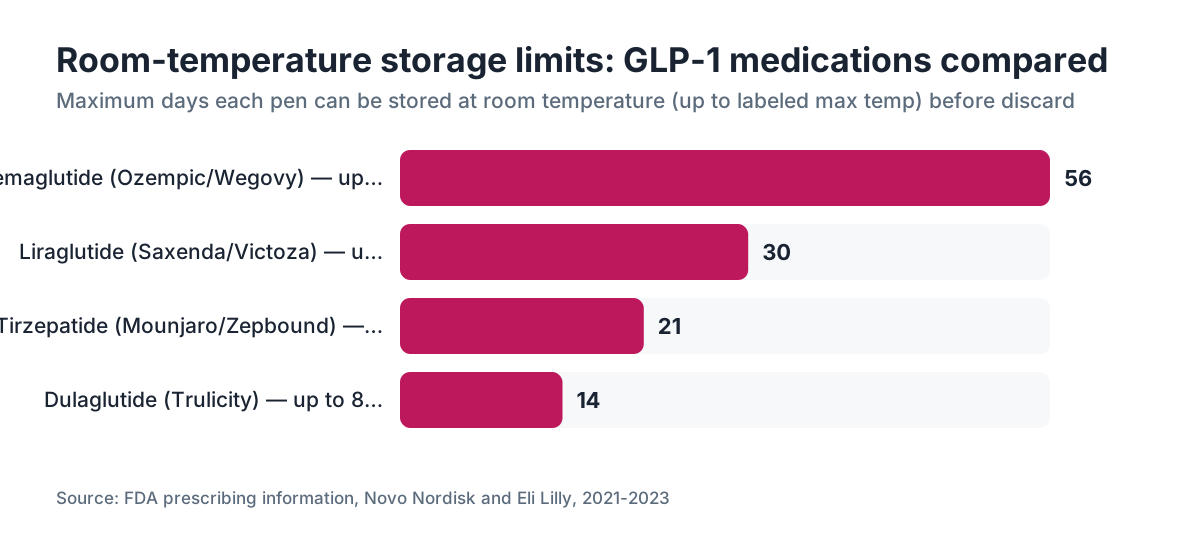
The table below lines up the labeled room-temperature limits for the major GLP-1 and GIP/GLP-1 receptor agonists on the market. Every figure comes from FDA prescribing information or manufacturer labeling [1][2][6][7][10].
| Drug | Brand | Room-temp limit | Max temp | Freeze? | |---|---|---|---|---| | Semaglutide injection | Ozempic / Wegovy | 56 days | 86°F (30°C) | Never | | Tirzepatide | Mounjaro / Zepbound | 21 days | 86°F (30°C) | Never | | Liraglutide | Victoza / Saxenda | 30 days | 77°F (25°C) | Never | | Dulaglutide | Trulicity | 14 days | 86°F (30°C) | Never |
Semaglutide has the most forgiving room-temperature window of any GLP-1 in current use. Tirzepatide gets less than half of it. If you're weighing which GLP-1 fits your life, comparing semaglutide vs tirzepatide runs well beyond storage, but the 56-day versus 21-day gap is real and worth knowing.
Liraglutide (Saxenda) carries a stricter max temperature of 77°F instead of 86°F, which matters in warm climates.
Does storage affect how well semaglutide works for weight loss?
In theory, yes. If the peptide degrades, you get a lower effective dose. In practice, no published clinical trial has measured weight loss outcomes in people who used improperly stored semaglutide. The STEP trials, which established the drug's weight loss efficacy (an average 14.9% body weight reduction with 2.4 mg weekly over 68 weeks), ran under controlled storage that met every labeled requirement [8].
What STEP can't tell you is what happens to a pen after three weeks at 90°F. The labeled range is what got validated during development. Outside it, there's no efficacy guarantee.
For women using semaglutide for weight loss, especially through perimenopause or menopause when hormones already complicate body composition, a degraded pen that delivers less drug than expected can masquerade as a plateau or a non-response. If your results stall out of nowhere and you've had any storage trouble, tell your prescriber.
The larger point: storage is not paperwork. It is part of getting the full clinical benefit of a medication you inject weekly and pay real money for.
Who should you call if you have a storage question about your specific pen?
Three options, ranked by speed and specificity.
Start with your dispensing pharmacy. Pharmacists are trained in drug storage and stability. They can pull your fill date, check the labeled beyond-use date, hear the storage history you describe, and give you a concrete answer. This is the fastest path to something reliable.
Next, your prescriber or telehealth platform. If you use a service like WomenRx for your GLP-1 prescription, the clinical team can advise on whether a replacement is indicated and help coordinate it. Most GLP-1 prescribers handle storage questions constantly and work from a set protocol.
Third, Novo Nordisk's patient support line (1-888-668-6444 for Ozempic, 1-833-934-6891 for Wegovy). The manufacturer has medical information staff who answer label-specific questions directly.
For general medication storage guidance, the FDA's consumer drug information pages are public and free [4].
Frequently asked questions
Can I leave my Ozempic pen out overnight?
Yes, as long as the room stays between 59°F and 86°F and the pen has been out of the fridge fewer than 56 days total. One night at normal room temperature sits well within the labeled limits. Just make sure the total accumulated time at room temperature never crosses 56 days from the day the pen first left refrigeration.
What if my semaglutide pen was left in a hot car?
Discard it. Car interiors in warm weather routinely pass 86°F, often hitting 130°F or higher, far outside the labeled storage range. The peptide may have degraded even if the liquid looks normal. Contact your pharmacy and prescriber to arrange a replacement before your next scheduled dose.
Does the 56-day rule apply to Wegovy and Ozempic equally?
Yes. Both the Ozempic and Wegovy FDA labels set a 56-day maximum at room temperature up to 86°F (30°C). The active molecule is the same semaglutide peptide in both. The dosing differs, but the storage requirement is identical.
Can semaglutide be stored in a bathroom medicine cabinet?
Usually a bad idea. Bathrooms build heat and humidity from showers, and temperatures near a mirror or a cabinet above the sink swing around. A cooler, drier spot, like a bedroom dresser drawer away from windows, is a better room-temperature home for a pen inside its 56-day window.
Does semaglutide need to be at room temperature before injection?
Novo Nordisk suggests letting the pen reach room temperature before injecting, usually about 30 minutes out of the fridge. Injecting cold medication can sting more, though it doesn't change the drug's efficacy. This short warming period doesn't count meaningfully against the 56-day clock.
How should I store semaglutide when traveling internationally?
Keep it in your carry-on, never checked luggage. Cargo holds can freeze. A soft insulated pen case with a cooling card (not ice packs) helps in hot destinations. The pen holds at room temperature for up to 56 days total, so most trips need no cooler if you can keep the bag in air-conditioned spaces.
What does semaglutide look like if it has gone bad?
A compromised pen may show cloudiness, discoloration, or visible particles in what should be a clear, colorless solution. But a heat-damaged pen can look completely normal. Appearance alone is not a reliable safety check. Always verify the storage history and discard any pen that has been outside labeled temperatures or past 56 days at room temperature.
Is the storage rule the same for compounded semaglutide?
No. Compounded semaglutide has no FDA-reviewed stability data supporting the 56-day rule. Most compounding pharmacies label their vials refrigerate-only with short room-temperature limits, sometimes just a few hours. Always follow the beyond-use dating and storage instructions printed on your compounded vial, not the branded product rules.
Can I put semaglutide back in the fridge after it has been at room temperature?
Yes, you can refrigerate it again. Moving the pen between the fridge and room temperature is explicitly allowed per the label. But the 56-day clock does not reset when you return it to the cold. The clock started the first day the pen left refrigeration and keeps running wherever the pen goes next.
Does semaglutide lose effectiveness if stored incorrectly?
Potentially yes. The drug's trial efficacy was established under proper storage. If the GLP-1 peptide degrades from heat or freezing, the effective dose you receive may drop below what's expected. A sudden weight loss plateau paired with a suspected storage issue is worth raising with your prescriber.
How long does an unopened semaglutide pen last in the fridge?
An unopened, refrigerated pen is good until the expiration date printed on the label, usually around two years from manufacture. The 56-day room-temperature rule only starts once the pen leaves the fridge. Before that, standard refrigerator storage between 36°F and 46°F (2°C to 8°C) applies.
What temperature should a semaglutide pen be stored at in the refrigerator?
Between 36°F and 46°F (2°C to 8°C), standard refrigerator temperature. Keep it out of the freezer compartment and off the back wall, where some refrigerators run colder and risk freezing. The crisper drawer or a shelf in the main compartment usually works well.
Sources
- FDA, Ozempic (semaglutide) prescribing information via DailyMed, Novo Nordisk
- FDA, Wegovy (semaglutide) prescribing information via DailyMed, Novo Nordisk
- FDA, Safe Drug Disposal and Storage consumer information
- TSA, What Can I Bring? Medications
- FDA, Compounding and the FDA: Questions and Answers
- FDA, Mounjaro (tirzepatide) prescribing information via DailyMed, Eli Lilly
- FDA, Saxenda (liraglutide) prescribing information via DailyMed, Novo Nordisk
- Wilding JPH et al., STEP 1 Trial, New England Journal of Medicine, 2021
- USP, Compounding Standards and Beyond-Use Dating
- FDA, Zepbound (tirzepatide) prescribing information via DailyMed, Eli Lilly