How long after stopping HRT do symptoms return?
TL;DR: Most menopausal symptoms come back within 2 to 4 weeks of stopping hormone replacement therapy. Hot flashes and night sweats lead; sleep goes next. How fast and how hard depends on whether you quit abruptly or tapered, how long you were on it, and your age. Some women feel fine. Others get a rebound worse than their original symptoms. There is no universal safe window.
What actually happens in your body when you stop HRT?
HRT supplements estrogen, and often progesterone or testosterone, at levels your ovaries no longer make reliably. Stop it, and circulating hormone levels fall again, usually within days. Oral estradiol has a half-life of roughly 12 to 20 hours, and patches and gels clear a bit slower, so blood levels drop fast [1].
The hypothalamus and pituitary gland regulate body temperature and dozens of other functions, and they react to that drop. The hypothalamus narrows its thermoneutral zone. Tiny shifts in core body temperature then trigger a hot flash or a night sweat. This is the same mechanism that drove your original symptoms before HRT, and it switches back on when estrogen leaves.
None of this is dangerous for most women. But it's real, and it can feel abrupt, especially if you stop cold rather than tapering.
How quickly do hot flashes and night sweats come back after stopping HRT?
Faster than most women expect. In withdrawal studies, vasomotor symptoms (hot flashes and night sweats) usually come back within 2 to 4 weeks of stopping estrogen [2]. Some women get the first flush inside a week.
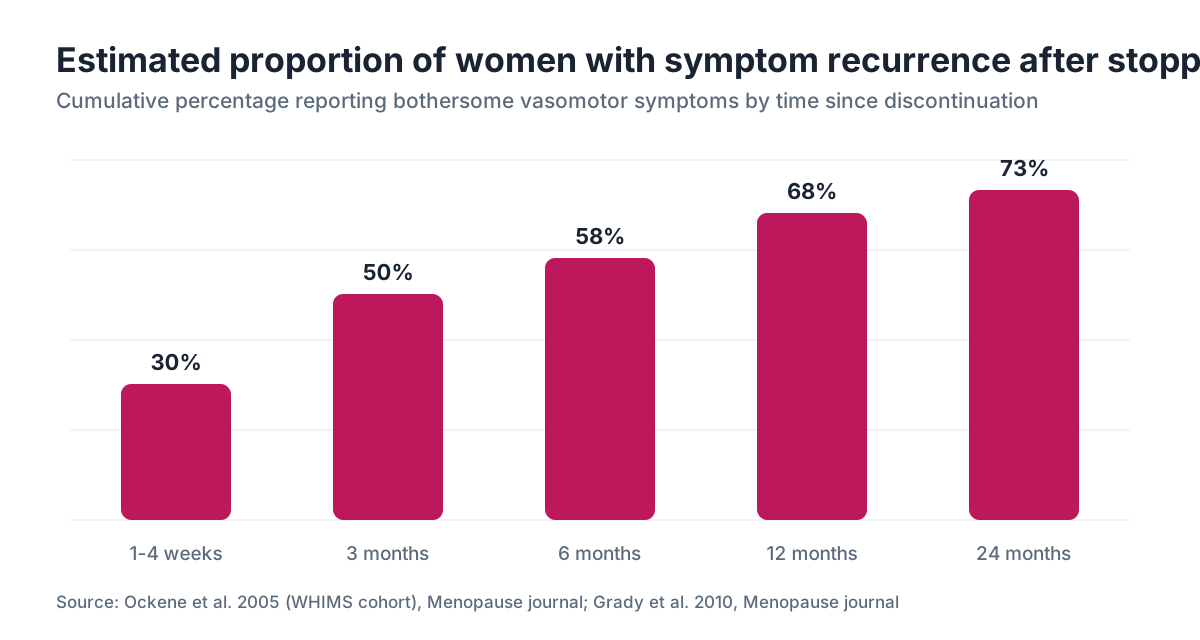
Research published in Menopause found that about half of women who stopped estrogen had significant symptom recurrence within 3 months. By 12 months, roughly 65 to 70 percent had bothersome symptoms back [3].
Severity matters as much as timing. Women who stop abruptly, especially those on higher doses, often say the return feels worse than what they had before starting HRT. That's the rebound effect, and it's real. Your body was holding FSH and LH low. When those hormones surge back, the thermoregulatory disruption can spike.
Women who used HRT longer than five years, or who started during early perimenopause, tend to report the most jarring recurrence. That doesn't mean they can't stop. It means they gain the most from a slow taper.
Does stopping HRT gradually make the symptoms less severe?
Yes, almost certainly. The North American Menopause Society (NAMS) says tapering the dose over weeks to months is generally preferred over abrupt discontinuation, while admitting the evidence on the best taper schedule is thin [4].
Common taper approaches: switch from a daily patch to a lower-dose patch, then to every-other-day use, then stop. Or drop oral estradiol from 1 mg to 0.5 mg for four to eight weeks before stopping. No single protocol has the strongest trial data behind it. The point is to let the hypothalamus readjust gradually instead of in one shock.
Some physicians use a six-week taper. Some use six months. If your symptoms were severe before you started HRT, a longer taper makes sense. If you were on a low dose for a short time, a four-week step-down is often plenty.
One caveat worth keeping. Even with a careful taper, many women still get some symptom return. The taper cuts the severity and the rebound. It rarely erases symptoms entirely.
Which symptoms come back first, and which take longer?
Hot flashes and night sweats almost always return first, usually within two to four weeks [2]. Sleep disruption follows fast, partly because night sweats wake you and partly because estrogen has its own effects on sleep architecture.
Vaginal dryness, urinary urgency, and the broader picture called genitourinary syndrome of menopause (GSM) come back too, but slower. Those tissues thin gradually, so changes may not be obvious for weeks to months after stopping systemic HRT. Low-dose vaginal estrogen is a separate product from systemic HRT, and it can keep treating GSM even after you've stopped systemic therapy. It carries a very different risk profile [4].
Joint pain and muscle aches, which many women never connect to hormones, may return over one to three months. If you've dealt with something like frozen shoulder, estrogen withdrawal can worsen the inflammatory environment around tendons and joints.
Mood changes, brain fog, and anxiety tend to resurface slower, often two to six months out, though women who had heavy mood symptoms before starting HRT usually notice mood shifts earlier.
Bone density is the long game. Within 12 to 24 months of stopping HRT, the accelerated bone resorption of early menopause resumes [5]. You won't feel it. It matters for fracture risk over the next decade.
Does it matter how long you were on HRT?
Yes, in a few ways. Women who used HRT longer tend to feel a sharper drop when they stop, because their bodies had less reason to keep any adaptation to low estrogen. Then again, longer-term users are usually older by the time they stop, and symptom severity generally eases with age (not for everyone).
A woman who started HRT in her early 40s during perimenopause and used it into her late 50s is in a different spot than a woman who started at 52 for a two-year course. For the longer-term user, the hypothalamus may be more reactive when estrogen is pulled.
The data on duration and recurrence risk aren't clean. A post-WHI reanalysis in JAMA in 2017 found symptom recurrence was common regardless of how long women had used HRT, and no subgroup was reliably protected [6]. Honest takeaway: duration is worth discussing with your prescriber, but it doesn't reliably predict whether your symptoms come back.
Are symptoms after stopping HRT always the same as the original ones?
Not always. Most women get back something close to what they had, but the picture can shift. Someone whose main problem was night sweats may find she now has more daytime flashes. Someone with mild symptoms before HRT may get more intense ones on withdrawal, especially in the first few weeks.
Part of that is the rebound effect. Part of it is that menopause keeps progressing while you're on HRT. If you started therapy at 48 during perimenopause and stop at 55, your hormonal environment after stopping is different from what it was at 48. You're further down the estrogen-decline curve.
Some women develop new symptoms they never had before: anxiety, heart palpitations, and formication (the sensation of insects crawling on skin). These are recognized menopause symptoms that can show up at any point along the estrogen-decline trajectory [7].
What does the research say about symptom recurrence rates?
The most-cited figure is that 50 to 65 percent of women get a meaningful return of vasomotor symptoms within the first year after stopping HRT [3]. Research in BJOG found that among women who quit after long-term use, 43 percent restarted within 12 months because symptoms became unmanageable [8].
The SWAN study (Study of Women's Health Across the Nation) tracked women for years and found vasomotor symptoms persist for a median of 7.4 years from the final menstrual period, and longer for some [9]. That matters here. Stopping HRT doesn't reset that clock. It just removes the drug that was suppressing symptoms that were going to keep going anyway.
Younger women who stop HRT (say, late 40s, started early) tend to have higher recurrence rates and rougher symptoms than older women, because they're further from the natural window when symptoms fade.
Here's what the evidence says about timing and recurrence probability.
| Timeframe after stopping HRT | Estimated proportion with symptom return | |---|---| | 1 to 4 weeks | ~25-35% (hot flashes, night sweats) | | 3 months | ~50% | | 6 months | ~55-60% | | 12 months | ~65-70% | | 24 months | ~70-75% |
These figures are approximate and come from observational cohort data. Individual experience varies widely [3][8][9].
Is there a "right" time in life to stop HRT?
This is genuinely contested. NAMS sets no firm age ceiling for HRT use. Its 2022 position statement holds that for healthy women under 60 or within 10 years of menopause onset, the benefits of hormone therapy for quality of life generally outweigh the risks when there are no contraindications [4]. That's a big shift from the post-WHI years, when many physicians told women to stop by 55 no matter what.
The old "try to stop in your fifties" advice was largely a reaction to the Women's Health Initiative scare in 2002, which showed elevated breast cancer and cardiovascular risk in older women (average age 63) starting conjugated equine estrogen plus medroxyprogesterone acetate. Later reanalysis showed the risks were far smaller for younger postmenopausal women using body-identical estradiol [6].
So the honest answer: there is no universal right time to stop. The decision weighs your symptom burden, your cardiovascular and breast cancer risk, your bone density, your quality of life, and your own preferences. For many women, that math changes in their mid-to-late 60s. For others, low-dose estrogen into their 70s is a reasonable choice made with a physician.
If you want individualized guidance from a practitioner who does this all day, WomenRx offers telehealth hormone consultations that include a full medical history review before any prescription is written.
What non-hormonal options actually help if symptoms return after stopping HRT?
A few options have real evidence. Many sold for menopause relief do not.
Fezolinetant (brand name Veozah) is a neurokinin 3 receptor antagonist the FDA approved in 2023 specifically for vasomotor symptoms. It hits the same hypothalamic pathway as estrogen but without hormonal activity. In trials, it cut moderate-to-severe hot flash frequency by about 60 percent versus about 17 percent for placebo [10]. It's a legitimate option for women who can't or won't use estrogen.
Paroxetine (Brisdelle) at 7.5 mg is the only SSRI with an FDA indication for menopausal hot flashes. Other SSRIs and SNRIs get used off-label and show meaningful benefit in trials.
Cognitive behavioral therapy adapted for menopause (CBT-M) shows moderate reductions in hot flash bother in randomized trials. Not in frequency, but in how distressing the flashes feel. That matters for women who can't tolerate drugs.
For vaginal symptoms, low-dose vaginal estrogen (creams, rings, tablets), vaginal DHEA (Intrarosa), and ospemifene (Osphena) are FDA-approved and reasonably effective. They don't touch systemic hot flashes, but they handle the local tissue issues.
Supplements marketed for hot flash relief, including products like CVS menopause multivitamins with hot flash support, vary enormously in ingredient quality and evidence. Black cohosh has the most studied track record among botanicals, and some meta-analyses show modest benefit, but the effect sizes are small and the studies are mixed [11].
Can you restart HRT if symptoms come back and become unmanageable?
Yes, in most cases. Restarting after a planned stop is medically straightforward for women without new contraindications. About 43 percent of women who stop restart within 12 months [8], and there's no evidence that stopping and restarting once or twice carries meaningfully different risk than continuous use.
What changes is the conversation with your prescriber. If you stopped over a medical concern, that concern still applies on restart. If you stopped because a previous doctor told you to at a certain age and your symptoms are severe, current NAMS guidance gives clear room to discuss restarting.
Restart at the lowest effective dose rather than jumping back to the exact dose you left. Some women need less than before. Some need the same. Expect a few weeks before you feel the full effect, just like the first time.
For the wider landscape of care options in perimenopause and menopause, the new menopause is worth reading. It covers how changing guidelines are reshaping what practitioners offer.
Should you be worried about bone loss and heart risk after stopping HRT?
Both are real concerns. They play out over years, not weeks.
On bone: HRT holds bone mineral density while you take it. Within 12 to 24 months of stopping, you start losing density again at roughly the accelerated rate of early menopause [5]. For women with osteopenia or a family history of osteoporosis, a DEXA scan 18 to 24 months after stopping gives useful information and may point toward a non-hormonal bone-protective agent.
On cardiovascular risk: estrogen improves LDL, HDL, and vascular elasticity while you take it. Those effects reverse after stopping. Whether the reversal changes your long-term event risk depends heavily on your baseline. A 2015 Cochrane review found hormone therapy started within 10 years of menopause reduced cardiovascular mortality, but the protective effect didn't hold long after discontinuation [12].
Neither finding is a reason to stay on HRT forever regardless of everything else. They're reasons to have a full read on your cardiovascular and bone health when you decide to stop, and to set up monitoring with your doctor. Your thyroid hormone replacement therapy status, if it applies, also interacts with both bone and cardiovascular outcomes and should be current when you make this call.
For more on what sets menopause care apart from the version most of us learned in school, the peri-menopausal transition article covers how the cascade starts earlier than most women realize.
How to talk to your doctor about stopping HRT without feeling rushed
Many women report being told to stop HRT by a certain age with almost no individual discussion. Push back on that.
Questions worth asking: What's my current symptom burden, and how does it weigh against my individual risk profile? What's my bone density? What does my cardiovascular history suggest? Is there a non-hormonal option I haven't tried? If I do stop, what taper schedule fits my dose and how long I've been on it? And what's the plan if symptoms get severe?
If your doctor isn't up on current NAMS guidance, or hands you a firm age cutoff with no risk discussion, a second opinion from a menopause specialist is reasonable. NAMS keeps a directory of certified menopause practitioners at menopause.org.
WomenRx providers specialize in this exact conversation. If you want a full hormone evaluation before you decide to stop, adjust, or restart, that's the kind of visit the telehealth service is built for.
For a grounded look at what the larger evidence base for menopause care actually says, menopause society covers NAMS guidelines in more depth.
Frequently asked questions
How long does it take for hot flashes to come back after stopping HRT?
Most women notice hot flashes returning within 2 to 4 weeks of stopping HRT, with the sharpest jump in frequency in the first month. About 50 percent have meaningful recurrence within 3 months, and roughly 65 to 70 percent within 12 months. Stopping abruptly tends to produce faster and more intense recurrence than tapering the dose over several weeks.
Will stopping HRT make my symptoms worse than before I started?
For some women, yes. Abrupt discontinuation can cause a rebound where hot flashes and night sweats feel more intense than the original symptoms, partly because FSH and LH surge back quickly once estrogen is gone. This is usually temporary, lasting a few weeks to a few months, and less pronounced with a gradual taper. Women on higher doses for longer are at highest risk of rebound.
Is it safer to stop HRT gradually or all at once?
NAMS recommends tapering over stopping abruptly, while acknowledging limited trial data on the best schedule. A gradual step-down over four to twelve weeks gives the hypothalamus time to readjust and reduces the severity of rebound. Common approaches include dropping to a lower-dose patch or halving the oral dose for four to eight weeks before stopping. Abrupt stopping isn't dangerous, but it tends to make the withdrawal period worse.
Do all women get symptoms back after stopping HRT?
No. Roughly 30 to 35 percent of women who stop HRT report minimal or no recurrence. These tend to be older women further along the transition, or women who had mild symptoms to begin with. There's no reliable way to predict who will be fine and who won't before stopping, though age, baseline symptom severity, and dose are the main indicators.
How long do symptoms last after stopping HRT?
It depends on where you are in the menopause timeline. SWAN cohort data found vasomotor symptoms persist for a median of 7.4 years from the final menstrual period. Stopping HRT doesn't reset that clock; it just removes the pharmacological suppression. Women who stop in their early 50s may have symptoms for several more years. Women who stop in their late 60s, closer to the natural end of the window, often see shorter recurrence.
Can vaginal dryness and bladder symptoms come back after stopping HRT?
Yes, but slower than hot flashes. Vaginal dryness, urinary urgency, and other genitourinary syndrome of menopause symptoms may take weeks to months to worsen after stopping systemic HRT. Low-dose vaginal estrogen can keep being used even after stopping systemic therapy; it has a different and very low risk profile and is FDA-approved specifically for local genitourinary symptoms.
Can I restart HRT if I stop and symptoms become unbearable?
Yes, and about 43 percent of women who stop HRT restart within 12 months because symptoms become unmanageable. Restarting is medically straightforward for women without new contraindications. Current NAMS guidance supports restarting if symptoms significantly affect quality of life and the individual risk profile allows it. Most physicians recommend restarting at the lowest effective dose rather than returning to the previous dose.
What happens to bone density when you stop HRT?
Bone mineral density, which HRT maintains, starts declining again within 12 to 24 months of stopping at roughly the accelerated rate of early menopause. This causes no pain or obvious symptoms, but it raises fracture risk over the following decade. A DEXA scan 18 to 24 months after stopping is reasonable for women with any baseline bone density concern or family history of osteoporosis.
Does stopping HRT increase heart disease risk?
The cardiovascular benefits of estrogen, including favorable effects on LDL, HDL, and blood vessel function, reverse after stopping. A 2015 Cochrane review found HRT started within 10 years of menopause reduced cardiovascular mortality, but this protection wasn't sustained long after discontinuation. Your baseline cardiovascular risk factors, and the age and context in which you stop, all affect how much this matters for you.
Are there non-hormonal options if my symptoms return after stopping HRT?
Yes. FDA-approved non-hormonal options include fezolinetant (Veozah), approved in 2023 for vasomotor symptoms, which cut hot flash frequency by about 60 percent in trials. Paroxetine 7.5 mg (Brisdelle) is the only SSRI with an FDA indication for menopausal hot flashes. For vaginal symptoms, ospemifene and vaginal DHEA (Intrarosa) are FDA-approved non-estrogen options. Cognitive behavioral therapy adapted for menopause also has trial support for reducing hot flash distress.
Does how long you were on HRT affect how quickly symptoms return?
Somewhat. Women on HRT longer tend to feel a sharper drop when they stop, because their bodies had less need to adapt to low estrogen. But longer-term users are also usually older when they stop, which eases symptom severity naturally. A 2017 JAMA reanalysis found recurrence was common regardless of duration of prior use, with no subgroup reliably protected.
At what age should women stop taking HRT?
There's no universal age. NAMS 2022 guidance states that for healthy women under 60 or within 10 years of menopause onset, HRT benefits for quality of life generally outweigh the risks when there are no contraindications. The decision should be individual, weighing symptom burden, cardiovascular and breast cancer risk, bone health, and personal preference. An arbitrary cutoff like 55 with no full risk discussion isn't consistent with current evidence.
How do I know if my symptoms returning are from stopping HRT or something else?
Timing is the main clue. If hot flashes, night sweats, and sleep disruption return within 2 to 8 weeks of stopping or tapering HRT, withdrawal is almost certainly the cause. If new symptoms appear months later, or include things like weight gain, fatigue, and cold intolerance, check thyroid function. Heart palpitations and anxiety that start after stopping are also recognized menopause symptoms, but a cardiac workup is reasonable if they're prominent.
Is it possible that symptoms won't come back at all after stopping HRT?
Yes, for about 30 to 35 percent of women. Women who are older, further along the post-menopause timeline, or who had mild original symptoms are most likely to stop HRT without significant recurrence. No test predicts this reliably in advance. A slow taper gives you the best chance of catching early recurrence before it turns severe, and leaves the door open to stopping if things stay manageable.
Sources
- FDA, Estrace (estradiol) prescribing information
- Menopause (journal), Grady et al. 2010, 'Symptom recurrence after discontinuation of HRT'
- Menopause (journal), Ockene et al. 2005, WHIMS withdrawal cohort
- North American Menopause Society (NAMS), 2022 Hormone Therapy Position Statement
- Cochrane Database of Systematic Reviews, Wells et al., 'Hormone replacement therapy for preventing bone loss and fractures in postmenopausal women'
- JAMA, Manson et al. 2017, 'Menopausal Hormone Therapy and Long-term All-Cause and Cause-Specific Mortality'
- The Menopause Society (formerly NAMS), Patient FAQs on Menopause Symptoms
- BJOG (British Journal of Obstetrics and Gynaecology), study on HRT discontinuation and restart rates
- JAMA Internal Medicine, Avis et al. 2015, SWAN study, 'Duration of Menopausal Vasomotor Symptoms Over the Menopause Transition'
- FDA Drug Approval, Veozah (fezolinetant), 2023
- Cochrane Database of Systematic Reviews, Leach et al. 2012, 'Black cohosh (Cimicifuga spp.) for menopausal symptoms'
- Cochrane Database of Systematic Reviews, Boardman et al. 2015, 'Hormone therapy for preventing cardiovascular disease in post-menopausal women'