How fast does semaglutide work? A week-by-week timeline
TL;DR: Most women feel appetite suppression within the first week on semaglutide. Measurable weight loss (1-2% of body weight) usually shows up at weeks 4-8. The full effect builds over 16-20 weeks as the dose climbs. In the STEP 1 trial, women and men lost an average of 14.9% of body weight over 68 weeks at the 2.4 mg maintenance dose.
What does semaglutide actually do in your body, and why does timing matter?
Semaglutide is a GLP-1 receptor agonist. It copies glucagon-like peptide-1, a hormone your gut releases after you eat. Inject it (or take the oral version, Rybelsus) and it binds to GLP-1 receptors in your brain, stomach, and pancreas. Your stomach empties slower. Your brain gets fullness signals earlier. The pull of food drops noticeably for most people.[1]
So "how fast does semaglutide work" has two answers, depending on what you mean by "work." The drug changes your physiology almost right away. The pounds take longer, because the starting dose is kept deliberately low to spare you from nausea.
Escalation is slow on purpose. The FDA-approved schedule for Wegovy (semaglutide 2.4 mg for weight management) starts at 0.25 mg weekly for four weeks, then steps up every four weeks through 0.5 mg, 1.0 mg, 1.7 mg, and finally 2.4 mg. That's 16 weeks minimum to reach full dose. For most of that stretch, you're running on a fraction of the therapeutic amount.[2]
Women see a slightly different picture than the general-population summaries suggest. Hormonal status matters. Estrogen shapes GLP-1 receptor sensitivity, and some research points to postmenopausal women having a modestly weaker GLP-1 response than premenopausal women. That doesn't mean the drug fails you. It works, and the STEP trials enrolled women across a wide age range. It just means your timeline may sit toward the slower end of normal. That's fine. Our overview of semaglutide for weight loss covers the dosing specifics.
Week by week: what actually happens after your first injection?
Week 1 (0.25 mg dose). Most people notice something within 3 to 5 days. The earliest signal is usually reduced appetite. Not dramatic, but real. Foods that used to feel urgent feel optional. Portions shrink on their own. Some women describe a drop in "food noise," the background mental chatter about eating. A subset get nausea, worse after fatty or large meals. Roughly 20% of STEP 1 participants reported nausea at some point, most of it clustered in the early weeks.[3]
Weeks 2-4. Appetite suppression settles in and stays. Slower stomach emptying means you feel full faster and stay full longer. The scale may barely move, because 0.25 mg is a sub-therapeutic dose picked to minimize side effects, not to strip fat. Some women lose 1 to 3 pounds here. Others lose nothing measurable. Neither predicts your final result.
Weeks 4-8 (dose steps up to 0.5 mg). This is where most people first see a clear downward trend. A reasonable benchmark: losing about 1 to 2% of body weight by week 8 means you're responding well. For a 200-pound woman that's 2 to 4 pounds, which can feel like nothing. It isn't. STEP 1 showed loss keeps building as the dose climbs.[3]
Weeks 8-16 (climbing through 1.0 mg and 1.7 mg). The steepest month-over-month losses land here for most people. Hunger is heavily blunted. You eat less, not because you're white-knuckling a diet, but because the reward signal for food has gone quiet. Early side effects usually fade by now.
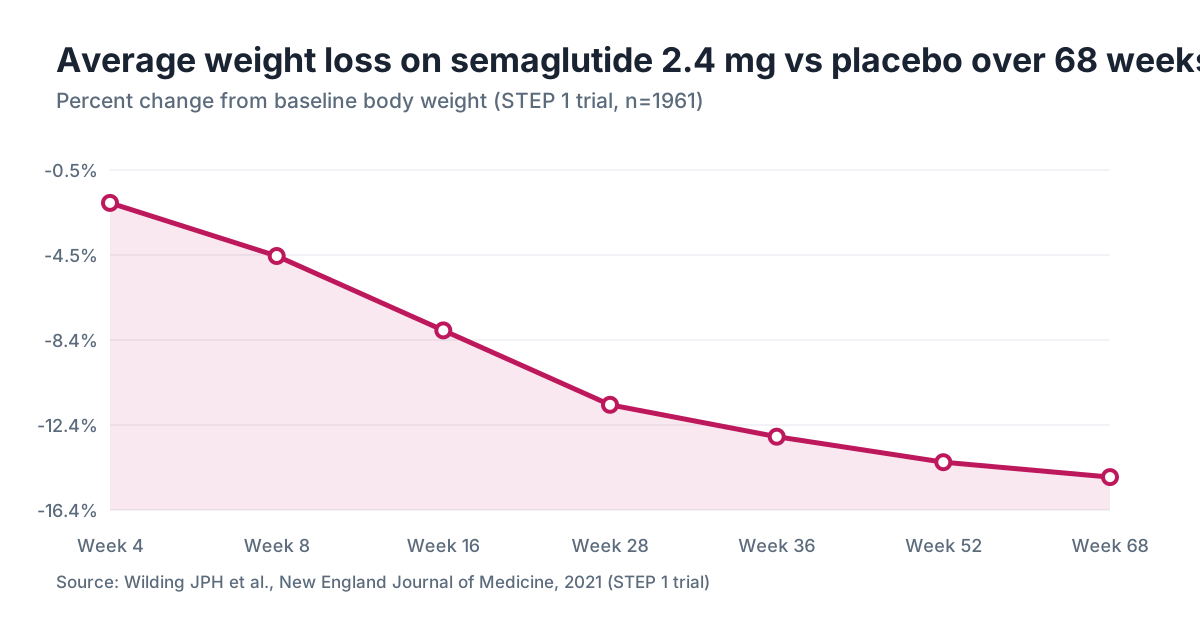
Weeks 16-68 (maintenance at 2.4 mg). Loss continues but slows. Your body adapts metabolically and the rate tapers, which is normal physiology, not the drug quitting. In STEP 1, participants who stayed at full dose for the full 68 weeks lost an average of 14.9% of starting body weight, versus 2.4% on placebo.[3]
The week-by-week picture is a curve, not a cliff. Expecting fast, dramatic results in month one is the single biggest reason women decide semaglutide "isn't working" and quit before it can.
How much weight can you lose, and how long does it take to see it?
The STEP 1 trial (adults with BMI 30+, or 27+ with a weight-related condition, no diabetes) is the cleanest data for this question.[3] At 68 weeks:
| Timepoint | Average weight loss (semaglutide 2.4 mg) | Average weight loss (placebo) | |---|---|---| | Week 4 | ~2% | ~0.5% | | Week 16 | ~8% | ~2% | | Week 36 | ~13% | ~2.5% | | Week 68 | 14.9% | 2.4% |
Those percentages come from the trial's published figures in the New England Journal of Medicine.[3] The 14.9% average hides a wide spread: roughly 32% of participants lost more than 20% of body weight, and about 14% lost less than 5%. Genetics, baseline metabolic health, activity, and hormonal status all decide where you land in that range.
Type 2 diabetes patients on Ozempic (semaglutide 1.0 mg or 2.0 mg, lower than Wegovy) lost less. The STEP 2 trial found an average loss of 9.6% over 68 weeks at the 2.4 mg dose in people with diabetes, versus 3.4% for placebo.[4] Diabetes blunts the response somewhat.
Here's the honest answer for one woman: expect the scale to move meaningfully (past normal week-to-week noise) somewhere between weeks 4 and 12. If you're at week 16 on a therapeutic dose with zero change, book a conversation with your prescriber about dose, adherence, and whether something else (unmanaged hypothyroidism, sleep apnea) is fighting you.
Perimenopause and postmenopause add a layer. Estrogen decline slows metabolism and shifts fat toward the belly. Semaglutide still produces meaningful losses, but pairing it with hormone replacement therapy may change your body composition results. Some clinicians (including platforms like WomenRx that focus on women's hormonal health) look at both at once, because treating one and ignoring the other leaves real results on the table.
How fast does semaglutide work for blood sugar versus weight?
Blood sugar responds faster than weight. That matters if you have type 2 diabetes or prediabetes.
Semaglutide triggers insulin release in a glucose-dependent way, so it pushes insulin out only when blood sugar is high. It also suppresses glucagon, the hormone that raises blood sugar between meals. Both effects start with the first dose. You can see measurable HbA1c improvement within 4 to 8 weeks even at the starting dose, and it deepens as the dose rises.[4]
The STEP 2 trial found patients with type 2 diabetes on semaglutide 2.4 mg cut HbA1c by an average of 1.6 percentage points over 68 weeks, versus 0.4 points for placebo.[4] That's a clinically real gap, and it arrives faster than the weight effect.
Heart benefits take much longer. The SUSTAIN-6 trial, which tested semaglutide 0.5 mg and 1.0 mg in people with type 2 diabetes and cardiovascular disease, found a 26% cut in major adverse cardiovascular events over 104 weeks of follow-up.[5] That's not a quick result. It's an outcome that stacks up over years.
Women using semaglutide purely for weight, without diabetes, still get the glycemic upside: better insulin sensitivity, less reactive hypoglycemia, steadier energy. Plenty of women feel this before they see the scale move, and it's a genuine sign the drug is doing its job.
Does semaglutide work faster for some women than others?
Yes, and the variation is real. A few factors predict a faster or slower response.
Dose. More drug means more receptor activation. Women who tolerate faster escalation (under a physician's watch) reach therapeutic levels sooner. This is individual, not arbitrary.
Baseline insulin resistance. Women with heavy insulin resistance often feel the appetite effect faster, because GLP-1 signaling runs especially active in that state. The catch: they may also lose weight more slowly, because their metabolic adaptation is more dug in.
Sleep. Poor sleep raises ghrelin (the hunger hormone) and dulls semaglutide's appetite effect. Women who fix their sleep on the drug tend to see faster, bigger results.
Menopausal status. This is the part most online summaries skip. Estrogen receptors and GLP-1 receptors interact in the hypothalamus, the brain region that runs appetite and energy balance. Animal work and some human data suggest estrogen amplifies GLP-1 signaling.[6] Postmenopausal women with low estrogen may need more time at a therapeutic dose to feel the appetite suppression a premenopausal woman notices quickly. If you're postmenopausal and the drug feels like it's barely doing anything, that's a plausible reason, and one to raise with your prescriber.
Medication interactions. Thyroid meds, corticosteroids, and some antidepressants (mirtazapine in particular) can push against semaglutide's weight effect. That doesn't make those drugs wrong for you. It means the timeline and size of your semaglutide results may differ.
Tirzepatide is worth knowing here. Tirzepatide (Mounjaro, Zepbound) hits both GLP-1 and GIP receptors, and the SURMOUNT-1 trial found an average weight loss of 20.9% over 72 weeks at the top dose, more than semaglutide in comparisons.[7] Whether that speed difference matters for you depends on your goals, side effect tolerance, and cost. More in our semaglutide vs tirzepatide breakdown.
What are the early signs that semaglutide is working?
The scale is the last thing to confirm semaglutide is working. Several earlier signals matter more.
Quieter food noise usually comes first. Women describe it like this: "I realized I hadn't thought about food for three hours." That drop in background food preoccupation is a real drug effect, not placebo, and it typically shows up on days 3 to 7.
Smaller portions start to satisfy. You may stop eating before your plate is clear, not from willpower but from genuine fullness. That's the slower stomach emptying at work.
Alcohol cravings often fall. GLP-1 receptors sit in the brain's reward pathways, and semaglutide seems to dampen the reward from alcohol the same way it dampens the reward from food. That's an off-label observation backed by early clinical data, not a guarantee.[8]
Energy steadies. Without big glucose spikes and crashes from overeating, many women notice more even energy through the day, usually by week 2 or 3.
Reach week 4 on 0.25 mg and feel none of this, no appetite shift at all? The starting dose may simply be too low to register for you. Tell your prescriber. Some protocols allow faster escalation when tolerability is good.
How long before semaglutide reaches its full weight loss effect?
Full effect, meaning close to your maximum loss on the maintenance dose, usually lands between week 52 and week 68 based on STEP trial data.[3] The curve runs steep in months 3 through 6, then flattens as your body finds a new equilibrium.
This is not the drug stopping. It's weight loss physiology. As you lose weight, your resting metabolic rate drops, because a smaller body burns fewer calories. The appetite suppression is still there, but now it's matching your appetite to a lower energy need rather than driving the same deficit.
Some women hit a plateau at week 20 to 30 and read it as failure. The plateau is normal. The usual right move is to hold the current dose, check your eating for caloric drift (not necessarily eat less, just look for creep), and add resistance training to protect lean mass.
Muscle loss on GLP-1s is a real concern. Studies suggest 25 to 40% of the weight lost on semaglutide can be lean mass rather than fat, especially with no strength training.[9] For women near or past menopause, where muscle is already slipping, that stings. Bone density can take a hit too. Our article on bone density tests covers what to monitor.
WomenRx builds resistance training into its semaglutide programs for exactly this reason, but that's standard of care, not proprietary. Any good prescriber should raise it.
How fast does oral semaglutide (Rybelsus) work compared to the injection?
Rybelsus is the oral form of semaglutide, approved for type 2 diabetes at 3 mg, 7 mg, and 14 mg daily. It's not approved for weight loss, though weight loss happens as a side effect.
Oral semaglutide has far lower bioavailability than the injection, roughly 1% absorbed under ideal conditions (fasting, no more than 4 ounces of water, 30 minutes before food).[2] That's why the doses look so different: 14 mg oral works out to about 0.5 mg subcutaneous in clinical effect.
Because absorption is lower and more variable, oral semaglutide often takes a bit longer to feel, and the ceiling sits lower. The PIONEER 1 trial found patients on Rybelsus 14 mg lost an average of 4.1% of body weight over 26 weeks, versus 0.5% on placebo.[10] Meaningful, but well below the injectable results in STEP 1.
For women who hate needles, oral semaglutide is a genuine option, just with calibrated expectations on timeline and size. If appetite suppression feels minimal at week 8 on 14 mg oral, an injectable form may fit you better.
What slows semaglutide down, or stops it from working at all?
Semaglutide works for most people, but a handful of things reliably blunt or block it.
Not escalating the dose. Some patients, and some prescribers, keep women at low doses forever to dodge side effects. At 0.25 mg or 0.5 mg, you're below or at the edge of a meaningful weight effect. The therapeutic dose for weight management is 2.4 mg weekly. You have to get there.
Untreated hypothyroidism. Low thyroid function slows metabolism so hard that semaglutide often can't overcome it. Check TSH if weight loss stalls out of nowhere.
High-calorie liquids. Semaglutide blunts appetite for solid food more reliably than for liquid calories. Juice, alcohol, and loaded coffee drinks can wipe out the deficit the drug creates. Many women don't catch this until they track.
Severe insulin resistance or PCOS. These need more time and often benefit from add-on approaches. Semaglutide works, just slower.
Stopping and restarting. Every discontinuation drops you back to the bottom of the escalation ladder. The weeks you spend re-climbing from 0.25 mg are weeks of sub-therapeutic effect. That's the hidden cost of "breaks."
Compounded formulations of uneven quality. Not all compounded semaglutide matches in potency or absorption. Using a compounded version and seeing nothing? Product quality is worth checking.
Hormones are the one category where the story is genuinely unsettled. Nobody has clean randomized data on how much menopausal hormone therapy changes semaglutide response in humans. The closest evidence is mechanistic (estrogen and GLP-1 receptor cross-talk in animals) and observational. What's clear: women with undertreated menopause symptoms have worse sleep, higher cortisol, and more belly fat, all of which work against the drug.
What happens when you stop semaglutide, and how fast does the effect reverse?
This is probably the question women most need a straight answer to, and the straight answer is not comfortable.
In the STEP 1 extension trial (STEP 1 sustained), participants who stopped semaglutide after 68 weeks and were followed for another 52 weeks off the drug regained, on average, two-thirds of their lost weight by week 120.[11] Not everyone. But that's the average.
The reversal happens because semaglutide doesn't fix the neurobiology behind excess weight. It overrides it pharmacologically. When the drug clears (its half-life is about one week, so it leaves fairly quickly after the last dose), appetite drifts back toward baseline, often with a rebound.
This is the strongest case for treating semaglutide as a long-term medication, not a finite course. The FDA's Wegovy approval sets no stop date. The Endocrine Society's obesity pharmacotherapy guideline says medications should generally continue long-term if they're working and tolerated, because the underlying condition stays.[12]
For women who want or need to stop, the most protective moves are: real muscle built during treatment (which lifts resting metabolism), eating habits restructured during treatment, and, ideally, any hormonal drivers of weight gain addressed, estrogen deficiency included. Our piece on hormone replacement therapy covers how that fits.
Restarting after stopping is medically fine. You just re-climb from the beginning, which means 16 weeks of sub-therapeutic dosing before you're back at full effect. Plan for it.
How does semaglutide timeline compare to other GLP-1 medications?
Knowing where semaglutide sits next to its alternatives helps set expectations.
| Medication | Active ingredient | Mechanism | Avg weight loss (trial, weeks) | Notes | |---|---|---|---|---| | Wegovy | Semaglutide 2.4 mg | GLP-1 agonist | 14.9% (STEP 1, 68 wks) | Weekly injection | | Ozempic (off-label for weight) | Semaglutide 2.0 mg | GLP-1 agonist | ~10-12% (estimated from label data) | Approved for T2D, used off-label | | Zepbound / Mounjaro | Tirzepatide 15 mg | GLP-1 + GIP agonist | 20.9% (SURMOUNT-1, 72 wks) | Weekly injection, faster results | | Rybelsus | Oral semaglutide 14 mg | GLP-1 agonist | 4.1% (PIONEER 1, 26 wks) | Daily oral, lower bioavailability | | Saxenda | Liraglutide 3.0 mg | GLP-1 agonist | 8.0% (SCALE, 56 wks) | Daily injection, older drug |
Sources: FDA prescribing information and published trial results.[2][3][7][10]
On timeline: tirzepatide tends to produce more weight loss faster, with clear separation from placebo by week 8 to 12 in SURMOUNT-1.[7] Semaglutide's edge over tirzepatide is a longer safety record and, in some markets, better insurance coverage. Neither drug is objectively better for every woman. It comes down to response, side effects, and cost.
For women weighing options, the question isn't only which drug wins in a trial. It's which drug you'll stay on long enough to see full results, tolerate well enough to escalate properly, and afford month after month. Full breakdown in semaglutide vs tirzepatide.
Frequently asked questions
How soon after starting semaglutide will I feel less hungry?
Most women notice some appetite suppression within 3 to 7 days of the first 0.25 mg dose. It's often subtle: food feels less urgent, portions satisfy sooner. A clear, steady drop in hunger usually solidifies by weeks 2 to 4. Feel nothing by week 4? Tell your prescriber. Faster dose escalation may fit if you're tolerating the starting dose well.
How much weight will I lose in the first month on semaglutide?
Expect 1 to 4 pounds in the first month for most women, though some lose more and some lose nothing measurable. Almost all of month one runs at 0.25 mg, a sub-therapeutic dose built to minimize nausea. Slow early loss does not predict a poor final result. STEP 1 data shows clear separation from placebo by weeks 8 to 12 as the dose climbs.
Why am I not losing weight on semaglutide after 4 weeks?
Four weeks at 0.25 mg is often too early and too low a dose to move the scale. Check: Are you escalating on schedule? Are high-calorie liquids bypassing the satiety effect? Is your thyroid normal? Is your sleep enough? If you're at 1.0 mg or higher with no change at week 8 to 12, that's worth a real clinical conversation rather than more waiting.
Does semaglutide work faster in women who are postmenopausal?
The evidence suggests postmenopausal women may respond a bit slower, or need longer at therapeutic doses to feel the same appetite suppression, possibly because estrogen amplifies GLP-1 receptor signaling in the brain. Final weight loss in the STEP trials was still clinically meaningful across age groups. Women with untreated estrogen deficiency may benefit from addressing hormonal status alongside GLP-1 therapy.
How long does it take semaglutide to work for diabetes (blood sugar control)?
Blood sugar improves faster than weight. HbA1c reductions are measurable within 4 to 8 weeks even at the starting dose. The STEP 2 trial found an average HbA1c drop of 1.6 percentage points over 68 weeks at semaglutide 2.4 mg versus 0.4 points for placebo in people with type 2 diabetes. Fasting glucose often improves within the first 2 weeks.
Is semaglutide faster or slower than tirzepatide for weight loss?
Tirzepatide (Zepbound/Mounjaro) produces faster and larger average weight loss. SURMOUNT-1 showed 20.9% average loss over 72 weeks at the 15 mg dose versus 14.9% for semaglutide over 68 weeks in STEP 1. Both start low and escalate over 16 to 20 weeks. Tirzepatide's extra GIP receptor mechanism appears to speed the response, but individual results vary a lot.
How long does semaglutide stay in your system after you stop?
Semaglutide has a half-life of about one week, so it takes roughly 5 weeks to clear after the last injection. Appetite typically starts returning within 1 to 2 weeks of stopping. In the STEP 1 extension trial, weight regain began almost immediately after discontinuation, with two-thirds of lost weight back within 52 weeks off the drug.
Does semaglutide work faster at higher doses?
Yes, directly. Higher doses drive more GLP-1 receptor activation, stronger appetite suppression, and a bigger caloric deficit. The 2.4 mg weekly dose in STEP 1 produced 14.9% average loss; the 1.0 mg dose in SUSTAIN-6 produced roughly 4 to 6% in a diabetic group. That's why finishing the full escalation matters, and why parking at a low dose undermines results.
Can semaglutide work in just a few weeks for significant weight loss?
Significant loss in a few weeks is unlikely and not how the drug is built to work. The escalation protocol keeps doses low for the first 16 weeks on purpose. Women who report dramatic results in 2 to 3 weeks are usually seeing early water weight loss or less bloating, which is real but different from fat loss. True fat loss accelerates between months 2 and 6.
Does exercise make semaglutide work faster?
Exercise probably doesn't speed the drug's mechanism, but it markedly improves results. Resistance training protects lean mass during weight loss, which matters because 25 to 40% of weight lost on GLP-1s can come from muscle without it. More muscle means higher resting metabolism, which deepens the deficit. Exercise also improves insulin sensitivity on its own, stacking with semaglutide's metabolic effects.
How fast does compounded semaglutide work compared to brand-name Wegovy?
Compounded semaglutide should work on the same timeline if it contains the correct active pharmaceutical ingredient at the labeled dose. The worry is quality consistency: compounded formulations aren't FDA-reviewed for potency or purity. Using a compounded version and seeing slower-than-expected results? Product quality variation is a legitimate variable. Our article on compounded semaglutide covers what to look for in a pharmacy.
What percentage of people respond well to semaglutide, and how quickly?
In STEP 1, roughly 86% of participants on semaglutide lost at least 5% of body weight by week 68, versus 32% on placebo. About 32% lost more than 20%. Early response at week 16 (at least 5% of starting weight gone) is a reasonable predictor of eventual full response. Non-responders at week 16 may benefit from dose reassessment or a switch to tirzepatide.
Sources
- FDA, Wegovy (semaglutide) prescribing information
- Wilding JPH et al., New England Journal of Medicine, 2021 (STEP 1 trial)
- Davies M et al., New England Journal of Medicine, 2021 (STEP 2 trial)
- Marso SP et al., New England Journal of Medicine, 2016 (SUSTAIN-6 trial)
- Mauvais-Jarvis F, Diabetes, Obesity and Metabolism, 2020
- Jastreboff AM et al., New England Journal of Medicine, 2022 (SURMOUNT-1 trial)
- Klausen MK et al., JCI Insight, 2022
- Wilding JPH et al., Nature Medicine, 2021 (STEP 1 body composition analysis)
- Rodbard HW et al., Diabetes Care, 2019 (PIONEER 1 trial)
- Wilding JPH et al., Diabetes, Obesity and Metabolism, 2022 (STEP 1 sustained, off-treatment extension)
- Endocrine Society, Clinical Practice Guideline: Pharmacological Management of Obesity