How early does menopause begin? Ages, stages, and what's normal
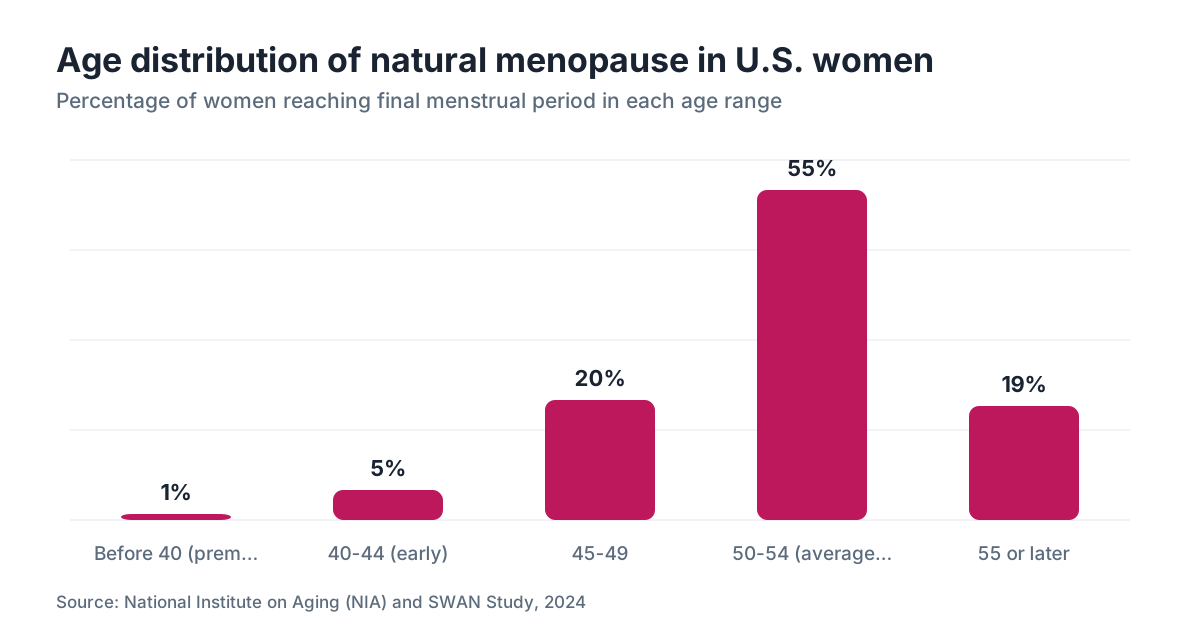
TL;DR: The average age of natural menopause in the U.S. is 51, but perimenopause (the transition) usually starts in the mid-to-late 40s and can begin as early as the late 30s. Premature menopause (before 40) affects roughly 1% of women. Induced menopause from surgery or chemotherapy can happen at any age.
What is the earliest age menopause can actually begin?
Menopause can begin at any adult age if the ovaries stop working or get removed. The clinical term for menopause that arrives before age 40 is premature ovarian insufficiency (POI), sometimes still called premature menopause. It affects roughly 1 in 100 women under 40 and about 1 in 1,000 women under 30 [1]. Those aren't small numbers when you do the math at a population level.
Perimenopause, the years of hormonal fluctuation that precede the final menstrual period, most often starts in the mid-40s. But somewhere between 5 and 10 percent of women notice perimenopausal symptoms in their late 30s [2]. Hot flashes in your 37th year aren't a sign that something has gone terribly wrong. They may mean your ovaries are beginning a slow, irregular wind-down that will take another decade to finish.
The earliest spontaneous (non-surgical) menopause documented in the medical literature tends to occur in the early-to-mid 30s. These cases are rare and almost always tied to an identifiable cause: a genetic condition, an autoimmune disorder, or prior cancer treatment. Without a clear cause, a diagnosis of POI at 32 warrants a full workup, not a shrug.
Surgical menopause is a different story entirely. A bilateral oophorectomy (removal of both ovaries) causes immediate menopause regardless of age. A 28-year-old who has both ovaries removed for cancer or severe endometriosis enters menopause on the operating table, with estrogen levels that drop within 24 to 48 hours rather than over years [3].
What is the average age menopause starts in the United States?
The average age of the final menstrual period in U.S. women is 51 to 52 [1]. That single number hides a wide bell curve. A healthy range for natural menopause runs from age 45 to 55. Women who reach their final period between 40 and 45 have early menopause, which is distinct from premature menopause (before 40).
Race and ethnicity shift that average in ways that matter. The Study of Women's Health Across the Nation (SWAN), one of the largest longitudinal menopause studies ever done, found that Black women on average reach menopause about 8.5 months earlier than white women, and Hispanic women also tend toward earlier timing, while Japanese and Chinese American women in the study tended toward later menopause [2]. These are group averages with lots of overlap. Your individual biology counts for more than your demographic category.
Family history is the single strongest predictor. If your mother or older sister hit menopause at 44, your odds of doing the same go up substantially. Nobody can hand you a precise number, but the correlation is real and worth knowing when you're trying to make sense of symptoms in your early 40s.
What is the difference between perimenopause, early menopause, and premature menopause?
These three terms get used interchangeably in casual conversation, but they mean different things clinically.
Perimenopause is the transitional phase before menopause, marked by irregular cycles and fluctuating hormone levels. It is not menopause itself. It typically lasts 4 to 8 years, though it can run shorter or longer [4]. A woman in perimenopause still ovulates sometimes, can still get pregnant (unlikely but possible), and has not yet had 12 consecutive months without a period.
Early menopause means the final menstrual period happened between ages 40 and 45. It is natural in the sense that no medical intervention caused it, but it arrives earlier than the statistical average. Early menopause affects roughly 5 percent of women [1].
Premature ovarian insufficiency (POI) is the cessation of normal ovarian function before age 40. The North American Menopause Society (NAMS) uses this term rather than "premature menopause" because the ovaries don't always fully stop functioning. Some women with POI still have intermittent periods, and a small percentage (around 5 to 10 percent) conceive spontaneously after diagnosis [4]. POI is a more complicated hormonal state than simple early menopause.
Induced menopause, whether from surgical removal of both ovaries, chemotherapy, or pelvic radiation, is its own category. The hormonal consequences are often more abrupt and severe than natural transitions, and the long-term health implications (bone loss, cardiovascular risk) are significant [3].
What are the signs that menopause is starting early?
The symptoms of early or premature menopause match menopause symptoms at any age: irregular or missed periods, hot flashes, night sweats, vaginal dryness, sleep disruption, mood changes, brain fog, and reduced libido. The problem is that many of these are easy to blame on stress, a busy life, thyroid issues, or just "getting older." Women who are 38 rarely hear a doctor say, without prompting, "this might be perimenopause."
The most reliable early signal is a change in your menstrual cycle. Cycles that get shorter (less than 25 days), cycles that vary by 7 or more days from your usual length, or periods that become heavier or lighter than your normal pattern are all documented early perimenopausal changes [2]. Irregular periods before 40 should always be investigated, because the causes include thyroid disease, hyperprolactinemia, and pregnancy, not only ovarian aging.
Hot flashes that wake you up repeatedly, or a sudden onset of vaginal dryness that makes sex uncomfortable, are two symptoms that point specifically toward low estrogen rather than stress. Mention them to a clinician.
FSH (follicle-stimulating hormone) can be measured in blood, but interpreting it during perimenopause is tricky. FSH swings day to day. A single elevated FSH doesn't confirm POI. NAMS recommends measuring FSH on day 2 to 5 of the cycle, repeating the test at least four weeks later, and combining it with estradiol levels and clinical symptoms before drawing conclusions [4].
What causes menopause to happen early or before 40?
For a large share of women with POI, no specific cause is ever found. That's frustrating but honest: roughly 50 to 70 percent of POI cases are idiopathic, meaning the workup comes back without a clear answer [1].
Of the cases with identifiable causes, genetic factors are the most common. Turner syndrome (45,X karyotype) and Fragile X premutation carriers are the two most studied genetic associations. Women with Fragile X premutations have about a 20 percent lifetime risk of POI [5]. If your sister or mother had POI, asking about genetic testing is reasonable.
Autoimmune disease is another big category. The ovaries can be targeted by the same autoimmune processes that attack the thyroid (Hashimoto's, Graves' disease), the adrenal glands (Addison's disease), or other glandular tissues. Women diagnosed with POI should have their thyroid and adrenal function checked, because co-occurring autoimmune disease is common [4].
Cancer treatment causes early menopause across all age groups. Certain chemotherapy agents (especially alkylating agents like cyclophosphamide) are particularly toxic to ovarian follicles. Pelvic radiation affects ovarian function even at relatively low doses. How much damage happens depends on the drugs used, the dose, and the woman's age at treatment [3]. Fertility preservation before cancer treatment has become standard of care partly for this reason.
Smoking is a modifiable risk factor. Women who smoke reach menopause 1 to 2 years earlier than non-smokers on average, likely because tobacco speeds up follicle loss [2]. Low BMI, and possibly a history of very low body fat, is also linked to earlier menopause in some studies, though the effect size is modest.
How is early or premature menopause diagnosed?
Diagnosis takes both symptom history and lab confirmation. For natural menopause in women over 45 with typical symptoms and irregular or stopped periods, most clinicians diagnose on clinical grounds without mandatory lab testing [4]. For women under 45, and especially under 40, labs matter more because the differential diagnosis is wider.
The standard lab workup includes FSH and estradiol (ideally timed to early follicular phase), anti-Mullerian hormone (AMH) as a marker of ovarian reserve, thyroid-stimulating hormone (TSH), and a pregnancy test. For POI specifically, NAMS and the Endocrine Society recommend two elevated FSH readings (typically above 25 to 40 IU/L depending on the lab's reference range) at least four to six weeks apart, with low or low-normal estradiol [4][6].
A transvaginal ultrasound to count antral follicles adds information about ovarian reserve. Karyotype testing, screening for Fragile X premutation, and autoimmune antibody panels (antithyroid, antiadrenal) are reasonable next steps once POI is confirmed [5].
Bone density testing is not part of the diagnostic workup itself, but it is recommended once early or premature menopause is confirmed, because these women have spent more years with low estrogen and carry higher long-term fracture risk. A bone density test early in the course of POI gives you a useful baseline.
Does early menopause increase health risks?
Yes, and this is the part that makes early menopause more than a timing inconvenience. Estrogen does real work throughout the reproductive years: it maintains bone density, supports cardiovascular function, affects cognitive metabolism, and keeps vaginal and urinary tissues healthy. Losing it earlier means more years without those protective effects.
The cardiovascular risk is the most studied. Women with natural menopause before 45 have a roughly 50 percent higher risk of coronary heart disease and a higher risk of cardiovascular death compared to women who reach menopause at 50 to 51 [3]. Women with surgical menopause (both ovaries removed) before 50 who don't take estrogen have an even more elevated cardiovascular risk profile, a finding documented in long-term follow-up from multiple cohort studies.
Bone loss speeds up immediately after estrogen drops. Women with POI who go untreated lose bone at a rate that puts them at meaningful fracture risk by their 50s and 60s. The Endocrine Society's clinical practice guideline on POI recommends hormone therapy at least until the average age of natural menopause (around 51) for most women with POI, specifically to protect bone and cardiovascular health [6].
Cognition is an area where the research is still developing, but observational data suggest that early menopause without hormone therapy is associated with modestly higher rates of cognitive decline in later life. The timing of estrogen exposure relative to the menopause transition appears to matter, which has been called the "critical window" hypothesis.
Fertility is obviously affected, though not always completely. Women with POI have reduced but sometimes not zero fertility. Egg donation is usually the most reliable path to pregnancy once the diagnosis is confirmed.
Should you take hormone therapy if menopause starts early?
For most women with early or premature menopause who have no contraindications, the answer from every major medical society is yes. NAMS, the Endocrine Society, and the British Menopause Society all recommend hormone therapy for women with POI or early menopause at least through the average age of natural menopause [4][6]. The reasoning: you're replacing hormones your body would still be making if your ovaries hadn't given out early. That's a different situation from a 55-year-old adding hormones after a normal menopause.
The standard treatment is estrogen (at doses generally higher than those used in older postmenopausal women) plus a progestogen in women with a uterus to protect the uterine lining. Estrogen comes as oral pills, patches, gels, or vaginal rings, and the progestogen as oral or vaginal progesterone or a levonorgestrel IUD. An estrogen patch delivers steady estrogen without the first-pass liver metabolism that oral pills involve, which some clinicians prefer.
The Women's Health Initiative (WHI) results, which scared a generation of women and clinicians away from hormone therapy, studied a different population: women with an average age of 63 who had been postmenopausal for many years. The risk-benefit balance for a 36-year-old with POI is not the balance for a 63-year-old who never needed hormones. NAMS has been direct about this distinction [4].
For women who want to understand their options in depth, hormone replacement therapy covers the evidence on formulations, risks, and benefits in detail. Telehealth platforms like WomenRx specialize in helping women access this kind of individualized care without the months-long wait that often comes with finding a menopause specialist in person.
If you have contraindications to systemic estrogen (certain hormone-sensitive cancers, for example), you still have options for managing specific symptoms like bone loss and genitourinary changes, but that conversation belongs with a clinician who knows your full health history.
Does perimenopause age vary by race, genetics, or lifestyle?
It does. SWAN data, which followed over 3,000 women across multiple ethnic groups for more than a decade, found meaningful variation in both the timing of the menopause transition and the severity of symptoms [2]. Black women in the SWAN cohort reported more frequent and severe hot flashes than white women even at similar estrogen levels. Hispanic women tended toward earlier menopause on average. These are group-level patterns. They don't predict any individual woman's experience.
Genetics probably account for the largest share of variation in timing. Studies of twins find that genetic factors explain around 50 to 60 percent of the variance in age at natural menopause. The rest is environmental and behavioral.
Lifestyle factors with the best evidence for shifting timing include smoking (earlier by 1 to 2 years), lower body weight (earlier in some studies), nulliparity (never having been pregnant, linked to slightly earlier menopause in some datasets), and possibly physical activity level (though the direction of this effect is debated). Neither a healthy diet nor regular exercise has been shown to meaningfully delay menopause, though both affect symptom severity and long-term health outcomes.
Chemotherapy and radiation, as noted above, are the lifestyle-adjacent factors with the largest potential to trigger early menopause. If you're planning cancer treatment or have a family history of blood cancers or solid tumors that might require it, talk to a reproductive endocrinologist before treatment about fertility and ovarian preservation. Do it proactively.
You can read more about typical perimenopause age ranges and symptom patterns if you're trying to figure out whether what you're feeling fits the profile.
Can you still get pregnant if menopause starts early?
Spontaneous pregnancy with early menopause or POI is uncommon but not impossible. Studies estimate that 5 to 10 percent of women with POI conceive spontaneously, because ovarian function in POI is often intermittent rather than completely absent [4]. That's why contraception is still recommended for women with POI who don't want to become pregnant, even after the diagnosis.
For women with POI who actively want to conceive, the realistic options are egg donation (high success rates with a gestational carrier or the woman's own uterus), embryo adoption, and in some cases ovulation induction if residual ovarian function can be documented. The success of ovulation induction in confirmed POI is low, around 5 percent or less per cycle, and most reproductive endocrinologists are candid that egg donation offers better odds.
Women with early menopause (age 40 to 45) who still have some residual fertility have a narrower but more workable window. Consult a reproductive endocrinologist as early as possible if preserving fertility is a priority.
For women who've completed their families or don't want children, this part of the conversation is less pressing, but it's still worth knowing that contraception needs to continue until at least 12 months of confirmed amenorrhea (no periods), and in POI, that determination gets complicated by the intermittent nature of ovarian function.
What should you do if you think menopause is starting in your 30s or 40s?
Track your cycles. An app or a simple paper record showing the start date, length, and character of each period gives a clinician far more to work with than "my cycles have been kind of off." Note when hot flashes hit and how disruptive they are. Log sleep disruption, mood changes, and any genitourinary symptoms. This symptom history is genuinely useful.
Make an appointment with your primary care provider or OB/GYN and bring up the possibility of perimenopause or early menopause directly. Many clinicians won't raise it unprompted in women in their late 30s. You may need to say the word yourself. If you're under 40 and having symptoms, ask explicitly for FSH, estradiol, and TSH testing. A thyroid panel matters because thyroid dysfunction mimics many perimenopausal symptoms and is actually more common in women.
If your FSH comes back elevated or your clinician is uncertain, a referral to a reproductive endocrinologist or a menopause specialist is reasonable. NAMS maintains a directory of certified menopause practitioners at menopause.org.
Ask about bone health early. If early menopause is confirmed, a baseline bone density test gives you data to track against over time. Start thinking about calcium and vitamin D: the recommended calcium intake for premenopausal women is 1,000 mg per day, and the Endocrine Society recommends 1,500 to 2,000 IU of vitamin D daily for women at risk of deficiency [6].
For women handling this in their 40s who are also thinking about weight management, the interaction between menopause and metabolic health is real. Estrogen affects insulin sensitivity and fat distribution. If you're also considering semaglutide for weight loss or other GLP-1 options during this transition, talk to a provider about how those fit with any hormone therapy you might need. WomenRx clinicians are trained to address the overlap between menopause and metabolic health, which too often gets split into separate specialties when women would do better with one connected plan.
How does early menopause affect long-term bone and heart health?
The long-term data here is fairly consistent and worth knowing directly. A 2019 systematic review in the journal Menopause found that women with premature or early menopause had significantly higher risks of cardiovascular disease, total mortality, and cardiovascular death compared to women with typical-timing menopause [3]. The excess risk appears to shrink substantially in women who use hormone therapy, which is part of why the major societies recommend it.
Bone density loss begins within the first year of estrogen loss and is fastest in the first three to five years after menopause. Women with POI who go untreated for years often have bone density scores in the osteopenic or osteoporotic range by their mid-40s, a decade or more earlier than you'd expect with normal menopause timing. The Endocrine Society's 2015 clinical practice guideline on POI states: "We recommend that all women with POI who do not have contraindications should be encouraged to use hormone therapy to reduce the risks associated with estrogen deficiency" [6].
Cardiovascular protection from hormone therapy in early menopause is stronger than the WHI headlines suggested, largely because timing matters. Starting estrogen close to the onset of menopause (within the first 5 to 10 years, or before age 60) appears protective. Starting it more than a decade after menopause, as many WHI participants did, shows a different and less favorable picture. This is not a reason to avoid hormone therapy in POI. It is a reason to start it promptly.
Regular cardiovascular screening (blood pressure, lipids, fasting glucose) starting at diagnosis of early or premature menopause is a reasonable move even in women who feel perfectly healthy. The Framingham risk calculators used in standard cardiovascular screening don't specifically account for early menopause, so you may need to advocate for yourself or find a clinician who understands the added risk.
Frequently asked questions
How early does menopause begin on average?
The average age of the final menstrual period in U.S. women is 51 to 52. Perimenopause typically begins 4 to 8 years before that, so most women start noticing changes in their mid-to-late 40s. About 5 percent of women experience early menopause (final period between 40 and 45), and roughly 1 percent have premature ovarian insufficiency before age 40.
Can menopause start at 35?
Yes, though it's uncommon. Menopause before age 40 is called premature ovarian insufficiency and affects about 1 in 100 women under 40. At age 35 the odds are lower but not zero, and perimenopausal symptoms in the late 30s are more common than most people realize. If you're 35 and having irregular cycles, hot flashes, or sleep disruption, get FSH and estradiol tested.
Can menopause start at 40?
Yes. Menopause at exactly 40 sits right at the boundary between premature ovarian insufficiency (before 40) and early menopause (40 to 45). Both are real, documented categories. About 5 percent of women reach their final period between 40 and 45. At 40, symptoms like irregular cycles, hot flashes, and night sweats should prompt a lab workup rather than being written off as stress.
What are the first signs of menopause starting?
The most reliable early sign is a change in your menstrual cycle: shorter cycles, more variable timing (7 or more days different from your usual), or a change in flow. Hot flashes, night sweats, sleep disruption, vaginal dryness, and mood changes can follow. These symptoms often appear before periods become irregular. In your late 30s or early 40s, any of these is worth mentioning to a clinician.
What is the difference between early menopause and premature menopause?
Early menopause means the final period occurs between ages 40 and 45. Premature menopause (more precisely called premature ovarian insufficiency, or POI) means ovarian function declines before age 40. POI is more complex: ovarian function can be intermittent, and a small percentage of women with POI still conceive. Both carry elevated long-term risks for bone loss and cardiovascular disease compared to average-timing menopause.
Does smoking cause early menopause?
Yes. Women who smoke reach menopause approximately 1 to 2 years earlier than non-smokers on average. The leading hypothesis is that tobacco compounds speed up the loss of ovarian follicles. The effect appears dose-dependent, meaning heavier smoking correlates with greater advancement of timing. This is one of the few lifestyle factors with consistent evidence for influencing menopause age.
Can chemotherapy cause menopause in young women?
Yes. Certain chemotherapy agents, particularly alkylating drugs like cyclophosphamide, are toxic to ovarian follicles and can cause immediate or premature menopause in women of any age. Pelvic radiation also damages ovarian function. Whether menopause is permanent depends on the drugs used, the cumulative dose, and the woman's age at treatment. Fertility preservation before cancer treatment is now standard practice for this reason.
Is hormone therapy safe for women with early or premature menopause?
For most women with premature or early menopause who have no contraindications, the major medical societies (NAMS, Endocrine Society) recommend hormone therapy at least until the average age of natural menopause around 51. The risk-benefit calculation differs from older postmenopausal women: you're replacing hormones your body would normally still be making, not adding them above your natural baseline. Benefits include bone and cardiovascular protection.
Can you get pregnant after early menopause?
Spontaneous pregnancy in confirmed premature ovarian insufficiency is uncommon but possible. Studies estimate 5 to 10 percent of women with POI conceive spontaneously because ovarian function can be intermittent. For planned pregnancy, egg donation offers the best success rates. Women with early menopause (40 to 45) have a narrower fertility window but more options if they act quickly and consult a reproductive endocrinologist promptly.
How do I know if my irregular periods are perimenopause or something else?
Irregular periods in your 30s and 40s have several possible causes: perimenopause, thyroid disease, hyperprolactinemia, polycystic ovary syndrome, or pregnancy. Lab testing (FSH, estradiol, TSH, prolactin, and a pregnancy test) is the practical way to sort them out. A single elevated FSH isn't diagnostic; hormone levels fluctuate during perimenopause, so repeat testing and clinical context both matter.
Does early menopause raise the risk of heart disease?
Yes. Women with premature or early menopause have a roughly 50 percent higher risk of coronary heart disease compared to women with average-timing menopause. Surgical menopause before 50 without hormone therapy carries an even higher cardiovascular risk. Hormone therapy started promptly after early menopause appears to reduce but not fully eliminate this excess risk, which is one reason early treatment is recommended.
What does the FSH test tell you about early menopause?
FSH (follicle-stimulating hormone) rises as the ovaries' follicle supply declines. An elevated FSH, generally above 25 to 40 IU/L depending on the lab's reference range, combined with low estradiol, suggests reduced ovarian function. But FSH fluctuates day to day during perimenopause, so one result is not diagnostic. NAMS recommends at least two elevated readings four to six weeks apart, tested early in the menstrual cycle, before concluding POI is present.
Does menopause age affect dementia or cognitive decline risk?
Observational data suggest a possible link between earlier menopause and modestly higher rates of cognitive decline later in life, possibly because of the longer stretch without estrogen. The 'critical window' hypothesis holds that estrogen started close to menopause may be more protective cognitively than estrogen started years later. The research is ongoing and not definitive, but it is another reason the major societies recommend treating early menopause promptly with hormones.
How does race or ethnicity affect when menopause starts?
Race and ethnicity influence both timing and symptom patterns. The SWAN study found Black women reach menopause about 8 months earlier on average than white women and report more severe hot flashes. Hispanic women also tend toward earlier timing. Japanese and Chinese American women in SWAN tended toward slightly later menopause. These are averages with wide individual variation; your personal and family history predicts your timing better than group averages.
Sources
- National Institute on Aging (NIA), 'What Is Menopause?'
- Study of Women's Health Across the Nation (SWAN), University of Michigan main study page
- Menopause journal (The Menopause Society), 'Premature and early menopause and cardiovascular disease risk' systematic review
- The Menopause Society (NAMS), 'Premature Ovarian Insufficiency' position statement
- National Institutes of Health (NIH), National Library of Medicine, MedlinePlus, 'Fragile X syndrome'
- Endocrine Society Clinical Practice Guideline, 'Premature Ovarian Insufficiency: An Endocrine Society Clinical Practice Guideline', Journal of Clinical Endocrinology & Metabolism
- Office on Women's Health, U.S. Department of Health and Human Services, 'Menopause'
- MedlinePlus (NIH/NLM), 'Premature ovarian failure'
- American College of Obstetricians and Gynecologists (ACOG), 'Premature Menopause'
- National Cancer Institute (NCI), 'Fertility Issues in Girls and Women with Cancer'
- NIH National Institute of Child Health and Human Development (NICHD), 'What are the symptoms of menopause and perimenopause?'
- Menopause journal (The Menopause Society), 'The 2023 Menopause Society Position Statement on Hormone Therapy'