Hot flashes in perimenopause: causes, treatments, and what actually works
TL;DR: Hot flashes affect roughly 75-80% of women during perimenopause and can start years before the last period. Hormone therapy is the most effective treatment, cutting flash frequency 75% or more. Fezolinetant and certain antidepressants help moderately. Lifestyle changes help at the margins. This article walks through every option with the evidence behind it.
What are hot flashes and why do they happen in perimenopause?
A hot flash is a sudden wave of heat that usually starts in the chest or face and spreads upward, lasting anywhere from 30 seconds to 10 minutes. Most women also get flushing, sweating, and a chill afterward. Night sweats are the same event during sleep, just a different name.
The root cause is falling estrogen. During perimenopause, estrogen swings erratically before dropping for good. Those swings narrow the thermoregulatory zone the hypothalamus uses to hold body temperature steady. The hypothalamus turns hypersensitive to tiny changes in core temperature and fires off a heat-dumping response, the flash itself, even when you are not actually overheating [1].
The mechanism is more specific than that. Neurons in the hypothalamic preoptic area express a peptide called neurokinin B. In a low-estrogen state those neurons become overactive and fire when they should not, telling the brain the body is too hot when it isn't [2]. Blocking the neurokinin B receptor is now an FDA-approved treatment strategy, and I cover it below.
Flashes are more than uncomfortable. Severe or frequent ones wreck sleep, cut into concentration, and show up alongside higher cardiovascular risk in some research, though whether flashes cause the risk or just travel with it is still an open question [1].
How common are hot flashes during perimenopause?
Between 75% and 80% of women get hot flashes at some point during the menopause transition, according to the National Institute on Aging [10]. That burden is not spread evenly. Black women report higher frequency and severity than white women, while Hispanic and Asian women tend to report lower rates, though differences in healthcare access and reporting muddy those comparisons [3].
The Study of Women's Health Across the Nation (SWAN) followed more than 3,000 women for over a decade and found the median duration of hot flash symptoms was 7.4 years [3]. Women who started flashing before their final period had the longest run, a median of 11.8 years. That number blindsides most women, who expect two or three years of trouble and then quiet.
Frequency ranges wildly. Some women get one or two flashes a day. Others get 20 or more, which researchers classify as severe and which chews through sleep and daily function.
How do you know if hot flashes are from perimenopause or something else?
Most hot flashes in women between 40 and 55 come from the menopause transition. A handful of other causes are worth ruling out, especially if flashes show up suddenly or come with weight loss, palpitations, or diarrhea.
Thyroid disease is the most common mimic. An overactive thyroid raises metabolic rate and causes sweating and heat intolerance that can feel like a flash. A basic TSH test sorts it out fast. Pheochromocytoma, an adrenal tumor, causes episodic sweating and flushing but is rare. Carcinoid syndrome is rarer still.
Some drugs flush you too. Niacin, tamoxifen, and certain blood pressure medications can produce flushing that looks like a hot flash.
If you are in your 40s, your cycles are getting irregular, and you keep waking up drenched at 3 a.m., the history alone is usually enough for a clinician to call it perimenopause. FSH and estradiol levels can support the diagnosis but are not required. A single snapshot is close to useless because levels swing so much during perimenopause. ACOG's practice guidance is blunt on this point: a single FSH or estradiol measurement is not reliable for diagnosing perimenopause [4]. For more on timing, see when does menopause start.
What is the most effective treatment for hot flashes in perimenopause?
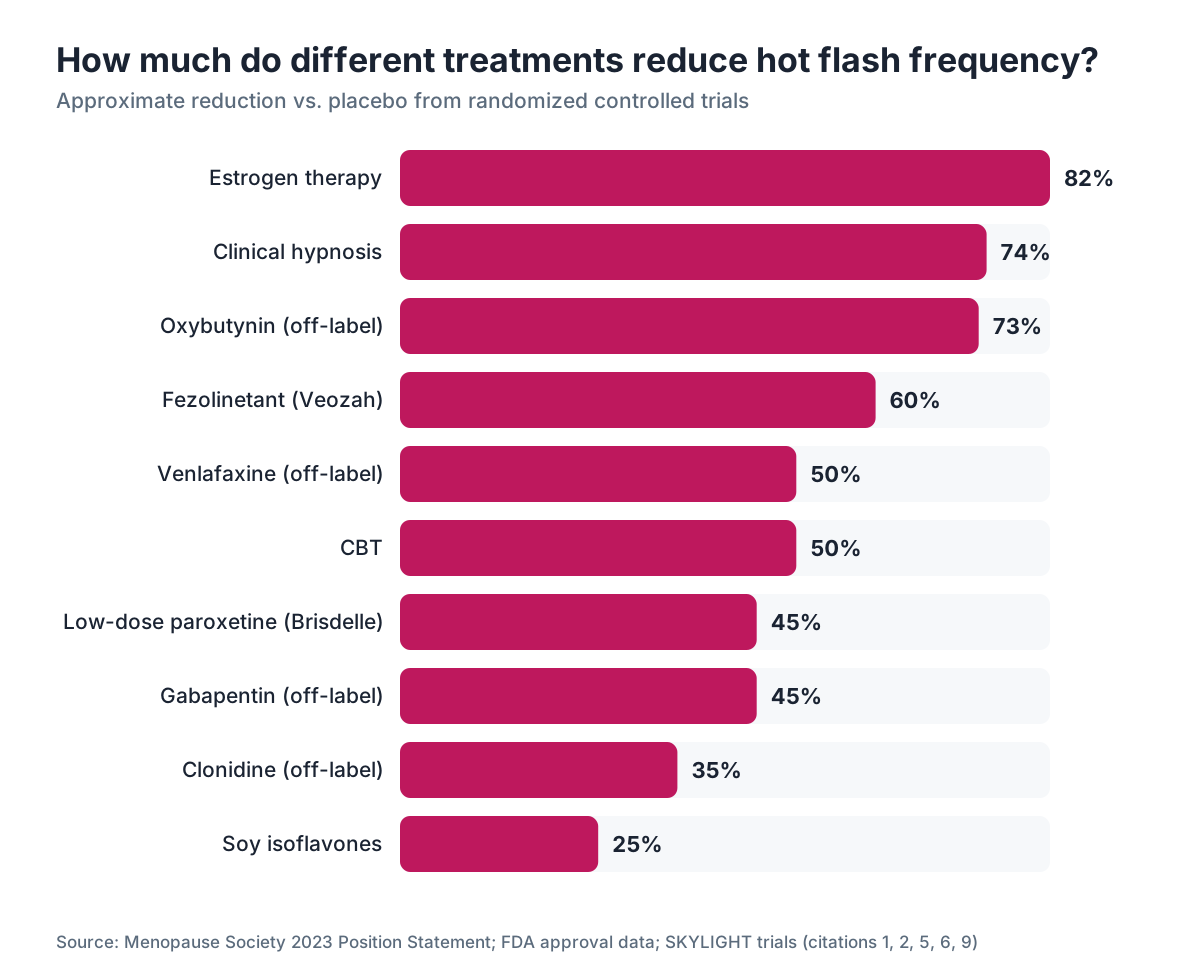
Estrogen therapy is the most effective treatment for hot flashes, and it is not a close race. Randomized trials show it cuts flash frequency by 75% to 90% versus placebo [5]. Nothing else touches that number.
The Menopause Society (formerly NAMS) puts it plainly in its 2023 position statement: "Hormone therapy is the most effective treatment for vasomotor symptoms and should be considered for appropriate candidates." [1] The society endorses starting hormone therapy before age 60 and within 10 years of the final period for women without contraindications, because the benefit-risk balance is favorable in that window.
Estrogen comes as a pill, patch, gel, or spray. Patches are often the better pick because they skip first-pass liver metabolism and carry a lower clot risk than oral estrogen [5]. Most women who still have a uterus need to pair estrogen with a progestogen to protect the uterine lining. Progesterone and synthetic progestins both do that job, though some research suggests micronized progesterone has a cleaner cardiovascular and breast safety profile than certain synthetic progestins.
For the practical formulation choices, the hormone replacement therapy and estrogen patch articles go deeper.
For women who cannot or would rather not use estrogen, the picture gets more layered. Several non-hormonal options have real evidence, and I break them down next.
What non-hormonal medications work for hot flashes?
Fezolinetant (Veozah). The FDA approved fezolinetant in May 2023, the first non-hormonal drug built specifically to block the neurokinin B pathway that drives hot flashes [2]. In the pooled SKYLIGHT trials, fezolinetant 45 mg daily cut flash frequency by about 60% and severity by about 50% versus placebo at 12 weeks [9]. That is meaningfully less than estrogen and meaningfully more than the SSRIs. It is a once-daily pill with no hormonal activity, which matters for women with estrogen-sensitive cancers or a clot history. A small share of participants had liver enzyme elevations, so baseline liver labs and follow-up monitoring are recommended [2].
Low-dose paroxetine (Brisdelle). The only SSRI with an FDA indication for hot flashes [11]. At 7.5 mg, lower than the antidepressant dose, it reduces flash frequency by roughly 33% to 65% depending on the trial [6]. One caution matters a lot: paroxetine inhibits CYP2D6 and can blunt tamoxifen's effectiveness, so it is generally avoided in women on tamoxifen.
Venlafaxine. Off-label but widely used. Doses of 37.5 to 150 mg daily reduce flash frequency by 40% to 60% in trials [6]. It kicks in faster than paroxetine and has a different side effect profile. Escitalopram has decent trial data too.
Gabapentin. Works, especially for night sweats, at 300 to 900 mg at bedtime. Sedation is the main complaint. One randomized trial showed about a 45% reduction in flash frequency versus placebo [6].
Oxybutynin. An anticholinergic used off-label. A 2018 trial showed roughly 73% reduction in flash frequency at 15 mg daily, but cognitive side effects are a real concern in older women. The American Geriatrics Society flags anticholinergics as potentially inappropriate for women over 65.
Clonidine. Modest, maybe 30% to 40%, with side effects worth minding like dizziness and dry mouth. Mostly a last resort now that fezolinetant exists.
| Treatment | Flash reduction vs placebo | FDA-approved for hot flashes | Hormonal? | |---|---|---|---| | Estrogen therapy | 75-90% | Yes (menopause symptoms) | Yes | | Fezolinetant (Veozah) | ~60% | Yes (2023) | No | | Low-dose paroxetine (Brisdelle) | 33-65% | Yes | No | | Venlafaxine | 40-60% | No (off-label) | No | | Gabapentin | ~45% | No (off-label) | No | | Oxybutynin | ~73% | No (off-label) | No | | Clonidine | ~30-40% | No (off-label) | No |
Are there natural treatments for hot flashes in women?
Yes, a few. The evidence is generally thinner than for prescriptions, but some options have real trial data behind them.
Cognitive behavioral therapy (CBT). The most underrated intervention on this list. A randomized trial in Menopause found CBT aimed at hot flash beliefs and behaviors cut flash problem rating (a composite of frequency and bother) by about 50% versus control, with gains holding at 6 months [6]. It works less by lowering flash count and more by dialing down the distress and hypervigilance that amplify each flash. For mild-to-moderate flashes, or for women who cannot use medications, CBT is a Menopause Society first-line recommendation.
Clinical hypnosis. An NIH-funded randomized trial found hypnotherapy reduced hot flash scores by about 74% versus a structured attention control [12]. That is a striking number from a well-designed study. The barrier is access: trained practitioners are thin on the ground.
Paced breathing and mindfulness. Widely recommended, less convincing in controlled trials. They lower perceived distress and may trim frequency a little, but they will not carry a woman with 15 flashes a day.
Phytoestrogens (soy isoflavones, red clover). Meta-analyses show a modest reduction in flash frequency, roughly 20% to 30%, concentrated in women with higher baseline frequency [7]. The effect is real and small. Safety in women with hormone-sensitive cancers is not established, and most oncologists say be careful.
Black cohosh. Studied a lot. Most rigorous trials show no significant difference from placebo, and the Menopause Society does not recommend it as an evidence-based treatment [1]. Germany's Commission E approved it historically, but that approval predates modern trial methods. There are also rare reports of liver injury.
Evening primrose oil, dong quai, valerian. No convincing trial data. Honest answer: not worth your money.
Lifestyle changes. Cooler rooms, layered moisture-wicking clothing, and steering around known triggers (spicy food, alcohol, caffeine for some women) cut severity. They will not erase flashes, but they make daily life more livable [10].
Can weight loss or GLP-1 medications reduce hot flashes?
Higher BMI tracks with worse hot flashes, and some research suggests losing weight helps. In a NAMS-linked study, women who lost 10 pounds or more over six months were about twice as likely to report hot flash improvement as women who did not lose weight [7].
GLP-1 receptor agonists like semaglutide and tirzepatide produce large weight loss in women. The SURMOUNT-1 trial showed tirzepatide dropping mean body weight 20% to 22% at the highest dose [8]. Clinicians describe hot flash improvement alongside that weight loss, but no randomized trial has tested GLP-1s with hot flashes as an endpoint. So the honest answer is this: probably helpful as an indirect effect of weight loss, not yet proven as a direct mechanism.
For women handling perimenopausal weight gain and hot flashes at once, semaglutide for weight loss and the semaglutide vs tirzepatide comparison are worth reading.
The practical point: treating obesity and using hormone therapy is not either/or. Some women do both. The metabolic gains from GLP-1s may also lower cardiovascular risk during the menopause transition, which is a stretch when that risk climbs regardless of hot flashes.
Who should avoid estrogen for hot flashes?
Estrogen therapy is not right for everyone. The clearest contraindications are active or recent hormone-sensitive breast cancer, active or recent endometrial cancer, unexplained vaginal bleeding, active liver disease, active venous thromboembolism (DVT or pulmonary embolism), and, in some cases, a history of stroke or known cardiovascular disease [5].
Women with a strong family history of breast cancer or a BRCA mutation face a more nuanced conversation. The absolute risk increase from short-term menopausal hormone therapy is modest, but the decision needs to be individualized with an oncologist or menopause specialist.
The Women's Health Initiative showed an increased breast cancer risk with combined estrogen-progestin over five years of use, but the absolute numbers are small, roughly 8 additional cases per 10,000 women per year, and the risk appears lower with transdermal estradiol and micronized progesterone than with the oral conjugated equine estrogen and medroxyprogesterone acetate used in WHI [5]. Context matters: WHI participants had a mean age of 63, well outside the 10-year window now considered best for starting.
For women who cannot use estrogen, fezolinetant or an SNRI is usually the next conversation. WomenRx clinicians who focus on perimenopausal care can help work through this, especially for complex histories.
How long do hot flashes last during perimenopause?
Longer than most women expect. SWAN, the best longitudinal data we have, found the median total duration of hot flash symptoms was 7.4 years [3]. Women who started flashing while still having periods had the longest course, a median of 11.8 years.
Peak intensity usually hits in the first two years after the final period. After that, most women see frequency and severity taper, but roughly 10% to 15% of postmenopausal women still get bothersome flashes into their 70s.
So plan accordingly. This is not a six-month problem. If flashes are hurting your sleep, work, or relationships, that is a reason to treat, not a reason to wait it out. There is no medical prize for suffering through severe hot flashes untreated.
See menopause age for the full arc from perimenopause through postmenopause.
What makes hot flashes worse?
A few things reliably crank up flash frequency and severity, and cutting them can help before you ever start a medication.
Alcohol is a consistent trigger in clinical reports and survey data. It raises core temperature and widens blood vessels, which can start or worsen a flash. For some women, one drink is enough to bump up frequency.
Spicy food and hot drinks raise core temperature directly. The effect is short-lived, but the timing is predictable enough that you can test it yourself.
Stress and anxiety narrow the thermoregulatory zone further. Women with higher perceived stress scores in SWAN had more severe vasomotor symptoms [3]. This does not mean flashes are in your head. The physiology is real. But the threshold where the hypothalamus fires is not fixed, and your emotional state nudges it.
Smoking links to earlier menopause and worse vasomotor symptoms, likely through nicotine's effect on estrogen metabolism.
Overheated rooms are obvious and still underrated. Sleeping in a cooler room, around 65 to 68 degrees Fahrenheit, sharply reduces night sweat disruption for many women, no medication required [10].
How do you talk to your doctor about hot flash treatment?
The conversation goes better with specifics. Track your flashes for one to two weeks before the appointment. Note the time of day, severity on a 1-10 scale, whether they wake you, and what you were doing when one hit. That gives a clinician something concrete to work with and helps classify severity.
Severity classification drives the treatment decision:
- Mild: noticeable but not disruptive to daily function
- Moderate: disruptive, cuts into concentration or comfort
- Severe: wrecks sleep consistently, impairs daily function, 10 or more flashes per day
For mild flashes, lifestyle changes and CBT are reasonable starting points. For moderate to severe flashes, hormone therapy or fezolinetant belong on the table.
If your doctor waves you off, ask directly about the 2023 Menopause Society position statement. The society updated its guidance precisely because many women were undertreated based on outdated readings of the Women's Health Initiative data [1].
Telehealth platforms that focus on perimenopausal care, including WomenRx, can help women without a menopause-informed clinician nearby. The Menopause Society also runs a practitioner finder on its website.
If you have not confirmed you are in perimenopause yet, perimenopause age lays out what the transition looks like.
What does hot flash treatment cost without insurance?
Costs swing a lot by formulation and pharmacy.
Generic estradiol patches (0.05 mg/week) run roughly $20 to $60 a month at most retail pharmacies. Oral estradiol tablets are often cheaper, sometimes under $15 a month with a GoodRx coupon. Brand formulations like Climara Pro or Vivelle-Dot cost more, sometimes $80 to $150 a month without insurance.
Fezolinetant (Veozah) launched around $550 a month at list price [2]. The manufacturer offers a savings card for commercially insured patients, but for women paying out of pocket, that is a heavy expense.
Brand-name Brisdelle is pricey. Generic paroxetine at the 7.5 mg dose is hard to find, but generic paroxetine at a nearby dose used off-label often runs under $20 a month.
Generic venlafaxine is usually $10 to $30 a month. Generic gabapentin is similarly cheap.
Clinician visits range from $0 (if covered under preventive care) to $150 to $300 out of pocket for a specialist. Telehealth visits typically run $50 to $150 for an initial consult.
The bottom line: hormone therapy is both the most effective treatment and among the cheapest. The barrier to access is usually clinical gatekeeping, not price.
Frequently asked questions
At what age do hot flashes start in perimenopause?
Most women first notice hot flashes in their mid-to-late 40s, though some start in their early 40s. The average age of perimenopause onset in the US is around 47, and flashes often appear within the first year or two of irregular cycles. Black women tend to report earlier onset than white women. See perimenopause age for the full timeline.
Can hot flashes happen before periods become irregular?
Yes. Some women notice occasional flashes while cycles are still regular, a sign of the early hormonal fluctuations of perimenopause before obvious cycle changes show up. These early flashes are usually milder and less frequent. If they happen in a woman under 40, evaluation for premature ovarian insufficiency is warranted, since the cause and treatment implications differ.
Do hot flashes go away on their own without treatment?
For most women, eventually yes. Frequency tends to decline in the years after the final period. But SWAN found a median total duration of 7.4 years, with some women symptomatic for over a decade. Waiting them out is a fine choice for mild flashes. For moderate-to-severe flashes hurting sleep and daily function, treatment shortens the suffering with no evidence that treating causes long-term harm.
Is estrogen safe to take during perimenopause?
For most women under 60 who are within 10 years of their final period and have no contraindications, the Menopause Society says the benefit-risk balance of hormone therapy is favorable. The Women's Health Initiative findings, often cited as a reason to avoid HRT, applied to older women using oral conjugated estrogen. Transdermal estradiol with micronized progesterone appears to carry a lower clot and possibly lower breast cancer risk.
What is fezolinetant and is it better than HRT for hot flashes?
Fezolinetant (Veozah), FDA-approved in 2023, is the first non-hormonal drug that specifically blocks the neurokinin B pathway behind hot flashes. It cuts flash frequency by about 60% versus placebo, meaningful but less than estrogen's 75-90% reduction. It is a good fit for women who cannot or prefer not to use hormones. It needs liver monitoring and costs around $550 a month without insurance.
What is the fastest way to stop a hot flash when it starts?
Lower your core temperature fast: move to a cooler room, put a cold pack on your wrists or neck, drink cold water, or aim a small fan at yourself. Slow paced breathing (around 6 breaths per minute) during the flash may soften its intensity and length. These are management tactics, not cures. Prescription treatments reduce frequency and severity over time but do not abort a single flash in seconds.
Can antidepressants really help hot flashes?
Yes, and it is not about mood. SSRIs and SNRIs adjust serotonin and norepinephrine signaling in the hypothalamus, which affects the thermoregulatory trigger. Low-dose paroxetine (Brisdelle, 7.5 mg) is FDA-approved for hot flashes. Venlafaxine and escitalopram have good off-label trial data. Flash frequency drops by 33% to 60%, which matters for women who cannot use hormones.
Does diet affect hot flashes in perimenopause?
Diet affects hot flashes indirectly more than directly. Excess body weight worsens flash severity, so eating in a way that supports a healthy weight helps. Alcohol is a reliable trigger for many women. Spicy food and hot drinks can set off a flash acutely. High soy intake from food (not supplements) delivers low-level phytoestrogenic activity that may modestly cut flash frequency, roughly 20-30% in meta-analyses, but the effect is small.
Are night sweats the same as hot flashes?
Yes. Night sweats are hot flashes during sleep. The mechanism is identical: hypothalamic overreaction to small temperature changes driven by falling estrogen. The practical difference is that night sweats disrupt sleep more directly, waking women repeatedly and cutting slow-wave and REM sleep. Every treatment that reduces hot flash frequency also reduces night sweats, because they are the same event.
What is the difference between perimenopause and menopause hot flashes?
The flashes are physiologically the same. The difference is timing and hormonal context. In perimenopause, estrogen fluctuates unpredictably, which some women find makes flashes feel more erratic. After menopause (12 straight months without a period), estrogen sits consistently low, and many women notice flashes turn more regular and predictable, though not necessarily less intense. Treatment options are the same at both stages.
Do hot flashes cause any long-term health problems?
Severe, frequent hot flashes disrupt sleep, which affects mood, cognition, and metabolic health downstream. Some research links frequent vasomotor symptoms to higher cardiovascular risk markers, though whether flashes cause the risk or simply flag the same hormonal environment that raises it is unsettled. Treating hot flashes well improves sleep quality, and adequate sleep independently supports cardiovascular and metabolic health.
Is black cohosh safe and effective for hot flashes?
Black cohosh is heavily marketed for hot flashes, but the trial evidence is weak. Most rigorous randomized controlled trials show no significant difference from placebo in flash frequency or severity. The Menopause Society does not recommend it as an evidence-based treatment. There are rare reports of liver injury. For a non-hormonal option, fezolinetant, venlafaxine, or CBT have better data.
How do I track my hot flashes to discuss with my doctor?
Keep a simple daily log for one to two weeks: time of day, severity (1-10), duration in minutes, whether it woke you, and any apparent trigger. The Hot Flash Related Daily Interference Scale (HFRDIS) is a validated tool used in trials that your clinician may recognize. Bring the log to the appointment. Objective frequency and severity data substantially improve the treatment conversation.
Sources
- The Menopause Society (formerly NAMS), 2023 Position Statement on Hormone Therapy
- FDA Drug Approval Package, Veozah (fezolinetant), 2023
- Avis NE et al., JAMA Internal Medicine, 2015. Duration of menopausal vasomotor symptoms over the menopause transition. (SWAN study)
- American College of Obstetricians and Gynecologists (ACOG), Practice guidance on menopause
- Manson JE et al., JAMA 2017. Menopausal Hormone Therapy and Long-term All-Cause and Cause-Specific Mortality: WHI Randomized Trials
- Nonhormonal management of menopause-associated vasomotor symptoms, NAMS 2015 Position Statement
- Franco OH et al., JAMA 2016. Use of Plant-Based Therapies and Menopausal Symptoms: Systematic Review and Meta-analysis
- Jastreboff AM et al., NEJM 2022. Tirzepatide Once Weekly for the Treatment of Obesity (SURMOUNT-1 trial)
- Lederman S et al., The Lancet 2023. Fezolinetant SKYLIGHT 1 randomized controlled trial
- National Institute on Aging (NIA), Hot Flashes: What Can I Do?
- FDA, Brisdelle (paroxetine) Label and Approval
- Elkins GR et al., Menopause 2013. NIH-funded randomized trial of hypnotherapy for hot flashes