Hot flashes after menopause: why they happen and how long they last
TL;DR: Hot flashes don't stop at menopause. For most women they run 7 to 10 years past the final period, and for roughly 1 in 10 they continue past 70. Falling estrogen is the main trigger, but body weight, race, stress, and sleep quality all shape severity. Hormone therapy is the most effective treatment. Several non-hormonal options are now FDA-approved for women who can't or won't use hormones.
What exactly is a hot flash and what causes it?
A hot flash is a sudden wave of heat that usually starts in the chest or face and spreads outward, often followed by sweating, flushing, then a chill. Each one lasts 30 seconds to 5 minutes. Some women get one or two a day. Others get ten or more, several of them at night, which is when we call them night sweats.
The mechanism is a narrowing of the thermoneutral zone, the temperature range in which your body doesn't need to sweat or shiver to stay comfortable. Work by Dr. Robert Freedman at Wayne State showed that menopausal women can have a thermoneutral zone essentially zero degrees wide, so the tiniest temperature shift sets off a full sweating response [1]. Low estrogen changes the sensitivity of neurons in the hypothalamus, especially the ones that make kisspeptin, neurokinin B, and dynorphin (the KNDy neurons). When estrogen drops, these neurons go hyperactive and tell the body it's overheating when it isn't.
That's why neurokinin B blockers are now a real treatment category. Fezolinetant (Veozah), FDA-approved in May 2023, acts directly on this pathway instead of replacing estrogen [2]. It's the first non-hormonal drug that treats the neural cause rather than the downstream symptom.
Body weight complicates the story. Fat tissue generates heat, which is one reason heavier women report more severe flashes even though fat also makes some estrogen after menopause. The heat-generating effect of extra body mass seems to matter more than the small estrogen bump.
Do hot flashes really continue after menopause is complete?
Yes. This surprises a lot of women who assumed the symptoms would end when their periods did. Menopause is 12 straight months without a period, so the day you hit that mark you're postmenopausal. The hormonal disruption behind hot flashes doesn't quit at that line. It often gets worse in the first year or two after the last period before it slowly eases.
The Study of Women's Health Across the Nation (SWAN), one of the most detailed longitudinal studies of midlife women ever done, tracked participants for more than 10 years. Median total duration of frequent hot flashes was 7.4 years, and women who started having them before their final period had the longest run, averaging 11.8 years [3]. That's not a worst-case outlier. That's the median for early-onset sufferers.
Here's what that means in real life. A woman who starts perimenopause at 45 with flashes beginning around then could still be dealing with them well into her late 50s, even if menopause itself arrived at 51.
About 10 to 15 percent of women still have bothersome hot flashes into their 60s and 70s [3]. So if you're 62 and still having them, you're not unusual. You just weren't told the full story.
How long do hot flashes last after menopause for most women?
Longer than almost anyone tells you in a routine 15-minute appointment. SWAN puts the median duration of frequent vasomotor symptoms (the clinical term for hot flashes and night sweats) at 7.4 years total [3]. Plan for at least that if you want to be realistic.
Women who were still premenopausal when symptoms started had the longest rides. Women who didn't develop symptoms until after their final period had shorter durations, around 3.4 years, but they're the minority.
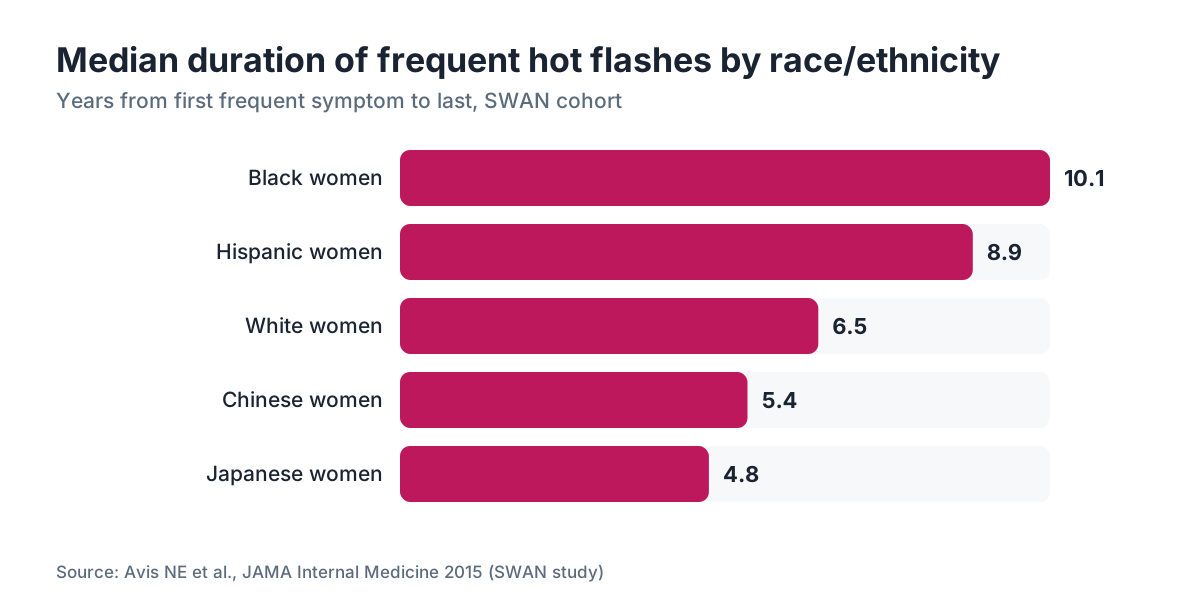
Race matters here in ways the data makes clear. Black women had the longest duration (median 10.1 years) and the highest frequency. Hispanic women ran a median of 8.9 years. White women averaged 6.5 years. Japanese and Chinese women averaged 4.8 and 5.4 years [3]. These are documented differences, not anecdote. The reasons are probably a mix of socioeconomic stress, body composition, and possibly genetic variation in thermoregulatory pathways.
Some women have flashes mild enough that they never seek treatment. Others have them so often and so hard that sleep, focus, and daily life take a hit every single day. Both are normal. The severity, not a calendar, decides whether you treat.
Who is at highest risk for severe or prolonged hot flashes?
A handful of factors show up again and again in the research as predictors of worse or longer symptoms.
Early onset is the biggest one. If your flashes started in perimenopause rather than after your final period, your total duration is likely to be longer [3].
Race is a documented factor, with Black women facing the longest median duration [3].
Smoking raises frequency and severity. This is one of the cleaner associations in the literature, and it makes biological sense: smoking is antiestrogenic and disrupts thermoregulation on its own.
Higher body weight and obesity link to more severe symptoms, even though fat tissue makes some estrogen. The heat from a larger body mass seems to win out.
Poor sleep and high perceived stress both track with more frequent flashes. Stress raises core body temperature and narrows the thermoneutral zone. Flashes wreck sleep, poor sleep amplifies stress, and stress worsens flashes. The loop runs both directions no matter where it starts.
Anxiety and depression show up in multiple studies, SWAN included, as linked to worse vasomotor symptoms [3]. Women with a history of anxiety or major depression before menopause tend to have a harder time.
Surgical menopause (ovaries removed) usually causes more abrupt, more severe flashes than natural menopause, because estrogen falls off a cliff instead of tapering.
Is hormone therapy the best treatment for hot flashes after menopause?
For most healthy women under 60 or within 10 years of menopause, yes. The North American Menopause Society (NAMS) states that hormone therapy is the most effective treatment for vasomotor symptoms and the standard of care for women without contraindications [4]. The Endocrine Society guidelines say the same [5].
Estrogen is the ingredient that clears hot flashes. Progesterone (or a progestogen) gets added for women with a uterus to protect the lining. Women who've had a hysterectomy can use estrogen alone, which has a friendlier safety profile than combined therapy.
The Women's Health Initiative (WHI) scared a generation of women and doctors off hormones starting in 2002 with findings of higher breast cancer and cardiovascular risk. The picture has changed a lot since. The WHI used oral conjugated equine estrogen plus medroxyprogesterone acetate in women who were, on average, 63, many with pre-existing cardiovascular risk. Younger, healthier women on transdermal estradiol with micronized progesterone carry a different risk profile.
A 2019 WHI analysis in JAMA Internal Medicine found that among women aged 50-59 who used estrogen alone, there was no increase in breast cancer risk and a possible reduction [6]. The timing hypothesis, now widely accepted, holds that starting hormone therapy close to menopause (within 10 years or before age 60) is safer than starting it in older women with established vascular disease.
If you're weighing this, hormone replacement therapy is worth reading in full, and so is the delivery method question. An estrogen patch skips first-pass liver metabolism and may carry lower clotting risk than oral estrogen. The progesterone you use (micronized versus a synthetic progestin) matters for both how you feel and your safety numbers.
For women with contraindications, including certain hormone-sensitive cancers, a clotting history, or plain preference, there are now real non-hormonal alternatives.
What non-hormonal treatments actually work for hot flashes?
This category has genuinely improved in the last few years. For a long time the choices were antidepressants with mixed evidence and gabapentin with rough side effects. Now there's a targeted drug.
Fezolinetant (Veozah) got FDA approval in May 2023 for moderate to severe vasomotor symptoms due to menopause [2]. It's a neurokinin 3 (NK3) receptor antagonist that blocks the KNDy pathway driving flashes. In the SKYLIGHT trials, fezolinetant cut hot flash frequency by roughly 60% at 12 weeks versus about 45% for placebo [2]. That's a meaningful gap, and it works with no hormonal activity at all. The main watch-out is liver enzyme elevation in a small share of users, so liver monitoring is recommended.
SSRIs and SNRIs, especially paroxetine (the only one FDA-approved for this use, as Brisdelle at 7.5mg), venlafaxine, and desvenlafaxine, cut frequency by roughly 50 to 60% in trials, real but usually less than hormone therapy [7]. They're a sensible pick for women who have mood symptoms alongside flashes, or who can't use hormones.
Gabapentin at 300mg three times daily reduces flashes but brings sedation, dizziness, and mental fog for many women. It helps night sweats because the sedation isn't all bad at bedtime, but it's a hard drug to live with during the day.
Oxybutynin, a bladder drug, has cut flash frequency in small trials and gets used off-label. The evidence is thinner than for the options above.
Behavioral approaches have moderate evidence. A randomized trial in Menopause found cognitive behavioral therapy adapted for menopause reduced hot flash problem rating significantly versus control [8]. CBT doesn't erase flashes, but it lowers how disruptive they feel. Paced breathing and mindfulness show smaller effects.
Weight loss reduces frequency. The Women's Health Initiative dietary modification trial found women who lost at least 10 pounds had greater odds of eliminating vasomotor symptoms than women who stayed weight-stable [9]. If you're already losing weight on a GLP-1, that vasomotor payoff may come along with the metabolic ones.
Can losing weight reduce hot flashes after menopause?
Yes, and this is one of the more useful facts for postmenopausal women handling weight and hot flashes at the same time. The WHI found women who lost 10 or more pounds over a year were significantly more likely to report their hot flashes gone compared to weight-stable women [9]. The link held after controlling for other factors.
The mechanism is part reduced heat from body mass, part better sleep that tends to follow weight loss, and possibly lower inflammatory signaling.
For women on GLP-1 receptor agonists, there's early interest in whether the weight loss specifically eases vasomotor symptoms. No dedicated trial has tested it directly yet. The indirect evidence from WHI and general weight loss studies points to a real benefit, but nobody has a GLP-1-specific number to hand you. If you're looking at semaglutide for weight loss for other reasons, lighter hot flash burden may be a secondary win. Treat that as a reasonable hypothesis, not a proven claim.
Telehealth providers that handle both GLP-1 prescriptions and hormone therapy, like WomenRx, can address both in one plan instead of splitting them across visits. Even so, the two treatments are independent. Hormone therapy for flashes and a GLP-1 for weight are separate decisions, and one doesn't require the other.
What triggers hot flashes and how can you reduce them day to day?
Common reported triggers include alcohol (wine especially), spicy food, hot drinks, hot weather, stress, tight clothing, and stepping from a cool room into a warm one. Trigger research is mostly observational and self-reported, so it varies by person. A two-week symptom diary to find your own pattern beats any generic list.
Caffeine gets blamed a lot, but the evidence is inconsistent. Some women flare on it, some don't. Same with sugar.
Dressing in layers is genuinely useful, not a platitude. Being able to strip off a cardigan the moment a flash hits lowers the peak discomfort even if it doesn't change how often flashes come. A bedside fan, moisture-wicking sheets, and cooling pillow inserts are low-risk and help many women with night sweats.
Alcohol earns special attention. It widens blood vessels and raises core body temperature, two things that directly worsen flashes. If you drink regularly and your symptoms are bad, cut this variable before adding another medication.
Exercise has a mixed relationship with flashes. A single workout raises core temperature and can set one off. But regular aerobic exercise over time modestly lowers frequency and improves sleep [10]. The net effect of a steady habit is likely positive even when the occasional session triggers a flash.
The bedroom matters for night sweats. Keep the room between 65 and 67 degrees F, use breathable natural-fiber bedding, and put a small fan on your side of the bed. Low downside, real help.
Are hot flashes after menopause a sign of anything more serious?
More women should ask this, and the answer is more interesting than most doctors have time to explain. Recent research links frequent, persistent hot flashes to cardiovascular risk. A study in Menopause found women with more frequent, persistent vasomotor symptoms had higher markers of subclinical cardiovascular disease, including arterial stiffness and endothelial dysfunction [11]. Hot flashes don't cause heart disease. The same hormonal and vascular shifts that drive flashes probably also flag broader cardiovascular vulnerability.
This is part of why the menopause cardiology conversation has moved. NAMS and cardiology groups increasingly frame early hormone therapy in the right candidate as potentially cardioprotective, not only symptom-relieving [4].
Severe night sweats that persist far into postmenopause, especially with unintended weight loss, swollen lymph nodes, or drenching sweats, warrant a talk with your doctor to rule out other causes including lymphoma. New or worsening symptoms in a woman 10 or more years out from her last period should get taken seriously rather than automatically written off as lingering menopause.
Bone health is connected too. The estrogen deficit driving your flashes is the same one speeding bone loss in the years right after menopause. A bone density test is a reasonable step for any woman managing postmenopausal symptoms, because your hormone therapy decisions affect bone as much as hot flash relief.
What does the timeline from perimenopause through postmenopause look like?
The overall arc helps calibrate expectations. Perimenopause can start in the early to mid-40s. Cycles turn irregular, estrogen swings hard, and hot flashes often begin here, even while periods still come. If you're trying to pin down perimenopause age ranges or when does menopause start for your situation, the range is wide.
Menopause itself is a single point: 12 months after your last period. The average age in the United States is 51, with the range of 45 to 55 covering most women [12].
The years right after menopause, called early postmenopause, are usually when flashes hit hardest. Estrogen is at its floor and the thermoregulatory system hasn't adapted.
By 5 to 10 years out, symptoms ease for most but not all. A meaningful minority, around 10 to 15%, stay symptomatic for a decade or more.
For the fuller picture, menopause covers the biology, staging, and what to expect across the transition.
| Stage | Typical timing | Hot flash status | |---|---|---| | Early perimenopause | 4-8 years before last period | May begin, often mild | | Late perimenopause | 1-2 years before last period | Frequently peak frequency | | Menopause (the day) | 12 months after last period | Often at or near worst | | Early postmenopause | Years 1-5 after last period | Highly variable, still severe for many | | Late postmenopause | Years 5-10+ | Gradually improves; 10-15% still symptomatic |
The SWAN median for total duration, first frequent symptom to last, is 7.4 years [3]. Read this table as a rough guide, not a personal forecast.
How do doctors assess and treat hot flashes, and what should you ask at your appointment?
The standard tools are the Menopause Rating Scale (MRS) or the Hot Flash Related Daily Interference Scale (HFRDIS), though many busy practices just ask how many flashes a day and how much they bother you. That's the bare minimum. You should be asked about severity, timing (day versus night), sleep disruption, and quality-of-life impact, not only frequency.
Bring your hot flash diary. Know your count per day, your worst hours, how many nights a week sleep gets wrecked, and what you've already tried. Doctors respond better to patients who arrive with data.
Ask specifically about the type of hormone therapy on offer. Transdermal estradiol (patches, gels, sprays) and oral estradiol have different metabolic effects. Ask about the progestogen if you have a uterus: micronized progesterone (Prometrium) is better tolerated and has a friendlier safety profile than medroxyprogesterone acetate for many women.
If you're handed an SSRI with no mention of hormones, ask why you aren't a hormone candidate. Sometimes there's a good reason. Sometimes the prescriber is defaulting to a post-WHI habit and your actual risk profile would support hormone therapy.
WomenRx runs hormone therapy consultations remotely for women across multiple states, a practical route if your primary care provider isn't confident managing menopause hormones. Any telehealth relationship for hormone management should still involve a real history, not a checkbox intake.
Want to read up before your visit? Hormone replacement therapy has the evidence summary, and menopause age covers what your timing means for the treatment window.
Frequently asked questions
Can hot flashes start or get worse after menopause is complete?
Yes. Hot flashes often intensify in the year or two after the final period as estrogen hits its floor. Women who never had them in perimenopause can develop them postmenopause. New or clearly worsening symptoms years into postmenopause (10+ years out) are worth discussing with a doctor to rule out other causes, since persistent menopause is the most common explanation but not the only one.
Is it normal to still have hot flashes at 60 or 65?
Completely normal, and more common than most women realize. SWAN data shows about 10 to 15 percent of women still have frequent vasomotor symptoms into their 60s. Effective treatment exists at any postmenopausal age, though the risk-benefit math for hormone therapy shifts as women move further from their last period. Non-hormonal options like fezolinetant don't carry the same timing restrictions.
What is the most effective treatment for hot flashes after menopause?
Hormone therapy, specifically estradiol with progesterone for women with a uterus, remains the most effective treatment, cutting hot flash frequency by 75 to 90 percent in most studies. For women who can't use hormones, fezolinetant (Veozah), FDA-approved in 2023, is the best-evidenced non-hormonal option, cutting frequency by roughly 60 percent in the SKYLIGHT trials. SSRIs and SNRIs are a reasonable second-line non-hormonal choice.
Do hot flashes ever go away completely on their own?
For most women, yes, eventually. SWAN found about 80 percent of women see a significant drop within 7 to 10 years of their final period. But 'significant drop' doesn't always mean full resolution, and about 10 to 15 percent of women stay symptomatic for more than a decade. There's no reliable way to predict which group you'll land in.
Does hormone therapy stop working over time for hot flashes?
It can lose some effect if estrogen levels shift or the dose hasn't been adjusted as your body changes. More often, women stop hormone therapy and symptoms return. When it's stopped, about half of women get a return of flashes, especially if stopped abruptly rather than tapered. Gradual dose reduction on stopping is generally recommended to limit rebound symptoms.
Are night sweats the same as hot flashes?
Night sweats are hot flashes during sleep. The mechanism is identical: a narrowed thermoneutral zone that makes the hypothalamus trigger sweating from a tiny temperature change. The practical difference is that night sweats break up sleep architecture, often waking women drenched and then chilled, with downstream effects on mood, thinking, and cardiovascular health beyond the discomfort of a daytime flash.
Can diet or supplements reduce hot flashes after menopause?
The evidence for most supplements is weak. Soy isoflavones show modest reductions in some trials, but the effect is inconsistent and smaller than any prescription option. Black cohosh has mixed evidence and safety questions around liver toxicity with long-term use. Evening primrose oil, red clover, and most other herbals lack reliable controlled-trial evidence. A whole-food diet with less alcohol probably helps more than any single supplement.
Does weight loss help with hot flashes after menopause?
Yes. The Women's Health Initiative found women who lost 10 or more pounds were significantly more likely to eliminate vasomotor symptoms than weight-stable women. Likely mechanisms include less heat from body mass and better sleep. Weight loss won't clear flashes in every woman, but it's one of the few lifestyle changes with real clinical trial support rather than only observational data.
What triggers hot flashes after menopause and how do I identify mine?
Common reported triggers include alcohol, hot drinks, spicy food, stress, warm environments, and tight clothing. Triggers vary a lot by person. The most useful move is a two-week symptom diary noting timing, activity, what you ate or drank, stress level, and room temperature before each flash. Personal patterns show up faster than any generic list. Alcohol and stress are the two most consistently backed by physiology.
Are hot flashes after menopause linked to heart disease risk?
Research, including studies in Menopause, has found associations between frequent persistent vasomotor symptoms and markers of subclinical cardiovascular disease like arterial stiffness and endothelial dysfunction. The link likely reflects shared underlying vascular and hormonal vulnerability rather than flashes directly causing heart disease. This is one reason cardiologists and menopause specialists increasingly discuss hormone therapy as potentially cardioprotective when started close to menopause in healthy women.
Can anxiety or stress make hot flashes worse after menopause?
Yes. Psychological stress raises core body temperature and narrows the thermoneutral zone, making it easier for the hypothalamus to fire off a flash. SWAN consistently found anxiety and perceived stress linked to higher frequency and bother. Cognitive behavioral therapy adapted for menopause has moderate evidence for cutting how disruptive flashes feel, even when it doesn't eliminate them.
Is fezolinetant (Veozah) safe for women who can't use hormone therapy?
Fezolinetant is non-hormonal and FDA-approved specifically for women with moderate to severe vasomotor symptoms who want a non-estrogen option. It isn't suitable for women with severe liver impairment, and liver enzyme monitoring is recommended during use because a small share of users develop elevated enzymes. Long-term data beyond 52 weeks is still accumulating. For women with hormone-sensitive cancer histories, it's a targeted option worth discussing with an oncologist.
How do I know if my postmenopausal hot flashes need treatment versus waiting them out?
The threshold is whether symptoms bother you, not whether they hit a set frequency. If flashes disrupt your sleep more than two nights a week, break your focus at work, drag your mood, or make you dread daily activities, that's a quality-of-life problem worth treating. Effective options exist at any severity, so 'just waiting' is only valid if the symptoms are genuinely tolerable to you.
Sources
- Freedman RR, Thermoregulatory physiology of menopausal hot flashes, Seminars in Reproductive Medicine 2005
- FDA Drug Approval, Veozah (fezolinetant), FDA.gov 2023
- Avis NE et al., Duration of menopausal vasomotor symptoms over the menopause transition, JAMA Internal Medicine 2015
- North American Menopause Society, 2023 NAMS Menopause Practice Guidelines
- Endocrine Society, Clinical Practice Guideline: Treatment of Menopause-Associated Vasomotor Symptoms
- Manson JE et al., Menopausal hormone therapy and long-term all-cause and cause-specific mortality, JAMA Internal Medicine 2019 (Women's Health Initiative)
- Loprinzi CL et al., Venlafaxine in management of hot flashes in survivors of breast cancer, Lancet 2000
- Ayers B et al., Cognitive behavior therapy for menopausal vasomotor symptoms, Menopause 2012
- Thurston RC et al., Gains in body fat and vasomotor symptom reporting over the menopausal transition, American Journal of Epidemiology 2008; and WHI dietary modification trial on weight loss and vasomotor symptoms
- Daley A et al., Exercise for vasomotor menopausal symptoms, Cochrane Database of Systematic Reviews 2015
- Thurston RC et al., Menopausal vasomotor symptoms and subclinical cardiovascular disease, Menopause 2017
- National Institute on Aging, Menopause overview, NIA.NIH.gov