Hot flash treatment: every option ranked by evidence
TL;DR: Hormone therapy (estrogen alone or with progesterone) is the most effective hot flash treatment, cutting frequency 75 to 90 percent. When hormones are off the table, the FDA-approved drug fezolinetant, SSRIs, and gabapentin help. A few natural remedies show modest benefit. The right choice depends on your symptom severity, health history, and how much relief you actually need.
Why do hot flashes happen in the first place?
Hot flashes are not random. They trace back to falling estrogen disrupting the hypothalamus, the brain region that runs your internal thermostat. When estrogen drops, the temperature comfort zone in the hypothalamus narrows, so even a tiny rise in core body temperature sets off a heat-dumping response: skin blood vessels dilate, you flush, you sweat, your heart rate climbs. A single episode usually lasts one to five minutes [1].
About 75 to 80 percent of women in the menopause transition get hot flashes, and for roughly 25 to 30 percent of them the flashes are bad enough to wreck sleep, work, and daily life [2]. They usually start in perimenopause, sometimes years before the last period, and can hang around from a few months to more than a decade. The SWAN study (Study of Women's Health Across the Nation) found the median total duration of frequent hot flashes was 7.4 years, and women who started flashing before their final period had symptoms that lasted even longer [2].
The mechanism explains why different treatments work. Estrogen fixes the root problem at the hypothalamus. Fezolinetant blocks the neurokinin-3 receptor pathway that fires the flash. Natural approaches work on related pathways or have mild plant-estrogen effects. None of it is mysterious once you know what the brain is actually doing.
What is the most effective treatment for hot flashes?
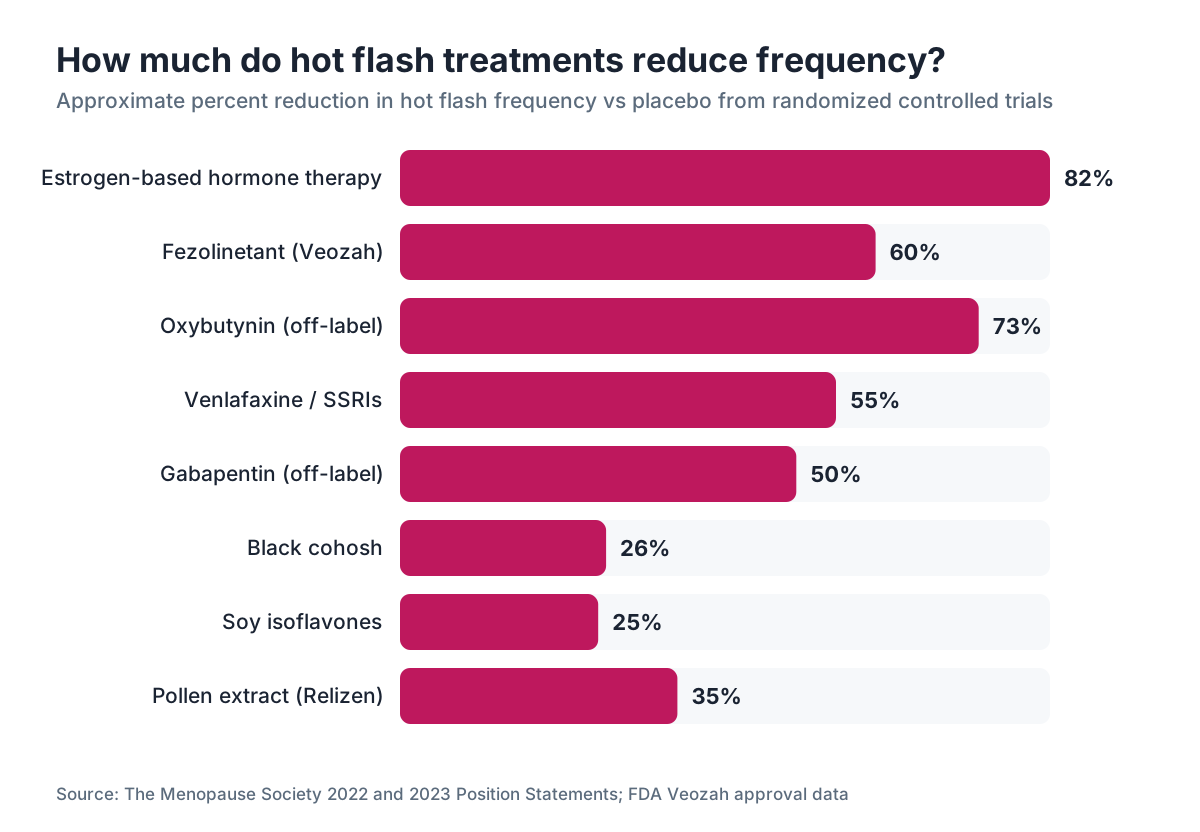
Hormone therapy (HT) is the most effective treatment for hot flashes, full stop. Estrogen given alone (for women without a uterus) or combined with a progestogen (for women with a uterus) reduces hot flash frequency by 75 to 90 percent compared to placebo [3]. Nothing else in the evidence comes close.
The Menopause Society calls hormone therapy the most effective treatment available for vasomotor symptoms and states it improves quality of life in randomized trials [3]. That is not a fringe view. It is the shared position of every major menopause body, including the Menopause Society, the Endocrine Society, and the American College of Obstetricians and Gynecologists.
Most of the fear traces back to the 2002 Women's Health Initiative (WHI), which found a small rise in breast cancer risk with one specific product (conjugated equine estrogen plus medroxyprogesterone acetate) in older women who were more than 10 years past menopause [4]. Twenty-plus years of follow-up and re-analysis tell a different story. The risk picture is much more favorable for women who start HT within 10 years of menopause or before age 60, and the estrogen-only arm (for women without a uterus) actually showed a lower breast cancer rate, not a higher one [4].
Are you a healthy woman under 60 with moderate to severe hot flashes and no history of breast cancer, hormone-sensitive cancer, active clotting disorders, or unexplained vaginal bleeding? Then most evidence says HT is your safest and most effective option. Find a clinician who actually knows menopause medicine. Our hormone replacement therapy guide goes deeper.
What types of hormone therapy are used for hot flashes?
Hormone therapy is not one product. There are dozens of formulations, doses, and delivery routes, and they do not all carry the same risks or produce the same results.
Estrogen delivery options
Transdermal estrogen (patches, gels, sprays, creams) skips the liver, so it does not push up clotting factors the way oral estrogen does. Most menopause specialists now prefer transdermal delivery for that reason, especially in women with any cardiovascular risk. The estrogen patch is one of the most studied and most prescribed formats.
Oral estrogen tablets (estradiol, conjugated equine estrogens) work well and have the longest track record, but the liver-first metabolism means a slightly higher clot risk than transdermal.
Progestogen options for women with a uterus
Still have your uterus? You need a progestogen alongside estrogen to protect the uterine lining. Options include:
- Micronized progesterone (Prometrium, compounded bioidentical progesterone): generally considered the safest for breast and cardiovascular risk based on observational data. Our progesterone explainer has the full breakdown.
- Medroxyprogesterone acetate (MPA): the progestogen from the original WHI. Most clinicians have moved away from it.
- Levonorgestrel-releasing IUD: delivers progestogen locally to the uterus with minimal systemic absorption.
Dose
Lower doses work for many women and cause fewer side effects. Transdermal estradiol usually starts at 0.025 mg/day to 0.05 mg/day. Some women need more, some do fine on much less. Dose gets individualized.
Duration
The old "shortest time, lowest dose" rule came from a misreading of the WHI. Current Menopause Society guidance sets no arbitrary cutoff. Duration should track your continued need and your risk profile, reassessed regularly [3].
What are the non-hormonal prescription options for hot flashes?
For women who cannot or would rather not use hormone therapy, several non-hormonal prescription drugs have real evidence behind them.
Fezolinetant (Veozah)
The FDA approved fezolinetant in May 2023 for moderate to severe vasomotor symptoms due to menopause [5]. It is the first drug in a class called neurokinin-3 receptor antagonists. When estrogen is low, the hypothalamus uses neurokinin B signaling through the NK3 receptor to fire hot flashes. Fezolinetant blocks that receptor.
In the SKYLIGHT 1 and SKYLIGHT 2 trials, women on fezolinetant 45 mg daily saw hot flash frequency fall about 60 percent and severity fall about 55 percent at 12 weeks, versus roughly 40 percent and 35 percent on placebo [5]. Those are real numbers. Not as strong as estrogen, clearly better than placebo.
Fezolinetant is off-limits for women with liver problems (it needs liver enzyme monitoring) and carries a boxed warning for potential liver injury based on a handful of trial cases [5]. It costs a lot. As of 2024 the list price runs around $550 to $600 per month without insurance.
SSRIs and SNRIs
Paroxetine mesylate 7.5 mg (Brisdelle) is the only antidepressant with FDA approval specifically for hot flashes [11]. Escitalopram, venlafaxine, and desvenlafaxine get used off-label with decent evidence. Venlafaxine 75 mg typically cuts hot flash frequency by about 50 to 60 percent in trials. A good fit for women who also have depression or anxiety.
One warning: paroxetine is a strong CYP2D6 inhibitor, which matters if you take tamoxifen. It blocks tamoxifen's conversion to its active form and can reduce how well the drug works [11]. Women on tamoxifen should use a different SSRI or SNRI, usually venlafaxine or escitalopram.
Gabapentin
Gabapentin (off-label, 300 to 900 mg at night) cuts hot flash frequency by about 45 to 54 percent in trials [3]. It works best for night sweats and broken sleep. Dizziness and sedation are the main side effects, which is why you take it at bedtime. Pregabalin has similar evidence.
Clonidine
An older blood pressure drug used off-label. It helps somewhat, but dry mouth, dizziness, and constipation limit it, so it lands as a third-line option.
Oxybutynin
An overactive bladder drug that, surprisingly, cuts hot flashes. A 2020 randomized trial in Menopause found oxybutynin 2.5 to 5 mg twice daily reduced hot flash frequency by about 73 percent versus 29 percent for placebo [7]. Dry mouth is common. It is off-label but increasingly recommended as a non-hormonal choice.
| Treatment | Mechanism | Hot flash frequency reduction (approximate) | FDA-approved for hot flashes? | |---|---|---|---| | Estrogen-based HT | Replaces declining estrogen | 75 to 90% | Yes | | Fezolinetant (Veozah) | NK3 receptor blocker | ~60% | Yes (2023) | | Venlafaxine / SSRIs | Serotonin/norepinephrine | 50 to 60% | Off-label (paroxetine: yes) | | Oxybutynin | Anticholinergic | ~73% (one trial) | Off-label | | Gabapentin | GABA receptor modulator | 45 to 54% | Off-label | | Clonidine | Alpha-2 agonist | ~40% | Off-label |
Do natural remedies for hot flashes actually work?
The honest answer: a few do, modestly, and most do not. Evidence for natural hot flash treatments is far messier than for prescription options, and most trials are small, short, and loosely controlled. A handful still have enough signal to talk about.
Black cohosh
The most studied herbal remedy for hot flashes. A review of 16 trials found black cohosh reduced hot flash frequency by about 26 percent versus placebo, which is real but not dramatic [6]. Most trials used Remifemin (an isopropanolic extract). Safety looks acceptable for up to six months. Longer data are thin, and there are rare case reports of liver injury, so women with liver disease should skip it.
Phytoestrogens (soy isoflavones, red clover)
Soy isoflavones bind weakly to estrogen receptors. Meta-analyses show modest drops in hot flash frequency, roughly 20 to 30 percent versus placebo [6]. Real, but small. Whole soy foods (tofu, edamame, tempeh) are probably safer than concentrated supplements, and there is no convincing evidence that normal dietary soy harms breast cancer survivors, though high-dose supplements stay debated.
Red clover isoflavones have similar modest evidence. Neither touches the strength of prescription options.
Pollen extract (Relizen)
A non-estrogenic pollen extract with two small but decent randomized trials showing about 30 to 40 percent reduction in hot flash frequency versus placebo [6]. Being non-hormonal makes it appealing for women who cannot use estrogen. Sold over the counter.
Evening primrose oil, dong quai, wild yam
Little to no credible evidence. One evening primrose oil trial showed no significant benefit. Dong quai has no good randomized data for hot flashes. Wild yam creams sold as "natural progesterone" do not convert to progesterone in the human body and do not work.
Lifestyle measures
Keeping the bedroom cool, layering clothes, cutting caffeine and alcohol, and quitting smoking all have evidence for reducing hot flash severity, even when they do not cut frequency. A 2019 study found vigorous aerobic exercise did not significantly reduce hot flash frequency versus controls, but it improved sleep, mood, and quality of life, which count for plenty on their own.
Mind-body approaches
Cognitive behavioral therapy (CBT) for menopause has the best evidence of any behavioral option. The UK MENOS1 trial showed CBT significantly reduced how problematic women rated their hot flashes, even without cutting the objective count. Hypnotherapy has one decent randomized trial showing roughly 74 percent reduction in self-reported hot flash scores versus 17 percent for a structured attention control [6]. Not mainstream, but real options, especially for women set on avoiding medication.
What are the best natural treatments for hot flashes in menopause specifically?
Women searching for a natural treatment for hot flashes in menopause usually want something with no hormones or prescriptions, either because of health history or plain preference. Here is the realistic picture.
The most evidence-supported natural approaches, in rough order of evidence quality:
- Pollen extract (Relizen): Two randomized trials, non-estrogenic, safe for most women including those with a history of hormone-sensitive cancers.
- Soy isoflavones (food-based or supplement): Consistent modest benefit across trials. Whole food beats concentrated supplements.
- Black cohosh: Reasonable evidence for 3 to 6 months. Do not exceed 40 mg of standardized extract per day, and stop if you notice liver symptoms.
- CBT for menopause: Underused, genuinely effective at reducing the distress hot flashes cause. Look for a therapist trained in menopause-specific CBT.
- Acupuncture: A 2016 Cochrane review found it slightly better than sham acupuncture for hot flash frequency, but effect sizes were small and study quality was mixed [6].
None of these cut hot flash frequency by 75 to 90 percent the way estrogen does. With severe symptoms, the natural route alone probably will not get you where you want to be. For mild to moderate symptoms, or for women who cannot use hormones, stacking several of these can add up to real relief.
Worth saying plainly: "natural" does not mean risk-free, and "prescription" does not mean dangerous. Hormone therapy at the right dose and timing is safe for most healthy perimenopausal and postmenopausal women. Natural versus hormonal is mostly a marketing frame, not a medical one.
Who should not use hormone therapy for hot flashes?
There are genuine contraindications to hormone therapy, and they matter. Women with these conditions are typically advised against systemic HT:
- Active or recent (within the past year) cardiovascular disease, including heart attack or stroke [3]
- Personal history of breast cancer or other hormone-sensitive cancers (endometrial cancer, certain ovarian cancers)
- Active liver disease or severe liver dysfunction
- Unexplained vaginal bleeding
- Active or past blood clots (deep vein thrombosis, pulmonary embolism), especially if not on anticoagulation
- Known or suspected pregnancy
- Untreated hypertension (not an absolute contraindication, but manage it first)
Women who get migraines with aura have long been told to avoid oral estrogen (and combined oral contraceptives) over stroke risk, but transdermal estrogen is generally considered safer here since it does not affect clotting factors.
The Endocrine Society says risk stratification has to be individualized, tied to the patient's values, goals of care, and specific risk profile [10]. Take a woman with a BRCA mutation who has had a bilateral salpingo-oophorectomy. She may still be a candidate for HT despite her cancer history, because surgical menopause before 45 carries its own serious long-term risks [10].
If HT is truly out for you, fezolinetant, an SSRI or SNRI, or oxybutynin are your best prescription options. If you want to avoid prescriptions entirely, pollen extract, soy isoflavones, and CBT have the most evidence behind them.
How does body weight affect hot flashes, and can weight loss help?
Fat tissue is metabolically active and generates heat. Higher body weight is consistently tied to more frequent, more severe hot flashes, and several studies show that weight loss reduces vasomotor symptom burden [8].
The mechanism is not fully settled. The leading theory: body fat acts like insulation, making it harder to shed heat when a flash hits. Excess weight also raises inflammatory markers that may crank up hypothalamic sensitivity.
In practical terms, losing 10 percent of body weight has been linked to meaningful drops in hot flash frequency in overweight and obese women in observational data [8]. The Women's Health Initiative Dietary Modification trial found women who lost weight were more likely to see their vasomotor symptoms improve.
Here is where GLP-1 receptor agonists like semaglutide and tirzepatide come in. These drugs produce large, sustained weight loss, up to 22.5 percent of body weight in the SURMOUNT-1 tirzepatide trial versus 2.4 percent on placebo over 72 weeks [9]. No large randomized trial has measured hot flash frequency as an outcome in GLP-1 users yet, so the direct evidence is thin. But the logic holds. If excess weight worsens hot flashes, then losing a real amount of it, GLP-1 medications included, should ease them. Menopause clinicians are seeing this play out in practice.
Curious about GLP-1 options? The semaglutide for weight loss article and the semaglutide vs tirzepatide comparison are good starting points.
WomenRx works with women handling both menopause hormone care and weight management, because for many women the two are tied together.
What lifestyle changes reduce hot flash frequency?
Lifestyle measures rarely erase hot flashes, but they can cut severity and make you better at coping. Here is what has actual evidence:
Temperature management: A bedroom below 65 to 68 degrees Fahrenheit, moisture-wicking fabrics, and a fan within reach are reported as helpful across surveys and clinical experience. Obvious, but it works.
Alcohol reduction: Alcohol dilates blood vessels and raises core body temperature. Even one drink can set off or worsen a flash in susceptible women. Several observational studies show a dose-dependent link between alcohol and hot flash severity.
Smoking cessation: Smokers have worse vasomotor symptoms than non-smokers, likely through nicotine's effect on estrogen metabolism. One more reason to quit, as if you needed it.
Stress reduction: Stress and anxiety narrow the temperature comfort window further, making flashes more likely. Mindfulness-based stress reduction (MBSR) has a few small positive trials in hot flash populations.
Diet: No single food is a fix, but less spicy food, fewer hot drinks, and less caffeine cut trigger exposure. A Mediterranean-style diet is linked in some observational data to fewer vasomotor symptoms, though no randomized dietary trial has confirmed cause.
Exercise: As noted, aerobic exercise does not reliably cut hot flash frequency in trials, but it improves sleep, mood, body composition, and long-term heart health, all of which matter now. Prioritize resistance training for bone density and metabolic health.
Sleep hygiene: Night sweats fracture sleep. Cool the room, use breathable bedding, skip alcohol near bedtime. If sleep is badly hit, treating the hot flashes medically is usually the fastest path to sleeping through the night.
How do I choose the right hot flash treatment for me?
There is no single right answer, but there is a logical way to work through it.
Step 1: Assess severity. Count your hot flashes for a week. Fewer than 7 per week is mild. Seven or more, or any flashes that regularly wreck sleep or daily function, count as moderate to severe [3]. With severe symptoms, lifestyle changes and natural remedies alone rarely give enough relief.
Step 2: Check your health history. Any history of hormone-sensitive cancer, blood clots, liver disease, or recent cardiovascular disease? If yes, systemic HT may not fit, and you and your clinician should talk through non-hormonal options. If your history is clear, HT is likely the most effective and, for many women, the best first choice.
Step 3: Look at what else is going on. Also dealing with depression or anxiety? An SSRI or SNRI can cover both. Mainly struggling with sleep? Gabapentin at night or a sleep-focused plan may help. Carrying significant extra weight? Weight loss (with or without GLP-1 support) could ease your symptom load.
Step 4: Know where you are in the transition. Perimenopausal with irregular periods, or postmenopausal? Timing shapes the choices. Understanding perimenopause age and when menopause starts helps frame your situation.
Step 5: Have a real conversation with a real clinician. Online quizzes have limits. A clinician who specializes in menopause care can order the right labs, review your full history, and write a plan that is actually yours. WomenRx runs telehealth consultations for women who want expert menopause and hormone care without hunting down a local specialist.
The short version: hormone therapy for healthy women with moderate to severe symptoms, non-hormonal prescriptions for women who cannot use hormones, and evidence-backed lifestyle and supplement approaches for mild symptoms or strong anti-medication preferences. Most women land somewhere on that spectrum.
What questions should I ask my doctor about hot flash treatment?
Walking in prepared changes the appointment. These are the questions worth asking:
- Given my health history, am I a candidate for hormone therapy? If not, what is the specific reason, and could a form like transdermal change that answer?
- If I start hormone therapy, what type, dose, and delivery method do you recommend, and why?
- How long can I realistically stay on this treatment?
- What are the actual numbers on my personal risk, beyond general statements?
- If hormones are out, which non-hormonal option gives me the best evidence-based shot at real relief?
- Should I track my hot flashes systematically, and if so, how?
- Are my symptoms severe enough to treat now, or is watchful waiting reasonable?
- What else should I be doing for bone health, heart health, and sleep at this stage?
A clinician who cannot answer these specifically is probably not the right fit for menopause care. Generalist training often falls short here, so finding someone with real menopause expertise matters.
Frequently asked questions
How long do hot flashes last if untreated?
The SWAN study found the median duration of frequent hot flashes is 7.4 years, with a wide range. Women whose symptoms start before their final period tend to have longer total duration, sometimes over a decade. About 10 to 15 percent of women still get hot flashes into their 70s. Untreated, symptoms usually peak in perimenopause and slowly fade, but for many women they last far longer than expected.
Can hot flashes come back after stopping hormone therapy?
Yes, often. When you stop HT, estrogen drops again and hot flashes can return, sometimes within weeks. Tapering the dose slowly instead of quitting cold turkey reduces the rebound. Some women stay on HT longer than planned because symptoms recur every time they try to stop. There is no rule forcing you to quit by a certain age if your health profile supports staying on.
Are hot flashes dangerous to your health?
Hot flashes themselves are not acutely dangerous, but frequent severe ones are linked in epidemiological studies to higher long-term cardiovascular risk. The association is likely bidirectional: the same estrogen deficiency that causes hot flashes also affects arterial health. Women with very frequent hot flashes (more than six per hour) showed greater arterial stiffness in at least one imaging study. That is a reason to take severe symptoms seriously rather than just endure them.
Is there a natural progesterone cream that helps hot flashes?
Wild yam creams marketed as natural progesterone do not work for hot flashes. The human body cannot convert diosgenin (the compound in wild yam) into progesterone. Prescription oral micronized progesterone (Prometrium) is bioidentical and has some evidence for improving sleep and possibly mild vasomotor symptoms, but it is a prescription drug, not a cream from the health food store. Do not confuse the two.
What is the fastest way to stop a hot flash when it starts?
In the moment: move to a cool space, remove layers, run cold water over your wrists, or use a portable fan. Paced breathing (slow, deep, about six breaths per minute) has a small but real evidence base for lowering hot flash intensity. None of these stop a flash already in motion, but they shorten how bad it feels. Longer term, treating the underlying cause is the only way to reduce how often flashes happen.
Can diet changes really treat hot flashes naturally?
Diet changes alone rarely eliminate hot flashes, but some foods make them worse and some may modestly help. Spicy food, hot drinks, alcohol, and caffeine are common triggers. A diet higher in phytoestrogens (soy, flaxseed, legumes) shows modest benefit in meta-analyses, roughly 20 to 30 percent reduction in frequency. Losing weight through diet helps in overweight women. Diet is a useful add-on, not a replacement for effective treatment when symptoms are severe.
Does black cohosh work for hot flashes, and is it safe?
Black cohosh has the most evidence of any herbal remedy for hot flashes, with studies showing about 26 percent reduction in frequency versus placebo. Remifemin (isopropanolic black cohosh extract) is the most studied form. Safety looks acceptable up to six months; longer use has less data. Rare cases of liver injury have been reported, so women with liver disease should avoid it. It does not appear to act like estrogen in the body, which may make it usable for some women with hormone-sensitive conditions, but discuss it with a clinician.
What is fezolinetant and how is it different from hormone therapy?
Fezolinetant (Veozah) is an FDA-approved non-hormonal pill for moderate to severe hot flashes, approved in May 2023. It blocks the neurokinin-3 receptor in the hypothalamus, interrupting the signaling that triggers flashes. It reduces frequency by about 60 percent versus roughly 75 to 90 percent for estrogen. It has no hormonal activity, so it is an option for women who cannot use estrogen. It requires liver monitoring and carries a warning for potential liver injury. List price runs around $550 to $600 per month.
Do SSRIs really help with hot flashes, or is that just for mood?
SSRIs and SNRIs have genuine evidence for hot flash reduction independent of their mood effect. Paroxetine mesylate 7.5 mg (Brisdelle) has FDA approval specifically for vasomotor symptoms. Venlafaxine 75 mg typically cuts hot flash frequency by 50 to 60 percent in trials. The mechanism is separate from the antidepressant action. They are a real non-hormonal option, useful for women who also have depression or anxiety, or those on tamoxifen (use venlafaxine or escitalopram, not paroxetine).
Are compounded bioidentical hormones better than FDA-approved HT for hot flashes?
No, and possibly riskier. FDA-approved bioidentical estradiol and micronized progesterone already come in multiple formulations. Compounded products are not FDA-regulated for potency, purity, or consistency, so you cannot be sure what you are getting. The FDA and the Endocrine Society both caution against compounded hormones for this reason. Compounded pellets in particular have no good trial evidence and have been tied to serious adverse events. The standard FDA-approved bioidentical options are both safer and better studied.
Can perimenopause hot flashes be treated the same way as postmenopausal ones?
Largely yes, with some differences. Perimenopausal women still have unpredictable estrogen swings, which make symptom management trickier. Some clinicians prefer low-dose hormonal contraception for perimenopausal women (it also provides birth control) over traditional menopausal HT doses. Fezolinetant, SSRIs, and natural remedies work similarly regardless of stage. Timing matters for long-term HT benefits: starting during perimenopause or within 10 years of menopause gives the best cardiovascular and bone protection.
How do I know if my hot flashes are severe enough to need treatment?
Clinically, moderate to severe means seven or more hot flashes per week, or any frequency that disrupts sleep, work, relationships, or daily function. If you are changing clothes from sweating, waking multiple times a night, or ducking social situations because of symptoms, that is severe enough to treat. Mild symptoms (fewer than seven per week with little disruption) are often managed with lifestyle changes. The bar is not the count, it is how much they affect your life.
Is there any treatment for hot flashes that also helps with weight gain in menopause?
Estrogen therapy has modest metabolic benefits and can reduce central fat gain in menopause. But the biggest impact on weight comes from interventions built for weight. GLP-1 receptor agonists (semaglutide, tirzepatide) produce 15 to 22 percent body weight loss in trials, and since excess fat worsens hot flashes, real weight loss should ease symptom burden. Some women do best addressing both at once through a clinician who handles menopause hormones and metabolic health together.
Sources
- NIH National Institute on Aging, Menopause overview
- SWAN Study, Study of Women's Health Across the Nation, JAMA Internal Medicine 2015
- The Menopause Society, 2022 Hormone Therapy Position Statement
- NIH National Heart, Lung, and Blood Institute, Women's Health Initiative
- FDA, Veozah (fezolinetant) approval and prescribing information, 2023
- NIH National Center for Complementary and Integrative Health, Menopausal Symptoms and Complementary Health Approaches
- Menopause journal, oxybutynin for vasomotor symptoms randomized trial, 2020
- NIH National Library of Medicine, weight and vasomotor symptoms review
- New England Journal of Medicine, SURMOUNT-1 trial, tirzepatide for obesity, 2022
- Endocrine Society, Clinical Practice Guideline: Treatment of Symptoms of the Menopause
- FDA, Brisdelle (paroxetine mesylate) prescribing information