Horrible perimenopause symptoms: what's normal, what's not, and what helps
TL;DR: Perimenopause usually starts in the early-to-mid 40s and can run 4 to 10 years. The worst symptoms (hot flashes, wrecked sleep, mood swings, joint pain, brain fog) come from estrogen swinging wildly, not simply dropping. Most respond well to hormone therapy, and the evidence for starting it early is strong.
Why does perimenopause feel so much worse than anyone warned you?
Most women expect menopause to be a gradual fade. What they get instead is chaos. Hormones don't decline in a straight line during perimenopause. Estrogen spikes, crashes, and spikes again, sometimes within the same week. That volatility is harder on the body than the low, stable estrogen of postmenopause. Your brain's temperature regulator, your sleep architecture, your mood circuitry, your gut, all of them depend on estrogen. When estrogen swings wildly, everything swings with it.
The North American Menopause Society (NAMS) describes the menopausal transition as beginning with irregular menstrual cycles and ending 12 months after the final period, a window that averages about 4 years but can stretch to a decade for some women [1]. That's a long time to feel like your body is running someone else's software.
The word "perimenopause" is clinical shorthand for a hormonal state, not a single experience. Some women coast through with mild disruption. Others describe it as the hardest physical and psychological stretch of their lives. Both are real. If you're in the second group, you're not being dramatic.
What are the most common horrible perimenopause symptoms?
Here are the symptoms women most often call unbearable, plus what's actually happening physiologically.
Hot flashes and night sweats. About 75 to 80 percent of women in the menopausal transition get vasomotor symptoms, making them the single most reported complaint [1]. A hot flash is a sudden firing of the heat-dissipation system in the hypothalamus, set off when erratic estrogen narrows the thermoregulatory zone. Core body temperature doesn't have to rise. The hypothalamus fires anyway. You flush, sweat, then often shiver. Night sweats are the same mechanism while you're horizontal and trying to sleep.
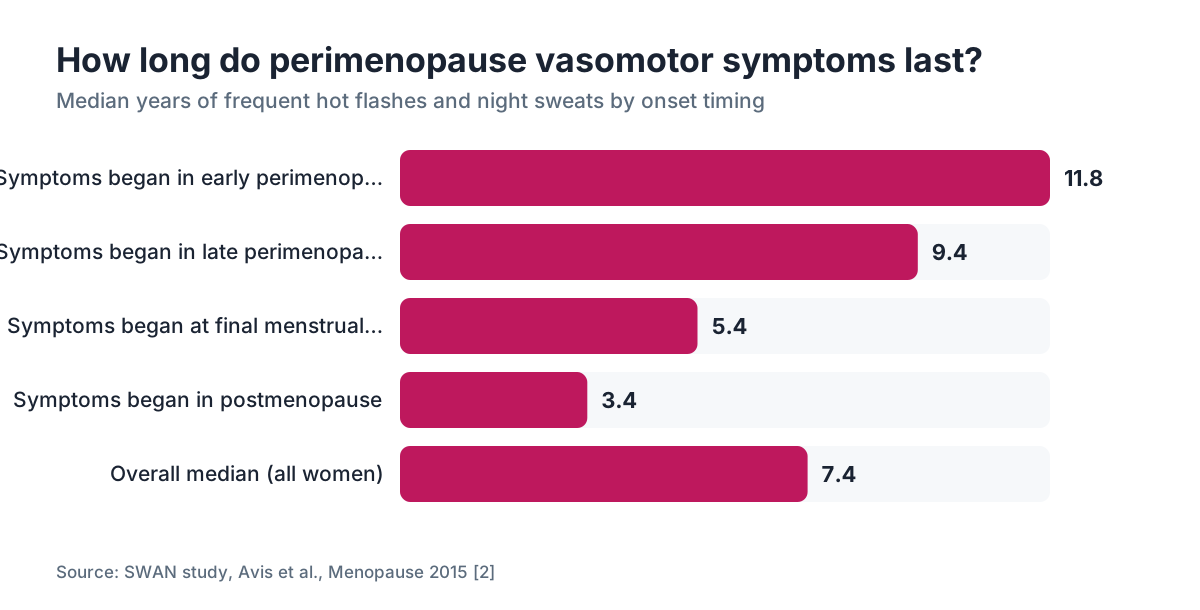
For roughly 25 percent of women these are severe, meaning they interfere with daily functioning [2]. The SWAN study, one of the longest running datasets on menopause symptoms, found the median duration of frequent vasomotor symptoms is 7.4 years, far longer than women are typically told [2].
Sleep destruction. Night sweats wreck sleep, obviously, but estrogen and progesterone both act directly on sleep architecture whether or not you're sweating. Progesterone has a sedative action at GABA receptors. As it drops, many women find their sleep turns light, fragmented, and unrestful even on dry nights.
Mood crashes, rage, and anxiety. These get underdiagnosed because they look like psychiatric symptoms rather than hormonal ones. Estrogen modulates serotonin, dopamine, and norepinephrine. When it fluctuates, those neurotransmitter systems destabilize. Women who have never had a mood disorder can develop sudden anxiety, irritability, or what many call "rage out of nowhere." A history of PMS or postpartum mood changes makes you significantly more vulnerable [3].
Brain fog and memory problems. The cognitive symptoms of perimenopause are real and well documented. The Study of Women's Health Across the Nation (SWAN) found measurable declines in processing speed, verbal memory, and working memory during the transition, most of which recovered in postmenopause [4]. The hippocampus has dense estrogen receptors. Estrogen volatility disrupts the glucose metabolism the hippocampus needs to lay down memory.
Joint pain and muscle aches. This one surprises many women. Estrogen has anti-inflammatory properties and lubricates connective tissue. As it becomes erratic, joint pain, morning stiffness, and muscle soreness show up. In the SWAN data, musculoskeletal pain rose significantly during the menopausal transition, affecting more than half of midlife women [5].
Weight gain and body composition shift. Average weight gain through the transition is modest, about 1.5 kg, but the redistribution is dramatic. Fat migrates from hips and thighs to the abdomen. This is partly estrogen-driven, partly cortisol-driven, and partly age-related muscle loss. The resulting visceral fat carries real metabolic risk.
Heart palpitations. Estrogen steadies the cardiac conduction system. Fluctuations can produce palpitations, a racing heart, or an awareness of an irregular beat. These are almost always benign but genuinely unnerving. Always rule out arrhythmia with your doctor if they're new or severe.
Vaginal and urinary changes. Genitourinary syndrome of menopause (GSM) involves thinning, dryness, and loss of elasticity in vaginal and urethral tissue. It affects roughly 50 percent of postmenopausal women and is underreported because women are embarrassed to bring it up [6]. Unlike hot flashes, GSM does not improve on its own. It needs treatment.
Hair thinning and skin changes. Estrogen supports collagen production and stretches out the anagen (growth) phase of the hair cycle. Falling estrogen speeds up both skin thinning and hair shedding. Testosterone doesn't necessarily rise in absolute terms, but its relative dominance climbs, which can bring facial hair and scalp thinning at the same time.
How do you know if your symptoms are perimenopause or something else?
This matters more than most women realize. Thyroid dysfunction, autoimmune conditions, sleep apnea, depression, and anemia all overlap with perimenopause. A workup should include TSH, a complete blood count, ferritin (iron deficiency is extremely common in your 40s from heavier periods), and fasting glucose. Some practitioners add AMH (anti-Müllerian hormone) to estimate ovarian reserve, though it doesn't predict symptom severity.
FSH (follicle-stimulating hormone) gets ordered constantly, but the NAMS guidance is blunt: FSH levels are unreliable for diagnosing perimenopause in women who are still cycling because they swing so dramatically day to day [1]. A single high FSH means almost nothing on its own.
Age is your best diagnostic signal. If you're between 40 and 55, have irregular cycles, and are living the symptom cluster above, you're almost certainly in perimenopause. You don't need a "definitive" lab value to start treatment if symptoms are hurting your quality of life. See perimenopause age for the full age breakdown.
Which perimenopause symptoms are actually dangerous?
Most perimenopausal symptoms are brutally uncomfortable but not medically dangerous. A few need faster attention.
Heart palpitations with chest pain, shortness of breath, or fainting need a cardiac workup, not a menopause diagnosis. Women's heart disease is underdiagnosed precisely because symptoms get written off as hormones.
Severe depression or suicidal ideation is not "just hormones" in the sense that it needs active treatment, not watchful waiting. The perimenopausal window carries roughly double the risk of a major depressive episode compared with the premenopausal years [3].
Bone loss accelerates sharply in the two to three years before the final menstrual period and keeps going for several years postmenopause. This happens silently. By the time you have a fracture, real bone is already gone. A baseline bone density test is worth doing in late perimenopause, especially with risk factors like family history, smoking, or low body weight.
Heavy, prolonged, or irregular bleeding during perimenopause is usually anovulatory, but endometrial hyperplasia and uterine cancer have to be ruled out. Any bleeding after 12 months without a period needs evaluation.
How long do the worst perimenopause symptoms last?
The honest answer: longer than the "average" figures suggest, and it varies a lot by symptom.
Vasomotor symptoms (hot flashes and night sweats) have a median duration of 7.4 years from the time they start. Women who begin having them before their periods become irregular, meaning early perimenopause, tend to have the longest run, sometimes over 10 years [2]. Younger onset, being Black, and higher BMI all track with longer and more severe hot flashes.
Mood and cognitive symptoms tend to follow the transition itself and often ease in postmenopause as estrogen settles at a lower level. Sleep usually improves too, though not always fully.
GSM and vaginal symptoms do not improve without treatment. They progress as estrogen stays low.
Joint symptoms are a mixed bag. Some women improve after the transition; others, particularly those who develop inflammatory arthritis, keep hurting.
Don't let anyone tell you this is a "short phase" you just wait out. Seven-plus years of severe hot flashes is not a phase. It's a condition that responds to treatment.
What actually works for horrible perimenopause symptoms?
Hormone therapy (MHT/HRT) is the most effective treatment for vasomotor symptoms and most perimenopausal complaints. The Menopause Society (formerly NAMS) affirms that for healthy women under 60 or within 10 years of menopause onset, the benefits of hormone therapy outweigh the risks for most women [1]. The old fear came from a misreading of the 2002 Women's Health Initiative (WHI) data, which studied an older population using oral conjugated equine estrogen plus medroxyprogesterone acetate. Transdermal estradiol, which skips first-pass liver metabolism, has a different risk profile, particularly for blood clots [7].
For women with a uterus, estrogen has to be paired with progesterone or a progestogen to protect the uterine lining. Micronized progesterone (body-identical) is generally preferred over synthetic progestins because of its gentler side effect profile and its sleep-supportive effect at GABA receptors. See the full breakdown of progesterone and hormone replacement therapy.
Low-dose vaginal estrogen for GSM works well and is considered safe even for women who can't or won't use systemic HRT, including most breast cancer survivors. The FDA labels for vaginal estrogen products note that systemic absorption is minimal at the labeled doses [8].
Non-hormonal prescription options include fezolinetant (Veozah), an FDA-approved neurokinin B antagonist cleared in 2023 specifically for vasomotor symptoms, and paroxetine 7.5 mg (Brisdelle), the only SSRI with an FDA vasomotor symptom indication [9]. SSRIs and SNRIs more broadly are used off-label with moderate evidence. None of them touch GSM, joint pain, or cognitive symptoms.
Sleep. Treating the underlying hot flashes usually improves sleep. CBT-I (cognitive behavioral therapy for insomnia) has solid evidence as an add-on. Melatonin has minimal evidence for perimenopausal sleep specifically.
Weight and metabolic symptoms. GLP-1 receptor agonists like semaglutide matter here because the visceral fat shift of perimenopause responds well to GLP-1-driven weight loss, and estrogen loss ramps up food reward signaling, exactly what GLP-1s dampen. See semaglutide for weight loss for the trial data. Pairing GLP-1s with hormone therapy, when both are indicated, covers the symptom picture more completely than either alone. Platforms like WomenRx can evaluate both together, which matters because so few providers are comfortable prescribing across both categories.
Lifestyle. Strength training is the single most evidence-supported lifestyle move for perimenopausal body composition, bone health, and mood. Aerobic exercise helps hot flashes modestly, roughly a 30 to 40 percent cut in severity in some studies. Alcohol reliably worsens hot flashes. Cutting it out is one of the cheapest interventions you have.
Is hormone therapy safe if your symptoms are severe?
The safety question is where so much confusion lives, and the misunderstanding has done real harm by leaving women undertreated for years.
The 2002 WHI trial found a small absolute risk increase in breast cancer, heart disease, stroke, and blood clots in older postmenopausal women taking oral combined HRT. The absolute numbers were small (about 8 additional breast cancers per 10,000 women per year in the combined arm), and the estrogen-only arm in women who'd had hysterectomies actually showed a non-significant reduction in breast cancer risk [7].
The Menopause Society's 2023 position statement concludes that "for women who are younger than 60 years or within 10 years of menopause onset and have no contraindications, the benefit-risk ratio is favorable for treatment of bothersome vasomotor symptoms" [1]. That's about as clear a professional endorsement as medicine produces.
Transdermal estrogen does not raise venous thromboembolism risk the way oral estrogen does, based on observational data and the biological mechanism (avoiding first-pass hepatic coagulation factor changes) [7]. That matters for women with a personal or family history of clotting.
Contraindications are real: undiagnosed vaginal bleeding, active liver disease, prior hormone-sensitive cancer, or a personal history of VTE in high-risk settings. Those need individual clinical assessment. But for the majority of women with horrible perimenopausal symptoms and none of those flags, the evidence supports starting hormone therapy rather than suffering through it.
Why do doctors dismiss perimenopause symptoms?
This is a systemic problem, not individual bad luck.
Medical training has spent little time on menopause care. A 2021 survey of U.S. obstetrics and gynecology residency programs found only about 31 percent had a structured menopause curriculum, and residents on average got fewer than 2 hours of menopause-specific training [10]. That's the specialty most likely to see perimenopausal women.
The post-WHI overcorrection made many physicians risk-averse about prescribing hormone therapy, and that culture lingers even as the evidence has been substantially revised.
The symptom overlap with anxiety, depression, and "just stress" means mood symptoms in particular get routed to mental health care instead of hormonal evaluation. A woman who bursts into tears for no reason or can't concentrate at work may walk out with an SSRI when what she needs is estradiol.
If you're being dismissed: ask specifically about your FSH trend (not a single value), your symptom duration and pattern, and whether a hormone therapy trial makes sense. If your provider won't discuss it, find someone with real menopause training. NAMS keeps a provider directory at menopause.org. Telehealth has made this kind of care easier to reach for women who can't find it locally.
Does perimenopause affect weight in ways that regular dieting can't fix?
Yes, and this frustration is legitimate.
The hormonal shift of perimenopause changes where fat gets stored and how efficiently the body burns it. Estrogen suppresses lipoprotein lipase activity in abdominal fat tissue. When estrogen drops or fluctuates, that suppression lifts and abdominal fat piles on faster. Muscle mass falls with age and speeds up with estrogen loss, dragging down resting metabolic rate. Cortisol, often elevated by poor sleep, adds to visceral fat.
Women keep saying they eat the same food they always have and gain weight anyway. That's not imagined. The metabolic landscape genuinely shifted underneath them.
Caloric restriction alone tends to work less well in perimenopausal women than in younger women, and it disproportionately strips muscle rather than fat without resistance training. Hormone therapy has modest favorable effects on body composition, mainly by curbing visceral fat rather than driving weight loss on its own.
GLP-1 receptor agonists (semaglutide, tirzepatide) show strong weight loss in midlife women. In the STEP 1 trial, participants on semaglutide 2.4 mg lost an average of 14.9 percent of body weight over 68 weeks [11]. Tirzepatide data from SURMOUNT-1 showed up to 20.9 percent weight loss at the highest dose [12]. The appetite mechanism is especially relevant here, because estrogen loss increases food reward signaling in the brain and GLP-1s counter exactly that pathway. For a head-to-head, see semaglutide vs tirzepatide.
What should you actually track before your first doctor's appointment?
Walk in with data. Doctors make better decisions when you hand them a pattern, not a list of adjectives.
Track for four to six weeks: the date, time, and rough duration of hot flashes; a sleep score (most wearables give one, but a rough 1-10 works); mood (scale of 1-5, note specific triggers); menstrual cycle length and flow; and anything that made things better or worse that day (alcohol, stress, exercise, specific foods).
Note when symptoms peak in relation to your cycle. Many women find the week before their period and the week of ovulation are far worse than mid-follicular phase. That pattern is classic perimenopausal hormonal chaos and helps separate it from other causes.
Bring a list of every supplement and medication you take. St. John's Wort, black cohosh, and evening primrose oil are common for perimenopause; your doctor needs to know because they have drug interactions and the evidence for most of them is modest at best.
If you've had any cardiac symptoms, neurological symptoms, or significant unintended weight change, flag those separately. They need to be ruled out as independent issues before everything gets pinned on perimenopause.
For context on where you are in the timeline, see when does menopause start and menopause age.
Are there perimenopause symptoms no one talks about?
Several. Women consistently report being blindsided by these.
Frozen shoulder (adhesive capsulitis). There's a real link between perimenopause and frozen shoulder. Estrogen receptors sit in the shoulder joint capsule, and the condition is much more common in midlife women than in men or younger women. It's painful, slow to resolve, and almost never gets tied to hormone change.
Tinnitus. New or worsening ringing in the ears around perimenopause has a plausible estrogen-related mechanism (estrogen receptors in cochlear tissue) and gets reported often but studied poorly.
Electric shock sensations. Some women report brief electrical-feeling zaps under the skin, often right before a hot flash. These are almost certainly neurological, driven by the same hypothalamic dysregulation. Startling, but benign.
Burning mouth syndrome. Oral tissues carry estrogen receptors, and a burning or tingling feeling in the mouth, tongue, or lips can surface in perimenopause. It gets misread as dental or anxiety-related.
Changes in body odor. Shifts in microbiome composition and sweat gland function during perimenopause can change how you smell. Barely studied, very commonly reported in patient communities.
Loss of libido that's also physical. Lower libido in perimenopause has psychological and social parts, but it's also partly physical: lower estrogen cuts genital blood flow and sensitivity, and lower testosterone (which also declines through this period) cuts desire directly. Treating only the psychological side without the hormonal side rarely works well.
What's the difference between perimenopause and menopause symptoms?
Perimenopause is the transition. Menopause is the label you apply in hindsight once you've gone 12 straight months without a period. After that, you're postmenopausal.
The symptoms feel similar, but the hormonal environment differs. In perimenopause, estrogen fluctuates wildly, including high spikes that produce estrogen-dominance symptoms: bloating, breast tenderness, heavy periods, mood instability. In early postmenopause, estrogen is consistently low. For many women, the wild-swing symptoms calm down once they're solidly postmenopausal, even though estrogen is lower. The stability is what the brain adapts to.
Management differs a little too. Perimenopausal women who still cycle need progesterone protection if estrogen is prescribed, and cycle management is trickier. Dosing may need adjustment more often during perimenopause than in postmenopause.
See the full breakdown at menopause.
WomenRx's clinical team evaluates both perimenopausal and postmenopausal patients, which matters because cookie-cutter protocols don't fit the varied hormonal picture across this whole stretch of a woman's life.
Frequently asked questions
What are the worst perimenopause symptoms most women experience?
The most commonly reported severe symptoms are hot flashes, night sweats, sleep disruption, mood swings or rage, brain fog, joint pain, and vaginal dryness. The SWAN study found that frequent vasomotor symptoms last a median of 7.4 years. For many women it's the mood and cognitive symptoms, not the hot flashes, that feel most destabilizing because they're harder to attribute and less socially acknowledged.
Can perimenopause symptoms start in your late 30s?
Yes. While average perimenopause onset is the mid-40s, symptoms can begin as early as the late 30s, particularly irregular cycles, mood changes, and sleep disruption. This is sometimes called "early perimenopause." Premature ovarian insufficiency (POI), which can cause similar symptoms before age 40, is a separate diagnosis that requires its own evaluation and more urgent treatment given the longer duration of estrogen deficiency.
How do I know if my anxiety and depression are perimenopause or a mental health condition?
Both can be true at once. But if your anxiety or depression is new in your 40s with no prior history, cycles with your period, or comes alongside other perimenopausal symptoms, a hormonal contribution is very likely. Research shows perimenopausal women have roughly double the risk of a major depressive episode compared with premenopausal years. A psychiatrist who never asks about your cycle is missing part of the picture.
Does perimenopause cause weight gain even if I haven't changed my eating?
Yes. The hormonal shift of perimenopause changes fat distribution and lowers resting metabolic rate through muscle loss, independent of caloric intake. Visceral fat rises as estrogen becomes erratic. Women commonly gain 1 to 2 kg through the transition itself, but the composition change, more abdominal fat and less muscle, often matters more than the number on the scale. Standard caloric restriction tends to lose muscle rather than visceral fat without resistance training.
Is hormone therapy safe if I had horrible perimenopause symptoms starting early?
For most women under 60 and within 10 years of menopause onset with no contraindications, the Menopause Society concludes the benefit-risk ratio for hormone therapy is favorable. Starting early in perimenopause is generally safe and may offer cardiovascular and bone protection. Transdermal estradiol avoids the clot risk associated with oral formulations. Individual contraindications, including hormone-sensitive cancer history or active liver disease, require clinical assessment.
What non-hormonal treatments actually help perimenopause symptoms?
Fezolinetant (Veozah), FDA-approved in 2023, is the best evidence-based non-hormonal option for hot flashes. Paroxetine 7.5 mg (Brisdelle) has an FDA indication for vasomotor symptoms. SNRIs have moderate evidence off-label. CBT-I is effective for sleep. None of these address vaginal symptoms, joint pain, or cognitive symptoms, which are better served by hormone therapy or, for vaginal symptoms specifically, low-dose vaginal estrogen.
Can you have perimenopause symptoms with regular periods?
Absolutely. Many women have significant symptoms, including hot flashes, mood changes, sleep disruption, and brain fog, while still cycling regularly. Perimenopause is defined by the hormonal shift, not by cycle irregularity. Early perimenopause can involve significant estrogen volatility while cycles stay roughly on schedule. A single FSH measurement is not reliable for diagnosis. Symptom pattern and age are better guides.
Does perimenopause cause joint pain and body aches?
Yes. The SWAN study documented a significant increase in musculoskeletal pain during the menopausal transition, affecting more than half of midlife women. Estrogen has anti-inflammatory properties and supports connective tissue. As it becomes erratic, joint stiffness, body aches, and even conditions like frozen shoulder become more common. This symptom cluster is often underattributed to hormones and undertreated.
How long do perimenopausal hot flashes last?
Longer than most women are told. The SWAN study found the median duration of frequent vasomotor symptoms is 7.4 years from onset. Women who start having hot flashes before their periods become irregular have the longest symptom duration, sometimes exceeding 10 years. Black women and women with higher BMI tend to have longer and more severe vasomotor symptoms. Waiting it out is a valid choice only if symptoms are mild.
What is genitourinary syndrome of menopause and why doesn't it go away on its own?
GSM is thinning, dryness, and loss of elasticity in vaginal and urethral tissue caused by estrogen deficiency. Unlike hot flashes, which often diminish over time, GSM progresses without treatment because the estrogen-dependent tissue has no way to recover on its own. It affects roughly 50 percent of postmenopausal women and is undertreated because women are reluctant to report it. Low-dose vaginal estrogen is safe and effective and considered appropriate even for most breast cancer survivors.
Should I get a bone density test during perimenopause?
NAMS and the National Osteoporosis Foundation recommend a baseline DEXA scan at menopause or earlier if risk factors are present, including family history of osteoporosis, low body weight, smoking, or prolonged steroid use. Bone loss accelerates in the two to three years before the final period. By the time a fracture occurs, significant bone has already been lost. Starting hormone therapy early may preserve bone density and reduce fracture risk long-term.
Can GLP-1 medications like semaglutide help with perimenopausal weight gain?
Yes, and the mechanism fits well here. Estrogen loss increases food reward signaling in the brain, and GLP-1 receptor agonists dampen that pathway. In the STEP 1 trial, semaglutide 2.4 mg produced an average weight loss of 14.9 percent over 68 weeks. Perimenopausal visceral fat, which resists standard dieting, responds well to GLP-1 treatment. Combining a GLP-1 with hormone therapy addresses both the hormonal and metabolic sides of midlife weight gain.
Why do doctors miss or dismiss perimenopause symptoms?
Medical training in menopause care is genuinely inadequate. A 2021 survey found fewer than one-third of OB-GYN residency programs had a structured menopause curriculum, and residents averaged fewer than 2 hours of menopause training. Post-2002 WHI overcorrection made many physicians overly risk-averse about hormone therapy. The overlap of hormonal symptoms with anxiety and depression routes many women to mental health care without hormonal evaluation. Seeking a provider with specific menopause training or NAMS certification makes a measurable difference.
What surprising symptoms are caused by perimenopause?
Many women are blindsided by: frozen shoulder (adhesive capsulitis, strongly associated with midlife women), tinnitus, electric shock sensations under the skin before hot flashes, burning mouth syndrome, changes in body odor, and worsening seasonal allergies or new food sensitivities. These symptoms have plausible estrogen-receptor mechanisms in affected tissues but are rarely discussed at appointments. If you have an unexplained new symptom in your 40s, raise perimenopause as a possible context.
Sources
- The Menopause Society (NAMS), 2023 Menopause Hormone Therapy Position Statement
- Menopause (journal), SWAN study: Duration of menopausal vasomotor symptoms, Avis et al., 2015
- Archives of General Psychiatry, Cohen et al., 2006 — perimenopause and depression risk
- Neurology, Greendale et al., 2009 — SWAN cognitive study
- Menopause (journal), SWAN musculoskeletal pain findings, Dugan et al., 2006
- ACOG Practice Bulletin, Genitourinary Syndrome of Menopause, No. 141
- BMJ, Canonico et al. / ESTHER study — transdermal vs oral estrogen and VTE risk
- FDA, Drug label: Vaginal estradiol products (e.g., Vagifem/Yuvafem)
- FDA, Drug approval: Veozah (fezolinetant) for vasomotor symptoms, May 2023
- Menopause (journal), Kaunitz & Manson survey of OB-GYN residency menopause training, 2021
- NEJM, STEP 1 trial — Wilding et al., 2021, semaglutide 2.4 mg for weight management
- NEJM, SURMOUNT-1 trial — Jastreboff et al., 2022, tirzepatide for weight management