Hormone therapy and perimenopause: what actually works
TL;DR: Perimenopause can start a decade before your final period. Hormone therapy, estrogen alone or paired with progesterone, reliably quiets hot flashes, broken sleep, and mood swings. For healthy women under 60 or within 10 years of their last period, the benefits usually outweigh the risks. The trick is matching the right formulation to your body and your history.
What is perimenopause and when does it start?
Perimenopause is the hormonal transition leading up to your final period. It is not a single moment. It is a phase that runs anywhere from two to twelve years, averaging four to eight. [1] Your ovaries do not shut down in a straight line during this window. Estrogen and progesterone lurch around, high one month and low the next. That volatility drives most of the symptoms.
Most women enter perimenopause in their mid-to-late 40s, though it can arrive as early as 35 or as late as 55. [1] Cycle length shifts first, usually shortening by a few days, then swinging wildly in the last year or two before periods stop. You have reached menopause once 12 straight months pass with no period. The median age for that in the United States is about 51. [2]
Here is the part that catches women off guard. You can have real symptoms for years before anyone uses the word menopause. Hot flashes, night sweats, wrecked sleep, brain fog, mood changes, and irregular periods all show up while you still bleed monthly. Too many women get told it is anxiety or stress. What is actually happening is a measurable shift in ovarian hormone output. If that sounds familiar, see perimenopause age and when does menopause start for the full timeline.
What symptoms does hormone therapy actually treat in perimenopause?
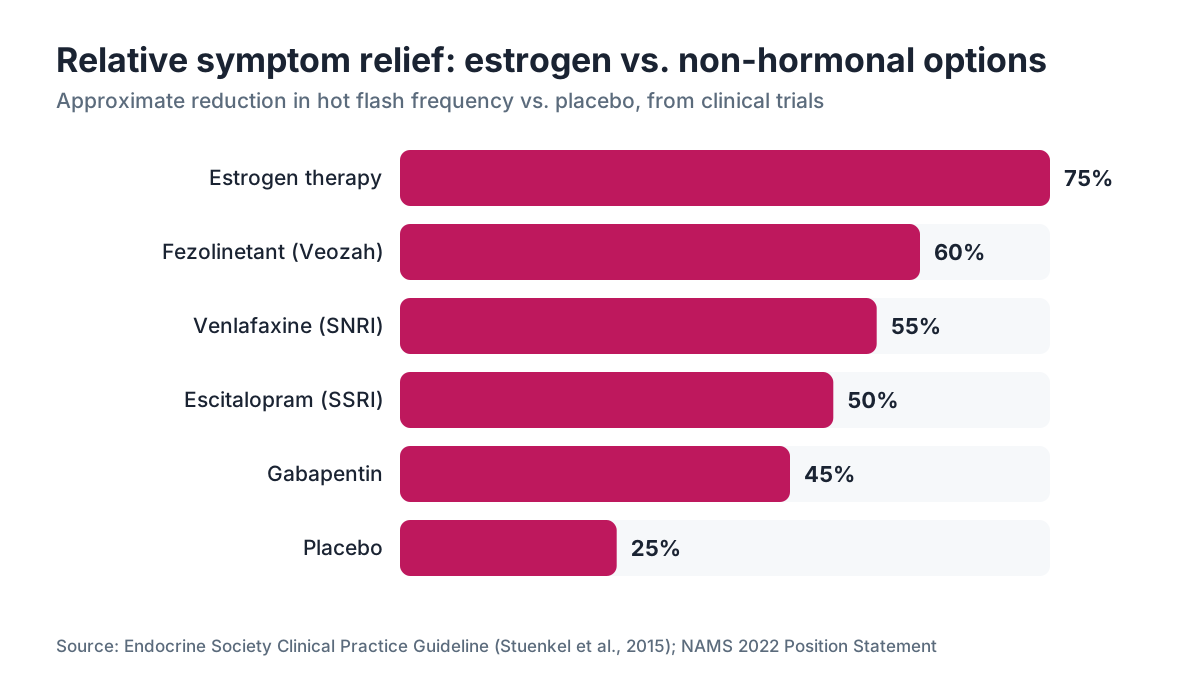
Hormone therapy has its strongest evidence for vasomotor symptoms, the clinical name for hot flashes and night sweats. These are the most studied symptoms in menopause research, and the data hold up across decades of trials. Estrogen cuts hot flash frequency by roughly 75 percent compared with placebo. [3]
Beyond hot flashes and night sweats, hormone therapy reliably helps with:
- Genitourinary symptoms (vaginal dryness, urinary urgency, pain with sex). Local low-dose vaginal estrogen is often all you need here, and it barely enters the bloodstream.
- Sleep disruption caused by night sweats. Stop the sweats and sleep usually follows.
- Mood instability during perimenopause specifically. There is reasonable evidence estrogen acts like an antidepressant during the transition, though the effect fades or disappears once menopause is established. [4]
- Bone density. Estrogen prevents the fast bone loss that starts in perimenopause. This matters because women can lose up to 20 percent of their bone density in the five to seven years around menopause. A bone density test before or soon after starting gives you a baseline.
What it does not reliably do: prevent dementia, cut heart attacks in women who start a decade or more after menopause, or fix symptoms that have nothing to do with hormones. The cognition evidence is genuinely mixed, and honest clinicians say so.
How does hormone replacement therapy for perimenopause differ from postmenopause HRT?
The distinction matters more than most people realize. Perimenopause is defined by fluctuating hormone levels, not simply low ones. Your estrogen can spike too high one cycle, crash the next, and swing back again. For many women that volatility, not the low end of the curve, is what sets off hot flashes, mood swings, and broken sleep.
Postmenopausal HRT works in a calmer hormonal environment. Estrogen sits consistently low, and you are replacing what is gone. In perimenopause the goal is more about smoothing the swings than filling a steady deficit. That is one reason some clinicians use lower doses during perimenopause than they would after the final period.
Then there is contraception. Perimenopausal women still ovulate and can still get pregnant. HRT doses do not prevent that. Women who need both birth control and symptom relief sometimes use low-dose hormonal contraception, which also flattens the wild estrogen swings. A hormonal IUD plus separate estrogen is another route. None of this is one-size-fits-all, which is exactly why a conversation with someone who knows perimenopausal physiology pays off. The hormone replacement therapy guide covers dosing comparisons in detail.
Is hormone replacement therapy safe for perimenopausal women?
This is the question that scared a generation of women away from care, so it deserves a careful answer.
Short version: for healthy women under 60, or within 10 years of their last period, and without specific contraindications, the benefits of hormone therapy generally outweigh the risks. That is the current position of the North American Menopause Society (NAMS), the Endocrine Society, and the American College of Obstetricians and Gynecologists. [5]
The longer version means understanding what the Women's Health Initiative (WHI) actually found and how it has been read since. The WHI trials, published in 2002, reported higher rates of breast cancer, heart disease, stroke, and blood clots in women taking combined estrogen-progestin. Prescribing dropped off a cliff and stayed low for more than a decade. [6]
The problem was context. The WHI enrolled women averaging age 63, most of them more than 10 years past menopause, many with cardiovascular risk factors. Applying those results to a healthy 46-year-old with hot flashes and no sleep was always shaky, and later reanalyses made that clear. The NAMS 2022 Hormone Therapy Position Statement puts it plainly: "for women aged younger than 60 years or who are within 10 years of menopause onset and have no contraindications, the benefit-risk ratio is favorable." [5]
Specific risk numbers worth knowing:
- Breast cancer: the risk tied to combination estrogen-progestin is roughly on par with drinking one glass of wine a night, and less than the risk from being sedentary. [5] Estrogen-only therapy in women who have had a hysterectomy may actually lower breast cancer risk.
- Blood clots (VTE): oral estrogen carries a real VTE risk. Transdermal estrogen (patch, gel, spray) does not appear to, because it skips the liver and does not raise clotting factors. [7]
- Cardiovascular risk: starting near menopause, rather than years later, is linked with neutral or slightly protective heart effects. Starting more than 10 years out may raise risk. This is the timing hypothesis, sometimes called the healthy-cell hypothesis. [6]
Contraindications that genuinely call for caution: a personal history of breast cancer, unexplained vaginal bleeding, active liver disease, a history of blood clots or stroke, and known cardiovascular disease. None are absolute in every case, but each requires individual risk assessment.
What types of hormone therapy are used for perimenopause?
The menu is wider than most women hear about in a rushed primary care visit.
Estrogen formulations
Estrogen comes as pills, patches, gels, sprays, and vaginal preparations. Transdermal options (patches, gels, sprays) deliver it through the skin and skip first-pass liver metabolism. That matters clinically. It avoids the liver-driven jump in clotting proteins that oral estrogen causes, which makes transdermal the preferred route for women with any VTE risk or migraine. [7] The estrogen patch guide covers specific products and dose ranges.
Progesterone and progestins
Any woman with a uterus who takes systemic estrogen must take a progestogen to shield the uterine lining from estrogen-driven overgrowth and cancer risk. Two main categories:
- Micronized progesterone (brand name Prometrium in the US): identical in structure to what your ovaries make. Linked with better sleep, lower VTE risk, and possibly a friendlier breast cancer profile than synthetic progestins. [8]
- Synthetic progestins (medroxyprogesterone acetate, norethindrone, levonorgestrel): used in many oral contraceptives and some HRT formulas. They protect the lining fine, but the WHI used medroxyprogesterone acetate, which is one reason that trial's risks may not carry over to bioidentical progesterone.
See progesterone for a full breakdown.
Testosterone
Often left out of perimenopause conversations. Low testosterone in women is linked with lower libido, energy, and sometimes cognition. The FDA has approved no testosterone product specifically for women in the US, but compounded or off-label low-dose testosterone is common. The evidence for libido is reasonably solid. For other symptoms it is thinner. [8]
Compounded vs. FDA-approved preparations
FDA-approved hormone therapies have passed efficacy and safety testing. Compounded preparations, including custom-mixed bioidentical hormones from a compounding pharmacy, are not FDA-regulated for consistency or potency. NAMS recommends FDA-approved options as first-line and says compounded ones fit mainly when an approved product cannot meet a specific need, like an allergy to a dye or filler. [5]
| Formulation | Route | VTE risk vs. oral | Uterine protection needed? | |---|---|---|---| | Oral estrogen (e.g., Premarin, Estrace) | Swallowed | Higher | Yes, if uterus intact | | Estrogen patch (e.g., Vivelle-Dot, Climara) | Transdermal | Lower | Yes, if uterus intact | | Estrogen gel/spray (e.g., EstroGel, Evamist) | Transdermal | Lower | Yes, if uterus intact | | Vaginal estrogen (ring, cream, tablet) | Local | Very low (systemic absorption minimal) | Generally not needed | | Micronized progesterone (Prometrium) | Oral | Low | Provides uterine protection | | Synthetic progestin (MPA, norethindrone) | Oral/patch | Moderate | Provides uterine protection |
What do the major medical societies actually recommend?
Three organizations set the clinical standard on this in North America.
NAMS publishes a hormone therapy position statement, last updated in 2022, that calls hormone therapy the most effective treatment for menopausal vasomotor symptoms and appropriate for most recently menopausal women. [5] NAMS explicitly names the misapplication of WHI data to younger, healthier women as a driver of undertreatment.
The Endocrine Society published clinical practice guidelines in 2015 and backs a similar line: hormone therapy suits symptomatic women who are recently menopausal, under 60, and without major contraindications. [9]
The FDA requires hormone therapy labels to warn about cardiovascular and breast cancer risk, and its guidance says to use the lowest effective dose for the shortest time needed. That phrase, "lowest effective dose for the shortest time," deserves a second look. It came from a conservative reading of the WHI. It does not mean short-term use is the only safe option. Plenty of women and their clinicians decide ongoing use makes sense after weighing individual risk. That is a legitimate choice.
If you want a provider who actually knows this literature, WomenRx offers telehealth consultations with clinicians who focus on perimenopausal hormone care. Worth considering if your primary care doctor is not comfortable with these nuances.
How do you know if hormone therapy is right for you in perimenopause?
Start with the symptom burden question: are your symptoms wrecking your quality of life? Hot flashes bad enough to wake you four nights a week is a real problem. An occasional mild flush is not. Hormone therapy is a medical treatment with real effects and real trade-offs, so symptom severity should drive the decision.
Then weigh your individual risk profile:
- Do you have a personal history of hormone-receptor-positive breast cancer? That is the strongest reason to avoid systemic estrogen.
- Do you have first-degree relatives with breast cancer? The relative risk bump from hormone therapy is small in absolute terms, but if your baseline is already elevated, this warrants a specific conversation.
- Do you smoke, have high blood pressure, or a history of blood clots? Oral estrogen is a poor fit. Transdermal is safer here.
- Have you had a hysterectomy? If yes, you skip the progestogen and may qualify for estrogen-only therapy, which carries a different and more favorable safety profile.
Lab testing in perimenopause is less useful than most people expect. FSH and estradiol swing so hard week to week that a single reading rarely tells you much. A clinician who knows perimenopause will often diagnose on symptoms and age alone. If you are 45 with hot flashes and irregular periods, you almost certainly do not need blood work to confirm it.
One practical note. If lifestyle changes and non-hormonal options are not cutting it, that alone is a fair reason to try hormone therapy. SSRIs, SNRIs, and gabapentin have some evidence for hot flash relief but are generally weaker than estrogen and bring their own side effects. [3]
How long can you stay on hormone therapy?
The old "five years maximum" rule has loosened a lot in the current literature. NAMS now says there is no arbitrary time limit on hormone therapy for appropriate candidates, and that duration should be individualized. [5]
For many women, symptoms come roaring back when therapy stops. So the question of when to quit is less about a countdown clock and more about reassessing symptoms and risks at regular intervals, usually once a year.
What does change with time:
- Breast cancer risk from combination estrogen-progestin does rise with duration of use. The absolute increase is small for most women, but it is real.
- Cardiovascular risk: women who start near menopause and stay on it do not seem to pile up heart risk the way late starters do.
- Bone protection: this benefit lasts as long as therapy does and fades after stopping.
The answer most experienced clinicians give: reassess yearly, use the lowest dose that controls symptoms, and do not quit just because a calendar hit five years if the risk-benefit picture still favors staying.
One thing that surprises women in their late 50s. The choice to stop is yours to make with your provider, not a reflex at turning 60. Some women use hormone therapy well into their 60s, often for genitourinary symptoms or bone protection, and do so appropriately with individual risk assessment.
What about weight gain in perimenopause, and can GLP-1s help?
Weight gain in perimenopause is real and has a hormonal basis. Falling estrogen shifts fat storage from the hips and thighs to the belly, and metabolic rate slows. This is not simply eating more. Research shows the hormonal transition itself, separate from aging, changes body composition. [10]
Hormone therapy does not cause weight gain. That surprises women who link any hormone treatment with bloating or extra pounds. The WHI and later studies found no meaningful weight gain from hormone therapy compared with placebo. [10] If anything, estrogen may blunt the shift of fat toward the abdomen.
GLP-1 receptor agonists like semaglutide and tirzepatide have become common for weight management in women moving through perimenopause and menopause. They work through a different mechanism than hormone therapy, mainly by cutting appetite and slowing how fast the stomach empties. They do not replace estrogen or touch hot flashes. Some women run both: hormone therapy for hormonal symptoms, a GLP-1 for metabolic support.
The SURMOUNT-1 trial of tirzepatide showed average weight loss of 20.9 percent over 72 weeks in adults with obesity. [11] The STEP 1 trial of semaglutide showed 14.9 percent average weight loss over 68 weeks. [12] Those are averages, and individual results vary widely. For women weighing a GLP-1 alongside hormone therapy, see semaglutide for weight loss and the semaglutide vs tirzepatide comparison.
If you want to manage perimenopausal weight changes and hormonal symptoms together, a telehealth service like WomenRx that offers both hormone therapy and GLP-1 evaluation under one roof can simplify the coordination.
How do you start hormone therapy for perimenopause?
First step: find a clinician who takes perimenopause seriously. Sounds obvious. It genuinely matters. Many primary care physicians still reflexively cite the WHI and decline, or tell you to wait until symptoms are "bad enough." If that happens, a menopause specialist or a telehealth service with hormone expertise is a reasonable move.
At your first visit, expect to cover:
- Your specific symptoms and how much they affect your daily life
- Personal and family medical history, especially breast cancer, cardiovascular disease, and blood clots
- Current medications and any interactions with hormone therapy
- Your uterine status (hysterectomy or not), which decides whether a progestogen is needed
Typical starting points for most perimenopausal women:
- Low-dose transdermal estrogen (patch, gel, or spray) plus micronized progesterone if the uterus is intact. This pairing has the most favorable safety profile on current evidence.
- Dose adjustments at 6 to 12 weeks based on symptom response.
- Annual reassessment of dose, symptoms, and any new risk factors.
Insurance coverage varies a lot. Many FDA-approved hormone therapies are covered under Part D or commercial plans, but coverage of specific formulations or compounded options is not guaranteed. Generic oral estradiol and generic micronized progesterone run cheap, under $30 to $50 a month at most pharmacies without insurance, while brand-name patches and gels can hit $100 to $200 monthly without coverage. [13]
For the wider picture, menopause is a useful companion read.
Are bioidentical hormones safer than conventional hormone therapy?
"Bioidentical" means the hormone has the same molecular structure as the one your body makes. By that definition, many FDA-approved products are bioidentical. Estradiol patches, gels, and oral estradiol match the estrogen your ovaries produce. Micronized progesterone (Prometrium) matches the progesterone your ovaries produce.
The term gets muddy when it is stuck on compounded preparations, especially custom multi-hormone blends that toss in estriol or DHEA in individualized formulas. Sellers market these as safer or more natural. The evidence does not back that up. There are no large randomized trials showing compounded multi-hormone blends are safer than FDA-approved options. NAMS states flatly that compounded bioidentical hormone therapy "has not been proven to be safer or more effective" than FDA-approved hormone therapy. [5]
What the evidence does support: micronized progesterone (bioidentical, FDA-approved) has a friendlier safety profile than synthetic progestins like medroxyprogesterone acetate. That is a meaningful distinction. The E3N cohort found estrogen combined with micronized progesterone was not linked to higher breast cancer risk over shorter durations, while estrogen plus synthetic progestins was. [8]
The practical takeaway: asking for bioidentical hormones is reasonable, and it usually means asking for estradiol (transdermal) and micronized progesterone. Sensible combination. Asking for a compounded custom blend based on saliva hormone testing is a different request, and one without strong evidence behind it.
Frequently asked questions
Can you start hormone therapy while still having periods in perimenopause?
Yes. You do not need to wait for periods to stop. Hormone therapy can start any time during perimenopause if symptoms are hurting your quality of life. If you still need contraception, you and your clinician handle that separately, since standard HRT doses do not prevent pregnancy. Low-dose hormonal contraceptives can cover both jobs in some women.
How quickly does hormone therapy work for perimenopausal symptoms?
Hot flashes and night sweats usually start easing within two to four weeks of starting estrogen, with full benefit by eight to twelve weeks. Sleep tends to improve once vasomotor symptoms settle. Genitourinary symptoms like vaginal dryness may take six to twelve weeks to fully respond. If symptoms have not improved by 12 weeks, a dose adjustment is usually the next step.
What is the difference between hormone therapy and hormonal birth control for perimenopause?
Hormonal birth control uses synthetic hormones at doses set for contraception and cycle control. HRT uses lower doses, often bioidentical, aimed at symptom relief. Birth control also prevents pregnancy; HRT does not. Some perimenopausal women use low-dose combined pills or a hormonal IUD plus estrogen to get both effects. The two approaches are not interchangeable.
Does hormone therapy in perimenopause protect against osteoporosis?
Yes. Estrogen prevents the fast bone loss that hits in the years around menopause. Women can lose up to 20 percent of their bone density in the five to seven years surrounding menopause. Hormone therapy started near menopause reduces fracture risk. This benefit fades after stopping, so factor it into how long you plan to continue.
Can hormone therapy help with brain fog and memory issues in perimenopause?
There is modest evidence that estrogen started near menopause supports verbal memory and eases brain fog, especially the cognitive fuzziness tied to poor sleep from night sweats. The evidence is weaker for women who start years after menopause. The Study of Women's Health Across the Nation (SWAN) found cognitive complaints peak in perimenopause and often improve once the hormonal swings settle.
Is the estrogen patch safer than estrogen pills for perimenopause?
For most women, yes. Transdermal estrogen (patches, gels, sprays) skips first-pass liver metabolism, so it does not raise clotting factors the way oral estrogen does. Studies show transdermal estrogen does not carry the elevated venous thromboembolism risk seen with pills. For women with migraines, high blood pressure, or any history of blood clots, transdermal is the preferred route.
Do I need progesterone if I still have my uterus?
Yes. Any woman with an intact uterus who takes systemic estrogen needs a progestogen to protect the uterine lining from estrogen-driven overgrowth, which can progress to endometrial cancer. Micronized progesterone (Prometrium) is the most commonly recommended option because of its favorable safety profile. Women who have had a hysterectomy can take estrogen alone and skip the progestogen entirely.
What are the non-hormonal alternatives for perimenopausal symptoms?
Non-hormonal options include SSRIs and SNRIs (venlafaxine and escitalopram cut hot flash frequency by about 50 to 60 percent), gabapentin, and fezolinetant, a neurokinin B receptor antagonist the FDA approved for moderate-to-severe vasomotor symptoms in 2023. Cognitive behavioral therapy has evidence for better sleep and coping with hot flashes. None of these address bone loss, genitourinary atrophy, or the full symptom range the way estrogen does.
Will stopping hormone therapy cause symptoms to come back?
Often yes, especially if you stop abruptly. Hot flashes and night sweats frequently return when estrogen ends, sometimes at the original severity. Tapering rather than quitting cold is generally recommended to soften the rebound. Some women find their symptoms have naturally faded by the time they try stopping; others have symptoms that persist for years. There is no reliable way to predict who is who in advance.
Is saliva or urine hormone testing useful for guiding perimenopause HRT?
No, not reliably. Saliva and urine hormone panels get marketed as a way to personalize hormone therapy, but NAMS and the Endocrine Society do not recommend them for guiding HRT decisions. Hormone levels in perimenopause swing so hard day to day that a snapshot gives little actionable information. Clinical diagnosis from symptoms and menstrual history is more useful. Serum FSH and estradiol have limited value for the same reason.
Can women with a history of migraines use hormone therapy in perimenopause?
Many can, but the formulation matters. Oral estrogen causes peaks and troughs in blood levels that can trigger migraines in susceptible women. Transdermal estrogen holds a steadier level and is generally better tolerated. Women with migraine with aura carry an elevated baseline stroke risk, which calls for individual risk-benefit discussion, especially around combined estrogen-progestin contraceptives. A neurologist and gynecologist familiar with hormonal migraine is ideal.
How is perimenopause different from menopause in terms of hormone therapy approach?
In perimenopause, hormone levels fluctuate rather than simply falling. Therapy aims to smooth those swings more than replace a steady deficit. Doses are sometimes lower than in postmenopause. Contraception may still be needed since ovulation can still happen. In postmenopause, estrogen sits consistently low and replacement is more straightforward. The two phases call for different clinical thinking even though the medications often overlap.
Does hormone therapy in perimenopause affect cardiovascular health?
Starting hormone therapy near the onset of menopause, within 10 years or before age 60, appears to have a neutral to slightly protective heart effect. Starting more than 10 years after menopause, when arterial changes may already be present, may raise cardiovascular risk. This is the timing hypothesis, backed by reanalyses of WHI data and observational studies. Women with existing cardiovascular disease need individual assessment.
Can hormone therapy in perimenopause improve libido?
Estrogen can help libido indirectly by easing painful sex from vaginal atrophy and improving sleep and mood. For low libido itself, testosterone has more direct evidence. Off-label low-dose testosterone is commonly used in women for this, and the evidence for libido is reasonably strong, though no testosterone product is FDA-approved specifically for women. A combination of estrogen and testosterone addresses both pathways.
Sources
- NAMS (North American Menopause Society) – Perimenopause overview
- Office on Women's Health, U.S. Department of Health and Human Services – Menopause basics
- Stuenkel CA et al., Endocrine Society Clinical Practice Guideline – Treatment of Symptoms of the Menopause, Journal of Clinical Endocrinology & Metabolism 2015
- Soares CN, Frey BN – Challenges and opportunities to manage depression during the menopausal transition, Psychiatric Clinics of North America 2010
- NAMS 2022 Hormone Therapy Position Statement, published in Menopause (journal of the North American Menopause Society)
- Rossouw JE et al. – Writing Group for the Women's Health Initiative Investigators, JAMA 2002; with subsequent WHI reanalyses
- Canonico M et al. – Hormone therapy and venous thromboembolism among postmenopausal women: impact of the route of estrogen administration and progestogens, Circulation 2007
- Fournier A et al. – Unequal risks for breast cancer associated with different hormone replacement therapies: results from the E3N cohort study, Breast Cancer Research and Treatment 2008
- Endocrine Society – Clinical Practice Guidelines on menopause and hormone therapy
- Davis SR et al. – Understanding weight gain at menopause, Climacteric 2012
- Jastreboff AM et al. – SURMOUNT-1 trial: Tirzepatide Once Weekly for the Treatment of Obesity, NEJM 2022
- Wilding JPH et al. – STEP 1 trial: Once-Weekly Semaglutide in Adults with Overweight or Obesity, NEJM 2021
- GoodRx – Estradiol and progesterone pricing data