Hormone replacement for menopause: what actually works
TL;DR: Hormone replacement therapy (HRT) is the most effective treatment for menopause symptoms, cutting hot flashes by 75-90% versus placebo. The lowest-risk modern approach uses the smallest effective dose of estradiol (often a transdermal patch) plus micronized progesterone if you still have a uterus. Most healthy women under 60 who start within 10 years of menopause get benefits that outweigh the risks.
What is hormone replacement therapy for menopause?
HRT for menopause gives back the estrogen (and usually progesterone) your ovaries stop making around midlife. That estrogen drop is the direct cause of hot flashes, night sweats, vaginal dryness, broken sleep, mood shifts, and faster bone loss. Replacing the missing hormones fixes the deficiency at its source. That's why nothing else works as well.
The therapy comes in two forms. If you still have a uterus, you need both estrogen and a progestogen (either a synthetic progestin or body-identical micronized progesterone), because estrogen alone thickens the uterine lining and raises endometrial cancer risk. If you've had a hysterectomy, estrogen alone is right, and it carries a more favorable risk profile than combined therapy.
The terminology gets confusing. "HRT," "MHT" (menopausal hormone therapy), "BHRT" (bioidentical hormone replacement therapy), and "HT" describe overlapping but not identical things. The North American Menopause Society (NAMS) now prefers "menopause hormone therapy" (MHT) for precision, but in everyday clinical talk and insurance paperwork, "HRT" still wins. We use HRT throughout for clarity.
What are the main types of HRT available?
Three questions sort out your options: which hormones, which molecules, and which delivery route.
Which hormones Estrogen does the heavy lifting. It handles hot flashes, sleep, vaginal health, and bone protection. Progesterone (or a progestin) gets added only to protect the uterus. Testosterone is sometimes added for libido and energy, though it has no FDA-approved indication in women and is prescribed off-label.
Which molecules "Bioidentical" means the molecule is chemically identical to what your ovaries made. Estradiol (the dominant premenopausal estrogen) is bioidentical and sold in FDA-approved products. Micronized progesterone (brand name Prometrium) is bioidentical and shows a better breast safety signal than synthetic progestins in some data, notably the French E3N cohort of 80,377 women [1]. Synthetic progestins like medroxyprogesterone acetate (MPA) are not bioidentical. MPA was used in the original Women's Health Initiative (WHI) trial and has since been tied to a modestly higher breast cancer signal in that study [2].
Delivery routes Transdermal estradiol (patches, gels, sprays, creams) skips first-pass liver metabolism, so it does not raise clotting factor levels the way oral estrogen does. That matters for stroke and clot risk. Oral estradiol is convenient and cheap, but it does raise clotting risk modestly compared to transdermal [3]. Vaginal estrogen (cream, ring, tablet, suppository) works locally for vaginal and urinary symptoms at doses too low to move systemic estrogen levels much, so it's an option even for many women who can't use systemic HRT.
Here's a quick comparison of common options:
| Form | Common products | Route | Uterine protection needed? | |------|----------------|-------|---------------------------| | Oral estradiol | Estrace | Oral | Yes | | Estradiol patch | Vivelle-Dot, Climara | Transdermal | Yes | | Estradiol gel | EstroGel, Divigel | Transdermal | Yes | | Estradiol spray | Evamist | Transdermal | Yes | | Vaginal estradiol | Vagifem, Imvexxy | Local | Usually not | | Conjugated equine estrogen | Premarin | Oral | Yes | | Micronized progesterone | Prometrium | Oral | Provides protection | | Levonorgestrel IUD | Mirena | Local | Provides protection | | Combined patch | CombiPatch, Climara Pro | Transdermal | Built-in |
For most women starting HRT today, the estrogen patch plus oral micronized progesterone is the first combination most prescribers reach for. The transdermal route dodges the clot risk, and micronized progesterone has the cleanest data on breast safety.
How well does HRT actually work for hot flashes and night sweats?
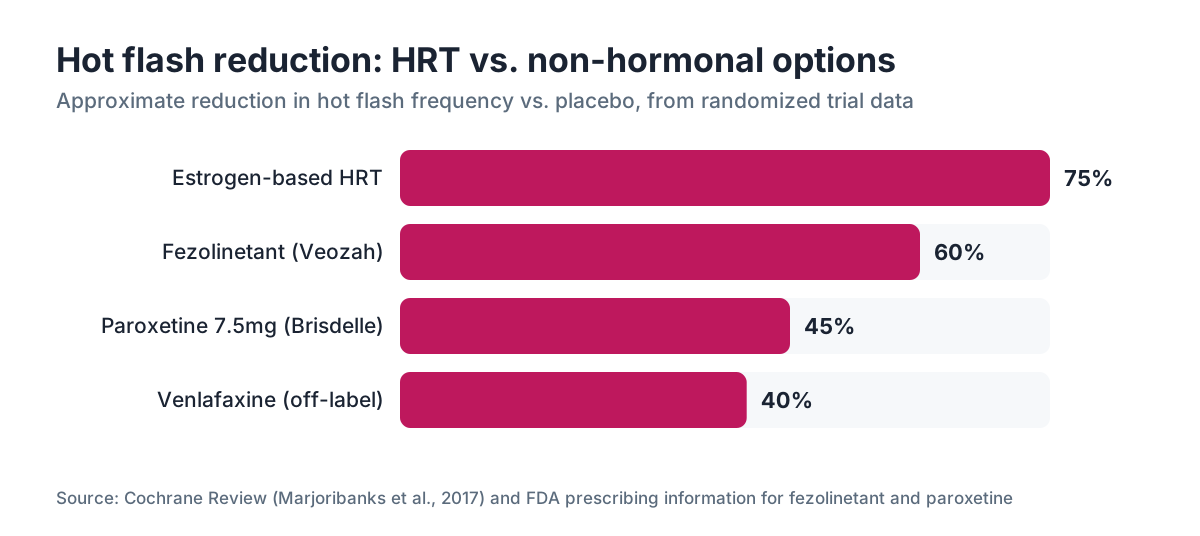
The evidence here is not subtle. A 2017 Cochrane review of 24 randomized trials found estrogen-based HRT cut hot flash frequency by about 75% versus placebo and dropped severity scores by roughly 87% [4]. Nothing else in the formulary comes close. Non-hormonal options like paroxetine (the only FDA-approved non-hormonal, cleared in 2013 as Brisdelle) or fezolinetant (Veozah, FDA-approved 2023) reduce hot flash frequency by roughly 40-65% in trials [5][8]. That's meaningful, but well below HRT's ceiling.
Sleep usually improves as a downstream effect of fewer night sweats, though estrogen likely has its own effect on sleep architecture too. Mood and cognitive fog often lift as well, especially in early perimenopause when the estrogen swings are most chaotic.
For genitourinary syndrome of menopause (GSM, formerly called vulvovaginal atrophy), low-dose vaginal estrogen works extremely well. The Endocrine Society's clinical practice guidance is blunt about this: low-dose vaginal estrogen is effective for genitourinary symptoms and can be used by most women, including many with a history of breast cancer after discussion with their oncologist [7].
What are the real risks of HRT, and how big are they?
This is where the WHI cast a 20-year shadow that the science has mostly walked back. The WHI randomized 16,608 postmenopausal women (average age 63) to conjugated equine estrogen plus MPA versus placebo and reported a small increase in breast cancer, heart attack, stroke, and pulmonary embolism in the combined-therapy arm [2]. The coverage was seismic. Millions of women stopped HRT overnight.
Here's what the headlines missed. The WHI population averaged 63 years old, so most women were more than 10 years past menopause. Starting HRT that late is a different thing from starting it in your early 50s. The "timing hypothesis" (now called the critical window hypothesis) has real support: estrogen started within 10 years of menopause or before age 60 appears to lower cardiovascular risk, while starting later may raise it [6][12].
The breast cancer data specifically:
- Estrogen alone (in women post-hysterectomy): WHI found a statistically non-significant reduction in breast cancer [2]
- Estrogen plus MPA: WHI found about 8 extra breast cancer cases per 10,000 women per year [2]
- Estrogen plus micronized progesterone: the E3N observational study of 80,377 French women found no increase in breast cancer risk after 5 years, though observational data is never as clean as a randomized trial [1]
Blood clots and stroke: oral estrogen roughly doubles DVT and PE risk, but transdermal estradiol does not appear to carry the same risk in observational studies [3]. Stroke risk with transdermal estrogen at standard doses looks neutral.
For most healthy women 50-59 starting HRT for bothersome symptoms, the NAMS position statement puts it plainly: "for women who initiate MHT within 10 years of menopause onset or before the age of 60 years, the benefits of MHT are likely to outweigh the risks" [5]. That's about as strong a statement as a medical society makes.
One number to hold onto: the absolute increase in breast cancer from combined HRT is roughly 8 extra cases per 10,000 women per year. The cost of leaving severe symptoms untreated (wrecked sleep, ground-down quality of life, ongoing bone loss) is real too. The conversation with your clinician should weigh both, more than the scary headline.
Who should not use systemic HRT?
Some contraindications are firm. Women with a history of estrogen-receptor-positive breast cancer, active or recent blood clots (DVT or PE), active or recent stroke or heart attack, unexplained vaginal bleeding, or known or suspected pregnancy should not use systemic estrogen without detailed specialist guidance.
Women with a BRCA1 or BRCA2 mutation who've had a risk-reducing bilateral oophorectomy sit in a genuinely different category. Early surgical menopause raises cardiovascular and cognitive risk, and many gynecologic oncologists recommend HRT in this group up to natural menopause age (around 51) even with BRCA status. That still needs an individual risk discussion.
Controlled hypertension, migraines with aura, and type 2 diabetes are not absolute contraindications, but they call for careful choice of route and formulation. Transdermal estradiol is generally preferred here because it skips the liver effects of oral estrogen.
If systemic HRT is off the table, vaginal estrogen for GSM, cognitive behavioral therapy (CBT) for hot flashes, and FDA-approved non-hormonal options like fezolinetant are reasonable. Weight loss also cuts hot flash severity, which is one reason some women who start a semaglutide for weight loss program notice their vasomotor symptoms ease up too.
What's the difference between bioidentical and conventional HRT?
This is probably the most marketing-muddled question in menopause medicine.
"Bioidentical" just means the hormone molecule is structurally identical to the one your body made. Estradiol is bioidentical. Micronized progesterone is bioidentical. Both are FDA-approved and stocked at any pharmacy. Using them is not fringe medicine. It's mainstream endocrinology.
The confusion comes from compounding pharmacies and some concierge clinics that use "bioidentical" to market custom-compounded preparations, often creams or troches mixing estriol, estradiol, and DHEA. These are not FDA-approved. The FDA has not verified their purity, potency, or stability. The Endocrine Society and NAMS both caution against custom-compounded bioidentical hormones because of the lack of safety and efficacy data [7][5].
The practical takeaway: you can get genuinely body-identical estradiol and micronized progesterone from an FDA-approved product at your regular pharmacy. You do not need a compounding pharmacy for bioidentical hormones, and choosing the compounded route trades quality control for marketing language.
Compounded preparations do have a legitimate niche. If you need a dose or delivery form no FDA-approved product offers (a specific low dose of vaginal estriol, say, or testosterone for women), a licensed compounding pharmacy can make sense. Just know what you're trading and make sure your prescriber is monitoring you. WomenRx clinicians who prescribe hormone replacement therapy walk through exactly this tradeoff during the initial consult.
When should you start HRT, and is there an age cutoff?
The critical window for the most benefit and the least risk is the first 10 years after your final period, or before age 60, whichever comes first. That's when the cardiovascular protection shows up and when breast cancer and clot risk sit lowest on a per-year basis [6][12].
Starting later isn't automatically wrong, but the math shifts. Women over 60 starting HRT for the first time carry a higher baseline cardiovascular risk, and estrogen behaves differently in an atherosclerotic vessel than in a healthy one. Most guidelines advise against starting systemic HRT after age 65 as a general rule, with individual exceptions for persistent disabling symptoms or early osteoporosis under specialist care.
Knowing your perimenopause age matters, because many women do well starting low-dose HRT while still in perimenopause to smooth the estrogen swings before their final period. You don't have to wait for 12 months of no periods to start.
Surgical menopause, from bilateral oophorectomy, drops estrogen to near zero overnight and often causes worse symptoms than natural menopause. Most guidelines recommend starting HRT promptly after surgery and continuing at least until the average age of natural menopause (around 51-52) [10]. See when does menopause start for more on the timeline.
From a bone density test angle: HRT preserves bone mineral density and lowers fracture risk. WHI data found combined HRT cut hip fracture risk by 33% in the primary prevention population [2]. That benefit compounds over years and belongs in the start-early argument.
How do you figure out the right dose?
Start low, go up slowly, and aim for symptom control at the lowest effective dose. That's been the standard clinical approach for years.
For transdermal estradiol, starting doses run 0.025 mg/day to 0.05 mg/day by patch. Many women get relief at 0.05 mg/day. Some need 0.1 mg/day. Oral estradiol often starts at 0.5 mg to 1 mg/day.
For micronized progesterone protecting a uterus, the standard dose is 200 mg/day for 12-14 days per cycle (sequential) or 100 mg nightly (continuous) [11]. Continuous dosing avoids the withdrawal bleed that sequential dosing triggers in some women.
Serum estradiol levels don't map cleanly to symptoms, so most experienced clinicians dose by symptom response rather than chasing a number. Some check levels after 6-8 weeks to confirm absorption, especially with transdermal preparations, where individual absorption varies a lot.
Testosterone, if added, is almost always off-label. No FDA-approved testosterone product exists for women. Most compounding or off-label prescribing targets total testosterone in the 15-70 ng/dL range, which covers a normal premenopausal female range. The Endocrine Society's 2014 guideline on androgen therapy in women states that testosterone therapy "may be considered" for hypoactive sexual desire disorder in postmenopausal women after ruling out other causes [7].
How does HRT interact with weight and GLP-1 medications?
Menopause and perimenopause change your metabolism independent of what you eat. Estrogen loss pushes fat toward the belly (visceral fat), lowers insulin sensitivity, and drops resting metabolic rate. Many women gain 5-10 pounds through the perimenopausal years without changing their diet.
HRT does not cause weight gain in the aggregate. Multiple trials, including the Cochrane review, found no significant weight difference between HRT and placebo groups [4]. Shifting fat from visceral back to subcutaneous may actually improve metabolic markers.
For women also using a GLP-1 receptor agonist like semaglutide, the interaction with HRT hasn't been studied in dedicated trials. From observational data and clinical practice, the two are not contraindicated together. Some clinicians report women on HRT need slightly lower GLP-1 doses for the same weight response, because the improved insulin sensitivity from estrogen helps. Nobody has good data on this. The closest thing is subgroup analyses from large GLP-1 trials that never stratified by HRT use.
If you're considering both, have one clinician oversee both prescriptions so dose changes make sense in context. WomenRx is built specifically to manage this combination in one place, which is worth considering if your primary care provider is less familiar with HRT nuance.
What does HRT cost, and is it covered by insurance?
Cost swings widely by formulation and insurance plan.
Generic oral estradiol can run as little as $10-$25 per month at a retail pharmacy with a GoodRx coupon. Generic micronized progesterone (generic Prometrium) runs roughly $30-$60/month. A generic estradiol patch (generic Vivelle-Dot) is typically $30-$80/month depending on dose and pharmacy. Brand-name products without insurance can hit $100-$300/month for each component.
Most commercial insurance plans and Medicare Part D cover FDA-approved HRT products, though formulary tiers and prior authorization rules differ by plan. Vaginal estrogen products are sometimes carved out or require step therapy.
Compounded HRT is usually not covered by insurance and can run $50-$200/month or more, depending on the formula.
Telehealth visits for HRT prescriptions range from about $75 to $200 for an initial consultation, often without insurance coverage, though some plans are starting to reimburse. A year of well-managed HRT via telehealth typically costs $500-$1,500 out of pocket depending on medications and follow-up frequency. That compares favorably with treating undertreated osteoporosis or cardiovascular disease down the line.
How long should you stay on HRT?
The old guidance said five years, tops. Current evidence does not support an arbitrary cutoff.
NAMS and the British Menopause Society both now say there's no evidence-based time limit for HRT in healthy women who are benefiting and have no contraindications [5]. An annual review of risks and benefits is recommended, but that's not the same as stopping at a fixed point.
Vasomotor symptoms can hang on for 7-10 years or longer. The median duration of moderate to severe hot flashes is about 7.4 years, from the Study of Women's Health Across the Nation (SWAN) [6]. Stopping HRT before symptoms resolve simply brings them back.
Bone protection is different. HRT's bone benefit fades fairly quickly after you stop. If osteoporosis prevention is a big reason you're on HRT and you've reached an age where fracture risk climbs, your clinician may talk about switching to a bisphosphonate rather than stopping cold.
When you do stop, tapering (easing the dose down over weeks to months) is generally more comfortable than quitting abruptly, though there's limited randomized data on the best taper schedule.
Does HRT protect against osteoporosis, heart disease, and dementia?
Bone: yes, clearly. Estrogen slows osteoclast activity (bone breakdown) and works well for osteoporosis prevention. WHI found a 33% cut in hip fracture and a 24% cut in total fractures with combined HRT [2]. HRT is not first-line treatment for established osteoporosis (bisphosphonates are), but it's excellent for prevention when started early. See our article on the bone density test for the numbers to watch.
Heart disease: it depends on timing. In WHI women aged 50-59 at enrollment, combined HRT was tied to a trend toward less coronary artery disease. In women 70-79, it was tied to more [2]. The Kronos Early Estrogen Prevention Study (KEEPS) found no significant change in carotid intima-media thickness over four years in recently menopausal women on HRT versus placebo, and no harm either [9]. The ELITE trial went further, showing estradiol slowed carotid thickening in women within 6 years of menopause but not in those 10 or more years past it [12]. Consensus: HRT does not replace statins or lifestyle measures for heart protection, but it likely does not hurt cardiovascular risk inside the timing window.
Dementia and cognitive decline: this is the murkiest area. The WHI Memory Study found a higher risk of dementia in women over 65 starting combined HRT. Observational data from women who started earlier hints at possible protection. The honest answer is we don't have clean randomized data for this outcome in younger starters, and it should not be your main reason to start or continue HRT right now.
Frequently asked questions
What is the safest HRT for menopause?
For most healthy women, transdermal estradiol (patch, gel, or spray) plus oral micronized progesterone is the lowest-risk combination. Transdermal delivery skips the liver's first-pass metabolism, so it does not raise clotting factor levels the way oral estrogen does. Micronized progesterone shows a better breast safety signal than synthetic progestins in observational data. No HRT is risk-free; the goal is matching formulation to your risk profile.
Is HRT the same as bioidentical hormones?
Not exactly. FDA-approved HRT products like estradiol patches and micronized progesterone (Prometrium) are bioidentical, meaning their molecules match what your ovaries made. Custom-compounded 'BHRT' preparations from compounding pharmacies are also bioidentical at the molecule level but lack FDA oversight of purity and potency. You can get genuinely body-identical hormones from a standard pharmacy without going the compounding route.
Does HRT cause breast cancer?
Combined estrogen-plus-synthetic-progestin HRT (as used in the original WHI) was tied to about 8 extra breast cancer cases per 10,000 women per year. Estrogen alone (in women without a uterus) showed a non-significant reduction in WHI. Estrogen plus micronized progesterone showed no increase in a large French observational study. The absolute risk increase is small; discuss your personal breast cancer risk factors with your clinician.
Can you start HRT during perimenopause before periods stop?
Yes, and many clinicians recommend it. Perimenopause brings erratic estrogen swings that cause symptoms before your final period. Low-dose estradiol, with or without progesterone, can smooth those swings. Starting during perimenopause also means you begin inside the critical window, when cardiovascular and bone benefits are strongest. You do not need to wait 12 months without a period to qualify.
What is the difference between a patch, pill, and gel for estrogen?
All three deliver estradiol but differ in absorption route and risk profile. Pills pass through the liver, slightly raising clotting factors. Patches, gels, and sprays absorb through skin straight into the bloodstream, skipping liver metabolism and carrying a lower blood clot risk. Patches change every 3-7 days depending on brand. Gels and sprays go on daily. Personal preference, skin sensitivity, and your clot risk all factor into the choice.
Does HRT cause weight gain?
No. Multiple randomized trials and a Cochrane review found no significant weight difference between women on HRT and those on placebo. Menopause itself drives metabolic changes that push belly fat; HRT may actually blunt that shift by partly restoring estrogen's effect on fat distribution. If you're gaining weight on HRT, other causes (thyroid, diet, sleep, activity) are more likely to blame.
Can HRT help with mood and anxiety during menopause?
Yes, for many women. Estrogen influences serotonin and dopamine pathways, and the volatile estrogen swings of perimenopause tie closely to mood instability, irritability, and low-grade anxiety. Stabilizing estrogen with HRT often improves these symptoms, especially in perimenopause. HRT is not a substitute for treating clinical depression or anxiety disorders, but it belongs in the conversation for mood symptoms that clearly track with the menopause transition.
What are the non-hormonal alternatives if HRT is not right for me?
FDA-approved non-hormonal options include paroxetine 7.5 mg (Brisdelle, approved 2013 for hot flashes) and fezolinetant (Veozah, approved 2023), a neurokinin B receptor antagonist that cuts hot flash frequency by 40-65% in trials. Off-label options with reasonable evidence include venlafaxine, gabapentin, and oxybutynin. For vaginal symptoms specifically, moisturizers and lubricants ease symptoms without any systemic hormone exposure.
How long does it take HRT to work?
Hot flash relief often starts within 1-4 weeks of reaching an effective dose. Full response can take 8-12 weeks. Vaginal dryness and GSM symptoms usually take 4-12 weeks of consistent vaginal estrogen use to improve. Bone density effects build over months to years; DXA scan changes are not usually measurable in under 12-24 months. If you have no symptom relief after 12 weeks on HRT, the dose likely needs adjusting.
Can I use HRT if I have a history of blood clots?
A prior DVT or PE is a contraindication to oral estrogen. Transdermal estradiol does not appear to raise clotting factor levels and may be safer in women with a clotting history, but this needs specialist input. If your clot had a hormone-related trigger (like oral contraceptives), the risk may differ from an unprovoked clot. A hematologist or a menopause specialist familiar with thrombophilia should be part of the decision.
Is progesterone necessary if I've had a hysterectomy?
No. Progesterone's only required job in HRT is protecting the uterine lining from estrogen's proliferative effect. Without a uterus, there's no lining to protect. Estrogen-only HRT has a cleaner safety profile than combined therapy; WHI's estrogen-only arm found no significant increase in breast cancer over roughly 7 years. Some women add progesterone for sleep, but it is not medically necessary after a hysterectomy.
How often should you have a check-in or blood test on HRT?
Most clinicians do a follow-up at 6-12 weeks after starting HRT to check symptom response, side effects, and sometimes serum estradiol. After that, annual reviews are standard. You do not need frequent blood tests on stable oral estradiol or micronized progesterone, because dosing is symptom-guided. Mammograms continue on their usual schedule. Pelvic exams and Pap smears follow standard cervical screening guidelines regardless of HRT status.
Does HRT affect thyroid function or thyroid medication doses?
Oral estrogen raises thyroid-binding globulin (TBG), which can lower the free (active) fraction of thyroid hormone. Women on levothyroxine for hypothyroidism may need a higher dose when starting oral estrogen. Transdermal estradiol has a minimal effect on TBG. If you take thyroid medication and start oral HRT, recheck your TSH about 6-8 weeks after the switch and adjust levothyroxine accordingly.
What menopause age is most common, and does it affect HRT decisions?
Natural menopause happens at an average age of 51-52 in the United States, with a normal range of 45-55. Earlier menopause (before 45) carries greater long-term cardiovascular and bone risk, which makes early HRT more compelling. Premature ovarian insufficiency (before 40) carries the highest risk and almost always warrants HRT at minimum until age 51. See the full article on menopause age for details.
Sources
- Fournier A et al., Breast Cancer Research and Treatment, E3N cohort study, 2008
- Rossouw JE et al., JAMA, Women's Health Initiative Writing Group, 2002 and 2004 reports
- Canonico M et al., Circulation, 2007 (Estrogen and Thromboembolism Risk, ESTHER study)
- Marjoribanks J et al., Cochrane Database of Systematic Reviews, 2017 (Long-term hormone therapy for perimenopausal and postmenopausal women)
- The 2022 Hormone Therapy Position Statement of The North American Menopause Society, Menopause journal, 2022
- Harlow SD et al., Study of Women's Health Across the Nation (SWAN), American Journal of Epidemiology, 2012
- Endocrine Society Clinical Practice Guideline, Androgen Therapy in Women, Journal of Clinical Endocrinology and Metabolism, 2014
- FDA, Drugs section, Estradiol and Progesterone product information
- Harman SM et al., Kronos Early Estrogen Prevention Study (KEEPS), Annals of Internal Medicine, 2014
- NIH National Institute on Aging, Menopause overview
- FDA, Drugs@FDA database, Prometrium (micronized progesterone) prescribing information
- Hodis HN et al., New England Journal of Medicine, ELITE trial (Early versus Late Intervention Trial with Estradiol), 2016