Hormone replacement therapy pellets: what women need to know
TL;DR: Hormone pellets are rice-sized implants placed under the skin of your hip or buttock that slowly release estrogen, testosterone, or both over 3 to 6 months. They are not FDA-approved as a finished dosage form, cost $300 to $600 per insertion, and carry real risks including pellet extrusion and non-adjustable dosing. Some women love them. The evidence base is thinner than for patches or pills.
What are hormone replacement therapy pellets and how do they work?
Hormone pellets are tiny cylinders, about the size of a grain of rice, made from compounded estradiol, testosterone, or both. A clinician numbs a small patch of skin, usually on your hip or upper buttock, makes a 3 to 5 mm incision, and slides the pellet in with a trocar. The whole thing takes about 10 minutes in an office.
Once the pellet is under the skin, it releases hormones continuously as the surrounding tissue slowly absorbs it. The theory is that blood flow to that area increases during exercise or stress, which nudges absorption up and keeps levels from spiking the way an injection might. In practice, blood levels do run steadier than with weekly injections, but they are not as finely controlled as the marketing suggests.
Most pellets dissolve completely within 3 to 6 months, depending on your activity level, metabolism, and starting dose. Then you come back for another insertion. There is no skipping a dose. There is no turning the therapy off quickly if you have a side effect. That is the central trade-off with this delivery method.
Pellets used in the United States are almost always made by compounding pharmacies, not by an FDA-approved drug manufacturer. The FDA regulates the active ingredients (estradiol, testosterone), but the finished pellet as a dosage form has no FDA approval [1]. That regulatory gap matters, and we will come back to it.
Are hormone pellets FDA-approved?
No. The FDA has approved oral estradiol, transdermal patches, gels, sprays, and vaginal formulations. It has approved testosterone products too, but those are approved for men, not women. The pellet as a finished dosage form has no FDA approval for any hormone or any patient [1].
The FDA has sent warning letters to compounding pharmacies for making and distributing hormonal pellets the agency considers essentially copies of commercially available, FDA-approved products. Under the Federal Food, Drug, and Cosmetic Act, compounders are supposed to prepare drugs for individual patient needs, not manufacture in bulk for general distribution. Some pellet operations have been cited for working outside that framework [1].
The Menopause Society (formerly NAMS), which publishes the most widely referenced menopause guidelines in the United States, states plainly that pellet testosterone lacks the safety and efficacy data of other testosterone formulations, and that clinicians should be aware of the lack of regulatory oversight [2]. That does not mean the FDA is about to raid your doctor's office. It does mean that if something goes wrong with a compounded pellet, your legal and medical recourse looks different than it would with an approved product.
None of this makes pellets automatically dangerous. Plenty of women use them without incident. It means you are accepting a different risk profile than with approved therapies, and you should go in knowing that rather than finding out later.
What symptoms do hormone pellets treat?
Pellets get marketed hard for the full spread of menopause and perimenopause symptoms: hot flashes, night sweats, sleep disruption, brain fog, low libido, vaginal dryness, fatigue, and mood swings. The estradiol handles most of the classic estrogen-deficiency symptoms. The testosterone is aimed at libido, energy, and lean muscle.
For estrogen-related symptoms, pellets work the same basic way as any systemic estradiol. Get enough estradiol into your bloodstream and hot flashes improve. The delivery method matters less than the serum level you reach. Where pellets differ is consistency: you are not relying on remembering a daily pill, a twice-weekly patch change, or twice-daily gel.
Testosterone is more complicated. Women make testosterone naturally, and levels fall with age and after surgical menopause. Low testosterone in women is linked to reduced libido and sometimes to fatigue and mood changes, though the evidence for the non-sexual symptoms is weak [3]. Pellets deliver relatively high testosterone doses compared to the compounded creams or off-label low-dose gels sometimes prescribed for women. Some women find this genuinely helpful. Others end up with testosterone above the normal female range, which brings its own set of problems (see the side effects section below).
If you are perimenopausal rather than fully postmenopausal, the symptoms overlap but the biology is different. Estrogen is fluctuating, not simply depleted. Some clinicians think pellets work less predictably in that setting because your ovaries are still producing variable amounts of their own estrogen. Worth asking your prescriber directly.
How much do hormone pellets cost, and does insurance cover them?
Pellet therapy is almost always an out-of-pocket expense, and costs vary a lot by region and provider.
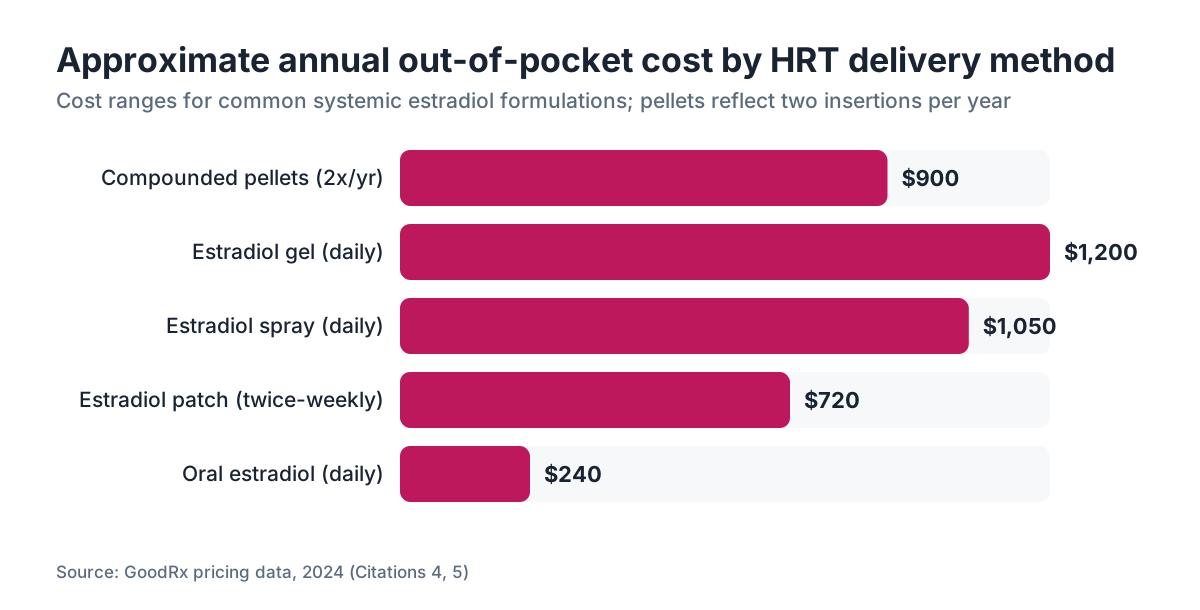
A single insertion typically runs $300 to $600 at most clinics, though some charge $800 or more depending on the number of pellets placed and local market rates [4]. Most women need at least two insertions a year, so annual costs land at $600 to $1,200 on the low end, higher if you need more frequent replacements or a dose-finding period at the start.
Insurance almost never covers pellets. Because they are compounded and lack FDA approval as a finished form, most major plans classify them as experimental or non-covered. Medicare does not cover them either. Some flexible spending accounts (FSAs) or health savings accounts (HSAs) may accept the expense as a qualified medical cost, but you will have to check with your plan administrator.
Compare that to approved HRT. A month of generic oral estradiol costs as little as $10 to $30 at most pharmacies. A box of four Vivelle-Dot estradiol patches runs about $30 to $90 with a GoodRx coupon, depending on dose and pharmacy [5]. Transdermal estradiol gel costs $50 to $150 a month out of pocket. Most insurance plans cover these.
The convenience pitch for pellets, skipping daily or weekly dosing, is real. So is the price gap. A woman paying $1,000 a year for pellets versus $120 to $360 for a patch should be clear on exactly what she is buying with that difference.
| Delivery Method | Approx. Annual OOP Cost | FDA Approved | Dose Adjustable | |---|---|---|---| | Pellets (compounded) | $600-$1,200+ | No (finished form) | No | | Estradiol patch | $360-$1,080 | Yes | Yes | | Oral estradiol | $120-$360 | Yes | Yes | | Estradiol gel | $600-$1,800 | Yes | Yes | | Estradiol spray | $600-$1,500 | Yes | Yes |
What are the real side effects and risks of hormone pellets?
The side effects of the hormones themselves, estradiol and testosterone, are similar regardless of how you take them. What is unique to pellets is the mechanical risk and the inability to adjust or stop quickly.
Mechanical risks include pellet extrusion (the pellet works its way out through the skin, which happens in roughly 1 to 10% of insertions depending on site and technique) [6], infection at the insertion site, bruising, and scarring from repeated insertions over years. None of that exists with patches, pills, or gels.
For estradiol, the systemic risks match any systemic HRT: a small increase in blood clot risk with oral formulations (transdermal forms, including pellets, are thought to carry lower clot risk, though pellet-specific data is limited), a modest increase in breast cancer risk with combined estrogen-progestogen therapy after about 5 years of use, and endometrial cancer risk if estradiol is given without progestogen to a woman who still has a uterus [2]. The Menopause Society's 2022 Hormone Therapy Position Statement is clear that for most healthy women under 60 or within 10 years of menopause, the benefits of HRT outweigh the risks for bothersome symptoms [2].
For testosterone in pellets, the bigger worry is overdose. Pellet doses for women often push serum levels above the normal female range. Supraphysiologic testosterone can cause acne, oily skin, unwanted hair growth, clitoral enlargement, and voice deepening. Some of those effects, voice changes especially, may not fully reverse even after you stop [3]. You cannot pull a pellet back out once it is in. If your levels go too high, you wait. That waiting period runs months.
Women with a uterus who get estrogen-containing pellets also need progestogen to protect the endometrium, usually prescribed as a separate oral pill or IUD. Pellet providers do not always spell this out. If you are offered estradiol-only pellets and still have your uterus, ask directly about endometrial protection.
How do pellets compare to patches, gels, and other HRT options?
This is the question most women are actually trying to answer, and the comparison runs across several axes.
Consistency of levels: Pellets produce relatively steady serum estradiol and testosterone compared to injections, and more consistent testosterone than topical creams. They are not more consistent than a well-applied patch or gel. Some studies have found pellet testosterone produces supraphysiologic peaks in the first weeks after insertion before declining [6]. A patch changed twice weekly (like Vivelle-Dot) produces quite stable estradiol.
Convenience: Pellets win. One insertion every 3 to 6 months versus daily pills, twice-weekly patch changes, or daily gel. For women who genuinely cannot keep a daily routine, this matters.
Dose flexibility: Patches, gels, and pills win clearly. Switch a patch strength and you have changed the dose. Cut a compounded cream in half. You cannot split or remove a pellet. If you are newly starting HRT or fine-tuning a complicated regimen, an adjustable format first is the sensible move before committing to pellets.
Evidence base: Patches, pills, and gels carry decades of randomized controlled trial data, including the Women's Health Initiative, which, despite its limitations and later reanalysis, produced enormous amounts of safety data [7]. Pellets rest on a much smaller base, mostly retrospective studies and observational data from pellet-specialty practices, with the obvious bias that carries [6].
For a fuller look at your options, the hormone replacement therapy and estrogen patch overviews on this site go through each format. If progesterone is part of your protocol, the progesterone piece covers the oral-versus-other-delivery debate.
Who is a good candidate for hormone pellets?
Pellets are not the right first choice for most women starting HRT for the first time. The inability to adjust dosing makes them poorly suited to the early phase, when finding your correct dose usually takes some tweaking.
They make more sense for women who have already landed on a stable dose with another form of HRT and are tired of the daily or weekly logistics, women who have had reliably good results with pellets before, or women with real compliance challenges on other delivery forms.
Be especially cautious if you have a history of hormone-sensitive cancer, cardiovascular risk factors (where a non-adjustable, higher-dose therapy is harder to manage), or if you are perimenopausal rather than postmenopausal, since fluctuating endogenous estrogen makes dosing unpredictable.
Considering pellets for the first time? Ask your provider these: What lab values will you use to guide the dose? How do you handle a patient whose testosterone goes supraphysiologic? What is your extrusion rate in your own practice? Do you require a uterine protection protocol for estradiol-containing pellets?
A provider who cannot answer those questions clearly is a provider worth being cautious about.
What does the insertion procedure actually involve?
The procedure happens in an outpatient clinical setting, takes about 10 to 15 minutes total, and is generally tolerable, though not painless. Here is the practical sequence.
Your clinician reviews your lab work first: baseline estradiol, testosterone, SHBG (sex hormone-binding globulin), and sometimes DHEA-S and thyroid. Those values feed the pellet dose calculation. Different practitioners use different dosing algorithms. There is no single standardized protocol, which is part of why outcomes vary so much across providers.
The skin over your hip or upper buttock gets cleaned and a local anesthetic goes in, which is usually the most uncomfortable part. Once you are numb, the clinician makes a small incision and uses a trocar (a hollow needle-like device) to push the pellet into the subcutaneous fat. One to four pellets may be placed depending on the hormones and dose. The incision closes with surgical tape, not sutures, then gets a bandage.
Aftercare usually means no soaking the area (no baths or swimming) for a few days, limiting strenuous lower-body exercise for 48 to 72 hours, and watching for signs of infection. Most women go back to normal activity the same day.
Blood levels usually get checked 4 to 6 weeks after insertion to see where you landed, then again before your next insertion. If levels are off, the dose gets adjusted at the next insertion. There is nothing to be done about the current one.
Do hormone pellets help with weight loss?
This is one of the most-searched questions about pellet therapy, and the honest answer is: maybe modestly, mostly indirectly, and not the way the marketing implies.
Estrogen deficiency drives the shift in body fat distribution many women hit during the menopause transition, specifically more fat parking itself in the abdomen. Restoring estradiol levels, through any delivery method, may slow or slightly reverse that shift [8]. That is not the same as real weight loss. Estradiol is not a weight-loss drug.
Testosterone supports lean muscle mass, and better muscle mass nudges metabolic rate up. Some women on testosterone pellets report body composition changes even without the scale moving. The effect is real but modest, and the studies on pellet-specific testosterone for women's body composition are small and often funded by pellet industry interests.
If weight loss is a primary goal alongside hormone optimization, the GLP-1 receptor agonists (semaglutide and tirzepatide) have a far larger and more rigorous evidence base for that specific purpose. The SURMOUNT-1 trial found tirzepatide produced an average weight reduction of 20.9% at 72 weeks [9]. That is a different order of magnitude than anything hormone therapy delivers. Some women pursue both HRT and a GLP-1, and the two are not contraindicated. To understand how those work separately or together, the semaglutide for weight loss and semaglutide vs tirzepatide pages are good starting points.
How do I find a reputable hormone pellet provider?
The pellet market runs heavy on direct-to-consumer marketing and franchise-style wellness clinics. That does not make every provider in the space bad, but it does mean you should ask sharper questions than you might at a conventional gynecology practice.
Start by asking whether the provider is board-certified in a relevant specialty (gynecology, endocrinology, or family medicine), and whether they have specific training in menopause management. The Menopause Society keeps a certified menopause practitioner directory at menopause.org [2]. Certification is not a requirement for competence, but it is a signal the clinician takes menopause medicine seriously.
Ask what lab work is required before and after insertion, and what values trigger a dose change at the next cycle. A provider who skips baseline hormone labs, or uses the same dose formula for every patient no matter the labs, is a red flag.
Ask which pharmacy compounds their pellets, whether that pharmacy is PCAB-accredited (the Pharmacy Compounding Accreditation Board), and whether the pellets get tested for potency and sterility. Not all compounding pharmacies are equal. The FDA's list of registered outsourcing facilities and its warning letters to compounders are public [1].
For women in larger metro areas, Dallas has a heavy concentration of pellet-specialty clinics and direct-to-consumer hormone clinics. A search for hormone replacement therapy in Dallas surfaces a mix of NAMS-affiliated OB-GYN practices and wellness chains. Apply the same vetting questions to any of them, whatever the marketing language.
WomenRx offers telehealth HRT consultations with licensed clinicians who can help you weigh whether pellets or another delivery method fits your specific hormone picture, without steering you toward any single product format.
What labs should you check before and after pellet insertion?
A responsible provider will not insert anything without baseline labs. Here is what belongs on that panel.
For estradiol pellets: serum estradiol (E2), FSH (to confirm menopausal status), and a recent mammogram or documentation of current breast cancer screening. If you have a uterus, confirmation that a progestogen protocol is in place.
For testosterone pellets: total testosterone, free testosterone, SHBG (because SHBG affects how much testosterone is biologically active), and DHEA-S. A baseline lipid panel is reasonable, because high-dose testosterone can drop HDL cholesterol.
For both: a thyroid panel (TSH at minimum), because thyroid dysfunction mimics many hormone-deficiency symptoms and affects how your body processes sex hormones. Some providers also run a complete metabolic panel and CBC.
After insertion, levels should be checked 4 to 6 weeks in to see where you landed against target. Follow-up labs before each subsequent insertion let the provider trend your levels and adjust the next dose. If your provider is not ordering follow-up labs, that is a gap in care.
Understanding your bone density test results matters too for perimenopausal and postmenopausal women weighing HRT, because estrogen is one of the main drivers of bone loss rate after menopause. Knowing your DEXA baseline helps frame how urgent HRT initiation is for protecting your skeleton.
What does the research actually say about pellet effectiveness?
Pellet-specific research is sparse next to the literature on approved HRT. Most of it comes from retrospective chart reviews, small observational studies, and studies run by clinicians with financial ties to pellet companies. That does not make the findings wrong. It means you weight the evidence accordingly.
A 2019 systematic review in Maturitas looked at subcutaneous hormone pellets for women and found that while pellets can achieve physiologic hormone levels, the evidence for clinical outcomes (symptom relief, fracture prevention, cardiovascular effects) was insufficient to draw strong conclusions, mostly because of study quality and size [6].
Transdermal estradiol, by contrast, has been studied in thousands of women in randomized controlled trials, with clear evidence for symptom relief, bone protection, and, in the Women's Health Initiative Memory Study subset, no increase in dementia risk for women starting within 10 years of menopause [7].
The Endocrine Society's 2019 clinical practice guideline on testosterone therapy for women acknowledges that testosterone can improve sexual function in postmenopausal women, but specifically notes the evidence does not support use beyond that indication and that the long-term safety of supraphysiologic doses is unknown [3].
Starting HRT for the first time? The honest evidence-based starting point is an FDA-approved transdermal estradiol product, adjusted to symptom relief, with progesterone added if you have a uterus. Pellets may be worth a look after you have a stable regimen and clear reasons to prefer that delivery format. That is not a popular opinion in pellet clinics, but it reflects what the evidence actually supports.
Frequently asked questions
How long do hormone replacement therapy pellets last?
Most pellets last 3 to 6 months depending on your metabolism, activity level, and starting dose. Women who exercise heavily or carry higher body mass typically absorb pellets faster. Your provider should check labs 4 to 6 weeks after insertion and again before your next scheduled appointment to time the replacement correctly.
Can hormone pellets cause cancer?
Estradiol-containing pellets carry similar breast cancer considerations to any systemic estrogen therapy. Combined estrogen-progestogen HRT is tied to a modest increase in breast cancer risk after about 5 years of use, while estrogen-only therapy (in women without a uterus) shows a lower or possibly neutral risk. Pellet-specific cancer data is limited. Uterine cancer risk climbs with estrogen alone if you have a uterus and no progestogen protection.
Do hormone pellets help with menopause symptoms?
Yes. Estradiol pellets relieve the same symptoms as other systemic estradiol therapies: hot flashes, night sweats, sleep disruption, brain fog, and vaginal dryness. The delivery method does not change the underlying biology. What pellets add is dosing consistency without daily or weekly administration. Whether that trade-off justifies the higher cost and reduced dose flexibility is a personal and clinical call.
Why do some women feel better on pellets than patches or pills?
Some women genuinely do better with the steady, continuous delivery of pellets. Oral estradiol goes through first-pass liver metabolism, which can change how some women feel even at equivalent serum levels. Transdermal patches skip that but need consistent application and skin tolerance. Pellets remove both variables. Pellets also typically include testosterone, which patches and pills do not, and some women credit the improvement they feel to that component specifically.
What happens if a hormone pellet extrudes or falls out?
Pellet extrusion, where the pellet works its way out through the skin, happens in roughly 1 to 10% of insertions. If it happens, the pellet is sterile but you lose the rest of that dose cycle. Your provider may offer a replacement insertion, though some practices charge for it. Extrusion is more common at the hip than the buttock, and in the first 48 to 72 hours if activity restrictions are ignored.
Do I need progesterone if I take estrogen pellets?
Yes, if you still have a uterus. Estrogen stimulates the uterine lining; without progestogen to balance it, the lining can overgrow and raise uterine cancer risk. Women who have had a hysterectomy do not need progestogen. Progestogen is typically prescribed separately, as oral micronized progesterone or occasionally a progesterone IUD, and is not included in estradiol pellets.
How much testosterone is in a hormone pellet for women?
This varies by clinic and provider protocol. Women's testosterone pellets typically target serum total testosterone in the 70 to 150 ng/dL range, though some providers aim higher. The normal female range is roughly 15 to 70 ng/dL depending on the assay. Doses above the normal range are common with pellets and are a primary concern among endocrinologists reviewing this therapy.
Can you get hormone pellets through telehealth?
The insertion itself requires an in-person visit. Telehealth providers can handle the consultation, lab review, prescription, and follow-up around pellet therapy if they coordinate with in-person insertion providers or arrange care locally. Some telehealth hormone practices also help women decide whether pellets even fit versus other HRT formats that can be managed entirely remotely.
What is pellet hormone replacement therapy for testosterone specifically?
Testosterone pellets for women are compounded cylinders of crystalline testosterone placed subcutaneously, usually in the hip or buttock. They are used to address low libido, fatigue, and sometimes mood and cognition in perimenopausal and postmenopausal women. No testosterone product is FDA-approved for women in the United States, so all female testosterone therapy is technically off-label, whatever the delivery form.
How do hormone pellets compare to bioidentical hormone creams?
Both are typically compounded. Creams go on topically, usually to thin-skinned areas, and deliver hormones transdermally. Cream absorption is highly variable based on application site, amount, and skin condition. Pellets produce more consistent serum levels but cannot be adjusted once inserted. Neither has an FDA-approved finished dosage form, though both use FDA-approved active ingredients.
Are hormone pellets safe for women with a history of blood clots?
This needs a direct conversation with a physician or specialist. Oral estrogen raises clot risk more than transdermal forms because it affects clotting factors through liver metabolism. Pellets deliver estradiol transdermally, thought to carry lower clot risk, but pellet-specific clot data is limited. Women with a personal or family history of blood clots or a clotting disorder (like Factor V Leiden) need individualized risk assessment before any systemic estrogen.
How soon after pellet insertion do you feel a difference?
Most women notice symptom changes within 2 to 4 weeks, with the full effect often apparent by 6 to 8 weeks once levels stabilize. Some women feel an initial stretch of higher energy and better symptoms in the first weeks when levels peak, followed by a gradual return of symptoms in the final weeks before the next insertion is due. This trough effect is a common complaint.
Is pellet HRT right for perimenopause or only menopause?
Pellets get used in both, but dosing is trickier in perimenopause because your ovaries still produce variable estrogen. If your ovaries spike endogenous estrogen on top of a full pellet dose, you can temporarily have too much. Many menopause specialists prefer adjustable formats, like patches or gels, during the perimenopausal transition for exactly that reason. For more on timing, the perimenopause age overview is a useful reference.
What should I look for in a hormone pellet provider?
Look for board certification in gynecology, family medicine, or endocrinology; formal menopause training (NAMS certification is one signal); a pre-insertion lab panel including estradiol, testosterone, SHBG, and FSH; follow-up labs 4 to 6 weeks after insertion; and a compounding pharmacy with PCAB accreditation. Avoid practices that use a one-size-fits-all dose protocol or that skip baseline levels before insertion.
Sources
- U.S. Food and Drug Administration, Compounding homepage
- The Menopause Society (NAMS), 2022 Hormone Therapy Position Statement
- Endocrine Society, Testosterone Therapy in Women Clinical Practice Guideline, 2019
- GoodRx Health, Hormone Pellet Therapy Cost Overview
- GoodRx, Vivelle-Dot Price Information
- Maturitas, Subcutaneous Hormone Pellet Therapy Systematic Review, 2019
- Women's Health Initiative, National Heart, Lung, and Blood Institute (NHLBI)
- National Institute on Aging, NIH, Menopause and Hormones
- New England Journal of Medicine, SURMOUNT-1 Trial (Jastreboff et al., 2022)
- MedlinePlus, National Library of Medicine, Testosterone Lab Reference Ranges