Hormone replacement therapy news: what's changed and what it means for you
TL;DR: Major medical societies now say hormone replacement therapy is appropriate for most healthy women under 60 who start within 10 years of menopause. Recent data has softened earlier fears about breast cancer risk, clarified cardiovascular timing, and produced new FDA-approved formulations. The landscape is genuinely different from where it stood in 2002 when the WHI trial stopped.
Why is HRT news suddenly everywhere again?
The Women's Health Initiative (WHI) trial halted its combined estrogen-progestogen arm in 2002, and the fallout scared a generation of women and physicians away from hormones. Prescriptions dropped by more than 60 percent in the years that followed [1]. That overcorrection left millions of women in perimenopause and menopause undertreated for hot flashes, bone loss, sleep disruption, and genitourinary symptoms.
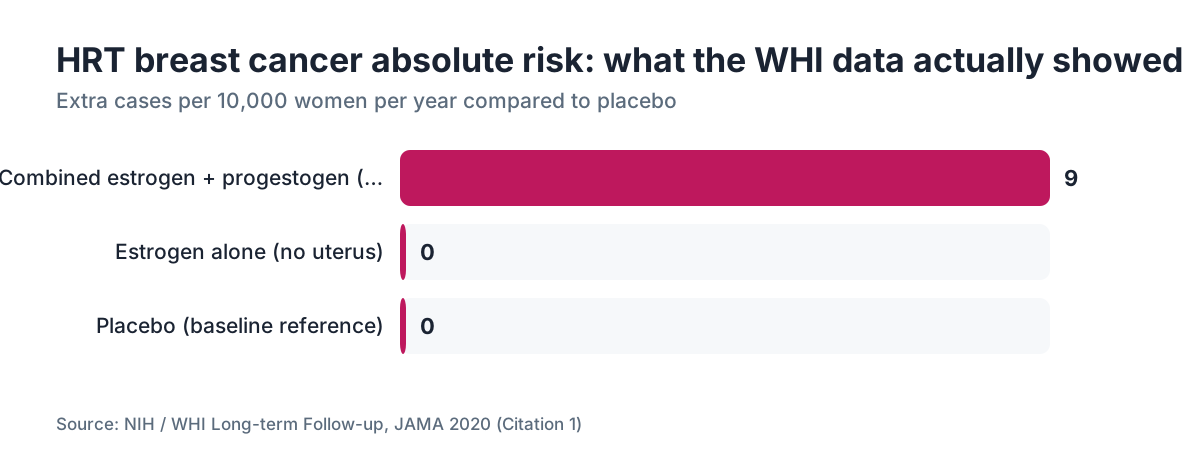
The science caught up. Researchers re-analyzed the WHI data by age and timing of hormone initiation, and the picture looked very different from the original headlines. Women who started HRT within 10 years of menopause onset or before age 60 showed cardiovascular benefit, not harm, in multiple re-analyses [2]. Breast cancer risk from combined estrogen-progestogen therapy turned out to be smaller than early reports suggested, and estrogen-only therapy (for women without a uterus) showed no statistically significant increase in breast cancer risk over placebo in the WHI's own long-term follow-up [1].
So the news cycle you're seeing now reflects a real evidence shift, not marketing. Medical societies have updated their guidance, telehealth platforms have made access easier, and a new generation of clinicians trained after the WHI panic is less reflexively cautious. If your doctor was trained in the mid-2000s and still treats the 2002 WHI headlines as settled science, that's outdated practice.
What did NAMS and the Endocrine Society actually say in their latest guidance?
The North American Menopause Society (NAMS) 2022 position statement, the most current published guidance as of this writing, is the clearest repudiation of post-WHI alarmism to date. The statement concludes: "For women aged younger than 60 years or who are within 10 years of menopause onset and have no contraindications, the benefit-risk ratio is favorable for treatment of bothersome vasomotor symptoms and for those at elevated risk for bone loss or fracture" [2].
That is a strong clinical endorsement. NAMS goes further and says plainly that the risks of HRT have been overstated, and that fear of HRT is itself a public health problem, because undertreated menopause has real consequences for cardiovascular, bone, cognitive, and metabolic health.
The Endocrine Society's clinical practice guideline on menopause takes the same position. It supports hormone therapy for symptomatic women without major contraindications and notes that transdermal estrogen delivery may carry lower clotting risk than oral formulations, though the absolute risk difference in healthy women is small [3].
What neither society does is give a blanket green light for every woman. Women with active or recent breast cancer, unexplained uterine bleeding, active liver disease, or a personal history of blood clots still need individualized evaluation. "One size fits all" works in neither direction, for or against.
What new HRT formulations and FDA approvals have come out recently?
The FDA has approved several formulations in the past few years that give women and their prescribers more options than the older oral conjugated equine estrogen and medroxyprogesterone acetate (MPA) combination that the WHI tested.
Fezolinetant (brand name Veozah), approved by the FDA in May 2023, is a non-hormonal option that targets the neurokinin B pathway in the hypothalamus to reduce vasomotor symptoms [4]. This matters for women who cannot or will not take estrogen, though it is not technically HRT. It gives that population a mechanism-based alternative rather than a serotonin-based antidepressant taken off-label.
The FDA also updated its label language in 2023 to clarify the risk wording on estrogen and estrogen-progestogen products, so labeling reflects what current evidence shows by age group rather than the blanket black-box tone that had dominated since 2003 [10].
On the bioidentical side, FDA-approved compounded bioidentical hormone therapy remains a contested space. The FDA does not approve custom-compounded formulations, but it has approved several "bioidentical" products (meaning chemically identical to endogenous human hormones), including 17-beta estradiol patches, gels, and sprays, and micronized progesterone (Prometrium). These are the formulations most evidence-based clinicians now prefer over older synthetic versions, and they are manufactured to FDA standards, not mixed to order [5].
See our overview of hormone replacement therapy for a breakdown of which formulations have the strongest clinical evidence.
Has the breast cancer risk data actually changed?
This is the question women ask most, and the honest answer is that the risk picture has gotten more nuanced, not more alarming.
The WHI's 2020 long-term follow-up, published in JAMA, reported that women who took combined estrogen plus progestogen had a slightly elevated breast cancer risk (hazard ratio approximately 1.28), but the absolute risk increase was about 9 extra cases per 10,000 women per year [1]. Women taking estrogen alone showed no statistically significant increase.
A 2019 observational study in The Lancet drew headlines for suggesting higher risk from all HRT types, but that study has been criticized for combining diverse formulations, durations, and populations in ways that make the risk estimates hard to apply to any individual woman [6]. The methodology was contested, and it does not supersede randomized controlled trial data.
The type of progestogen matters. Synthetic progestins like MPA (the one used in the WHI) appear to stimulate breast tissue more than micronized progesterone. Several European studies suggest that micronized progesterone combined with transdermal estradiol may carry a lower breast cancer signal than the older synthetic combinations, though the data is mostly observational and the confidence intervals are wide [6].
Here is the math that matters. If you are 50, have moderate to severe hot flashes, and no personal history of breast cancer, the absolute breast cancer risk from HRT is small and has to be weighed against real quality-of-life and longer-term health benefits. That is a calculation to do with a clinician who knows your full history, not one to make from a news headline.
What does the cardiovascular evidence say now?
The "timing hypothesis" (also called the "window of opportunity") is the single most important idea in the current cardiovascular evidence. It holds that estrogen's effect on the heart and arteries depends heavily on when therapy starts relative to menopause onset.
Women who start HRT within 10 years of menopause onset or before age 60 show neutral to favorable cardiovascular outcomes in multiple analyses of WHI data and in the KEEPS (Kronos Early Estrogen Prevention Study) and ELITE (Early versus Late Intervention Trial with Estradiol) trials [2]. The ELITE trial specifically showed that transdermal estradiol slowed progression of carotid intima-media thickness (a marker of atherosclerosis) when started within 6 years of menopause, but had no significant effect when started more than 10 years after [9].
Women who start HRT more than 10 to 20 years after menopause, or after age 60 with established cardiovascular disease, may face increased risk. That group was overrepresented in the original WHI cohort, which is largely why those initial results looked so alarming.
Oral estrogen raises triglycerides and C-reactive protein slightly in some women. Transdermal estrogen skips first-pass hepatic metabolism and avoids that effect [11]. For women with elevated triglycerides or other metabolic concerns, transdermal is the clinically preferred route. See our piece on the estrogen patch for a detailed look at delivery method tradeoffs.
How is access to HRT changing across the country, including in Florida and New Jersey?
Access to HRT has improved a lot in the past three years, and telehealth is the main reason. Women in states with historically thin specialist coverage, including rural parts of Florida and New Jersey, can now reach menopause-literate clinicians without driving to a major medical center.
In Florida, the state's telehealth law lets licensed practitioners prescribe hormone therapies via telehealth to established patients, which makes hormone replacement therapy orlando and statewide hormone replacement therapy florida access far more practical than it was before 2020. Florida has a large population of perimenopausal and menopausal women, particularly in the Tampa-Orlando corridor and South Florida, and demand for hormone replacement therapy orlando florida services has grown visibly since 2022.
New Jersey has similarly permissive telehealth statutes and a dense network of compounding pharmacies that carry FDA-approved estradiol and micronized progesterone formulations. Bioidentical hormone replacement therapy new jersey patients generally benefit from being close to mid-Atlantic compounding hubs, which can ship rapidly. Bioidentical hormone replacement therapy orlando patients have similar access, with several large Florida-licensed compounding pharmacies able to fill prescriptions within 24 to 48 hours.
Women choosing a telehealth provider for bioidentical HRT in any state should confirm three things: the prescriber is licensed in their state, the pharmacy is licensed and accredited (look for PCAB accreditation for compounders), and the formulations offered are FDA-approved bioidenticals rather than custom-compounded mixtures with untested dosing claims. WomenRx offers telehealth HRT consultations for women in Florida, New Jersey, and several other states, and it is one of the few platforms that also integrates GLP-1 therapies and hormone care in one clinical workflow, which matters because these two treatment areas overlap heavily in perimenopausal women.
If you are comparing providers, ask directly: does the clinician specialize in menopause, or are hormones a side service? The NAMS Menopause Practitioner database is a free, searchable resource for finding certified menopause specialists in your area [12].
What is the connection between HRT and weight, metabolism, and GLP-1 drugs?
This is an area where the science is moving fast, and it matters practically for a lot of women.
Estrogen loss at menopause shifts fat from the hips and thighs toward the abdomen, reduces insulin sensitivity, and lowers resting metabolic rate. HRT does not cause weight loss on its own, but multiple studies show it blunts the menopausal increase in central fat and may modestly improve insulin sensitivity [3]. That is a real metabolic difference even when the scale barely moves.
GLP-1 receptor agonists, the class that includes semaglutide and tirzepatide, are now widely used for weight loss in perimenopausal and postmenopausal women. There is no head-to-head randomized trial of GLP-1 plus HRT versus either alone, and that is an honest gap in the literature. The physiological case for using both is sensible, though: HRT addresses the hormonal driver of the menopausal metabolic shift while GLP-1 drugs address appetite and glucose regulation. Clinicians who treat this population increasingly use both.
For women weighing GLP-1 therapy alongside hormones, our comparison of semaglutide vs tirzepatide explains how the two drugs differ in mechanism and weight loss magnitude, and our piece on semaglutide for weight loss covers the STEP trial data in detail.
One practical note. GLP-1 drugs slow gastric emptying, which can reduce absorption of oral medications including oral estrogen. If you use oral estrogen and start a GLP-1 drug, talk to your prescriber about timing. Transdermal estrogen sidesteps this issue entirely.
What does HRT do for bone health, and should bone density testing change your decision?
Estrogen protects bone directly. It slows osteoclast activity (the cells that break bone down) and is one of the most effective preventive agents for osteoporosis in menopausal women [3]. WHI data showed that women on HRT had significantly fewer hip and vertebral fractures than placebo, even in the re-analyses that trimmed other apparent benefits.
For women early in perimenopause or just past menopause, this benefit gets overlooked. Bone loss accelerates sharply in the 2 to 5 years after the final menstrual period, and catching it early matters far more than treating it after significant density is already gone.
The US Preventive Services Task Force (USPSTF) recommends screening for osteoporosis in women aged 65 and older with a bone density test (DEXA scan), and in younger postmenopausal women with risk factors [7]. If your DEXA scan shows osteopenia (T-score between -1.0 and -2.5), estrogen therapy is one evidence-supported option for slowing further loss, particularly if you also have vasomotor symptoms. See our guide to bone density test interpretation for what the numbers actually mean.
Bisphosphonates (like alendronate) and RANK-L inhibitors are other options for bone protection, but they do nothing for hot flashes, sleep, or genitourinary symptoms the way estrogen does. For women with more than one menopausal concern, HRT often does more work per prescription.
What about progesterone specifically? Is there a difference between types?
Yes, and this distinction is clinically important and underexplained by many providers.
Any woman with an intact uterus who takes estrogen must also take a progestogen to protect the uterine lining from endometrial hyperplasia and cancer. The question is which progestogen.
Synthetic progestins like medroxyprogesterone acetate (MPA) are what the WHI used. They bind progesterone receptors but also have some glucocorticoid and androgen activity, which may contribute to the breast cancer signal and metabolic effects seen in the WHI.
Micronized progesterone (bioidentical progesterone, sold as Prometrium or in compounded forms) is chemically identical to the progesterone your body made before menopause. Several European cohort studies, including the E3N-EPIC study, found that micronized progesterone combined with transdermal estradiol carried a lower breast cancer risk than synthetic progestin combinations, though this has not been confirmed in a large randomized trial [6].
Some women use vaginal progesterone to minimize systemic exposure. This is an option when the goal is endometrial protection and systemic progestogen effects (like drowsiness or mood changes) are bothersome.
For a full breakdown of progesterone types, dosing windows, and clinical tradeoffs, see our in-depth piece on progesterone.
What are the biggest misconceptions women still have about HRT in 2025?
Several myths have proven remarkably durable despite being contradicted by current evidence.
Myth 1: HRT causes heart attacks. The evidence supports the opposite for women who start it before age 60 or within 10 years of menopause. Cardiovascular risk climbs with late initiation, not early [2].
Myth 2: All hormones are the same. The WHI tested one specific combination (oral conjugated equine estrogens plus MPA). That is not the same as transdermal 17-beta estradiol plus micronized progesterone. Extrapolating WHI risks to every HRT formulation is like using data on one antibiotic to draw conclusions about the whole drug class.
Myth 3: You should only take HRT for 5 years. There is no hard evidence-based cutoff at 5 years. NAMS states that continuation decisions should be individualized and not subject to arbitrary time limits [2]. Some women benefit from long-term therapy and their risk-benefit calculation may stay favorable at 10 or even 15 years.
Myth 4: Natural menopause is healthier without treatment. Untreated severe vasomotor symptoms, sleep disruption, and accelerated bone loss all carry health consequences. There is nothing inherently healthier about suffering through preventable symptoms.
Myth 5: Bioidentical hormones from a compounding pharmacy are safer than FDA-approved options. Custom-compounded bioidenticals have no clinical trial safety data. The FDA-approved bioidenticals (transdermal estradiol, micronized progesterone) carry the same molecular structure with the quality control that compounders cannot always guarantee.
If you are still in the earlier phase of hormonal change, our pieces on perimenopause age and when does menopause start can help you figure out where you are in the transition and what symptoms are typical at each stage.
How should you talk to your doctor about HRT given everything that has changed?
Go in prepared, because not every provider is current.
Start with your symptom burden. Hot flashes that wreck your sleep, vaginal dryness that makes sex painful, cognitive fog that affects your work: these are medical symptoms, not lifestyle complaints. Describe them specifically and put numbers on them if you can ("I'm waking 3 to 4 times a night, hot flashes 8 to 10 times a day").
Ask explicitly about the timing hypothesis. If a provider tells you HRT is "too risky" without asking when your last period was or how old you are, that is a red flag for outdated practice.
Ask about formulation options. If the only thing on offer is oral conjugated estrogens, ask why not transdermal. Ask about micronized progesterone versus synthetic progestins if you have a uterus.
Know your contraindications. Active or recent estrogen-receptor-positive breast cancer, unexplained vaginal bleeding, active liver disease, active thromboembolism, and known coronary artery disease in older women are the main ones. Migraine with aura is a relative contraindication for oral estrogen but may be fine with transdermal.
If you leave an appointment feeling dismissed, a second opinion from a NAMS-certified menopause specialist is entirely appropriate. Telehealth options, including platforms like WomenRx, have lowered the geographic barrier to reaching providers who are current on the evidence.
For a broader look at what the HRT decision involves beyond the news cycle, our full guide to hormone replacement therapy walks through the clinical picture, and our piece on menopause covers symptom management options beyond hormones.
Frequently asked questions
Is it safe to start HRT after 60?
It depends on timing relative to menopause, not age alone. NAMS guidance suggests the benefit-risk ratio is less favorable when starting more than 10 years after menopause onset, because cardiovascular and breast tissue have changed without estrogen exposure. Women over 60 who are within 10 years of their last period may still be candidates. This requires individualized assessment, not a blanket age cutoff.
What is the difference between bioidentical and synthetic hormones?
Bioidentical means the hormone is chemically identical to what the human body produces. 17-beta estradiol and micronized progesterone are bioidentical and come in FDA-approved forms. Conjugated equine estrogens and medroxyprogesterone acetate are synthetic or derived and structured differently. FDA-approved bioidenticals have clinical trial data; custom-compounded bioidenticals from pharmacies do not, even though they use the same molecules.
Does HRT cause weight gain?
The evidence says no, and it may help. Estrogen loss at menopause shifts fat to the abdomen and lowers metabolic rate. HRT does not move the scale dramatically in either direction for most women, but it does blunt the menopausal increase in central fat. Some women report initial water retention when starting HRT, which typically resolves within 4 to 8 weeks as the body adjusts.
Can I get HRT through telehealth in Florida?
Yes. Florida's telehealth statutes allow licensed practitioners to prescribe hormone therapies via telehealth. A prescriber licensed in Florida can run an initial evaluation by video, order labs, and send a prescription to a Florida-licensed pharmacy. Women in Orlando, Tampa, Miami, and rural parts of the state have used this pathway effectively since telemedicine rules expanded broadly after 2020.
Is HRT available via telehealth in New Jersey?
Yes. New Jersey allows telehealth prescribing for hormone therapies including estradiol and progesterone by state-licensed providers. Bioidentical hormone replacement therapy in New Jersey is accessible through telehealth platforms. Patients still need a thorough intake evaluation and recent labs; a prescriber who skips that step is cutting corners regardless of where they are located.
How long does it take for HRT to start working?
Hot flashes often improve within 2 to 4 weeks of reaching a therapeutic dose, though full effect takes 8 to 12 weeks. Vaginal dryness and genitourinary symptoms may take 3 to 6 months to fully respond, especially with localized estrogen. Bone density effects are measured over 1 to 2 years. Mood and sleep improvements vary, but many women report changes within the first month.
What labs do I need before starting HRT?
Standard workup typically includes FSH, estradiol, TSH (to rule out a thyroid cause of symptoms), a complete metabolic panel, and a lipid panel. Some clinicians add testosterone, SHBG, and a CBC. You need a current mammogram and pelvic exam if you haven't had one recently. Labs do not "diagnose" perimenopause from a single number; FSH and estradiol swing widely during the transition.
Does HRT protect against Alzheimer's disease?
The evidence is suggestive but not conclusive. Observational studies have found lower rates of dementia in women who used HRT, and the timing hypothesis shows up here too: early initiation may be neuroprotective while late initiation may not be. No large randomized trial has confirmed a cognitive benefit as a primary endpoint. NAMS does not recommend HRT solely for dementia prevention, but it does not consider cognitive concerns a reason to withhold HRT in otherwise appropriate candidates.
What is the latest on HRT and blood clot risk?
Oral estrogen increases clotting factor production through the liver and roughly doubles VTE (venous thromboembolism) risk over baseline, though the absolute risk in healthy women under 60 stays low. Transdermal estradiol does not significantly raise VTE risk in most observational studies. Women with a personal or strong family history of blood clots should ask about transdermal delivery specifically and may need hematology input before starting.
Can HRT help with perimenopause symptoms more than menopause?
Yes. Perimenopause is often when symptoms hit hardest: erratic cycles, severe hot flashes, sleep collapse, mood swings. Estrogen levels are fluctuating, not simply low, which makes hormone therapy trickier to dose but often very effective. Low-dose oral contraceptives are sometimes used in perimenopause as an alternative to traditional HRT, since they also regulate cycles. Perimenopausal women are often undertreated because FSH looks normal on a single draw.
Is progesterone still necessary if I've had a hysterectomy?
No. Progesterone's role in HRT is to protect the uterine lining from estrogen-driven overgrowth. Without a uterus, you don't need it. Women who've had a hysterectomy take estrogen alone, which the WHI data showed carries no statistically significant increase in breast cancer risk compared to placebo over the study period. Estrogen-only therapy is generally the simpler and lower-risk HRT regimen.
What happened to HRT prescriptions after the 2002 WHI trial?
They dropped sharply. Prescriptions for combined estrogen-progestogen therapy fell by more than 60 percent between 2002 and 2004 in the United States. That decline was not proportional to actual risk and left a large number of symptomatic women without treatment. Use has swung back partially since 2010 as re-analyses clarified the timing dependency of risks, but total HRT use has not returned to pre-2002 levels.
Are compounded bioidentical hormones better than FDA-approved ones?
No good evidence supports that claim. Custom-compounded bioidentical hormones use the same molecules (estradiol, progesterone, DHEA) as FDA-approved products but are not subject to the same potency testing, sterility standards, or clinical trial requirements. The FDA and NAMS both caution that compounded formulations should not be preferred over FDA-approved options without a specific clinical reason, such as an allergy to an excipient in the commercial product.
Sources
- Endocrine Society, Clinical Practice Guideline: Treatment of Menopause
- Fournier A et al., Breast Cancer Risk in Relation to Different Types of Hormone Replacement Therapy in the E3N-EPIC Cohort, International Journal of Cancer, 2005
- U.S. Preventive Services Task Force, Osteoporosis to Prevent Fractures: Screening Recommendation
- Manson JE et al., Menopausal Hormone Therapy and Long-term All-Cause and Cause-Specific Mortality: The Women's Health Initiative, JAMA 2017
- Hodis HN et al., Vascular Effects of Early versus Late Postmenopausal Treatment with Estradiol (ELITE Trial), New England Journal of Medicine, 2016
- FDA, Drug Safety and Availability
- Baber RJ et al., IMS Recommendations on Menopausal Hormone Therapy and Preventive Strategies for Midlife Health, Climacteric, 2016
- NAMS, Find a Menopause Practitioner