Hormone replacement therapy for women: the complete guide
TL;DR: Hormone replacement therapy replaces estrogen (and usually progesterone) that drops during perimenopause and menopause. It is the most effective treatment for hot flashes, night sweats, vaginal dryness, and bone loss. For healthy women under 60 who start within 10 years of menopause, current evidence shows benefits outweigh risks for most. Delivery options include pills, patches, gels, sprays, and vaginal preparations.
What is hormone replacement therapy and who is it for?
Hormone replacement therapy, usually called HRT or menopausal hormone therapy (MHT), gives back the estrogen and progesterone your ovaries stop making as you approach and pass menopause. It is primarily prescribed for women in perimenopause or postmenopause who have symptoms that interfere with daily life, or who are at elevated risk of osteoporosis.
The North American Menopause Society (NAMS) states that HRT is the most effective treatment for vasomotor symptoms and genitourinary syndrome of menopause (GSM) [1]. That covers the full cluster: hot flashes, night sweats, vaginal dryness, painful sex, and recurrent urinary tract infections.
Who benefits most? Women between roughly 45 and 60 who are within a decade of their last period. Women who had a surgical menopause (both ovaries removed) often need HRT even more urgently, because the hormone drop is abrupt rather than gradual. Women with premature ovarian insufficiency (POI), meaning menopause before age 40, are strongly advised to use HRT at least until the average age of natural menopause to protect bone and cardiovascular health [2].
HRT is not for everyone. Women with a personal history of estrogen-receptor-positive breast cancer, unexplained vaginal bleeding, active blood clots, or untreated endometrial cancer should not use systemic estrogen. Have a real conversation with a clinician who knows your full history before starting.
If you want to understand the menopause transition itself before getting into treatment options, that context frames every decision below.
What are the different types of HRT?
There are two main categories: systemic HRT, which circulates through your body and treats symptoms everywhere, and local (vaginal) therapy, which acts only in the genital-urinary area.
Within systemic HRT, the big structural split is:
Estrogen-only (ET): For women who have had a hysterectomy. Estrogen without progestogen is fine because there is no uterine lining to protect.
Combined estrogen-progestogen therapy (EPT): For women with a uterus. Progesterone or a synthetic progestin is added to prevent the overgrowth of the uterine lining (endometrial hyperplasia) that estrogen alone would cause.
Within those two structures, there are further variations:
| Type | Who it suits | Progestogen? | Route options | |---|---|---|---| | Estrogen-only | No uterus | No | Patch, pill, gel, spray | | Sequential EPT | Perimenopause, still cycling | Cyclic progestogen | Patch, pill | | Continuous combined EPT | Postmenopause (1+ yr since last period) | Daily low dose | Patch, pill, IUD | | Local vaginal estrogen | GSM only, no systemic symptoms | Usually not needed | Cream, ring, tablet, suppository | | Bioidentical compounded HRT | Individualized; variable evidence | Varies | Varies |
Sequential therapy gives progestogen for roughly 12 to 14 days per cycle, so most women still get a monthly bleed. That is often the preferred approach in perimenopause because it mimics a more natural rhythm. Continuous combined therapy aims for no bleed and suits women who are fully postmenopausal.
The term "natural hormone replacement therapy" or women's natural hormone replacement therapy refers most often to bioidentical hormones, meaning molecules that are chemically identical to what the human body makes: 17-beta estradiol, progesterone (not synthetic progestins), and sometimes testosterone or DHEA. Many FDA-approved products already use bioidentical estradiol and micronized progesterone. The controversy is mostly around custom-compounded versions, discussed below.
For a closer look at how progesterone specifically works and why the type matters, see progesterone.
What are the real benefits of HRT?
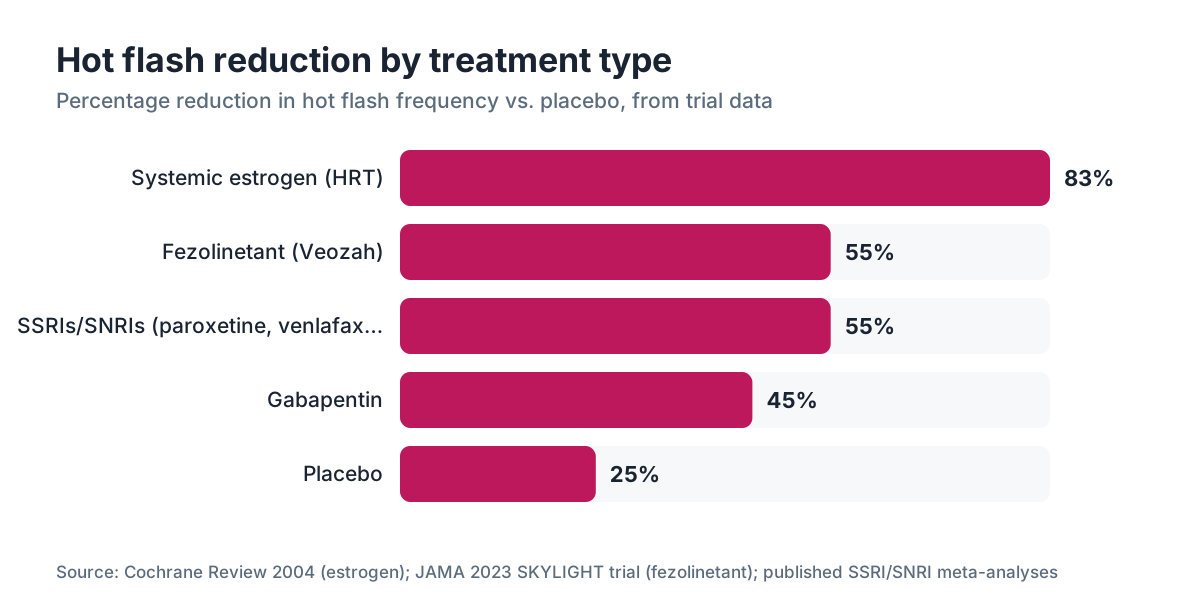
The benefits are not subtle. Systematic reviews and randomized trials consistently show estrogen reduces hot flash frequency by roughly 75 to 90 percent versus placebo [3]. For context, the next most effective non-hormonal option, the FDA-approved fezolinetant (Veozah), reduces frequency by about 50 to 60 percent in trials.
Beyond hot flashes, well-documented benefits include:
Bone protection. Estrogen is the primary brake on bone resorption. The Women's Health Initiative (WHI) trial showed combined EPT reduced hip fracture risk by 33 percent and vertebral fracture by 34 percent [4]. If you have not yet had a bone density test, that baseline is worth getting before or shortly after starting HRT.
Cardiovascular timing window. The WHI got a bad reputation for cardiovascular risk, but the data looked very different when researchers separated women by age at start. Women who began HRT within 10 years of menopause or before age 60 had lower rates of coronary heart disease and all-cause mortality versus placebo. This is the "timing hypothesis," now broadly accepted by NAMS and the British Menopause Society [1].
Genitourinary syndrome of menopause (GSM). Vaginal dryness, painful intercourse, urinary urgency. Local vaginal estrogen treats these effectively with minimal systemic absorption, and systemic HRT also helps.
Mood and sleep. Estrogen modulates serotonin and norepinephrine pathways. Many women report real improvement in mood instability and disrupted sleep during perimenopause on HRT, though randomized data here is thinner than for vasomotor symptoms.
Reduced diabetes risk. The WHI found combined EPT reduced new-onset type 2 diabetes by 21 percent versus placebo [4]. That signal has held up in other cohort data.
One honest caveat: most of the big trial data comes from oral conjugated equine estrogen (Premarin) plus medroxyprogesterone acetate (Provera). Transdermal estradiol with micronized progesterone, which is what most clinicians now prefer, has a more favorable risk profile in observational studies but fewer large RCTs. The evidence base is strong. It is not perfectly matched to the formulations most women start today.
What are the risks of HRT and how serious are they?
The risks are real and worth understanding clearly, not overstated and not minimized.
Breast cancer. This is the risk most women ask about. The WHI found combined EPT (oral conjugated estrogen plus medroxyprogesterone acetate) was associated with a small increased risk of breast cancer after about 5 years of use: roughly 8 additional cases per 10,000 women per year compared to placebo [4]. Estrogen-only therapy in women without a uterus was not associated with increased breast cancer risk in the WHI, and the data suggested a possible small reduction.
Larger observational data from the UK Million Women Study found higher risk estimates, but that study had significant confounding. The bottom line most clinicians use: combined EPT carries a breast cancer risk roughly comparable to drinking one to two alcoholic drinks per day or having a BMI over 30. It is not zero risk. Many women choose to accept it given how much their symptoms cost them.
Transdermal estradiol with micronized progesterone appears to carry lower breast cancer risk than oral conjugated estrogen with synthetic progestin, based on French and UK cohort data, though no head-to-head RCT has confirmed this definitively.
Blood clots (VTE). Oral estrogen raises clotting risk because it is metabolized by the liver on first pass, boosting clotting factors. Transdermal estradiol bypasses the liver and does not appear to raise VTE risk in observational studies [5]. Women with prior clots, Factor V Leiden, or high baseline clotting risk are generally steered toward transdermal routes.
Stroke. The WHI found a modest increase in stroke with oral combined EPT, particularly in older women. Again, transdermal routes show a much more neutral stroke profile in observational data.
Endometrial cancer. Estrogen alone in a woman with a uterus increases endometrial cancer risk significantly. This is precisely why progestogen is always added for women who have not had a hysterectomy.
The practical picture. For a healthy 50-year-old woman with a uterus using transdermal estradiol and micronized progesterone, starting within a few years of menopause, most evidence-based clinicians consider the benefit-risk balance favorable. For a 65-year-old starting HRT for the first time, the calculus is less clear and needs an individual discussion.
How is HRT delivered and which route is best?
Delivery route matters more than many women realize. It changes absorption, liver metabolism, side effects, and certain risks.
Patches (estrogen patch): Applied to skin once or twice weekly. They deliver steady estradiol levels, bypass liver first-pass metabolism, and are the most studied transdermal option. Most clinicians treat this as the default starting point for systemic estrogen.
Gels and sprays: Applied daily to the arm or thigh. Similar advantages to patches in terms of bypassing the liver. Dose is slightly more variable because application technique matters. Pumps make dosing fairly consistent.
Pills (oral estrogen): The oldest form. Oral conjugated equine estrogen (Premarin) and oral estradiol are both available. Convenient, but liver first-pass metabolism raises triglycerides, SHBG, and clotting factors. Still appropriate for women without clot risk who prefer an oral medication.
Pellets: Implanted under the skin every 3 to 6 months. Not FDA-approved for hormone therapy; classified as compounded preparations. Dosing is difficult to reverse if side effects occur. Many endocrinologists are cautious about pellets because supraphysiologic testosterone levels have been documented.
Vaginal preparations: Creams, tablets, suppositories, and rings deliver estrogen locally with minimal systemic absorption. The Femring delivers systemic levels; other vaginal rings and tablets (Vagifem, Imvexxy) deliver local-only doses. Women using low-dose vaginal estrogen for GSM alone generally do not need to add progestogen.
Micronized progesterone (Prometrium) vs. synthetic progestins: Prometrium is bioidentical progesterone and appears to have a more favorable cardiovascular and breast profile than medroxyprogesterone acetate (Provera) in observational data. It also causes less bloating and mood disruption for many women. It can be sedating at higher doses, which makes evening dosing an advantage. The Mirena IUD delivers progestogen locally to the uterus and is an increasingly common way to protect the endometrium while keeping systemic progestogen exposure low.
What is the difference between bioidentical and conventional HRT?
The term bioidentical refers to hormone molecules structurally identical to those produced by the human body. 17-beta estradiol, progesterone, and testosterone are all bioidentical. Here is the part the marketing skips: many FDA-approved HRT products already use bioidentical molecules. Vivelle-Dot, Climara, and Minivelle patches contain 17-beta estradiol; Prometrium contains micronized progesterone.
So the sharper question is whether you want FDA-approved bioidentical HRT or custom-compounded bioidentical HRT. Compounded versions are mixed by compounding pharmacies, often based on saliva hormone testing, and not evaluated for safety and efficacy by the FDA. The Endocrine Society's official position states: "The Endocrine Society is opposed to the use of compounded bioidentical hormones... because they lack evidence for safety and efficacy, have potential for under- or overdosing, and lack pharmacovigilance" [2].
That said, compounding fills genuine gaps. Some women need a dose or combination not commercially available. Some need preservative-free formulations for vaginal use. Compounding is appropriate in those specific situations, under the care of a knowledgeable prescriber.
Saliva testing, often sold alongside compounded HRT, does not reflect tissue or serum hormone levels accurately enough to guide dosing. Serum blood tests remain the standard for monitoring.
Women seeking what they call "natural hormone replacement therapy" are usually looking for bioidentical hormones and the avoidance of synthetic progestins. That goal is entirely achievable with FDA-approved products and does not require compounding in most cases.
How do you get HRT? In-person vs. online options
Getting HRT has become considerably more accessible in the past several years. You have three main paths.
Primary care or OB-GYN: The traditional route. Many are comfortable prescribing standard HRT. Gaps exist: surveys consistently find that many primary care physicians have limited menopause training, and a 2023 analysis found that fewer than 7 percent of OB-GYN residency programs have a formal menopause curriculum [6].
Menopause specialist: A gynecologist or internist with additional training in menopause management, sometimes credentialed through NAMS. Wait times can run months in many cities.
Hormone replacement therapy online and telehealth platforms: The fastest-growing option. Telehealth lets a licensed clinician evaluate your symptoms, medical history, and lab results via video or asynchronous messaging and prescribe HRT if appropriate, often within days. Prescriptions are filled at licensed pharmacies and shipped. This works well for women who cannot get timely in-person appointments, live in rural areas, or prefer the efficiency of online care.
When you evaluate any online HRT service, check that clinicians are licensed in your state, that they require labs before prescribing, and that you have a clear path to follow-up. Services like WomenRx pair telehealth prescribing with follow-up monitoring, which matters because HRT is not a set-it-and-forget-it prescription. Doses often need adjustment in the first 6 to 12 months.
For the best online hormone replacement therapy for women, the criteria stay the same regardless of platform: board-certified prescribers, required baseline labs, licensed pharmacy dispensing, and genuine follow-up visits rather than a one-time questionnaire.
Women's hormone replacement therapy via telehealth is legal in all 50 states provided the prescriber holds a valid license in the patient's state and an appropriate prescriber-patient relationship is established.
How much does HRT cost?
Cost varies widely depending on formulation, brand versus generic, insurance coverage, and whether you use telehealth or in-person care.
| HRT Product | Approximate monthly cost (generic, no insurance) | With insurance | |---|---|---| | Oral estradiol 1mg tablet | $10-$25 | Often $0-$10 copay | | Estradiol patch (generic) | $30-$60 | Often $10-$30 copay | | Estradiol gel (EstroGel, generic) | $60-$100 | Varies widely | | Prometrium 100mg (generic progesterone) | $30-$70 | Often $10-$30 copay | | Vaginal estradiol tablet (generic Vagifem) | $30-$80 | Often covered | | Compounded HRT (pharmacy) | $80-$200+ | Usually not covered |
Insurance coverage for FDA-approved HRT has improved since the Affordable Care Act required coverage of preventive services for women, but coverage varies substantially by plan. Many commercial plans cover generic estradiol patches and oral progesterone. Compounded preparations are almost never covered.
The telehealth visit itself typically costs $50 to $150 for an initial consultation and $30 to $100 for follow-ups, though some services bundle this into a monthly membership. That cost sits separate from the prescription.
GoodRx, Costco Pharmacy, and manufacturer coupons can cut out-of-pocket costs a lot for the uninsured or underinsured. Shop around: the same estradiol patch can cost three times as much at one pharmacy versus another.
How long should you stay on HRT?
Duration is one of the most contested questions in menopause medicine, and honest clinicians admit there is no single right answer.
The old guidance (pre-2000s) was to use HRT for the shortest time at the lowest dose. The WHI amplified this to the point where many women were taken off HRT after just a year or two. That overcorrection caused real harm, because hot flashes often return immediately and bone protection disappears when HRT stops.
NAMS's current position, updated in 2022, states: "For women who have bothersome vasomotor symptoms with no contraindications to hormone therapy, the most effective treatment is systemic hormone therapy. Duration of use should be individualized" [1]. There is no mandated cutoff at 5 years.
In practice, many clinicians continue HRT as long as:
- Symptoms return significantly when stopping (a reasonable trial off therapy can clarify this)
- The woman's individual benefit-risk profile remains favorable at annual review
- There are no new contraindications
Some women stay on lower-dose systemic HRT well into their 60s, particularly for bone protection and quality of life, with regular reassessment. Local vaginal estrogen for GSM has no established duration limit, and many gynecologists continue it indefinitely.
Women who want context on the perimenopausal timeline before committing to a start date can review perimenopause age and when does menopause start.
What does the monitoring process look like once you start HRT?
Starting HRT is more than picking a product and filling a prescription. Good clinical management involves baseline labs, dose adjustment, and ongoing check-ins.
Before starting: Most clinicians order baseline labs including FSH and estradiol (to confirm menopausal status if unclear), a complete metabolic panel, a lipid panel, blood pressure, and a review of mammography and Pap history. Some also check thyroid function, fasting glucose, and vitamin D, all of which interact with hormonal health.
First 3 months: This is the adjustment window. Symptoms may not fully improve for 6 to 12 weeks. Side effects like breast tenderness, bloating, or spotting are common early and often resolve. If they do not, the dose or formulation may need to change.
6-month check-in: Labs are typically repeated to confirm estradiol levels are in a therapeutic range (generally 40 to 100 pg/mL for symptom control, though some women need levels toward 100 to 150 pg/mL). Symptom tracking helps quantify progress.
Annual review: A full benefit-risk reassessment, updated mammogram, blood pressure check, and a discussion of whether to continue, taper, or adjust. Bone density testing (DEXA scan) is typically recommended at menopause baseline and then every 1 to 2 years if you have risk factors, or every 2 years on therapy.
Women who also have weight to manage sometimes ask about GLP-1 medications alongside HRT. Estrogen affects insulin sensitivity and fat distribution, and the combination is an active area of clinical interest. For more on GLP-1 options, semaglutide for weight loss and semaglutide vs tirzepatide are worth reading separately.
What are non-hormonal alternatives if HRT is not right for you?
HRT is the most effective option but not the only one. Several non-hormonal treatments have meaningful evidence behind them.
Fezolinetant (Veozah): FDA-approved in May 2023 for moderate-to-severe vasomotor symptoms. A neurokinin B receptor antagonist that works in the hypothalamus. In the SKYLIGHT trials, fezolinetant reduced hot flash frequency by about 50 to 60 percent over 12 weeks [7]. No hormones involved. Cost is significant (roughly $550 to $600 per month retail before coupons) and liver monitoring is required initially.
SSRIs and SNRIs: Paroxetine (Brisdelle, 7.5mg) is the only FDA-approved non-hormonal medication specifically for hot flashes. Venlafaxine, escitalopram, and desvenlafaxine also have reasonable trial data. They help mood symptoms too, which is why they suit women whose symptoms include anxiety or depression. Trials show about 50 to 60 percent reduction in hot flash frequency.
Gabapentin: Modestly effective for hot flashes, particularly night sweats. Sedation is the main side effect. Sometimes used at bedtime specifically for sleep disruption.
Ospemifene (Osphena): An oral SERM approved specifically for painful sex due to GSM. Works in vaginal tissue without systemic estrogen. A reasonable middle path for women who cannot use estrogen but find topical treatments difficult.
Cognitive behavioral therapy (CBT) and hypnotherapy: Genuinely helpful for the perception and distress caused by hot flashes, even if they do not reduce the raw frequency as dramatically as medication. The UK NICE menopause guidelines include these as first-line options for women who prefer non-pharmacological approaches [8].
Lifestyle: No supplement or lifestyle change comes close to hormonal efficacy for vasomotor symptoms. Maintaining a healthy weight, avoiding hot flash triggers (alcohol, caffeine, spicy food, hot environments), regular aerobic exercise, and layer-friendly clothing all help at the margins and carry other obvious health benefits.
What do the major medical societies actually say about HRT right now?
The consensus across major bodies has shifted a lot from the early-2000s panic triggered by the WHI's initial headlines.
NAMS (North American Menopause Society), 2022 Hormone Therapy Position Statement: "For women aged younger than 60 years or within 10 years of menopause onset and with no contraindications, the benefit-risk ratio is favorable for treatment of bothersome vasomotor symptoms and for those at elevated risk for bone loss or fracture" [1].
The Endocrine Society's 2015 clinical practice guideline on menopause recommends that women without contraindications use the lowest effective dose for the shortest duration consistent with their goals, but explicitly states that duration should be based on individual assessment, not a fixed time limit [2].
The FDA's current labeling for estrogen products includes a black box warning advising use of the lowest effective dose for the shortest duration [9]. The FDA's language predates much of the post-WHI reanalysis and the timing hypothesis data, and many clinicians consider the label more conservative than current evidence justifies.
The International Menopause Society and British Menopause Society have published similar reappraisals of HRT's benefit-risk profile, specifically endorsing transdermal routes for their lower clot and stroke risk.
The practical takeaway: the major clinical societies now support individualized HRT for symptomatic women, especially those starting in their 40s or 50s. The old blanket caution has been substantially revised, though it has not fully filtered into every primary care practice.
Frequently asked questions
At what age should a woman start HRT?
Most women start HRT in perimenopause or early postmenopause, typically between ages 45 and 55. NAMS and the Endocrine Society both consider starting within 10 years of menopause onset or before age 60 to carry the most favorable benefit-risk profile. Women with premature ovarian insufficiency (menopause before 40) are advised to start even earlier and continue at least until the average menopause age of around 51.
Is HRT safe long-term?
For most healthy women who start before age 60 or within 10 years of menopause, long-term use is considered acceptable with annual reassessment. The main risks, primarily a small increase in breast cancer risk with combined EPT after several years and blood clot risk with oral estrogen, can often be managed by using transdermal estradiol and micronized progesterone. There is no universal safe cutoff date; duration should be individualized based on symptoms and health history.
Does HRT cause weight gain?
HRT itself does not cause weight gain in controlled studies. Menopause causes a shift in fat distribution toward the abdomen, and estrogen therapy may actually limit that redistribution. Some women notice temporary bloating or fluid retention when starting HRT, but this typically resolves within a few months. Body weight is driven primarily by lifestyle factors; the hormone changes of menopause affect where fat is stored more than total body weight.
Can I get HRT without a uterus?
Yes, and in fact it is simpler. Women who have had a hysterectomy take estrogen alone, with no progesterone needed. This matters because estrogen-only therapy has a more favorable breast cancer risk profile than combined estrogen-progesterone therapy, and the WHI data suggested it may even slightly reduce breast cancer risk. Estrogen-only therapy is available as patches, gels, sprays, and pills.
What is the difference between HRT and bioidentical hormones?
Many FDA-approved HRT products already use bioidentical molecules: 17-beta estradiol (found in Vivelle-Dot, Climara, and estradiol gel) and micronized progesterone (Prometrium) are both structurally identical to what your body made before menopause. The term bioidentical most often signals custom-compounded preparations, which are not FDA-reviewed for safety or efficacy. You can get bioidentical hormones from a licensed pharmacy without compounding in most cases.
Can I get hormone replacement therapy online?
Yes. Telehealth platforms let a licensed prescriber evaluate your symptoms and history via video or messaging, order labs, and prescribe HRT if appropriate. Prescriptions are filled at licensed pharmacies. It is legal in all 50 states provided the clinician holds a valid license in your state. The key quality checks: confirmed prescriber licensing, required baseline labs before prescribing, and follow-up visits rather than a one-time questionnaire.
Does HRT protect against heart disease?
For women who start within 10 years of menopause or before age 60, observational studies and reanalysis of the WHI consistently show a neutral to favorable cardiovascular effect. This is the 'timing hypothesis.' Starting HRT more than 10 years after menopause does not appear to offer the same protection and may increase cardiovascular risk. HRT is not approved as a treatment for established heart disease, but earlier initiation for symptomatic women does not appear to increase cardiac risk.
How long does it take for HRT to start working?
Hot flash frequency typically begins to improve within 2 to 4 weeks of starting HRT, but full effect often takes 6 to 12 weeks. Vaginal symptoms usually take 2 to 3 months to fully respond. Sleep and mood often improve in parallel with hot flash reduction. If symptoms have not meaningfully improved after 3 months, dose adjustment or a formulation change may be needed rather than discontinuing.
What happens when you stop taking HRT?
Vasomotor symptoms often return when HRT is stopped, sometimes acutely (within days), sometimes gradually over weeks. Bone protection also decreases and bone loss resumes at an accelerated rate for roughly 2 to 3 years after stopping. Gradual dose tapering rather than abrupt discontinuation may reduce the severity of returning symptoms, though evidence for tapering protocols is limited. Some women find symptoms have naturally diminished by the time they stop; others need longer-term continuation.
Can women with a family history of breast cancer use HRT?
A family history of breast cancer is a risk factor to discuss carefully with your clinician, but it is not an automatic disqualification for HRT. Risk depends on whether the relative carried a BRCA1/2 mutation, what degree of relation they were, and your own breast density and other risk factors. Women with BRCA mutations face a different risk calculus and should have the conversation with a specialist in both genetics and menopause medicine.
Is compounded HRT better than FDA-approved HRT?
Not according to current evidence. The Endocrine Society explicitly opposes routine use of compounded bioidentical hormones because they lack FDA review for purity, potency, and safety, and have documented cases of over- and under-dosing. Compounding is appropriate when a commercially available product does not meet a clinical need: an unusual dose, a specific delivery form, or an allergy to an ingredient. But 'more natural' is not a clinically meaningful justification for compounding over an FDA-approved bioidentical product.
Does HRT affect libido?
Estrogen helps libido indirectly by reducing vaginal dryness and pain with sex, which often dramatically improves sexual interest and satisfaction. But estrogen itself is not the primary hormone driving libido in women: testosterone is. Women with persistently low libido despite adequate estrogen replacement may benefit from low-dose testosterone therapy, prescribed off-label in the US but well-supported by evidence from the International Society for the Study of Women's Sexual Health.
What labs should be checked before starting HRT?
Standard baseline labs before starting HRT typically include FSH and estradiol to confirm menopausal status, a complete metabolic panel, a lipid panel, blood pressure, and review of current mammography and Pap status. Many clinicians also check fasting glucose, thyroid (TSH), and vitamin D. Depending on your history, a DEXA bone density scan may be ordered. These baselines help confirm appropriateness and provide benchmarks for monitoring response.
Can HRT help with brain fog and memory issues?
Estrogen has clear effects on brain function: receptors are found throughout regions involved in memory and cognition. Many women report real improvement in concentration and mental clarity on HRT, and this is a legitimate treatment goal. The randomized trial evidence on cognitive outcomes is mixed: the KEEPS and ELITE trials suggested modest cognitive benefits when HRT is started in early menopause, but no benefit (and possible harm) when started late. Timing appears to matter here, as it does for cardiovascular effects.
Sources
- North American Menopause Society, 2022 Hormone Therapy Position Statement
- Endocrine Society, Clinical Practice Guideline: Treatment of Symptoms of the Menopause
- MacLennan AH et al., Cochrane Database of Systematic Reviews 2004: Oral oestrogen and combined oestrogen/progestogen therapy versus placebo for hot flushes
- Writing Group for the Women's Health Initiative Investigators, JAMA 2002: Risks and Benefits of Estrogen Plus Progestin in Healthy Postmenopausal Women
- Canonico M et al., Circulation 2007: Hormone therapy and venous thromboembolism among postmenopausal women
- Kaunitz AM et al., Menopause 2023: Menopause training in US OB-GYN residency programs
- Johnson KA et al., JAMA 2023: Fezolinetant for Treatment of Moderate-to-Severe Vasomotor Symptoms (SKYLIGHT 1)
- UK National Institute for Health and Care Excellence, NICE Guideline NG23: Menopause: diagnosis and management
- FDA, Estrogen and Estrogen with Progestin Therapies for Postmenopausal Women (Black Box Warning guidance)
- Hodis HN et al., NEJM 2016: Vascular Effects of Early versus Late Postmenopausal Treatment with Estradiol (ELITE trial)
- Collaborative Group on Hormonal Factors in Breast Cancer, Lancet 2019: Type and timing of menopausal hormone therapy and breast cancer risk
- Fournier A et al., Breast Cancer Research and Treatment 2008: Unequal risks for breast cancer associated with different hormone replacement therapies