Hormone replacement therapy: what it is, who needs it, and how it works
TL;DR: Hormone replacement therapy (HRT) replaces the estrogen and progesterone your ovaries stop making in perimenopause and menopause. It is the most effective treatment for hot flashes, night sweats, vaginal dryness, and bone loss. For healthy women under 60 or within 10 years of menopause, major medical societies say the benefits generally outweigh the risks. Both conventional and bioidentical forms exist.
What is hormone replacement therapy?
Hormone replacement therapy is what it sounds like: medications that replace the estrogen and progesterone your ovaries stop making as you move through perimenopause and menopause. Some regimens add testosterone too, though that is a narrower conversation we will get to.
Two hormones do most of the work. Estrogen handles symptom relief. Progesterone (or a synthetic version called progestin) gets added for any woman who still has a uterus, because estrogen alone can overstimulate the uterine lining and raise the risk of endometrial cancer [1].
Women who have had a hysterectomy usually take estrogen alone.
HRT goes by several names in medical literature and everyday talk: hormone therapy (HT), menopausal hormone therapy (MHT), and in older studies, hormone replacement therapy or HRT. They all mean the same thing. The North American Menopause Society (NAMS) now prefers "menopause hormone therapy" to signal that the goal is managing a natural transition, not correcting a disease [2]. But most women search for HRT, so that is what we call it here.
Here is what HRT does at the cellular level. Estrogen receptors sit on cells throughout your body: brain, bone, heart, bladder, vagina, skin. When circulating estrogen drops, those receptors go quiet, and symptoms follow. Replacing estrogen switches them back on.
What symptoms does HRT treat?
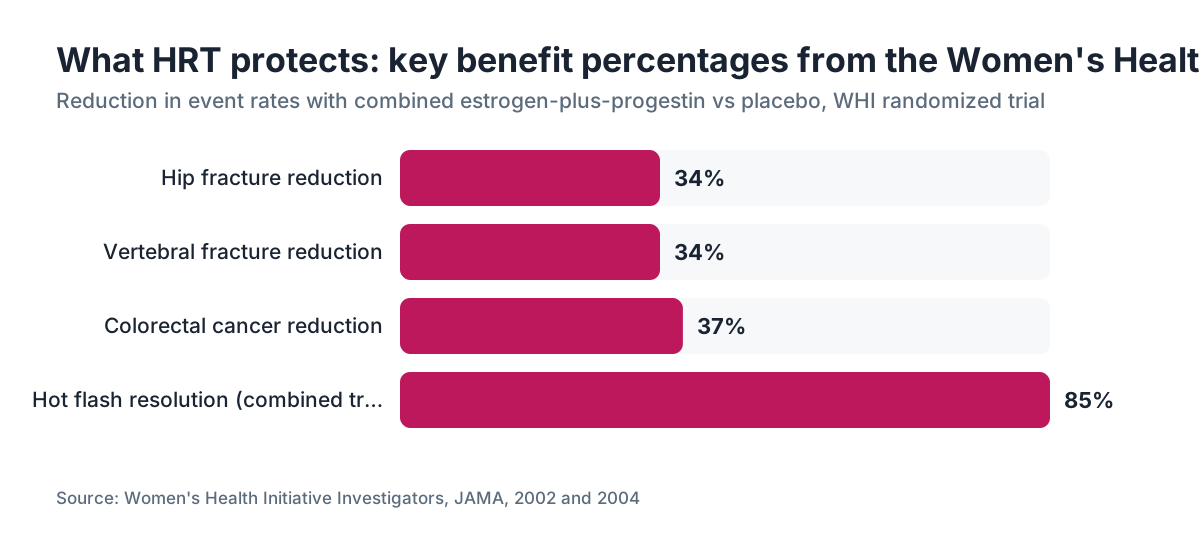
The headline symptoms are vasomotor: hot flashes and night sweats. Falling estrogen throws off the hypothalamus, the brain's thermostat. HRT resolves or substantially cuts hot flashes in roughly 80 to 90 percent of women who take it [2].
Beyond hot flashes and night sweats, HRT addresses:
- Vaginal dryness and painful sex (genitourinary syndrome of menopause)
- Sleep wrecked by night sweats
- Mood changes and irritability driven by hormonal swings
- Brain fog and trouble concentrating
- Bone loss that leads to osteoporosis
- Recurrent urinary tract infections from thinning urethral tissue
Bone protection is the underappreciated one. Estrogen is the main hormone that slows bone breakdown. Women lose an average of 1 to 2 percent of bone density per year in the first few years after menopause, and some lose it faster [3]. HRT holds that density in place. The Women's Health Initiative (WHI) confirmed that combined estrogen-plus-progestin cut hip fractures by 34 percent compared with placebo [4].
What HRT does not reliably do: cure clinical depression on its own, reverse established heart disease, or prevent cognitive decline when started years after menopause. Timing matters a lot, and we get into that below.
If your menopause symptoms are mild, lifestyle changes alone might carry you. If they are wrecking your sleep, your work, or your marriage, that is not something to white-knuckle through for years.
What are the different types of HRT?
Two things define your regimen: which hormones are in it, and how you take them.
By hormone combination
| Type | Who it is for | Estrogen | Progestogen | |---|---|---|---| | Estrogen-only | Women without a uterus | Yes | No | | Combined continuous | Women with a uterus, post-menopause | Yes | Yes, daily | | Combined cyclic (sequential) | Women with a uterus, peri/early post-menopause | Yes | Yes, 10-14 days/month | | Local estrogen only | Vaginal symptoms only | Low-dose vaginal | No (usually) |
By delivery route
Oral pills are the oldest form. They work, but estrogen taken by mouth passes through the liver first, which raises certain clotting proteins and slightly increases VTE (blood clot) risk compared with transdermal delivery [5].
Transdermal patches, gels, and sprays skip the liver. Estrogen applied to skin enters the bloodstream directly. Most current guidelines favor transdermal estrogen for women with cardiovascular risk factors or a personal or family history of clots [2][5]. Our estrogen patch explainer goes deeper.
Vaginal creams, rings, and tablets deliver tiny local doses that mostly stay in pelvic tissue. They treat genitourinary symptoms without moving systemic estrogen levels much, which is why they stay on the table even for some women with a hormone-sensitive cancer history (with oncologist sign-off).
Progesterone specifics
Micronized progesterone (brand name Prometrium in the US) is body-identical progesterone suspended in peanut oil. Most women tolerate it better than older synthetic progestins, and observational data hints at a slightly friendlier breast cancer profile, though randomized trial data is limited [6]. Our progesterone piece covers the details.
Testosterone sometimes gets added for libido, energy, and mood when those don't recover on estrogen alone. There is no FDA-approved female testosterone product in the US, so prescribers use compounded preparations or off-label male products at very low doses. The evidence for female sexual function is reasonably good. The long-term safety data is thinner.
What is bioidentical hormone replacement therapy, and is it safer?
Bioidentical means the hormone molecule is chemically identical to the one your ovary made. That is the whole definition. It does not mean natural, unregulated, or automatically safer.
Here is where people get confused. Two very different categories operate under the "bioidentical" label.
FDA-approved bioidentical hormones include estradiol patches (Vivelle-Dot, Climara, and generics), estradiol gels (Divigel, EstroGel), estradiol sprays (Evamist), and micronized progesterone (Prometrium). These are bioidentical, regulated, tested for potency and sterility, and prescribed by any gynecologist or internist. When a NAMS-certified menopause practitioner says bioidentical, this is usually what they mean.
Custom-compounded bioidenticals are mixed by a compounding pharmacy to a specific formula, sometimes including hormones like estriol that are not in FDA-approved products. These are not FDA-approved. The FDA has said repeatedly that compounded hormones lack the same efficacy and safety data as approved products, and in 2020 the agency moved to restrict certain compounded estrogen combinations it considers too risky [7]. The Endocrine Society's scientific statement concluded that "custom-compounded bioidentical hormones are not safer than or superior to FDA-approved menopausal hormone therapy" [8].
So: bioidentical hormone therapy from an FDA-approved product is a fine choice with a solid evidence base. Custom-compounded formulas may fit in rare cases (a true allergy to an excipient, say), but they should not be sold as safer or more natural. The estradiol molecule in a patch and the estradiol molecule in a compound are the same molecule. What differs is quality control and regulatory oversight.
One more thing on the compounded marketing package: saliva testing. NAMS does not recommend saliva hormone testing to guide HRT dosing, because it does not track reliably with blood or tissue levels [2].
What are the real risks of HRT?
The 2002 WHI publication drove women off HRT in huge numbers on the strength of relative risk increases that read as terrifying in headlines but were small in absolute terms. Two decades of reanalysis have reshaped that picture. The risks are still real and deserve honest treatment.
Breast cancer
This is the one women fear most. Combined estrogen-plus-progestin HRT carries a small increase in breast cancer risk that grows with longer use. The WHI found about 8 additional cases per 10,000 women per year of use [4]. For scale: drinking two alcoholic drinks a day carries a risk increase in the same ballpark.
Estrogen-only HRT (for women without a uterus) did not raise breast cancer risk in the WHI and may have slightly lowered it [4].
Micronized progesterone appears to carry a smaller breast cancer signal than synthetic progestins in observational studies, but no randomized trial has confirmed that with breast cancer as the primary outcome.
Duration matters. Short-term use (under 5 years) in healthy, recently menopausal women adds very little absolute risk. Long-term use warrants an ongoing conversation with your provider.
Blood clots (VTE)
Oral estrogen modestly raises the risk of deep vein thrombosis and pulmonary embolism. Transdermal estrogen does not appear to, based on multiple observational studies and the ESTHER study [5]. For women with a clot history or risk factors, transdermal is the preferred route.
Stroke
Oral HRT carries a small increase in ischemic stroke risk. Transdermal estrogen at standard doses does not appear to carry this signal [5].
Cardiovascular disease
The WHI headline was alarming, but the trial studied women who averaged 63 years old and had been postmenopausal for more than a decade. Starting HRT that late, after arterial disease has set in, appears to carry different risk than starting within 10 years of menopause. The "timing hypothesis" now has enough behind it that NAMS and the Endocrine Society both endorse it [2][8]. Women who start HRT early do not appear to have elevated cardiovascular risk and may have lower risk of coronary artery disease.
Bottom line on risk
For a healthy woman under 60, within 10 years of menopause onset, with moderate to severe symptoms, the current consensus from NAMS, the Endocrine Society, the British Menopause Society, and the International Menopause Society is that benefits outweigh risks for most women [2][8]. Individual history (breast cancer, clots, active heart disease, certain liver conditions) changes that math. This is always a conversation with a clinician, not a blanket prescription.
Who should not take HRT?
Absolute reasons to avoid HRT are narrower than most women believe, but they are real. Do not take systemic HRT if you have:
- A personal history of estrogen-receptor-positive breast cancer (local vaginal estrogen may still be an option with oncologist input)
- Active or recent arterial cardiovascular disease (heart attack, stroke) within 6-12 months
- Active liver disease with impaired liver function
- Unexplained vaginal bleeding
- Active or recent VTE (blood clot)
- Known or suspected pregnancy
Relative contraindications, where the call needs more careful weighing, include a strong family history of breast cancer, treated but stable cardiovascular disease, migraine with aura (oral estrogen is usually avoided, transdermal may be acceptable), and heavy smoking.
Women who had a clot on combined oral contraceptives years ago are not automatically shut out of HRT, especially transdermal. But that history needs to be on the table.
If someone told you that you cannot take HRT with no reason beyond "it's risky," get a second opinion from a menopause-trained clinician. A 2019 survey published in Menopause found a large share of ob-gyns felt undertrained in menopause care, and many women get turned down for HRT on outdated grounds [9].
When should you start HRT and how long can you take it?
The best time to start is when your symptoms are hurting your quality of life and you have no contraindications. For most women, that window opens in perimenopause or shortly after the final period.
The timing hypothesis says starting HRT within 10 years of menopause or before age 60 comes with the most favorable benefit-risk profile. Starting after 65, or more than a decade out, is not automatically harmful, but the cardiovascular math shifts and needs individual assessment [2].
Perimenopausal women, still bleeding but irregularly, can absolutely start HRT. Irregular cycles are not a reason to wait. For where you sit in the transition, see our perimenopause age and when does menopause start explainers.
How long can you stay on it? There is no mandated limit. NAMS states plainly that arbitrary cutoffs like "5 years maximum" are not supported by evidence for most women [2]. Review the decision every year, weighing ongoing symptoms, bone density, cardiovascular health, and your own preferences. Some women stay on into their 60s and 70s, mainly for bone protection and quality of life. That is a reasonable choice made with full information, not a reckless one.
Stopping cold can bring symptoms roaring back. Tapering slowly over weeks to months tends to feel better than quitting overnight, though there is no strong clinical data on the ideal taper schedule.
How is HRT different from birth control hormones?
Good question, and it trips up a lot of women. Oral contraceptives (OCs) contain synthetic progestins and often synthetic estrogen (ethinyl estradiol) at doses high enough to suppress ovulation. They were built for a different job.
HRT uses much lower doses, typically estradiol (the same estrogen your body made), to relieve symptoms and protect tissue. The risks tied to OCs, including their higher VTE risk and stronger cardiovascular signals, do not map straight onto HRT, because the hormones and the doses differ.
Perimenopausal women sometimes land on low-dose OCs to manage irregular bleeding and symptoms, since OCs do suppress symptoms and regulate cycles. That works in some cases, but it is not the same as HRT, and most women transition off it around age 50 to 51.
If you have been told "you can't take hormones" because you had a clot or a blood pressure problem on the pill in your 30s, that experience shapes the conversation but does not rule out all HRT, particularly transdermal options. The hormone types and doses are different enough to earn a fresh assessment.
How do you get HRT and what does it cost?
HRT needs a prescription in the United States. Your primary care provider, ob-gyn, or a menopause specialist can write it. Telehealth platforms increasingly handle this care without an in-person visit, which matters for women in areas with few menopause-trained clinicians.
WomenRx is one telehealth option focused specifically on hormone care for women, handling the evaluation, prescription, and follow-up in one place. The FDA-approved products discussed here are available through that channel and through any standard pharmacy.
Cost swings widely:
| Form | Typical monthly cost (US, 2024-2025) | Notes | |---|---|---| | Generic oral estradiol | $10-30 | Cheap, widely available | | Estradiol patch (generic) | $30-80 | Price varies by brand and pharmacy | | Estradiol gel/spray | $60-150 | Less generic competition | | Micronized progesterone (Prometrium or generic) | $20-80 | Generic is cheaper | | Compounded bioidentical | $60-200+ | Not covered by most insurance |
Most FDA-approved HRT products are covered by insurance, though copays depend on your plan and formulary. Medicare Part D covers HRT. Compounded preparations usually are not covered.
GoodRx and similar discount programs can cut out-of-pocket costs on generics sharply, often bringing estradiol tablets under $15 a month at major pharmacy chains.
Can HRT help with weight gain during menopause?
Menopause weight gain is real, and it is not a willpower problem. Falling estrogen shifts fat from hips and thighs to the belly, raises insulin resistance, and slows resting metabolism. HRT does not cause weight loss on its own, but it does appear to soften that metabolic shift.
Several randomized trials show HRT blunts the rise in central fat seen in postmenopausal women, even without weight loss. A 2020 review in JAMA Internal Medicine found HRT modestly reduced total fat mass and improved body composition versus placebo [10].
For women who need real weight loss beyond what HRT does, GLP-1 receptor agonists like semaglutide are now a big part of the conversation. The STEP 1 trial showed semaglutide 2.4 mg produced an average 14.9 percent body weight reduction in adults with obesity over 68 weeks, versus 2.4 percent with placebo [11]. That is a different tool with a different mechanism, and the two can run together. Our semaglutide for weight loss piece and the semaglutide vs tirzepatide comparison cover the options.
How HRT and GLP-1 therapy interact is an active clinical question. Estrogen improves insulin sensitivity. GLP-1 agonists improve insulin sensitivity. Used together in menopausal women, they may work in complementary ways, though no large trial has tested that combination directly yet.
What does the evidence actually say about HRT and bone health?
Bone health is one of the clearest wins for HRT in the whole evidence base. Estrogen directly holds back osteoclasts, the cells that break down bone. When estrogen drops, osteoclast activity speeds up and density falls.
A bone density test (DEXA scan) shows exactly where you stand. The WHI confirmed that combined HRT cut hip fractures by 34 percent and vertebral fractures by 34 percent as well [4]. Those are clinically meaningful numbers, not statistical noise.
When HRT stops, the bone protection fades over about 2 to 5 years. That is why women who quit around age 60 and carry osteoporosis risk factors may need to move to another bone drug (a bisphosphonate, denosumab, or others).
For women with premature ovarian insufficiency (POI), meaning menopause before age 40, HRT matters even more for bone. These women face decades of estrogen-deficient bone loss without treatment [2].
Calcium and vitamin D count too, but they do not replace estrogen in women at real risk. HRT plus adequate calcium (1,200 mg daily from food and supplements combined) and vitamin D (at least 800 to 1,000 IU daily) beats either one alone.
How do you know if HRT is working, and what follow-up do you need?
Most women feel real symptom relief within 4 to 12 weeks of starting HRT, with full effect often landing around 3 months. If hot flashes are not much better by 12 weeks, the dose may need adjusting or the delivery route may need changing.
Blood levels are not required to monitor standard HRT in most cases. NAMS recommends against routine hormone level checks for symptomatic women on standard doses, because how you feel is a better guide than a serum number [2]. Levels get checked when something is off: symptoms not responding, odd side effects, or a question about absorption on a transdermal route.
Follow-up should include:
- A check-in at 3 months to review symptom response and side effects
- Annual review of the benefit-risk balance
- Continued breast cancer screening per standard guidelines (your mammogram schedule does not change because of HRT, though your radiologist should know you are on it)
- Blood pressure monitoring, since HRT can occasionally affect blood pressure
- A DEXA scan per standard osteoporosis screening guidelines
Side effects to watch in the first few months: breast tenderness (usually fades), bloating, and irregular spotting on cyclic regimens. Persistent unscheduled bleeding needs evaluation to rule out endometrial pathology.
WomenRx builds ongoing clinical follow-up into its hormone care model, which matters because HRT is not set-it-and-forget-it. Doses often need refinement as you move further past menopause.
Frequently asked questions
Is hormone replacement therapy safe?
For healthy women under 60 or within 10 years of menopause onset, the North American Menopause Society and the Endocrine Society both state benefits outweigh risks for most women with significant symptoms. Absolute safety depends on your history. Women with a history of estrogen-receptor-positive breast cancer, active cardiovascular disease, or active blood clots should not take systemic HRT without careful specialist guidance.
What is the difference between bioidentical and conventional HRT?
Bioidentical means the hormone molecule is chemically identical to what your ovary produced. Many FDA-approved HRT products, including estradiol patches, gels, and micronized progesterone, are bioidentical. Custom-compounded bioidenticals from specialty pharmacies are not FDA-approved and lack the same quality-control oversight. The Endocrine Society concluded compounded bioidenticals are not proven safer than or superior to FDA-approved options.
Can you take HRT during perimenopause, before menopause is official?
Yes. You do not have to wait for 12 straight period-free months to start HRT. Perimenopausal women with real symptoms, including hot flashes, sleep disruption, and mood changes, can benefit from hormone therapy. Your provider picks a formulation that fits your hormonal status, and low-dose oral contraceptives are sometimes used in this window to manage both symptoms and cycle irregularity.
Does HRT cause weight gain?
No, HRT does not cause weight gain. Studies consistently show it is weight-neutral or modestly helpful for body composition. Menopause itself drives belly fat as estrogen falls, and HRT blunts that shift. The weight gain many women notice around menopause is real, but it comes from hormonal change, not from the treatment.
How long does it take for HRT to work?
Most women notice improvement in hot flashes and sleep within 4 to 8 weeks. Full effect on vasomotor symptoms often takes up to 3 months. Vaginal dryness can take longer, sometimes 3 to 6 months, especially if atrophy was significant before starting. If symptoms are not much better by 12 weeks, a dose or delivery-route change is worth discussing with your provider.
What is the safest type of HRT?
Transdermal estradiol (patch, gel, or spray) combined with micronized progesterone (for women with a uterus) has the most favorable safety profile on current evidence. Transdermal delivery avoids the liver-related VTE and stroke risk tied to oral estrogen. Micronized progesterone appears to carry a smaller breast cancer signal than older synthetic progestins in observational data, though randomized confirmation is limited.
Can HRT protect against osteoporosis?
Yes, and this is one of HRT's best-supported benefits. The Women's Health Initiative confirmed combined HRT cut hip fractures by 34 percent compared with placebo. Estrogen directly slows the bone-resorbing cells called osteoclasts. Women who stop HRT after long-term use lose that protection over 2 to 5 years and may need to move to a different bone drug.
Does HRT increase breast cancer risk?
Combined estrogen-plus-progestin HRT carries a small increase in breast cancer risk with longer use: about 8 additional cases per 10,000 women per year, from WHI data. Estrogen-only HRT (for women without a uterus) did not raise breast cancer risk in the WHI. That risk sits against real benefits for quality of life and bone health. Duration of use and type of progestogen both matter.
Can I take HRT if I am over 65?
Starting HRT after 65, especially more than a decade after menopause, needs individual assessment. The cardiovascular and cognitive-risk math shifts for women who start late. Even so, there is no hard age cutoff. Women who have been on HRT continuously and tolerate it well often continue past 65 for bone protection and quality of life, with annual benefit-risk reviews.
What happens when you stop HRT?
Symptoms often return, sometimes fast. Hot flashes, night sweats, and sleep disruption can come back within weeks to months. Bone protection fades over 2 to 5 years. There is no medical mandate to stop at a set age for most women. If you do stop, tapering gradually over weeks to months tends to feel better than quitting all at once, though formal taper protocols vary by provider.
Is HRT the same as hormone therapy for birth control?
No. Oral contraceptives use synthetic hormones at doses high enough to suppress ovulation, with a different risk profile. HRT uses much lower doses of body-identical estradiol to relieve menopausal symptoms. The clotting and cardiovascular risks of older-generation birth control pills do not apply directly to modern low-dose HRT, particularly transdermal formulations.
Can HRT help with mood and brain fog during menopause?
Yes, for many women. Estrogen acts directly on serotonin, dopamine, and acetylcholine pathways in the brain. HRT started in perimenopause or early postmenopause often improves mood, irritability, and mental sharpness. It is not a substitute for treating clinical depression or an anxiety disorder, but for mood and cognition symptoms clearly tied to the hormonal transition, it works often.
Do I need a blood test before starting HRT?
A blood test confirming low estrogen is not required to start HRT. Menopause and perimenopause are diagnosed mostly on clinical grounds: age, symptoms, and menstrual pattern. FSH levels can support the picture but are not definitive, because they swing in perimenopause. Your provider may check baseline labs including a lipid panel, blood pressure, and blood glucose to assess overall cardiovascular risk before prescribing.
Can I get HRT through telehealth?
Yes. Multiple telehealth platforms now prescribe and manage HRT without an in-person visit, which matters because many areas have very few menopause-trained clinicians. Telehealth evaluations usually include a health history review, a symptom assessment, and baseline labs ordered to your local lab. FDA-approved HRT products can then be sent to any standard pharmacy. Follow-up appointments are typically scheduled at 3 months, then annually.
Sources
- FDA, Prescribing Information for Prometrium (micronized progesterone)
- North American Menopause Society (NAMS), Menopause Practice: A Clinician's Guide, 2022 position statement
- Bone Health and Osteoporosis Foundation
- Women's Health Initiative Investigators, JAMA 2002 and 2004 follow-up reports
- Canonico M et al., ESTHER Study, Circulation 2007
- Fournier A et al., Breast Cancer Research and Treatment 2008, observational cohort data on progestogen type and breast cancer
- FDA, Compounded Drug Products Containing Combinations of Estrogens (Citizen Petition Response and Guidance), 2020
- Endocrine Society, Scientific Statement on Postmenopausal Hormone Therapy, Journal of Clinical Endocrinology and Metabolism 2015
- Kling JM et al., Menopause 2019, survey of resident and clinician menopause training
- Davis SR et al., review of HRT and body composition, JAMA Internal Medicine 2020
- Wilding JPH et al., STEP 1 Trial, New England Journal of Medicine 2021
- NIH MedlinePlus, Hormone Replacement Therapy overview