Hip pain during perimenopause: why it happens and what actually helps
TL;DR: Perimenopause drives hip pain through three routes: estrogen loss thins cartilage and inflames the trochanteric bursa, progesterone and relaxin swings loosen ligaments, and broken sleep sharpens every pain signal. Most women improve with hormone therapy, targeted gluteal physical therapy, or both. Hip pain that wakes you at night or limits walking needs imaging.
Why does perimenopause cause hip pain?
Estrogen runs the maintenance crew for cartilage, synovial fluid, tendons, and bone. When it starts dropping in perimenopause, every structure in your hip feels the slowdown.
Estrogen receptors sit on chondrocytes, the cells that keep cartilage alive. A 2010 study in Arthritis & Rheumatism found that estrogen deficiency speeds cartilage breakdown in animal models and that estrogen replacement slowed it [1]. Human data lines up. Women account for roughly 60 percent of total hip replacements in the United States, and the rate climbs sharply after age 45, which maps almost exactly onto the perimenopausal transition [2].
Estrogen also suppresses inflammatory cytokines like interleukin-6 and tumor necrosis factor-alpha. When estrogen falls, those proteins rise. The bursa over the greater trochanter (the bony point on your outer hip) is especially touchy about that shift. Greater trochanteric pain syndrome, once called trochanteric bursitis, is diagnosed far more often in perimenopausal and postmenopausal women than in men or younger women [3].
Then there's connective tissue. Estrogen keeps tendons and ligaments stiff and strong. Progesterone and relaxin swings during perimenopause tip that balance toward laxity, so the joint gets less support from the tissues meant to stabilize it. That extra micro-motion creates friction, and friction becomes pain. Poor sleep finishes the job. Most perimenopausal women lose sleep to night sweats and cycling hormones, and sleep loss drops the pain threshold across the whole body, so hip discomfort that used to be background noise turns into something that stops you.
What does perimenopausal hip pain actually feel like?
The character of the pain tells you where it comes from. Learn to read it.
Outer hip pain (lateral hip pain) that is sharp on your first steps in the morning and aches after long sitting is the signature of greater trochanteric pain syndrome or gluteal tendinopathy. It usually hurts to lie on that side at night, which wrecks sleep and feeds a miserable loop [3].
Deep groin pain that is worse climbing stairs or after sitting a while points to the hip joint itself, either osteoarthritis or labral irritation. Cartilage has no nerve supply, so osteoarthritis stays quiet until there's real structural change. Women are often shocked to see a moderately advanced X-ray for what felt like a minor ache.
A dull ache across both hips and the pelvis that flares premenstrually or during ragged cycles is more likely hormonal. It shifts with the cycle in early perimenopause, then turns more constant as periods space out.
Sacroiliac joint pain shows up too. It sits just to either side of the tailbone and can shoot into the buttock or outer thigh. Ligament laxity from estrogen withdrawal is a real driver here.
Some patterns need prompt evaluation. Pain that is constant and not tied to position, hip pain with unexplained weight loss, night pain that nothing relieves, or hip pain in a woman with known osteoporosis can signal a stress fracture (especially with low bone density) or, rarely, something more serious. Get those looked at rather than waiting them out.
How common is hip pain during perimenopause?
Very common, and badly underreported.
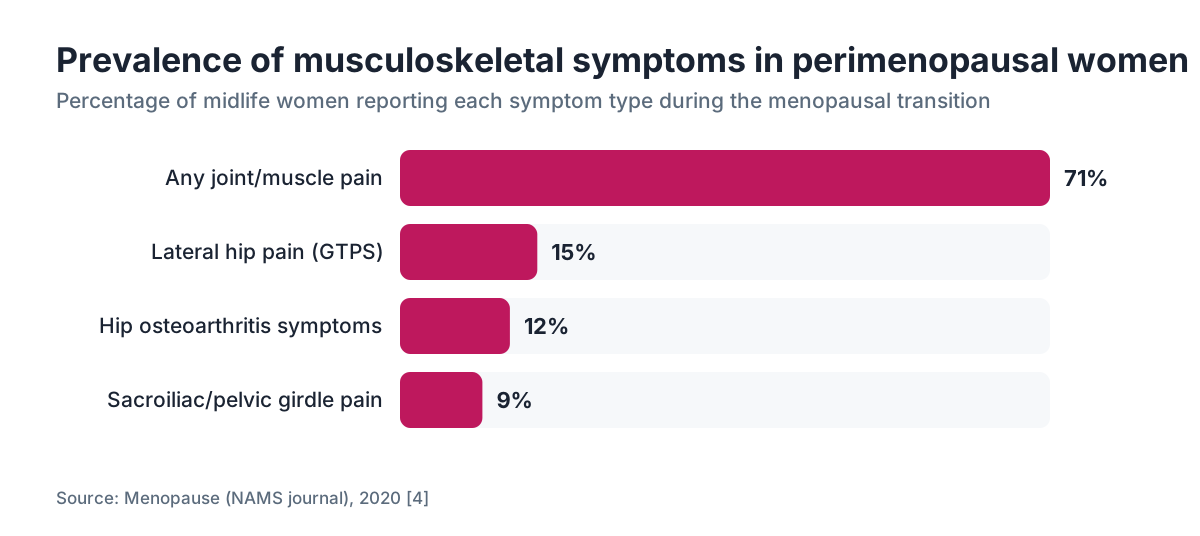
The Arthritis Foundation estimates osteoarthritis affects more than 32 million US adults, and women make up a lopsided share of hip and knee cases [2]. Incidence jumps between ages 45 and 55, the same decade as perimenopause. A 2020 study in Menopause, the journal of the North American Menopause Society (NAMS), reported that musculoskeletal symptoms including joint pain rank among the most common and most bothersome complaints across the menopausal transition, affecting more than 70 percent of midlife women [4].
Greater trochanteric pain syndrome affects an estimated 15 percent of women at some point, with peak incidence in the 40s and 50s [3].
The real numbers are probably higher. Many women chalk hip pain up to "getting older" or a bad mattress and never mention it. Perimenopausal primary care visits tend to orbit hot flashes and irregular periods, so joint pain gets triaged down or shipped off as a separate orthopedic issue when it is, often, a hormone problem.
Does the data actually link falling estrogen to hip joint damage?
Yes, though it's more layered than a clean cause-and-effect.
Chondrocytes express estrogen receptor-alpha. When estrogen binds those receptors, it turns up proteoglycan synthesis and slows matrix metalloproteinase activity, so cartilage repairs faster and degrades slower [1]. Pull the estrogen and the balance tips toward breakdown.
The Women's Health Initiative (WHI) gave us some of the most direct human evidence. In its observational arm, women using hormone therapy reported significantly lower rates of joint pain and stiffness than non-users [5]. The WHI hormone program, run through the National Institutes of Health, is the largest hormone research effort ever mounted in women, with more than 160,000 participants across its trials and observational study.
Bone data adds weight to the concern. Trabecular bone in the femoral neck (the part of the hip most likely to fracture) can drop 3 to 5 percent per year in the first years after the final period, and that loss begins during perimenopause [6]. A bone density test (DEXA scan) is often the first hard evidence that hormonal bone loss is already running, even before periods stop.
Nobody claims estrogen is the whole story. Body weight, past athletic loading, genetics, and an inflammatory diet all feed in. But the timing of the perimenopausal transition tracks too closely with the spike in hip complaints to write hormones off as a coincidence.
Which treatments actually help hip pain in perimenopause?
A few approaches have good evidence. A few popular ones mostly drain your wallet. Here's how I'd rank them.
Hormone therapy. This is the most logical fix for hormonally driven hip pain. NAMS updated its position statement in 2022, affirming that hormone therapy is appropriate for bothersome menopausal symptoms in healthy women under 60 or within ten years of menopause, with a favorable benefit-risk ratio in that window [7]. An estrogen patch delivers steady transdermal estradiol and skips the liver first-pass effect, which makes it a sensible start for women whose main problem is musculoskeletal pain plus hot flashes. If you still have a uterus, you need a progestogen added. Progesterone (micronized, body-identical) is the preferred form in most current guidelines thanks to a better cardiovascular and breast profile than synthetic progestins [7]. WomenRx prescribes both through its hormone replacement therapy program after a full symptom and risk review.
Physical therapy for the glutes and external hip rotators. This carries the strongest evidence for greater trochanteric pain syndrome and gluteal tendinopathy. A 2018 randomized trial in JAMA found that education plus a targeted exercise program beat corticosteroid injection at both 8 and 52 weeks [8]. Train the gluteus medius and minimus. Strong glutes offload the tendon and bursa. Sleep position helps too: a pillow between the knees keeps the top hip from dropping inward and cuts lateral hip pain measurably.
Anti-inflammatory strategies. NSAIDs (ibuprofen, naproxen) handle acute flares, but long-term use brings GI and cardiovascular risk that isn't trivial for midlife women. Topical diclofenac is a fair middle ground for localized joint pain, with far lower systemic absorption.
Weight management. Every extra kilogram of body weight adds roughly three to six kilograms of force across the hip during walking, per biomechanical models cited by the Arthritis Foundation [2]. A 10 percent weight reduction measurably lowers hip pain scores in women with osteoarthritis. GLP-1 receptor agonists have made that achievable. The SURMOUNT-1 trial showed tirzepatide produced 20.9 percent average weight loss in adults with obesity [9]. If you have both perimenopausal hip pain and excess weight, it's worth weighing whether semaglutide for weight loss or tirzepatide fits.
Corticosteroid injections. Good for short-term relief (4 to 8 weeks) in bursitis and moderate osteoarthritis. But repeat injections into the hip joint can speed cartilage loss and shouldn't happen more than three times a year.
Supplements. Glucosamine and chondroitin are the most studied over-the-counter options. The GAIT trial (National Institutes of Health, 2006) found no benefit over placebo for the overall knee osteoarthritis group, though a moderate-to-severe subset showed a faint signal [10]. Hip data is thinner still. I wouldn't put them ahead of physical therapy or hormone therapy.
Does hormone therapy actually reduce hip pain, or just mask it?
It works on the underlying biology, not the sensation alone. That's the difference that matters.
Estrogen therapy restores receptor-driven cartilage maintenance, lowers systemic inflammatory cytokines, protects bone mineral density at the femoral neck, and steadies sleep. Better sleep by itself lifts the pain threshold. The WHI observational data showed hormone users had roughly 30 percent lower rates of joint pain than non-users, and the effect held after accounting for other health behaviors [5].
For women with established osteoarthritis, hormone therapy slows progression but won't reverse damage that's already there. Starting earlier in perimenopause, before major cartilage loss, gives it the best shot at a structural effect.
Current NAMS and Endocrine Society guidance both back hormone therapy for quality-of-life benefits in women under 60 who are within ten years of menopause onset and free of contraindications [7]. Those contraindications include unexplained vaginal bleeding, active liver disease, a history of estrogen-sensitive breast or uterine cancer, and personal history of venous thromboembolism.
If you want the full context on hormone replacement therapy before deciding, the NAMS 2022 position statement is the most balanced summary out there.
What is greater trochanteric pain syndrome and why do perimenopausal women get it so often?
Greater trochanteric pain syndrome (GTPS) is the current umbrella term for lateral hip pain that starts at or around the greater trochanter, the bony bump on your outer hip. It covers gluteal tendinopathy (degeneration of the gluteus medius or minimus tendons where they attach to the trochanter) and trochanteric bursitis (inflammation of the fluid sac between tendon and bone).
Women get it more than men partly because the wider female pelvis creates a larger Q angle, the angle between hip and knee during walking. That geometry loads the gluteal tendons harder with every step. Layer in estrogen-driven changes to tendon stiffness and a more inflammatory environment, and you have a setup built for tendon breakdown.
The hallmark test is the FABER test (hip flexion, abduction, external rotation), which reproduces the pain in GTPS. Ultrasound or MRI confirms it when imaging is warranted.
Treatment works. The 2018 JAMA trial noted earlier showed a structured gluteal loading program, done properly, beat steroid injection at one year [8]. Load management matters just as much. Skip sitting cross-legged, stop standing with your weight parked on one hip (the "hanging hip" slouch), and avoid running on cambered roads that tilt one hip inward. These changes cost nothing and pay off fast.
Can perimenopause cause hip pain at night specifically?
Yes, and night pain is one of the most disruptive versions of it.
Lying on the sore side compresses the greater trochanteric bursa and gluteal tendons, which is why lateral hip pain peaks at night. Add night sweats and hot flashes pulling you into lighter sleep stages, and your pain threshold drops, so an ache you'd shrug off by day becomes the thing keeping you awake.
Sleeping with a firm pillow between the knees to stop the top hip from adducting (dropping inward) shows up in physiotherapy guidance again and again. It holds the iliotibial band and gluteal tendons in a neutral line and takes compression off the bursa.
Hip osteoarthritis behaves differently. Early on it eases with rest and worsens with activity. If your hip pain is worse after lying still for hours (beyond morning stiffness that clears within 30 minutes), that pattern leans toward inflammatory arthritis, specifically rheumatoid or psoriatic, and deserves a rheumatology look.
Femoral neck stress fractures cause night pain that is constant and not position-dependent. Rare but serious, especially in perimenopausal women with low bone density, heavy training loads, or relative energy deficiency. MRI is the diagnostic test of choice when a femoral neck stress fracture is suspected.
How does perimenopause affect bone density in the hip?
The perimenopause to early-postmenopause window is the fastest bone loss of a woman's life. Full stop.
The Bone Health and Osteoporosis Foundation (formerly the National Osteoporosis Foundation) reports women can lose up to 20 percent of bone density in the five to seven years after menopause [6]. The femoral neck and hip carry the biggest consequences, because femoral neck fractures come with a one-year mortality rate around 20 percent in older women.
The USPSTF recommends DEXA screening at age 65 for average-risk women, but NAMS and the Endocrine Society both suggest screening earlier for specific risks: family history of hip fracture, low body weight, early menopause (before 45), long-term glucocorticoid use, or a prior fragility fracture [7]. If you're perimenopausal with two or more of those, a bone density test now gives you a baseline before the steeper postmenopausal drop.
Understanding perimenopause age and when menopause starts matters here, because earlier menopause means a longer stretch of estrogen deficiency and more cumulative bone loss.
On scores: a T-score between -1.0 and -2.5 is osteopenia, and below -2.5 is osteoporosis. Plenty of perimenopausal women land in the osteopenia range feeling perfectly fine, then break a hip in their 60s. Catching it at osteopenia is exactly when lifestyle, hormone therapy, and sometimes medication can still change the road ahead.
What should you tell your doctor about hip pain during perimenopause?
Be specific, and draw the line to hormones yourself, because plenty of clinicians won't do it for you.
Tell your doctor where exactly it hurts (outer hip, groin, buttock, both hips), when it's worst (morning stiffness, night pain, after activity), how long it's been going on, whether it tracks your cycle or got worse once periods turned irregular, and whether it steals sleep. That detail narrows the differential fast.
Also mention current supplements and medications, your cycle pattern over the last six to twelve months, any family history of hip fracture or early osteoporosis, and whether you have other perimenopausal symptoms like hot flashes, mood swings, or vaginal dryness. Clinicians who see the whole hormonal picture are likelier to put hormone therapy on the table instead of routing you straight to orthopedics.
Ask directly: "Could this be related to perimenopause and falling estrogen?" "Should I have a bone density scan?" "Is hormone therapy worth considering for my joint pain?" These are fair clinical questions, and any competent clinician should engage with them.
If your primary care doctor waves it off with ibuprofen and "wait and see," a second opinion from a menopause specialist, a gynecologist with hormone training, or a telehealth service like WomenRx built around women's hormones is a reasonable next move. Care for perimenopausal musculoskeletal pain has changed a lot in the last decade, and not every practitioner has kept up.
Are there lifestyle changes that reduce hip pain in perimenopause?
Several, and a handful are genuinely evidence-based rather than just plausible.
Strength training twice a week cuts hip pain two ways: it rebuilds the muscle that protects joints, and it independently improves bone density. The American College of Sports Medicine recommends resistance training with a focus on hip abductor and external rotator work for women in the menopausal transition [4].
Weight management pays off proportionally. As noted above, even a modest 10 percent loss lowers mechanical load and inflammatory signaling in the hip. Pair weight loss with exercise and the benefits stack beyond either alone.
Omega-3 fatty acids (EPA and DHA from fish oil) lower systemic inflammation measurably, with 2 to 3 grams a day showing effects on joint stiffness in randomized trials. It won't replace hormone therapy or physical therapy, but it's a low-risk add-on.
Sleep changes pain perception in a real way. A 2019 review in Sleep Medicine Reviews found that experimental sleep restriction raised pain sensitivity in healthy people, and that perimenopausal women were disproportionately vulnerable to the effect [11]. Fixing sleep disruption (which may itself take hormone therapy to quiet the night sweats) isn't a soft suggestion. It's mechanically tied to how bad your hip feels.
And stop parking yourself in cross-legged or hip-drop postures for hours. That removes repetitive compressive load from the gluteal tendons, and it's a change you can make today.
How do GLP-1 medications fit into managing perimenopausal hip pain?
Indirectly but meaningfully, for women whose weight is part of the problem.
GLP-1 receptor agonists like semaglutide and tirzepatide produce large, lasting weight loss. The SURMOUNT-1 trial in the New England Journal of Medicine showed 20.9 percent average weight loss with tirzepatide 15 mg over 72 weeks in adults with obesity [9]. Semaglutide 2.4 mg (Wegovy) produced 14.9 percent average loss in the STEP 1 trial [12]. Less body weight means less mechanical load on every hip structure.
There's early evidence that GLP-1 receptors exist in synovial tissue and cartilage, hinting at a possible direct anti-inflammatory effect. That research is preliminary and not yet something to prescribe around.
If you're deciding between the two, the semaglutide vs tirzepatide comparison is worth a careful read. The weight-loss gap is real and wider than most people expect once you line the trials up side by side.
GLP-1 medications don't replace hormone therapy for the estrogen-driven parts of hip pain, and they don't touch tendon or cartilage biology directly. They earn their place when excess weight is compounding a problem that also has hormonal and structural roots. Run them alongside physiotherapy and hormone therapy (when indicated) and you're addressing more of the underlying biology than any single lever can.
Frequently asked questions
Can perimenopause cause hip and pelvic pain at the same time?
Yes. Falling estrogen hits multiple pelvic structures at once: the hip joint, the sacroiliac ligaments, the pelvic floor muscles, and the pubic symphysis. Women often describe a mix of outer hip aching, low back tightness, and deep pelvic pressure during perimenopause. If the pain is clearly cyclical or worse around irregular periods, a hormonal evaluation is a logical first step before imaging.
At what age does perimenopausal hip pain typically start?
Most women enter perimenopause between ages 44 and 50, though it can begin in the late 30s. Musculoskeletal complaints including hip pain often start within the first two years of cycle irregularity. A 2020 NAMS-affiliated study found joint pain was among the most common symptoms across the perimenopausal transition, peaking in the late 40s.
Does hip pain from perimenopause go away on its own?
Some of it may settle once the transition finishes and the body adapts to lower estrogen. But structural changes like cartilage thinning or tendon degeneration don't reverse on their own. Greater trochanteric pain syndrome can improve a lot with physical therapy even without hormone treatment. Hip osteoarthritis usually progresses without intervention. Getting evaluated early gives you more options.
Is hip bursitis more common during menopause?
Yes. Greater trochanteric bursitis (now called greater trochanteric pain syndrome) peaks in women in their 40s and 50s. Estrogen loss raises local inflammatory mediators, and the wider female pelvis puts more compressive load on the bursal tissue. Roughly 15 percent of women are affected at some point, per published prevalence estimates, with a strong cluster around the menopausal transition.
Can hormone replacement therapy help with hip pain?
Yes. Women's Health Initiative observational data showed hormone users had roughly 30 percent lower rates of joint pain than non-users. NAMS 2022 guidelines support hormone therapy for musculoskeletal symptoms in women under 60 or within ten years of menopause who have no contraindications. Estrogen works on the underlying biology of cartilage maintenance and inflammation, more than the pain signal.
What is the best exercise for hip pain during perimenopause?
A physiotherapist-directed gluteal loading program has the strongest evidence for lateral hip pain. It includes clamshells, side-lying hip abduction, and single-leg stance work. A 2018 randomized trial in JAMA found this beat corticosteroid injection at one year. Avoid high-impact loading and cross-legged postures during the acute phase. Resistance training twice weekly also supports bone density.
Should I get an X-ray or MRI for perimenopausal hip pain?
An X-ray is a reasonable first step for deep groin pain or suspected joint involvement; it shows bone structure and joint space narrowing. MRI is better for soft tissue including tendons, labrum, and bursae, and it's the test of choice for a suspected femoral neck stress fracture. Ultrasound is increasingly used for gluteal tendinopathy because it's cheap and dynamic. Imaging isn't always needed for straightforward lateral hip pain that fits a classic pattern.
Can low progesterone cause hip pain?
Indirectly, yes. Progesterone and relaxin swings affect ligament laxity. When progesterone runs erratic or chronically low, as it often does in early perimenopause, hip and pelvic ligaments lose support, which raises joint micro-movement and friction. This is separate from estrogen's direct effect on cartilage but adds to the overall picture. Body-identical micronized progesterone is the form NAMS and most current guidelines recommend when a progestogen is needed.
Does losing weight help perimenopausal hip pain?
Yes, meaningfully. Each additional kilogram of body weight adds three to six kilograms of force across the hip during normal walking. A 10 percent weight reduction measurably lowers hip pain scores in women with osteoarthritis. GLP-1 medications like semaglutide and tirzepatide now put that degree of weight loss within reach for many women who couldn't get there through diet alone.
What is the difference between hip pain from arthritis and hip pain from perimenopause?
They overlap. Perimenopause speeds the cartilage changes that turn into osteoarthritis. Arthritis pain is usually deep groin pain, worse with activity and better with rest early on; perimenopausal hormonal pain tends to be more diffuse, bilateral, and sometimes tied to cycle timing. Lateral (outer) hip pain points more to tendon or bursa trouble driven by estrogen loss. X-ray and a clinical exam can usually tell them apart, though both can run at once.
Can a magnesium deficiency cause hip pain in perimenopause?
Magnesium deficiency can cause widespread muscle aching, cramping, and poor sleep, all of which crank up perceived pain. Perimenopausal women run a higher risk of deficiency because estrogen helps with intestinal magnesium absorption. Serum magnesium is a poor marker (RBC magnesium is more accurate). A trial of magnesium glycinate 200 to 400 mg at night is low-risk and may help sleep and muscle pain, but it does nothing for structural hip pathology.
How long does perimenopausal hip pain last?
It depends on the cause. Hormonally driven joint aching often improves within three to six months of starting hormone therapy. Greater trochanteric pain syndrome with targeted physiotherapy usually resolves or substantially improves in eight to twelve weeks. Osteoarthritis is progressive and managed rather than cured. If hip pain has run past six weeks without improving, get a clinical evaluation instead of continuing to self-manage.
Can perimenopause cause hip pain during sleep?
Yes, and it's one of the most common complaints. Lateral hip pain from gluteal tendinopathy or bursitis gets worse lying on the affected side. The fix is a pillow between the knees to stop hip adduction, plus avoiding sleeping on the painful side. Night sweats push women into lighter sleep stages, lowering pain thresholds and making existing hip pain feel worse. Treating hot flashes often improves both sleep and pain scores together.
Is it safe to take ibuprofen long-term for perimenopause joint pain?
No. Long-term NSAID use carries real risks: GI bleeding, higher blood pressure, and kidney strain, all of which climb with age. Topical diclofenac gel is a safer choice for localized hip pain because systemic absorption is roughly 6 percent of oral dosing. For persistent pain, treating the hormonal root cause with estrogen therapy or a structured physiotherapy program beats daily anti-inflammatories as a long-term strategy.
Sources
- Arthritis & Rheumatism, Sniekers et al., 2010 - estrogen and chondrocyte function
- Arthritis Foundation - osteoarthritis facts
- Journal of Orthopaedic & Sports Physical Therapy - GTPS prevalence and management
- Menopause (NAMS journal) - musculoskeletal symptoms in midlife women, 2020
- NIH National Heart, Lung, and Blood Institute - Women's Health Initiative
- Bone Health and Osteoporosis Foundation - bone loss rates after menopause
- North American Menopause Society - 2022 Hormone Therapy Position Statement
- JAMA - Mellor et al. 2018 RCT, gluteal tendinopathy treatment
- New England Journal of Medicine - SURMOUNT-1 trial, tirzepatide, Jastreboff et al. 2022
- NEJM - GAIT trial, glucosamine and chondroitin for knee OA, Clegg et al. 2006
- Sleep Medicine Reviews - sleep restriction and pain sensitivity, 2019
- NEJM - STEP 1 trial, semaglutide 2.4 mg, Wilding et al. 2021