Hip pain and menopause: why estrogen loss hurts your hips
TL;DR: Falling estrogen during perimenopause and menopause directly weakens cartilage, reduces synovial fluid, and speeds up bone loss in the hip joint. Up to 60% of menopausal women report musculoskeletal pain. Causes range from osteoarthritis and bursitis to stress fractures and referred spine pain. Treatment options include hormone therapy, weight management, physical therapy, and targeted injections.
What is the connection between menopause and hip pain?
Estrogen is more than a reproductive hormone. It has receptors in cartilage, synovial tissue, bone, tendons, and the connective tissue that holds the hip joint together. When estrogen drops, all of those tissues change at once.
Cartilage in the hip becomes thinner and stiffer. Synovial fluid production decreases, so the joint loses its cushioning. Bone resorption speeds up, which means the femoral head and acetabulum (the ball and socket of the hip) can lose density faster than the body rebuilds them. Tendons and ligaments lose elasticity. The result is a joint that is less padded, less lubricated, and less structurally supported than it was a decade before.
A 2021 analysis in Arthritis Research and Therapy found that women in the menopausal transition had significantly higher rates of new-onset hip and knee pain than premenopausal women of similar age, pointing at estrogen withdrawal as the driver rather than aging alone [1]. That distinction matters. It opens the door to hormonal treatment, more than pain management.
Perimenopause can start in the mid-30s for some women, and the hormonal swings of that transition, more than the final drop at menopause, can begin affecting joint health years before periods stop. For more on that timing, see our piece on perimenopause age.
How common is hip pain during menopause?
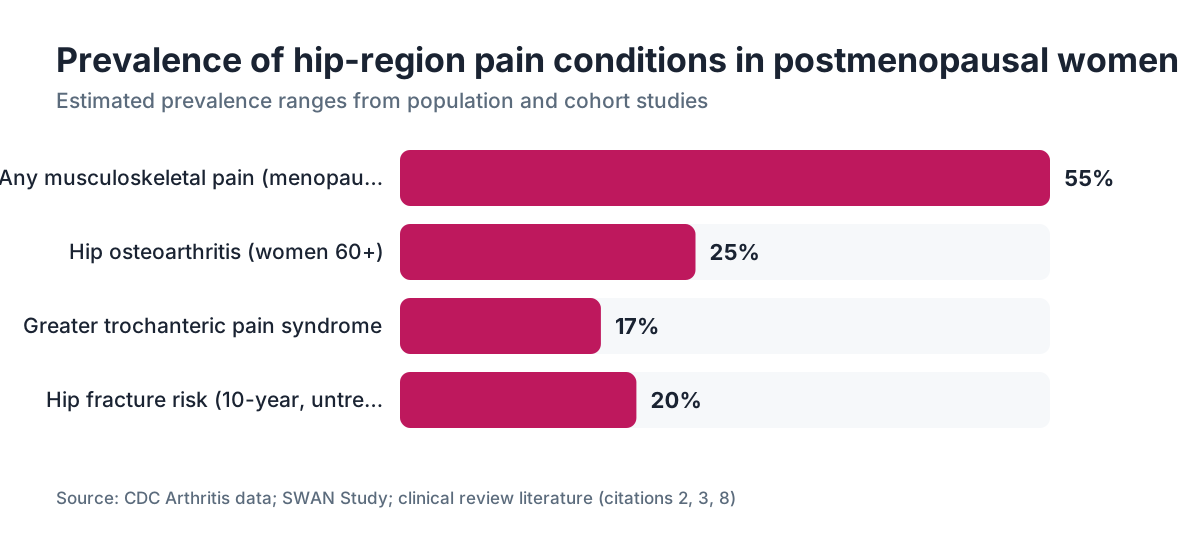
More common than most clinicians acknowledge. The Study of Women's Health Across the Nation (SWAN), a large longitudinal cohort funded by the NIH, found that roughly 50 to 60% of women reported bodily pain during the menopausal transition, with musculoskeletal complaints being the most frequently cited category [2]. Hip pain specifically gets mentioned less often than back or knee pain in population studies, but that partly reflects how women describe symptoms: many say "hip pain" when they mean the lateral thigh (greater trochanteric bursitis), the groin (true hip joint), or the SI joint (referred from the lumbar spine).
So the real number depends on definition. Count all pain in the hip region broadly, and prevalence in perimenopausal and postmenopausal women runs somewhere between 40 and 60%. True hip osteoarthritis (cartilage loss confirmed on imaging) affects around 25% of women over 60 [3]. Greater trochanteric pain syndrome, which feels like lateral hip pain, may affect 10 to 25% of the general population and is far more common in women than men.
Here is the practical takeaway. If your hips started hurting in your 40s or 50s and nobody has explained why, estrogen loss is a legitimate suspect worth raising with your provider.
What specific conditions cause hip pain in menopausal women?
Hip pain in midlife is not one diagnosis. It is a cluster of conditions that all get worse when estrogen drops. Knowing which one you have changes the treatment entirely.
Hip osteoarthritis (OA) is cartilage breakdown in the ball-and-socket joint itself. Pain sits in the groin, sometimes radiating to the inner thigh or buttock. It is worse with activity, stiffness peaks in the morning, and range of motion narrows over time. Women develop OA faster and more severely after menopause than men of the same age [3].
Greater trochanteric pain syndrome (GTPS), often called hip bursitis, causes pain on the outer hip, directly over the bony prominence you feel on the side of your thigh. It hurts when you lie on that side, climb stairs, or cross your legs. Estrogen loss weakens the gluteal tendons that attach there, leaving them open to micro-tears.
Stress fractures of the femoral neck are less common but serious. The femoral neck is the narrow column of bone connecting the femoral head to the shaft. As bone density drops after menopause, this area can develop microfractures from ordinary walking or standing. Pain is in the groin, worse with weight-bearing, and it warrants urgent imaging.
Referred pain from the lumbar spine is common in menopausal women and often blamed on the hip joint by mistake. The L3 and L4 nerve roots refer pain to the front of the thigh and the groin in a pattern that mimics hip OA. If your "hip pain" is also in your lower back, if it radiates down the leg, or if hip range of motion is normal on exam, your spine is the more likely source.
Sacroiliac (SI) joint dysfunction causes pain in the back of the pelvis and buttock, sometimes wrapping around to the front. Estrogen affects ligament laxity, and perimenopausal swings can destabilize the SI joint even in women who never had pregnancy-related SI problems.
| Condition | Location of pain | Worse with | Key diagnostic clue | |---|---|---|---| | Hip OA | Groin, inner thigh | Activity, morning stiffness | Limited internal rotation on exam | | GTPS (bursitis) | Outer hip/thigh | Lying on side, stairs | Tenderness over greater trochanter | | Femoral neck stress fracture | Groin | Walking, standing | Pain with single-leg stand test | | Lumbar referred pain | Anterior thigh, groin | Sitting, bending | Normal hip ROM, spine positive | | SI joint dysfunction | Posterior pelvis, buttock | Standing on one leg | FABER test positive |
Does estrogen loss actually damage the hip joint, or just lower pain tolerance?
Both, and separating the two has been genuinely hard for researchers. The structural evidence is real.
Estrogen receptors (ERα and ERβ) sit in human chondrocytes, the cells that maintain cartilage. In lab studies, estrogen promotes cartilage matrix synthesis and blocks the inflammatory cytokines (IL-1β, TNF-α) that degrade it [10]. Remove estrogen and cartilage breakdown speeds up. This is not theoretical. MRI studies have documented measurable cartilage volume loss at the hip and knee within 12 to 24 months of menopause onset.
Estrogen also regulates osteoclast activity. The Bone Health and Osteoporosis Foundation notes that women can lose up to 20% of their bone density in the five to seven years following menopause, with the sharpest loss in the first two years [5]. The femoral neck, the hip structure most likely to fracture, is one of the primary measurement sites for DEXA scanning. A bone density test is worth discussing with your doctor once you are postmenopausal, especially if you have hip pain.
On the pain-tolerance side, estrogen tunes central pain processing. Lower estrogen is linked to reduced pain thresholds and higher pain sensitivity. So the joint is genuinely getting worse structurally, and the nervous system is amplifying the signal. That double effect explains why hip pain can feel out of proportion to what shows up on an X-ray.
Can hormone replacement therapy help with menopause hip pain?
Yes, and the evidence is more compelling than it used to be. The position statement from the North American Menopause Society (NAMS) acknowledges that systemic hormone therapy reduces musculoskeletal pain in menopausal women and may slow cartilage loss [6]. This is no longer treated as a minor side benefit. It is increasingly seen as a reason to prescribe.
The Women's Health Initiative (WHI), despite its fraught history, found that women on combined estrogen-progestogen therapy had lower rates of hip fracture and joint replacement than placebo [12]. A 2022 meta-analysis in Menopause found that current HRT users had significantly lower odds of hip OA and hip replacement than non-users, with an odds ratio around 0.71 (roughly a 29% lower risk) [4].
For hip pain, the mechanism is clean: HRT maintains synovial fluid, slows cartilage degradation, preserves bone density at the femoral neck, and improves tendon and ligament quality. Women who start HRT within a few years of menopause tend to see more benefit than those who start a decade later, which fits the "timing hypothesis" NAMS describes in its guidelines.
HRT is not right for everyone. If you have a personal history of estrogen-receptor-positive breast cancer, active DVT, or unexplained vaginal bleeding, the conversation is more complicated [11]. For otherwise healthy women in early menopause with hip pain and no major contraindications, HRT deserves a serious conversation with your provider, not a reflexive no.
Our piece on hormone replacement therapy covers the risk-benefit picture in detail. If you are considering a transdermal approach, the estrogen patch article is worth reading, since transdermal delivery skips the liver-first-pass effect that raises clotting risk with oral estrogen.
Does excess weight make menopause hip pain worse, and can GLP-1 drugs help?
Weight and hip pain have a direct mechanical link. Every pound of body weight translates to roughly four to six pounds of force across the hip joint during walking. For someone carrying an extra 30 pounds after menopause, that is 120 to 180 additional pounds of force on the hip with every step.
Menopause itself pushes fat toward the middle. As estrogen falls, fat shifts from the hips and thighs toward the abdomen, and total fat mass tends to rise even without changes in diet or exercise. That weight gain is not a personal failure. It is a hormonal event.
GLP-1 receptor agonists like semaglutide and tirzepatide produce meaningful weight loss (15 to 22% of body weight in clinical trials) and have shown reductions in joint pain as a secondary outcome. The STEP 5 trial of semaglutide found significant improvements in patient-reported physical functioning scores, and a post-hoc analysis of SURMOUNT-1 (tirzepatide) found reduced knee pain in participants with OA [7]. Hip-specific data is thinner, but the mechanics are hard to argue with: less weight on the joint means less pain and slower cartilage breakdown.
GLP-1s also appear to have direct anti-inflammatory effects independent of weight loss, which may help inflamed hip tissue. If weight is a factor in your hip pain, asking a provider about GLP-1 therapy is reasonable. WomenRx works specifically with women facing the hormonal drivers of weight gain, including menopause-related fat redistribution. You can learn more about semaglutide for weight loss or how semaglutide compares to tirzepatide.
What non-hormonal treatments actually work for hip pain in menopause?
Several do, and some are badly underused.
Physical therapy targeting hip abductors and external rotators is the highest-evidence non-drug treatment for both hip OA and GTPS. The gluteus medius and minimus, which attach at the greater trochanter, weaken noticeably after menopause. Strengthening them offloads the joint and reduces pressure on the bursa. A 2020 RCT in JAMA Internal Medicine found a targeted exercise program cut GTPS pain scores by 70% at 8 weeks, compared with 32% in the wait-and-see group [8].
Weight loss, even modest amounts (5 to 10% of body weight), reduces hip joint load and slows OA progression. See the GLP-1 section above.
NSAIDs (ibuprofen, naproxen) give short-term relief for hip OA and bursitis but do nothing for the underlying cause and carry GI, kidney, and cardiovascular risks with long-term use. Use them for acute flares, not daily management.
Corticosteroid injections into the hip joint or trochanteric bursa can buy 4 to 12 weeks of real relief. They are not disease-modifying, and repeated injections may worsen cartilage over time, so they work best as a bridge that lets you engage in physical therapy.
Duloxetine (Cymbalta) is FDA-approved for chronic musculoskeletal pain and has trial data for OA specifically. It is worth considering for women who have both pain and mood symptoms, since both tend to worsen at menopause.
Topical diclofenac gel delivers an NSAID effect straight to the joint with far lower systemic exposure than oral pills. It is underused and genuinely effective for superficial joints.
Sleep position and load management matter more than people expect. A pillow between your knees reduces lateral hip stress at night. Backing off high-impact activity during flares (running on concrete, step aerobics) lets the bursa calm down without giving up movement entirely.
When should hip pain during menopause prompt urgent medical attention?
Most menopause-related hip pain is chronic and non-urgent. But some warning signs need same-day or next-day evaluation.
Go urgently if you have pain after a fall or impact, especially if you cannot bear weight. Postmenopausal women with reduced bone density can fracture the femoral neck without high-energy trauma. A hip fracture misdiagnosed as a muscle strain is a catastrophic outcome.
See someone promptly if you have pain at rest and at night that is constant and getting worse, pain with fever and systemic symptoms (which suggests septic arthritis, a medical emergency), or sudden severe groin pain with no trauma history (which can be a stress fracture).
Also worth prompt evaluation: groin pain with a new limp, hip range of motion that is shrinking over weeks rather than months, and pain that is clearly worse lying down than walking (which is not typical of OA and suggests other causes, including referred spinal or vascular problems).
For ordinary hip aching that started around perimenopause, gets worse with prolonged walking, and eases with rest, urgent care is not needed. A conversation with a gynecologist, rheumatologist, or orthopedic specialist within a few weeks is reasonable.
How is hip pain in menopause diagnosed?
Diagnosis starts with a careful history and physical exam, not imaging. A good clinician asks where exactly the pain sits (groin versus outer hip versus buttock versus posterior pelvis), what makes it worse, and how the onset lined up with your menstrual cycle changes. That history alone narrows the differential a lot.
Physical exam maneuvers that separate hip joint pain from referred or soft-tissue pain include the FABER test (hip flexion, abduction, external rotation), the FADIR test (hip flexion, adduction, internal rotation, which stresses the front joint capsule and labrum), the Trendelenburg test (assesses gluteus medius strength), and single-leg stance provocation (positive in femoral neck stress fracture).
Imaging starts with a plain X-ray of the pelvis and the affected hip. It shows OA changes (joint space narrowing, osteophytes, subchondral sclerosis) and catches obvious fractures. It does not show early cartilage loss, bursitis, labral tears, or stress fractures well.
MRI is the standard for soft tissue and early bone problems. A dedicated hip MRI with and without contrast can identify labral tears, early stress fractures (visible on MRI before they show on X-ray), tendon tears at the greater trochanter, and avascular necrosis.
A DEXA scan (bone density) is separate from pain imaging but matters a great deal in postmenopausal women with hip pain, since it sets fracture risk and guides treatment. Current USPSTF guidelines recommend DEXA for all women 65 and older and for younger postmenopausal women with risk factors [9].
Blood work rarely diagnoses hip pain itself but can rule out inflammatory arthritis (ESR, CRP, RF, anti-CCP), check vitamin D status (deficiency contributes to bone pain and muscle weakness), and assess calcium metabolism.
What lifestyle changes reduce hip pain during perimenopause and menopause?
Exercise is the single most evidence-based lifestyle move for menopause-related joint pain, but the type matters. High-impact activity on inflamed joints makes things worse. The goal is to strengthen the muscles that protect the hip while keeping load manageable.
What the research supports: strength training for the gluteals, hip abductors, and quadriceps two to three times a week; low-impact aerobic activity like swimming, cycling, or walking on soft surfaces; yoga and Pilates for flexibility and proprioception; and aquatic exercise, where the water's buoyancy offloads the joint while resistance builds the muscle.
What tends to worsen hip OA and bursitis: running on pavement without progressive conditioning, high-impact step classes, a sudden jump in activity volume, and prolonged sitting with legs crossed (which compresses the lateral hip structures).
Sleep quality matters more than most women realize. Poor sleep amplifies pain directly. Menopause-related sleep disruption from night sweats and insomnia lowers pain thresholds. Treating the sleep problem, whether with HRT, progesterone (which has sedating properties), or behavioral changes, often reduces reported pain even before the hip itself is treated. The progesterone article covers its role in sleep in more detail.
Anti-inflammatory eating has modest supporting evidence. The Mediterranean diet, higher in omega-3 fatty acids, polyphenols, and fiber, is linked to lower markers of systemic inflammation and slower OA progression in observational data. Nobody has run a rigorous RCT on diet and hip OA progression, but the Mediterranean pattern has no downside and clear cardiovascular benefits in midlife women.
Vitamin D sufficiency is non-negotiable. Deficiency contributes to muscle weakness (raising fall risk), bone pain, and impaired calcium absorption. Most endocrinologists target serum 25-OH vitamin D above 30 ng/mL, and many postmenopausal women are deficient without knowing it.
What does the long-term outlook look like for hip pain that starts at menopause?
Honest answer: variable, and a lot depends on what you do in the first few years.
For hip OA, the path without treatment is slow, steady worsening over years to decades. But "progressive" does not mean inevitable total joint replacement. Many women stabilize with weight management, physical therapy, and HRT if it starts early enough. A 2023 study in Osteoarthritis and Cartilage found that women who began HRT within 5 years of menopause had 32% lower odds of needing total hip replacement over 15-year follow-up compared with non-users [4].
For greater trochanteric pain syndrome, the outlook is actually good with targeted treatment. Physical therapy, load management, and sometimes a single corticosteroid injection resolve most cases within 3 to 6 months. It comes back if the root cause (weak glutes, continued high-impact loading) goes unaddressed.
Femoral neck stress fractures, caught early, heal with rest and weight-bearing restrictions over 6 to 12 weeks. Complete fractures need surgery, which is why early diagnosis matters so much.
The bigger story is that perimenopause and early menopause are a narrow window. The bone loss, cartilage thinning, and tendon weakening that begin then set the trajectory for the next 30 years. Interventions started in the late 40s and early 50s do far more than the same interventions started at 65. For more on the hormonal timeline, the menopause and when does menopause start articles lay out what is happening at each stage.
WomenRx's clinical model is built around exactly this window: treating the hormonal root causes of midlife symptoms, including musculoskeletal ones, before they harden into structural problems.
Frequently asked questions
Can menopause cause hip pain even if I'm not overweight?
Yes. Weight amplifies hip pain but does not cause it. Estrogen loss directly affects cartilage, synovial fluid, bone density, and tendon quality regardless of body weight. Lean postmenopausal women still get bursitis, early OA, and increased fracture risk from estrogen withdrawal. Weight is one modifiable factor among several, not a prerequisite for the underlying problem.
What does menopause hip pain feel like compared to regular hip pain?
Menopause-related hip pain tends to come on gradually in the mid-to-late 40s, often on both sides, and shows up in the outer hip (bursitis), groin (OA), or posterior pelvis (SI joint). It is often worse after inactivity, disrupts sleep when you lie on the affected side, and frequently tracks with period irregularity. Pain from trauma or infection behaves differently: it comes on suddenly, with clear provocation, or with fever.
How long does hip pain from menopause last?
Without treatment, menopause-related hip pain tends to persist and worsen over years. Greater trochanteric pain syndrome usually improves in 3 to 6 months with targeted physical therapy. Hip OA is chronic but can plateau with weight management and HRT. The deciding variable is whether you address the underlying hormonal and mechanical causes early. Pain that goes ignored for years is harder to reverse.
Can I take estrogen just for hip pain, or do I need another reason?
Musculoskeletal pain is a recognized indication for hormone therapy under NAMS guidance. You do not need hot flashes or other classic symptoms to consider HRT for hip and joint pain. The decision still weighs your individual risk for breast cancer, clotting, and cardiovascular disease, but hip pain alone is a legitimate reason to have the conversation with your provider.
Is hip pain a sign of osteoporosis?
Hip pain itself is not a reliable sign of osteoporosis. Osteoporosis is usually silent until a fracture happens. But postmenopausal women with hip pain should have bone density assessed with a DEXA scan, because low bone density raises the risk that a minor fall or stress injury becomes a fracture. The USPSTF recommends DEXA for all women 65 and older and for postmenopausal women under 65 with risk factors.
Does low progesterone also cause hip pain?
Progesterone has some bone-protective effects and may influence pain modulation, but its role in hip pain is less direct than estrogen's. Progesterone does affect sleep quality, and poor sleep raises pain sensitivity. Women with low progesterone in perimenopause who sleep badly often report more diffuse musculoskeletal pain. Progesterone supplementation may help indirectly by improving sleep and lowering systemic inflammation, though the evidence is thinner than for estrogen.
What exercises should I avoid if I have hip pain from menopause?
During active hip pain, avoid running on hard surfaces, deep squats that cause groin impingement, lying on the affected side without a pillow between your knees, and high-impact aerobics or step classes. Prolonged sitting with legs crossed compresses the lateral hip and worsens trochanteric bursitis. Swimming, cycling, and targeted strength work in a pain-free range are typically safe and helpful.
Can hip pain from menopause be mistaken for sciatica?
Yes, often. A lumbar disc herniation at L4-5 or L5-S1 can refer pain to the buttock and lateral hip in a pattern that looks like bursitis or hip OA. True sciatica also causes numbness, tingling, or weakness in the leg. A simple clinical test: if your hip's range of motion is normal and the pain changes with spine position rather than hip movement, your spine is likely the source. MRI of both the hip and lumbar spine may be needed.
Will losing weight fix my hip pain?
It helps a lot for most women but rarely resolves the problem entirely. A 10% reduction in body weight cuts hip joint load by 40 to 60 pounds per step and slows OA progression. But the underlying estrogen-related cartilage and bone changes continue regardless of weight. Combining weight loss with HRT and physical therapy produces better outcomes than any single intervention alone.
Are there any supplements proven to help with hip pain in menopause?
The evidence is weak for most supplements. Vitamin D is the clearest priority: deficiency is common in postmenopausal women and contributes to muscle weakness and bone pain. Magnesium supports bone and muscle function. Omega-3 fatty acids have modest anti-inflammatory effects. Glucosamine and chondroitin have mixed trial results for OA and are unlikely to cause harm. None replace estrogen or physical therapy as primary treatment.
Does hip pain get worse after menopause is complete (postmenopause)?
It can, especially in the first two to three years after menopause, when estrogen loss is sharpest and bone density drops fastest. Many women notice symptoms accelerate around the one- to two-year post-menopause mark. After that initial drop, the rate of change tends to slow, though cumulative damage continues. Starting HRT before this window closes is one argument for early rather than delayed treatment.
What kind of doctor should I see for menopause hip pain?
Start with your gynecologist or primary care physician to address the hormonal context and get baseline imaging and a DEXA scan. A rheumatologist fits if inflammatory arthritis is suspected. An orthopedic surgeon evaluates structural problems (OA, labral tears, fracture). A physical therapist is essential once the diagnosis is set. Many women do best seeing a menopause specialist who can coordinate the hormonal and musculoskeletal pieces together.
Can hip pain be an early sign of perimenopause?
Yes. Joint pain, including hip pain, is one of the less-discussed perimenopause symptoms and can appear before period changes become obvious. Estrogen begins fluctuating erratically in the mid-to-late 30s in some women, and those swings affect joint tissue. If you are in your late 30s or 40s with new hip pain and no injury history, a hormonal evaluation alongside a musculoskeletal one is worth considering.
Sources
- Arthritis Research and Therapy, 2021, Musculoskeletal pain and menopause transition
- SWAN (Study of Women's Health Across the Nation), NIH-funded cohort
- CDC, Osteoarthritis prevalence and sex differences
- Menopause journal (The Menopause Society), HRT and hip OA risk meta-analysis 2022/2023
- Bone Health and Osteoporosis Foundation, Bone density and menopause
- North American Menopause Society (NAMS), Hormone therapy position statement
- SURMOUNT-1 trial (tirzepatide), NEJM 2022, Jastreboff et al.
- JAMA Internal Medicine, RCT of exercise for greater trochanteric pain syndrome 2020
- USPSTF, Osteoporosis screening recommendation statement
- NIH / PubMed Central, Estrogen receptors in cartilage and joint tissue review
- Endocrine Society, Clinical practice guideline on menopausal hormone therapy
- Women's Health Initiative, WHI study results on fracture and joint outcomes