Highest dose of semaglutide: what the FDA actually approves
TL;DR: The highest FDA-approved semaglutide dose is 2.4 mg once weekly, used for chronic weight management under the brand name Wegovy. For type 2 diabetes, the ceiling is 2 mg weekly (Ozempic). Dose escalation takes roughly 16-20 weeks to reach the maintenance dose. Going above 2.4 mg is off-label; no approved product delivers more than that amount.
What is the highest approved dose of semaglutide?
The highest FDA-approved dose of semaglutide is 2.4 mg once weekly, delivered by subcutaneous injection under the brand name Wegovy. The FDA granted this approval in June 2021 for adults with obesity (BMI 30 or above) or overweight (BMI 27 or above) with at least one weight-related condition such as high blood pressure, type 2 diabetes, or high cholesterol [1].
For type 2 diabetes management, the ceiling is lower. Ozempic tops out at 2 mg weekly. That distinction matters: the same molecule, semaglutide, carries two different maximum doses depending on what it's being prescribed for.
The oral form, Rybelsus, caps at 14 mg daily. Oral bioavailability is much lower than injectable, so those milligram numbers are not directly comparable to the injectable doses [2].
Nothing above 2.4 mg injectable is approved anywhere in the world for any semaglutide indication as of mid-2025.
How does semaglutide dose escalation work before you reach the highest dose?
Reaching 2.4 mg takes roughly 16 to 20 weeks of gradual increases. The standard Wegovy escalation schedule looks like this:
| Weeks | Dose | |---|---| | 1-4 | 0.25 mg weekly | | 5-8 | 0.5 mg weekly | | 9-12 | 1.0 mg weekly | | 13-16 | 1.7 mg weekly | | 17 onward | 2.4 mg weekly (maintenance) |
The 0.25 mg starting dose is not a therapeutic dose. It's purely a tolerability ramp. Nausea, vomiting, and constipation are the most common reasons people need to slow down, and the FDA label explicitly allows staying at an intermediate dose for four extra weeks if side effects are difficult [1].
Ozempic follows a different escalation because the target is lower: 0.25 mg for four weeks, then 0.5 mg, then 1 mg, with 2 mg as an option if glycemic control is still insufficient after at least four weeks at 1 mg [2].
For semaglutide for weight loss, the full escalation schedule matters because most of the weight loss data comes from people who actually reached 2.4 mg. Staying at 1.7 mg because of tolerability issues is common in practice, and real-world outcomes at that dose tend to run somewhat below the trial results.
What weight loss does the highest semaglutide dose actually produce?
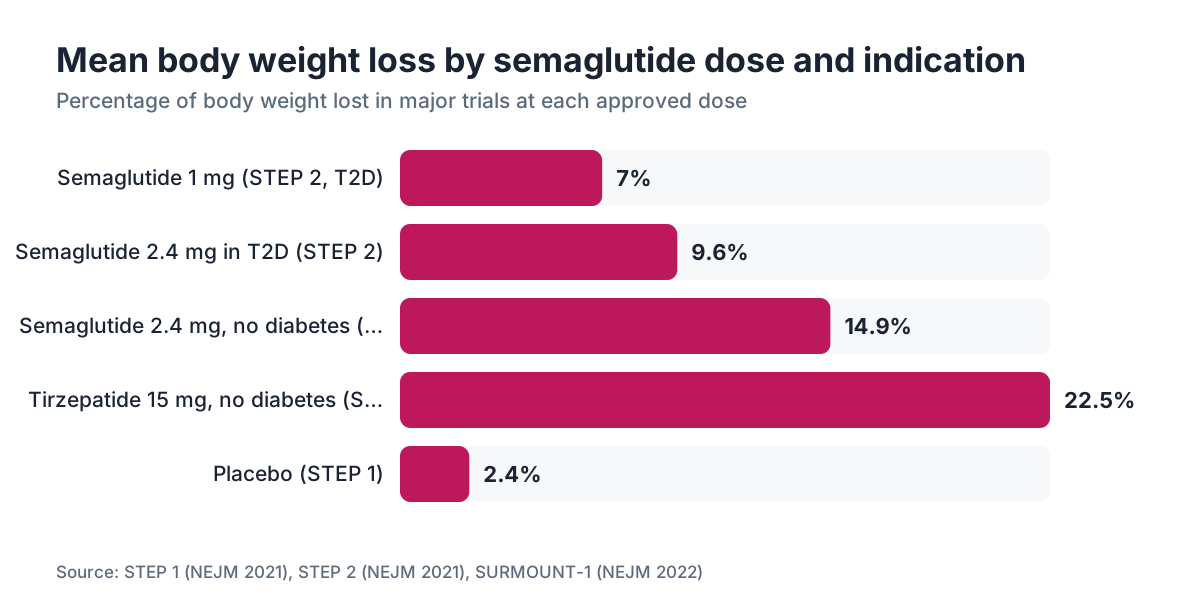
The STEP 1 trial is the foundational data. Among adults without diabetes, 68 weeks of 2.4 mg semaglutide weekly produced a mean weight loss of 14.9% of body weight versus 2.4% in the placebo group [3]. That's roughly 34 pounds on a 230-pound person.
Some people lose much more. In STEP 1, about 32% of participants lost 20% or more of their body weight. But roughly 14% lost less than 5%. The spread is wide, and there's no reliable way to predict which group you'll land in before you start.
The STEP 2 trial, which looked at people with type 2 diabetes, found a mean weight loss of 9.6% at the 2.4 mg dose compared with 7% at 1 mg [3]. Diabetes blunts the effect somewhat, which is why that indication uses a lower maximum dose.
"Treatment with semaglutide 2.4 mg once weekly was associated with a significantly greater reduction in body weight than placebo," the STEP 1 investigators reported in the New England Journal of Medicine [3].
Weight regain after stopping is real and fast. A follow-up study (STEP 4) found participants regained about two-thirds of their lost weight within a year of discontinuing 2.4 mg semaglutide [4]. That's not a failure of the drug; it reflects the chronic nature of obesity biology.
Can a doctor prescribe semaglutide doses higher than 2.4 mg?
Off-label, yes. A physician can legally prescribe any approved drug off-label in the US. But there's almost no published safety or efficacy data for semaglutide doses above 2.4 mg, and no commercial product is manufactured at a higher dose.
The only real-world access to above-label doses has been through compounded semaglutide, where a compounding pharmacy mixes a custom concentration. The FDA temporarily allowed compounding during the Wegovy shortage period, but that allowance was specific to the shortage and does not imply approval of higher-than-labeled doses. In early 2025, the FDA removed semaglutide from the shortage list, which sharply restricted the legal basis for most compounded versions [5].
Some researchers have speculated about higher-dose trials, but Novo Nordisk has not pursued regulatory approval above 2.4 mg. The dose-response curve for semaglutide appears to flatten considerably above 2 mg; the jump from 1 mg to 2.4 mg adds meaningful weight loss, but the returns would likely shrink fast beyond that.
Bottom line: if someone is offering you semaglutide in doses above 2.4 mg through a normal prescription or a med spa, ask hard questions.
How does the highest semaglutide dose compare to tirzepatide's maximum dose?
This is worth understanding because the two drugs get pitched as interchangeable, and they're not.
Semaglutide vs tirzepatide comes down partly to mechanism and partly to ceiling. Tirzepatide (Mounjaro for diabetes, Zepbound for obesity) acts on two receptors, GIP and GLP-1, rather than GLP-1 alone. Its maximum approved dose for obesity is 15 mg weekly. For diabetes, also 15 mg.
The SURMOUNT-1 trial found that 15 mg tirzepatide produced a mean weight loss of 22.5% of body weight at 72 weeks, compared to the roughly 15% seen with 2.4 mg semaglutide in STEP 1 [6]. That's a real difference, not a rounding error.
| Drug | Max dose (obesity) | Max dose (diabetes) | Mean weight loss in main trial | |---|---|---|---| | Semaglutide (Wegovy/Ozempic) | 2.4 mg weekly | 2 mg weekly | ~15% (STEP 1) | | Tirzepatide (Zepbound/Mounjaro) | 15 mg weekly | 15 mg weekly | ~22.5% (SURMOUNT-1) |
The higher number for tirzepatide is hard to ignore. Whether that translates into a better outcome for a specific woman depends on tolerability, cardiovascular risk profile, insurance coverage, and cost.
Is the highest dose always necessary for weight loss?
No. This is one of the most practically important points that gets lost in the 2.4 mg conversation.
Many people see substantial weight loss at intermediate doses. The dose-response relationship in semaglutide is roughly logarithmic: the move from 0.25 mg to 1 mg does a lot of the heavy lifting; the move from 1 mg to 2.4 mg adds more but with diminishing returns.
If a patient is losing weight steadily and tolerating 1 mg or 1.7 mg well, forcing them to escalate to 2.4 mg just because it's the maximum makes no clinical sense. The goal is the lowest effective dose, the same principle that governs hormone therapy, thyroid treatment, and everything else in medicine.
Side effects do increase with dose. Nausea and vomiting rates are higher at 2.4 mg than at 1 mg. Gallbladder disease risk climbs at higher doses and with rapid weight loss generally. Muscle loss is a real concern at any dose but may be worse with aggressive weight loss, which is why protein intake and resistance training matter regardless of which dose you're on.
For women in perimenopause or menopause, the overlap of hormone replacement therapy and GLP-1 therapy is increasingly relevant. Estrogen decline changes fat distribution and metabolic rate, so a woman who needs semaglutide at 45 may be responding to hormonal shifts as much as to caloric surplus.
What happens if you miss a dose or can't tolerate the maintenance dose?
Missing a single weekly dose happens. The FDA label says if more than two days have passed since the missed dose, skip it and resume on the next scheduled day. Don't double up.
If you've been at 2.4 mg and need to step back down because of side effects, that's legitimate clinical management. There's no rule that says you have to stay at the maximum. Stepping back to 1.7 mg for four to eight weeks, then trying 2.4 mg again, is a common approach.
Persistent intolerance at 2.4 mg after multiple attempts is a reason to consider whether tirzepatide might suit you better, since some people handle one drug's side-effect profile more easily than the other's. It's also a reason to look hard at whether concurrent behaviors like eating too quickly, eating high-fat meals, or drinking alcohol are worsening nausea.
If you've been off semaglutide for more than two weeks, clinicians typically restart at 0.25 mg and re-escalate rather than jumping back to where you left off.
Does the highest semaglutide dose affect women differently than men?
Clinical trial data consistently shows women lose a similar percentage of body weight as men on semaglutide, sometimes slightly more. In STEP 1, women made up about 74% of participants, so the headline numbers reflect a female-majority sample [3].
The hormonal context matters a lot and rarely gets enough attention. Women in their 40s and 50s are dealing with fluctuating and then declining estrogen, which increases visceral fat and changes how the brain responds to appetite signals. GLP-1 receptors exist in the hypothalamus, and estrogen interacts with those circuits. That means a perimenopausal woman's response to semaglutide may differ from a premenopausal woman's, though head-to-head trial data on this is thin.
Bone density is a specific concern. Rapid weight loss from any cause accelerates bone loss, and women already lose bone mass faster than men after menopause. A bone density test before and during treatment is reasonable for women over 50 using high-dose semaglutide, particularly if they're not on hormone therapy.
At WomenRx, this overlap of metabolic and hormonal health is exactly the kind of nuance a telehealth visit should address, because a prescriber who only thinks about the weight loss number and not the hormonal background is missing half the picture.
Muscle loss on GLP-1 drugs is a real issue for women especially. Women have less baseline muscle mass than men and face accelerated sarcopenia after menopause. Adequate protein (most estimates suggest at least 1.2 grams per kilogram of body weight daily) and resistance training are not optional add-ons at the highest semaglutide dose.
What does the highest semaglutide dose cost, and does insurance cover it?
Wegovy at 2.4 mg lists at roughly $1,300 to $1,400 per month without insurance as of 2025. With a Novo Nordisk savings card and commercial insurance coverage, some patients pay as little as $25 per month, but that eligibility is narrow and excludes anyone on Medicare, Medicaid, or government-sponsored plans [7].
Medicare Part D historically excluded obesity drugs from coverage. The Inflation Reduction Act opened the door to some changes, and CMS has proposed rules that would allow Medicare to cover anti-obesity medications, but as of mid-2025, coverage stays limited and varies by plan [8].
Ozempic (max 2 mg for diabetes) has somewhat better insurance coverage because diabetes medications have broader formulary inclusion. This is why many prescribers and patients pursued Ozempic off-label for weight loss during the period when Wegovy was on shortage.
Generic semaglutide does not exist. Novo Nordisk's patents on semaglutide run well into the late 2020s. Compounded versions were a workaround during the shortage, but their legal standing is now much narrower [5].
The cost difference between doses is minimal since Wegovy pens come pre-filled at each step's specific dose and are priced per pen, not per milligram.
Are there cardiovascular benefits at the highest semaglutide dose?
Yes, and this is arguably more important than the weight loss data for many women.
The SELECT trial, published in late 2023 in the New England Journal of Medicine, tested 2.4 mg semaglutide in over 17,600 adults with cardiovascular disease who were overweight or obese but did not have diabetes. After a mean follow-up of 33 months, semaglutide reduced the composite of cardiovascular death, nonfatal heart attack, and nonfatal stroke by 20% compared to placebo [9].
That cardiovascular benefit appears to be partly independent of weight loss, meaning semaglutide may have direct anti-inflammatory or vascular effects beyond just reducing body mass. The mechanism isn't fully worked out yet.
For women, cardiovascular disease is the leading cause of death and gets underdiagnosed. A drug that addresses weight, metabolic health, and cardiovascular risk at a single weekly dose is clinically meaningful. The SELECT result led the FDA to approve a new indication for Wegovy: reducing cardiovascular risk in adults with established heart disease who are overweight or obese [9].
This approval matters because it may improve insurance coverage beyond the obesity indication.
What does research say about semaglutide doses and kidney or liver disease?
The FLOW trial (published 2024) tested semaglutide 1 mg in people with type 2 diabetes and chronic kidney disease. It found a 24% reduction in the risk of major kidney events [10]. That trial used 1 mg, not 2.4 mg, so it doesn't directly answer the question about the highest dose and kidney outcomes.
For non-alcoholic fatty liver disease (now called MASH, metabolic dysfunction-associated steatohepatitis), semaglutide at 2.4 mg showed biopsy-proven improvements in a Phase 2 trial published in the New England Journal of Medicine in 2021, with later Phase 3 data pointing the same direction [11].
Semaglutide is cleared renally, but dose adjustment isn't required for mild to moderate kidney disease based on current labeling. Severe kidney disease and dialysis patients were largely excluded from trials, so data there is limited and clinicians stay cautious.
For liver disease, the emerging picture is positive, but most women learning about semaglutide for weight loss aren't hearing enough about these secondary benefits that could matter as much or more for their long-term health.
Who should not use the highest semaglutide dose?
The FDA label lists several contraindications and warnings that apply regardless of dose, plus some concerns that intensify at higher doses [1].
Personal or family history of medullary thyroid carcinoma (MTC) is a contraindication. So is Multiple Endocrine Neoplasia syndrome type 2 (MEN 2). This is because semaglutide caused thyroid C-cell tumors in rodent studies at clinically relevant exposures, though the relevance to humans remains uncertain. The FDA requires a boxed warning.
Pancreatitis history is a warning, not an absolute contraindication, but clinicians are generally cautious about starting or escalating semaglutide in someone with a prior pancreatitis episode.
Diabetic retinopathy complications have been reported, particularly with rapid glucose lowering. Women with diabetes who have pre-existing retinopathy should have ophthalmology monitoring.
Pregnancy is a contraindication. Semaglutide should be stopped at least two months before a planned pregnancy. This matters for perimenopausal women who may still be fertile and aren't using contraception reliably because they assume they can't conceive.
Gallbladder disease risk is real. Gallstones and cholecystitis are more common in people on semaglutide, and the risk is likely higher with rapid weight loss at the 2.4 mg dose than at lower doses. Women already carry roughly twice the gallstone risk of men at baseline.
For context on how this fits into a broader semaglutide overview, the contraindications are the same across doses; the higher doses just bring higher exposure and somewhat amplified risk signals.
Frequently asked questions
Is 2.4 mg semaglutide the highest dose available anywhere in the world?
Yes. As of mid-2025, no regulatory agency anywhere, including the FDA, EMA, or Health Canada, has approved a semaglutide injectable dose above 2.4 mg weekly. The 2.4 mg Wegovy dose is the global ceiling for approved use. Some compounding pharmacies have made higher concentrations, but there is no regulatory approval for those formulations.
Can I skip the escalation and start at the highest dose of semaglutide?
No, and you really don't want to. Starting at 2.4 mg without escalation causes severe nausea, vomiting, and dehydration in most people. The ramp-up schedule exists to let GLP-1 receptors in your gut adapt. The FDA label requires the specific escalation steps, and any prescriber who skips them is acting against the approved protocol.
What is the highest dose of oral semaglutide (Rybelsus)?
The maximum approved dose of oral semaglutide (Rybelsus) is 14 mg once daily, approved for type 2 diabetes only. Rybelsus is not FDA-approved for weight loss. Oral bioavailability of semaglutide is about 1%, which is why the milligram numbers look much larger than the injectable formulations. There is no direct conversion between oral and injectable doses.
How long does it take to feel the effects of 2.4 mg semaglutide?
Most people notice appetite suppression and some weight loss starting within the first two to four weeks, even at the 0.25 mg starting dose. The full effect of 2.4 mg isn't realized until you've been at the maintenance dose for roughly four to eight weeks. In trials, weight loss continued steadily through 68 weeks, so the drug keeps working as long as you're on it.
Does the highest dose of semaglutide cause more muscle loss?
Rapid weight loss at any dose causes some muscle loss alongside fat loss. At 2.4 mg, where weight loss is fastest, the absolute amount of lean mass lost is greater than at lower doses. Studies suggest roughly 25-40% of weight lost on GLP-1 drugs is lean mass. High protein intake and resistance training substantially reduce this. Women over 45 should treat muscle preservation as non-negotiable on this medication.
What happens after you stop the highest dose of semaglutide?
Weight regain is substantial. The STEP 4 trial found that participants who discontinued 2.4 mg semaglutide regained about two-thirds of their lost weight within 52 weeks, along with reversal of most cardiometabolic improvements. This is not a character flaw; it reflects that obesity is a chronic condition and semaglutide manages it rather than cures it. Most clinical guidance now frames it as long-term or indefinite therapy.
Is the highest semaglutide dose safe for women over 60?
Clinical trial data included adults over 60, and no specific dose reduction is required by age alone. However, older women face higher risks of muscle and bone loss with rapid weight loss, and drug interactions with multiple medications are more common. Women over 60 considering 2.4 mg semaglutide should have a thorough medication review and ideally a bone density baseline, particularly if they are not on hormone therapy.
How does the highest semaglutide dose compare for women who are also on hormone therapy?
There are no large randomized trials combining semaglutide 2.4 mg with hormone replacement therapy, so this is a gap in the evidence. Mechanistically, estrogen therapy may improve insulin sensitivity and reduce some of the visceral fat accumulation that GLP-1 drugs target, which could mean the combination works well together. Clinicians generally see no safety concern with combining them, but the specific interaction on weight outcomes isn't well-studied.
Can the highest dose of semaglutide be used without lifestyle changes?
Technically yes, and in trials, participants did lose significant weight even without highly structured lifestyle programs. In practice, the best outcomes happen with dietary change and physical activity. The drug suppresses appetite dramatically, but it doesn't choose what you eat or maintain muscle mass for you. Patients who pair semaglutide with protein-focused eating and resistance training consistently do better on body composition than those who let the drug do all the work.
Is compounded semaglutide available at doses higher than 2.4 mg?
Some compounding pharmacies have formulated higher concentrations, but this is off-label, unregulated, and of uncertain safety. After the FDA removed semaglutide from the drug shortage list in early 2025, most compounding of semaglutide became legally restricted. Compounded versions were never FDA-approved at any dose, and doses above 2.4 mg have no efficacy or safety trial data supporting them.
Why is the highest dose for Ozempic (2 mg) lower than Wegovy (2.4 mg)?
The two products were developed for different primary indications and went through separate clinical programs with different dose-finding studies. The 2 mg Ozempic dose was found sufficient for glycemic control in type 2 diabetes. Wegovy's 2.4 mg was identified as the optimal weight loss dose in the STEP trials. The same molecule, different target doses set by different clinical endpoints in different patient populations.
Does the highest semaglutide dose affect fertility or menstrual cycles?
Semaglutide is contraindicated in pregnancy, and Novo Nordisk recommends stopping at least two months before attempting conception. Weight loss itself can restore ovulation in women who had irregular cycles due to PCOS or obesity, meaning fertility can actually increase on semaglutide. Women who assume they cannot conceive due to irregular periods should use contraception while on this medication.
What is the highest dose of semaglutide being studied in clinical trials?
As of mid-2025, the publicly available trial registry does not show Novo Nordisk pursuing a dose above 2.4 mg for any semaglutide formulation. Research efforts have shifted toward longer-acting formulations, oral weight-loss-dose semaglutide (studied in the OASIS trials at 50 mg oral), and combination therapies rather than simply increasing the injectable dose.
Sources
- FDA, Wegovy (semaglutide) Prescribing Information
- Wilding et al., STEP 1 Trial, New England Journal of Medicine, 2021
- Rubino et al., STEP 4 Trial, JAMA, 2021
- Jastreboff et al., SURMOUNT-1 Trial, New England Journal of Medicine, 2022
- Novo Nordisk, Wegovy Savings Offer
- Lincoff et al., SELECT Trial, New England Journal of Medicine, 2023
- Perkovic et al., FLOW Trial, New England Journal of Medicine, 2024
- Newsome et al., Semaglutide in NASH, New England Journal of Medicine, 2021
- Endocrine Society, Obesity Pharmacotherapy Clinical Practice Guideline, 2023