High progesterone symptoms: what they feel like and why they happen
TL;DR: High progesterone most commonly causes fatigue, bloating, breast tenderness, mood changes, and brain fog. It happens naturally in the luteal phase, during pregnancy, and with supplemental progesterone. Levels above roughly 25 ng/mL outside of pregnancy or the luteal phase may warrant a conversation with your clinician. Symptoms overlap heavily with PMS, perimenopause, and hormone therapy side effects.
What does high progesterone actually feel like?
The honest answer is that high progesterone feels a lot like PMS, early pregnancy, or the sedating side effects of a sleep aid. You are tired in a way that coffee does not fix. Your breasts ache. Your jeans feel tighter even though you have not changed how you are eating. Your brain runs a little slow.
The symptoms stack because progesterone acts on multiple systems at once. It binds to GABA receptors in the brain, which is why it has a sedating, sometimes anxiolytic effect at high levels [1]. It relaxes smooth muscle throughout the body, which slows the gastrointestinal tract and causes bloating and constipation. It signals the body to raise basal body temperature slightly, which is why some women feel persistently warm or have broken sleep during the second half of their cycle.
Not every woman feels all of these. Some women with quite high progesterone levels report feeling nothing unusual. Others are knocked flat by levels that would be considered normal in the luteal phase. The symptom burden seems to track more with how fast progesterone rises and falls than with the absolute number.
A few symptoms get overlooked because they are less obvious. Mild dizziness or lightheadedness is one. Reduced libido is another, somewhat counterintuitive given progesterone's role in cycling. Water retention, particularly in the face and hands, can happen. And for women taking supplemental progesterone as part of hormone replacement therapy, nausea is a reported side effect worth knowing about before you start.
What are the most common symptoms of high progesterone?
Here is a straightforward list, ordered roughly by how often they come up in clinical practice and patient-reported data:
| Symptom | Why it happens | When it's most common | |---|---|---| | Fatigue / excessive sleepiness | Progesterone metabolizes to allopregnanolone, a GABA-A modulator with sedative properties [1] | Luteal phase, first trimester, high-dose supplementation | | Breast tenderness | Progesterone promotes breast lobular development and fluid retention | Luteal phase, early pregnancy | | Bloating / abdominal fullness | Smooth muscle relaxation slows GI motility | Luteal phase, progesterone therapy | | Mood changes (low mood, irritability) | Rapid changes in neuroactive steroid levels affect serotonin and GABA signaling [2] | Premenstrual days, progesterone dose changes | | Brain fog / poor concentration | GABA modulation affects alertness and working memory | Luteal phase, high-dose oral progesterone | | Headaches | Related to progesterone-driven fluid shifts and vascular effects | Luteal phase, hormone therapy initiation | | Weight gain / water retention | Progesterone can promote aldosterone-like effects | Luteal phase, pregnancy | | Low libido | High progesterone relative to testosterone can suppress desire | Luteal phase, pregnancy | | Dizziness | CNS sedative effect | Oral micronized progesterone, especially at night | | Constipation | GI smooth muscle relaxation slows transit | Luteal phase, pregnancy, progesterone supplements |
The GABA connection is real and well-documented. A 2014 review in the Journal of Neuroendocrinology described the metabolite allopregnanolone as a "potent positive allosteric modulator of GABA-A receptors" and linked its fluctuation across the menstrual cycle to mood and cognitive effects in susceptible women [1].
Fatigue stands out as the most disruptive symptom for most women. Oral micronized progesterone (Prometrium) is prescribed at night specifically because the sedation is strong enough to be useful as a sleep aid. If you are taking it in the morning, that choice explains a lot.
What are normal vs. high progesterone levels by cycle phase and life stage?
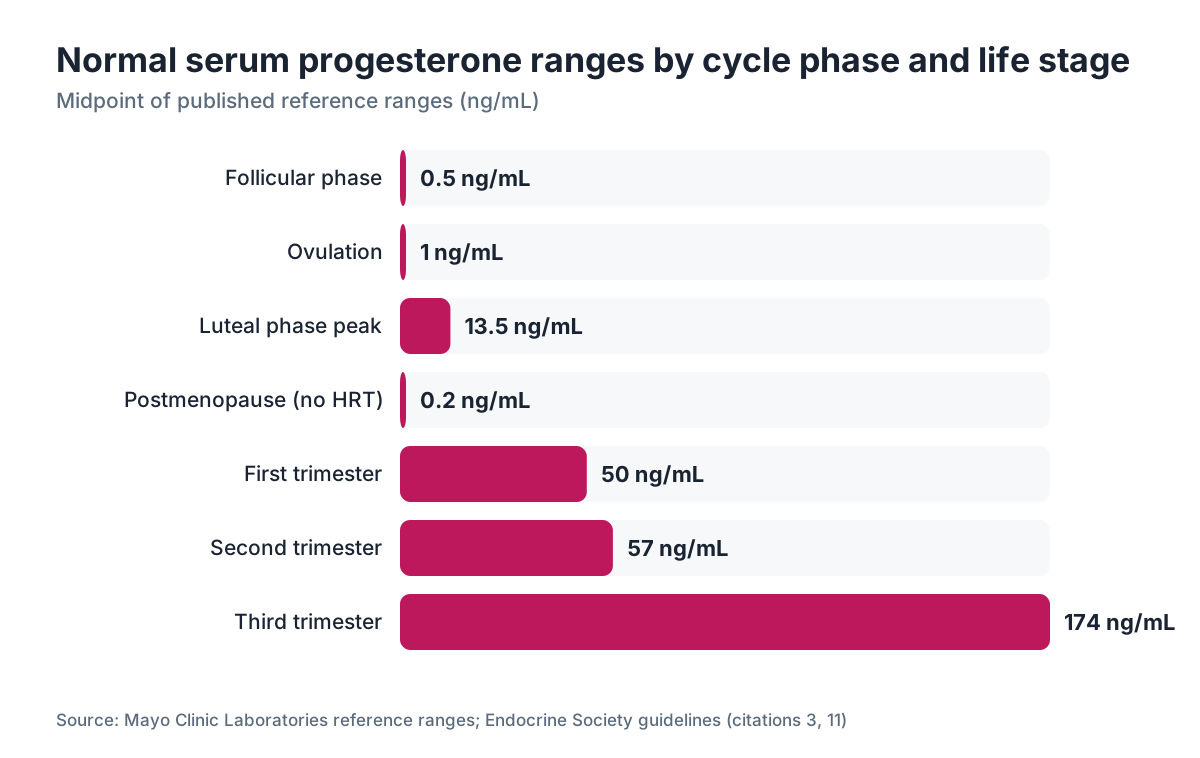
Progesterone numbers mean almost nothing without context. A level of 15 ng/mL is perfectly normal in the middle of your luteal phase and would be alarming in a postmenopausal woman not on therapy. Here is the reference framework most labs use [3]:
| Life stage / cycle phase | Typical progesterone range | |---|---| | Follicular phase (days 1-14) | 0.1 to 0.9 ng/mL | | Ovulation | 0.5 to 1.5 ng/mL | | Luteal phase peak (days 21-23) | 2 to 25 ng/mL | | Postmenopause (no HRT) | < 0.5 ng/mL | | First trimester pregnancy | 10 to 90 ng/mL | | Second trimester | 25 to 90 ng/mL | | Third trimester | 48 to 300 ng/mL |
The wide luteal-phase range (2 to 25 ng/mL) reflects genuine variation between women and between cycles. A reading of 20 ng/mL on day 21 is not high. It is textbook.
When does a number qualify as "high"? Clinically, providers look at numbers above 25 ng/mL in a non-pregnant, non-luteal woman, or levels that are persistently elevated without explanation, as a reason to investigate further. Causes worth ruling out include: corpus luteum cysts, ovarian tumors (rare), adrenal disorders, and exogenous progesterone exposure (including over-the-counter creams that many women do not disclose).
Lab methodology matters here. Immunoassay tests, the kind most commercial labs run, can differ by 20 to 30 percent from mass spectrometry-based tests [3]. If your number is borderline, ask which method was used before drawing conclusions.
For women in perimenopause, cycles become irregular and the luteal phase can be erratic, meaning progesterone output after ovulation can spike unpredictably even as cycles get shorter or longer. This is one reason perimenopause symptoms overlap so much with classic high-progesterone symptoms.
Can high progesterone cause anxiety or depression?
Yes, though the relationship is more complicated than a simple cause-and-effect.
Progesterone itself tends to be calming in the brain because of its GABA-A activity. But the rapid fall of progesterone (and its metabolite allopregnanolone) in the late luteal phase is associated with anxiety, irritability, and low mood in a subset of women who have what researchers call progesterone sensitivity [2]. This is the mechanism behind premenstrual dysphoric disorder (PMDD), which affects roughly 3 to 8 percent of women of reproductive age according to the American College of Obstetricians and Gynecologists [4].
So the paradox is this: chronically elevated progesterone can actually dampen anxiety in some women while the withdrawal from a progesterone spike triggers mood disruption in others. Which experience you have depends partly on your individual GABA-receptor sensitivity, which appears to be heritable.
Women who start oral micronized progesterone as part of HRT sometimes report new or worsened depression in the early weeks. This is a real side effect, not imagined. The FDA label for Prometrium includes depression as a listed adverse reaction [5]. If this happens to you, switching to a progesterone-containing IUD or vaginal progesterone gel can reduce systemic exposure while still protecting the uterine lining, and many clinicians consider this a reasonable next step rather than stopping protection of the uterus altogether.
For women trying to sort out whether perimenopause or a hormone imbalance is behind their mood changes, it helps to track symptoms day by day against the cycle. Apps or even a simple paper calendar showing which cycle days produce which symptoms can be more informative than a single blood draw.
What causes progesterone to be abnormally high?
Most cases of high progesterone have a completely normal explanation. Pregnancy tops the list. In the first trimester, progesterone produced by the corpus luteum and then the placenta reaches levels that would be considered extraordinary outside of pregnancy.
Outside of pregnancy, the main causes break down into natural, supplemental, and pathological:
Natural causes. A large or persistent corpus luteum cyst can keep secreting progesterone past its normal lifespan. Some women simply have a stronger luteal phase than average. Neither necessarily requires treatment unless the cyst causes pain or does not resolve on its own.
Supplemental causes. This is probably the most common reason a clinician sees an elevated progesterone level in a non-pregnant woman today. Prescribed progesterone (for HRT, luteal phase support in fertility treatment, or cycle regulation) and over-the-counter progesterone creams both raise serum levels. Many women do not think to mention a cream they bought at a health food store. The transdermal absorption is variable but can be significant [6].
Pathological causes. These are less common but important to rule out. A luteoma of pregnancy (an exaggerated luteal response) resolves after delivery. Congenital adrenal hyperplasia (CAH), particularly the non-classic form, can cause elevated progesterone because of upstream enzymatic defects in cortisol synthesis. Ovarian tumors that produce progesterone are rare. Adrenal carcinoma can produce progesterone as one of several hormones in excess.
If your level is unexpectedly high and you are not pregnant and not taking any supplemental progesterone, a full workup should include 17-hydroxyprogesterone (to screen for CAH), a pelvic ultrasound, and review of any creams, supplements, or topical products you use. Some bioidentical compounding preparations contain higher progesterone concentrations than their labels suggest [6].
How is high progesterone different from high estrogen?
These two get confused constantly, partly because they cycle together and partly because symptom lists on the internet are often sloppy about which hormone causes which problem.
High estrogen (estrogen dominance, whether absolute or relative to progesterone) tends to produce: heavy periods, breast swelling and fibrocystic changes, fluid retention, irritability and anxiety, and weight gain particularly around hips and thighs. It is also linked to endometriosis flares and uterine fibroid growth.
High progesterone (or progesterone sensitivity) looks different in key ways: the fatigue is heavier and more sedating, the mood effect leans toward low mood rather than anxiety, the bloating is more diffuse, and the breast tenderness is more lobular than surface-level.
In practice, the most common clinical picture is not purely one or the other. In perimenopause, for example, anovulatory cycles mean progesterone drops while estrogen continues to fluctuate, creating relative estrogen dominance. Then an ovulatory cycle comes along with a large corpus luteum and suddenly progesterone spikes. Both states can occur in the same woman within a few months of each other.
The clearest way to tell them apart is symptom timing relative to the cycle. High-estrogen symptoms tend to worsen in the follicular phase (first half) or around ovulation. High-progesterone symptoms worsen in the luteal phase (second half), roughly days 15 through 28. Tracking both symptoms and cycle day simultaneously is more useful than any single hormone test.
For women already on hormone replacement therapy, the formulation matters. Synthetic progestins like medroxyprogesterone acetate behave differently from oral micronized progesterone and differently again from the levonorgestrel IUD. The symptom profile shifts with each.
Do high progesterone symptoms during pregnancy need treatment?
Almost never. High progesterone in pregnancy is normal and necessary. It maintains the uterine lining, suppresses contractions in early pregnancy, and supports immune tolerance of the fetus. The fatigue, bloating, nausea, and breast tenderness of the first trimester are largely progesterone-driven, and they are a sign the pregnancy is progressing.
The American College of Obstetricians and Gynecologists does not recommend treating high progesterone in pregnancy [4]. What gets treated is low progesterone in women with a history of recurrent miscarriage or preterm birth, where supplemental progesterone is used to support the pregnancy.
If symptoms of high progesterone are severe during pregnancy (extreme fatigue, significant nausea, mood disruption), the conversation with an OB is about symptom management, rest, nutrition, and sometimes antiemetic medication. The progesterone level itself is not the target.
One exception: if a woman is receiving supplemental progesterone as part of IVF or assisted reproduction and her levels are very high (some IVF protocols target luteal-phase levels of 10 to 20 ng/mL while injectable progesterone can drive levels to 50 ng/mL or higher), her reproductive endocrinologist may adjust the dose based on symptoms and levels together.
Can you have high progesterone in perimenopause or after menopause?
After natural menopause, the ovaries stop producing meaningful amounts of progesterone. A postmenopausal woman not taking any hormone therapy should have progesterone levels below 0.5 ng/mL. If the level is higher, the most likely explanations are supplemental progesterone from a product she is using, or rarely, a hormone-producing adrenal or ovarian tumor worth investigating.
Perimenopause is different. Ovulation still occurs, sometimes more strongly than expected. A woman in her late 40s can ovulate and mount a normal luteal-phase progesterone surge right alongside cycles that are entirely anovulatory. This unpredictability is part of what makes perimenopause symptoms so hard to pin down. She might have two months of estrogen-dominance symptoms (heavy bleeding, breast swelling, irritability) followed by a month of classic high-progesterone symptoms (fatigue, bloating, low mood) when ovulation happens.
Women who start progesterone as part of a menopausal hormone therapy regimen sometimes experience symptoms of high progesterone, particularly in the first few months. The FDA label for oral micronized progesterone (Prometrium 200 mg) lists somnolence, dizziness, headache, breast pain, abdominal pain, and depression as adverse reactions occurring in more than 2 percent of users in clinical trials [5].
For women curious about how progesterone therapy fits into the broader menopause picture, menopause care has changed significantly in the last decade. The current evidence, including guidance from NAMS (the North American Menopause Society), supports that the risk-benefit profile of menopausal hormone therapy is favorable for most healthy women under 60 or within 10 years of menopause onset [7].
If you are managing these questions through a telehealth provider, platforms like WomenRx allow you to review your labs, adjust your progesterone formulation or dose, and track symptom changes without waiting weeks for an appointment.
How is high progesterone diagnosed?
Diagnosis starts with a blood draw, timed carefully to the cycle. A progesterone level drawn on cycle day 21 (or 7 days after presumed ovulation) gives a luteal-phase peak reading. The same number drawn on cycle day 5 would mean something completely different. Timing is almost more important than the number itself.
For women with irregular cycles, the timing problem gets harder. In that case, some clinicians recommend serial measurements every few days to track the progesterone rise and fall, which also confirms whether ovulation is occurring.
Beyond the progesterone level itself, a complete picture includes:
- Estradiol (to contextualize the estrogen-to-progesterone ratio)
- FSH and LH (to assess cycle stage and rule out ovarian failure)
- 17-hydroxyprogesterone (if adrenal causes are suspected)
- Testosterone and DHEAS (for full hormonal context)
- Pelvic ultrasound if a cyst or structural cause is suspected
Some clinicians also run a 24-hour urine progesterone or use dried urine testing (DUTCH test). These can be useful for seeing metabolites, but serum testing remains the gold standard for most clinical decisions.
Self-diagnosis from an online symptom checker is genuinely unreliable here because the symptom list for high progesterone overlaps with thyroid disease, anemia, depression, and sleep disorders. A blood draw is cheap compared to the cost of chasing the wrong diagnosis for months.
If your levels come back and you need to understand what they mean in the context of your progesterone prescription or natural cycle, looking at reference ranges specific to your lab is essential; some labs still use older immunoassay ranges and the numbers may not be comparable to studies that used mass spectrometry.
What reduces high progesterone symptoms without stopping necessary therapy?
If your high progesterone is from a prescribed source (HRT or fertility treatment), the goal is usually not to eliminate progesterone but to find a dose, formulation, and timing that keeps symptoms manageable.
Several adjustments often help:
Switch to vaginal administration. Vaginal progesterone gel (Crinone) or suppositories deliver progesterone directly to the uterus with lower systemic serum levels than oral administration. This can sharply reduce fatigue and brain fog while maintaining uterine protection [8]. The trade-off is local side effects like discharge.
Take oral progesterone at night. If you are on Prometrium and taking it in the morning, switching to bedtime dosing turns the sedation into a feature rather than a problem. Most clinicians prescribe it this way.
Try the levonorgestrel IUD. For women who need endometrial protection but find oral or vaginal progesterone intolerable, a hormonal IUD (Mirena or Liletta) delivers progestin locally with minimal systemic absorption. Systemic progesterone symptoms are greatly reduced [9].
Dose adjustment. If symptoms are significant, a lower dose of oral progesterone (100 mg instead of 200 mg) may still protect the uterine lining in lower-estrogen HRT regimens while reducing side effects. This is a conversation with your prescribing clinician.
For natural luteal-phase elevation, there is no intervention that reliably blunts normal progesterone production without suppressing ovulation entirely (which is what combined oral contraceptives do). If luteal-phase symptoms are severe enough to consider that trade-off, discussing it with a gynecologist is worthwhile.
Magnesium glycinate (200 to 400 mg at night) is sometimes recommended by integrative practitioners for luteal-phase mood symptoms. The evidence is modest but plausible given magnesium's role in GABA activity; one small randomized trial found it reduced PMS symptoms compared to placebo [10]. It is low-risk and inexpensive, which is why it appears on many symptom-management lists.
When should you see a doctor about high progesterone symptoms?
See a clinician if:
- Symptoms are severe enough to affect your ability to work, sleep, or function in relationships
- You are postmenopausal and not on hormone therapy but have a progesterone level above 0.5 ng/mL
- Your symptoms appeared suddenly and do not match your usual cycle pattern
- You have unexplained weight gain, abdominal distension, or pelvic pain alongside elevated progesterone (pelvic ultrasound is warranted)
- You started a new hormone therapy and symptoms have not improved after 8 to 12 weeks
- You are using over-the-counter progesterone creams and wonder whether they are raising your levels (they can, and the absorption is unpredictable)
Some symptoms that are attributed to high progesterone are actually early signs of other conditions. Severe fatigue with normal hormone levels warrants thyroid testing. Persistent mood disturbance with cycle-phase correlation that does not improve with dose adjustment warrants a mental health assessment, more than more hormone tweaking.
For women managing hormone replacement therapy questions or trying to understand whether their symptoms fit a pattern that telehealth can address, WomenRx clinicians see these presentations regularly and can review labs in context.
The NAMS 2022 hormone therapy position statement notes that "individualization of therapy is important, as each woman's health history, symptoms, and preferences differ" [7]. That sentence applies directly to progesterone dosing: one formulation or dose does not work for every woman, and trial-and-adjustment is a legitimate and well-supported clinical approach.
Frequently asked questions
What are the symptoms of high progesterone in women?
The most common symptoms are fatigue, bloating, breast tenderness, brain fog, low mood, mild dizziness, low libido, and constipation. These happen because progesterone slows GI motility, promotes water retention, and its brain metabolite allopregnanolone acts on GABA receptors to produce sedation. Symptoms vary by how fast levels rise and by individual sensitivity.
Can high progesterone cause weight gain?
It can contribute to temporary weight gain through water retention and GI bloating, particularly in the luteal phase. Long-term fat accumulation from progesterone alone is not well-supported by evidence. If you are gaining weight consistently, more than cyclically, other factors like insulin resistance, thyroid function, or caloric intake are more likely explanations and worth investigating.
What progesterone level is considered too high?
Outside pregnancy, a luteal-phase peak above 25 ng/mL or any reading above 0.5 ng/mL in a postmenopausal woman not on therapy is worth discussing with your clinician. In pregnancy, levels reaching 90 to 300 ng/mL are entirely normal. Context, particularly cycle phase and whether you are taking supplemental progesterone, determines what any number actually means.
Does high progesterone cause anxiety?
It can, though it is more often associated with low mood and sedation than classic anxiety. The rapid fall of progesterone in the late luteal phase, not the high level itself, is what triggers anxiety and irritability in women with PMDD. If your anxiety worsens in the second half of your cycle and resolves with your period, progesterone withdrawal is a plausible mechanism.
Can high progesterone cause fatigue?
Yes. Progesterone metabolizes to allopregnanolone, which enhances GABA-A receptor activity and produces a sedating effect. This is why oral micronized progesterone is typically prescribed at bedtime. Fatigue is one of the most consistently reported symptoms in the luteal phase and in women starting progesterone therapy. It usually improves once the body adjusts to stable levels.
How do I know if my progesterone is too high or too low?
A timed blood test is the only reliable way to know. A sample drawn 7 days after ovulation (typically day 21 of a 28-day cycle) gives a luteal-phase peak. Below 2 ng/mL on day 21 suggests low or absent ovulation. Above 25 ng/mL in a non-pregnant woman outside the luteal phase suggests elevated levels worth investigating. Symptoms alone are not a reliable guide.
Is high progesterone a sign of pregnancy?
It can be. Progesterone rises sharply after conception because the corpus luteum keeps producing it and the developing placenta adds to that output by 8 to 10 weeks. A level above 10 ng/mL in a woman trying to conceive who is not yet in the luteal phase is often a reason to take a pregnancy test. But a high level alone does not confirm pregnancy; a positive hCG test does.
Can progesterone cream cause high progesterone symptoms?
Yes. Over-the-counter progesterone creams have variable absorption, and serum levels can rise unpredictably depending on the product, application site, and individual skin chemistry. Some compounded topical preparations contain concentrations well above what is labeled. Women using these creams who then have blood work showing elevated progesterone should disclose the cream to their clinician before any further testing or diagnosis.
Does high progesterone affect sleep?
In two opposite ways. Moderate progesterone elevation in the luteal phase can improve sleep onset because of its GABA-A sedating effect. But very high levels, or the crash from high levels dropping, can fragment sleep, cause vivid dreams, and raise body temperature enough to disrupt sleep quality. Women on oral micronized progesterone often report both effects: falling asleep faster but waking earlier.
Can high progesterone cause headaches?
Yes, particularly during the luteal phase or when starting progesterone therapy. The mechanism involves fluid shifts and vascular reactivity. Menstrual migraines, which typically occur in the days before the period, are partly driven by the drop in both estrogen and progesterone. If headaches are new, severe, or do not follow a cycle pattern, other causes should be ruled out before attributing them to progesterone.
What happens to progesterone levels during perimenopause?
Progesterone becomes erratic during perimenopause because ovulation becomes irregular. Some cycles are anovulatory, producing almost no progesterone. Others are fully ovulatory with a normal luteal surge. This unpredictability, not a steady decline, is what drives the chaotic symptom pattern many perimenopausal women describe. Average progesterone output does decline as ovarian reserve drops.
How long do high progesterone symptoms last?
If driven by the natural cycle, luteal-phase symptoms last roughly 10 to 14 days and resolve with menstruation. If driven by supplemental progesterone, symptoms often improve over 4 to 12 weeks as the body adapts. If a formulation change is needed (such as switching from oral to vaginal progesterone), symptom improvement can happen within one cycle.
Can men have high progesterone symptoms?
Men do produce small amounts of progesterone and can have elevated levels from adrenal disorders or certain tumors. The symptoms overlap with those in women: fatigue, low libido, and mood changes. In men, elevated progesterone sometimes accompanies low testosterone because progesterone can weakly suppress testosterone production. This is a separate clinical topic from what women experience, and the causes and treatment differ.
What is the difference between progesterone and progestin?
Progesterone is the bioidentical hormone produced by the body and can be synthesized identically for use in FDA-approved products like Prometrium. Progestins are synthetic compounds that mimic progesterone's effect on the uterine lining but have different chemical structures. Examples include medroxyprogesterone acetate and norethindrone. Their side effect profiles differ, and some research suggests bioidentical progesterone may have a more favorable cardiovascular and mood profile.
Sources
- Journal of Neuroendocrinology, Backstrom et al. 2014, GABA-A receptors and progesterone metabolites
- Archives of Women's Mental Health, Bixo et al. 2017, PMDD and GABA-A receptor sensitivity
- Endocrine Society Clinical Practice Guideline, Female Reproductive Hormones
- American College of Obstetricians and Gynecologists, ACOG Practice Bulletin on PMDD and PMS
- FDA, Prometrium (progesterone) Prescribing Information
- Obstetrics and Gynecology, Burry et al. 1999, Progesterone cream absorption variability
- North American Menopause Society, 2022 Hormone Therapy Position Statement
- Fertility and Sterility, Miles et al. 1994, Vaginal vs oral progesterone systemic absorption
- Contraception, Nilsson et al. 1986, Levonorgestrel IUD systemic absorption
- Journal of Women's Health, Facchinetti et al. 1991, Magnesium supplementation and PMS
- Mayo Clinic Laboratories, Progesterone Reference Values by Reproductive Stage
- NIH National Library of Medicine, MedlinePlus, Progesterone test