Hers semaglutide reviews: what real data says about the platform
TL;DR: Hers prescribes compounded semaglutide through telehealth, usually $99 to $199 a month depending on dose. Clinical trials show semaglutide produces about 15% body weight loss over 68 weeks. Hers uses compounded versions, not FDA-approved Ozempic or Wegovy, and that difference matters. This guide covers what the platform delivers, where it falls short, and how to compare your options.
What is Hers semaglutide and how does the platform work?
Hers is a direct-to-consumer telehealth company that connects women to licensed clinicians online. For weight loss, it offers compounded semaglutide, a GLP-1 receptor agonist that mimics the hormone glucagon-like peptide-1 to slow gastric emptying, reduce appetite, and improve blood sugar regulation. You fill out a health intake form, a clinician reviews it asynchronously, and if approved, a compounding pharmacy ships the medication to your door.
The model appeals to women who want to skip the waiting room and bypass insurance battles over brand-name Wegovy or Ozempic. That's understandable. Brand-name semaglutide has been hard to get since 2022, when the FDA placed it on the drug shortage list [1].
Hers is not a pharmacy and does not manufacture the drug itself. It connects patients to 503A compounding pharmacies, which are state-licensed pharmacies that prepare medications for individual patients. This is a legal but important distinction: the semaglutide in a Hers prescription is not the same as FDA-approved Wegovy (semaglutide 2.4 mg injection, approved for chronic weight management) or Ozempic (semaglutide, approved for type 2 diabetes). Compounded drugs skip FDA's pre-market approval process for safety and efficacy [2].
Learn more about the specifics of compounded semaglutide before deciding.
What do reviews say Hers semaglutide actually costs?
Hers advertises compounded semaglutide starting around $99 per month for the lowest doses, rising to roughly $149 to $199 per month at maintenance doses. Pricing varies by dose tier and changes frequently, so verify directly on the Hers site before making decisions.
For comparison, brand-name Wegovy lists at approximately $1,349 per month without insurance as of 2024, though coverage is expanding. Compounded alternatives from any telehealth platform (Hers, Ro, Found, Calibrate, and others) cluster in the $100 to $350 range depending on dose and add-ons.
The Hers subscription typically includes the medication, clinician consultation, and messaging access. It does not include labs, which some clinicians consider standard practice before prescribing GLP-1s (fasting glucose, HbA1c, thyroid function). If you need labs, budget an additional $50 to $150 unless your primary care provider orders them.
One thing reviewers flag repeatedly: the introductory price is for the starting dose. As your dose titrates upward over weeks 4 through 16 (following a slow escalation schedule similar to the one used in the STEP 1 trial), the monthly cost climbs [3]. Read the full pricing tier before committing.
See the cost comparison chart below for a side-by-side look at compounded vs. brand-name options.
How much weight loss can women actually expect on semaglutide?
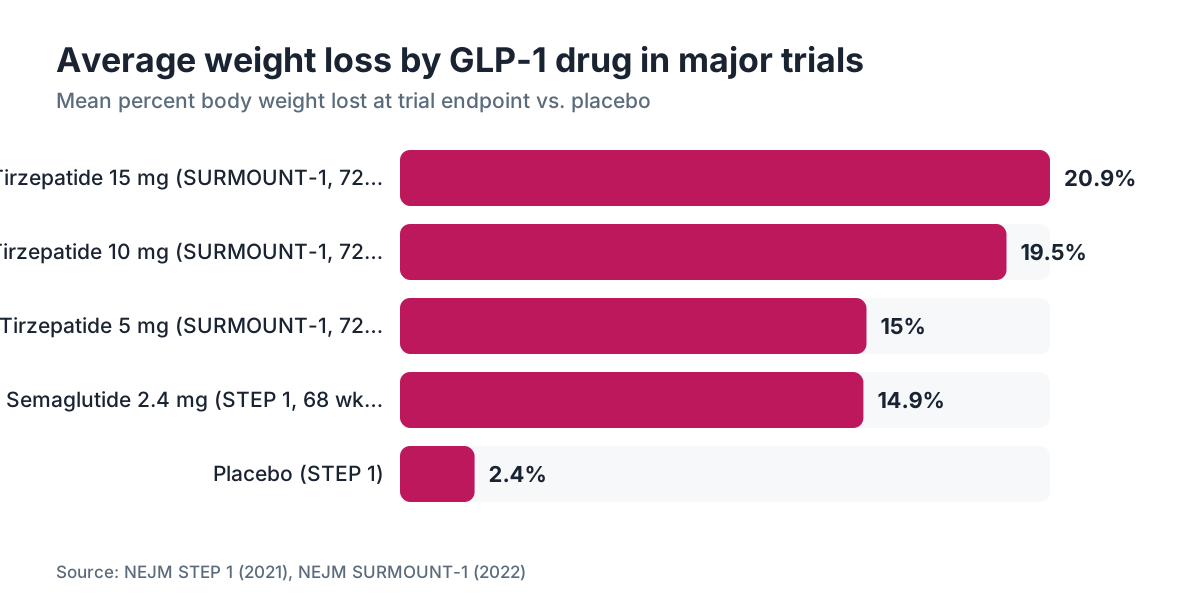
The STEP 1 trial (Semaglutide Treatment Effect in People with Obesity, published in the New England Journal of Medicine, 2021) is the largest efficacy reference we have. Participants on 2.4 mg semaglutide weekly lost a mean of 14.9% of body weight over 68 weeks, versus 2.4% on placebo [3]. That's roughly 33 to 35 pounds for a 225-pound woman, sustained over about 16 months.
Here's the catch: trial participants were on the fully titrated, FDA-approved 2.4 mg dose of brand-name Wegovy with close monitoring. Compounded semaglutide may contain the same active ingredient at the same claimed dose, but compounders are not required to publish bioavailability or potency data.
Women in perimenopause and postmenopause tend to carry more weight in the abdomen due to declining estrogen, and that visceral fat responds well to GLP-1s in general. However, semaglutide causes both fat and lean mass loss. A secondary analysis of STEP 1 found that roughly 39% of the weight lost was lean mass [4]. For women already at risk of sarcopenia (which increases after menopause), that is a real concern, not a footnote.
If you're also dealing with menopause symptoms alongside weight gain, know that hormone replacement can improve insulin sensitivity and body composition on its own. Combining hormone replacement therapy with a GLP-1 may amplify fat loss while protecting lean tissue, though large randomized trials on that specific combination are still sparse.
For a detailed look at the weight loss evidence, see our guide on semaglutide for weight loss.
Is compounded semaglutide from Hers safe?
This is where reviewers and clinicians disagree most sharply, so here is what the actual regulatory record says.
The FDA does not approve compounded drugs for safety, efficacy, or manufacturing quality. In February 2024, the FDA confirmed that semaglutide injection (the active ingredient in Ozempic and Wegovy) was no longer in shortage, which means compounding pharmacies lost the legal basis under Section 503A and 503B of the Food, Drug, and Cosmetic Act to compound semaglutide for most patients [2]. The FDA issued guidance in 2024 stating that it would take action against pharmacies continuing to compound semaglutide.
The FDA stated: "Outsourcing facilities and traditional compounders are not permitted to compound drugs that are copies of commercially available drugs unless certain conditions are met" [2].
This does not mean Hers is operating illegally right now. Some pharmacies have argued their formulations differ meaningfully (for example, by adding B12 or changing the salt form to semaglutide sodium or acetate). The legal situation is actively contested as of mid-2025. But it does mean you should ask your prescribing clinician exactly which pharmacy is filling your prescription, whether that pharmacy is 503A or 503B licensed, and what quality testing it performs.
Side effects reported from compounded semaglutide mirror those of brand-name: nausea (most common, affecting roughly 44% of participants in STEP 1), vomiting, constipation, diarrhea, and fatigue [3]. Rare but serious risks include pancreatitis, gallbladder disease, and a theoretical risk of thyroid C-cell tumors (observed in rodents; the relevance to humans is unknown). The full FDA prescribing information for Wegovy lists these risks with a black box warning for thyroid tumors [5].
For a broader look at the drug itself, our semaglutide overview covers the pharmacology and safety data in full.
What do Hers patient reviews actually report as pros and cons?
Patient reviews across Reddit (r/Semaglutide, r/Ozempic), Trustpilot, and app stores cluster around a few consistent themes. These are reported experiences, not controlled data, but the patterns matter.
Commonly reported positives:
- Affordable entry price compared to brand-name Wegovy
- Convenient fully online process (no in-person visit required)
- Weight loss results that match or roughly approach trial expectations for many users
- Responsive app messaging for dose questions
Commonly reported negatives:
- Price increases as dose titrates up, sometimes doubling from the introductory offer
- Inconsistent clinician quality (asynchronous review means the clinician may not catch contraindications a synchronous visit would surface)
- Shipping delays and cold-chain concerns for injectable medications
- No integrated lab monitoring; some reviewers discovered elevated liver enzymes or glucose issues only through their own primary care visits
- Difficulty canceling subscriptions; multiple reviewers report unexpected charges after requesting cancellation
- Limited support if side effects become severe (the platform is not an emergency resource)
One honest observation: the people most satisfied with Hers are those who already had a primary care relationship managing their overall health and used Hers specifically for the prescription access and price. Those who expected Hers to replace full metabolic care were more frequently disappointed.
If you're comparing platforms, our head-to-head on semaglutide vs tirzepatide is worth reading, because several competitors offer tirzepatide (Mounjaro/Zepbound) at similar price points with better efficacy data.
How does Hers semaglutide compare to other telehealth GLP-1 platforms?
The telehealth GLP-1 market expanded fast between 2022 and 2025. Hers competes directly with Ro Body, Found, Calibrate, Henry Meds, and dozens of smaller prescribers. Here's how they differ on the variables that matter most.
| Platform | Starting price (monthly) | Drug options | Lab monitoring included | Synchronous visits | |---|---|---|---|---| | Hers | ~$99 | Compounded semaglutide | No | No | | Ro Body | ~$145 | Compounded semaglutide, tirzepatide | No | No | | Found | ~$99 | Compounded semaglutide, oral options | Optional add-on | Yes (some plans) | | Calibrate | ~$149 | Insurance-support for brand-name | Not included | Yes | | Henry Meds | ~$297 | Compounded semaglutide | No | No |
Prices shift frequently and these should be verified directly. The comparison point that matters for safety: only platforms that include or recommend labs before prescribing catch the patients for whom GLP-1s are genuinely contraindicated, such as those with a personal or family history of medullary thyroid carcinoma or multiple endocrine neoplasia type 2 [5].
Hers does ask intake screening questions that cover those contraindications. Whether an asynchronous reviewer catches every nuance in a large intake form is a clinical judgment call you're implicitly making when you choose the platform.
WomenRx is a telehealth platform serving women on hormones and GLP-1s that includes clinician consultations focused on the hormonal context of perimenopause and menopause, which can meaningfully change how a GLP-1 plan is structured.
Is Hers semaglutide appropriate for perimenopausal and menopausal women?
This question doesn't get asked enough on review sites, so let's answer it directly.
Perimenopause typically begins in the mid-40s, sometimes earlier, and is associated with rising FSH, irregular cycles, and estrogen fluctuation [6]. Postmenopause (12 consecutive months without a period) brings sustained low estrogen and progesterone. Both phases bring central weight gain, increased insulin resistance, and metabolic changes that make weight loss harder.
Semaglutide works through GLP-1 receptors present in the hypothalamus, gut, and pancreas. It improves insulin sensitivity and reduces caloric intake, mechanisms that address some of the metabolic shifts of menopause. There is reasonable clinical logic to using it in this population.
Here's the gap. Hers does not currently offer integrated hormone therapy alongside its GLP-1 prescriptions in a coordinated way. If you're also experiencing vasomotor symptoms (hot flashes, night sweats), sleep disruption, or mood changes, you are managing two separate clinical problems. Treating only one may leave the other driving continued weight gain or making the GLP-1 feel ineffective.
Estrogen's role in body composition is real. Postmenopausal women prescribed estradiol in the SWAN study showed slower accumulation of visceral fat compared to those not on HRT [12]. If bone density is also a concern (and it should be for most women over 50 who are losing weight rapidly), a bone density test is worth discussing before starting any significant calorie-restriction protocol.
Understanding perimenopause age and when menopause starts can help you time your conversations with your clinician about both GLP-1s and hormones.
What questions should you ask before starting Hers semaglutide?
Before you complete the intake form and hand over a credit card, these are the questions worth having answers to.
First: which compounding pharmacy fills Hers prescriptions in your state, and is it 503A or 503B licensed? 503B outsourcing facilities have stricter FDA oversight than 503A pharmacies [2]. Ask Hers support directly. The answer should be immediate.
Second: what is the exact milligram dose in your starting pen, and how is it labeled? Dosing errors with compounded semaglutide have been reported to the FDA's MedWatch system, some involving concentration confusion (units of insulin vs. units of semaglutide) [5].
Third: what is the cancellation and refund policy before the first shipment? Read this before subscribing, not after.
Fourth: does your primary care clinician know you're starting a GLP-1? They should, because semaglutide interacts with other diabetes medications, can mask symptoms of pancreatitis, and changes the dosing dynamics of some oral medications by slowing gastric emptying.
Fifth: do you have a plan for maintaining lean mass? The STEP trials showed significant muscle loss alongside fat loss [4]. Protein intake of at least 1.2 grams per kilogram of body weight per day and resistance training twice weekly are the most evidence-supported countermeasures. Hers does not include coaching on this by default.
Sixth: what happens if you have a severe adverse event at 11 PM on a Saturday? The answer with any async telehealth platform is: go to urgent care or an ER. That's the right answer. Just be clear-eyed that the platform is not a substitute for an accessible clinical relationship.
How long does it take to see results with Hers semaglutide?
Based on the STEP 1 trial protocol, participants reach the full 2.4 mg maintenance dose after a 16-week titration schedule [3]. Most telehealth platforms, including Hers, follow a similar slow titration: 0.25 mg weekly for 4 weeks, then 0.5 mg, then 1.0 mg, then 1.7 mg, then 2.4 mg. Each step lasts roughly 4 weeks.
Most reviewers report appetite suppression within the first one to two weeks, even at the lowest dose. Measurable weight loss (2 to 5 pounds) typically appears by weeks 4 to 8. The steepest loss phase is usually weeks 8 through 28, after which the rate slows but continues.
Plateau is normal and expected. STEP 1 participants kept losing weight through week 68, but the rate flattened substantially after week 20. If you plateau at week 12 on a low dose, that is not failure. That's a signal the dose may need titration or lifestyle factors need adjustment.
Long-term maintenance is the harder question. The STEP 4 trial found that participants who stopped semaglutide regained about two-thirds of their lost weight within one year [7]. Nobody has clean data on what happens to Hers-platform patients who discontinue, because the platform does not publish outcome data.
What are the FDA's current warnings about compounded semaglutide?
The FDA has issued multiple communications since 2023 about compounded semaglutide. The clearest summary: the agency has received reports of adverse events, including hospitalizations, linked to compounded semaglutide products, some involving incorrect dosing instructions and some involving contaminated or mislabeled products [5].
The FDA issued a statement that it "is aware that patients have been harmed after receiving compounded semaglutide" and that compounded drugs "lack FDA review for safety, effectiveness, and quality" [2].
In early 2024, the FDA updated its guidance stating that because FDA-approved semaglutide products were no longer in shortage, the legal basis for most compounding exceptions under 503A and 503B was removed. Some compounders challenged this in federal court, and the litigation was ongoing as of mid-2025. The regulatory status of compounded semaglutide is genuinely unsettled, and a platform like Hers operates in that gray zone.
This does not mean Hers is unsafe or illegal. It means you should stay informed. The FDA maintains a current list of drug shortage determinations at FDA.gov that you can check yourself [1].
For context on how the Endocrine Society approaches GLP-1 prescribing, its 2023 clinical practice guideline states that anti-obesity medications should be used as part of a treatment program that includes lifestyle modification, not as standalone prescriptions [8].
Is Hers semaglutide worth it? An honest bottom line
Worth it depends entirely on your starting point.
If you are a generally healthy woman with a BMI over 30 (or over 27 with a weight-related condition), who has a primary care physician monitoring your overall health, who understands you're getting a compounded drug without FDA-approved manufacturing oversight, and who has verified the pharmacy's credentials: Hers is a reasonable, affordable entry point into semaglutide.
If you are perimenopausal or postmenopausal and your weight gain is tangled up with hormonal changes, sleep disruption, and metabolic slowdown, a platform that treats only the GLP-1 side of the equation is probably leaving clinical value on the table. An integrated approach, one that addresses estrogen, progesterone, and metabolic health together, is likely to produce better outcomes than either intervention alone.
If you are considering Hers mainly because of price and you do not have another clinician reviewing your overall health, I'd push back on that framing. The cost of a missed contraindication or a serious adverse event is not $99 a month.
WomenRx is built for women who want GLP-1 care integrated with hormonal context, which is the combination most likely to matter for women in their 40s, 50s, and 60s. That's worth knowing as you compare options.
For a rigorous look at how semaglutide compares to tirzepatide (which showed 20.9% weight loss in the SURMOUNT-1 trial [9]), read our guide on semaglutide vs tirzepatide. And if you're also weighing whether an estrogen patch belongs in your plan, that piece covers the delivery options and evidence.
Frequently asked questions
Does Hers prescribe real Ozempic or Wegovy?
No. Hers prescribes compounded semaglutide from 503A compounding pharmacies, not FDA-approved Ozempic or Wegovy. Compounded semaglutide contains the same active ingredient but is not reviewed by the FDA for safety, efficacy, or manufacturing quality. If you want brand-name Wegovy, you'll need a prescription through a traditional prescriber with insurance coverage or a manufacturer savings program.
What is the Hers semaglutide starting dose?
Hers typically starts patients at 0.25 mg subcutaneous injection weekly, consistent with the titration schedule used in the STEP 1 clinical trial. The dose increases in 4-week intervals up to a target of 2.4 mg weekly at maintenance, though some patients stay on lower doses if tolerability is a concern. Total time to full dose is roughly 16 weeks.
Can you get semaglutide from Hers if you are in menopause?
Yes, clinically speaking. Menopause is not a contraindication to semaglutide. The real question is whether treating weight alone, without addressing hormonal changes that drive abdominal weight gain and metabolic shifts, gives you the best outcome. Many clinicians recommend evaluating hormone status first and considering combined GLP-1 plus HRT approaches in perimenopausal and postmenopausal women.
How do Hers semaglutide reviews compare to Ro Body reviews?
Both platforms offer compounded semaglutide through async telehealth. Ro Body (Ro's weight loss program) starts slightly higher in price but offers tirzepatide as well. Patient reviews across both platforms share similar themes: affordable access, variable clinician engagement, and price increases at higher doses. Ro's pharmacy transparency has generally rated better in user reports, though this varies by state and period.
Does Hers semaglutide require a blood test before starting?
Hers does not require labs as a condition of prescribing. Its intake form screens for contraindications through self-reported health history. Many endocrinologists and obesity medicine specialists consider baseline labs (fasting glucose, HbA1c, thyroid function, lipid panel) standard of care before starting a GLP-1. The absence of required labs is a meaningful gap compared to in-person prescribing practices.
What happens if you stop taking Hers semaglutide?
Weight regain is well-documented. The STEP 4 trial found participants regained approximately two-thirds of lost weight within 52 weeks after stopping semaglutide, compared to continued loss in those who remained on drug. This is not a personal failure; it reflects that obesity is a chronic condition and GLP-1s are managing it, not curing it. Long-term plans should account for either continued use or a transition strategy.
Is compounded semaglutide from Hers legal in 2025?
The legal status is actively contested. The FDA determined semaglutide was no longer in shortage in early 2024, removing the primary statutory basis for compounding under 503A and 503B. Some compounders are challenging this in federal court. As of mid-2025, some pharmacies continue compounding under arguments about formulation differences. Check the FDA's current shortage list and ask Hers directly which pharmacy they use and on what legal basis it continues compounding.
How do I cancel my Hers semaglutide subscription?
Cancellation must be completed through the Hers app or by contacting their support team directly, before your next billing cycle processes. Multiple reviewers report difficulty canceling and unexpected charges; the FTC's negative option rule (effective 2024) requires companies to provide simple cancellation mechanisms. Document your cancellation request in writing. If charges continue after confirmed cancellation, dispute with your card issuer and file a complaint at FTC.gov.
Does semaglutide cause muscle loss in women?
Yes, and this matters for women, especially after menopause when sarcopenia risk is already elevated. A secondary analysis of STEP 1 data found approximately 39% of total weight lost was lean mass. Protein intake of at least 1.2 grams per kilogram of body weight per day and regular resistance training are the most evidence-supported strategies to minimize muscle loss during GLP-1 therapy.
What GLP-1 is stronger than semaglutide?
Tirzepatide (Mounjaro for diabetes, Zepbound for weight loss) acts on both GLP-1 and GIP receptors. The SURMOUNT-1 trial showed mean weight loss of 20.9% at 72 weeks on the 15 mg dose, compared to roughly 15% for semaglutide in STEP 1. Several telehealth platforms now offer compounded tirzepatide. Our comparison article on semaglutide vs tirzepatide covers the efficacy and cost trade-offs.
Can Hers prescribe both semaglutide and hormone therapy together?
As of mid-2025, Hers offers hormone therapy (primarily low-dose estrogen and progesterone) through a separate product line. They are not typically prescribed together in a coordinated protocol on that platform, meaning you may get two prescriptions but not integrated clinical management of how they interact. If you want that integration, seek a clinician or platform focused on both GLP-1 and hormonal care in women.
How does semaglutide interact with perimenopause symptoms?
There is no large randomized trial specifically on semaglutide in perimenopausal women. Clinically, GLP-1s may reduce hot flash severity indirectly by lowering adiposity (adipose tissue converts androgens to estrone, contributing to estrogen fluctuation). However, they do not address the primary estrogen decline driving vasomotor symptoms. A GLP-1 alone is not a substitute for HRT in symptomatic perimenopause.
What is the difference between semaglutide sodium, semaglutide acetate, and regular semaglutide?
FDA-approved semaglutide in Ozempic and Wegovy uses semaglutide as the free base or a specific salt form validated through clinical trials. Some compounders use semaglutide sodium or acetate, arguing these are meaningfully different formulations that allow continued compounding after the shortage ended. The FDA has disputed that these differences are clinically significant. Bioavailability data for these salt forms is not publicly available from compounders.
Are there Hers semaglutide before and after results I can trust?
Individual before-and-after reports on social media and review sites reflect real experiences but are not controlled data. Selection bias is strong: people with dramatic results post more. The best available data comes from clinical trials. STEP 1 shows roughly 15% body weight loss over 68 weeks at the full dose. Expect your individual result to vary based on dose reached, adherence, diet, activity, hormonal status, and genetics.
Sources
- FDA, Drug Shortages database
- Wilding JPH et al., New England Journal of Medicine, 2021, STEP 1 trial
- Bikou A et al., Obesity Reviews, 2024, lean mass loss analysis in STEP 1
- FDA, Wegovy (semaglutide) prescribing information and compounded semaglutide safety communications
- The Menopause Society (NAMS), 2023 Menopause Practice: A Clinician's Guide
- Rubino DM et al., JAMA, 2022, STEP 4 trial
- Endocrine Society, Clinical Practice Guideline: Pharmacological Management of Obesity, 2023
- Jastreboff AM et al., New England Journal of Medicine, 2022, SURMOUNT-1 trial
- FTC, Negative Option Rule, 16 CFR Part 425, effective 2024
- Matthews KA et al., SWAN study, Menopause, 2018