Hers semaglutide: what women should know before starting
TL;DR: Hers prescribes compounded semaglutide through its telehealth platform for weight loss. Compounded versions are not FDA-approved and differ from brand-name Ozempic or Wegovy. Women in perimenopause or menopause face specific risks around muscle loss, bone density, and hormone interactions that most GLP-1 programs skip. This article covers how Hers works, what compounded semaglutide actually is, how pricing compares, and what to ask before you start.
What is Hers semaglutide and how does the program work?
Hers is a direct-to-consumer telehealth platform that prescribes compounded semaglutide for weight loss. You fill out an online intake form, a licensed clinician reviews your health history, and if you qualify, a prescription goes to a compounding pharmacy that ships the medication to your door. Sign-up to first injection usually takes a few days.
The drug in that vial is semaglutide, the same active molecule in Wegovy (approved for chronic weight management) and Ozempic (approved for type 2 diabetes). What makes it 'compounded' is that a state-licensed compounding pharmacy makes it from bulk pharmaceutical-grade semaglutide rather than through Novo Nordisk's FDA-approved process. That distinction matters more than most people realize, and we'll get into it below.
Hers structures its program around monthly subscription tiers. As of mid-2025, introductory pricing has been advertised at roughly $79 to $99 per month, scaling upward as doses increase. Pricing changes often, so treat any specific number as a starting point, not a guarantee. [1]
The program does not require an in-person visit. That convenience is real. So is the tradeoff: you get less ongoing clinical oversight than you would with an in-person endocrinologist or obesity medicine specialist who can order labs and adjust your care in real time.
Is Hers compounded semaglutide the same as Wegovy or Ozempic?
No. And the FDA has been explicit about this.
Wegovy and Ozempic are manufactured by Novo Nordisk under FDA-approved processes with quality controls at every production step. The FDA reviewed their clinical trial data before approval and monitors ongoing manufacturing. Compounded semaglutide is not FDA-approved. The FDA's own guidance states that compounded drugs 'are not FDA-approved and FDA has not reviewed them for safety, effectiveness, or quality.' [2]
This does not automatically make compounded semaglutide dangerous. Compounding pharmacies accredited by the Pharmacy Compounding Accreditation Board (PCAB) or inspected under USP standards do operate with real quality controls. But 'real quality controls' and 'FDA-approved manufacturing' are not the same level of oversight.
There is also a specific legal context. The FDA added semaglutide to its drug shortage list in 2022, which opened a legal window for compounders to make it under sections 503A and 503B of the Federal Food, Drug, and Cosmetic Act. By early 2025, the FDA declared the shortage resolved for Wegovy, which put compounders in a legally murky position. Litigation followed. If you are researching this in late 2025 or beyond, the legal status may have changed from what it was when this article was written. [3]
One more thing. Some compounded formulations add ingredients like B12 or glycine. The clinical evidence for those additions is essentially zero. They are not in the FDA-approved versions for a reason.
How does semaglutide work for weight loss in women?
Semaglutide is a GLP-1 receptor agonist. GLP-1 (glucagon-like peptide-1) is a hormone your gut releases after eating. It tells your pancreas to release insulin, signals your brain that you are full, and slows how fast food moves through your stomach. Semaglutide mimics that signal at pharmacological levels, keeping it sustained rather than letting it fade after a meal.
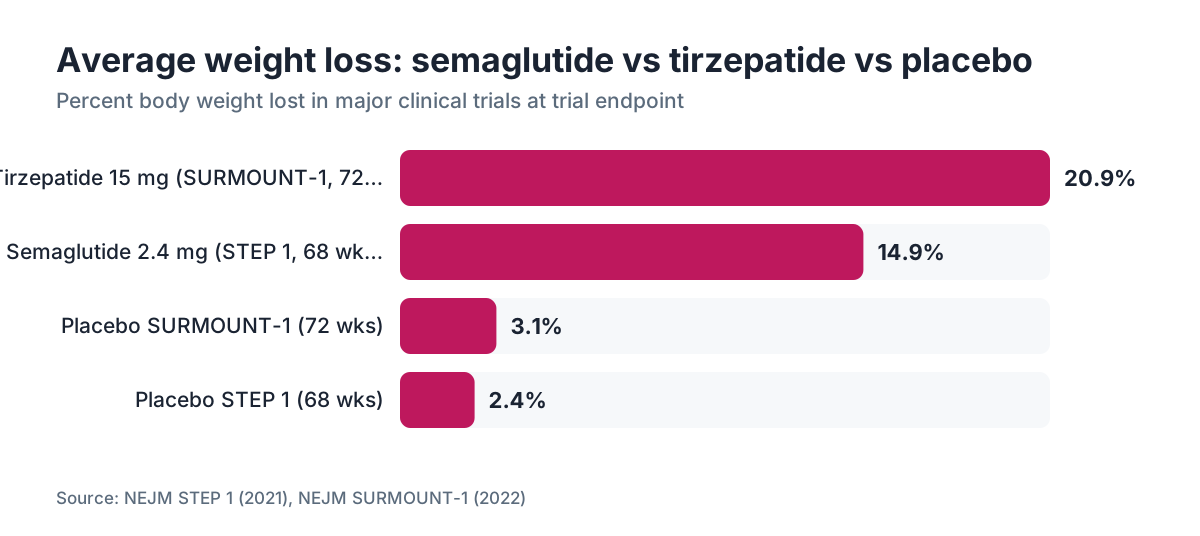
The clinical results in the STEP trials were large. In STEP 1, participants without diabetes on 2.4 mg weekly semaglutide lost an average of 14.9% of body weight over 68 weeks versus 2.4% for placebo. [4] That is a real number. It is also an average, meaning some women lost considerably more and some lost considerably less.
For women, the picture gets more complicated. Body weight is not the whole story. The STEP trials were not designed to separate out how menopause status, hormone levels, or the age-related shift toward central fat interact with GLP-1 response. What physiology tells us is that estrogen decline speeds visceral fat accumulation and slows metabolic rate. GLP-1 agonists can help with both, but the underlying hormonal driver is still there. You can read the full mechanism in our article on semaglutide for weight loss.
Muscle preservation is the other big concern. GLP-1s cause weight loss partly through caloric restriction, and caloric restriction without resistance training strips muscle alongside fat. Women over 40 are already losing muscle faster than younger women because of estrogen decline. If a Hers program, or any GLP-1 program, does not address protein intake and resistance exercise directly, you are at real risk of trading fat for muscle. That is not a metabolic win.
What does Hers semaglutide cost compared to brand-name options?
Cost is the main reason women choose compounded semaglutide. Wegovy's list price in the United States has been approximately $1,350 per month without insurance. [5] Most commercial plans cover it poorly or not at all, and Medicare was barred from covering anti-obesity medications until the Treat and Reduce Obesity Act created a narrow pathway. So the out-of-pocket math pushes a lot of women toward compounded options.
Hers and similar platforms price compounded semaglutide much lower, typically $100 to $400 per month depending on dose and whether you are in an introductory period. The table below compares approximate costs as of mid-2025. Prices change and should be verified directly with each provider.
| Option | Approximate monthly cost | FDA approval status | |---|---|---| | Wegovy (2.4 mg, brand) | ~$1,349 list price | FDA-approved for weight management | | Ozempic (1 mg, brand, off-label for weight) | ~$935 list price | FDA-approved for type 2 diabetes | | Hers compounded semaglutide | ~$79-$299 (dose-dependent) | Not FDA-approved | | Other telehealth compounded programs | ~$150-$450 | Not FDA-approved |
The cost savings are real. So is the quality-oversight gap. If you have insurance that covers Wegovy or can access a manufacturer savings program (Novo Nordisk's NovoCare has offered $0 copay cards for eligible commercially insured patients), running through insurance first is usually worth the effort. [5]
For women without that access, compounded semaglutide through a reputable telehealth provider is a pragmatic option, not a reckless one. But pragmatic means going in with eyes open about what is and is not known.
What are the side effects of semaglutide women should expect?
The most common side effects are gastrointestinal: nausea, vomiting, diarrhea, constipation, and stomach pain. In the STEP 1 trial, roughly 44% of participants on semaglutide reported nausea, compared to about 16% on placebo. [4] Most of it is worst in the first few weeks after a dose increase and eases for most people after that.
The more serious risks are rarer but real. The FDA label for Wegovy carries a boxed warning about thyroid C-cell tumors, based on rodent studies. The clinical relevance in humans is still uncertain, but the warning means you should not take semaglutide if you have a personal or family history of medullary thyroid carcinoma or MEN2. [6]
Pancreatitis is another serious but rare risk. Gallbladder disease, including gallstones, happens more often with rapid weight loss and has been reported with GLP-1s at higher rates than placebo.
For women in perimenopause and menopause, a few extra things are worth watching. Nausea stacked on top of hot flashes is miserable in a way that compounds. Caloric restriction from GLP-1 therapy can speed bone loss in women who are already at elevated risk after menopause. The STEP trials did not measure bone density as a primary outcome. If you have any osteoporosis risk factors, getting a baseline bone density test before starting a GLP-1 is a reasonable precaution.
Hair loss (telogen effluvium) from rapid weight loss is also reported by many women on GLP-1s, though it usually resolves once weight stabilizes.
Does semaglutide interact with menopause or hormone therapy?
This is one of the least-studied and most clinically relevant questions for women over 40.
There are no large randomized trials specifically examining semaglutide in perimenopausal or postmenopausal women on hormone therapy. What we have is mechanistic reasoning and smaller observational data. Here is what the science suggests.
Estrogen affects GLP-1 receptor expression. Animal studies have found that estrogen enhances GLP-1 signaling, which may partly explain why some women respond faster or slower to GLP-1 drugs depending on menopausal status. Whether that translates into a meaningful clinical difference in weight loss is not established in humans. [7]
Hormone therapy, particularly estrogen, independently improves insulin sensitivity and helps prevent the central weight redistribution that menopause drives. So HRT and semaglutide are not competing approaches. Many clinicians who specialize in women's health use them together. Our overview of hormone replacement therapy covers HRT broadly.
Progesterone type matters too. Medroxyprogesterone acetate (the synthetic progestin in older HRT formulations) has been linked to worse metabolic outcomes than micronized progesterone (Prometrium). If you are on HRT and starting semaglutide, make sure your prescriber knows your full hormone regimen. More on progesterone formulations is in our progesterone article.
The practical takeaway: there is no known contraindication between semaglutide and standard menopausal hormone therapy. But most telehealth-only GLP-1 programs do not have the clinical setup to think through that combination carefully. That gap is real.
Who qualifies for semaglutide through Hers, and who should not use it?
Hers uses the same general clinical criteria that guide FDA-approved prescribing for Wegovy. The FDA approved Wegovy for adults with a BMI of 30 or higher, or a BMI of 27 or higher with at least one weight-related condition such as hypertension, type 2 diabetes, or dyslipidemia. [6] Telehealth platforms generally use these as their eligibility thresholds, though clinical judgment varies.
Absolute contraindications that should disqualify you regardless of platform:
- Personal or family history of medullary thyroid carcinoma
- MEN2 (multiple endocrine neoplasia type 2)
- Known hypersensitivity to semaglutide
- Pregnancy (GLP-1s are not safe in pregnancy; you need effective contraception)
Relative contraindications where you need a close clinical conversation:
- History of pancreatitis
- Significant gastroparesis
- Active gallbladder disease
- Severe kidney or liver impairment
- Eating disorder history (GLP-1s reduce appetite in ways that can complicate recovery)
For women in perimenopause, age is not a disqualifier. But any telehealth platform that does not ask about your hormone status, whether you have had a DEXA scan, your current medications, and your exercise habits is working from an incomplete picture. Ask those questions of yourself even if the intake form does not.
How does Hers semaglutide compare to other telehealth GLP-1 programs?
Hers sits in a crowded market. Ro, Noom Med, Found, and various compounding-pharmacy-direct models all offer similar compounded semaglutide programs. What separates them comes down to clinical depth, pricing structure, and what happens when you hit a problem.
Hers markets heavily to women and has built some women-specific health content, but its GLP-1 program is not structurally different from competitors on clinical oversight. You get an async clinician review, a prescription, and a subscription. You generally do not get proactive lab monitoring, a dietitian, or a structured exercise program unless you pay for add-ons.
If you are weighing tirzepatide instead (Mounjaro or Zepbound, also available as compounded versions), that comparison is worth making. Tirzepatide acts on both GLP-1 and GIP receptors and produced average weight loss of 20.9% at the highest dose in the SURMOUNT-1 trial, compared to about 15% for semaglutide. [8] The tradeoff is price and a slightly different side effect profile. Our semaglutide vs tirzepatide article breaks that comparison down in detail.
Where WomenRx differs from purely GLP-1-focused platforms is in treating the hormonal context around weight rather than the weight alone. If you are in perimenopause or menopause, a program that can address estrogen decline and GLP-1 therapy in the same clinical conversation is a different category of care than one that handles them separately.
The question to ask any program: if my period becomes irregular on this medication, or my hot flashes worsen, or I have questions about my bone density, who handles that? If the answer is 'go see your regular doctor,' you are getting a fragmented care model.
What is the dose schedule for semaglutide and how long does it take to work?
Standard semaglutide dosing for weight management follows a titration schedule built to reduce side effects. For Wegovy, the FDA-approved schedule starts at 0.25 mg weekly for four weeks, increases to 0.5 mg for four weeks, then 1.0 mg, then 1.7 mg, and finally the maintenance dose of 2.4 mg weekly. Most people take 16 to 20 weeks to reach the full dose. [6]
Compounded semaglutide programs generally follow similar titration, though the exact schedule can vary by prescriber.
As for when you see results: most people notice reduced appetite within the first one to two weeks. Measurable weight loss usually starts in weeks two through four. The STEP trials measured outcomes at 68 weeks, and the weight loss curve shows most of the loss happening in the first 36 to 52 weeks, then plateauing. Stopping semaglutide is associated with regaining most of the lost weight within a year in most people who stop without lifestyle changes in place. [4]
For women in perimenopause, onset and trajectory can feel different because appetite, bloating, and gastrointestinal function are already being scrambled by hormonal fluctuation. Tracking symptoms carefully in the first 12 weeks helps you and your prescriber sort out which symptoms are semaglutide and which are perimenopause. Our article on perimenopause age covers what typical symptom timelines look like.
What should women ask before starting any semaglutide program?
Telehealth makes starting a GLP-1 easy. That ease is a feature and a risk at once. Here are the questions worth asking any program, including Hers, before you put anything in your body.
First, what pharmacy is compounding the medication? Ask whether it is 503A or 503B. A 503B outsourcing facility operates under stricter FDA oversight than a 503A pharmacy. Both are legal, but 503B is the higher standard. [3]
Second, what is the testing cadence? At minimum, a responsible program checks your baseline metabolic panel, kidney function, and thyroid. If no labs are ordered before you start, that is a gap.
Third, what happens if you have a bad reaction? Is there a clinical line you can call, or just a message portal with a 24-48 hour response time? For serious side effects like severe abdominal pain (a possible sign of pancreatitis), that matters.
Fourth, how does this program account for your menopausal status? If the intake form does not ask about perimenopause symptoms, current HRT use, or prior bone density testing, you are being treated as a generic weight-loss patient, not a woman in a specific hormonal context.
Fifth, what is the plan for when you want to stop? A good program has a tapering and maintenance strategy. Stopping semaglutide cold after significant weight loss with no plan is a setup for rapid regain.
And honestly: if you are in your 40s or 50s and have not yet looked into whether your symptoms are perimenopause or something else, that conversation should happen before or alongside any GLP-1 program. See our overview of menopause to understand the hormonal context better.
Is Hers compounded semaglutide legal and safe right now?
The legality question has been genuinely unsettled and may still be in flux depending on when you read this.
The FDA placed semaglutide on its drug shortage list in 2022, which let 503A and 503B pharmacies compound it legally under federal law. In February 2025, the FDA announced it had determined the Wegovy shortage was resolved and set deadlines for 503B outsourcing facilities to stop compounding it (April 2025) and 503A pharmacies (May 2025). [3] Telehealth platforms including Hers and others challenged this in court, and at least one federal judge issued a temporary injunction allowing compounding to continue while litigation proceeded.
The FDA's position, stated in its own guidance, is that 'once a drug shortage is resolved, the conditions that permit compounding under the shortage provisions no longer apply.' [2] The compounders' position is that access and affordability are not the same as shortage resolution, and that the FDA moved too fast.
As of mid-2025, the legal status was actively contested. If you are reading this later, check the FDA's current drug shortage list and any updates to its semaglutide compounding guidance at FDA.gov.
On safety: the profile of semaglutide itself is well-documented through the STEP trials and years of Ozempic use. The specific safety question for compounded versions is about manufacturing consistency, sterility, and accurate dosing, not the molecule itself. A high-quality compounding pharmacy with proper accreditation reduces those risks a lot. Reduces is not eliminates.
Frequently asked questions
Does Hers semaglutide require a prescription?
Yes. Semaglutide is a prescription drug regardless of whether it is brand-name or compounded. Hers connects you with licensed clinicians who evaluate your health history and write the prescription if you qualify. No legitimate telehealth platform can legally ship semaglutide without that prescribing step. If a website offers to sell semaglutide without a prescription, that is a red flag for an illegal or counterfeit product.
Can I use Hers semaglutide if I am on birth control or HRT?
There is no known direct contraindication between semaglutide and most hormonal contraceptives or standard menopausal HRT. But oral contraceptives and some HRT formulations are absorbed partly based on gastric transit time, which semaglutide slows. For oral medications that depend on consistent absorption, timing and formulation can matter. Tell your prescriber your full medication list. Transdermal estrogen (patches, gels) avoids this absorption issue entirely.
What happens if I stop taking Hers semaglutide?
Weight regain after stopping semaglutide is well documented. A STEP 4 extension study found that participants who discontinued semaglutide regained about two-thirds of their prior weight loss within a year. The appetite-suppressing effect reverses when the drug clears your system, usually within a few weeks. This does not mean semaglutide is never worth stopping, but it means the exit needs a plan: progressive tapering, dietary habits already in place, and a resistance training routine.
How is Hers semaglutide different from Ozempic?
Ozempic is FDA-approved for type 2 diabetes at doses up to 2 mg. It contains the same active molecule as Wegovy but at lower doses and with a diabetes-specific indication. Hers compounded semaglutide is made by a compounding pharmacy, not Novo Nordisk, and is not FDA-approved. The molecule is the same; the manufacturing oversight, inactive ingredients, and legal status differ. Ozempic prescribed off-label for weight loss is common but increasingly scrutinized by payers.
Is compounded semaglutide safe for women over 50?
The safety data from the STEP trials included women over 50, and age itself is not a contraindication. The more specific concern for postmenopausal women is muscle and bone loss that can come with the caloric restriction GLP-1s produce. Women over 50 should get enough protein (most experts suggest at least 1.2 grams per kilogram of body weight daily), do resistance exercise, and get baseline bone density testing if they have not had one. Semaglutide does not directly harm bone, but weight loss without those safeguards can.
Does Hers semaglutide work for belly fat specifically?
GLP-1 receptor agonists produce generalized weight loss, not targeted fat removal. That said, visceral fat (belly fat) does respond to overall caloric deficit and improved insulin sensitivity, both of which semaglutide promotes. In women after menopause, where estrogen loss specifically drives central fat, combining semaglutide with estrogen replacement addresses both the hormonal driver and the metabolic one. Neither alone is as complete as both together if you are a good candidate for HRT.
Can semaglutide help with PCOS symptoms?
Semaglutide is not FDA-approved for PCOS, but insulin resistance is central to PCOS in many women, and GLP-1 agonists improve insulin sensitivity. Small studies and clinical experience suggest semaglutide can support weight loss and improve menstrual regularity in women with PCOS. The Endocrine Society's guidelines acknowledge GLP-1 agonists as an option in insulin-resistant PCOS when lifestyle modification is not enough, though the evidence base is still growing compared to metformin.
What foods should I avoid while taking semaglutide?
There are no absolute dietary restrictions, but high-fat meals and large portions reliably worsen nausea on semaglutide. Alcohol is more of a problem on GLP-1s for many people because gastric emptying is slowed, changing how quickly alcohol hits the bloodstream. High-sugar, low-protein diets work against your goals by promoting fat storage rather than fat loss. Most clinical guidance recommends small, frequent, protein-rich meals, especially in the first months while your body adjusts.
How do I know if the compounded semaglutide from Hers is legitimate?
Hers uses licensed compounding pharmacies. You can check whether the pharmacy is 503B-registered by looking it up in the FDA's list of registered outsourcing facilities at FDA.gov, or verify 503A accreditation through the Pharmacy Compounding Accreditation Board (PCAB). Your prescription should arrive in a vial with a lot number. If a product arrives unlabeled, is unusually cheap, or ships from outside the United States, those are serious red flags.
Does semaglutide affect fertility or menstrual cycles?
Semaglutide is not recommended during pregnancy and should be stopped at least two months before a planned pregnancy due to potential fetal risk. Some women report changes in menstrual cycle on GLP-1s, possibly tied to weight loss itself rather than a direct drug effect. Weight loss can restore ovulation in women with obesity-related anovulation, which paradoxically raises pregnancy odds in women who assumed they were infertile. Use effective contraception if you are not trying to conceive.
Is tirzepatide a better option than semaglutide for women in menopause?
Tirzepatide produced greater average weight loss than semaglutide in trial context (SURMOUNT-1 showed up to 20.9% body weight reduction versus roughly 15% for semaglutide in STEP 1). Whether that difference matters more for menopausal women specifically has not been studied directly. Some clinicians prefer tirzepatide for women with significant insulin resistance, which is common after menopause. Cost and tolerability are real differentiators too. Our detailed comparison is at the semaglutide vs tirzepatide article.
What labs should I get before starting semaglutide?
At minimum: fasting glucose or HbA1c, a metabolic panel (kidney and liver function), lipid panel, TSH, and CBC. If you are a woman over 40, adding a DEXA scan for bone density is reasonable given the muscle and bone concern. A program that skips baseline labs entirely is cutting corners on your safety. Results also give you a comparison point at six to twelve months to judge whether the medication is working as intended.
How much weight can I expect to lose on Hers semaglutide?
The STEP 1 trial found an average weight loss of 14.9% of body weight at 68 weeks on 2.4 mg semaglutide. That is an average across a large, diverse population. Individual outcomes ranged from minimal loss to over 20%. Women in menopause may see a slower response due to lower metabolic rate and hormonal factors. Realistic expectation: meaningful but variable weight loss over 12 to 18 months, with a plateau likely after that and regain likely if the drug is stopped without lifestyle changes in place.
Sources
- Hers.com, GLP-1 weight loss program page
- FDA, Compounding and the FDA: Questions and Answers
- FDA, drug shortages and 503A/503B compounding guidance
- Wilding JPH et al., STEP 1 Trial, New England Journal of Medicine, 2021
- Novo Nordisk NovoCare, Wegovy list price and savings program
- FDA, Wegovy (semaglutide) prescribing information and label
- Mauvais-Jarvis F et al., Endocrine Reviews, 2013 - Estrogen and GLP-1 receptor signaling interaction
- Jastreboff AM et al., SURMOUNT-1 Trial, New England Journal of Medicine, 2022
- Rubino D et al., STEP 4 Trial, JAMA, 2021
- Endocrine Society, Clinical Practice Guideline: Pharmacological Management of Obesity, 2015
- North American Menopause Society (NAMS), Menopause and Weight Position Statement