Hair fall in menopause: why it happens and what actually helps
TL;DR: Estrogen and progesterone decline during perimenopause and menopause, shortening the hair growth phase and letting androgens shrink follicles. Up to half of women over 50 notice significant shedding or thinning. Hormone therapy, minoxidil, and low-level laser therapy have the strongest evidence. Biotin supplements and most hair-growth shampoos have almost none.
Why does hair fall out during menopause?
The short answer: estrogen and progesterone keep hair in its growth phase longer, and when those hormones drop, follicles spend more time resting and shedding than growing.
Hair grows in three stages. Anagen is the active growth phase, lasting two to seven years. Telogen is the resting phase, lasting about three months, after which the hair falls out. Estrogen prolongs anagen. So when estrogen falls sharply during perimenopause and menopause, more follicles slip into telogen at the same time, and you see what looks like sudden, alarming shedding.
Progesterone matters too. It weakly blocks 5-alpha reductase, the enzyme that converts testosterone into dihydrotestosterone (DHT). DHT is the androgen that miniaturizes hair follicles in women with genetic sensitivity. When progesterone drops, that weak block is gone, DHT rises relative to other hormones, and follicles on the crown and temples gradually shrink. The resulting pattern, diffuse thinning at the crown that preserves the frontal hairline, is called female pattern hair loss (FPHL), or androgenetic alopecia. [1]
A third mechanism is telogen effluvium triggered by the physiologic stress of hormonal change itself. The body treats a sudden hormonal shift like a metabolic stressor, and a wave of follicles can exit anagen together. This kind of shedding typically starts two to three months after the trigger and can resolve on its own in six to nine months if the underlying cause is addressed. The problem: in menopausal women, the trigger (low estrogen) is not going away on its own.
How common is hair loss in menopause?
Very common. The American Academy of Dermatology estimates that roughly 40% of women have noticeable hair loss by age 50, and the number climbs from there. [2] Some studies put it closer to 50% among postmenopausal women. The condition gets underreported because women are less likely than men to seek treatment for hair loss, and because diffuse thinning is harder to spot in a mirror than a receding hairline.
FPHL peaks in the fifth and sixth decades, almost exactly tracking the menopause transition. That is not a coincidence. A 2020 cross-sectional study in the Journal of the American Academy of Dermatology found that postmenopausal status was independently associated with higher FPHL severity after controlling for age, which suggests hormones, rather than just aging, explain part of the risk. [3]
Ethnic background matters. Research suggests FPHL is most prevalent in women of European descent and less common, though not rare, in women of East Asian, African, and South Asian backgrounds. The pattern of thinning can also differ: African-American women are more prone to traction alopecia on top of any hormonal loss, and that distinction changes what treatment you pursue.
What does menopausal hair loss actually look like?
It almost never looks like a man's bald spot. Most women notice a widening part line, a ponytail that feels thinner when you rubber-band it, or clumps of hair on the shower drain that seem larger than they used to be. The frontal hairline typically stays intact, which is one feature that distinguishes FPHL from the pattern more common in men.
A normal shed is 50 to 100 hairs per day, according to the American Academy of Dermatology. [2] That sounds like a lot until you realize a full head of hair has roughly 100,000 follicles. The trouble in menopausal shedding is less the quantity than the lack of replacement: hairs that fall out grow back thinner, shorter, and eventually not at all in affected follicles.
Two things can look like menopausal hair loss but have different causes. Thyroid dysfunction (both hypothyroidism and hyperthyroidism) causes diffuse shedding and is more common in perimenopausal women, whose symptoms often overlap with menopause anyway. Iron deficiency anemia is the other big mimicker. Any workup for hair loss in this age group should include a TSH and a serum ferritin, more than a hormonal panel.
Which hormones are the real culprits?
Estrogen, progesterone, and androgens are all involved, but they do not affect hair in the same way or on the same timeline.
Estradiol (the main circulating estrogen before menopause) directly prolongs anagen through estrogen receptors on follicular cells. When ovarian production falls, scalp follicles lose that signal first because follicular estrogen receptors are less sensitive than those in uterine or breast tissue. That means hair changes can show up before other classic menopause symptoms.
Progesterone's role is more indirect, working through DHT suppression. A 2018 review in Skin Pharmacology and Physiology noted that 5-alpha reductase inhibitors (the class of drugs that blocks DHT) are effective in men with androgenetic alopecia and that the same enzymatic pathway is active in women, just with weaker genetic expression in most cases. [4]
Then there are the androgens. Total testosterone does not necessarily rise in menopause, but the ratio of androgen to estrogen shifts heavily toward androgens. That relative androgen excess, not an absolute testosterone spike, is what drives follicular miniaturization in most postmenopausal women.
Cortisol deserves a mention. Chronic stress raises cortisol, which can directly disrupt anagen. The sleep disruption and psychosocial stress of menopause itself pile on top of the hormonal shift. This is one reason hair loss in perimenopause sometimes feels worse than what the labs seem to show.
Does hormone replacement therapy help with hair loss?
This is where things get genuinely interesting and where the evidence is messier than most articles admit.
The logic is sound: replace estrogen, restore the anagen-prolonging signal, slow follicular miniaturization by improving the androgen-to-estrogen ratio. Several observational studies support it. A study in Menopause in 2015 found that postmenopausal women using combined hormone replacement therapy had lower rates of FPHL severity than non-users, with a dose-response relationship. [5]
Randomized controlled trial data specifically on hair is sparse. Most large HRT trials like WHI were not designed to measure hair outcomes. So we are working from observational data, smaller trials, and mechanistic plausibility. That is honest, and worth saying out loud.
The type of progestin in combined HRT matters more than most women are told. Synthetic progestins with androgenic activity, particularly norethindrone acetate and some older levonorgestrel formulations, can actually worsen hair loss because they bind androgen receptors and mimic DHT's follicular effects. Micronized progesterone (Prometrium) and dydrogesterone have lower androgenic activity and are generally preferred when hair preservation is a goal. If you are on HRT and your hair is still thinning, ask what progestin you are taking.
Estrogen delivery route also matters a little. Oral estrogen raises sex hormone binding globulin (SHBG), which can lower free testosterone. Transdermal estrogen (patches, gels) has less effect on SHBG. In theory, oral estrogen might give slightly more androgen suppression, but the clinical difference for hair is not well established. An estrogen patch is still a reasonable choice; just do not assume it is equivalent for this specific outcome.
What non-hormonal treatments have real evidence?
Minoxidil is the only FDA-approved topical treatment for female pattern hair loss. [6] The 2% solution has been approved for women since 1991; the 5% foam gained approval later. Minoxidil works by prolonging anagen and increasing follicular blood supply. It does not address the hormonal root cause, but it does produce measurable regrowth in a meaningful percentage of women. A 48-week randomized trial found that 5% minoxidil foam was non-inferior to 2% minoxidil solution in women, with a somewhat better tolerability profile. [7] The catch: you have to use it indefinitely. Stop, and any regrowth reverses within three to six months.
Oral minoxidil at very low doses (0.25 to 1 mg daily) has become popular among dermatologists as an off-label option. Small studies suggest it may outperform topical minoxidil for some women with fewer scalp-irritation side effects, though it carries systemic effects including fluid retention and, rarely, unwanted facial hair. It is not FDA-approved for hair loss at any dose.
Low-level laser therapy (LLLT) devices cleared by the FDA as 510(k) medical devices (not drugs) have evidence from several randomized controlled trials showing modest but real improvement in hair density in women with FPHL. The mechanism is thought to involve stimulation of mitochondrial activity in follicular cells. Results take four to six months of consistent use.
Platelet-rich plasma (PRP) injections show promise in case series and some small RCTs, but the evidence base is not yet large enough to call it a first-line option. It is expensive, usually $500 to $1,500 per session, not covered by insurance, and requires repeat treatments.
Spironolactone is an anti-androgen drug used off-label for FPHL in women. At doses of 50 to 200 mg daily it blocks androgen receptors in follicular cells. It is not FDA-approved for hair loss, but it is commonly prescribed, and there is a reasonable evidence base from prospective studies. It should not be used in women trying to conceive and requires monitoring for electrolyte changes.
What about biotin, collagen, and hair supplements?
Biotin is the most marketed supplement for hair loss. The evidence for biotin in women without a documented deficiency is essentially zero. The FDA has not approved biotin for hair loss treatment, and biotin deficiency severe enough to cause shedding is genuinely rare in women eating a normal diet. [6] One consistent finding in the literature: taking high-dose biotin (anything above 5 mg daily) can interfere with thyroid and cardiac laboratory tests, causing false results that lead to unnecessary treatment or missed diagnoses. That is a real harm, not a theoretical one.
Collagen peptide supplements sit in a similar spot. Plausible mechanism (collagen is part of hair follicle structure), limited randomized trial evidence specifically in menopausal women with hair loss. If you want to take them, they are generally safe, but do not expect dramatic results.
Iron supplementation does help if your ferritin is low. A serum ferritin below 30 ng/mL is associated with increased hair shedding even without frank anemia. [11] This is one of the most actionable and under-recognized causes of hair loss in perimenopausal women, whose periods may still be irregular and heavy before they stop entirely. Get the ferritin tested before supplementing, because iron overload carries its own risks.
Zinc, vitamin D, and selenium deficiencies are also linked to hair loss when they are actually deficient. The answer is not a blanket supplement stack. It is targeted replacement based on lab values.
How do you get a proper diagnosis?
A dermatologist with experience in hair disorders is your best first stop. They can run a pull test (gently pulling 40 to 60 hairs to count how many dislodge, with more than 6 being abnormal), a dermoscopy exam of the scalp to look at follicular miniaturization, and a structured history. A scalp biopsy is sometimes needed to rule out scarring alopecias like lichen planopilaris, which require completely different treatment and, if missed, lead to permanent follicular loss.
Blood work worth getting: TSH, free T4, serum ferritin, complete blood count, and a hormonal panel including estradiol, FSH, and total testosterone. DHEA-S can be added if you have other signs of androgen excess like acne or facial hair. An FSH above 40 IU/L in a woman with irregular periods is consistent with the menopausal transition. [8]
Telehealth platforms like WomenRx can help order hormonal labs and discuss HRT options, which is useful if your primary care provider does not specialize in menopause. But scalp evaluation still benefits from an in-person look at some point, particularly if your provider suspects anything beyond straightforward FPHL.
Can GLP-1 medications like semaglutide cause hair loss?
Yes, temporarily. Telogen effluvium is a recognized side effect of rapid weight loss from any cause, including GLP-1 receptor agonists like semaglutide and tirzepatide. In the STEP 1 trial of semaglutide, alopecia was reported as an adverse event in about 3% of participants, compared to less than 1% on placebo. [9] The SURMOUNT-1 trial of tirzepatide reported similar rates of telogen effluvium.
The mechanism is the same as post-surgical hair loss: a large caloric deficit signals the body to divert resources away from non-essential processes, and hair growth is one of the first things to get deprioritized. It typically starts two to four months after weight loss accelerates and resolves in most women within six to nine months as the body adjusts.
If you are taking semaglutide for weight loss and noticing hair shedding, the practical advice is to keep protein intake up (at least 1.2 g per kilogram of body weight per day), get your ferritin checked, and give it time. You can compare semaglutide vs tirzepatide for overall side effect profiles if you are still choosing between them. Stopping the GLP-1 to save your hair is usually not necessary. The shedding is self-limiting.
Women in menopause carry compounded risk here: hormonal hair loss plus GLP-1-related telogen effluvium can feel devastating together. The two causes need different management, and it is worth separating them with a proper workup.
What lifestyle changes actually move the needle?
Protein. Hair is made of keratin, which is protein. Women on calorie-restricted diets or GLP-1 medications who are not deliberately eating enough protein speed up follicular dormancy. Most hair specialists suggest 1.2 to 1.6 grams of protein per kilogram of body weight daily if you are actively dealing with hair loss.
Scalp care matters more than most product marketing suggests. Chronic scalp inflammation, from seborrheic dermatitis or contact reactions to sulfates and silicones, can worsen miniaturization. A basic, fragrance-free shampoo used regularly (daily if your scalp tends to be oily) keeps follicles healthier than expensive specialty formulas.
Sleep and stress management are more than wellness advice here. Chronic cortisol elevation from poor sleep or unmanaged stress has documented effects on anagen duration. Women in perimenopause who are already dealing with hot flashes and night sweats face a vicious cycle: poor sleep raises cortisol, which worsens hair loss, which raises anxiety, which disrupts sleep. Treating the sleep disruption of menopause is hair-loss treatment too.
Heat styling and tight hairstyles cause real mechanical damage and can worsen traction alopecia on top of hormonal loss. This is not about banning your curling iron. It is about not wearing tight buns or braids every single day while follicles are already vulnerable.
How long does it take to see results from treatment?
Patience is genuinely required. Hair grows roughly 0.5 to 1.5 cm per month, and any intervention has to first stop shedding, then restart growth, then let that growth reach visible length. Most practitioners tell women to give any treatment six months before judging whether it is working.
Minoxidil: expect reduced shedding in two to four months, early regrowth signs at four to six months, and meaningful cosmetic change at twelve months. HRT: observational data suggests women notice improved hair quality within three to six months of starting therapy if it is going to work. Spironolactone: typical assessment at six months. LLLT: four to six months of consistent use.
One important point about minoxidil: many women see increased shedding in the first four to six weeks of use and quit, sure it is making things worse. This is the "dread shed," a well-documented phase where minoxidil accelerates the exit of telogen hairs before new anagen hairs push through. [12] It is a sign the drug is working, not failing.
What does the evidence say about hair loss treatments side by side?
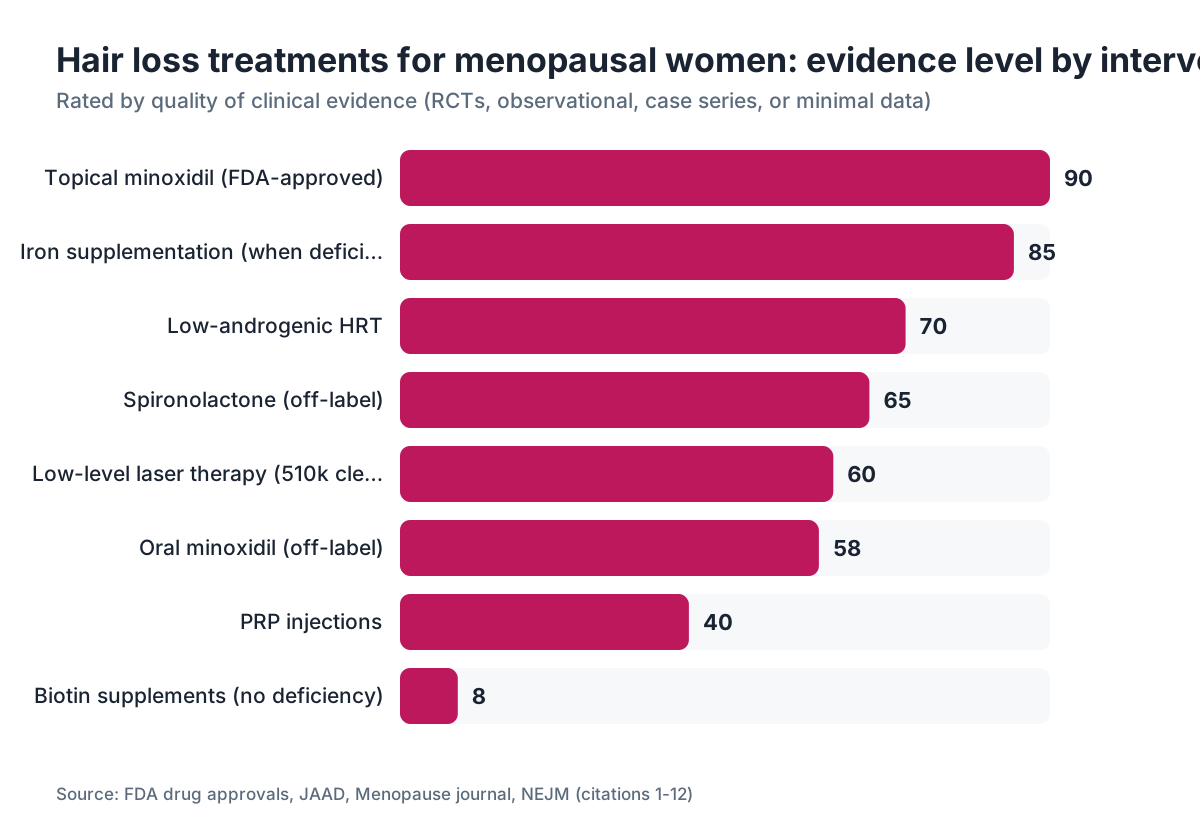
Here is a realistic comparison of the main options, based on current evidence levels:
| Treatment | Evidence level | FDA status | Typical time to see effect | Notes | |---|---|---|---|---| | Topical minoxidil 2-5% | High (RCTs) | Approved for FPHL | 4-6 months | Must use indefinitely; dread shed common | | Oral minoxidil (0.25-1 mg) | Moderate (small trials) | Off-label | 4-6 months | Systemic effects; consult dermatologist | | Systemic HRT (low-androgenic progestin) | Moderate (observational) | Approved for menopause, not hair | 3-6 months | Progestin type matters hugely | | Spironolactone 50-200 mg | Moderate (prospective studies) | Off-label | 6-12 months | Electrolyte monitoring required | | Low-level laser therapy | Moderate (small RCTs) | FDA 510(k) cleared | 4-6 months | Expensive; requires consistency | | PRP injections | Low-moderate (small RCTs) | Not FDA-approved | 3-6 months | $500-1,500/session; not covered by insurance | | Biotin supplements | Very low (no RCTs in non-deficient women) | Not approved | N/A | Can interfere with lab tests | | Iron supplementation | High (when ferritin is low) | Not approved for hair | 3-6 months | Only if deficient; get ferritin tested first |
No single treatment works for everyone. The approach most dermatologists reach for in practice is combination therapy: fix any nutritional deficiencies, optimize hormones if appropriate, and add topical or oral minoxidil as a dedicated hair treatment.
When should you see a doctor about menopausal hair loss?
See a doctor sooner rather than later if: your hair is falling out in patches rather than diffusely (could be alopecia areata, an autoimmune condition), if you have scalp pain, itching, or visible scarring (possible scarring alopecia that causes permanent loss if untreated), if your shedding started suddenly and severely after a stressful event, illness, or surgery, or if you have other symptoms suggesting thyroid disease or significant androgen excess.
For the more typical picture of gradual crown thinning and increased shedding around perimenopause, timing matters. Follicular miniaturization, once far advanced, is irreversible. The sooner you start effective treatment, the more follicles you keep. Waiting to "see if it gets better" is reasonable for three to six months if hair loss is mild. It is not a great strategy if thinning is already obvious.
A good resource for finding menopause-literate providers is the Menopause Society (formerly NAMS), which keeps a searchable directory of certified menopause practitioners. [8] These providers are more likely to be current on the evidence connecting hormones to hair health and to know which progestins are hair-neutral.
Frequently asked questions
Is hair loss from menopause permanent?
It can be, but it does not have to be. Follicles that are miniaturized but not yet dead can recover with treatment. Follicles replaced by scar tissue are gone. This is why early treatment matters. Androgenetic alopecia in women progresses slowly and is rarely as severe as male pattern baldness, but without intervention it does progress. Starting minoxidil or addressing hormones within the first year of noticeable thinning gives you the best chance of meaningful regrowth.
What is the best shampoo for menopausal hair loss?
There is no shampoo with strong clinical evidence for reversing FPHL. Shampoos containing ketoconazole have the most data, primarily from studies in men, suggesting modest reduction in shedding by lowering scalp-level androgen activity. Nioxin and similar scalp-focused shampoos have not been tested in RCTs. The main thing to avoid: sulfate-heavy, fragrance-loaded formulas that worsen scalp inflammation. A simple, gentle cleanser is probably better than an expensive "hair growth" formula.
Does stopping birth control cause hair loss in perimenopause?
Yes, this is a real phenomenon. Combined oral contraceptives suppress androgens. When you stop them, there is a rebound rise in androgens that can trigger telogen effluvium two to three months later. In perimenopause, this coincides with falling natural estrogen, so the combined effect can feel dramatic. The good news: most post-pill shedding resolves within six to nine months if no other hormonal issue is driving it.
Can low estrogen cause hair loss even before menopause is official?
Yes. Estrogen levels can fluctuate and trend downward for years before the final menstrual period. Perimenopause, which typically starts in the mid-to-late 40s but can begin in the late 30s, is when estrogen becomes erratic. Hair follicles are sensitive to these swings. Many women notice thinning or increased shedding well before they would clinically meet the 12-consecutive-months-without-a-period definition of menopause.
Does hormone therapy make hair thicker or just stop further loss?
Both can happen, but stopping further loss is the more realistic primary goal. Observational studies suggest HRT in postmenopausal women is associated with better hair density than non-use, but regrowth of already miniaturized follicles depends on how advanced the loss is. Women who start HRT early in the menopause transition, while many follicles are miniaturized but not yet dead, have the best chance of some actual regrowth.
Is there a specific type of HRT that is better for hair?
Yes. Estradiol combined with micronized progesterone (rather than synthetic progestins with androgenic activity like norethindrone acetate) is generally preferred for hair preservation. Some providers add low-dose topical or oral testosterone, though the evidence here is mostly expert opinion rather than RCTs. Avoid progestins with a high androgenic index if hair loss is a concern, and ask your prescriber specifically about this before starting any combined HRT regimen.
How much hair loss per day is normal during menopause?
Shedding 50 to 100 hairs per day is considered normal regardless of menopausal status. During hormonal transitions, many women hit telogen effluvium episodes where 150 to 200 or more hairs per day fall out for several weeks. If elevated shedding persists beyond six months, it is unlikely to resolve on its own without addressing the underlying cause. A simple home test: count hairs in your drain catcher after a normal wash on three separate days and average them.
Does minoxidil work for menopausal hair loss specifically?
Yes. Minoxidil's original FDA approval trials included premenopausal and postmenopausal women, and the drug is approved for FPHL broadly regardless of cause. It works by extending anagen and increasing follicular blood supply, mechanisms that apply whether androgens, estrogen deficiency, or both are driving the thinning. It is not a cure and requires indefinite use, but it is the single best-studied topical option women with menopausal hair loss have.
Can a high-protein diet help with menopausal hair loss?
Adequate protein is necessary but not sufficient. Hair is made of keratin, a protein, and follicles are protein-hungry. Women on calorie-restricted diets or GLP-1 medications who are losing weight rapidly risk protein-deficient shedding on top of hormonal shedding. Aim for at least 1.2 grams of protein per kilogram of body weight daily. Getting there from whole food sources like eggs, Greek yogurt, fish, and legumes is generally more effective than protein powders alone.
What blood tests should I get if I think menopause is causing my hair loss?
At minimum: TSH (to rule out thyroid disease), serum ferritin (iron stores, more than hemoglobin), complete blood count, estradiol, FSH, and total testosterone. If you have signs of high androgen activity like acne or facial hair, add DHEA-S. A ferritin below 30 ng/mL warrants iron supplementation even without anemia. FSH above 40 IU/L in the context of irregular periods confirms menopausal transition. These tests, not a supplement stack, should drive your treatment plan.
Does hair loss from menopause get worse with age?
Untreated, FPHL does generally progress over the years after menopause. The rate varies widely between women and is heavily influenced by genetics. Women with a family history of significant hair loss (on either parent's side) tend to progress faster. With effective treatment, many women stabilize their hair density and prevent further loss. The goal of treatment shifts from regrowth to preservation as follicles age and miniaturization advances.
Are hair loss and bone loss related in menopause?
Both are driven by falling estrogen, so they often co-occur, but they are not directly causing each other. If you are dealing with significant menopausal hair loss, it is a reasonable prompt to also ask about your bone density, particularly if you have other risk factors. A bone density test (DEXA scan) is recommended for all women at menopause if they have risk factors, and the shared cause of estrogen loss makes evaluating both at once sensible.
Sources
- StatPearls, National Library of Medicine: Androgenetic Alopecia
- American Academy of Dermatology: Hair Loss in Women
- Journal of the American Academy of Dermatology, Fabbrocini et al. 2020: Female pattern hair loss and menopause
- Skin Pharmacology and Physiology, Trüeb RM 2018: Pharmacologic interventions in aging hair
- Menopause journal, Gao et al. 2015: HRT and female pattern hair loss in postmenopausal women
- U.S. Food and Drug Administration: Drugs homepage
- Journal of the American Academy of Dermatology, Blume-Peytavi et al. 2011: 5% minoxidil foam vs 2% minoxidil solution in women
- The Menopause Society (formerly NAMS)
- New England Journal of Medicine, Wilding et al. 2021: STEP 1 trial of semaglutide 2.4 mg in adults with obesity
- National Institutes of Health, Office of Dietary Supplements: Iron Fact Sheet for Health Professionals
- Dermatology and Therapy, Suchonwanit et al. 2019: Minoxidil and hair regrowth mechanisms review